
Mechanism of Homologous Recombination MCB 720 Yahan wei
Mechanism of Homologous Recombination MCB 720 Yahan wei
Outline Background information n Mechanisms of Homologous Recombination (HR) n Reference n
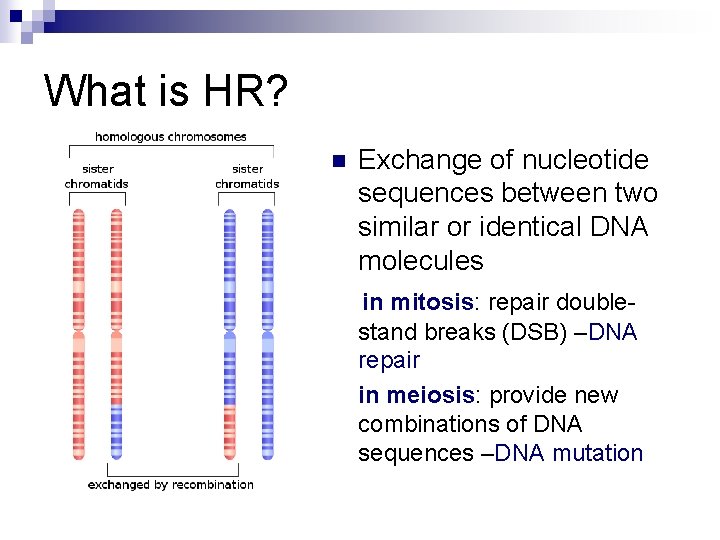
What is HR? n Exchange of nucleotide sequences between two similar or identical DNA molecules in mitosis: repair doublestand breaks (DSB) –DNA repair in meiosis: provide new combinations of DNA sequences –DNA mutation
How it was discovered? n n n n 1860 s Gregor Mendel –the principles of inheritance Early 1900 s William Bateson and Reginald Punnett – some genes can be inherited together 1911 Thomas Hunt Morgan –crossover can occur between linked genes Around 1930 Barbara Mc. Clintock and Harriet Creighton –crossover happens both in meiosis and mitosis 1947 Joshua Lederberg found recombination in bacteria 1964 Robin Holliday –Holliday Junction 1983 Jack Szostak –DSBR pathway ………………
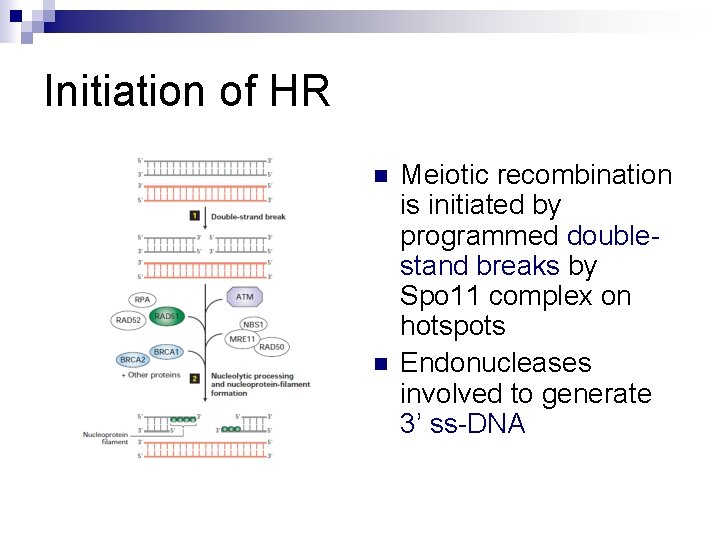
Initiation of HR n n Meiotic recombination is initiated by programmed doublestand breaks by Spo 11 complex on hotspots Endonucleases involved to generate 3’ ss-DNA
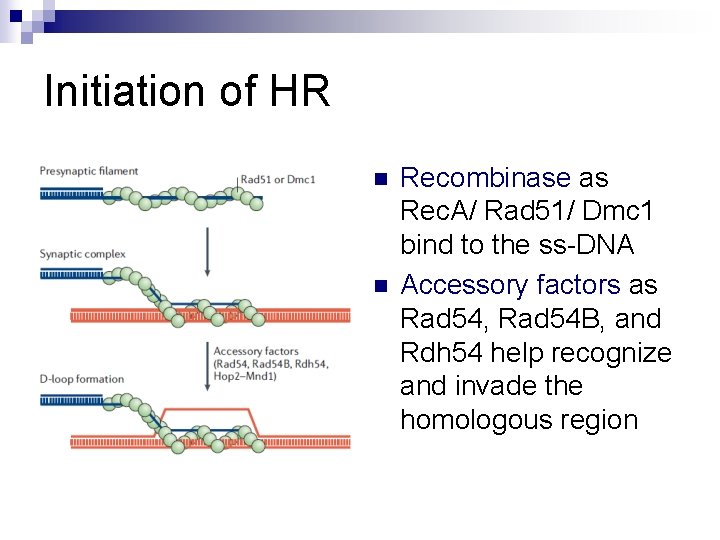
Initiation of HR n n Recombinase as Rec. A/ Rad 51/ Dmc 1 bind to the ss-DNA Accessory factors as Rad 54, Rad 54 B, and Rdh 54 help recognize and invade the homologous region
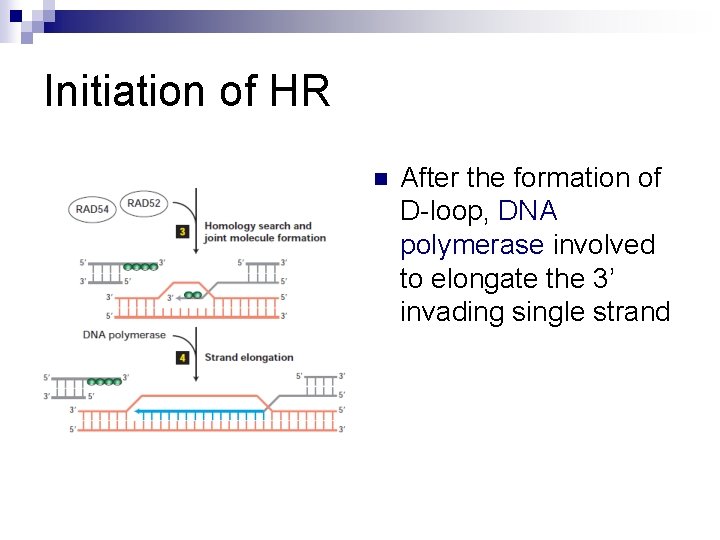
Initiation of HR n After the formation of D-loop, DNA polymerase involved to elongate the 3’ invading single strand
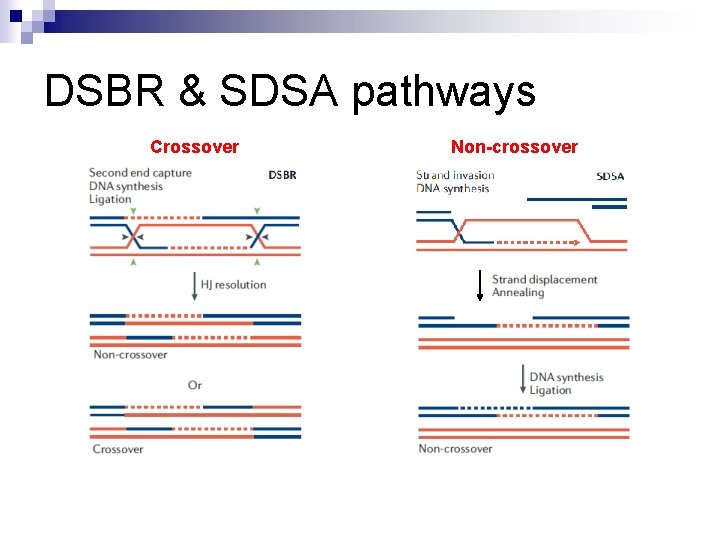
DSBR & SDSA pathways Crossover Non-crossover

Holliday Junction
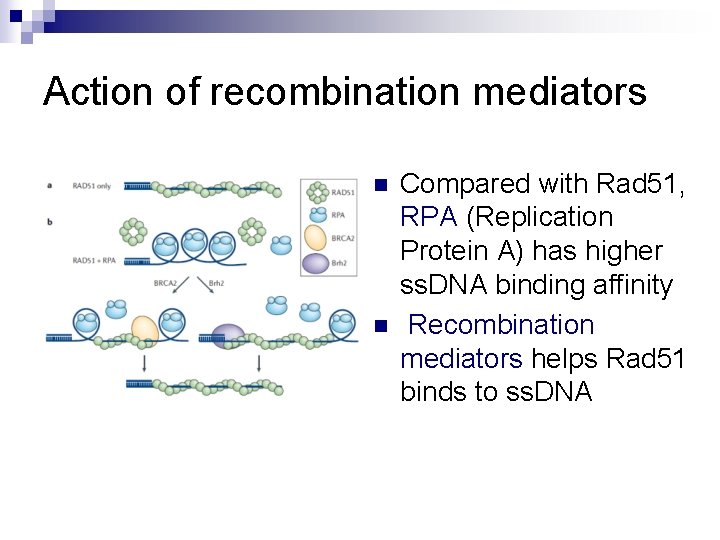
Action of recombination mediators n n Compared with Rad 51, RPA (Replication Protein A) has higher ss. DNA binding affinity Recombination mediators helps Rad 51 binds to ss. DNA
Regulation of recombination If crossover happens among repetitive DNA sequences, chromosome translocation can occur. n HR can also interfere post-replication repair, which result into prolonged activation of DNA-damage checkpointmediated cell cycle arrest. n
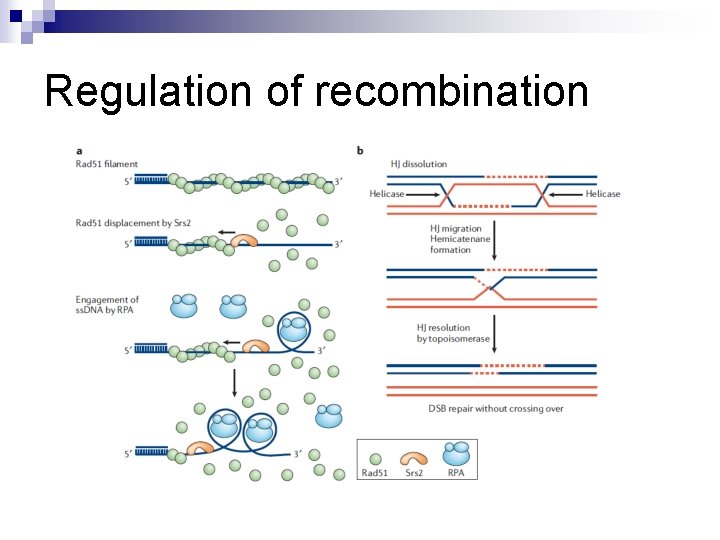
Regulation of recombination
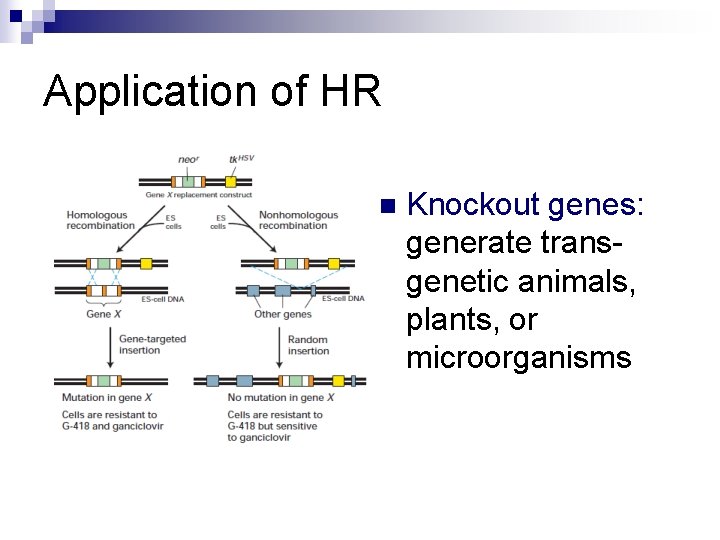
Application of HR n Knockout genes: generate transgenetic animals, plants, or microorganisms
Reference n n n Patrick Sung and Hannah Klein (2006). Mechanism of homologous recombination: mediators and helicases take on regulatory functions. Nature Reviews Mol. Cell Biol. 7, 739 -750. http: //en. wikipedia. org/wiki/Homologous_recombination Lodish et al. , (2007) Molecular Cell Biology, 6 th, W. H. Freeman and Company n Jeremy M. Berg (2007) Biochemistry 6 th, W. H. Freeman and Company
? ? ? ? ? ? ? Thank you!
- Slides: 15