
Mechanism of Behavior Hormones and Behavior of Animals
Mechanism of Behavior Hormones and Behavior of Animals in response to Hormones
Introduction Hormones are chemical messengers released from endocrine glands that travel through the blood system to influence the nervous system to regulate behaviors such as aggression, mating, and parenting of individuals.
HOW HORMONES EFFECT ANIMAL BEHAVIOR? Changes in external or internal v stimuli causes hormonal changes and release. v Endocrine glands secrete hormones which cause emotional changes. v Effects on nervous system, sensory perception and effector system v Animal show social, sexual, maternal, aggressive behavior in response to hormone release.
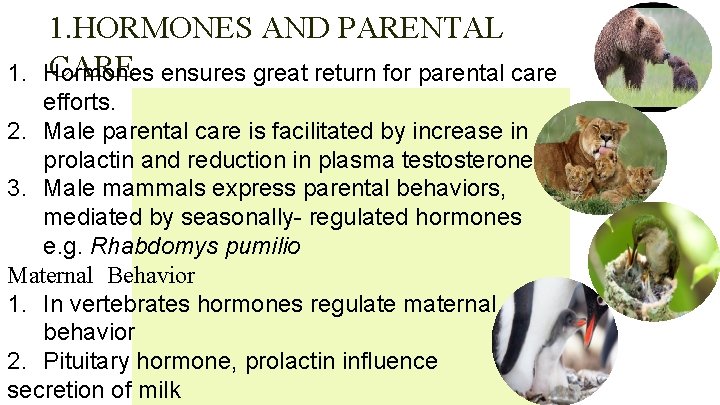
1. 1. HORMONES AND PARENTAL CARE ensures great return for parental care Hormones efforts. 2. Male parental care is facilitated by increase in prolactin and reduction in plasma testosterone. 3. Male mammals express parental behaviors, mediated by seasonally- regulated hormones e. g. Rhabdomys pumilio Maternal Behavior 1. In vertebrates hormones regulate maternal behavior 2. Pituitary hormone, prolactin influence secretion of milk
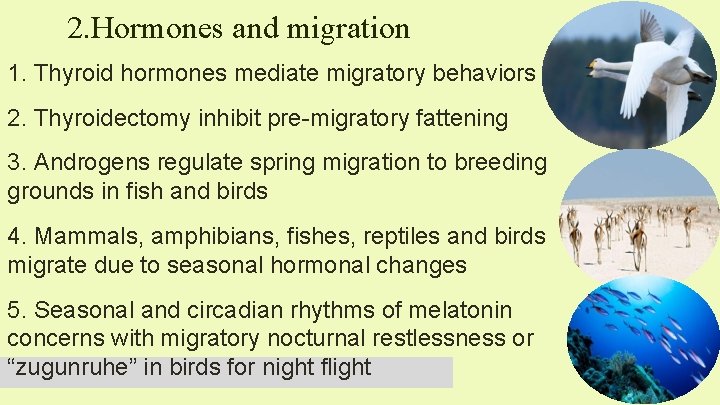
2. Hormones and migration 1. Thyroid hormones mediate migratory behaviors 2. Thyroidectomy inhibit pre-migratory fattening 3. Androgens regulate spring migration to breeding grounds in fish and birds 4. Mammals, amphibians, fishes, reptiles and birds migrate due to seasonal hormonal changes 5. Seasonal and circadian rhythms of melatonin concerns with migratory nocturnal restlessness or “zugunruhe” in birds for night flight
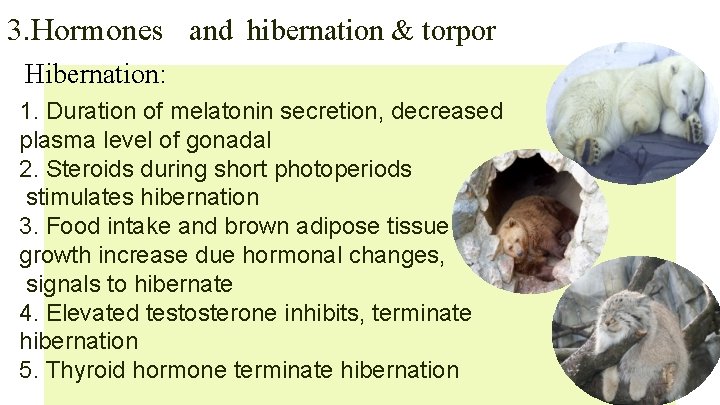
3. Hormones and hibernation & torpor Hibernation: 1. Duration of melatonin secretion, decreased plasma level of gonadal 2. Steroids during short photoperiods stimulates hibernation 3. Food intake and brown adipose tissue growth increase due hormonal changes, signals to hibernate 4. Elevated testosterone inhibits, terminate hibernation 5. Thyroid hormone terminate hibernation
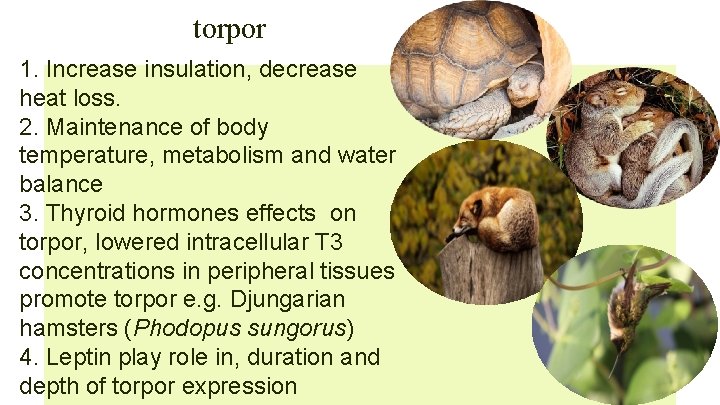
torpor 1. Increase insulation, decrease heat loss. 2. Maintenance of body temperature, metabolism and water balance 3. Thyroid hormones effects on torpor, lowered intracellular T 3 concentrations in peripheral tissues promote torpor e. g. Djungarian hamsters (Phodopus sungorus) 4. Leptin play role in, duration and depth of torpor expression
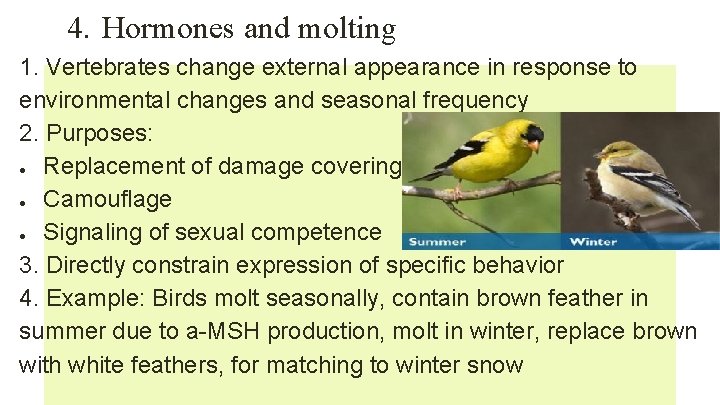
4. Hormones and molting 1. Vertebrates change external appearance in response to environmental changes and seasonal frequency 2. Purposes: ● Replacement of damage covering ● Camouflage ● Signaling of sexual competence 3. Directly constrain expression of specific behavior 4. Example: Birds molt seasonally, contain brown feather in summer due to a-MSH production, molt in winter, replace brown with white feathers, for matching to winter snow
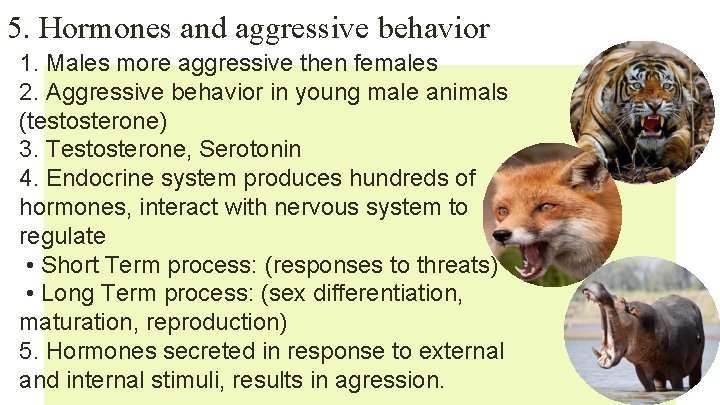
5. Hormones and aggressive behavior 1. Males more aggressive then females 2. Aggressive behavior in young male animals (testosterone) 3. Testosterone, Serotonin 4. Endocrine system produces hundreds of hormones, interact with nervous system to regulate • Short Term process: (responses to threats) • Long Term process: (sex differentiation, maturation, reproduction) 5. Hormones secreted in response to external and internal stimuli, results in agression.

thanku
- Slides: 10