
Mechanism of action of Local Anesthesia Factors to







- Slides: 96
Mechanism of action of Local Anesthesia ~ Factors to be considered in the choice of particular mode of anesthesia
Learning objectives • Fundamentals of impulse generation • Mode of action of local anesthetics • Action of local anesthetic agents on nerve membrane • Kinetics of onset of local anesthesia • Pharmacokinetics of local anesthetic drugs 2
Definition “Loss of sensation in a circumscribed area of the body caused by a depression of excitation in nerve endings or an inhibition of the conduction process in peripheral nerves” It produces loss of sensation without loss of consciousness 3
Impulse Generation 4
Electrochemistry of nerve conduction Resting potential Membrane excitation Depolarization Repolarization Membrane channels 5
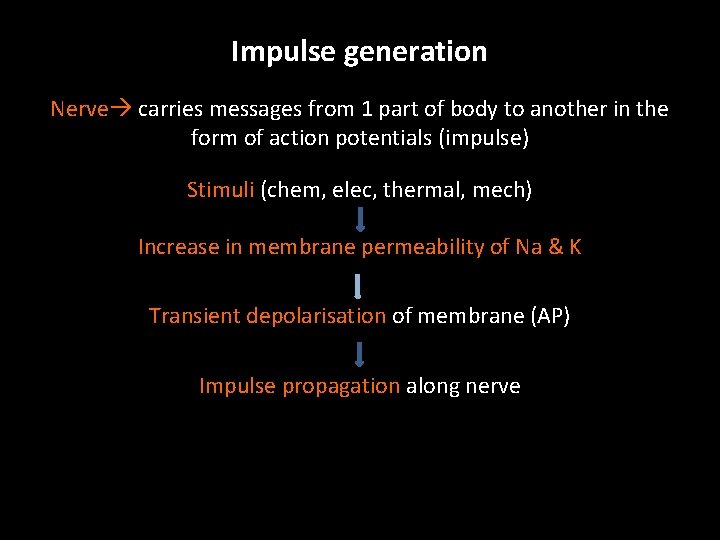
Impulse generation Nerve carries messages from 1 part of body to another in the form of action potentials (impulse) Stimuli (chem, elec, thermal, mech) Increase in membrane permeability of Na & K Transient depolarisation of membrane (AP) Impulse propagation along nerve
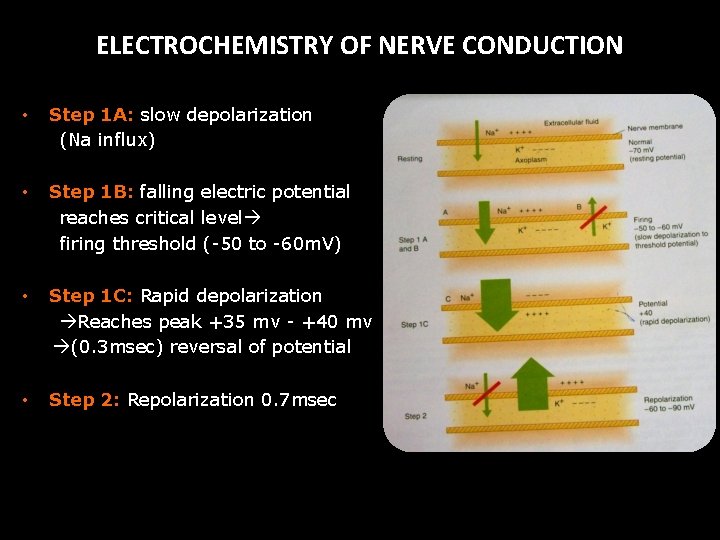
ELECTROCHEMISTRY OF NERVE CONDUCTION • Step 1 A: slow depolarization (Na influx) • Step 1 B: falling electric potential reaches critical level firing threshold (-50 to -60 m. V) • Step 1 C: Rapid depolarization Reaches peak +35 mv - +40 mv (0. 3 msec) reversal of potential • Step 2: Repolarization 0. 7 msec
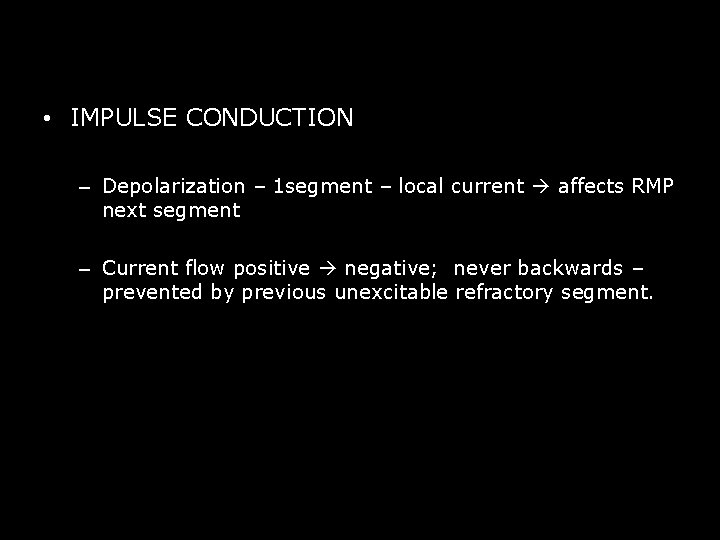
• IMPULSE CONDUCTION – Depolarization – 1 segment – local current affects RMP next segment – Current flow positive negative; never backwards – prevented by previous unexcitable refractory segment.
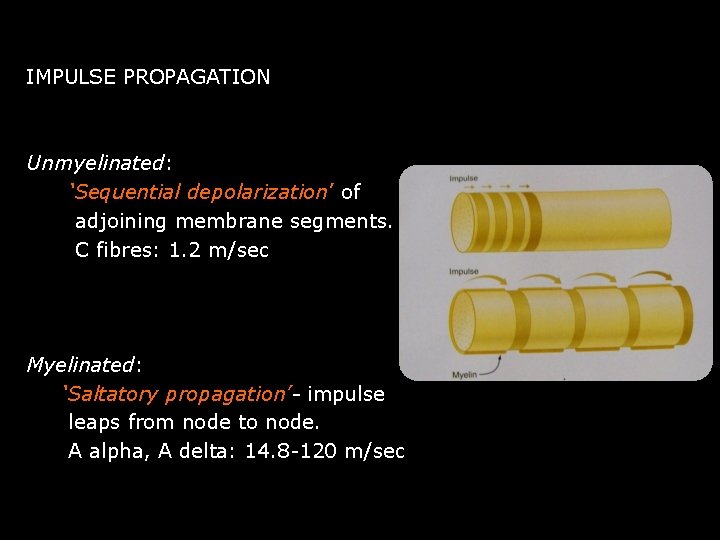
IMPULSE PROPAGATION Unmyelinated: ‘Sequential depolarization’ of adjoining membrane segments. C fibres: 1. 2 m/sec Myelinated: ‘Saltatory propagation’- impulse leaps from node to node. A alpha, A delta: 14. 8 -120 m/sec
How do local anesthetics work? Where do local anesthetics work? 10
Modes of action • Altering the basic resting potential of the nerve membrane • Altering the threshold potential • Decreasing the rate of depolarization • Prolonging the rate of repolarization 11
Theories of local anesthesia • The Acetylcholine theory • The Calcium displacement theory • The Surface charge (repulsion) theory • The Membrane expansion theory • The Specific receptor theory 12
The Acetylcholine theory “In addition to its role as a neurotransmitter at nerve synapses, acetylcholine is also involved in nerve conduction” • There is no evidence to support the role of acetylcholine in conduction along the body of neuron 13
The Calcium displacement theory “Local anesthetic nerve block was produced by the displacement of calcium from the membrane site that controlled permeability to sodium” • Evidence shows that varying the concentration of calcium ions around the nerve does not affect the local anesthetic potency 14
The Surface charge (repulsion) theory “Local anesthetics acts by binding to the nerve membrane and changing the electrical potential at the membrane surface” • Current evidence suggests that the resting potential of the nerve membrane is unaltered by local anesthetics • Also this theory could not explain the activity of uncharged molecules (e. g. Benzocaine) in blocking nerve conduction 15
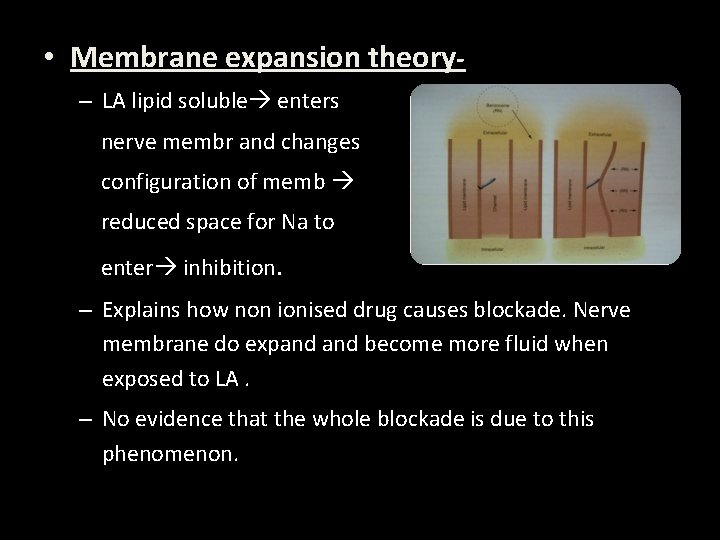
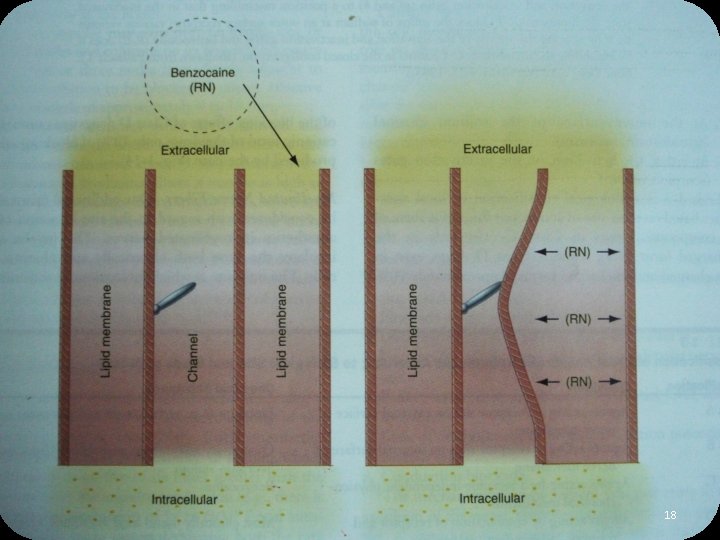
The Membrane expansion theory “The local anesthetic molecules diffuse to the hydrophobic regions of excitable membranes, producing a disturbance of the bulk membrane structure, expanding some critical regions, and decreasing permeability to sodium” 16
• Membrane expansion theory– LA lipid soluble enters nerve membr and changes configuration of memb reduced space for Na to enter inhibition. – Explains how non ionised drug causes blockade. Nerve membrane do expand become more fluid when exposed to LA. – No evidence that the whole blockade is due to this phenomenon.
18
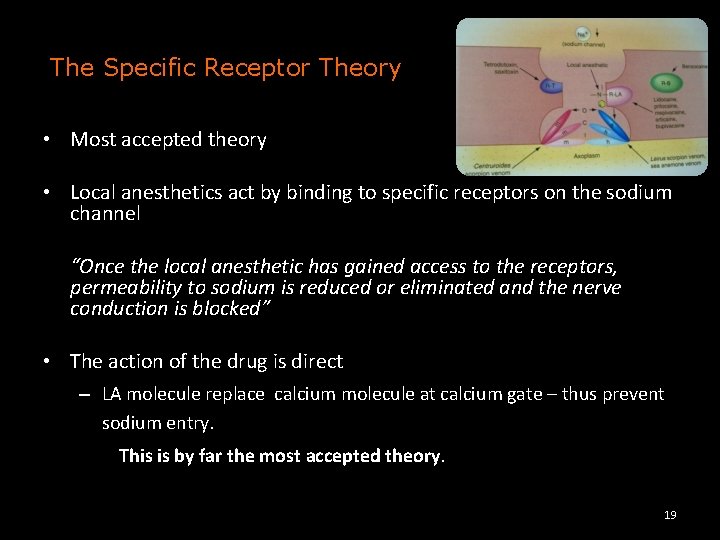
The Specific Receptor Theory • Most accepted theory • Local anesthetics act by binding to specific receptors on the sodium channel “Once the local anesthetic has gained access to the receptors, permeability to sodium is reduced or eliminated and the nerve conduction is blocked” • The action of the drug is direct – LA molecule replace calcium molecule at calcium gate – thus prevent sodium entry. This is by far the most accepted theory. 19
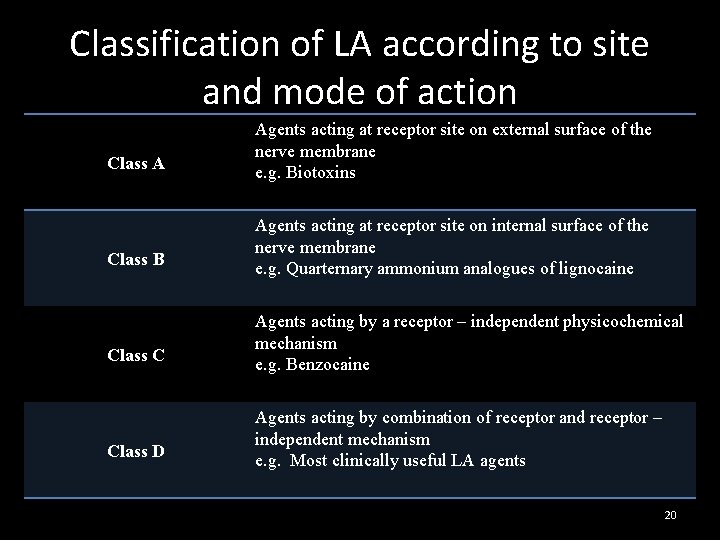
Classification of LA according to site and mode of action Class A Class B Class C Class D Agents acting at receptor site on external surface of the nerve membrane e. g. Biotoxins Agents acting at receptor site on internal surface of the nerve membrane e. g. Quarternary ammonium analogues of lignocaine Agents acting by a receptor – independent physicochemical mechanism e. g. Benzocaine Agents acting by combination of receptor and receptor – independent mechanism e. g. Most clinically useful LA agents 20
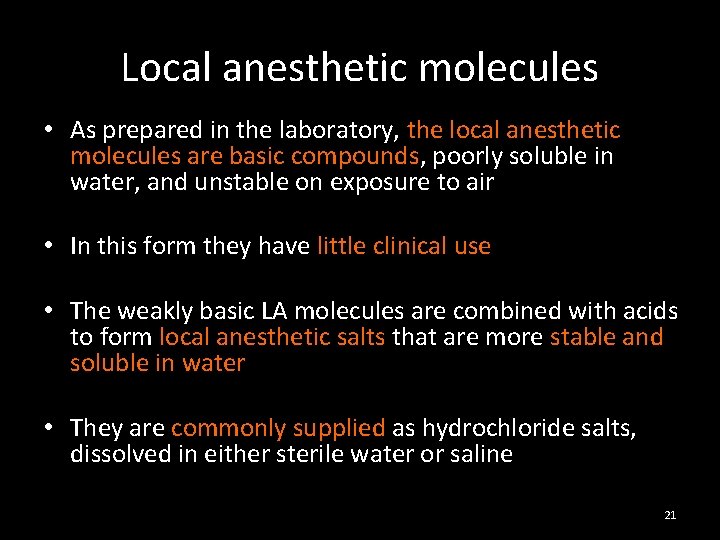
Local anesthetic molecules • As prepared in the laboratory, the local anesthetic molecules are basic compounds, poorly soluble in water, and unstable on exposure to air • In this form they have little clinical use • The weakly basic LA molecules are combined with acids to form local anesthetic salts that are more stable and soluble in water • They are commonly supplied as hydrochloride salts, dissolved in either sterile water or saline 21
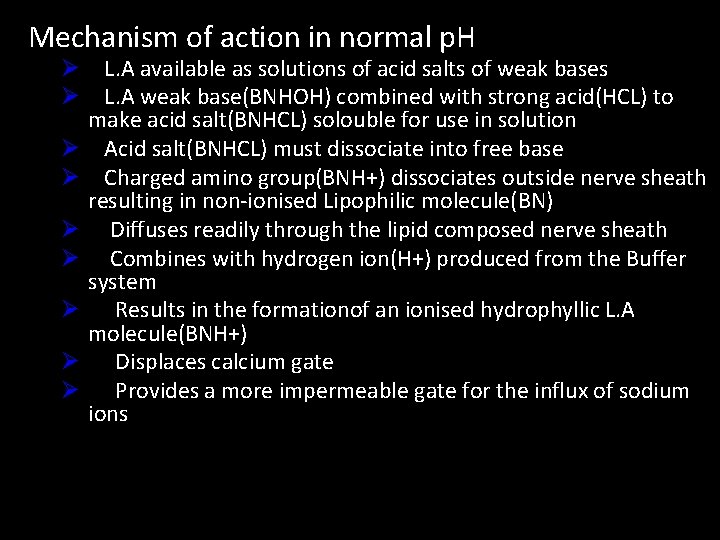
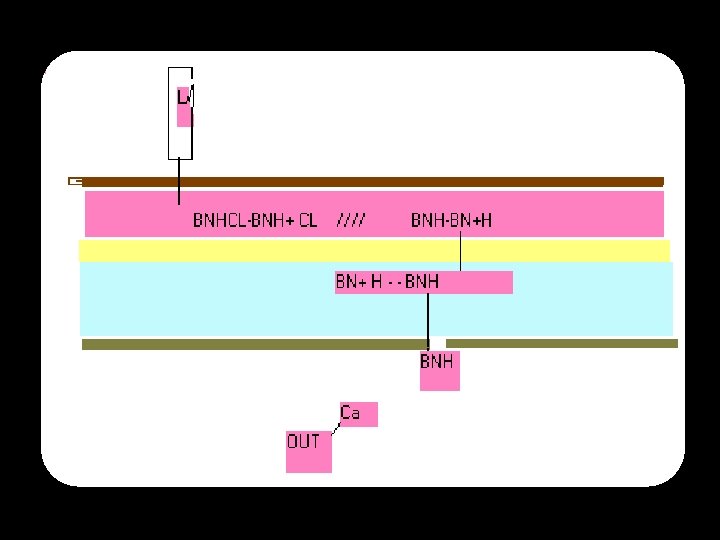
Mechanism of action in normal p. H Ø L. A available as solutions of acid salts of weak bases Ø L. A weak base(BNHOH) combined with strong acid(HCL) to make acid salt(BNHCL) solouble for use in solution Ø Acid salt(BNHCL) must dissociate into free base Ø Charged amino group(BNH+) dissociates outside nerve sheath resulting in non-ionised Lipophilic molecule(BN) Ø Diffuses readily through the lipid composed nerve sheath Ø Combines with hydrogen ion(H+) produced from the Buffer system Ø Results in the formationof an ionised hydrophyllic L. A molecule(BNH+) Ø Displaces calcium gate Ø Provides a more impermeable gate for the influx of sodium ions
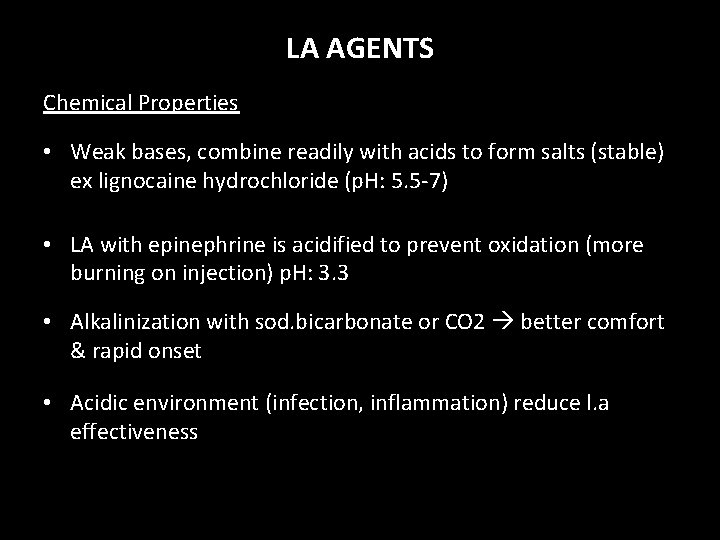
LA AGENTS Chemical Properties • Weak bases, combine readily with acids to form salts (stable) ex lignocaine hydrochloride (p. H: 5. 5 -7) • LA with epinephrine is acidified to prevent oxidation (more burning on injection) p. H: 3. 3 • Alkalinization with sod. bicarbonate or CO 2 better comfort & rapid onset • Acidic environment (infection, inflammation) reduce l. a effectiveness
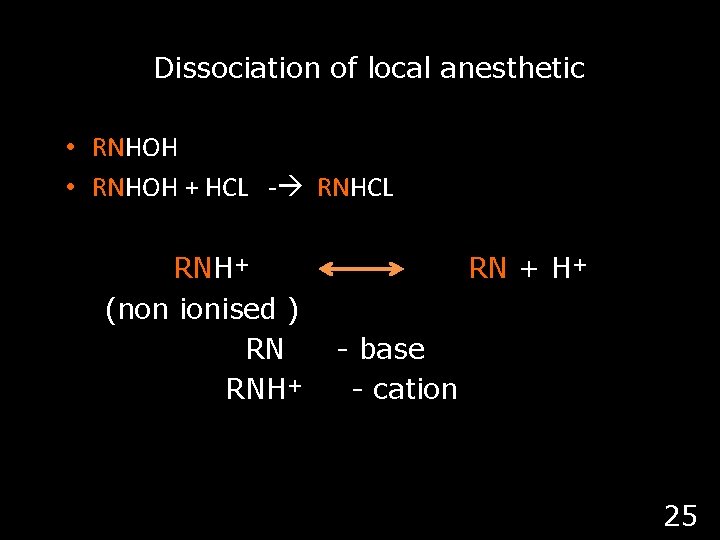
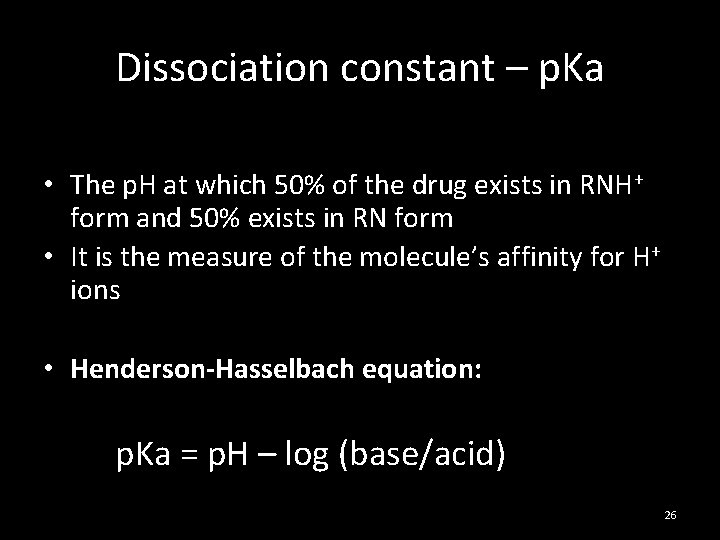
Dissociation of local anesthetic • RNHOH + HCL - RNHCL RNH+ (non ionised ) RN RNH+ RN + H+ - base - cation 25
Dissociation constant – p. Ka • The p. H at which 50% of the drug exists in RNH+ form and 50% exists in RN form • It is the measure of the molecule’s affinity for H+ ions • Henderson-Hasselbach equation: p. Ka = p. H – log (base/acid) 26
Action on nerve membrane 27
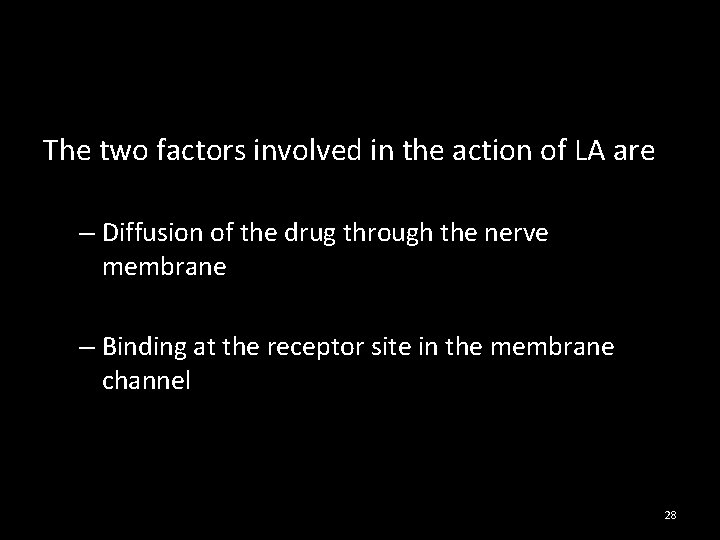
The two factors involved in the action of LA are – Diffusion of the drug through the nerve membrane – Binding at the receptor site in the membrane channel 28
Kinetics of LA action 29
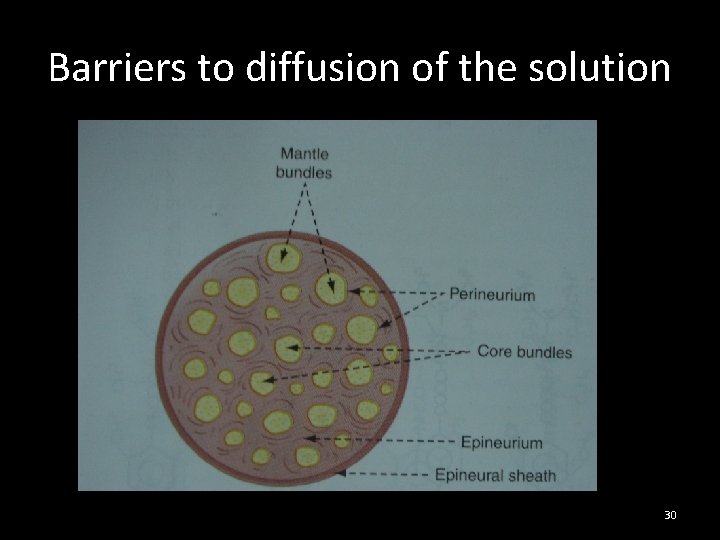
Barriers to diffusion of the solution 30
Induction of local anesthesia • The drug moves from its site of deposition toward the nerve as well as all possible directions along their concentration gradient – Diffusion • Factors affecting induction of anesthesia are: – Diffusion – Blocking process – Physical properties of the drug 31
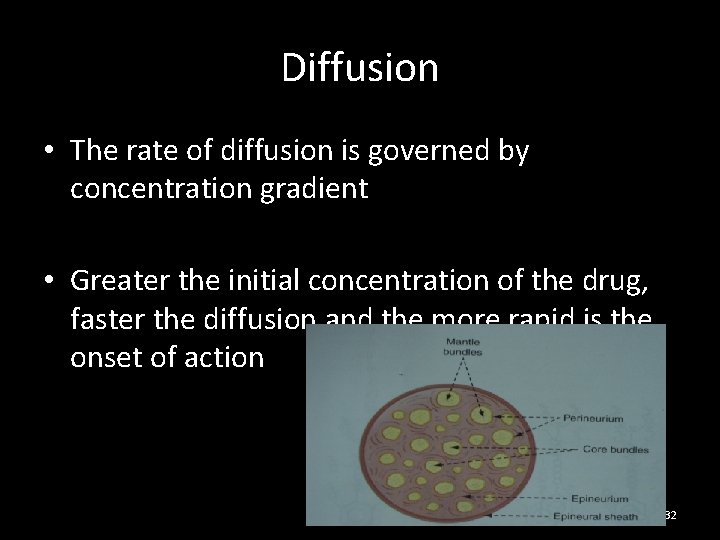
Diffusion • The rate of diffusion is governed by concentration gradient • Greater the initial concentration of the drug, faster the diffusion and the more rapid is the onset of action Dr. Sudheesh 32
Blocking process • Absorption of the drug by adjacent non neural tissues • Dilution of the drug by interstitial fluid • Some of the drug is removed by capillaries and lymphatics from the injection site • Ester type drugs are hydrolyzed by choline esterases 33
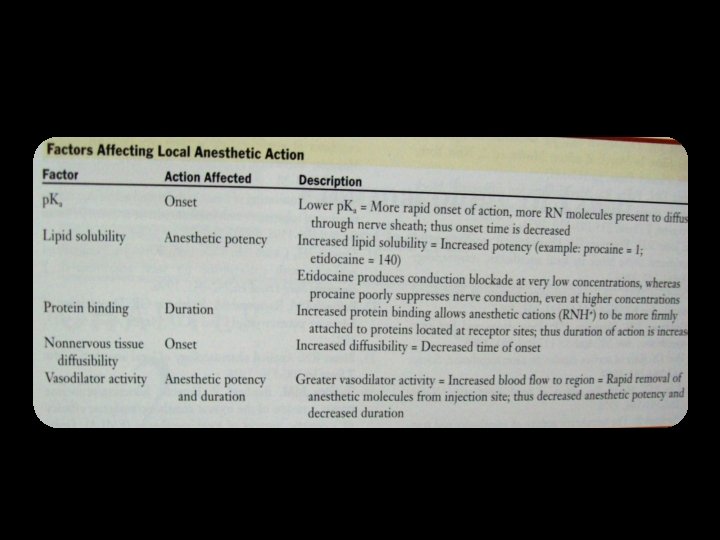
Physical properties of the drug and clinical action • Dissociation constant • Lipid solubility • Protein binding • Vasoactivity 34
Recovery of local anesthetic block • Reverse order of induction • The extraneural concentration of drug is continually depleted whereas the intraneural concentration remains stable • This results in reversal of concentration gradient and the molecules start diffusing out of the nerve • Recovery is slower than induction as the molecules are bound to the receptors on the sodium channels 35
Pharmacokinetics of local anesthetics 36
Uptake • Most agents are vasodilators except cocaine • Oral Route: poorly absorbed from GIT (except cocaine) & undergo hepatic 1 st pass metabolism • Topical route: – ineffective on intact skin (EMLA) – Rapid absorption from tracheal mucosa, slower in pharyngeal & bladder mucosa – Used in sunburns (Solarcaine) • Injection: – I. V: rapid absorption, ventricular dysrythmias Distribution • Largest concentration in skeletal muscles
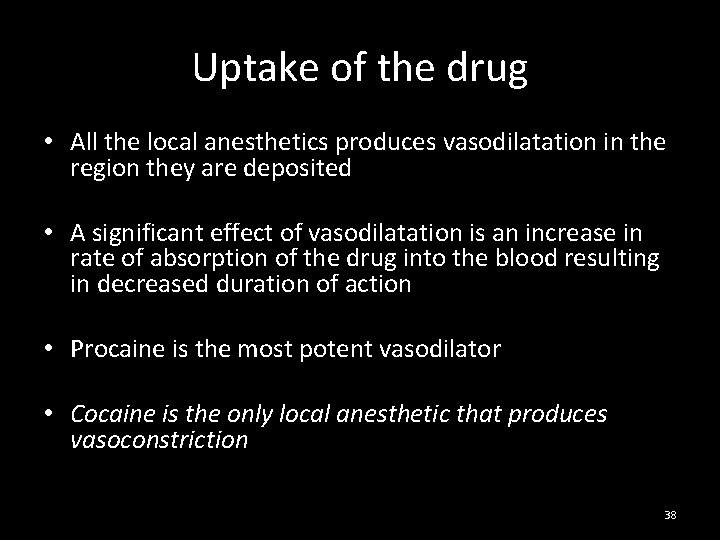
Uptake of the drug • All the local anesthetics produces vasodilatation in the region they are deposited • A significant effect of vasodilatation is an increase in rate of absorption of the drug into the blood resulting in decreased duration of action • Procaine is the most potent vasodilator • Cocaine is the only local anesthetic that produces vasoconstriction 38
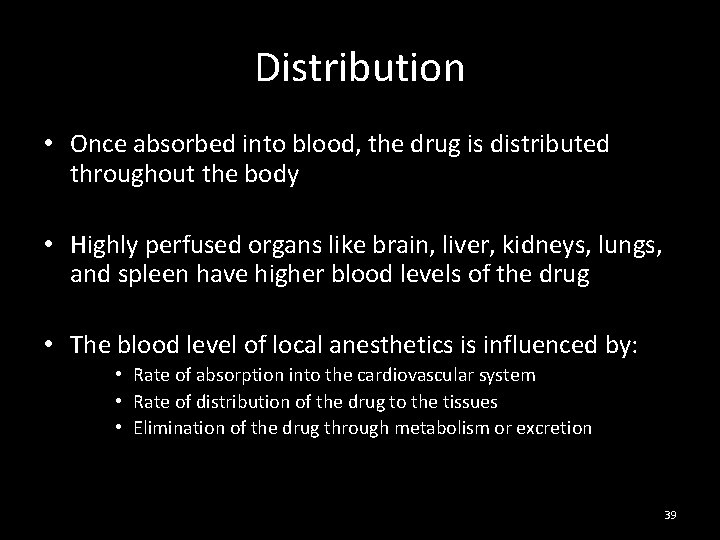
Distribution • Once absorbed into blood, the drug is distributed throughout the body • Highly perfused organs like brain, liver, kidneys, lungs, and spleen have higher blood levels of the drug • The blood level of local anesthetics is influenced by: • Rate of absorption into the cardiovascular system • Rate of distribution of the drug to the tissues • Elimination of the drug through metabolism or excretion 39
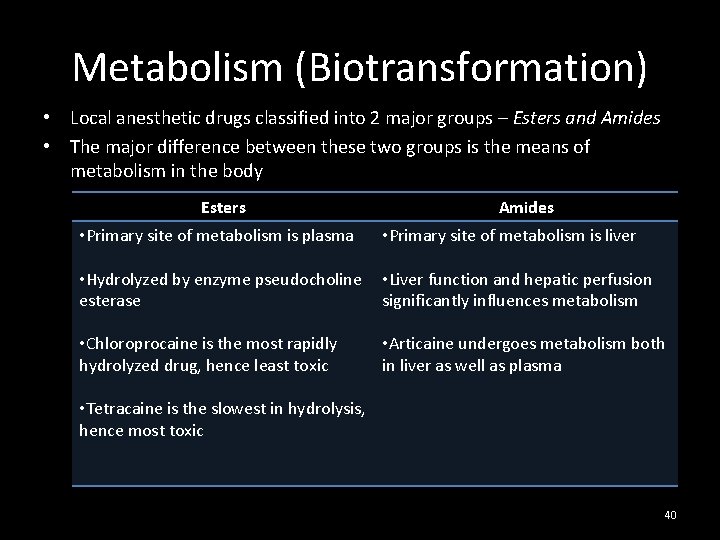
Metabolism (Biotransformation) • Local anesthetic drugs classified into 2 major groups – Esters and Amides • The major difference between these two groups is the means of metabolism in the body Esters Amides • Primary site of metabolism is plasma • Primary site of metabolism is liver • Hydrolyzed by enzyme pseudocholine esterase • Liver function and hepatic perfusion significantly influences metabolism • Chloroprocaine is the most rapidly hydrolyzed drug, hence least toxic • Articaine undergoes metabolism both in liver as well as plasma • Tetracaine is the slowest in hydrolysis, hence most toxic 40
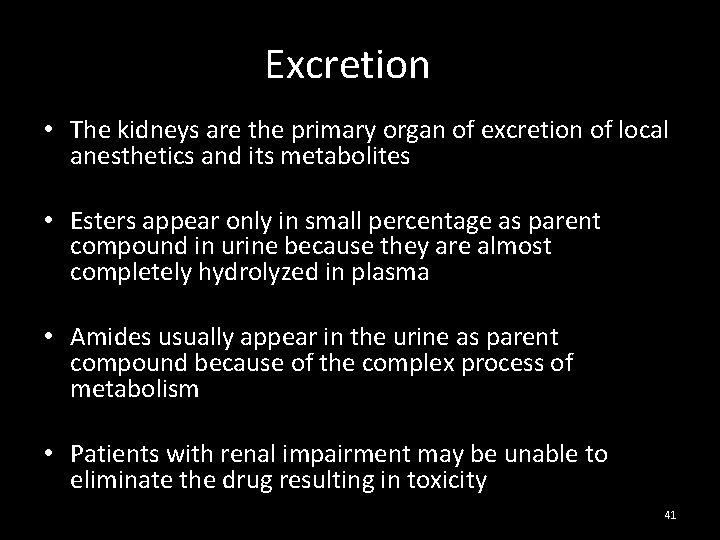
Excretion • The kidneys are the primary organ of excretion of local anesthetics and its metabolites • Esters appear only in small percentage as parent compound in urine because they are almost completely hydrolyzed in plasma • Amides usually appear in the urine as parent compound because of the complex process of metabolism • Patients with renal impairment may be unable to eliminate the drug resulting in toxicity 41
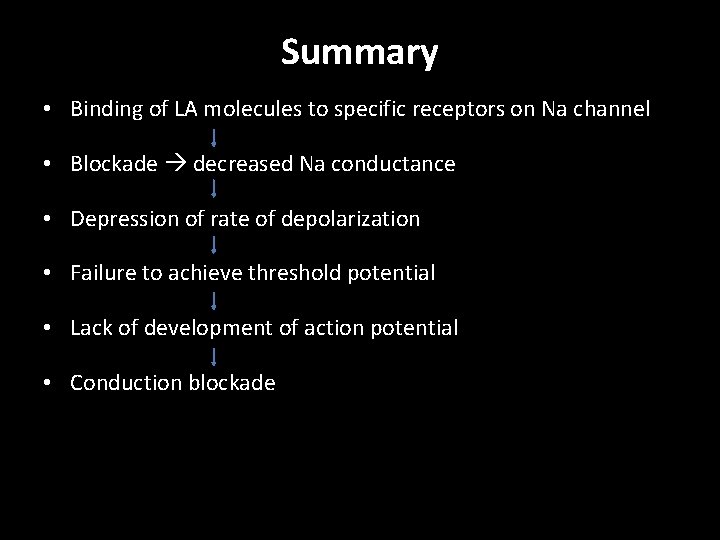
Summary • Binding of LA molecules to specific receptors on Na channel • Blockade decreased Na conductance • Depression of rate of depolarization • Failure to achieve threshold potential • Lack of development of action potential • Conduction blockade
Factors to be considered in selection of anesthesia
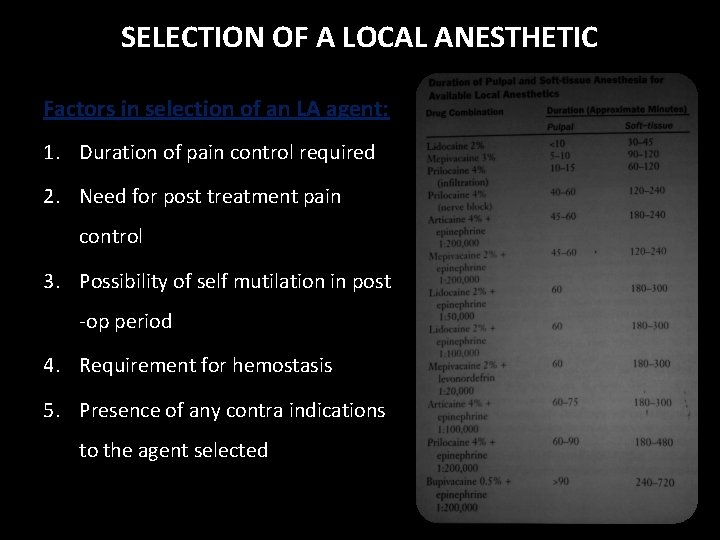
SELECTION OF A LOCAL ANESTHETIC Factors in selection of an LA agent: 1. Duration of pain control required 2. Need for post treatment pain control 3. Possibility of self mutilation in post -op period 4. Requirement for hemostasis 5. Presence of any contra indications to the agent selected
Introduction • No surgeon is a great surgeon. He/she is great if he/she manages the patient well and provide proper treatment and do proper justice to the patient condition. • Anesthesia being an integral part of surgery helps in managing the patient in a proper and easy way. • Use of local and general anesthesia advents long back to the 16 th century. • With enormous research and advancement it has nowadays become easy for managing the patient.
• For LA different type of blocks and infiltration are used depending on the condition. • Yet the clinician should have an proper idea in which case what technique should be used. • For mobile tooth where infiltration can be used yet for some difficult procedure field/nerve block should be used. • Apart from all this medical condition of the patient should also be kept in mind.
• The use of LA led to a considerable amount of problem like: • Bitter metallic taste • Tingling and numbness over a long period. • Ringing of ears, lightheadedness, toxicity, allergy and confusion in case of toxicity. • Yet the role of LA cannot be ruled out because till date it provides excellent results and its ease of use many major and minor surgeries are still done under LA.
• With the advent of general anesthesia procedures have become much easier and complications have reduced. • Yet what appears so easy needs proper planning and selection of patient for proper management.
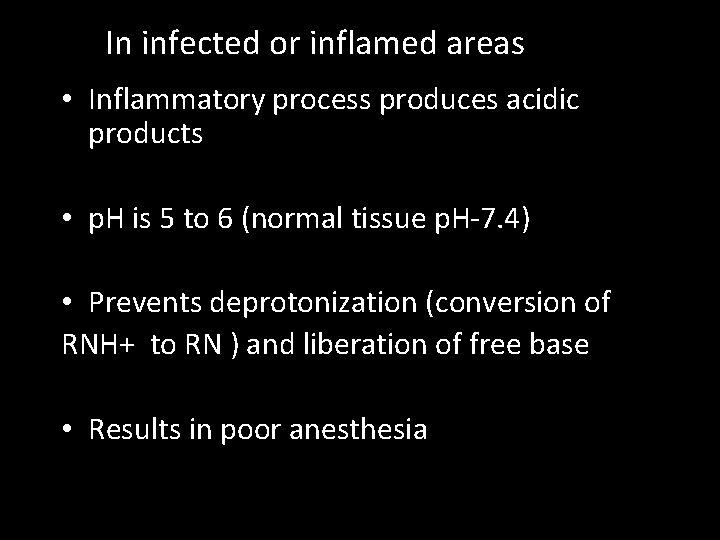
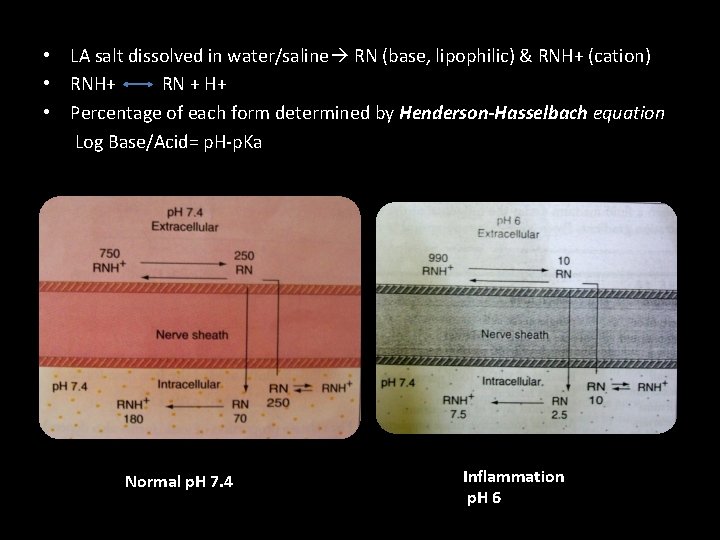
In infected or inflamed areas • Inflammatory process produces acidic products • p. H is 5 to 6 (normal tissue p. H-7. 4) • Prevents deprotonization (conversion of RNH+ to RN ) and liberation of free base • Results in poor anesthesia
• LA salt dissolved in water/saline RN (base, lipophilic) & RNH+ (cation) • RNH+ RN + H+ • Percentage of each form determined by Henderson-Hasselbach equation Log Base/Acid= p. H-p. Ka Normal p. H 7. 4 Inflammation p. H 6
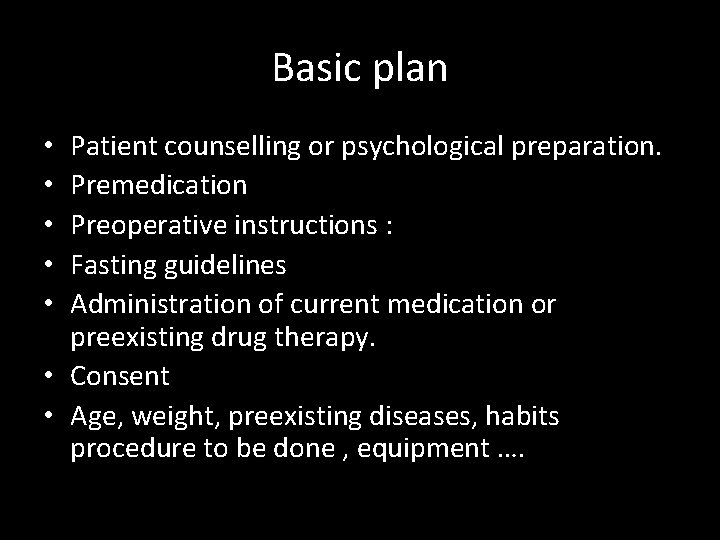
Basic plan Patient counselling or psychological preparation. Premedication Preoperative instructions : Fasting guidelines Administration of current medication or preexisting drug therapy. • Consent • Age, weight, preexisting diseases, habits procedure to be done , equipment …. • • •
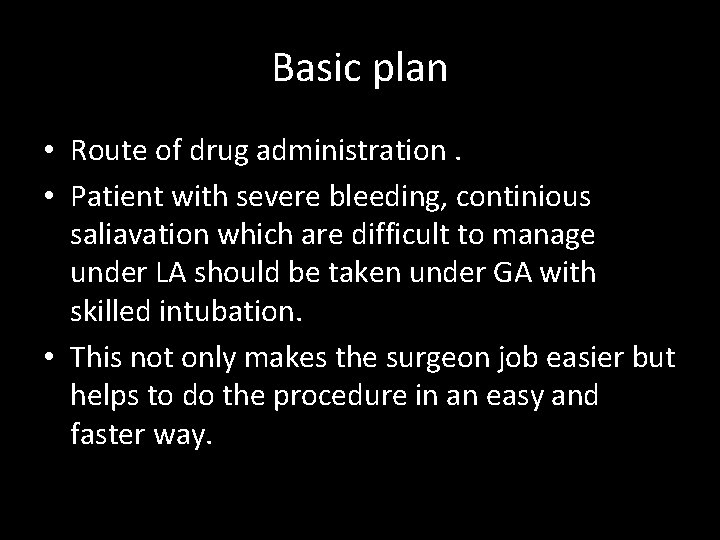
Basic plan • Route of drug administration. • Patient with severe bleeding, continious saliavation which are difficult to manage under LA should be taken under GA with skilled intubation. • This not only makes the surgeon job easier but helps to do the procedure in an easy and faster way.
Types of local anesthesia : • Surface anesthesia: • It is topical application of LA to mucous membrane and abraded skin. • Superficial area is anesthesied. • Lignocaine commonly used for mucous membrane of skin , nose, ear, eye , mouth, pharynx. • Also during proctoscopy, catherization, per rectal examination.
• Lignocaine is ineffective in intact skin. • A mixture of 5% prilocaine and 5% lignocaine in the ratio 1: 1 can be used. • Eutectic mixture. • Oxethazaine (mucaine) can be used to provide symptomatic relief in gastritis.
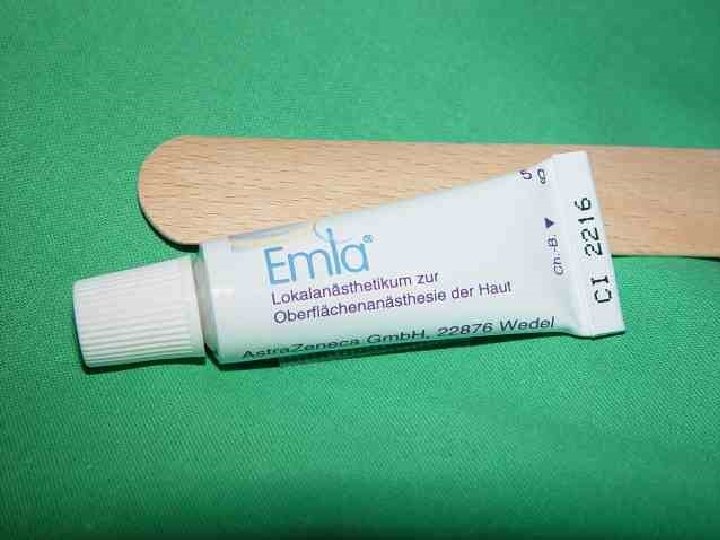
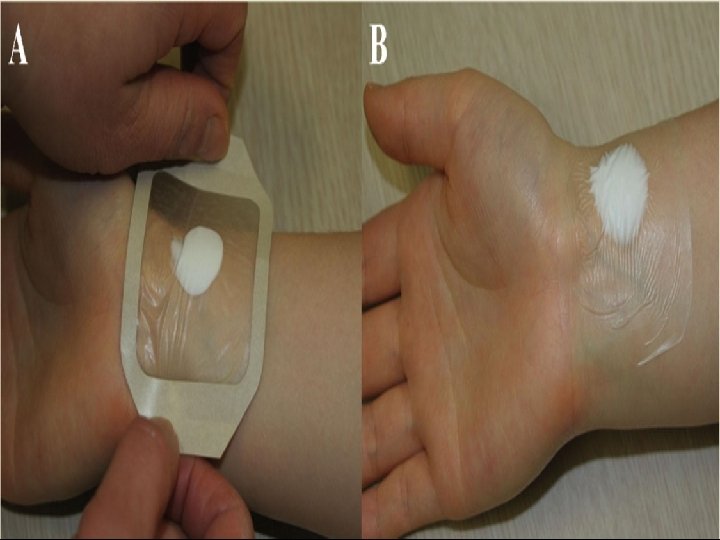
EMLA • Eutectic mixture of local anesthesia. • It is a mixture of 2. 5% lidocaine and 2. 5% prilocaine in an emulsion in which oil phase is a eutectic mixture of lidocaine and prilocaine in the ratio of 1: 1 by weight. • This mixture has a melting point below room temperature and therefore both local anesthetics exist as a liquid oil rather than crystals.
Uses Dermal anesthesia Intravenous catheter insertion Superficial surgical procedures Topical anesthesia for cleansing and debridement • Numbing of skin before tatooing and laser hair removal. • Children • •
Complications Severe burning, stinging and sensitivity. Swelling or redness. Sudden dizziness and sleepiness. Burning or purple appearance of skin. Precautions: Proper allergy history Medical condition like blood disorder ( methemoglobinemia) • G 6 PD def, heart disease, kidney and liver disease. • •
Infiltration anesthesia: • LA is infiltrated S. C. in the area of operation site for blocking the sensory nerve endings. • Minor surgeries like: • Incisions • Excisions • Suturing • Adrenaline can be added to LA to prolong action.
Nerve block: • LA is injected around the nerve block supplying a particular area to anesthetize all the nerve that is coming out or leaving that perticular area. • It involves block of head and neck, intraoral, thorax abdomen, upper limbs and lower limbs.
Field block : • It consists of injecting LA in close proximity to the larger terminal nerve branches so that the area to be anesthetized is walled off or circumscribed to prevent the central passage o afferent impulses. • It should be deposited above the root.
Intraligamentary technique: • The injection technique intended to provide single tooth anesthesia consists of forcing the anesthetic solution under pressure into the periodontal membrane space of maxillary and mandibular teeth. • Indicated in hemophillic patients.
• Field block and nerve block are contraindicated in case of hemophillic patients. • Max dose of LA with adrenaline is 7 mg/kg and 4 mg/kg without adrenaline. • In case of liver disease ester group of local anesthetic agents are used.
• The use of epinephrine soaked gingival retraction cords is contraindicated in cocaine abusers. • In hyperthyroid patients adrenaline free LA is used.
• In case of allergy to LA anti-histaminics like diphenylepihydramine (benadryl) can be used. • It is injected in 1. 5 -2 ml (15 -20 mg) will produce anesthesia for 30 mins. • In case of methyl paraben allergy which is used as a preservative in LA Capryllhydrocuprienotoxin can be used. • In case of adrenaline as a vasoconstrictor felypressin can be used.
• Previously adrenaline free LA was used in case of hypertensive patients but recent studies show LA with adrenaline can be used.
Indications of GA • Young children when multiple extractions are planned in different quadrants. • Extensive conservative procedures in young children along with surgical procedure. • Uncooperative patients , those who are mentally subnormal, physical infirmity, enough to be uncontrollable under local anesthesia e. g. spastics. • Appherensive patients who are unable to cooperate in local anesthesia.
Indications of GA • Acute infective conditions where local anesthesia work ineffectively in ludwig’s angina, oedema in floor of mouth. • Major surgical procedure ( orthognathic , neck dissections , trauma patients etc ) • Allergy to local anesthesia. • Failure of sedation.
Conscious sedation • It is a state of mind obtained by IV administration of combination of anxiolytics , sedatives, hypnotics, or analgesics that render patient relaxed yet allows the patient to communicate , maintain patent airway and ventilate adequately. • Indicated in short surgical procedure like wound debridement and suturing, uncooperative patients and patients requiring procedure but not fit for GA.
Deep sedation • It is a depressed level of consciousness with some blunting of protective reflexes , altough it remains possible to arouse the patients. • The ideal sedative medication for use during dental practice would provide for an easily titratable level of sedation , predictable amnesia and decreased anxiety while providing for a rapid recovery with minimal side effects.
Intravenous sedation • Professor Jogrenson used diluted solution of phenobarbitone, pethidine and hyoscine by slow IV route. • It was later followed my midazolam and diazepam. • Many drugs are used nowadays for IV sedation:
Agents • • Sedatives , hypnotics and anti-anxiety drugs: Benzodiazepines: diazepam, midazolam. Barbiturates : methohexitone. Nonbarbiturate hypnotics: Propofol , ketamine. Innovar ( droperidol and fentanyl comibination ) Anti-histaminics : promethazine. Narcotic agonists : pethidine , pentazocine , fentanyl.
Advantages • • Highly effective technique. Rapid action. Titration possible. Patent vein safety factor. Control of salivary secretions. Nausea vomiting less. Gag reflex diminished. Motor disturbances (epilepsy, cerebral plasy) diminished.
Disadvantages • Venepuncture is necessary. • Venepuncture complications ( infiltration, hematoma, thrombophlebitis )may occur. • More intensive monitoring required. • Escort needed. • NOTE : I. V. SEDATION TECHNIQUES MAY PRODUCE MAJOR DEPRESSION OF CARDIORESPIRATORY PARAMETERS IT IS TO BE ADMINISTERED BY TRAINED PROFESSIONALS.
Inhalation anesthesia • First practiced by LANGA in 1966. • In this gasses are used to achieve anesthesia. • As induction takes place patients are transferred from one plane to another. • Planes classification was given by GUEDELS> • Plane 1 : moderate analgesia and moderate sedation. • Plane 2: sedation is dissociation and there is greater amount of analgesia ( dissociative analgesia)
• Plane 3 : total analgesia. • Major surgical procedure are done in plane 3. • These gasses are stored in specific colour coded cylinders and PIN INDEX SYSTEM for safety. • Nitrous oxide: blue • Cyclopropane : orange. • Oxygen : black body with white shoulder • Carbon dioxide: grey. • Entonox : blue body with white shoulders.
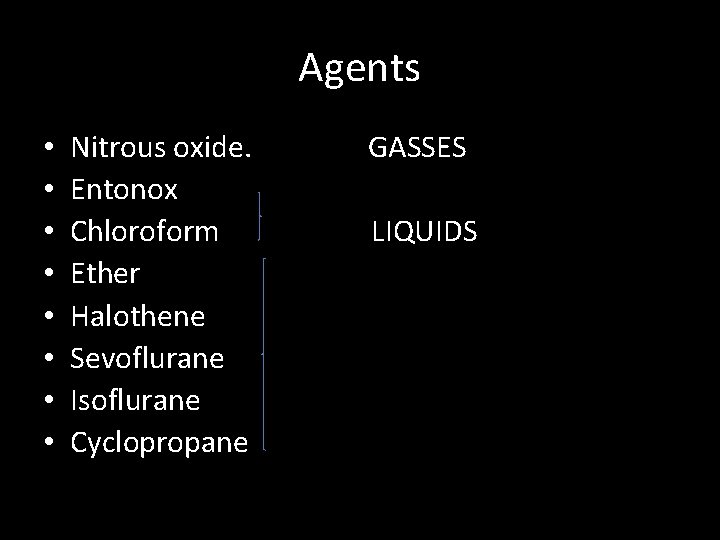
Agents • • Nitrous oxide. Entonox Chloroform Ether Halothene Sevoflurane Isoflurane Cyclopropane GASSES LIQUIDS
Indications • • Uncooperative children of reasoning age. Mildly apprehensive adult patients. Medically compromised patients. Patients with gagging problems.
Contraindications • • • Patient with extreme anxiety. Nasal obstruction , sinus problem. Upper respiratory tract infections. Serious psychiatric problems. COPD ( they have chronically elevated carbon dioxide levels and the stimulus for breathing in these patients is a lowered blood oxygen content. oxygen enriched mixture of gasses with inhalation sedation technique raises the oxygen saturation of blood and removes the stimulus for involuntary breathing leading to aponea in patients)
Advantages • • • Easy to administer. Onset of action is rapid. Rapid uptake and elimination. Wide margin of safety. Cardio respiratory stability. Titration possible.
Disadvantages. • • • Equipment expensive. Difficult setup. Testing the equipment for leaks. Venting of waste gasses. Analysis in periodic time.
Choice • • • Ischemic heart disease: etomidate. Left to right shunt : isoflurane. Right to left shunt: ketamine CHF: ketamine. Shock : ketamine. To produce deliberate hypotension: isoflurane. Asthma and COPD: ketamine Epilepsy : thiopentone. Electroconvulsive therapy: methohexitone.
Choice • • • Thyrotoxicosis: thiopentone. Cardiac surgery: isoflurane Neurosurgery: isoflirane. Children : halothene. Pheochromocytoma: isoflurane.
Day care surgery • Multiple extractions, conservative dental treatments, impactions, enucleation of large dental cysts, implants placement may require day care surgery. • Advantage is rapid return of home avoiding long stay in hospital while for hospital it is advantage of saving cost.
Selection • Fit and healthy patients free from cardiopulmonary disease and fitting into the category of ASA 1 and 2. • Surgery must not be expected to last for more than one hour. • No significant risk of complications like excessive bleeding, vomoting.
Agents • • Dr. – desflurane Manmohan : midazolam. Singh : sevoflurane Is : isoflurane. A: alfentanil Prime: propofol Minister : mivacurium Most accecpted today is sevoflurane.
Conclusion • Managing the patient under any type of anesthesia is a skill rather than a art. • So proper knowledge and training are primary need of a surgeon to manage complications and the subject. • Apart from this drug interactions and choice of a particular mode of anesthesia should be taken into consideration. • It’s a team work rather than a one man army……
“ Some pains are physical, some pains are mental, But the pain which is both physical and mental is…. Dental. ” Ogden Nash
Thank you
PHARMACOLOGY OF VASOCONSTRICTORS Actions: • Vasoconstriction Decreases blood flow to site of injection • Slows absorption of l. a into CVS decreases blood levels • Decreases risk of l. a toxicity • Increases the duration of action (l. a remains at injected site for longer) • Decreased bleeding at site of administration (hemostasis)
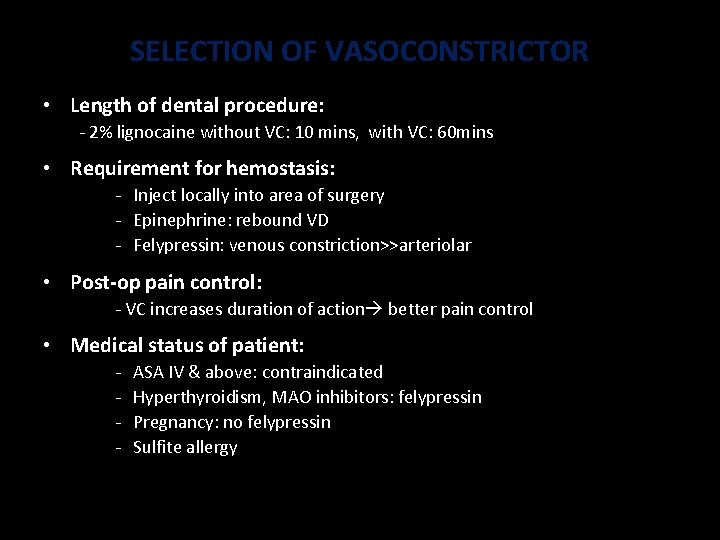
SELECTION OF VASOCONSTRICTOR • Length of dental procedure: - 2% lignocaine without VC: 10 mins, with VC: 60 mins • Requirement for hemostasis: - Inject locally into area of surgery - Epinephrine: rebound VD - Felypressin: venous constriction>>arteriolar • Post-op pain control: - VC increases duration of action better pain control • Medical status of patient: - ASA IV & above: contraindicated Hyperthyroidism, MAO inhibitors: felypressin Pregnancy: no felypressin Sulfite allergy