
MECHANICS UNITS NUMERICAL CALCULATIONS GENERAL PROCEDURE FOR ANALYSIS

- Slides: 15
MECHANICS, UNITS, NUMERICAL CALCULATIONS & GENERAL PROCEDURE FOR ANALYSIS Objectives: a) Identify what is mechanics / statics. b) Work with two types of units. c) Round the final answer appropriately. d) Apply problem solving strategies.
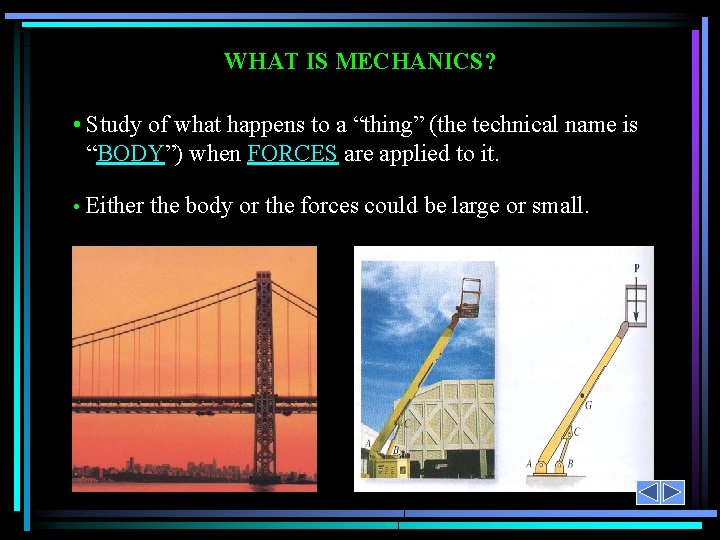
WHAT IS MECHANICS? • Study of what happens to a “thing” (the technical name is “BODY”) when FORCES are applied to it. • Either the body or the forces could be large or small.
BRANCHES OF MECHANICS
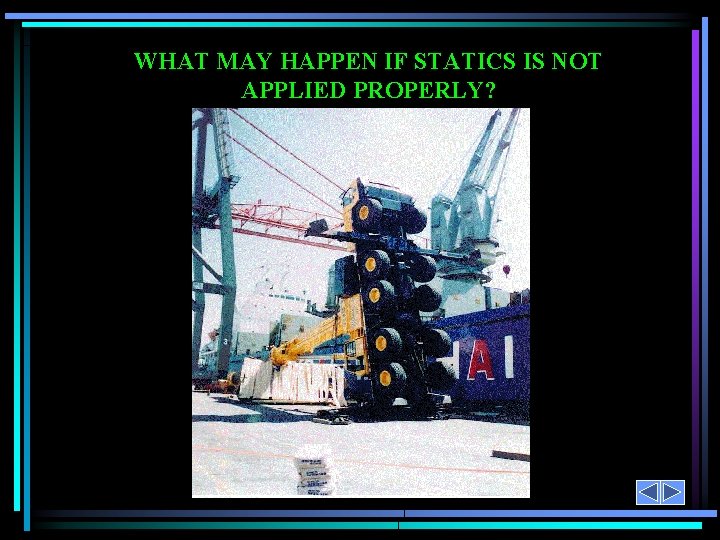
WHAT MAY HAPPEN IF STATICS IS NOT APPLIED PROPERLY?
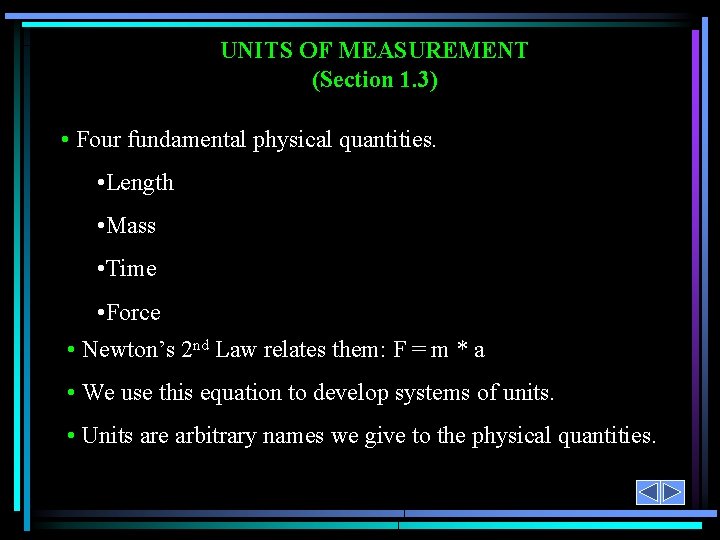
UNITS OF MEASUREMENT (Section 1. 3) • Four fundamental physical quantities. • Length • Mass • Time • Force • Newton’s 2 nd Law relates them: F = m * a • We use this equation to develop systems of units. • Units are arbitrary names we give to the physical quantities.
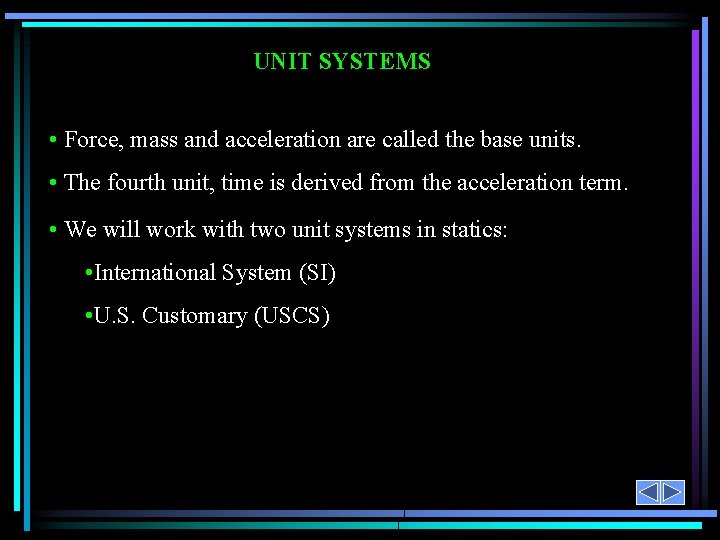
UNIT SYSTEMS • Force, mass and acceleration are called the base units. • The fourth unit, time is derived from the acceleration term. • We will work with two unit systems in statics: • International System (SI) • U. S. Customary (USCS)
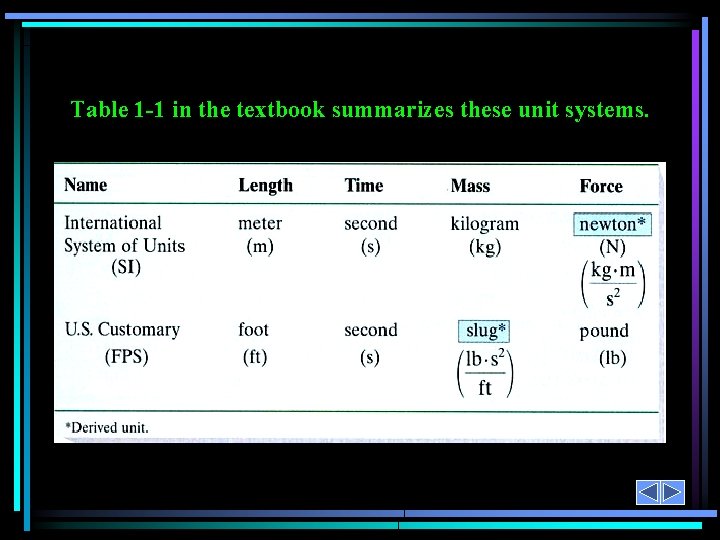
Table 1 -1 in the textbook summarizes these unit systems.
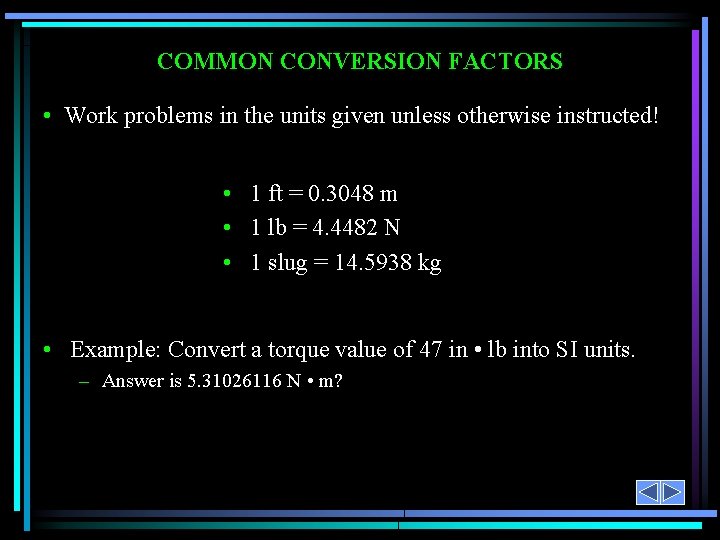
COMMON CONVERSION FACTORS • Work problems in the units given unless otherwise instructed! • 1 ft = 0. 3048 m • 1 lb = 4. 4482 N • 1 slug = 14. 5938 kg • Example: Convert a torque value of 47 in • lb into SI units. – Answer is 5. 31026116 N • m?
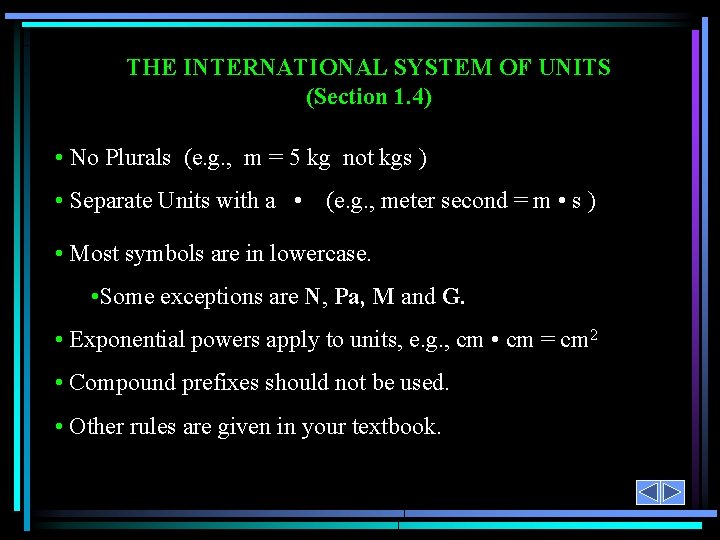
THE INTERNATIONAL SYSTEM OF UNITS (Section 1. 4) • No Plurals (e. g. , m = 5 kg not kgs ) • Separate Units with a • (e. g. , meter second = m • s ) • Most symbols are in lowercase. • Some exceptions are N, Pa, M and G. • Exponential powers apply to units, e. g. , cm • cm = cm 2 • Compound prefixes should not be used. • Other rules are given in your textbook.
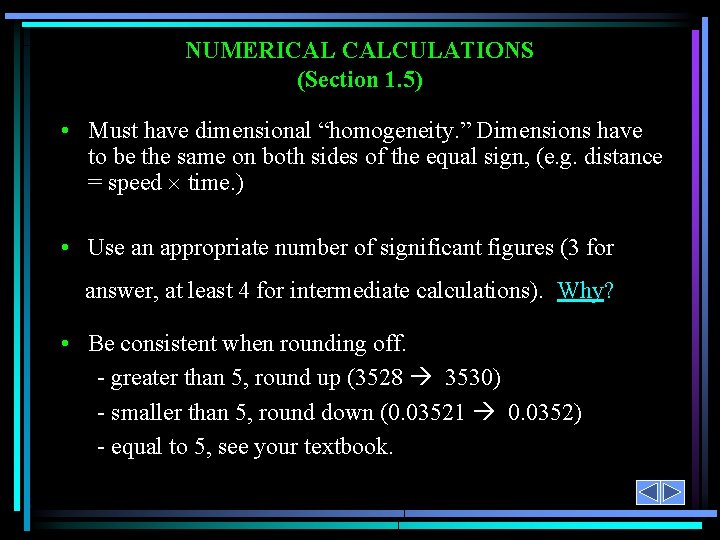
NUMERICAL CALCULATIONS (Section 1. 5) • Must have dimensional “homogeneity. ” Dimensions have to be the same on both sides of the equal sign, (e. g. distance = speed time. ) • Use an appropriate number of significant figures (3 for answer, at least 4 for intermediate calculations). Why? • Be consistent when rounding off. - greater than 5, round up (3528 3530) - smaller than 5, round down (0. 03521 0. 0352) - equal to 5, see your textbook.
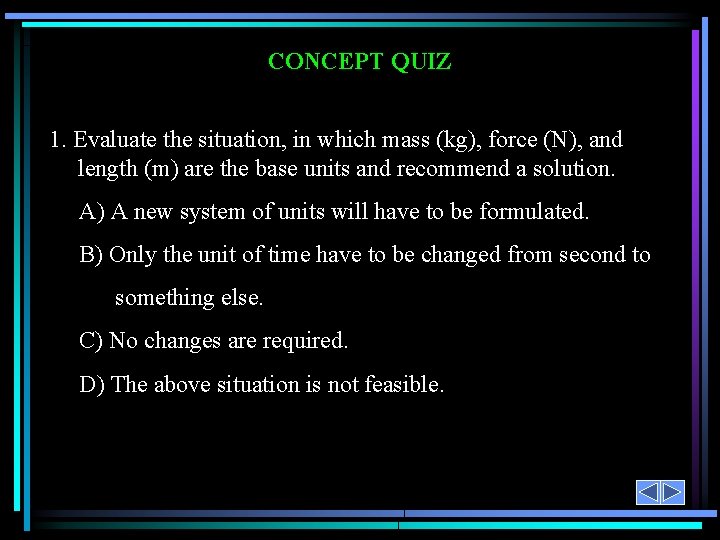
CONCEPT QUIZ 1. Evaluate the situation, in which mass (kg), force (N), and length (m) are the base units and recommend a solution. A) A new system of units will have to be formulated. B) Only the unit of time have to be changed from second to something else. C) No changes are required. D) The above situation is not feasible.
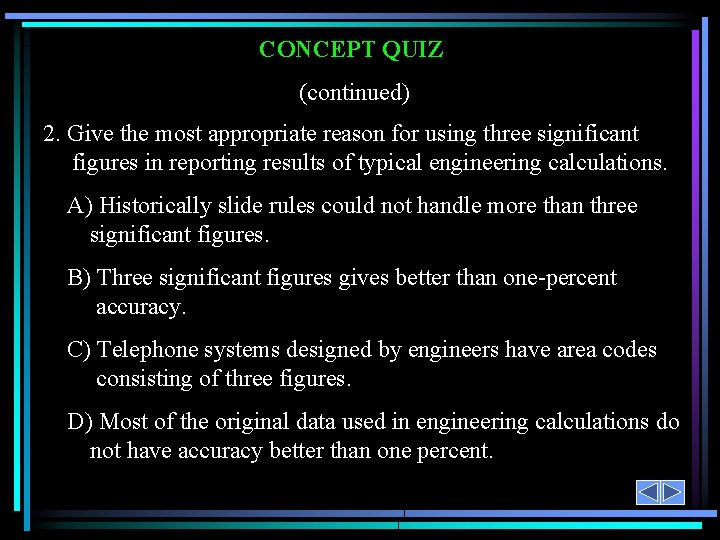
CONCEPT QUIZ (continued) 2. Give the most appropriate reason for using three significant figures in reporting results of typical engineering calculations. A) Historically slide rules could not handle more than three significant figures. B) Three significant figures gives better than one-percent accuracy. C) Telephone systems designed by engineers have area codes consisting of three figures. D) Most of the original data used in engineering calculations do not have accuracy better than one percent.
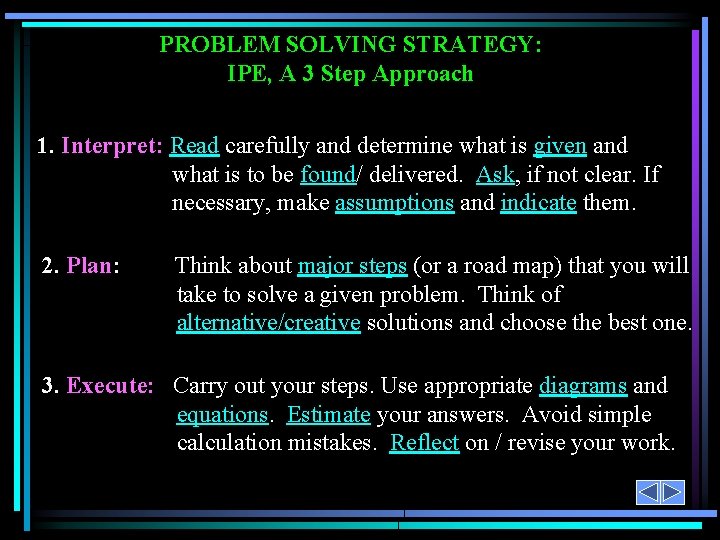
PROBLEM SOLVING STRATEGY: IPE, A 3 Step Approach 1. Interpret: Read carefully and determine what is given and what is to be found/ delivered. Ask, if not clear. If necessary, make assumptions and indicate them. 2. Plan: Think about major steps (or a road map) that you will take to solve a given problem. Think of alternative/creative solutions and choose the best one. 3. Execute: Carry out your steps. Use appropriate diagrams and equations. Estimate your answers. Avoid simple calculation mistakes. Reflect on / revise your work.
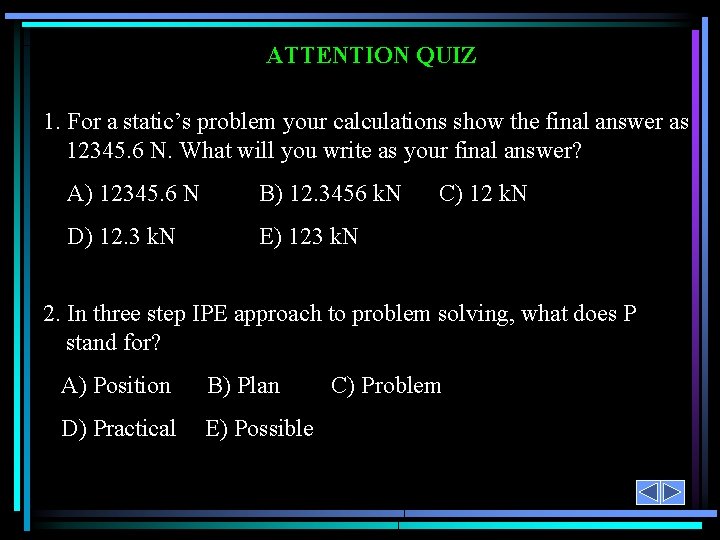
ATTENTION QUIZ 1. For a static’s problem your calculations show the final answer as 12345. 6 N. What will you write as your final answer? A) 12345. 6 N B) 12. 3456 k. N D) 12. 3 k. N E) 123 k. N C) 12 k. N 2. In three step IPE approach to problem solving, what does P stand for? A) Position B) Plan D) Practical E) Possible C) Problem