
MECHANICS OF THE ROUNDHOUSE KICK Deborah Yeh Professor
MECHANICS OF THE ROUNDHOUSE KICK Deborah Yeh Professor Rome BIOL 438 Spring 2012
What is Tae Kwon Do? • Tae Kwon Do: A Korean unarmed martial art distinguished by its emphasis on kicking techniques. • Mainly used for self-defense, but can also be a sport. • Variety of types of kicks – Position – Difficulty level – Combos
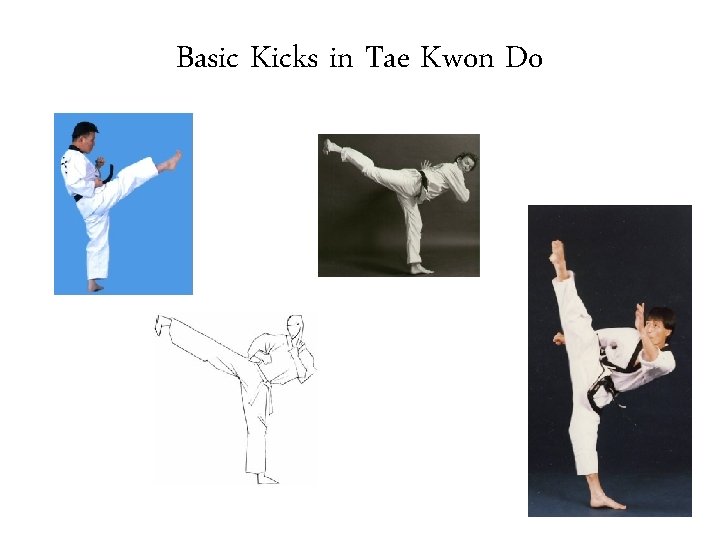
Basic Kicks in Tae Kwon Do
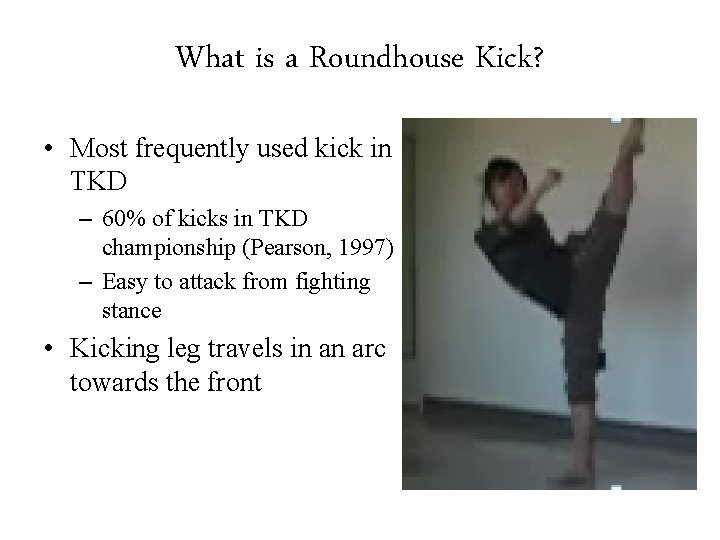
What is a Roundhouse Kick? • Most frequently used kick in TKD – 60% of kicks in TKD championship (Pearson, 1997) – Easy to attack from fighting stance • Kicking leg travels in an arc towards the front
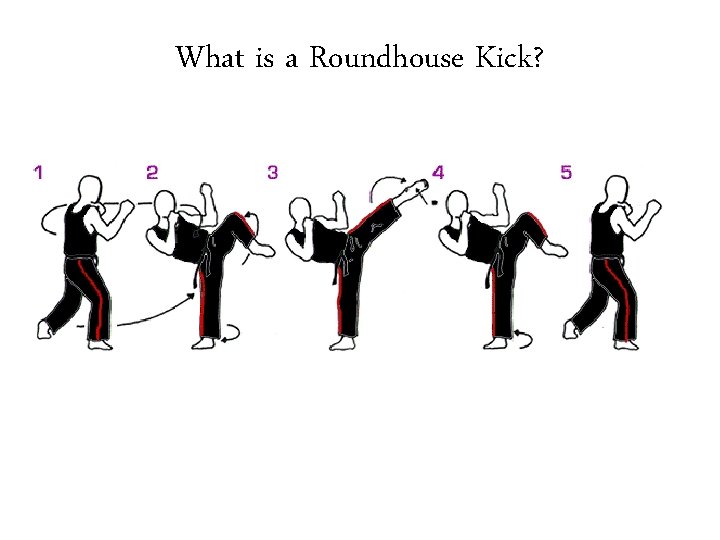
What is a Roundhouse Kick?
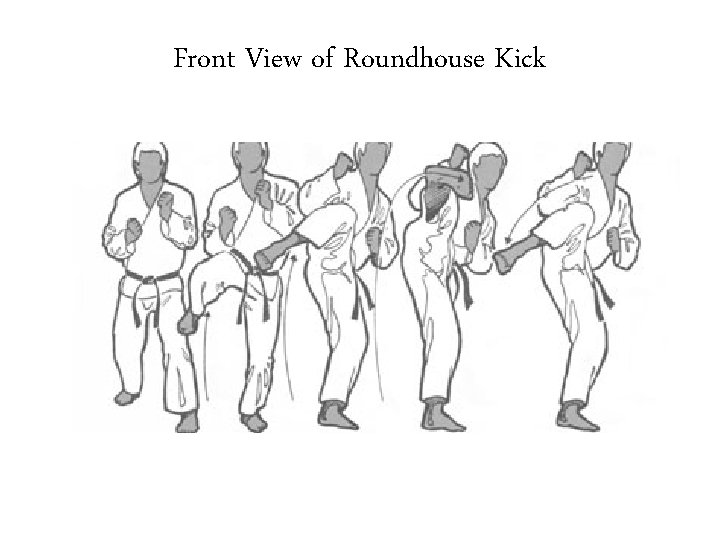
Front View of Roundhouse Kick
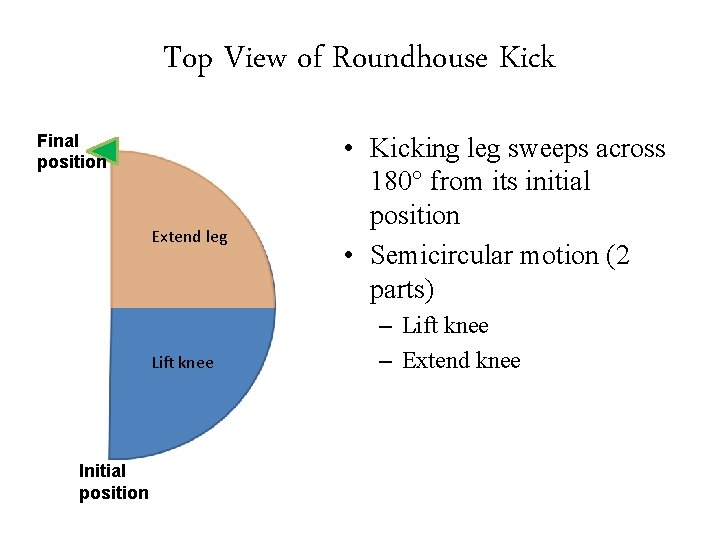
Top View of Roundhouse Kick Final position Extend leg Lift knee Initial position • Kicking leg sweeps across 180° from its initial position • Semicircular motion (2 parts) – Lift knee – Extend knee
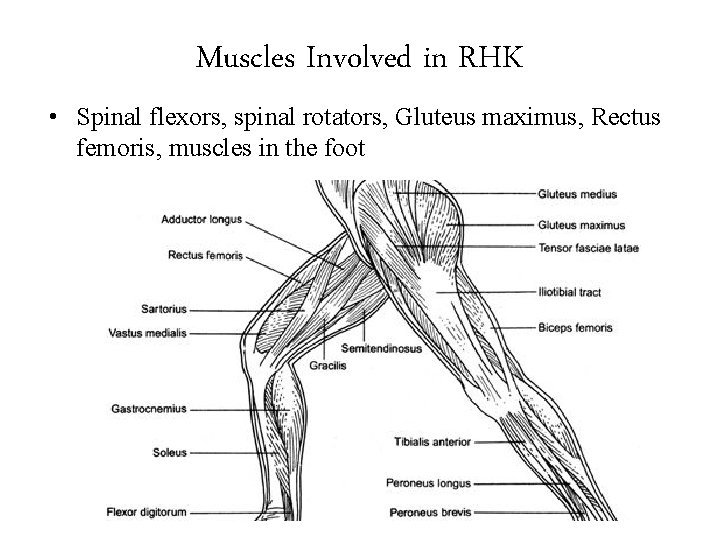
Muscles Involved in RHK • Spinal flexors, spinal rotators, Gluteus maximus, Rectus femoris, muscles in the foot
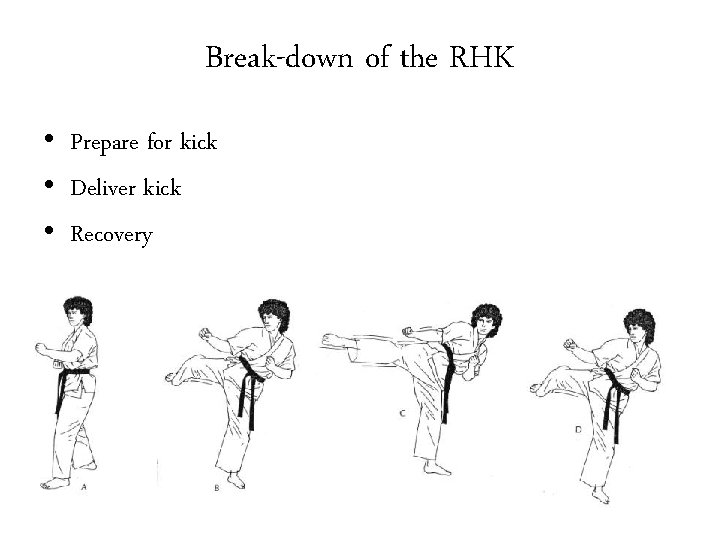
Break-down of the RHK • Prepare for kick • Deliver kick • Recovery
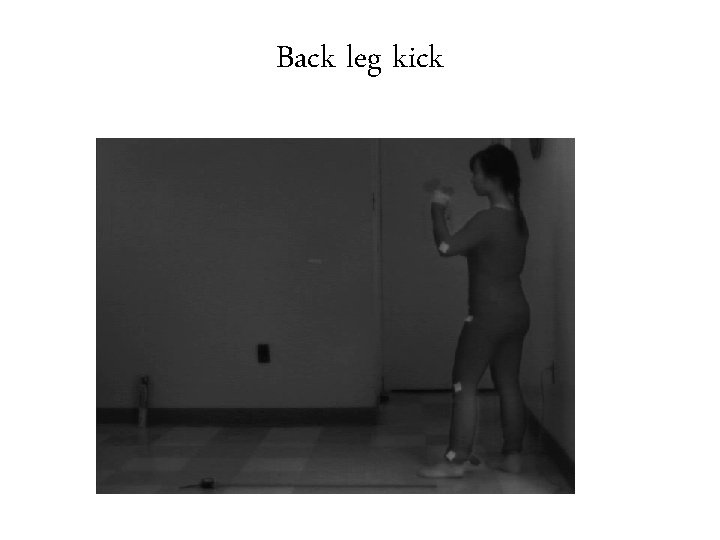
Back leg kick
Limitations • No force plate, cannot accurately measure impulse • No punching bag • Markers were sometimes difficult to see • Cannot account for 3 D motion – Describe Z axis qualitatively • Form is not perfect

Displacement vs. Time
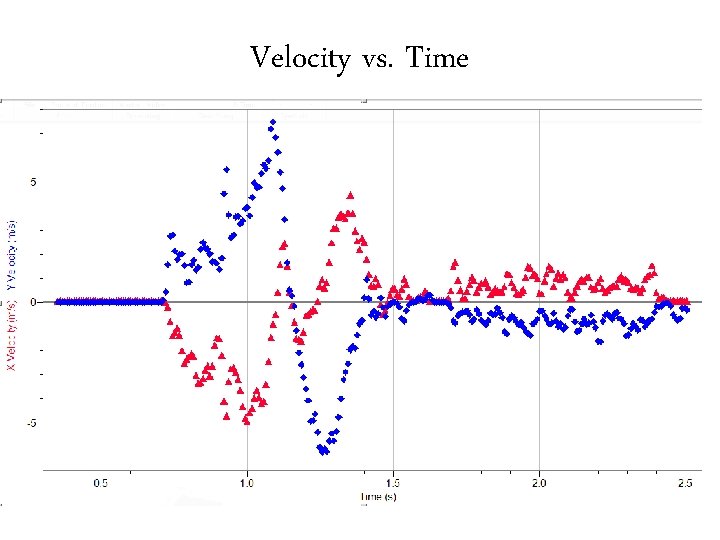
Velocity vs. Time
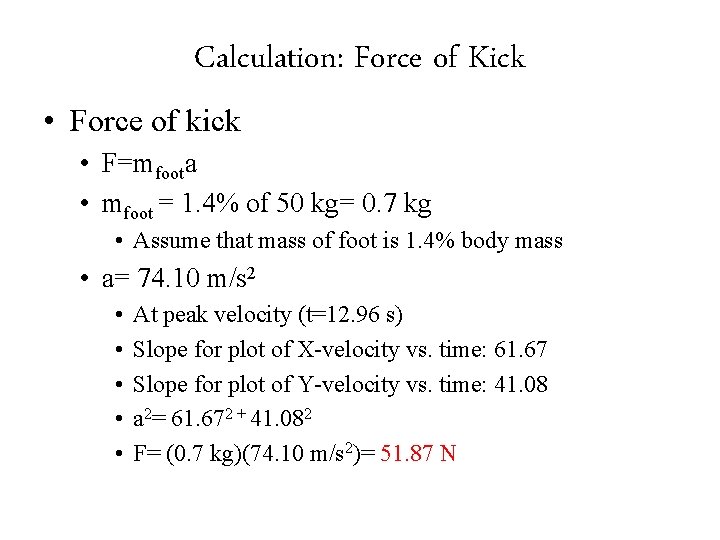
Calculation: Force of Kick • Force of kick • F=mfoota • mfoot = 1. 4% of 50 kg= 0. 7 kg • Assume that mass of foot is 1. 4% body mass • a= 74. 10 m/s 2 • • • At peak velocity (t=12. 96 s) Slope for plot of X-velocity vs. time: 61. 67 Slope for plot of Y-velocity vs. time: 41. 08 a 2= 61. 672 + 41. 082 F= (0. 7 kg)(74. 10 m/s 2)= 51. 87 N
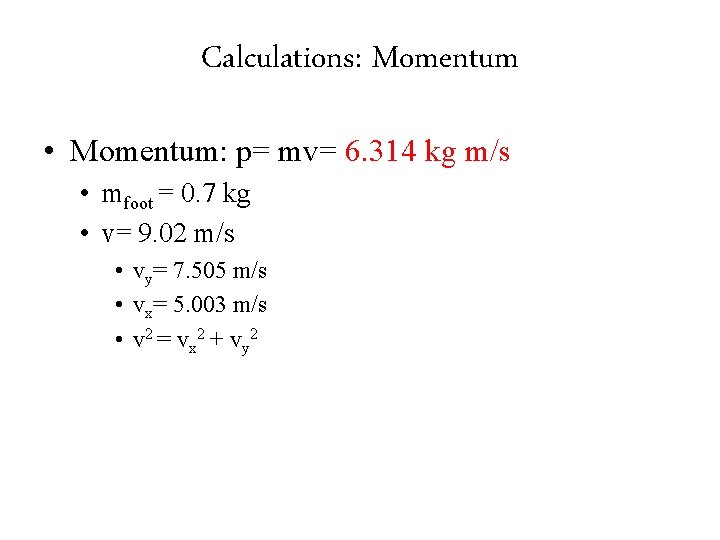
Calculations: Momentum • Momentum: p= mv= 6. 314 kg m/s • mfoot = 0. 7 kg • v= 9. 02 m/s • vy= 7. 505 m/s • vx= 5. 003 m/s • v 2 = vx 2 + vy 2
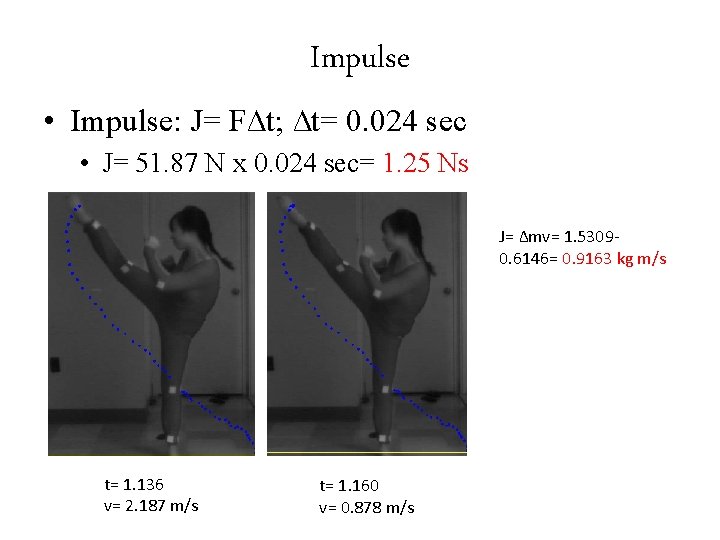
Impulse • Impulse: J= F∆t; ∆t= 0. 024 sec • J= 51. 87 N x 0. 024 sec= 1. 25 Ns J= ∆mv= 1. 53090. 6146= 0. 9163 kg m/s t= 1. 136 v= 2. 187 m/s t= 1. 160 v= 0. 878 m/s
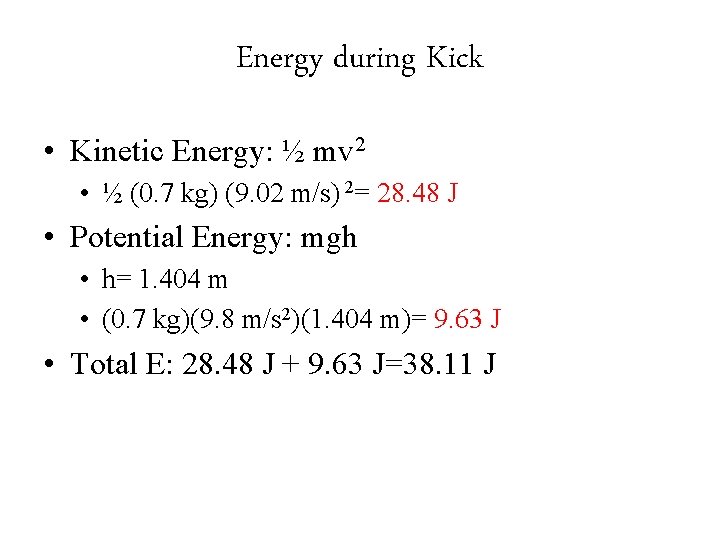
Energy during Kick • Kinetic Energy: ½ mv 2 • ½ (0. 7 kg) (9. 02 m/s) 2= 28. 48 J • Potential Energy: mgh • h= 1. 404 m • (0. 7 kg)(9. 8 m/s 2)(1. 404 m)= 9. 63 J • Total E: 28. 48 J + 9. 63 J=38. 11 J
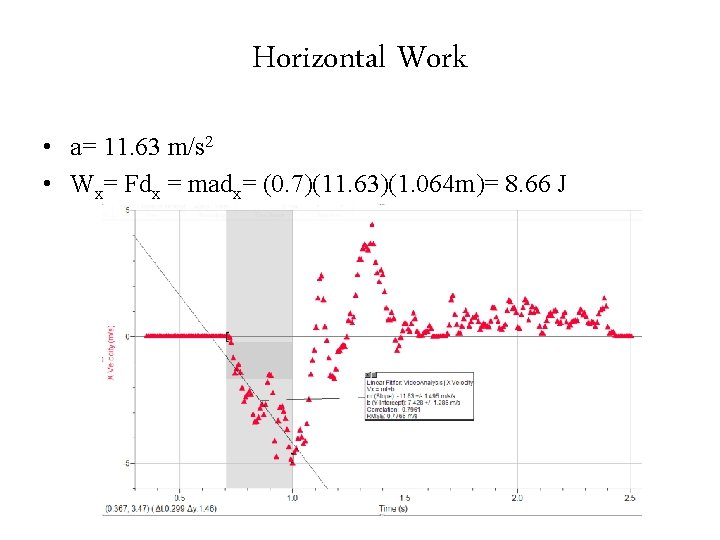
Horizontal Work • a= 11. 63 m/s 2 • Wx= Fdx = madx= (0. 7)(11. 63)(1. 064 m)= 8. 66 J
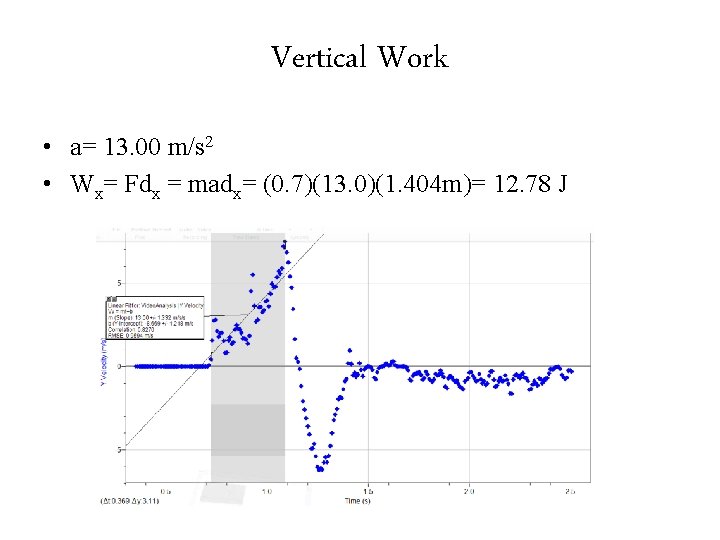
Vertical Work • a= 13. 00 m/s 2 • Wx= Fdx = madx= (0. 7)(13. 0)(1. 404 m)= 12. 78 J
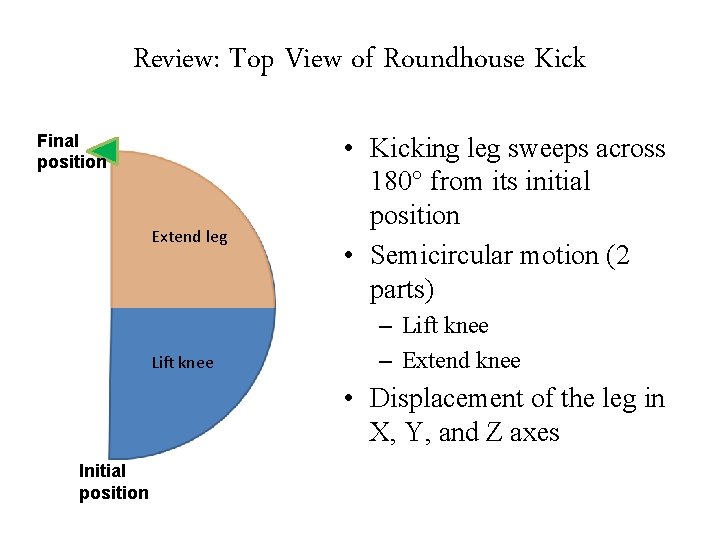
Review: Top View of Roundhouse Kick Final position Extend leg Lift knee • Kicking leg sweeps across 180° from its initial position • Semicircular motion (2 parts) – Lift knee – Extend knee • Displacement of the leg in X, Y, and Z axes Initial position
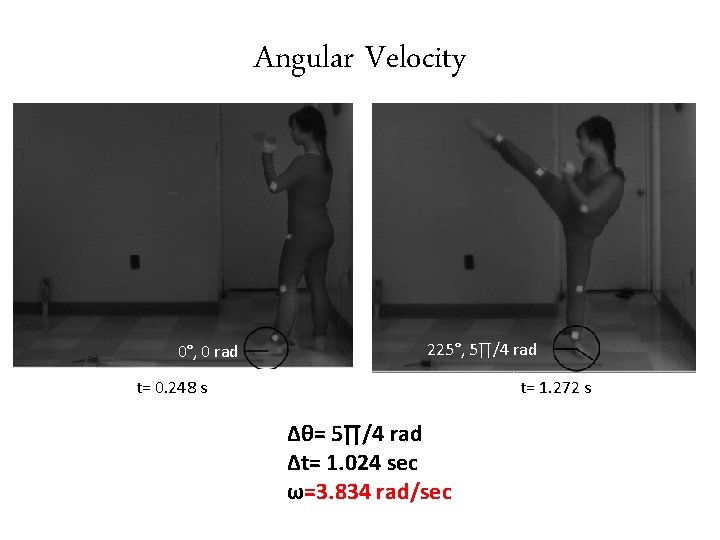
Angular Velocity 0°, 0 rad 225°, 5∏/4 rad t= 1. 272 s t= 0. 248 s ∆θ= 5∏/4 rad ∆t= 1. 024 sec ω=3. 834 rad/sec 135°
Elbow Rotation • Rotation of the elbow/arms generates angular momentum. – Conservation of Momentum: Momentum of a closed system remains constant • As arms swing back to original position, the heel of the standing leg rotates, allowing the hips and kicking leg to rotate as well.
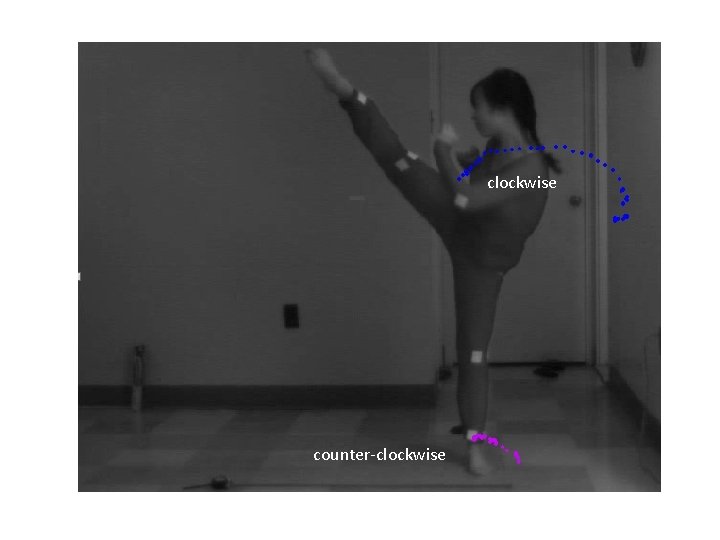
clockwise counter-clockwise
How to increase impact velocity • Impact velocity = linear distance/time • Increase linear distance traveled by foot while keeping elapsed time the same. • Reducing time while keeping linear distance the same.
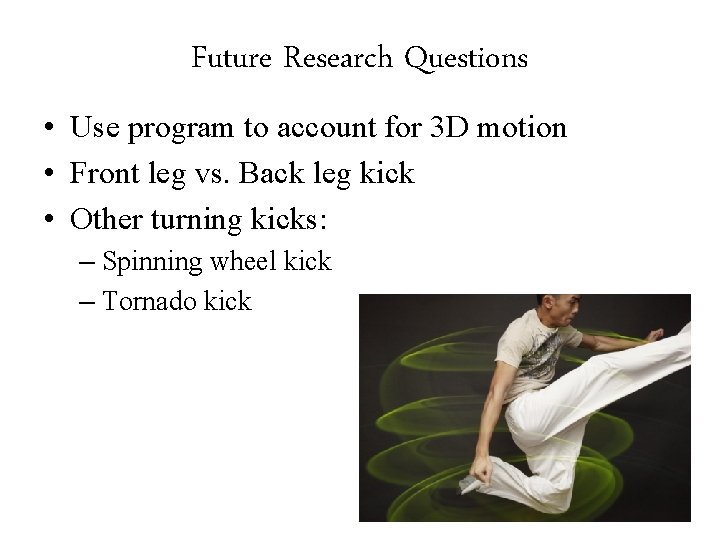
Future Research Questions • Use program to account for 3 D motion • Front leg vs. Back leg kick • Other turning kicks: – Spinning wheel kick – Tornado kick
Sources Boey, L. W. & Xie, Wei. (2008) Experimental Investigation of Turning Kick Performance of Singapore National Taekwondo Players. Journal of Biomechanics, 42(3), 242 -248. Kim, Y. K. , Kim, Y. H. , & Im, S. J. (2011) Inter-joint coordination in producing kicking velocity of Taekwondo kicks. Journal of Sports Science and Medicine, 10, 31 -38. Pearson, Jake. (1997) Kinematics and Kinetics of the Taekwon-Do Turning Kick. Unpublished Bachelor Degree Dissertation, University of Otago.
- Slides: 26