
Mechanics of Breathing I Lungs are very elastic
Mechanics of Breathing I. Lungs are very elastic. Their size varies greatly during breathing. However, lungs do not move on their own. They do not have muscle tissue. Instead, they respond passively to the movements of the rib cage and the diaphragm.

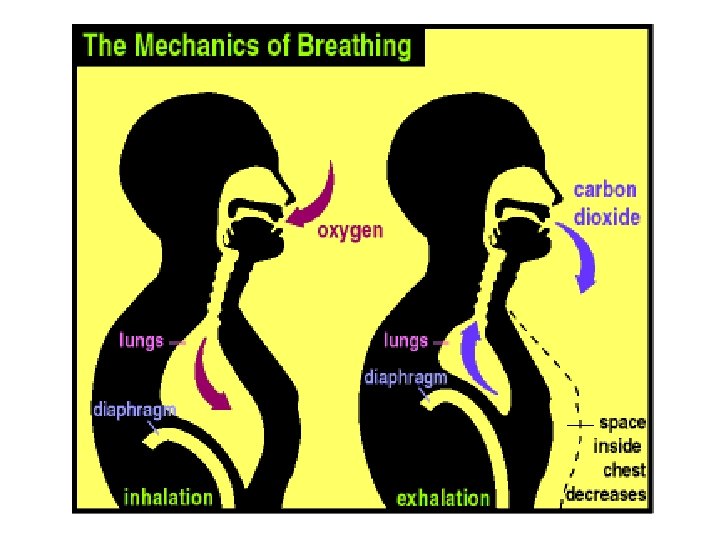
II. Inhalation (breathe in) A. Inhalation is the active phase of breathing. B. The mechanics are as follows: 1. Ribs move up and out 2. Diaphragm contracts and moves down (flattens) 3. Chest cavity becomes larger 4. Pressure within the chest cavity is reduced 5. Air from the outside rushes into lungs, forcing the lungs to expand
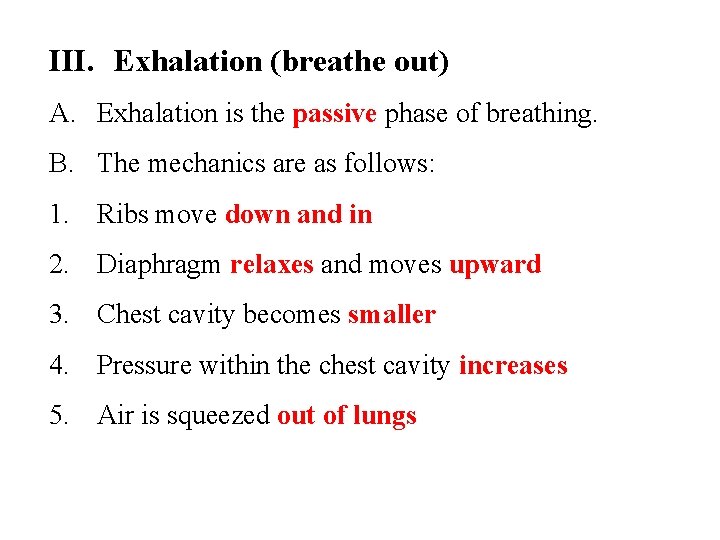
III. Exhalation (breathe out) A. Exhalation is the passive phase of breathing. B. The mechanics are as follows: 1. Ribs move down and in 2. Diaphragm relaxes and moves upward 3. Chest cavity becomes smaller 4. Pressure within the chest cavity increases 5. Air is squeezed out of lungs

IV. Rate of Breathing A. The normal rate of breathing is 12 -25 times/min B. The breathing rate is controlled by a respiratory center in the medulla of the brain. The medulla is part of the brainstem. If the concentration of CO 2 raises, the respiratory center is stimulated and breathing increases. C. The rate of breathing can increase under several conditions such as exercise and being scared. Oxygen is being used up and CO 2 is given off. The increase in CO 2 causes the breathing rate to increase. The result is more O 2 is taken in from the environment.
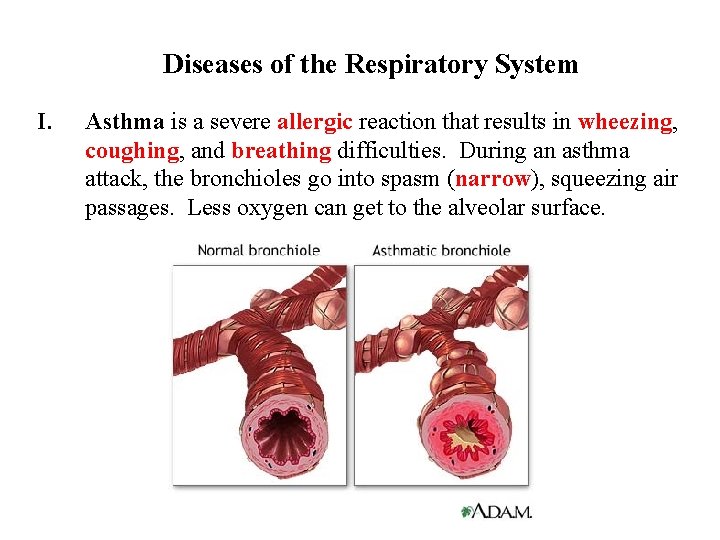
Diseases of the Respiratory System I. Asthma is a severe allergic reaction that results in wheezing, coughing, and breathing difficulties. During an asthma attack, the bronchioles go into spasm (narrow), squeezing air passages. Less oxygen can get to the alveolar surface.
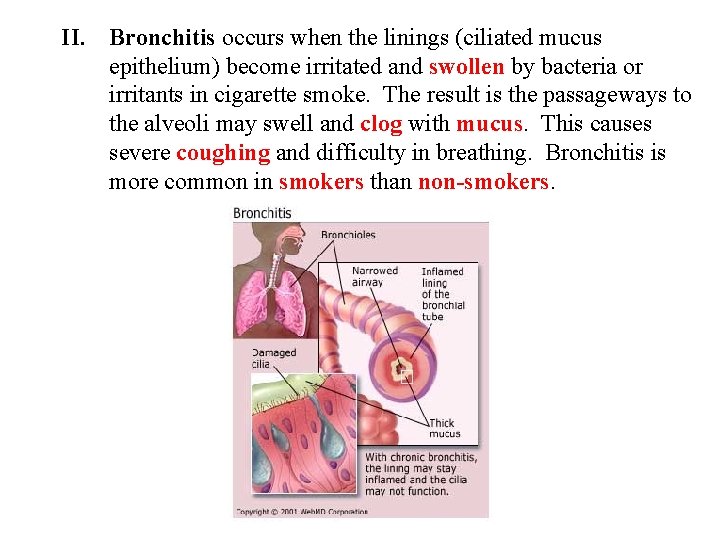
II. Bronchitis occurs when the linings (ciliated mucus epithelium) become irritated and swollen by bacteria or irritants in cigarette smoke. The result is the passageways to the alveoli may swell and clog with mucus. This causes severe coughing and difficulty in breathing. Bronchitis is more common in smokers than non-smokers.

III. Emphysema results when the lungs lose their elasticity. The walls of the alveoli become damaged resulting in a decrease in the respiratory surface. This causes shortness of breath since the amount of O 2 a person can take in is limited. Smoking increases a person’s chance of getting emphysema. The damage is irreversible.
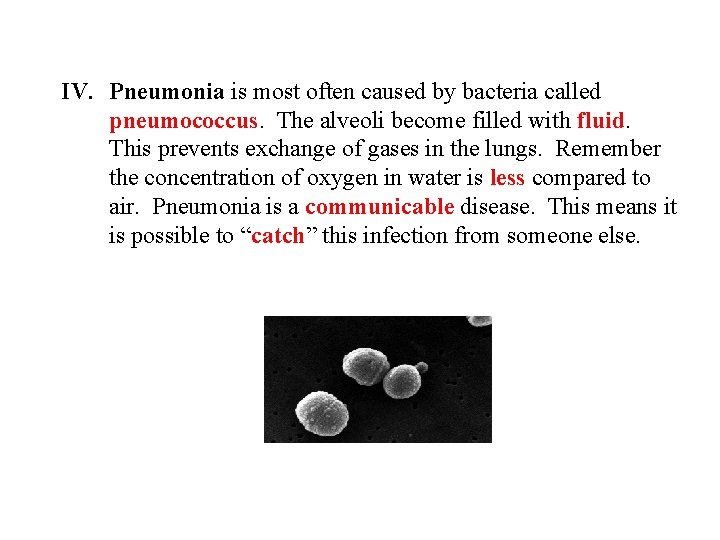
IV. Pneumonia is most often caused by bacteria called pneumococcus. The alveoli become filled with fluid. This prevents exchange of gases in the lungs. Remember the concentration of oxygen in water is less compared to air. Pneumonia is a communicable disease. This means it is possible to “catch” this infection from someone else.
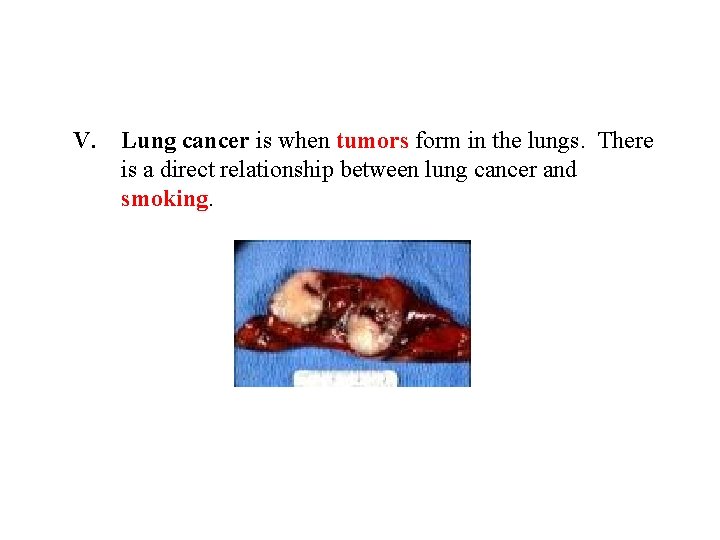
V. Lung cancer is when tumors form in the lungs. There is a direct relationship between lung cancer and smoking.
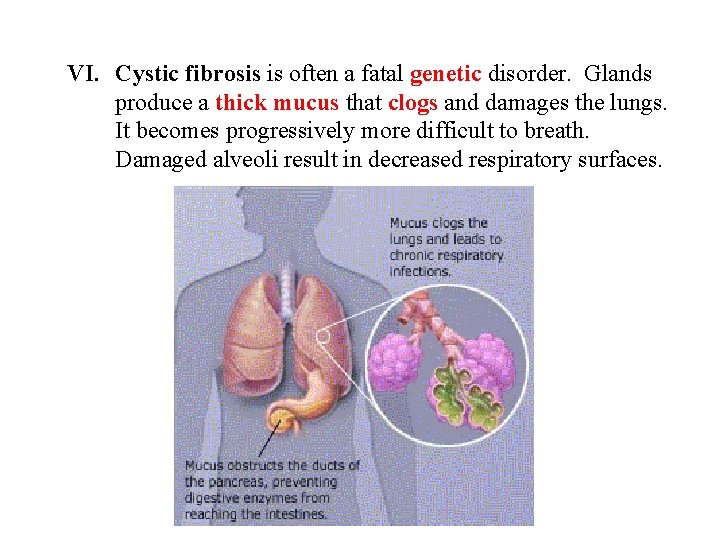
VI. Cystic fibrosis is often a fatal genetic disorder. Glands produce a thick mucus that clogs and damages the lungs. It becomes progressively more difficult to breath. Damaged alveoli result in decreased respiratory surfaces.
https: //www. youtube. com/watch? v =hp-g. Cv. W 8 PRY Video Clip https: //www. youtube. com/watch? v =z. Rv 5 t. NCMpy. Y Lung Animation
- Slides: 12