
Mechanical Work More Practice Mechanical Work More Practice
- Slides: 29
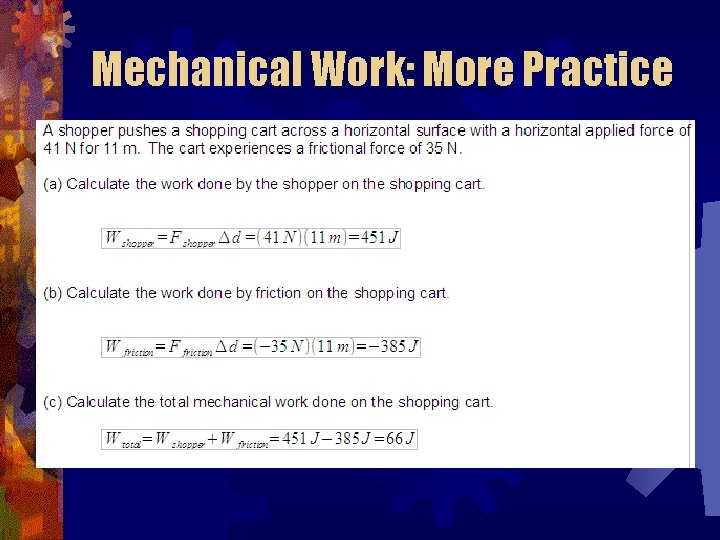
Mechanical Work: More Practice
Mechanical Work: More Practice
Mechanical Work: More Practice
Mechanical Work: More Practice
Mechanical Work: More Practice
Mechanical Work: More Practice
Mechanical Work: More Practice
Mechanical Work: More Practice
Mechanical Work: More Practice
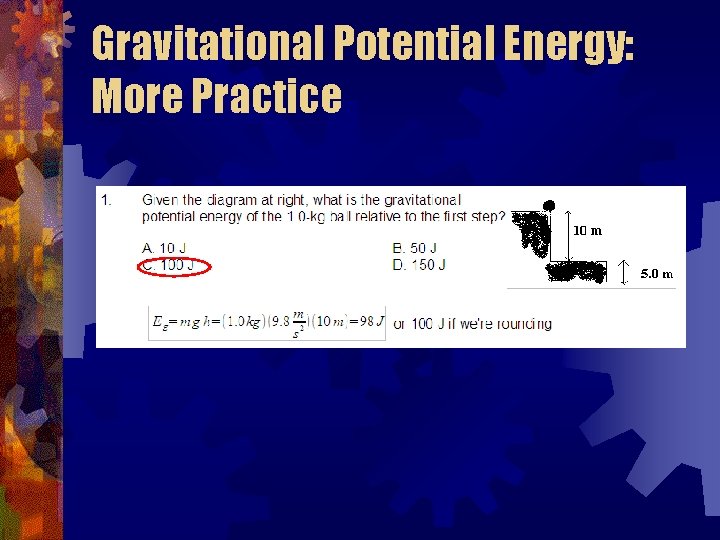
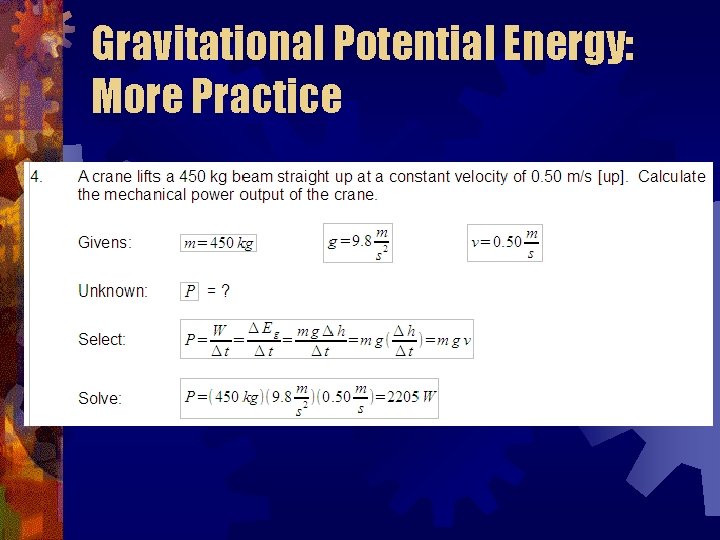
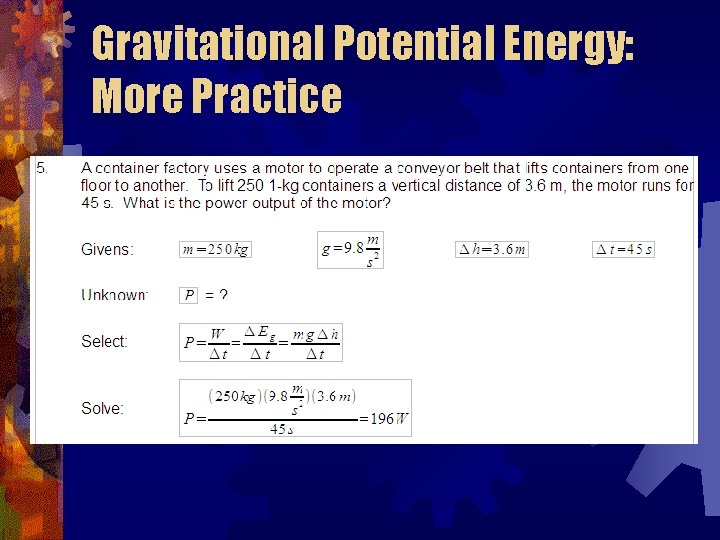
Gravitational Potential Energy: More Practice
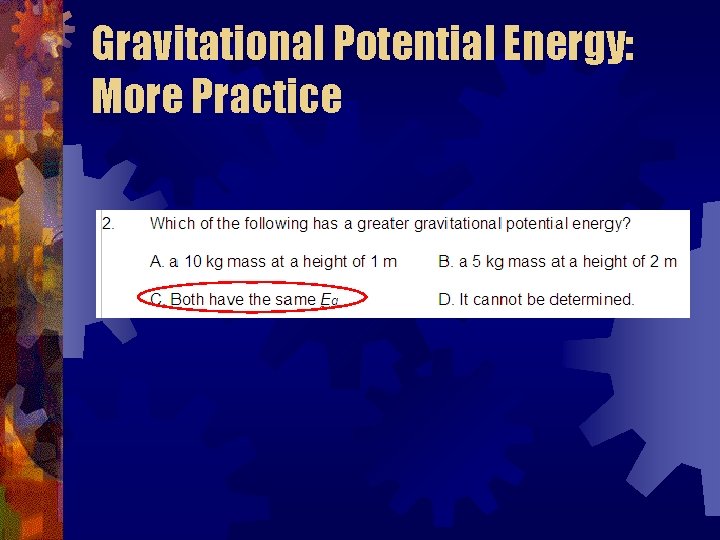
Gravitational Potential Energy: More Practice
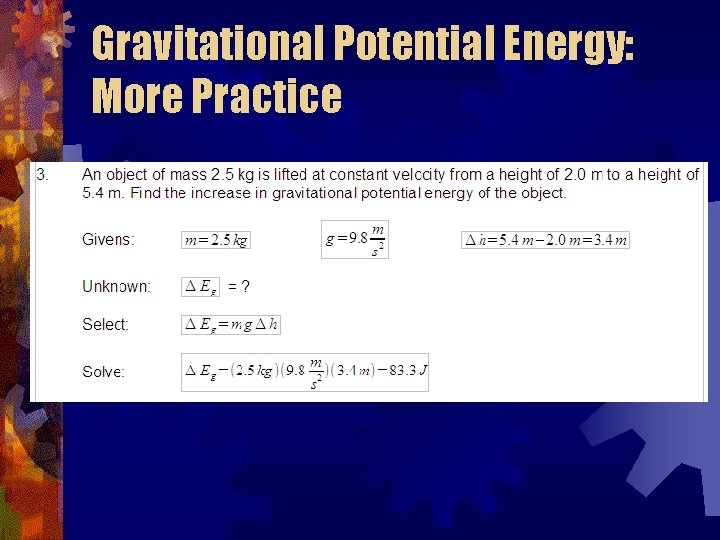
Gravitational Potential Energy: More Practice
Gravitational Potential Energy: More Practice
Gravitational Potential Energy: More Practice
Kinetic Energy: Learning Goals The student will be able to describe the kinetic energy of an object (the energy of motion) in qualitative and quantitative terms.
Kinetic Energy SPH 4 C
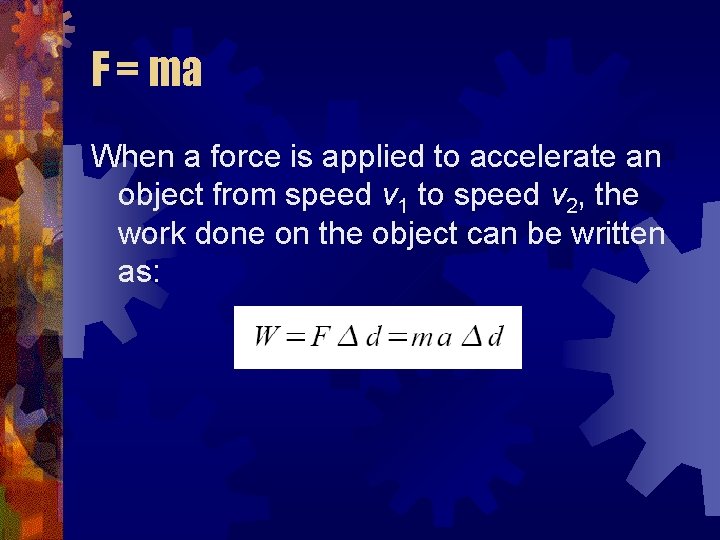
F = ma When a force is applied to accelerate an object from speed v 1 to speed v 2, the work done on the object can be written as:
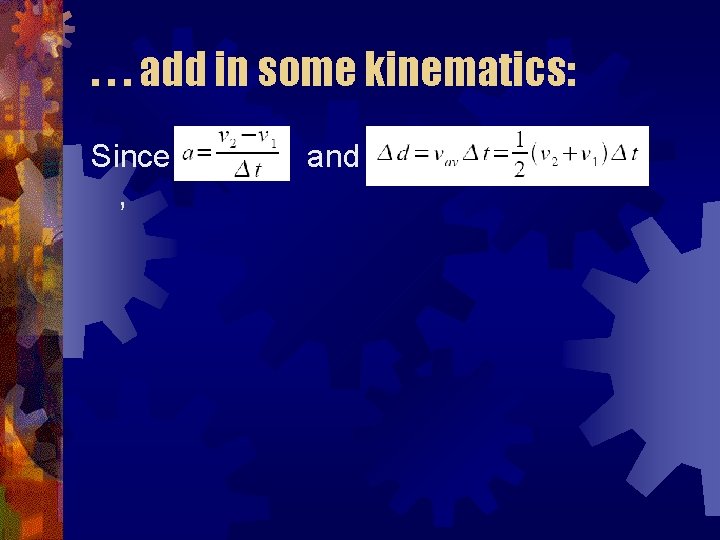
. . . add in some kinematics: Since , and
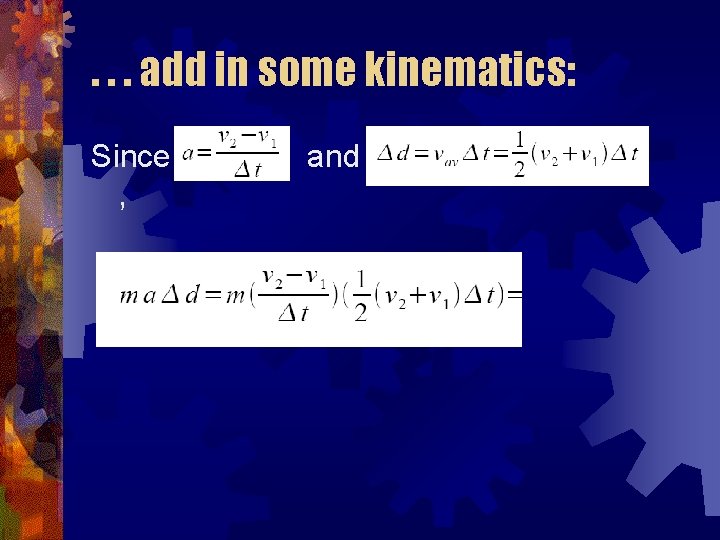
. . . add in some kinematics: Since , and
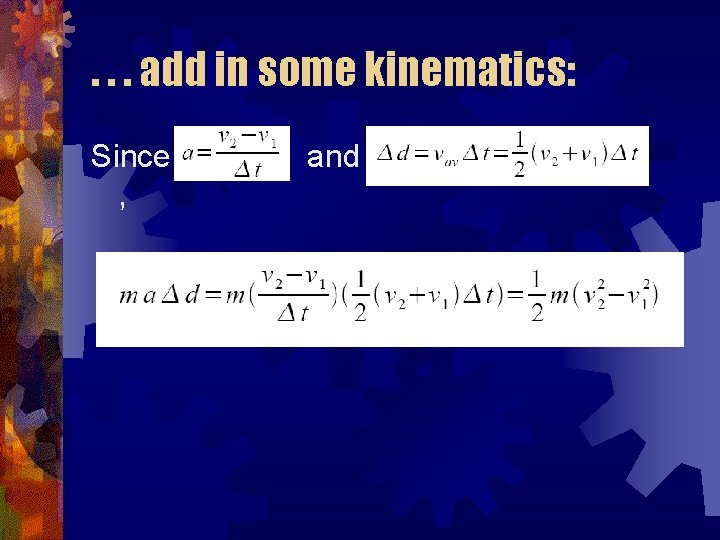
. . . add in some kinematics: Since , and
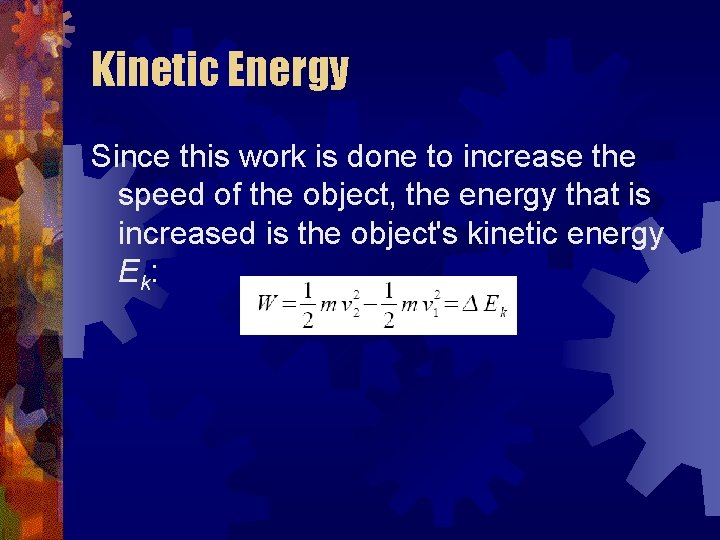
Kinetic Energy Since this work is done to increase the speed of the object, the energy that is increased is the object's kinetic energy Ek:
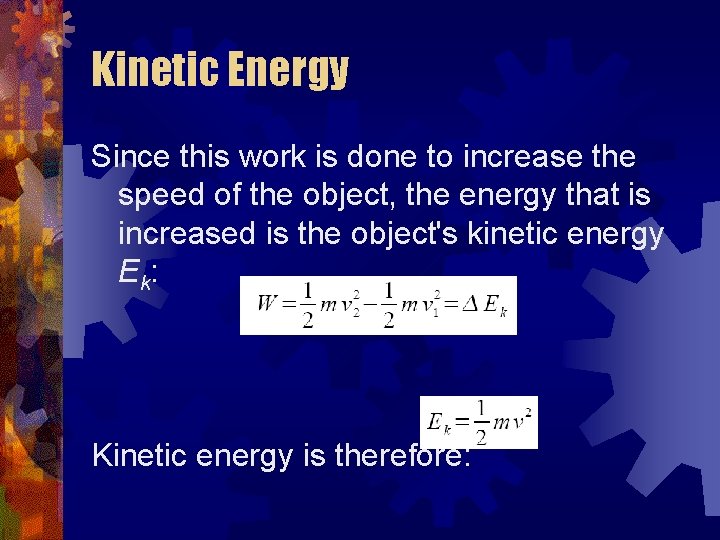
Kinetic Energy Since this work is done to increase the speed of the object, the energy that is increased is the object's kinetic energy Ek: Kinetic energy is therefore:
Example 1 A car of mass 1500 kg is travelling at a speed of 24 m/s. Calculate the kinetic energy of the car.
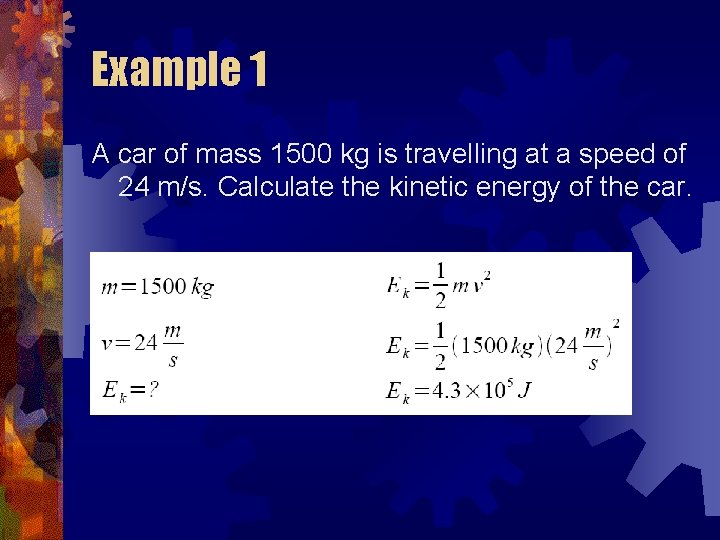
Example 1 A car of mass 1500 kg is travelling at a speed of 24 m/s. Calculate the kinetic energy of the car.
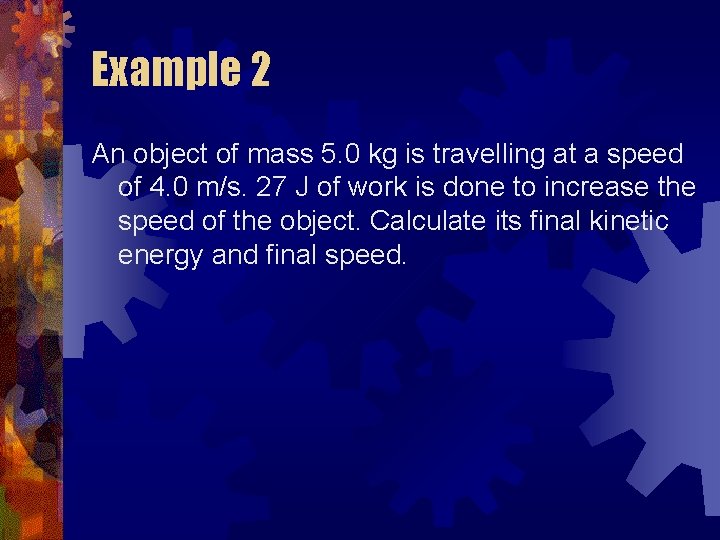
Example 2 An object of mass 5. 0 kg is travelling at a speed of 4. 0 m/s. 27 J of work is done to increase the speed of the object. Calculate its final kinetic energy and final speed.
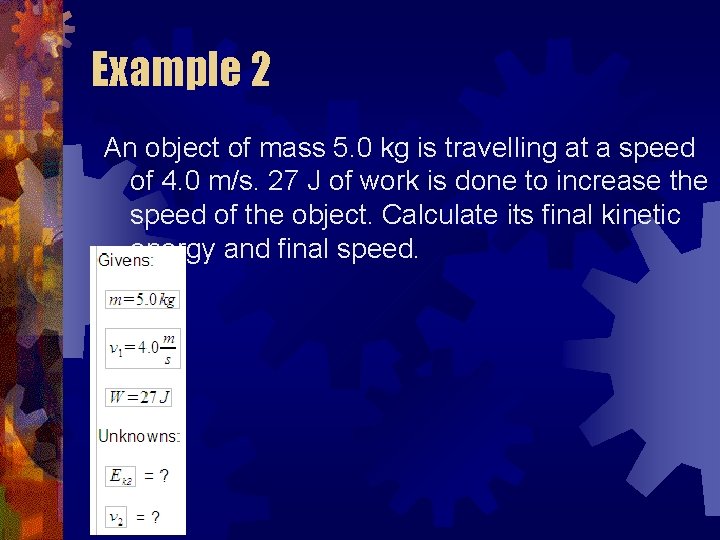
Example 2 An object of mass 5. 0 kg is travelling at a speed of 4. 0 m/s. 27 J of work is done to increase the speed of the object. Calculate its final kinetic energy and final speed.
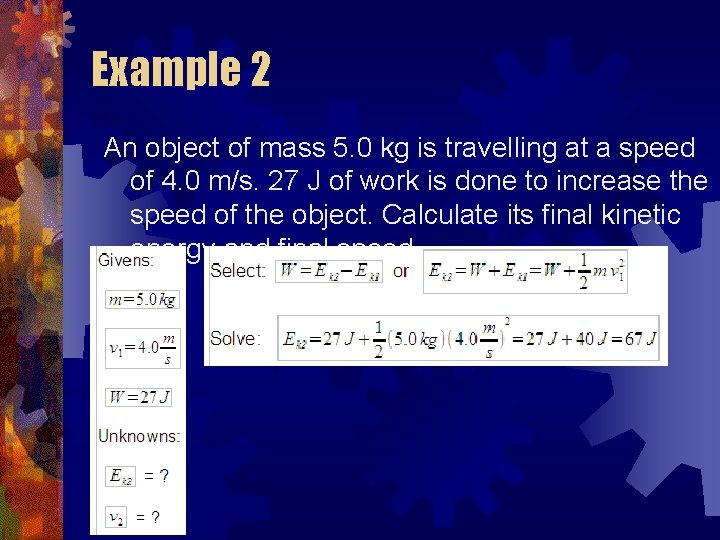
Example 2 An object of mass 5. 0 kg is travelling at a speed of 4. 0 m/s. 27 J of work is done to increase the speed of the object. Calculate its final kinetic energy and final speed.
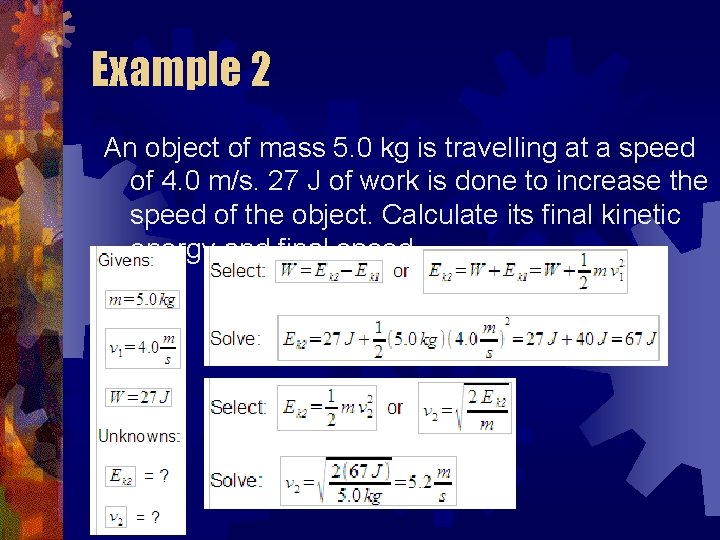
Example 2 An object of mass 5. 0 kg is travelling at a speed of 4. 0 m/s. 27 J of work is done to increase the speed of the object. Calculate its final kinetic energy and final speed.
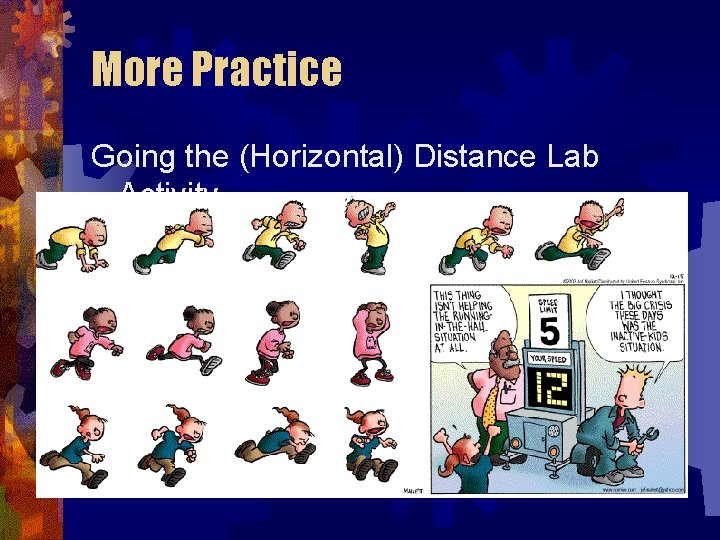
More Practice Going the (Horizontal) Distance Lab Activity