
Mechanical weathering the effects of Frost Mr Boland
Mechanical weathering the effects of Frost Mr Boland
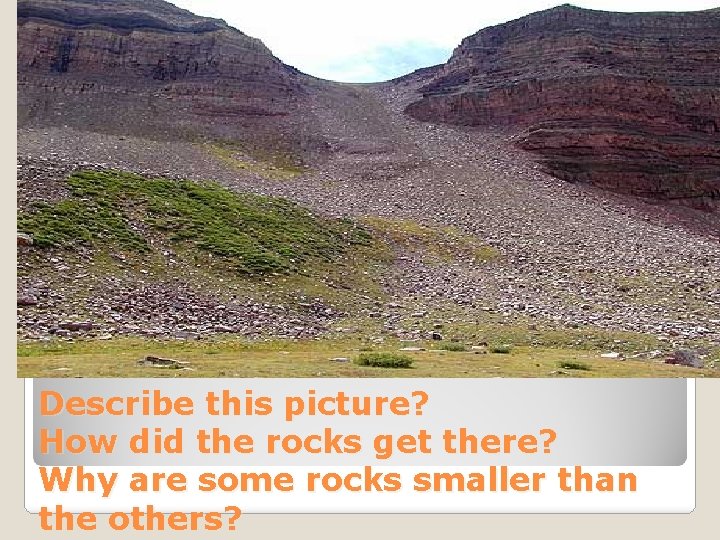
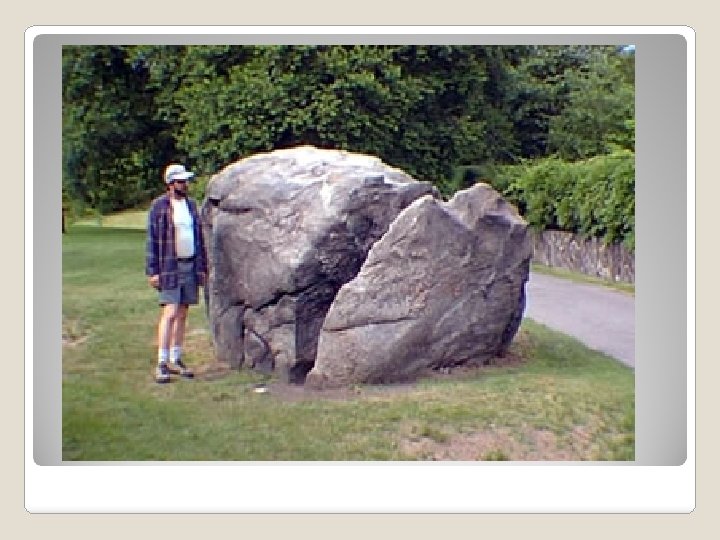
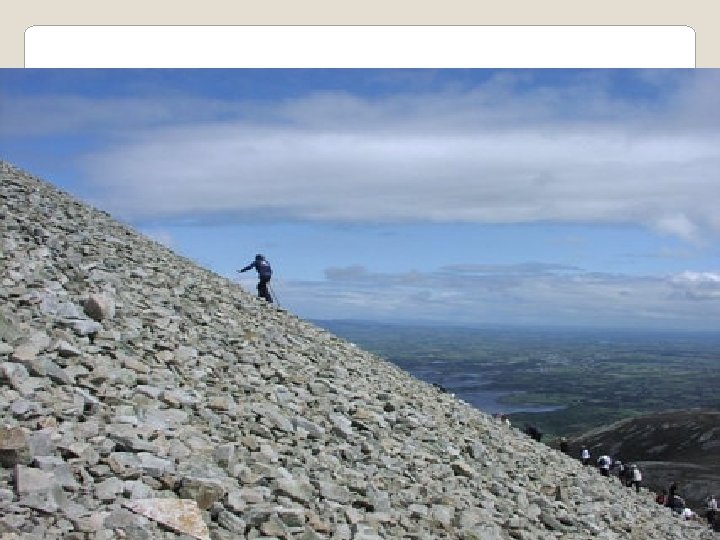
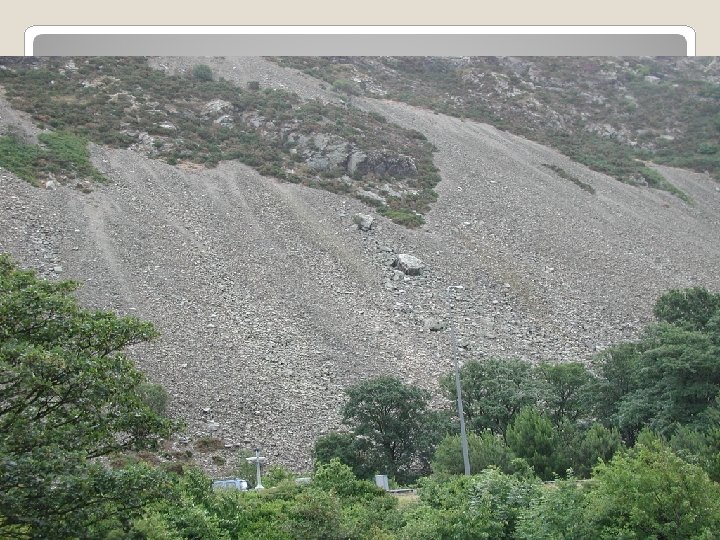
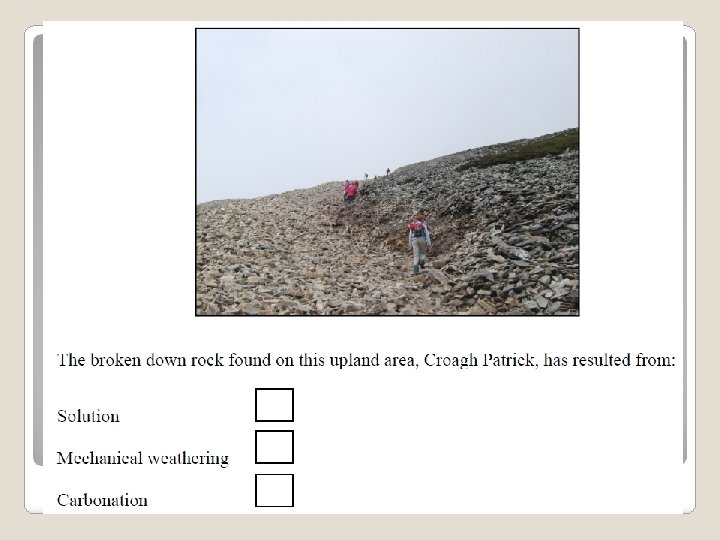
Describe this picture? How did the rocks get there? Why are some rocks smaller than the others?
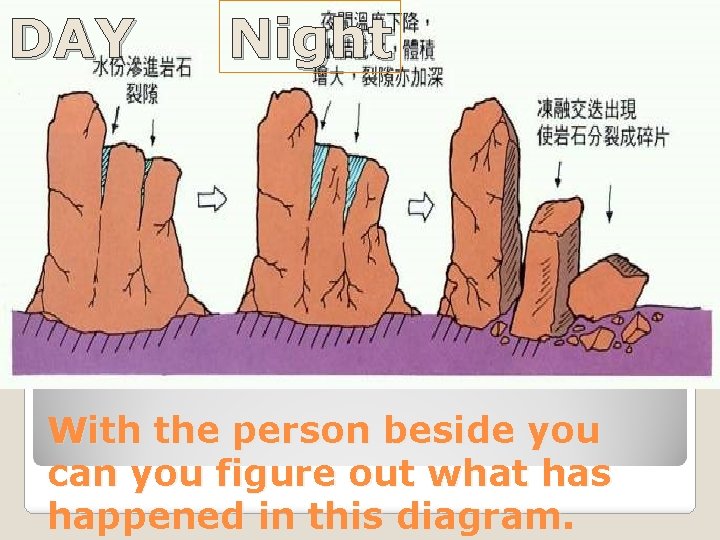
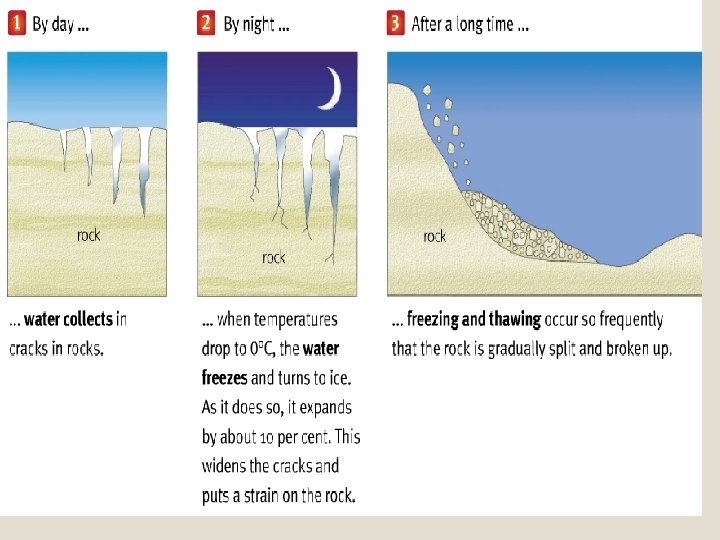
DAY Night With the person beside you can you figure out what has happened in this diagram.
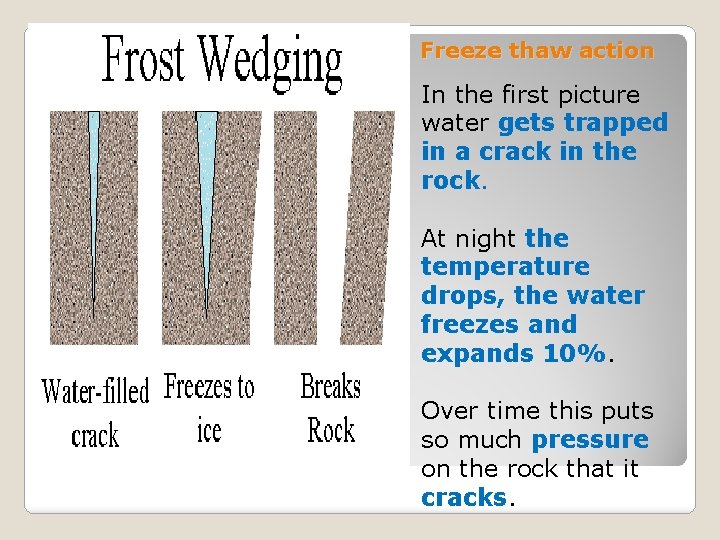
Freeze thaw action In the first picture water gets trapped in a crack in the rock. At night the temperature drops, the water freezes and expands 10%. Over time this puts so much pressure on the rock that it cracks.

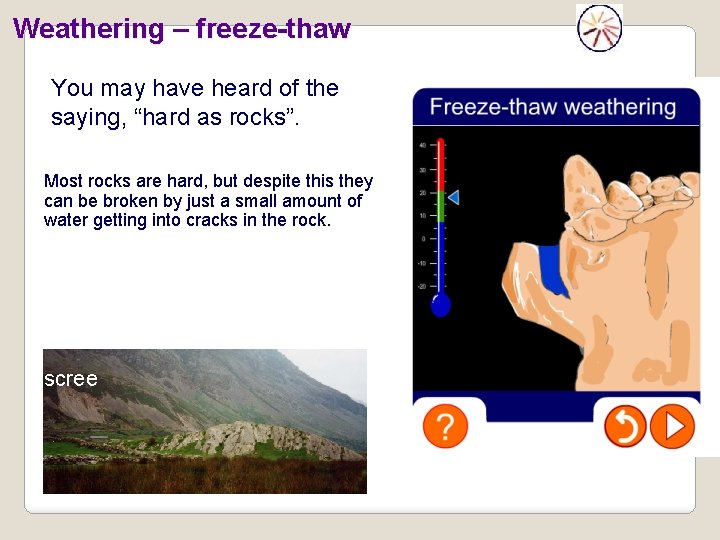
Weathering – freeze-thaw You may have heard of the saying, “hard as rocks”. This As this isrocks because freeze–thaw as water process freezes is repeated it they Most are hard, but despite this expands. and be cracks spread through theamount rock. of can broken by just a small water getting intopieces cracksofinrock the rock. Eventually small (called This creates powerful forces that can scree) scree break off altogether. enlarge the cracks. scree
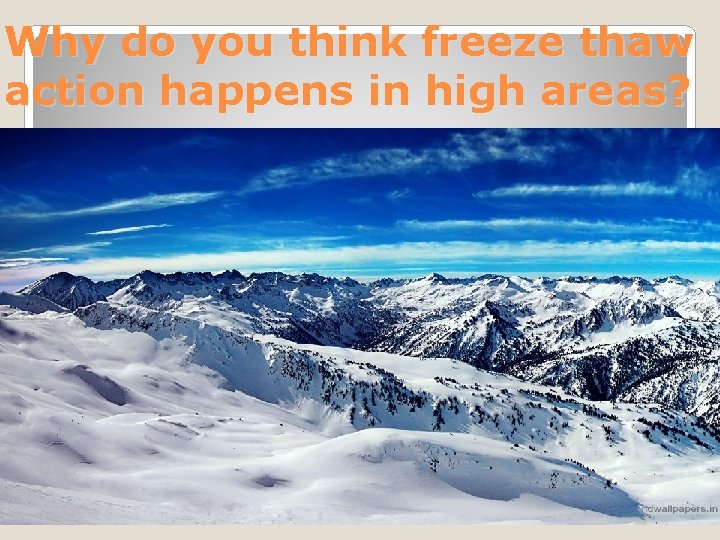
Why do you think freeze thaw action happens in high areas?
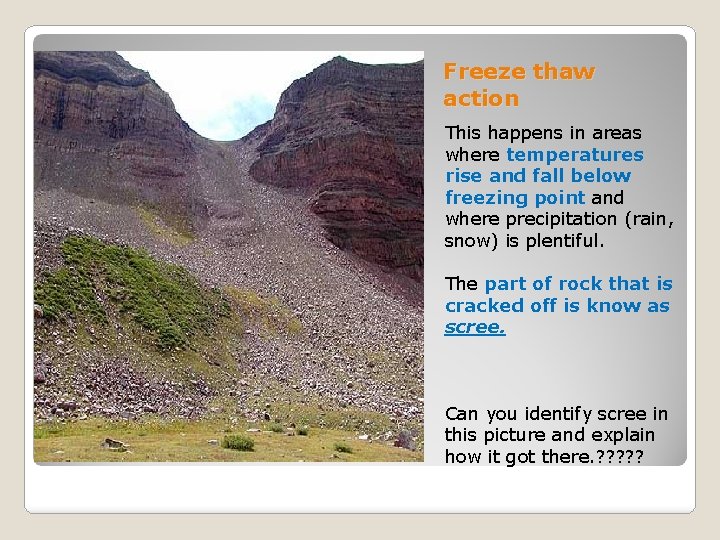
Freeze thaw action This happens in areas where temperatures rise and fall below freezing point and where precipitation (rain, snow) is plentiful. The part of rock that is cracked off is know as scree. Can you identify scree in this picture and explain how it got there. ? ? ?
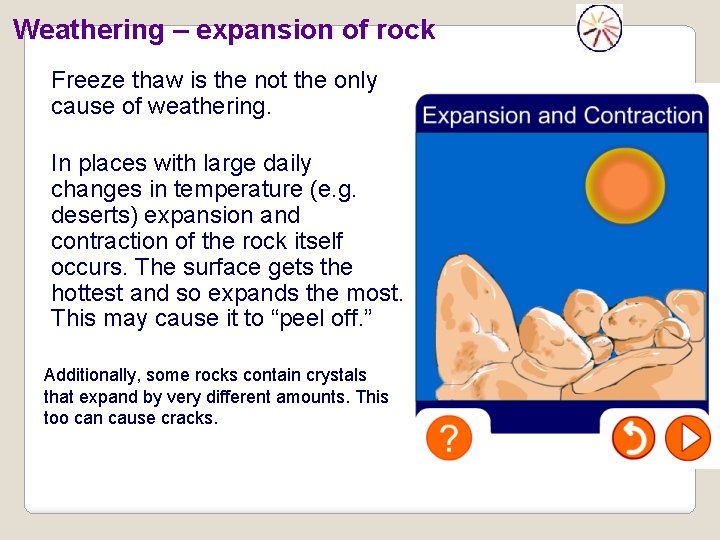
Weathering – expansion of rock Freeze thaw is the not the only cause of weathering. In places with large daily changes in temperature (e. g. deserts) expansion and contraction of the rock itself occurs. The surface gets the hottest and so expands the most. This may cause it to “peel off. ” Additionally, some rocks contain crystals that expand by very different amounts. This too can cause cracks.
The reason that Irish mountains are much smaller than the Alps, Andes & Himalayas, is because they are older & have constantly been worn away (denuded) by the forces of weathering and erosion. Denudation is the removal of rock from the earths surface by both weathering and erosion.
Exam Question
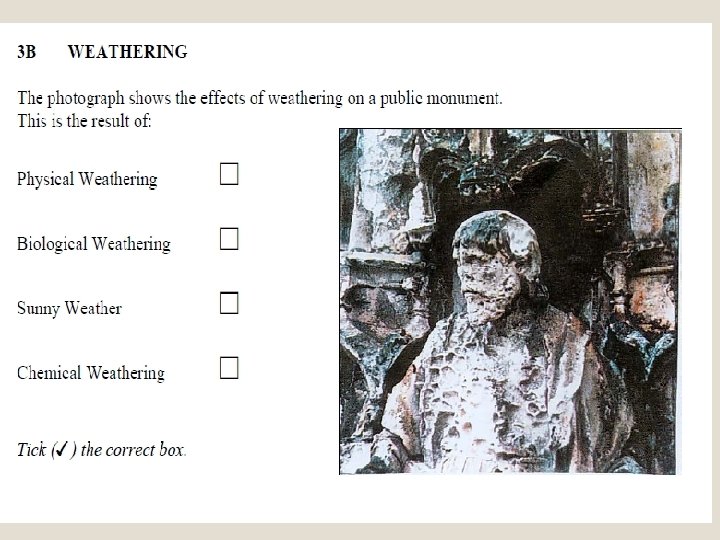
- Slides: 17