
Mechanical Waves Physical Science Anatomy of a Wave

- Slides: 20
Mechanical Waves Physical Science
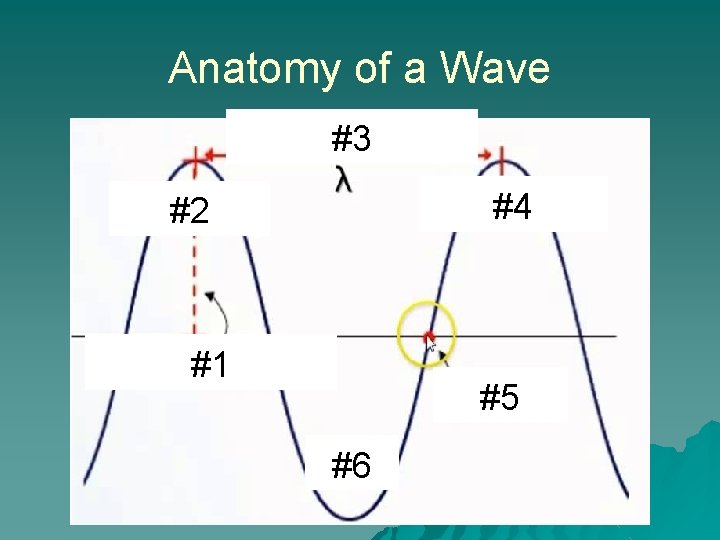
Anatomy of a Wave #3 #4 #2 #1 #5 #6
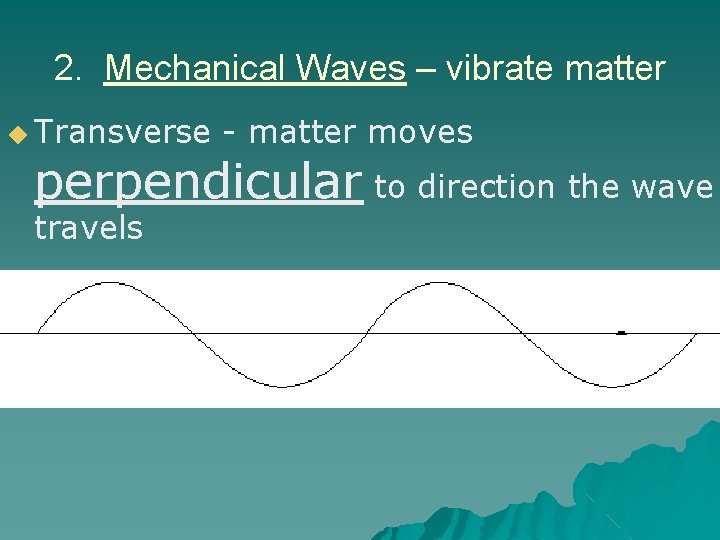
2. Mechanical Waves – vibrate matter ◆ Transverse - matter moves perpendicular to direction the wave travels
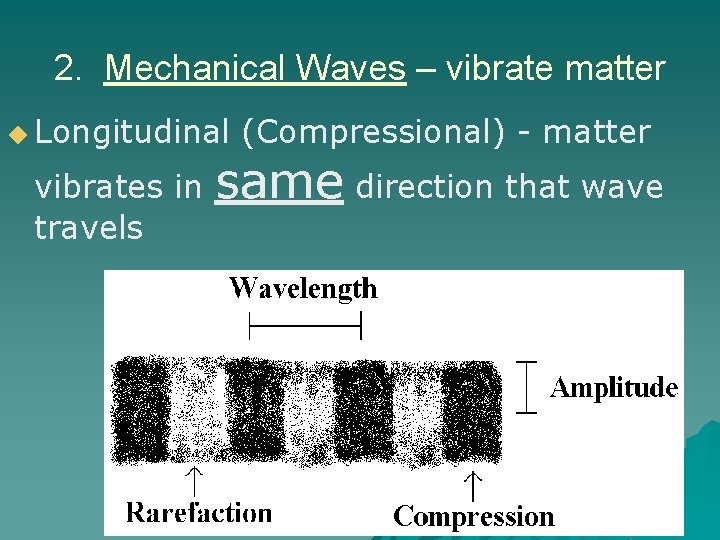
2. Mechanical Waves – vibrate matter ◆ Longitudinal vibrates in travels (Compressional) - matter same direction that wave
◆ Surface – combination of transverse & longitudinal, producing circular motion ◆ Ex. Earthquake or Ocean waves
http: //viewpure. com/SCtf-z 4 t 9 L 8
Velocity of Sound • Sound must be transmitted through matter –Velocity depends on medium –v at 0 o Celsius is 332 m/s, 344 m/s at 20 o degrees C –Travels faster through warm air –Faster through solids & liquids
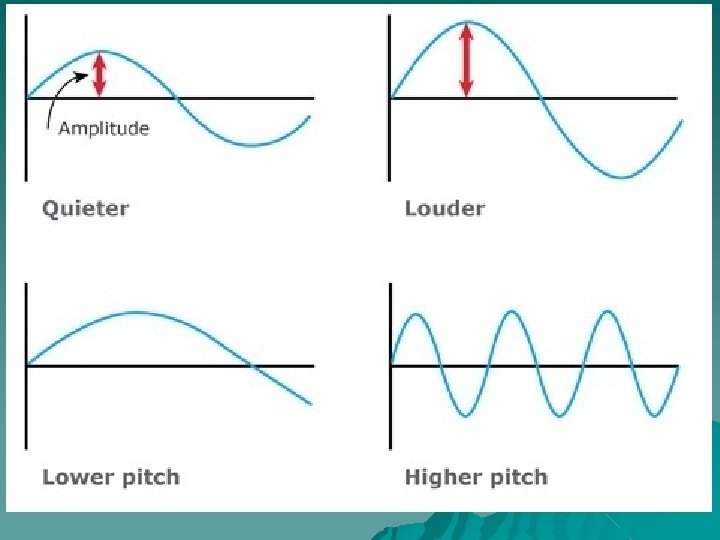
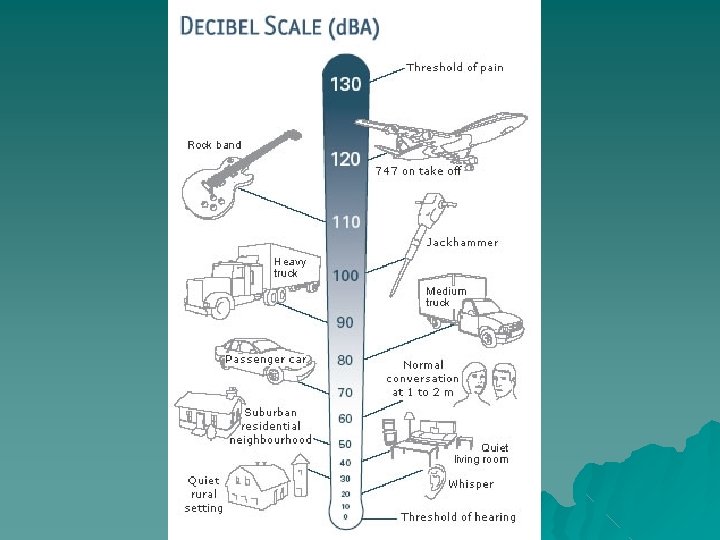
Loudness & Pitch ◆Intensity of sound depends on amplitude ◆Loudness describes a person’s response to intensity –Measured in decibels - d. B –Scale on next slide ◆ Pitch - Way a person hears frequency (Hertz)
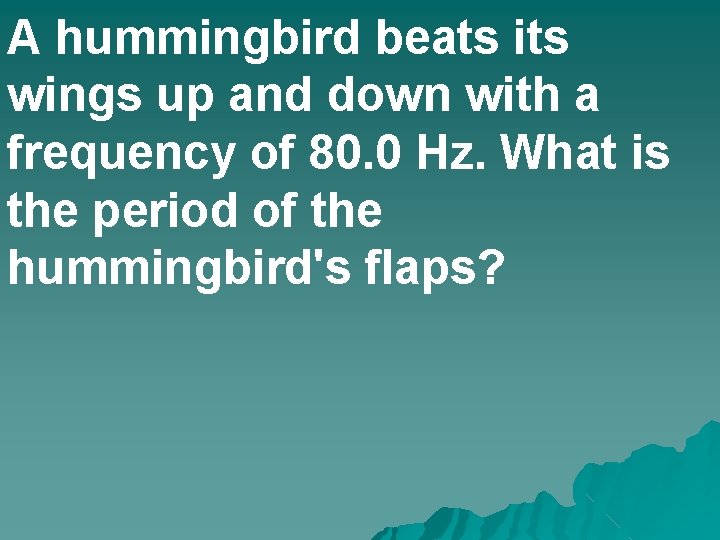
A hummingbird beats its wings up and down with a frequency of 80. 0 Hz. What is the period of the hummingbird's flaps?
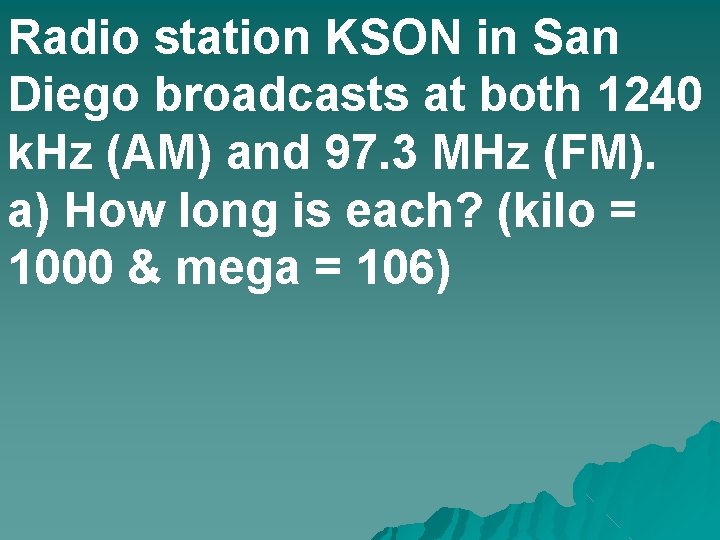
Radio station KSON in San Diego broadcasts at both 1240 k. Hz (AM) and 97. 3 MHz (FM). a) How long is each? (kilo = 1000 & mega = 106)
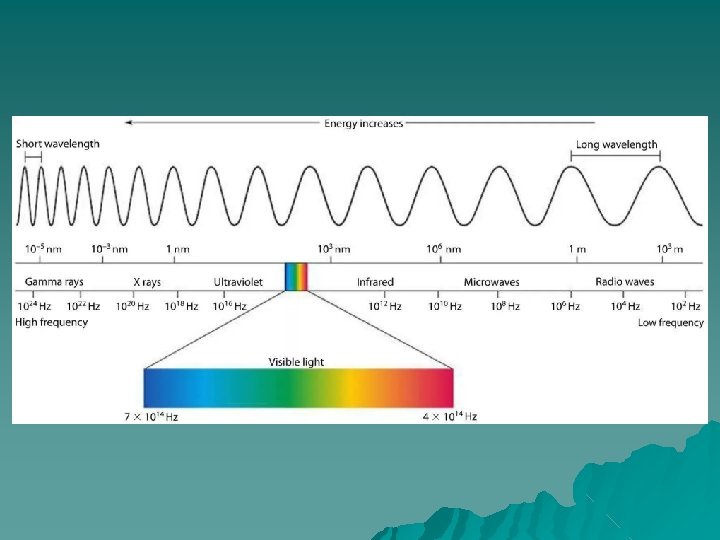
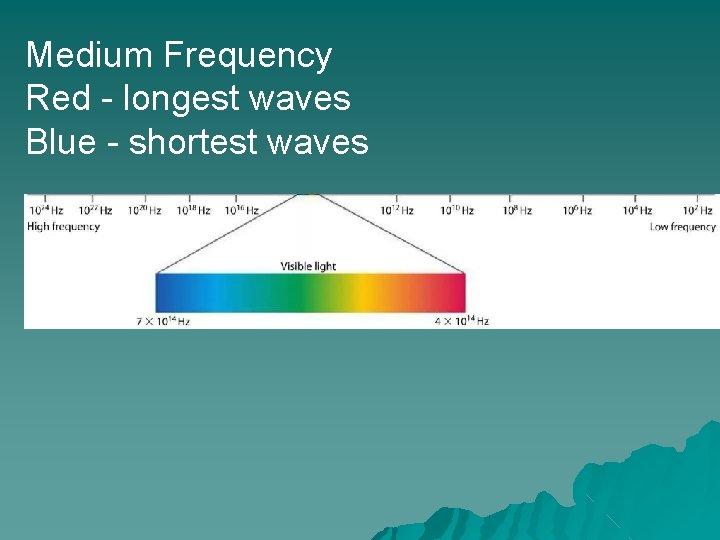
Medium Frequency Red - longest waves Blue - shortest waves
Interference ◆ Produced when waves overlap. ◆ Follows the Law of Superposition, which states that 2 waveforms combine in a manner which simply adds their respective amplitudes linearly at every point in time.
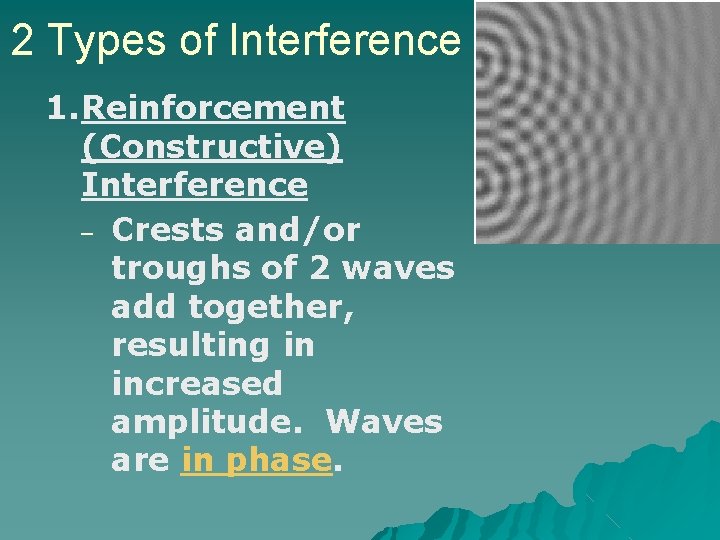
2 Types of Interference 1. Reinforcement (Constructive) Interference – Crests and/or troughs of 2 waves add together, resulting in increased amplitude. Waves are in phase.
◆2. Cancellation (Destructive) Interference –Crest of 1 wave overlaps with trough of another, canceling each other out. Waves are out of phase.
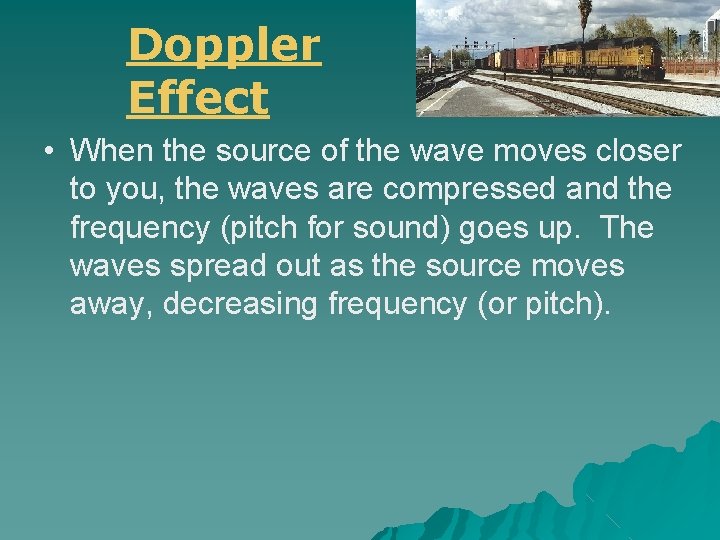
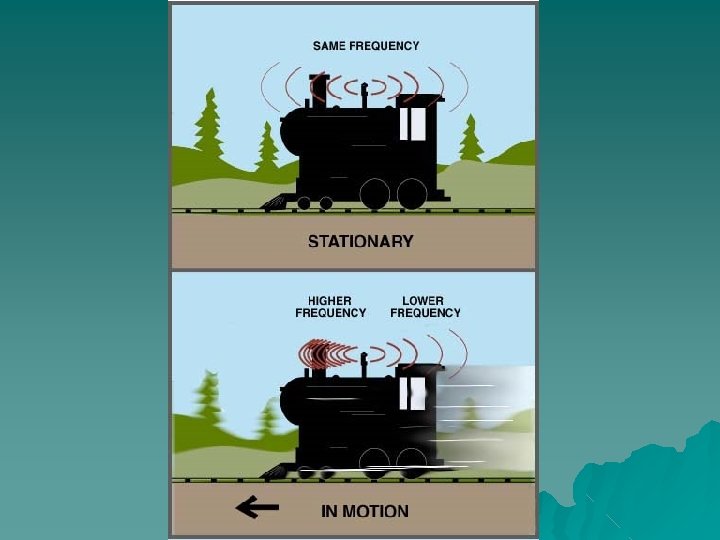
Doppler Effect • When the source of the wave moves closer to you, the waves are compressed and the frequency (pitch for sound) goes up. The waves spread out as the source moves away, decreasing frequency (or pitch).