
MECHANICAL WAVES Physical Science 8 th Grade What
- Slides: 21
MECHANICAL WAVES Physical Science 8 th Grade
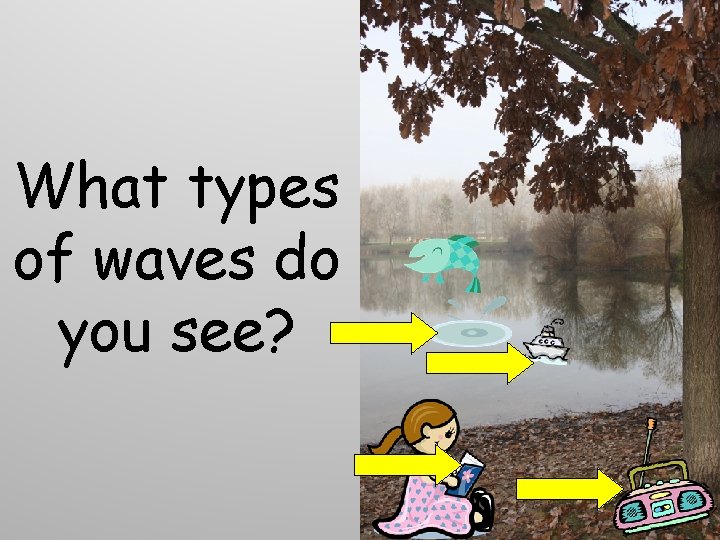
What types of waves do you see?
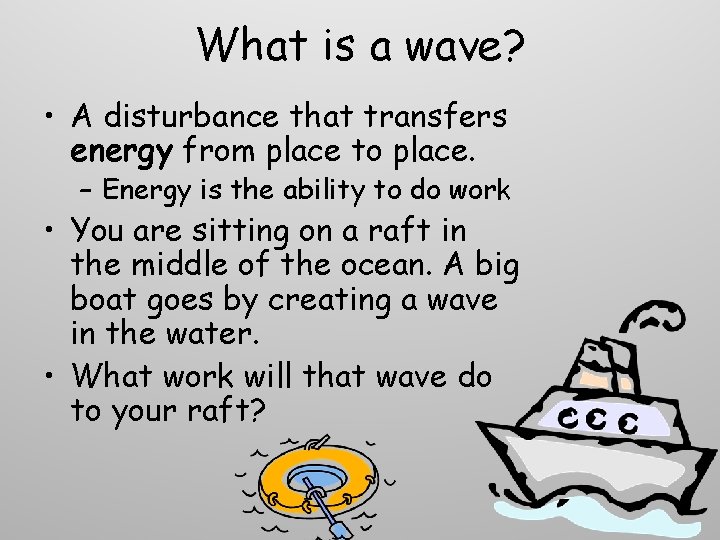
What is a wave? • A disturbance that transfers energy from place to place. – Energy is the ability to do work • You are sitting on a raft in the middle of the ocean. A big boat goes by creating a wave in the water. • What work will that wave do to your raft?
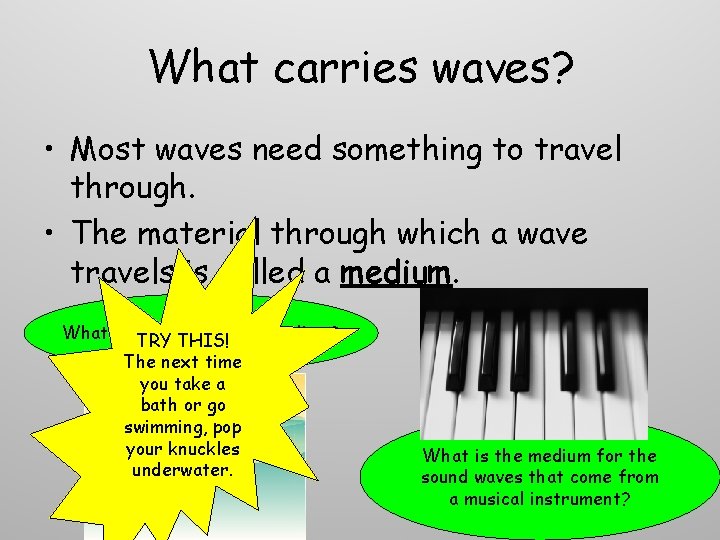
What carries waves? • Most waves need something to travel through. • The material through which a wave travels is called a medium. What is an ocean wave’s medium? TRY THIS! The next time you take a bath or go swimming, pop your knuckles underwater. What is the medium for the sound waves that come from a musical instrument?
So waves can travel through liquids and gases… • What about solids? • Can you think of any examples?
Mechanical Waves • Mechanical waves are waves that need a medium to travel through. – Mediums can be solid, liquid, or gas. We ’ll g we et t tal o th ka bou ese w h t li ght en Can you remember what kind of wave carries energy through empty space? HINT: Radiation ELECTROMAGNETIC
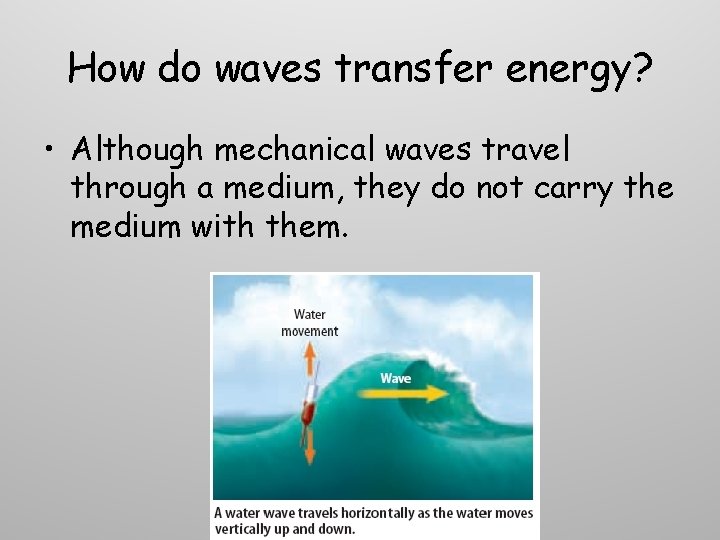
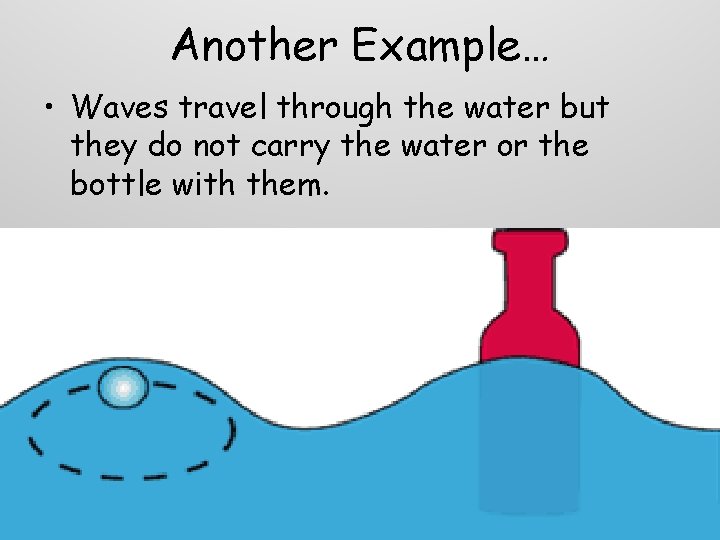
How do waves transfer energy? • Although mechanical waves travel through a medium, they do not carry the medium with them.
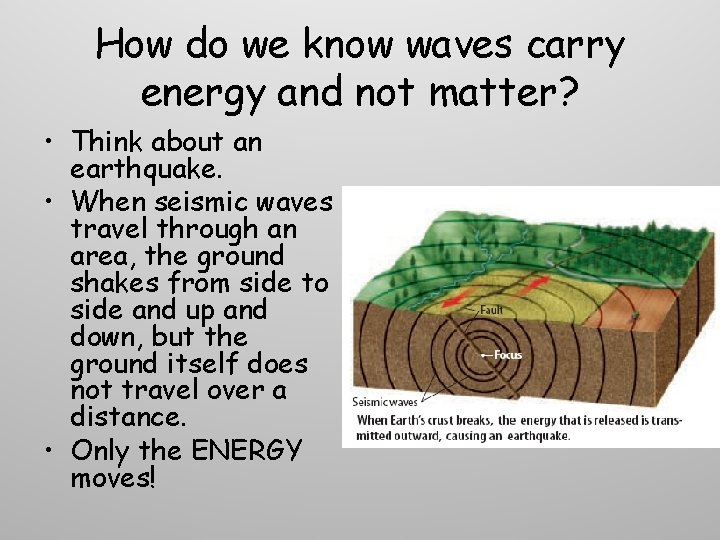
How do we know waves carry energy and not matter? • Think about an earthquake. • When seismic waves travel through an area, the ground shakes from side to side and up and down, but the ground itself does not travel over a distance. • Only the ENERGY moves!
Another Example… • Waves travel through the water but they do not carry the water or the bottle with them.
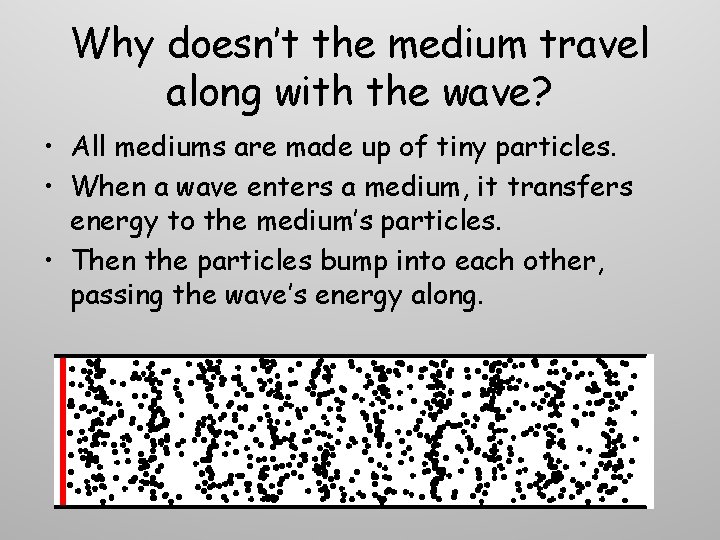
Why doesn’t the medium travel along with the wave? • All mediums are made up of tiny particles. • When a wave enters a medium, it transfers energy to the medium’s particles. • Then the particles bump into each other, passing the wave’s energy along.
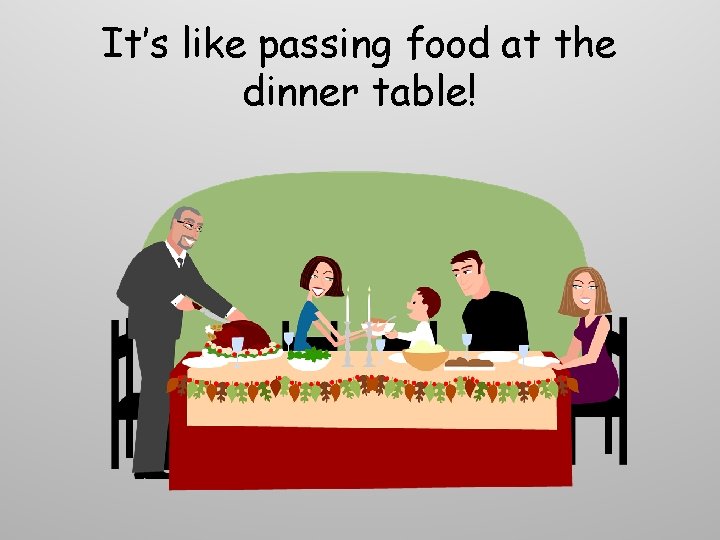
It’s like passing food at the dinner table!
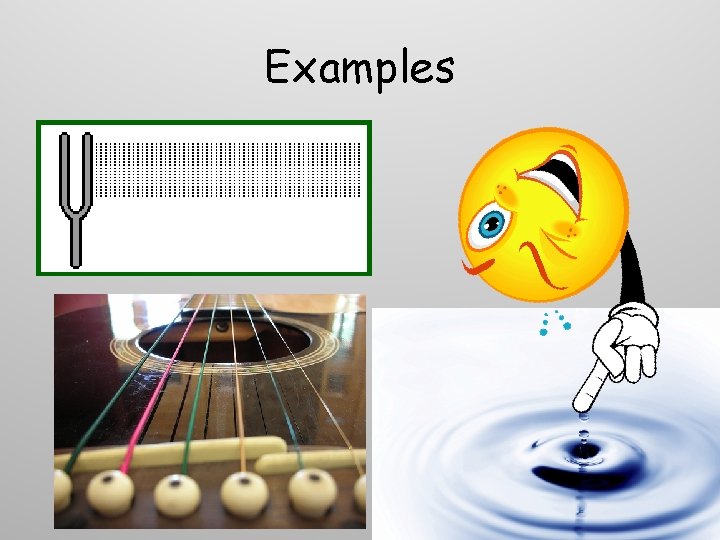
What causes waves? • You MUST have energy. • Mechanical waves are produced when a source of energy causes a medium to vibrate. – A vibration is a repeated back-and-forth or up-and-down motion. • When a vibration moves through a medium, a wave results.
Examples
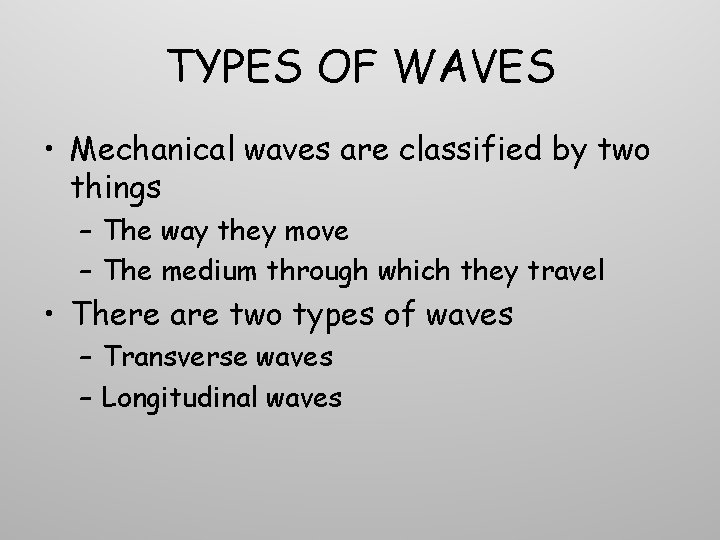
TYPES OF WAVES • Mechanical waves are classified by two things – The way they move – The medium through which they travel • There are two types of waves – Transverse waves – Longitudinal waves
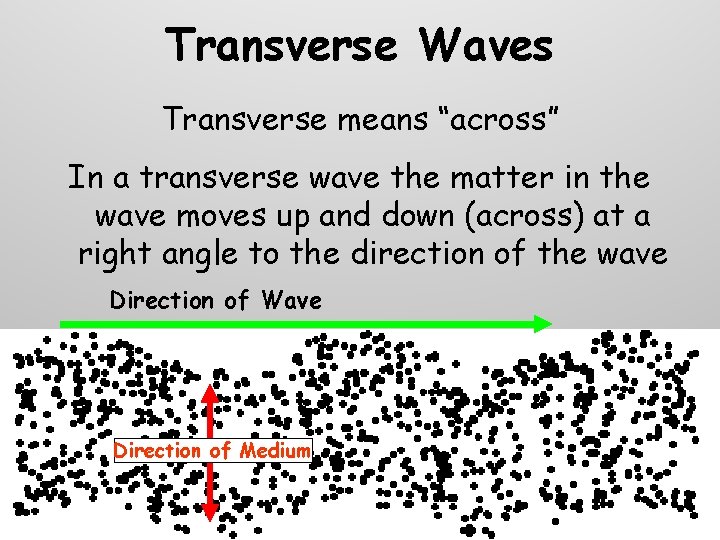
Transverse Waves Transverse means “across” In a transverse wave the matter in the wave moves up and down (across) at a right angle to the direction of the wave Direction of Wave Direction of Medium
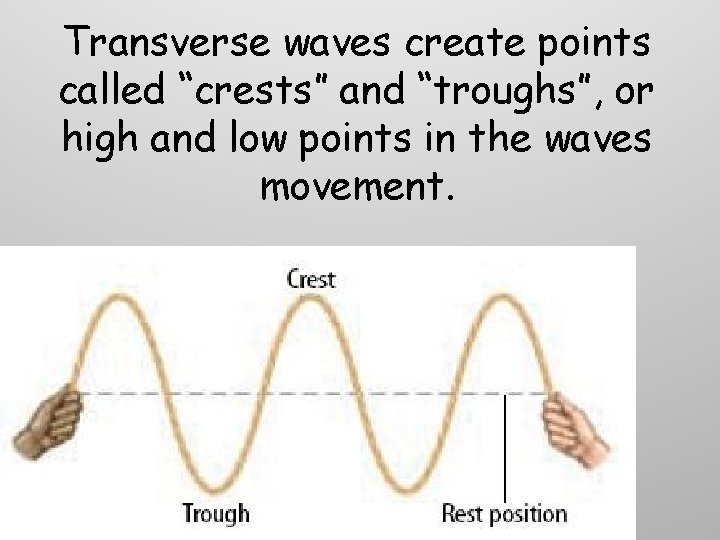
Transverse waves create points called “crests” and “troughs”, or high and low points in the waves movement.
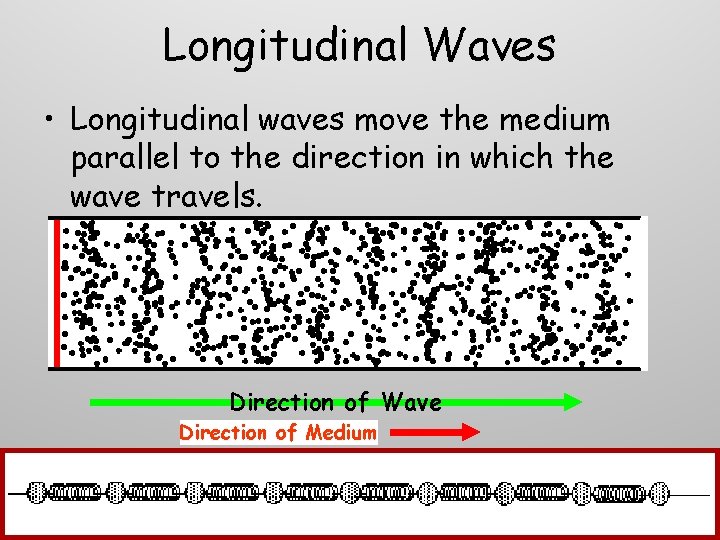
Longitudinal Waves • Longitudinal waves move the medium parallel to the direction in which the wave travels. Direction of Wave Direction of Medium
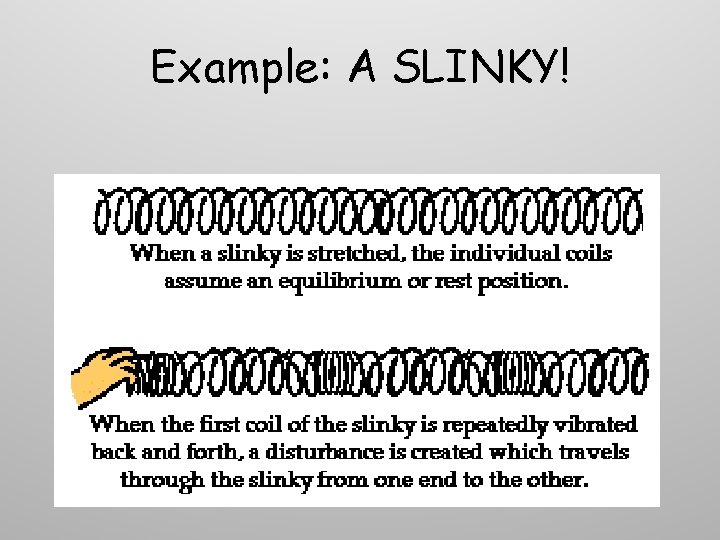
Example: A SLINKY!
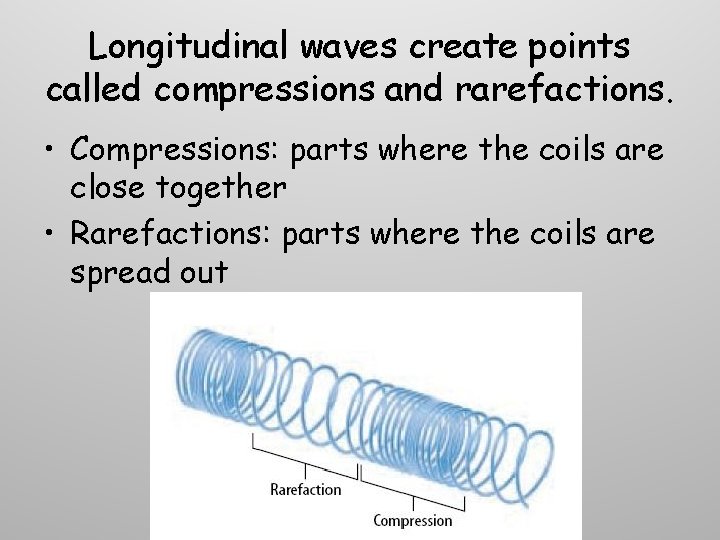
Longitudinal waves create points called compressions and rarefactions. • Compressions: parts where the coils are close together • Rarefactions: parts where the coils are spread out
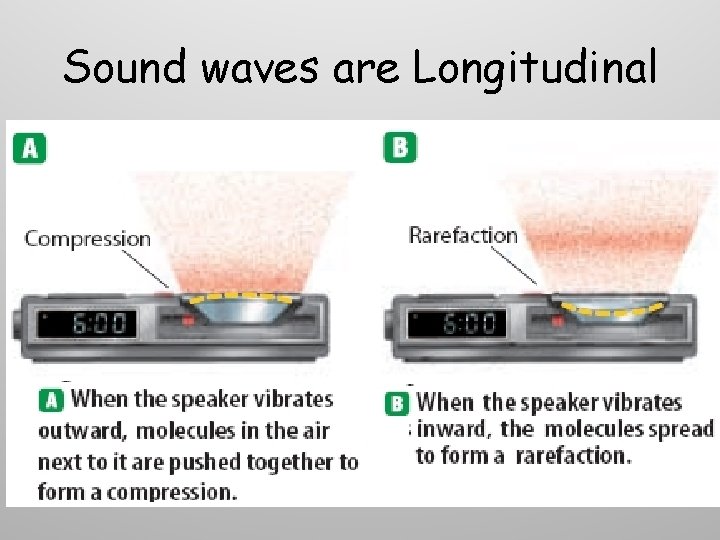
Sound waves are Longitudinal
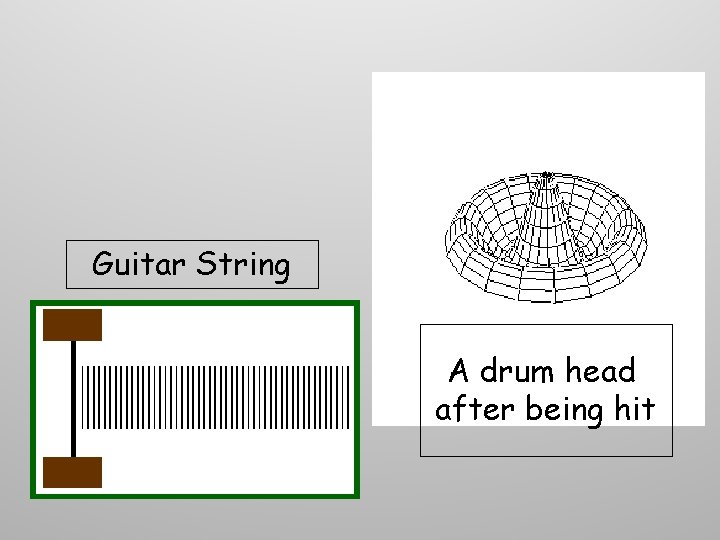
Guitar String A drum head after being hit