
Mechanical ventilation in special situationsARDS Ashraf Al Tarifi

- Slides: 75
Mechanical ventilation in special situations-ARDS Ashraf Al Tarifi, MD, FCCP Consultant Intensivist and Pulmonologist KFSH&RC-Riyadh Al Khortoum April 19, 2013
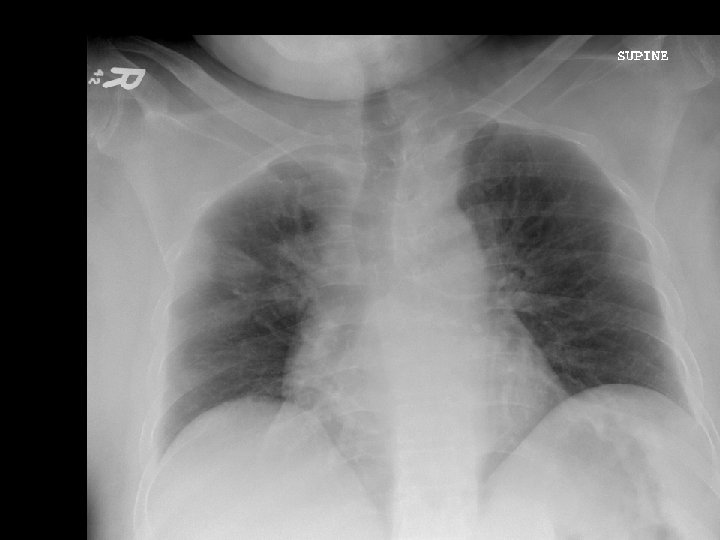
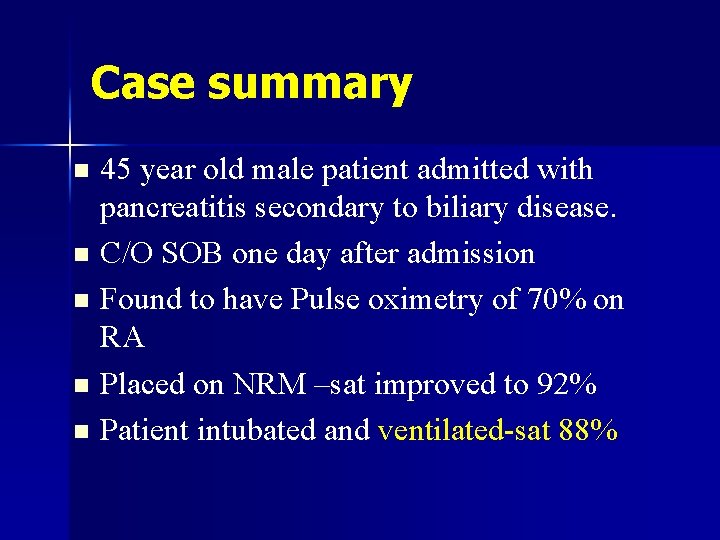
Case summary 45 year old male patient admitted with pancreatitis secondary to biliary disease. n C/O SOB one day after admission n Found to have Pulse oximetry of 70% on RA n Placed on NRM –sat improved to 92% n
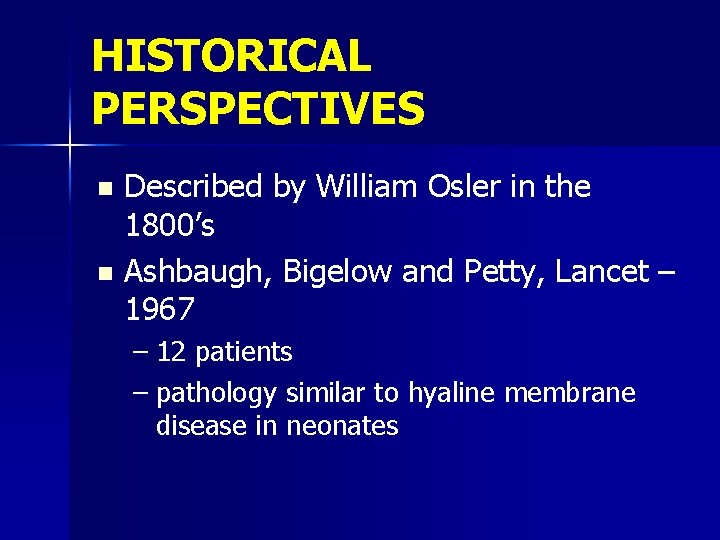
HISTORICAL PERSPECTIVES Described by William Osler in the 1800’s n Ashbaugh, Bigelow and Petty, Lancet – 1967 n – 12 patients – pathology similar to hyaline membrane disease in neonates
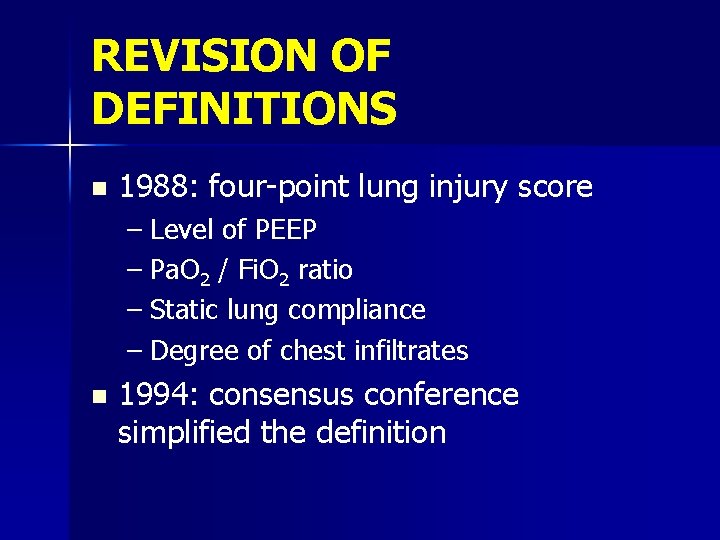
REVISION OF DEFINITIONS n 1988: four-point lung injury score – Level of PEEP – Pa. O 2 / Fi. O 2 ratio – Static lung compliance – Degree of chest infiltrates n 1994: consensus conference simplified the definition
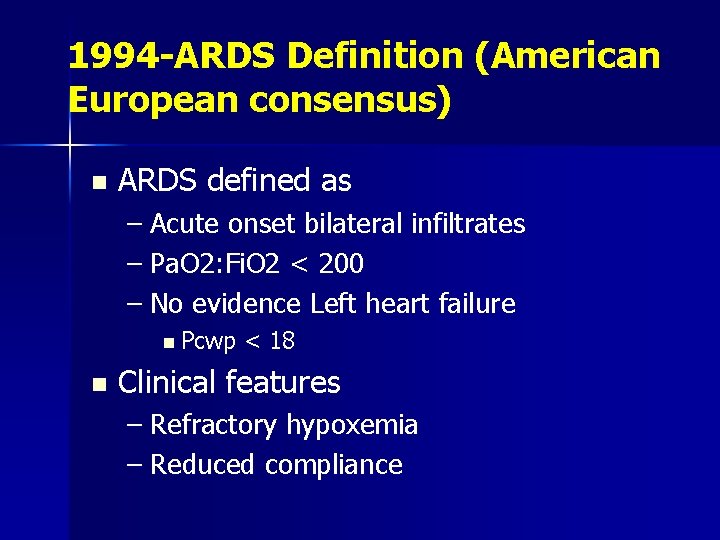
1994 -ARDS Definition (American European consensus) n ARDS defined as – Acute onset bilateral infiltrates – Pa. O 2: Fi. O 2 < 200 – No evidence Left heart failure n Pcwp n < 18 Clinical features – Refractory hypoxemia – Reduced compliance
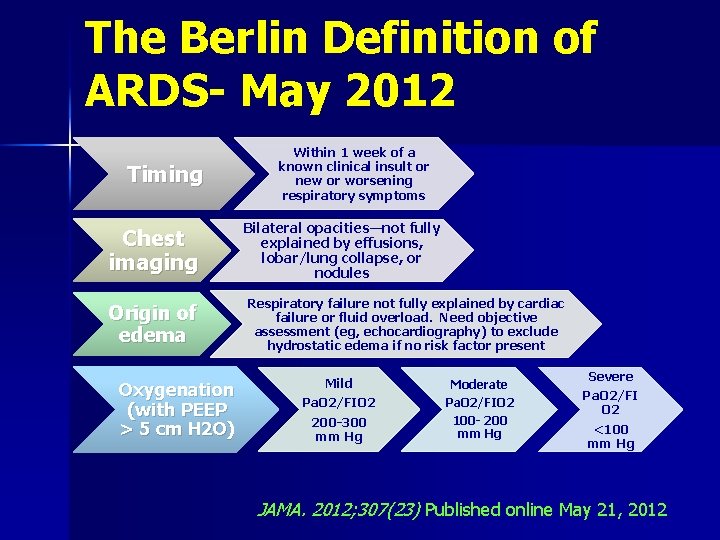
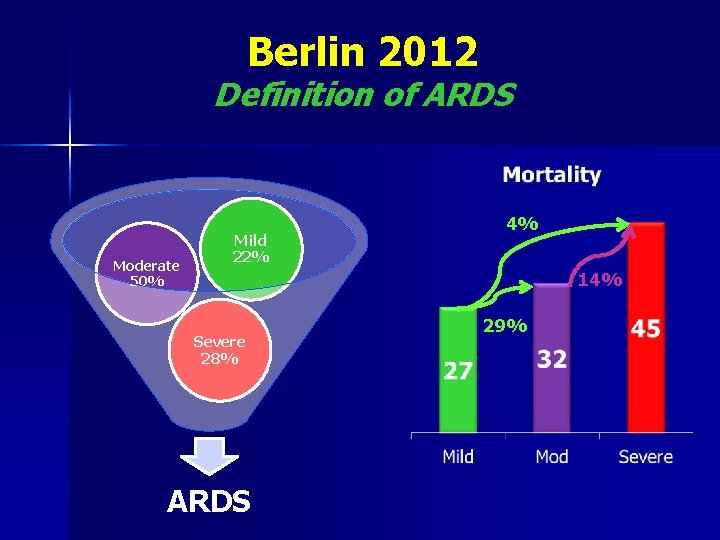
The Berlin Definition of ARDS- May 2012 Timing Chest imaging Origin of edema Oxygenation (with PEEP > 5 cm H 2 O) Within 1 week of a known clinical insult or new or worsening respiratory symptoms Bilateral opacities—not fully explained by effusions, lobar/lung collapse, or nodules Respiratory failure not fully explained by cardiac failure or fluid overload. Need objective assessment (eg, echocardiography) to exclude hydrostatic edema if no risk factor present Mild Pa. O 2/FIO 2 200 -300 mm Hg Moderate Pa. O 2/FIO 2 100 - 200 mm Hg Severe Pa. O 2/FI O 2 <100 mm Hg JAMA. 2012; 307(23) Published online May 21, 2012
Berlin 2012 Definition of ARDS Moderate 50% Mild 22% 4% 14% Severe 28% ARDS 29%
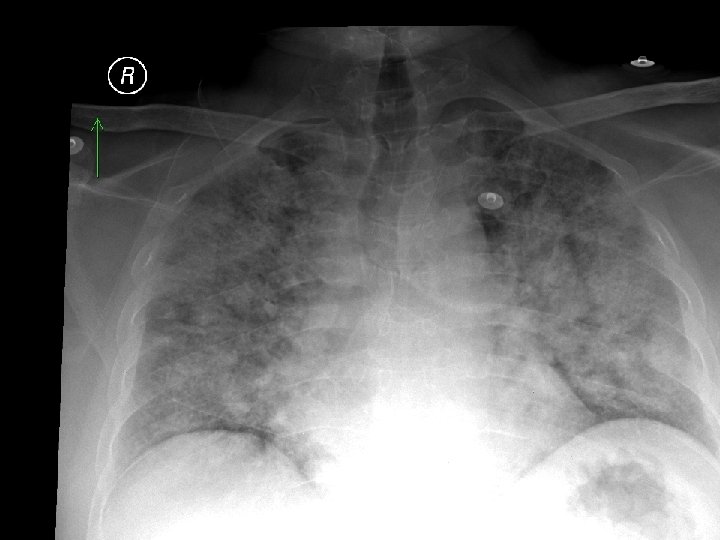
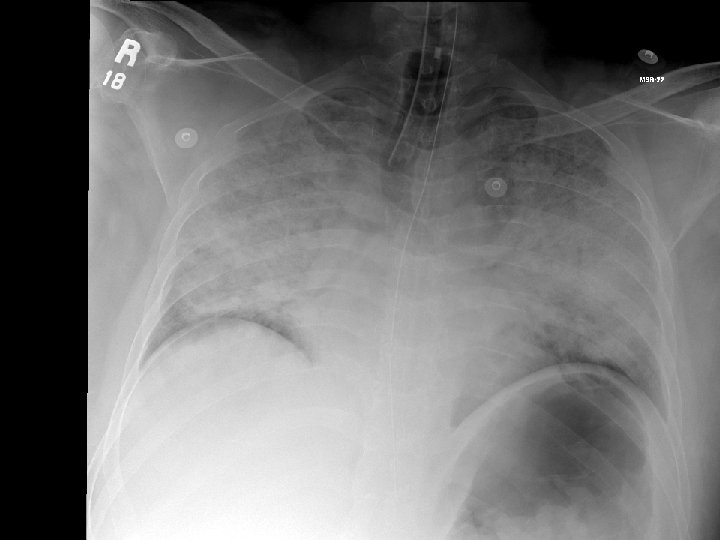
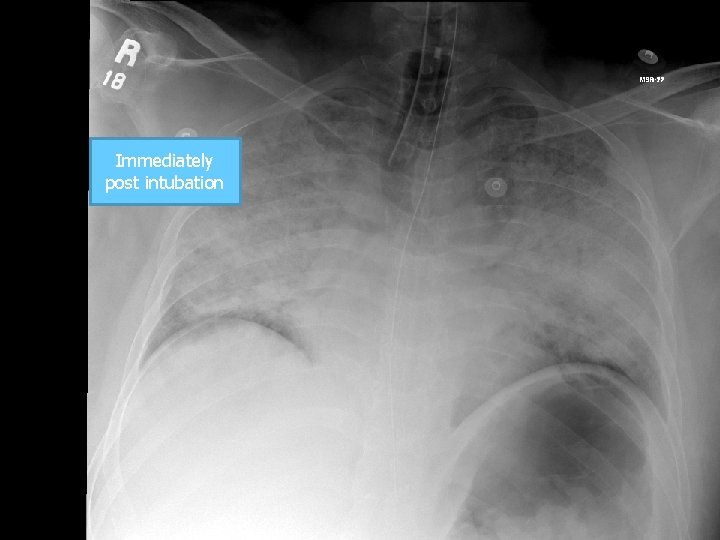
Case summary 45 year old male patient admitted with pancreatitis secondary to biliary disease. n C/O SOB one day after admission n Found to have Pulse oximetry of 70% on RA n Placed on NRM –sat improved to 92% n Patient intubated and ventilated-sat 88% n
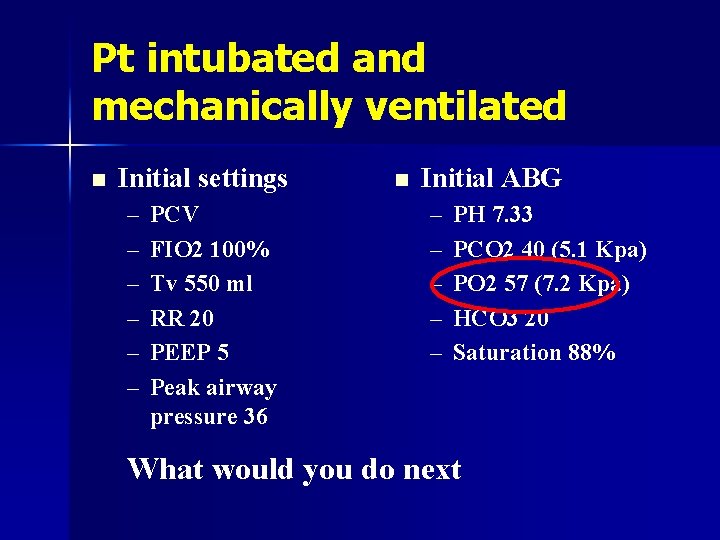
Pt intubated and mechanically ventilated n Initial settings – – – PCV FIO 2 100% Tv 550 ml RR 20 PEEP 5 Peak airway pressure 36 n Initial ABG – – – PH 7. 33 PCO 2 40 (5. 1 Kpa) PO 2 57 (7. 2 Kpa) HCO 3 20 Saturation 88% What would you do next
Factors Influencing Oxygenation FIO 2 n Mean Airway pressure n – Inspiratory Time (I: E ratio) – PEEP
Vent settings to improve oxygenation: FIO 2 n n n Always start at 100% even if patient was not hypoxemic prior to intubation – Patient might have Rt mainstem intubation – Pneumothorax secondary to high pressures during bagging Use continuous pulse oximetry if available or check arterial blood gases Once ETT position confirmed and oxygenation stable start weaning FIO 2 to keep sat > 92 -94%
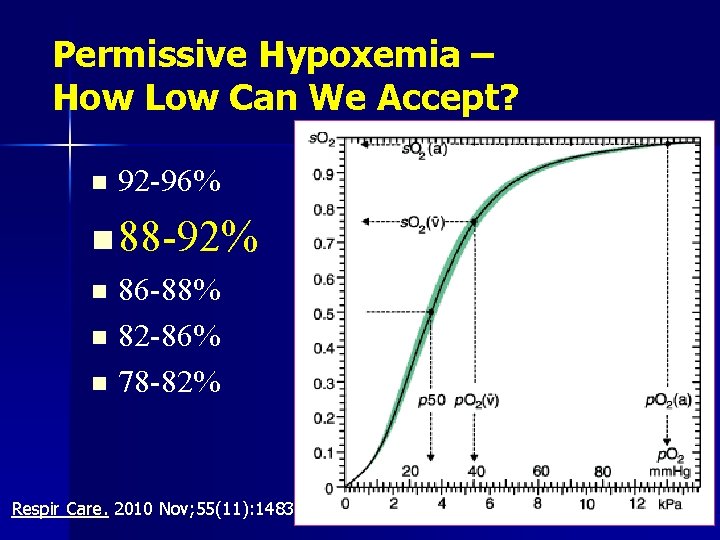
Permissive Hypoxemia – How Low Can We Accept? n 92 -96% n 88 -92% 86 -88% n 82 -86% n 78 -82% n Respir Care. 2010 Nov; 55(11): 1483 -90.
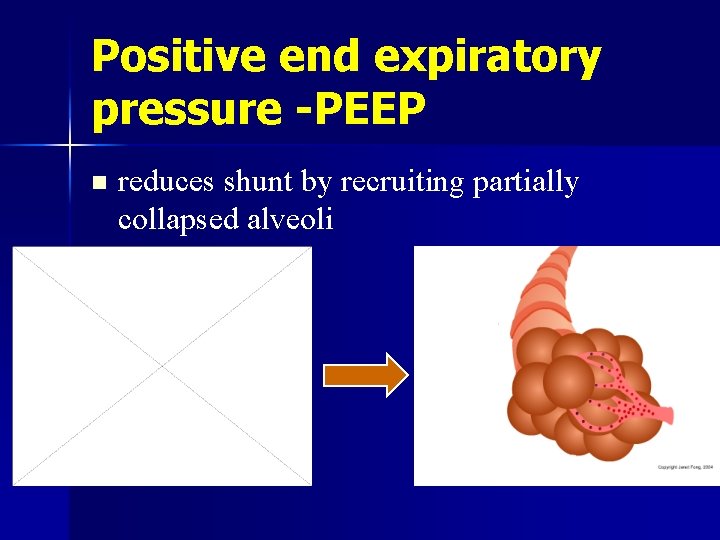
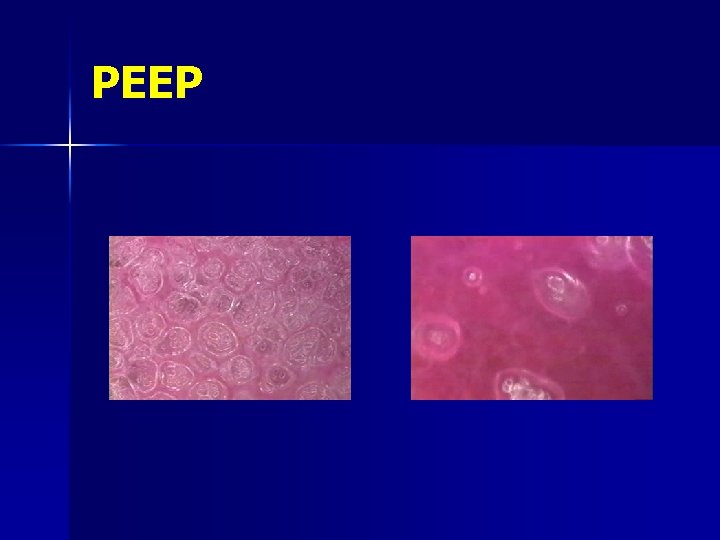
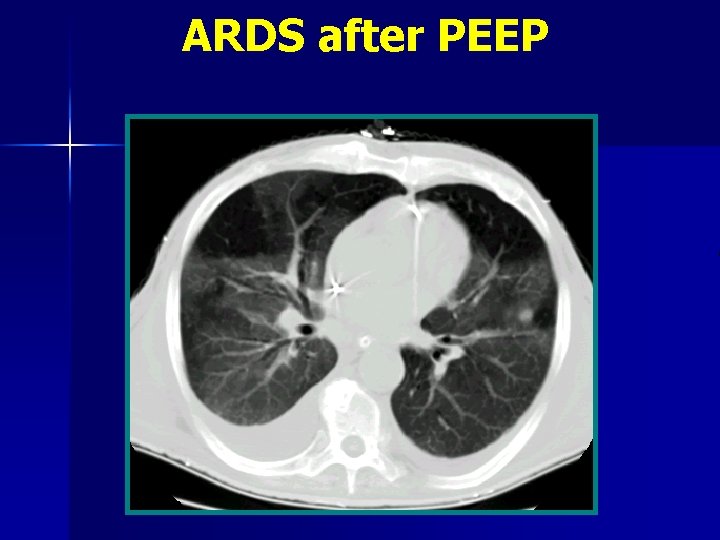
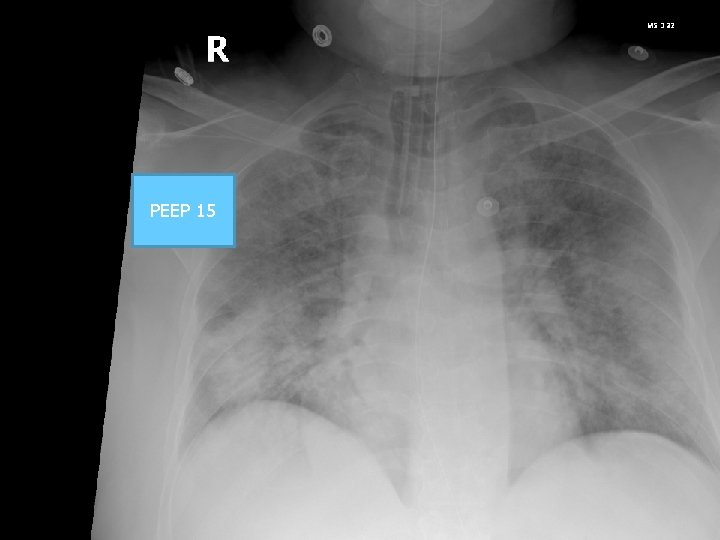
Positive end expiratory pressure -PEEP n reduces shunt by recruiting partially collapsed alveoli
PEEP
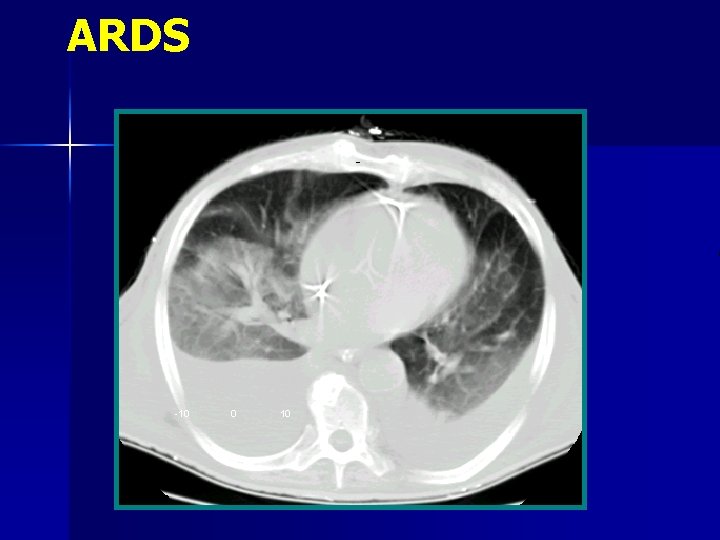
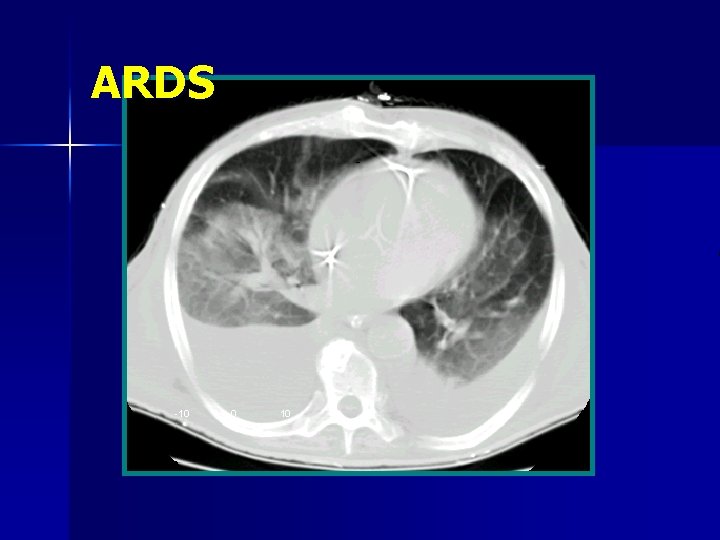
ARDS -10 0 10
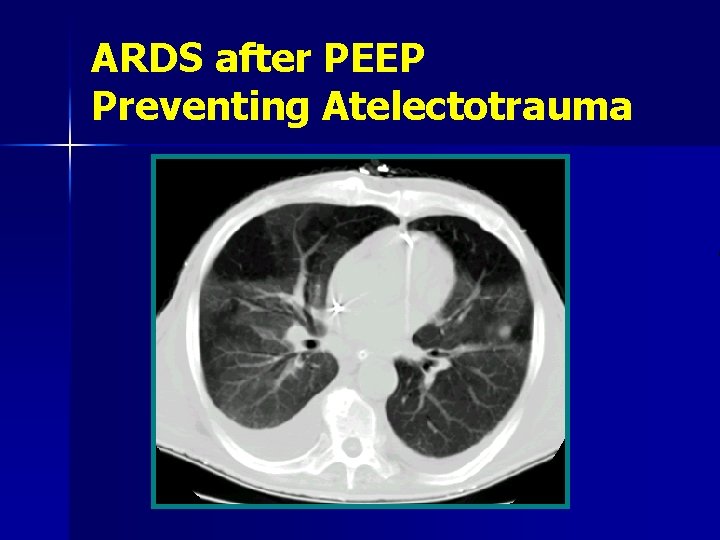
ARDS after PEEP
Immediately post intubation
PEEP 15
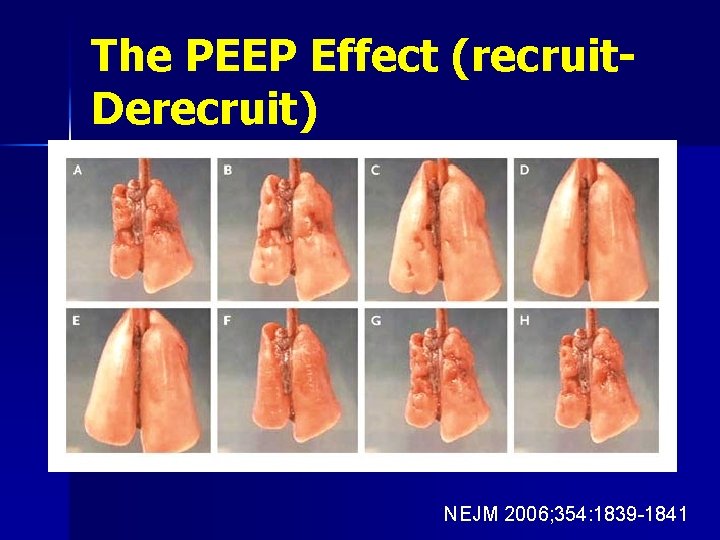
The PEEP Effect (recruit. Derecruit) NEJM 2006; 354: 1839 -1841
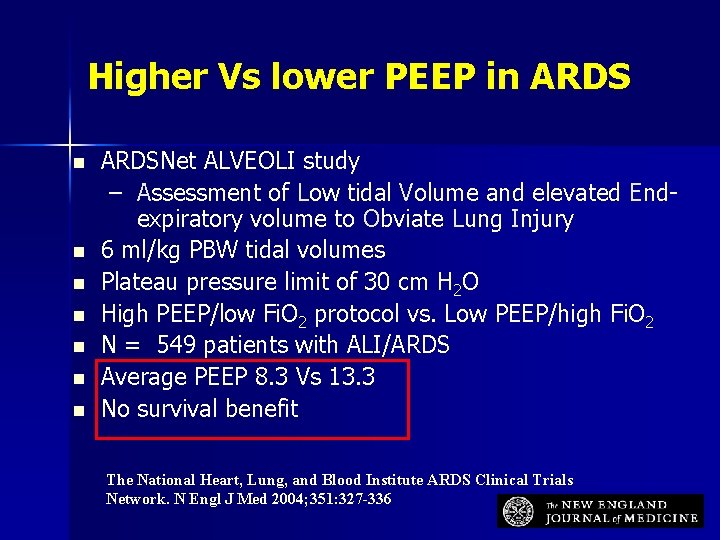
Higher Vs lower PEEP in ARDS n n n n ARDSNet ALVEOLI study – Assessment of Low tidal Volume and elevated Endexpiratory volume to Obviate Lung Injury 6 ml/kg PBW tidal volumes Plateau pressure limit of 30 cm H 2 O High PEEP/low Fi. O 2 protocol vs. Low PEEP/high Fi. O 2 N = 549 patients with ALI/ARDS Average PEEP 8. 3 Vs 13. 3 No survival benefit The National Heart, Lung, and Blood Institute ARDS Clinical Trials Network. N Engl J Med 2004; 351: 327 -336
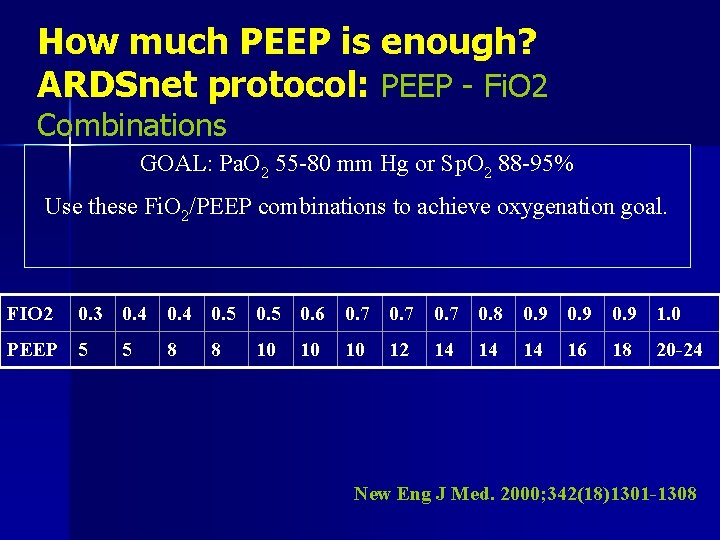
How much PEEP is enough? ARDSnet protocol: PEEP - Fi. O 2 Combinations GOAL: Pa. O 2 55 -80 mm Hg or Sp. O 2 88 -95% Use these Fi. O 2/PEEP combinations to achieve oxygenation goal. FIO 2 0. 3 0. 4 0. 5 0. 6 0. 7 0. 8 0. 9 1. 0 PEEP 5 5 8 8 10 10 10 12 14 14 14 16 18 20 -24 New Eng J Med. 2000; 342(18)1301 -1308
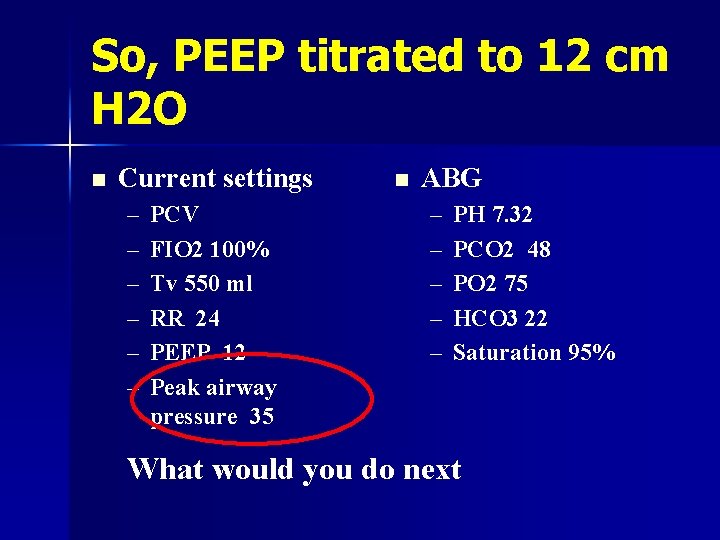
So, PEEP titrated to 12 cm H 2 O n Current settings – – – PCV FIO 2 100% Tv 550 ml RR 24 PEEP 12 Peak airway pressure 35 n ABG – – – PH 7. 32 PCO 2 48 PO 2 75 HCO 3 22 Saturation 95% What would you do next
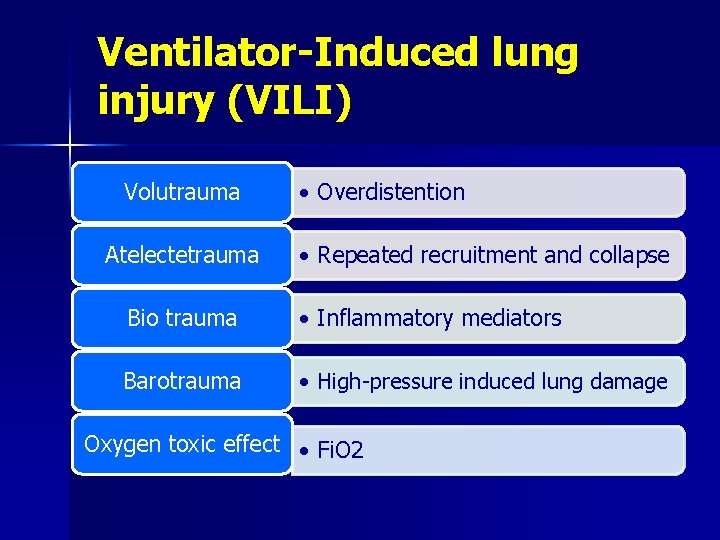
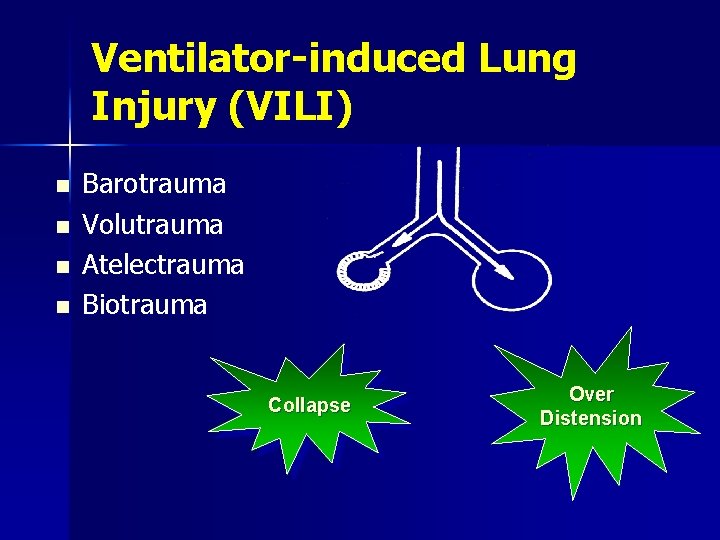
Ventilator-Induced lung injury (VILI) Volutrauma Atelectetrauma • Overdistention • Repeated recruitment and collapse Bio trauma • Inflammatory mediators Barotrauma • High-pressure induced lung damage Oxygen toxic effect • Fi. O 2
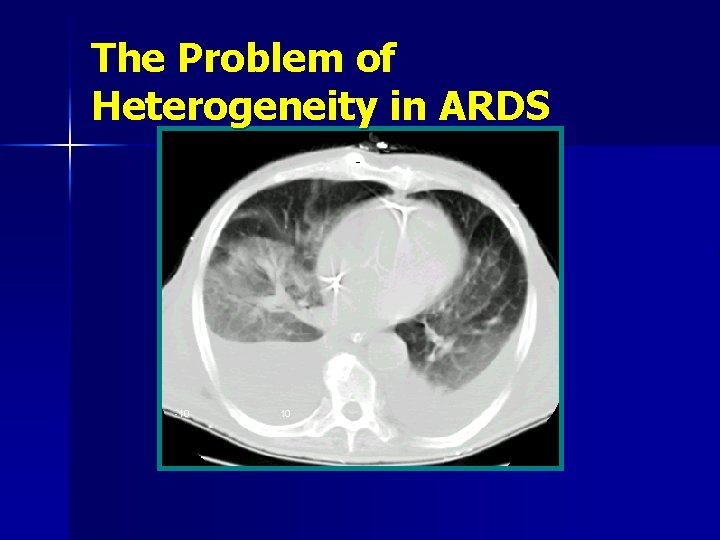
The Problem of Heterogeneity in ARDS -10 0 10
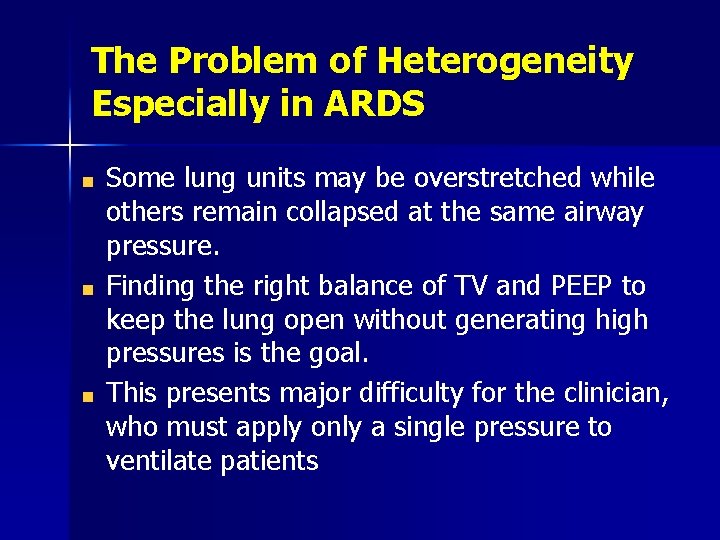
The Problem of Heterogeneity Especially in ARDS Some lung units may be overstretched while others remain collapsed at the same airway pressure. Finding the right balance of TV and PEEP to keep the lung open without generating high pressures is the goal. This presents major difficulty for the clinician, who must apply only a single pressure to ventilate patients
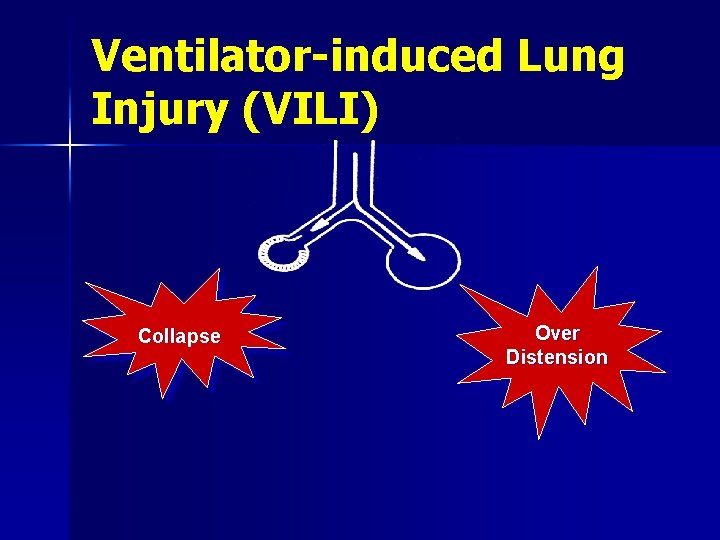
Ventilator-induced Lung Injury (VILI) Collapse Over Distension
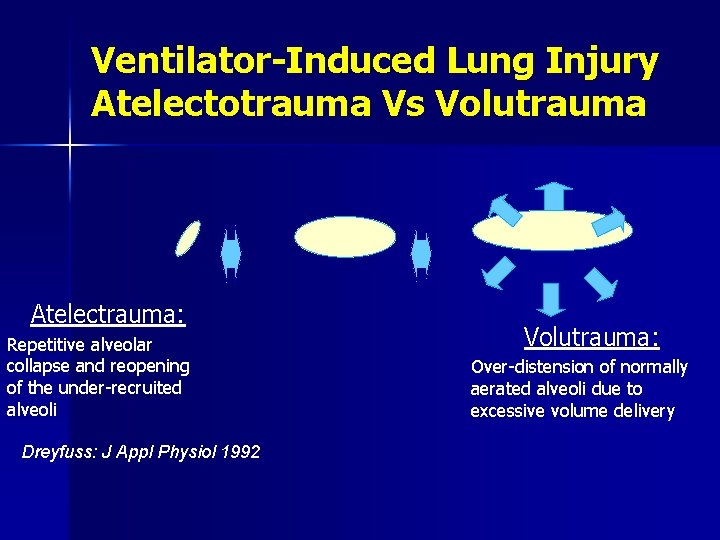
Ventilator-Induced Lung Injury Atelectotrauma Vs Volutrauma Atelectrauma: Repetitive alveolar collapse and reopening of the under-recruited alveoli Dreyfuss: J Appl Physiol 1992 Volutrauma: Over-distension of normally aerated alveoli due to excessive volume delivery
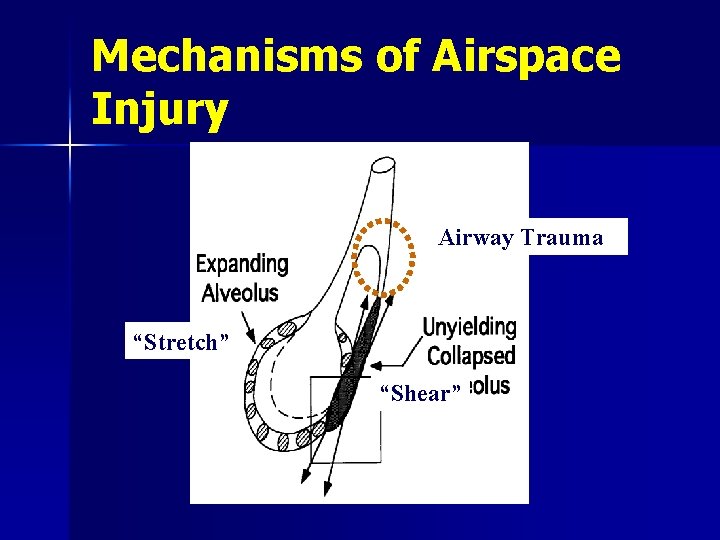
Mechanisms of Airspace Injury Airway Trauma “Stretch” “Shear”
ARDS -10 0 10
ARDS after PEEP Preventing Atelectotrauma
Ventilator-induced Lung Injury (VILI) n n Barotrauma Volutrauma Atelectrauma Biotrauma Collapse Over Distension
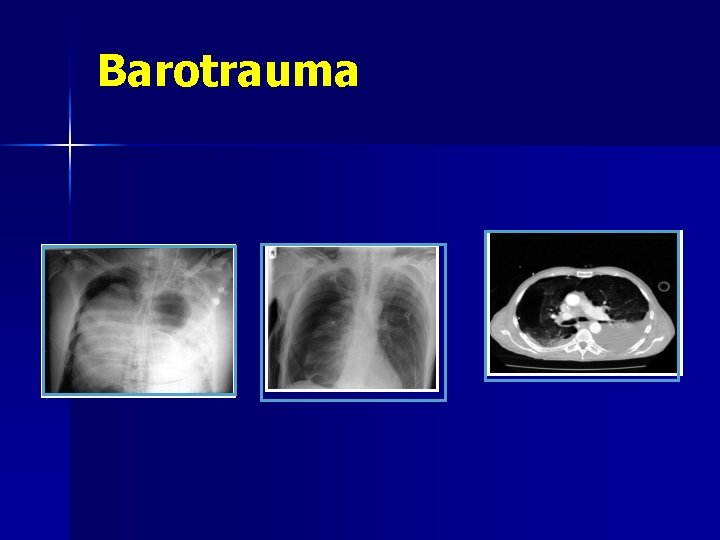
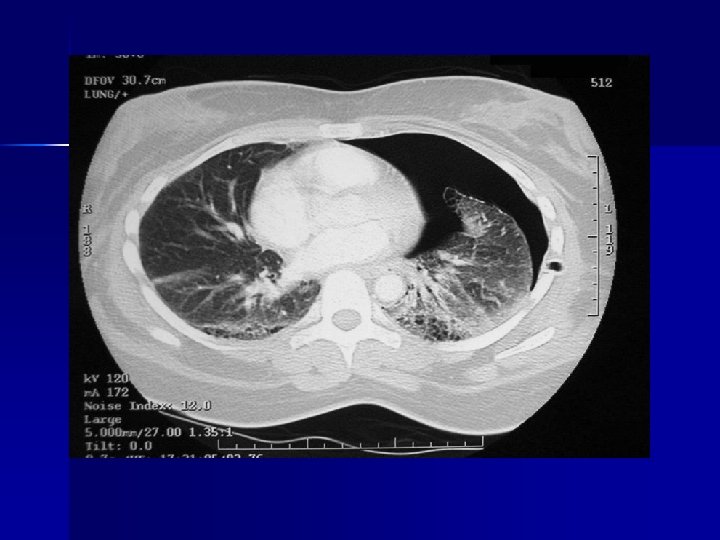
Baro-trauma Etiology : Directly related to airway pressures/PEEP Incidence 4% - 15% Highest in ARDS Incidence now decreased secondary to lung protective ventilation
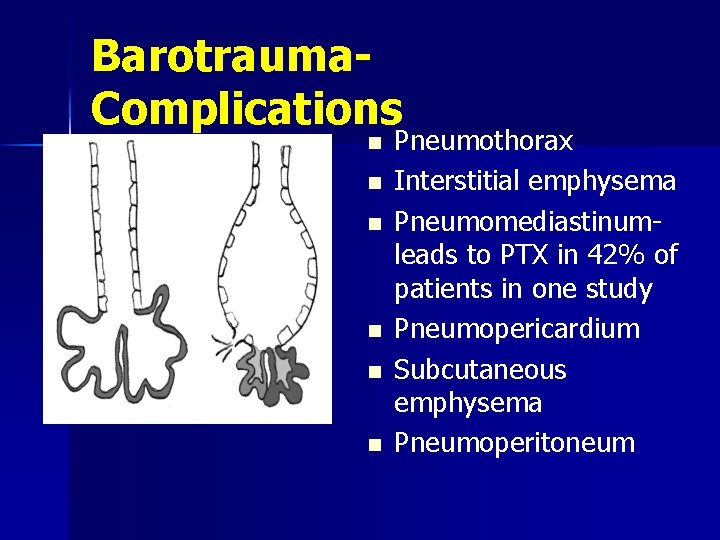
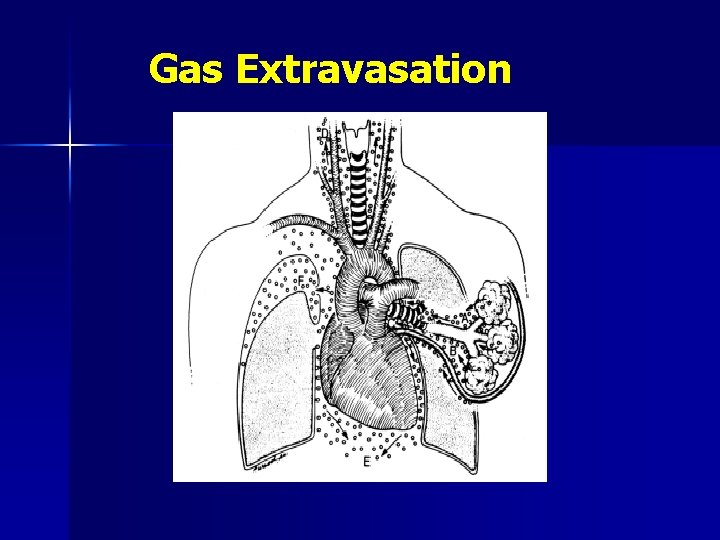
Barotrauma. Pathophysiology Some alveoli become more distended than others. Alveolar pressure increases and forms a pressure gradient between the alveoli and adjacent perivascular sheath. Air dissects into the perivascular sheath leading to perivascular interstitial emphysema (PIE) and further moves into areas of least resistance including subcutaneous tissue and tissue planes.
Barotrauma. Complications n n n Pneumothorax Interstitial emphysema Pneumomediastinumleads to PTX in 42% of patients in one study Pneumopericardium Subcutaneous emphysema Pneumoperitoneum
Gas Extravasation
Barotrauma
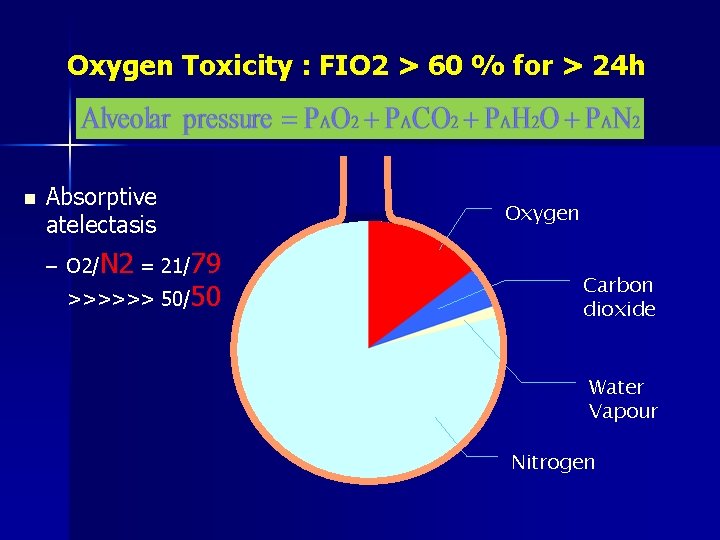
Oxygen Toxicity : FIO 2 > 60 % for > 24 h n Absorptive atelectasis – O 2/N 2 = 21/79 >>>>>> 50/50 Oxygen Carbon dioxide Water Vapour Nitrogen
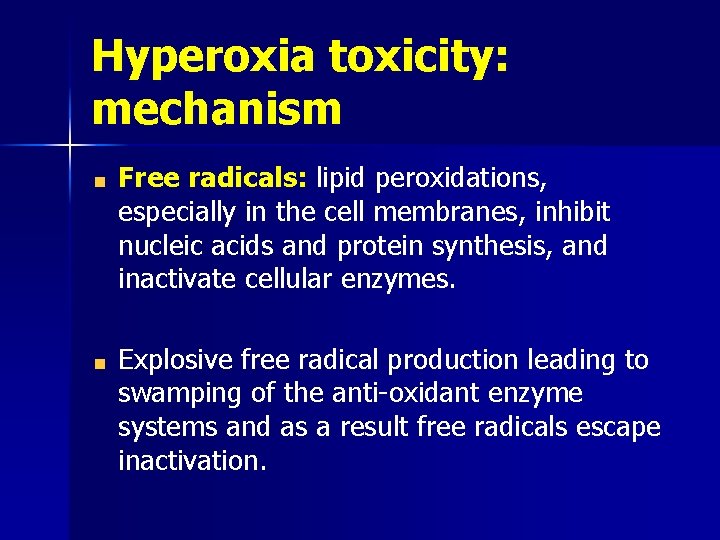
Hyperoxia toxicity: mechanism Free radicals: lipid peroxidations, especially in the cell membranes, inhibit nucleic acids and protein synthesis, and inactivate cellular enzymes. Explosive free radical production leading to swamping of the anti-oxidant enzyme systems and as a result free radicals escape inactivation.
ARDSnet NIH NHLBI ARDS Clinical Trials Network
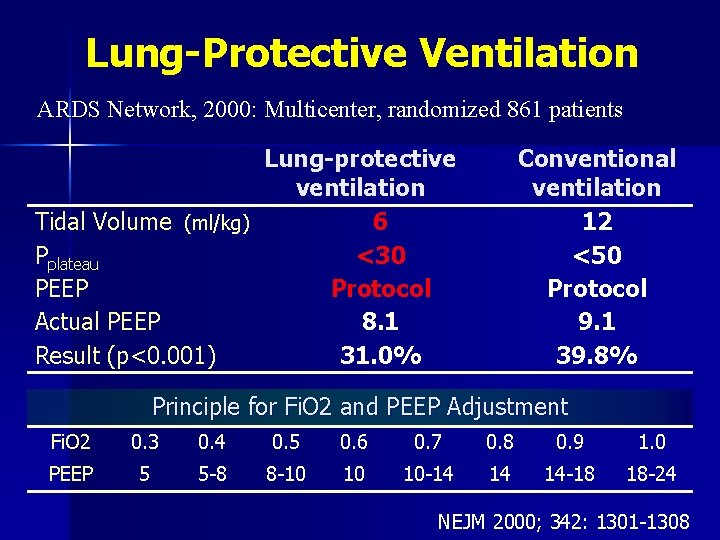
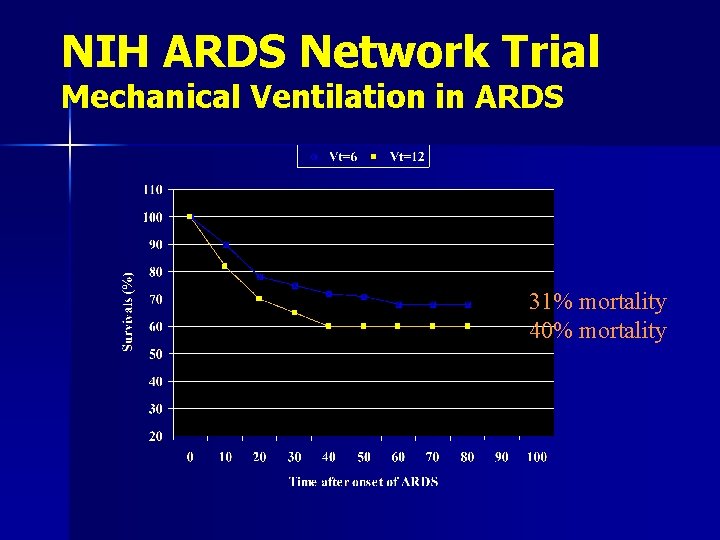
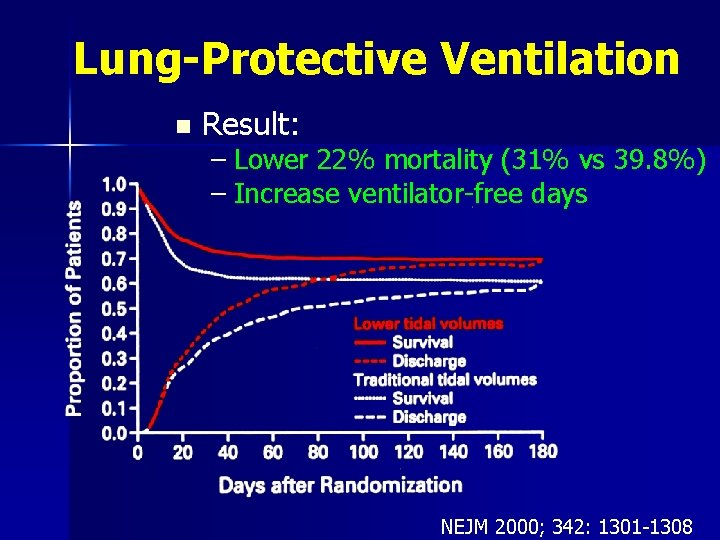
Lung-Protective Ventilation ARDS Network, 2000: Multicenter, randomized 861 patients Lung-protective ventilation Tidal Volume (ml/kg) 6 Pplateau <30 PEEP Protocol Actual PEEP 8. 1 Result (p<0. 001) 31. 0% Conventional ventilation 12 <50 Protocol 9. 1 39. 8% Principle for Fi. O 2 and PEEP Adjustment Fi. O 2 0. 3 0. 4 0. 5 0. 6 0. 7 0. 8 0. 9 1. 0 PEEP 5 5 -8 8 -10 10 10 -14 14 14 -18 18 -24 NEJM 2000; 342: 1301 -1308
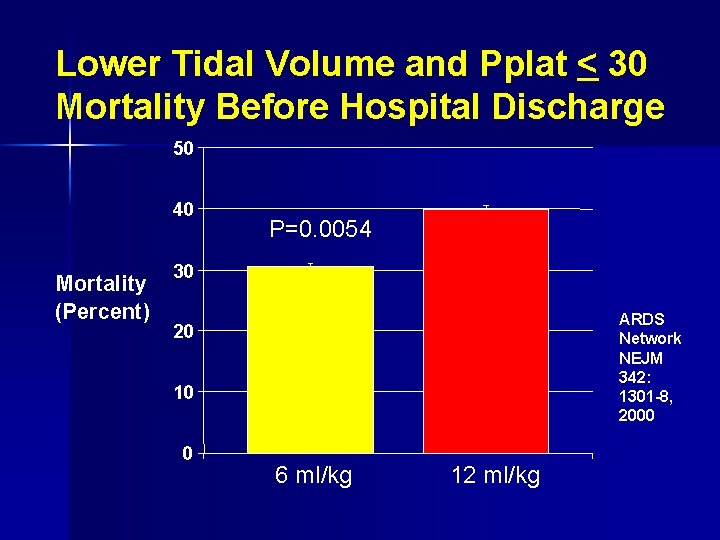
Lower Tidal Volume and Pplat < 30 Mortality Before Hospital Discharge 50 40 Mortality (Percent) P=0. 0054 30 ARDS Network NEJM 342: 1301 -8, 2000 20 10 0 6 ml/kg 12 ml/kg
NIH ARDS Network Trial Mechanical Ventilation in ARDS 31% mortality 40% mortality
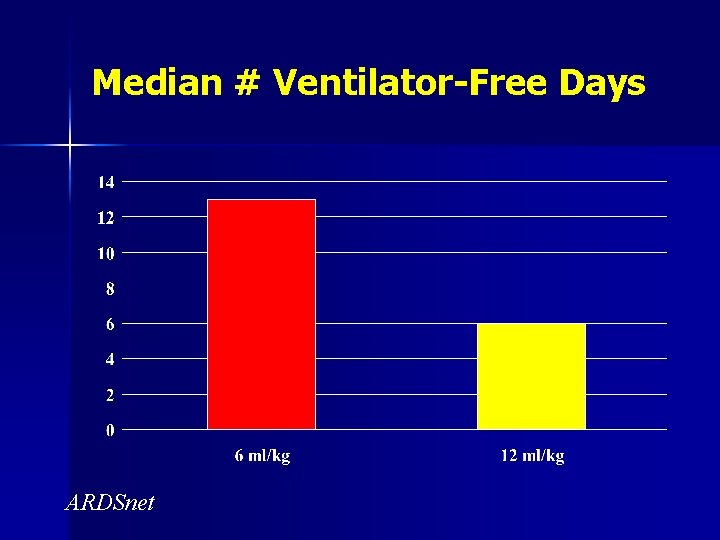
Lung-Protective Ventilation n Result: – Lower 22% mortality (31% vs 39. 8%) – Increase ventilator-free days NEJM 2000; 342: 1301 -1308
Median # Ventilator-Free Days ARDSnet
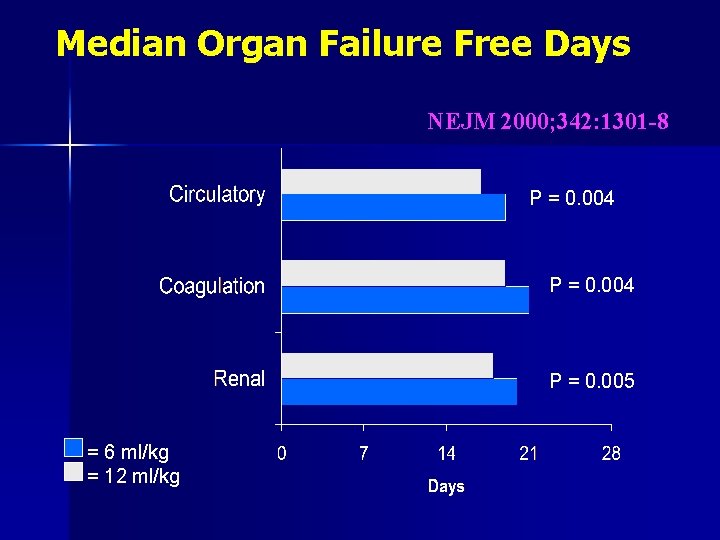
Median Organ Failure Free Days NEJM 2000; 342: 1301 -8 P = 0. 004 P = 0. 005 = 6 ml/kg = 12 ml/kg
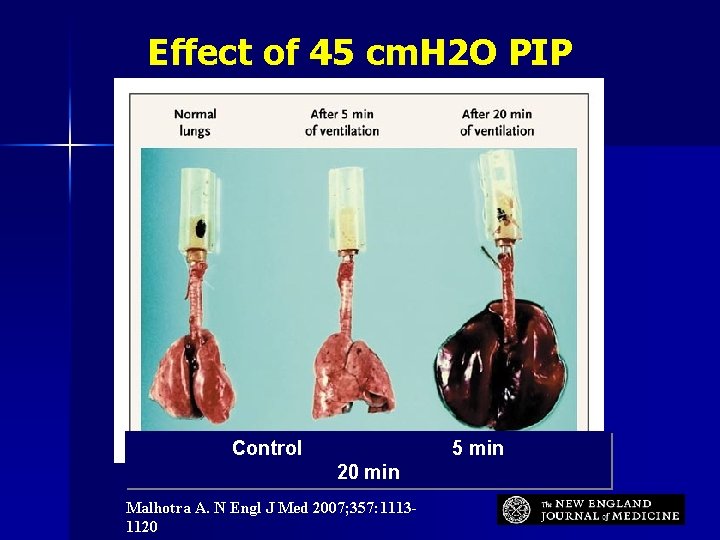
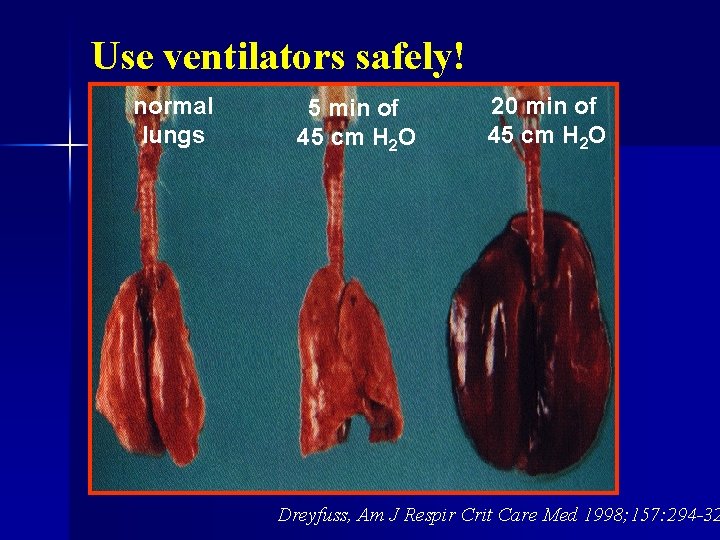
Effect of 45 cm. H 2 O PIP Control 5 min 20 min Malhotra A. N Engl J Med 2007; 357: 11131120
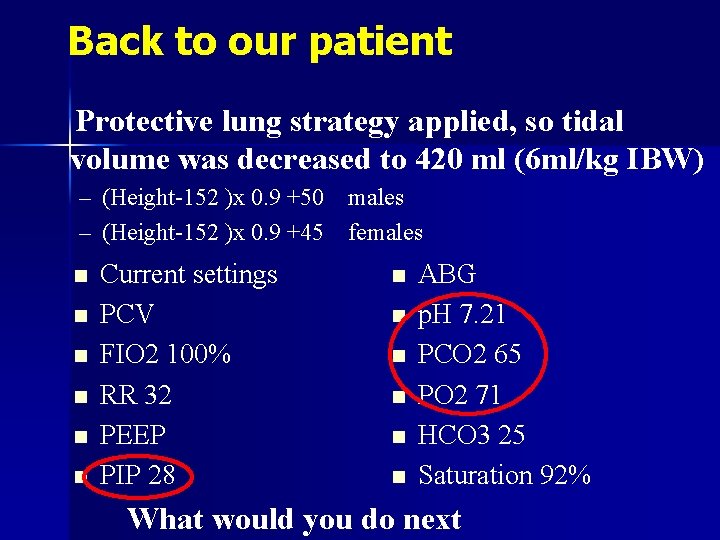
Back to our patient Protective lung strategy applied, so tidal volume was decreased to 420 ml (6 ml/kg IBW) – (Height-152 )x 0. 9 +50 males – (Height-152 )x 0. 9 +45 females n n n Current settings PCV FIO 2 100% RR 32 PEEP PIP 28 n n n ABG p. H 7. 21 PCO 2 65 PO 2 71 HCO 3 25 Saturation 92% What would you do next
Permissive Hypercapnia n n n Low Vt (6 ml/kg) to prevent over-distention Increase respiratory rate to avoid very high level of hypercapnia Pa. CO 2 allowed to rise Usually well tolerated-May be beneficial Potential Problems: tissue acidosis, autonomic dysregulation, CNS effect, and circulatory effects May need to start Bicarb infusion till the kidney starts to compensate (2 -3 days)
Permissive Hypercapnia – When would you NOT do it? Renal failure n High intracranial pressures n Cardiovascular problems/Arrhythmia n
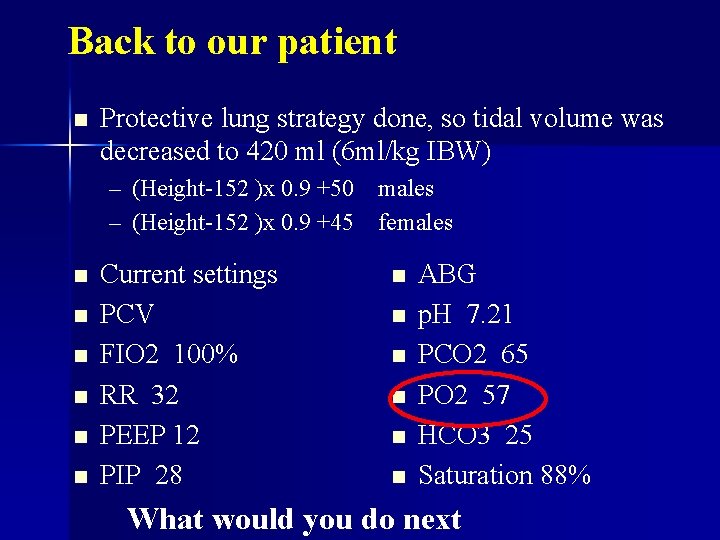
Back to our patient n Protective lung strategy done, so tidal volume was decreased to 420 ml (6 ml/kg IBW) – (Height-152 )x 0. 9 +50 males – (Height-152 )x 0. 9 +45 females n n n Current settings PCV FIO 2 100% RR 32 PEEP 12 PIP 28 n n n ABG p. H 7. 21 PCO 2 65 PO 2 57 HCO 3 25 Saturation 88% What would you do next
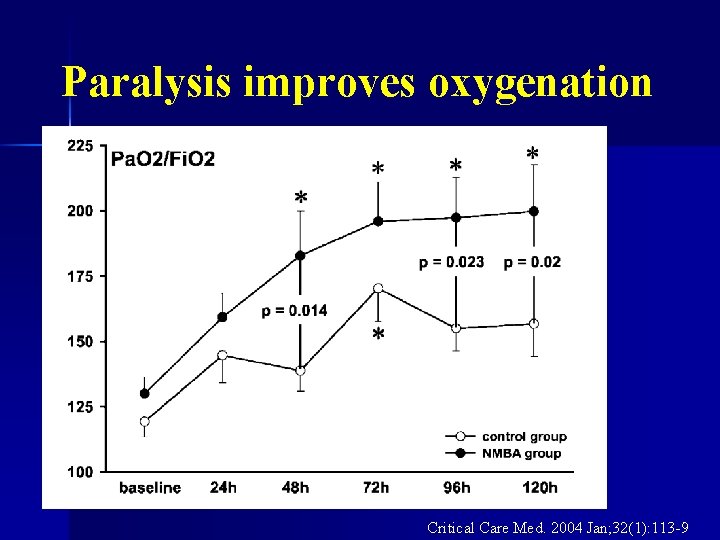
Paralysis improves oxygenation Critical Care Med. 2004 Jan; 32(1): 113 -9
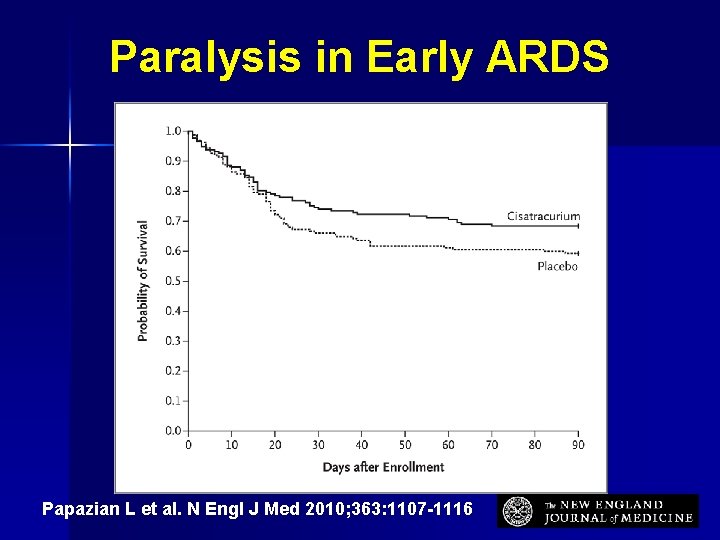
Paralysis in Early ARDS Papazian L et al. N Engl J Med 2010; 363: 1107 -1116
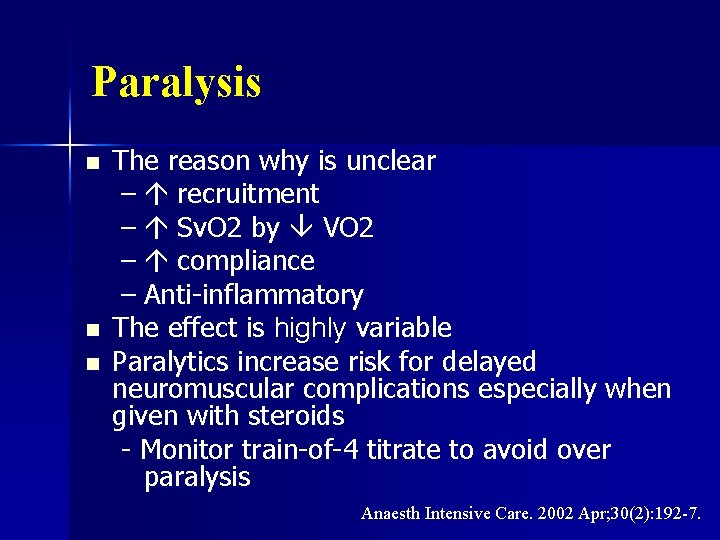
Paralysis n n n The reason why is unclear – recruitment – Sv. O 2 by VO 2 – compliance – Anti-inflammatory The effect is highly variable Paralytics increase risk for delayed neuromuscular complications especially when given with steroids - Monitor train-of-4 titrate to avoid over paralysis Anaesth Intensive Care. 2002 Apr; 30(2): 192 -7.
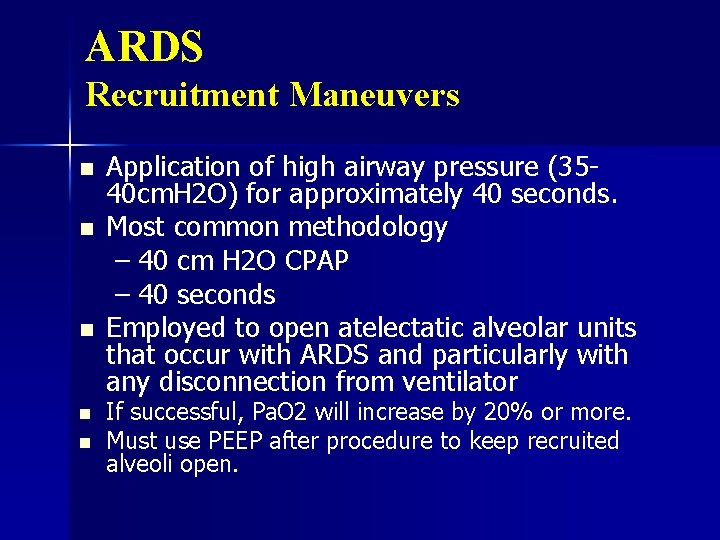
ARDS Recruitment Maneuvers n n n Application of high airway pressure (3540 cm. H 2 O) for approximately 40 seconds. Most common methodology – 40 cm H 2 O CPAP – 40 seconds Employed to open atelectatic alveolar units that occur with ARDS and particularly with any disconnection from ventilator If successful, Pa. O 2 will increase by 20% or more. Must use PEEP after procedure to keep recruited alveoli open.
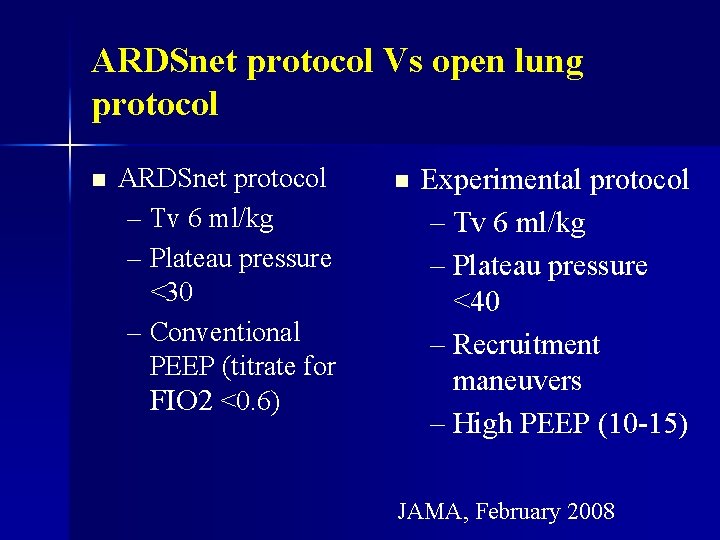
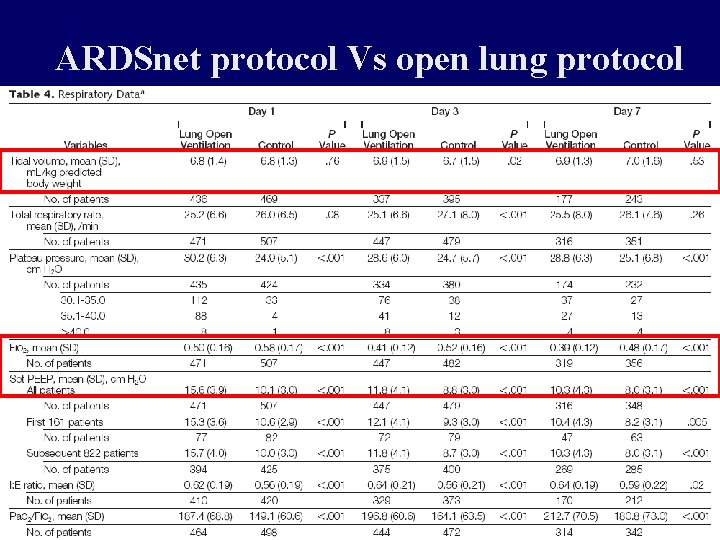
ARDSnet protocol Vs open lung protocol n ARDSnet protocol – Tv 6 ml/kg – Plateau pressure <30 – Conventional PEEP (titrate for FIO 2 <0. 6) n Experimental protocol – Tv 6 ml/kg – Plateau pressure <40 – Recruitment maneuvers – High PEEP (10 -15) JAMA, February 2008
ARDSnet protocol Vs open lung protocol
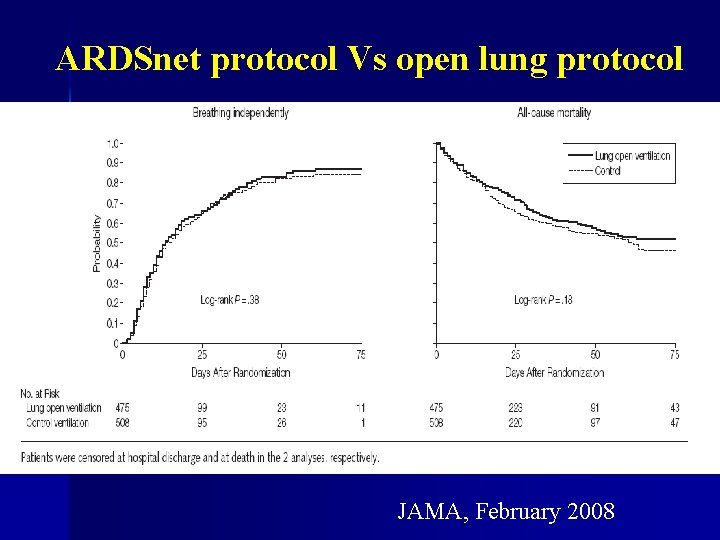
ARDSnet protocol Vs open lung protocol JAMA, February 2008
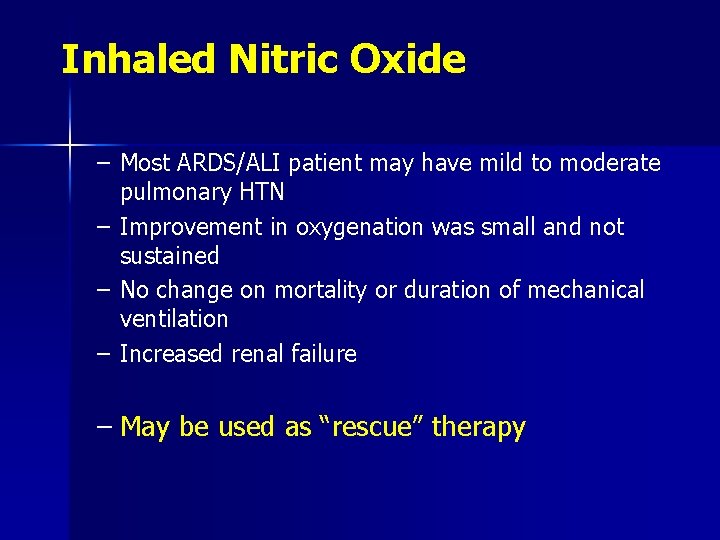
Inhaled Nitric Oxide – Most ARDS/ALI patient may have mild to moderate pulmonary HTN – Improvement in oxygenation was small and not sustained – No change on mortality or duration of mechanical ventilation – Increased renal failure – May be used as “rescue” therapy
Fluid management in ARDS
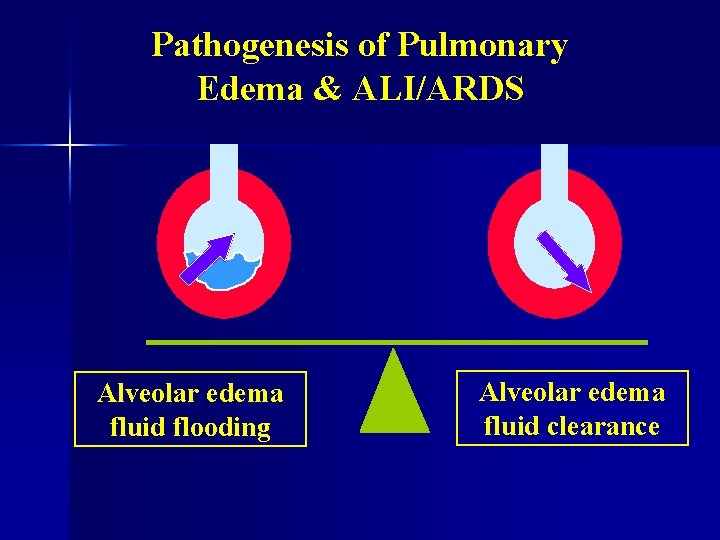
Pathogenesis of Pulmonary Edema & ALI/ARDS Alveolar edema fluid flooding Alveolar edema fluid clearance
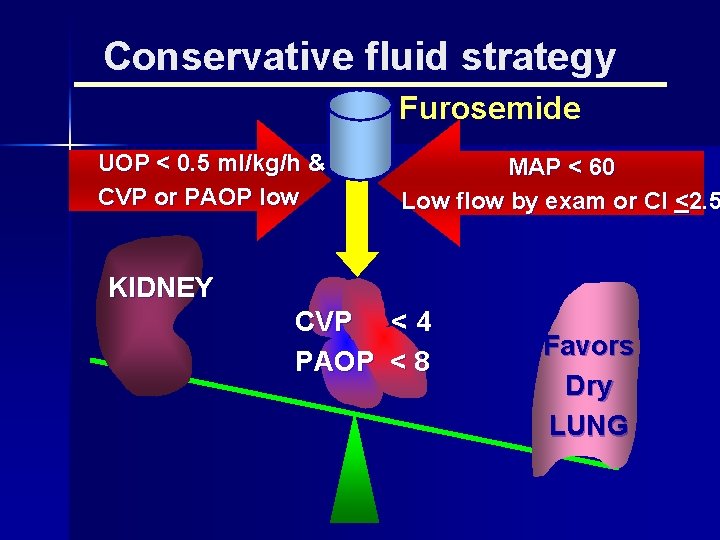
Conservative fluid strategy Furosemide UOP < 0. 5 ml/kg/h & CVP or PAOP low MA P < 6 0 L o w fl o w b y e x a m o r C I < 2. 5 KIDNEY CVP < 4 PAOP < 8 Favors Dry LUNG
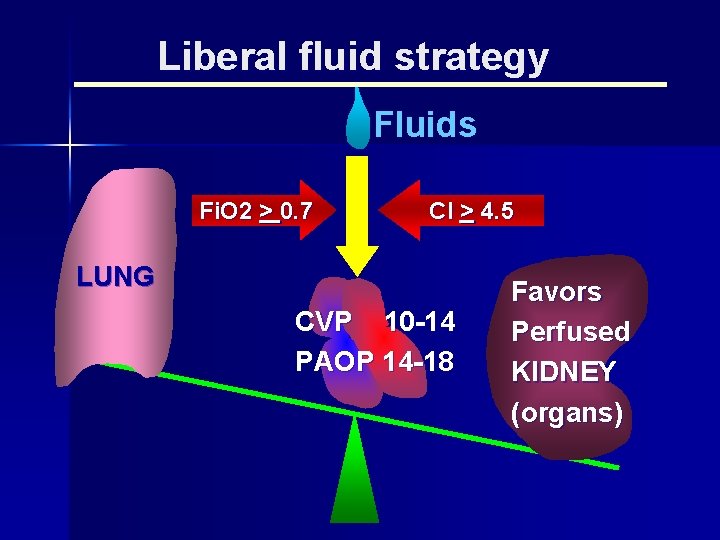
Liberal fluid strategy Fluids Fi. O 2 > 0. 7 CI > 4. 5 LUNG CVP 10 -14 PAOP 14 -18 Favors Perfused KIDNEY (organs)
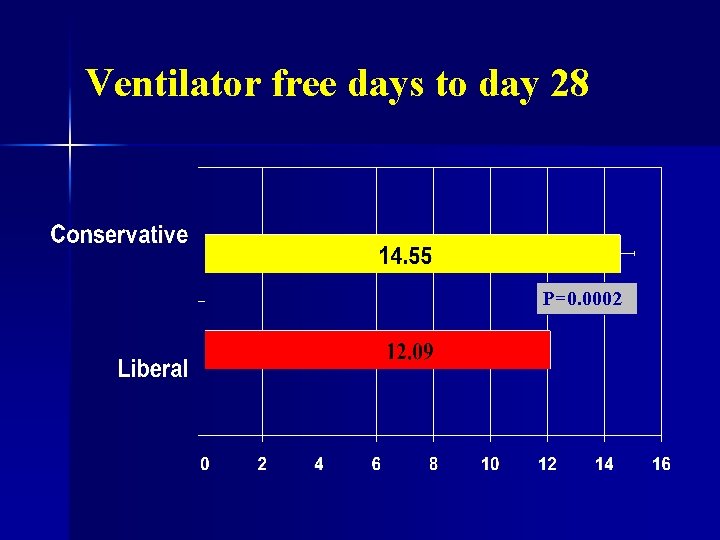
Ventilator free days to day 28 P=0. 0002
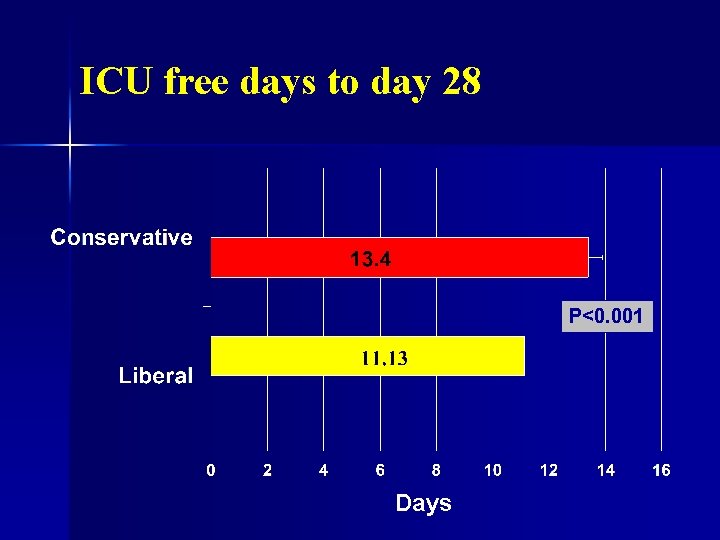
ICU free days to day 28 P<0. 001 Days
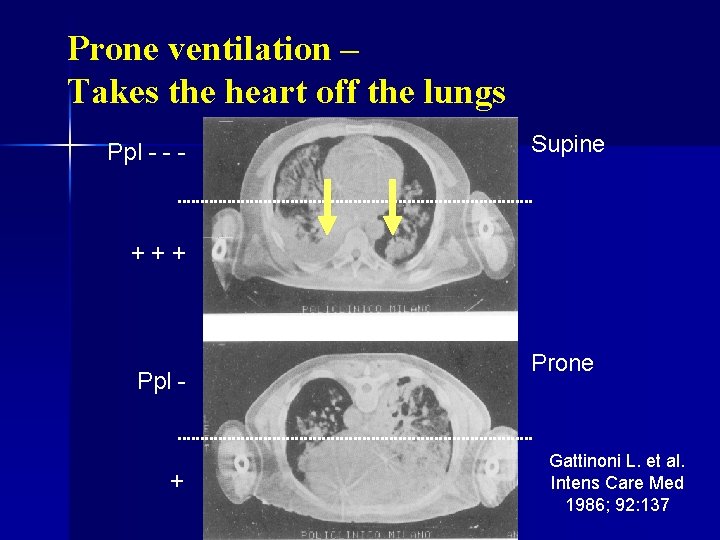
Prone ventilation – Takes the heart off the lungs Ppl - - - Supine +++ Ppl - + Prone Gattinoni L. et al. Intens Care Med 1986; 92: 137
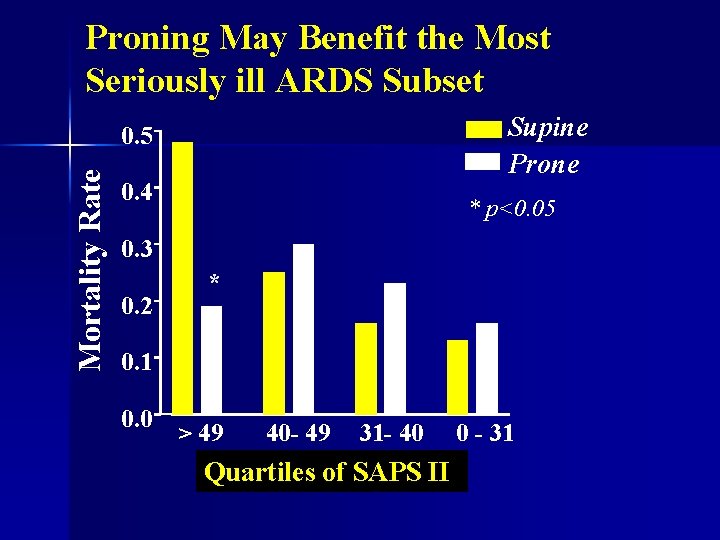
Proning May Benefit the Most Seriously ill ARDS Subset Supine Prone Mortality Rate 0. 5 0. 4 * p<0. 05 0. 3 0. 2 * 0. 1 0. 0 > 49 40 - 49 31 - 40 SAPS II Quartiles of SAPS II 0 - 31
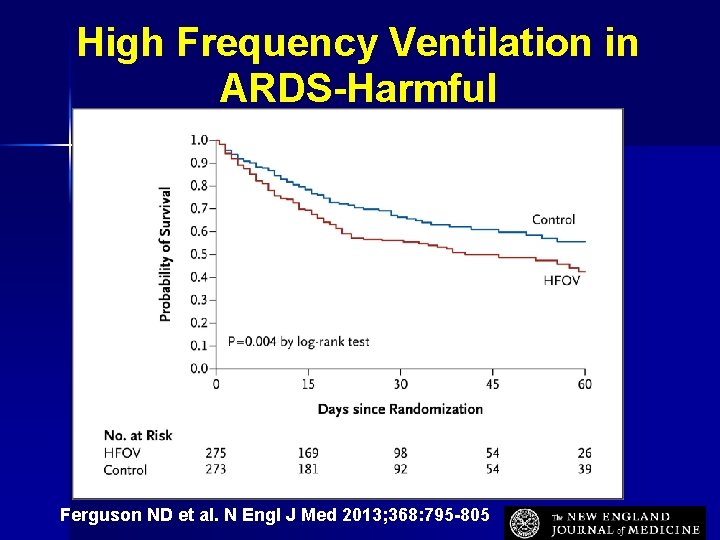
High Frequency Ventilation in ARDS-Harmful Ferguson ND et al. N Engl J Med 2013; 368: 795 -805
Steroids in ARDS n To be answered in Debate session
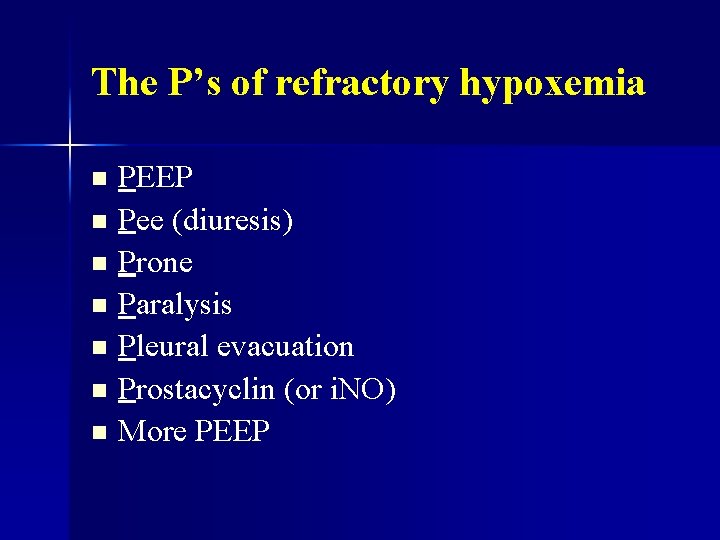
The P’s of refractory hypoxemia n n n n PEEP Pee (diuresis) Prone Paralysis Pleural evacuation Prostacyclin (or i. NO) More PEEP
Take home messages Take ARDS seriously-it kills about 60000 patients per year in the US n Use lower Tv (6 ml/kg IBW) to keep plateau pressure <30 n Permissive hypercapnea is safe and well tolerated n Use enough PEEP to recruit lungs n Keep lungs dry n
Use ventilators safely! normal lungs 5 min of 45 cm H 2 O 20 min of 45 cm H 2 O Dreyfuss, Am J Respir Crit Care Med 1998; 157: 294 -32