
MECHANICAL OBSTRUCTION OF AIRWAY DR dr BAMBANG UDJI
MECHANICAL OBSTRUCTION OF AIRWAY DR. dr. BAMBANG UDJI DJOKO RIANTO, SP. THT, M. KES. Referrences: Simpson J. F, Robin I. , Ballantyne J. C. , Groves J. 1967. A synopsis of otolaryngology. Becker W. , Naumann H. H. , Pfaltz C. R. 1993. Ear, Nose, and Throat Disease. 1
1. CONGENITAL 2. TRAUMA 3. INFLAMMATION/INFECTION 4. NEOPLASM 5. CORPUS ALIENUM 2
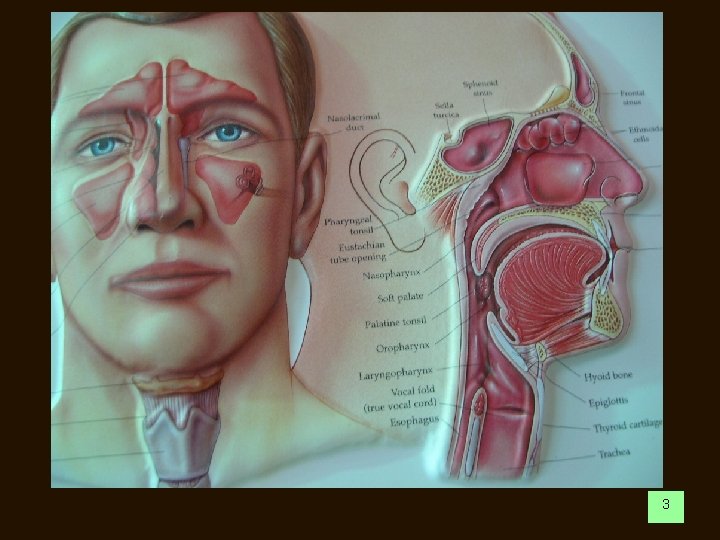
3
NOSE ABNORMALITY CONGENITAL MALFORMATIONS 1. ATRESIA & STENOSIS OF ANTERIOR NARES - aetiologi: non canalization & non epithelial plug between the medium & lateral nasal processes - incidence: rare - treatment: the web must be excised 4
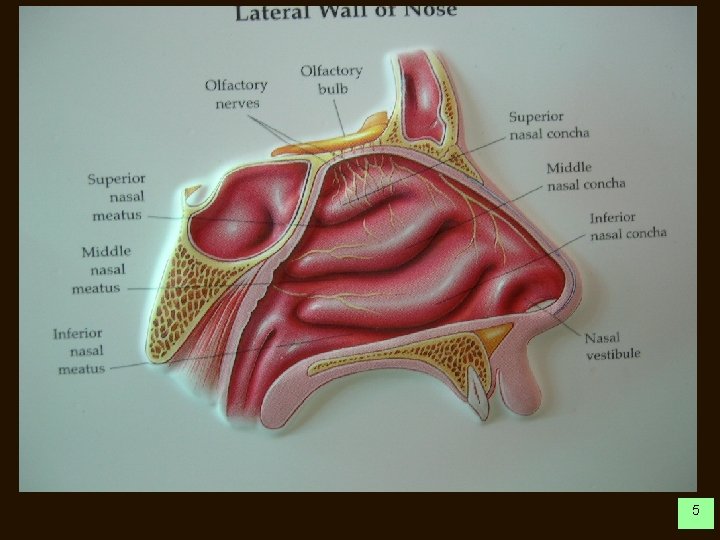
5
2. ATRESIA POSTERIOR NARES Aetiology: persistence of the primitive bucconasal membrane Degrees: - complete unilateral most commonly - incomplete unilateral - complete bilateral - incomplete bilateral Type or origin - mucous membrane - bony most commonly - mixed 6
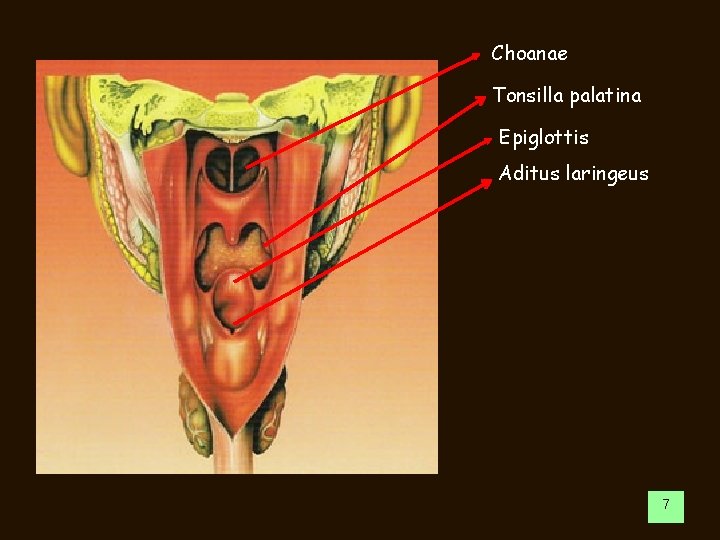
Choanae Tonsilla palatina Epiglottis Aditus laringeus 7
PATHOLOGY The partition is attached to: 1. basis sphenoid, above 2. medial pterygoid plate of sphenoid 3. vomer, on the inner side 4. hard palate, below - The thickened vary from: 1 -10 mm 8
INCIDENCE - neonatal - females are more commonly than male CLINICAL FEATURES Unilateral atresia: - nasal obstruction may notice for some years - excessive nasal discharge at /soon after birth glue like in consistency 9
Bilateral atresia - soon after birth - urgent death from asphyxia - nasal discharge - delayed symptom: - mouth breathing - failure to develop taste & smell 10
DIAGNOSIS - rubber catheter or probe can’t be passed through the nose into nasopharynx (NP) - posterior rhinoscopy atresia - radiograph a radiophag substance instilled into the nose doesn’t reach the NP 11
TREATMENT - transpalatal excision not for acute emergency case best performed after early childhood - transnasal perforation - simple perforation gauge/burr - emergency procedure in infant - tracheostomy 12
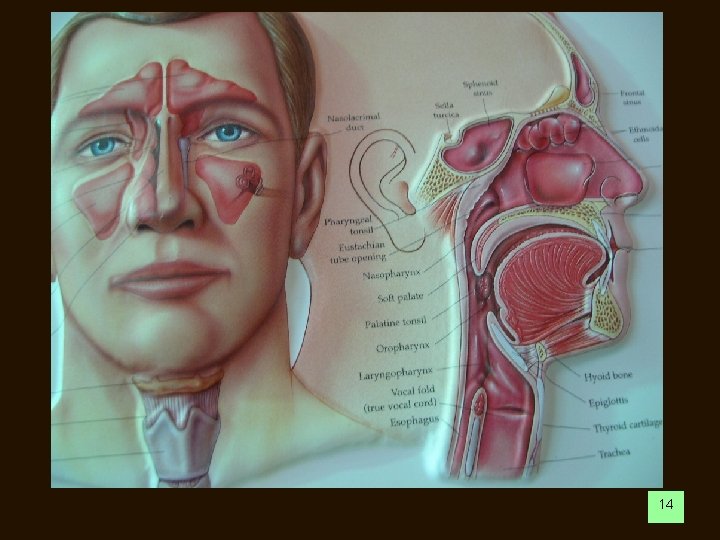
MAXILLOFACIAL TRAUMA FRACTURED NASAL BONE AETIOLOGY -Blows to the front or side of the nose -Nasal obstruction caused by dislocation or haematoma of the septum DIAGNOSIS -Clinical examination crepitation sign rhinoscopy anterior - radiographic examination 13
14
TREATMENT -Reposition of the fracture -Incision of haematom -Anti inflammation 15
INFLAMMATION/INFECTION NON SPECIFIC CHRONIC INFECTIVE RHINITIS - caused by inferior turbinate swells (simple type) - permanent hypertrophic changes cellular infiltration in mucous stroma, glands, blood vessels, lymphatic tissue fibrosis venous & lymphatic obstruction passive oedema nasal polyp 16
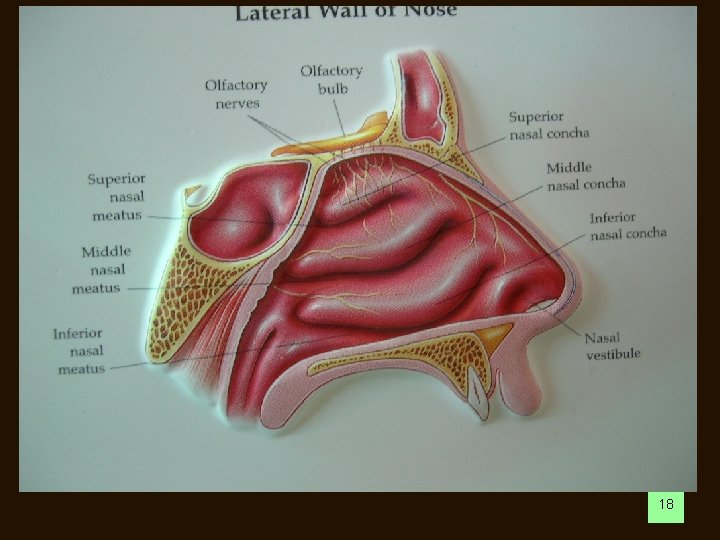
NASAL ALLERGY RHINITIS - caused by venous stasis of the conchae/mucosa - nasal polyp DIAGNOSIS - symptoms: itching/sneezing, nasal obstruction, rhinorrhea - careful history family & personal record - clinical examination/rhinoscopy - conchae hypertrophy - nasal discharge 17
18
SUPPORTING TEST - eosinophil in nasal discharge - skin test show single or multiple sensitivity - intranasal test (provocation test) TREATMENT -removal of precipitating factors -nasal allergic treatment - Operative nasal polyp 19
VASOMOTOR RHINITIS - nasal mucosa is hyperactive to certain stimuli - the absent of any specific allergic cause - caused by: - an autonomic imbalance in nasal mucosa - endocrine imbalance - septal deflection - drugs hypotensive drugs overuse local application - atmosphere condition - fume, dust, alcohol 20
Nasal obstruction caused by: - hypertrophy of the inferior turbinate - nasal polyp TREATMENT - elimination of cause factors - nasal medicament decongestant - cauterization - submucosal diathermy - removal of polyp - psychological adjustment 21
FOREIGN BODIES IN THE NOSE - more common in children - in adult psychiatry case - through the anterior nares most commonly - through the posterior nares food, enter during an attack of vomiting - through penetrating wound - organic or inorganic 22
CLINICAL FEATURE - unilateral nasal discharge & obstruction - nose bleeding may occur - sneezing - foreign body 23
DIAGNOSIS - clinical/rhinoscopy examination TREATMENT - removal foreign body 24
RHINOLITH - nasal concretions formed round a foreign bodies, blood, or mucous AETIOLOGY -foreign bodies exogenous (commonest cause) -blood-cloth or inspissated pus 25
DIAGNOSIS - Clinical examination/anterior rhinoscopy TREATMENT -removal 26
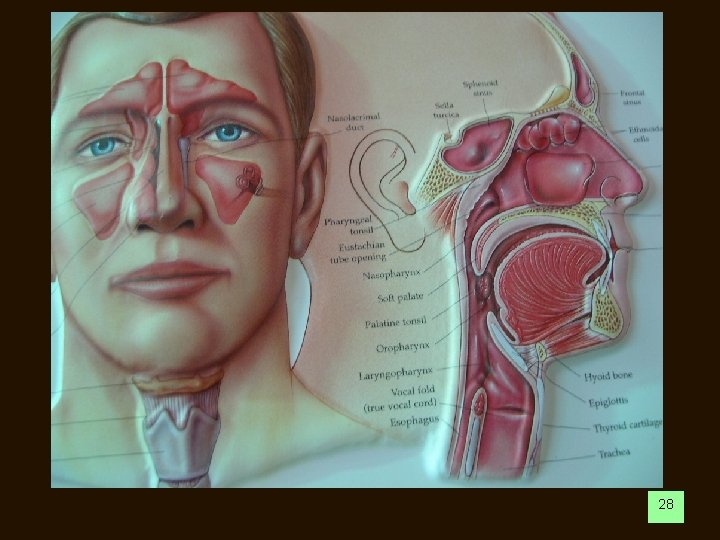
NASAL POLYP 1. SIMPLE NASAL POLYP - allergic rhinitis - vasomotor rhinitis - inflammatory: - acute - chronic non specific - chronic specific - mixed infective allergic rhinitis 27
28
2. NEOPLASTIC a. Benign b. Malignant Site of origin: - ethmoidal sinuses incidence at any age - antral more commonly in children & young adult 29
NASAL NEOPLASMS - primary nasal cavity - secondary from paranasal sinuses, nasopharynx DIAGNOSIS - clinical examination/rhinoscopy - histopathological examination TREATMENT - based on: -the symptoms, signs -histopathological test results 30
MOUTH & PHARYNX CONGENITAL ANOMALIES 1. THYROGLOSSAL CYSTS - between the suprasternal notch and the foramen caecum 2. STENOSIS OF THE PHARYNX - in the nasopharyngeal isthmus 3. WEB OR STRICTURE OF THE PARYNX - rare - in post cricoid region of the laryngopharynx 31
INFLAMMATION OF THE PHARYNGEAL LIMPHOID TISSUE - nasopharyngeal tonsil hypertrophic - physiologic condition at the 3 -7 years old DIAGNOSIS -clinical examination posterior rhinoscopy -X-ray film TREATMENT -surgical 32
ACUTE RETROPHARYNGEAL ABSCESS Abscess lies between the buccopharyngeal and pre Vertebral fasciae AETIOLOGI -Suppuration in the retropharyngeal lymph-gland -Infection spreading from naso & oropharynx TREATMENT -incision of the abscess -systemic disinfection -tracheostomy 33
34
TUMOURS OF THE NASOPHARYNX INCIDENCE - male more common than female - age: -8 -50 years old -18 -20 commonest TYPE OF TUMOURS - juvenile nasopharyngeal fibroma - juvenile nasopharyngeal angiofibroma 35
36
SQUAMOUS CELL CARCINOMA - the commonest type - varying degrees of differentiation - fossa Russenmulleri is a common site DIAGNOSIS - symptoms & signs - posterior rhinoscopy - biopsy & histopathological examination 37
TREATMENT - based on the stage & metastatic spreading - tracheostomy - irradiaton - surgery - combination of both 38
TUMOURS OF THE LARYNGOPHARYNX - especially inferior group - between the upper border of the cricoid cartilage and oesophageal opening - female more common (90%) DIAGNOSIS - radiography & endoscopy - biopsy & histopathological examination 39
TREATMENT - based on the stage & metastatic spreading - tracheostomy - irradiaton - surgery - combination of both 40
LARYNX CONGENITAL ABNORMALITIES LARINGOMALACIA - tissue of the larynx are flabby - congenital web of the larynx - fibrous tissue stroma covered by epithelium - usually in the anterior half of glottis - atresia may be complete DIAGNOSIS - endoscopic examination 41
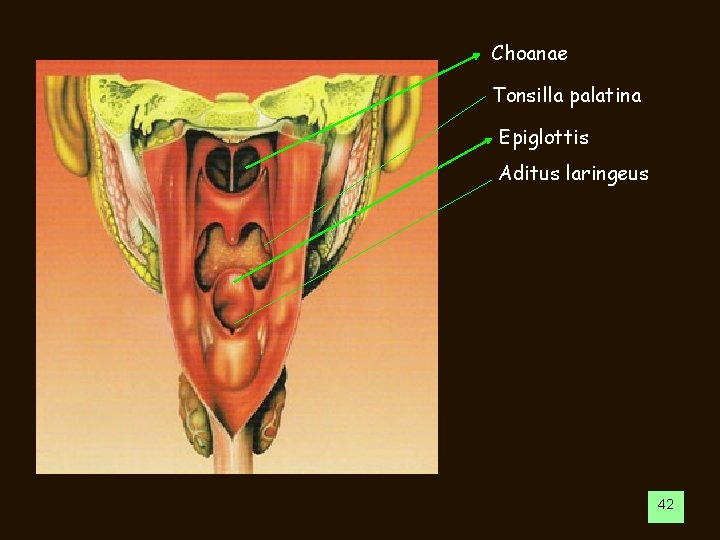
Choanae Tonsilla palatina Epiglottis Aditus laringeus 42
TREATMENT - no treatment in the milder form (just hoarseness) - tracheostomy severe stridor & dyspnoea - web excision 43
TRAUMATIC CONDITION - compression (closed) injury - penetrating (open) injury DIAGNOSIS - the history & physical signs - radiography TREATMENT - intubation/tracheostomy - systemic disinfection - repair the effect of trauma 44
BURNS AND SCALDS AETIOLOGY - inhalation of irritant fumes or gases - swallowing of corrosive fluids - inhalation of steam DIAGNOSIS - the history & physical signs TREATMENT - rest - steroid - systemic desinfection - tracheostomy or laryngotomy 45
INHALED FOREIGN BODIES - organic or anorganic foreign bodies DIAGNOSIS - the history & physical signs - radiography - endoscopy TREATMENT - removal by direct laryngoscopy - tracheostomy or laryngotomy - systemic disinfection, anti inflammation drug 46
INFLAMMATION OF THE LARYNX ACUTE SIMPLE LARYNGITIS IN CHILDREN - most serious than in adult - lymphatic supply is richer - the submucosa more likely to be infected - neuromuscular is more easily spasm - less able to expel the secretions by coughing 47
TREATMENT - rest in bed - systemic disinfection - oxygen - nasotracheal tube - tracheostomy - laryngotomy 48
OTHER DISEASE - acute epiglottitis - acute laryngotracheobronchitis - diphtheritic laryngitis 49
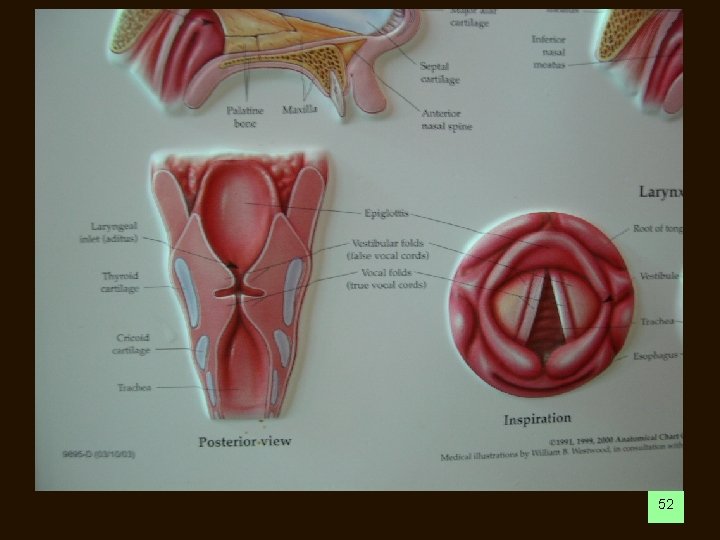
NEOPLASM OF THE LARYNX BENIGN NEOPLASM 1. Epithelial tumours: -single papilloma of the larynx -multiple papillomata 2. Connective tissue tumours: -fibroma of the vocal cord -chondroma -angioma 50
MALIGNANT OF THE LARYNX 1. EPITHELIAL TUMOURS squamous cell carcinoma a. supraglottic b. glottic c. infraglottic 2. CONNECTIVE TISSUE 51
52
DIAGNOSIS - symptoms & signs - radiography & endoscopy - biopsy & histopathological examination TREATMENT - based on the stage & metastatic spreading - tracheostomy - irradiaton - surgery - sombination of both 53
TRACHEA AND BRONCHI CONGENITAL ABNORMALITIES 1. Stenosis of tracheal & bronchi 2. Tracheo-oesophageal fistula 3. tracheocoele 54
TRAUMATIC CONDITIONS - usually associated with laryngeal injuries - injuries: cut throat, stab, gun-shot wounds - crush injury - medical operation upper end of oesophagus trachea 55
DIAGNOSIS - clinical symptoms & signs TREATMENT - tracheostomy - surgical repair 56
FOREIGN BODIES - vegetables & non vegetables DIAGNOSIS - right bronchus most commonly than left - history inhale a foreign body - fisical examination stridor - radiography TREATMENT - removal through a bronchoscope - removal by thoracotomy - tracheostomy 57
INFLAMMATION OF THE TRACHEA & TRACHEOBRONCHIAL TREE ACUTE SIMPLE TRACHEITIS - accompanies with laryngitis or bronchitis - cause by medical instrumentation - allergic reaction DIAGNOSIS - symptoms & signs - clinical examination 58
ACUTE LARYNGOTRACHEOBRONCHITIS - occurs in infants & young children up to 4 years old - it is serious & sometimes lethal DIAGNOSIS - symptoms & signs - examination - radiography TREATMENT - oxygen - humidification - systemic disinfection - tracheostomy 59
INFLAMMATION OF THE BRONCHI & LUNGS - ACUTE BRONCHITIS - PULMONARY COLLAPSE - LUNG ABSCESS DIAGNOSIS - symptoms & signs - clinical examination - radiography TREATMENT - systemic disinfection - postural drainage and breathing exercise - bronchoscopic aspiration - external drainage 60
MALIGNANT TUMOURS OF THE TRACHEOBRONCHIAL TREE CARCINOMA OF THE TRACHEA - secondary invasion more commonly than primary DIAGNOSIS - indirect and direct laryngoscopy TREATMENT - tracheostomy - operative - irradiation - combination 61
CARCINOMA OF THE BRONCHUS -80% are in the male -90% occur between 40 -70 years old DIAGNOSIS - symptoms & signs - radiography: bronchography, bronchuscopy - cytology TREATMENT - surgery - radiotherapy - combination 62

THANK YOU 63
- Slides: 63