
Mechanical behavior of the Euro Cir Col 16

Mechanical behavior of the Euro. Cir. Col 16 T Block-type dipole magnet during a quench Junjie Zhao, Tiina Salmi, Antti stenvall, Clement Lorin 1
Contents 1. Modelling 2. Simulated stress before quench and comparison with ANSYS (model validation) 3. Stress distribution due to temperature during a quench 4. Conlusions 2
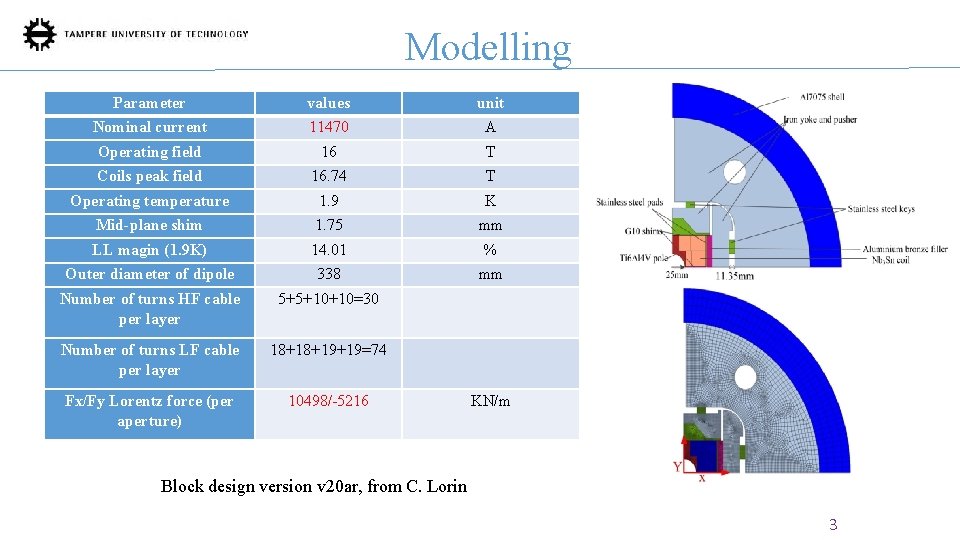
Modelling Parameter values unit Nominal current 11470 A Operating field 16 T Coils peak field 16. 74 T Operating temperature 1. 9 K Mid-plane shim 1. 75 mm LL magin (1. 9 K) 14. 01 % Outer diameter of dipole 338 mm Number of turns HF cable per layer 5+5+10+10=30 Number of turns LF cable per layer 18+18+19+19=74 Fx/Fy Lorentz force (per aperture) 10498/-5216 KN/m Block design version v 20 ar, from C. Lorin 3
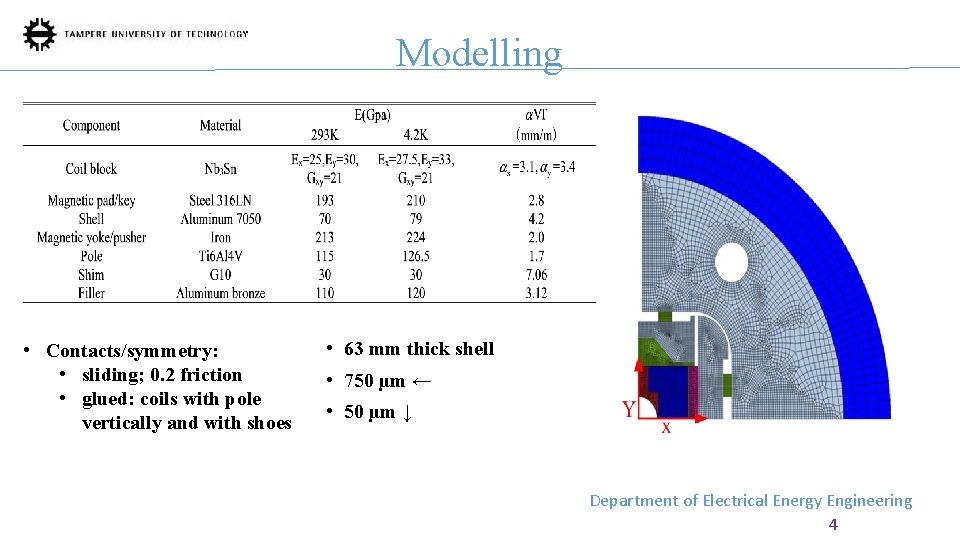
Modelling • Contacts/symmetry: • sliding; 0. 2 friction • glued: coils with pole vertically and with shoes • 63 mm thick shell • 750 µm ← • 50 µm ↓ Department of Electrical Energy Engineering 4
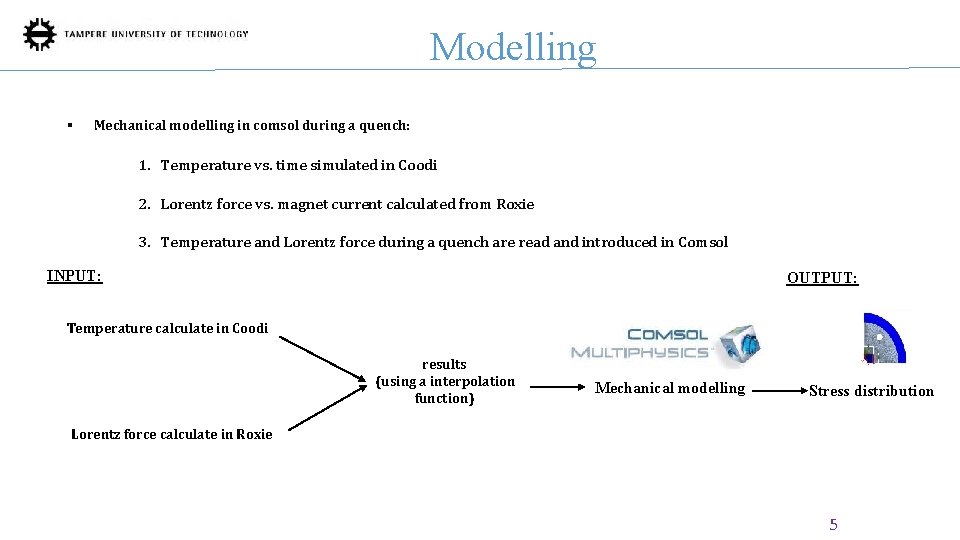
Modelling § Mechanical modelling in comsol during a quench: 1. Temperature vs. time simulated in Coodi 2. Lorentz force vs. magnet current calculated from Roxie 3. Temperature and Lorentz force during a quench are read and introduced in Comsol INPUT: OUTPUT: Temperature calculate in Coodi results (using a interpolation function) Mechanical modelling Stress distribution Lorentz force calculate in Roxie 5
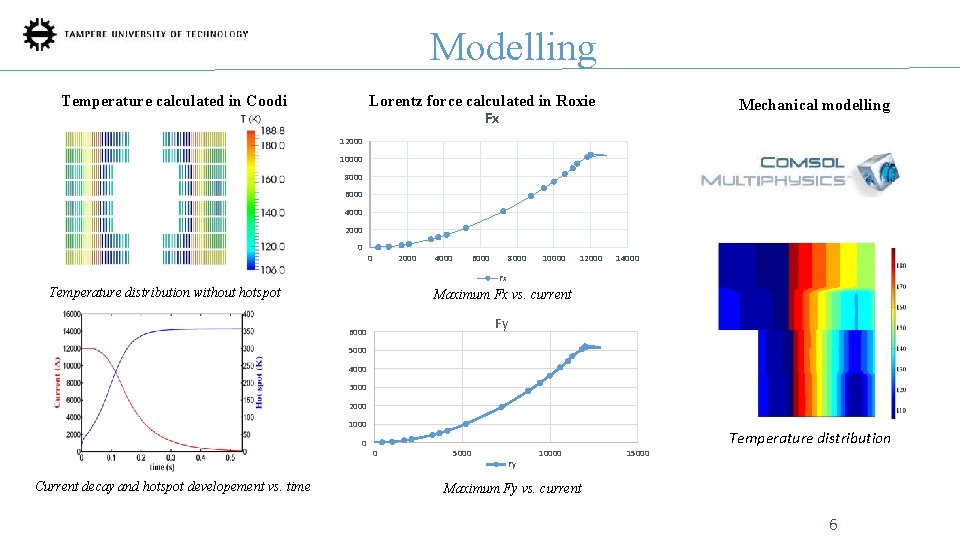
Modelling Lorentz force calculated in Roxie Fx Temperature calculated in Coodi Mechanical modelling 12000 10000 8000 6000 4000 2000 0 0 2000 4000 6000 8000 10000 12000 14000 Fx Temperature distribution without hotspot Maximum Fx vs. current Fy 6000 5000 4000 3000 2000 1000 0 Current decay and hotspot developement vs. time Temperature distribution 0 5000 Fy 10000 15000 Maximum Fy vs. current 6
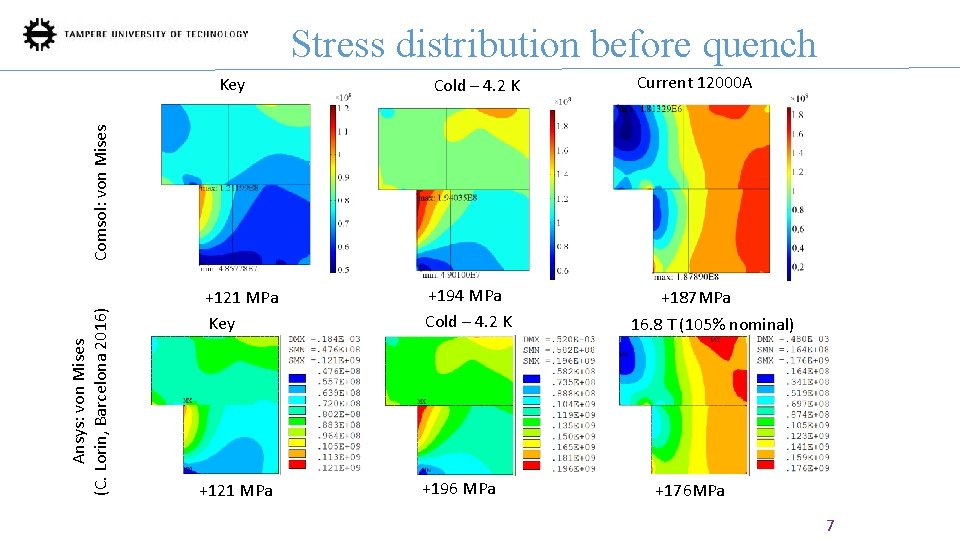
Stress distribution before quench Cold – 4. 2 K Current 12000 A Ansys: von Mises (C. Lorin, Barcelona 2016) Comsol: von Mises Key +121 MPa +194 MPa Cold – 4. 2 K +196 MPa +187 MPa 16. 8 T (105% nominal) +176 MPa 7
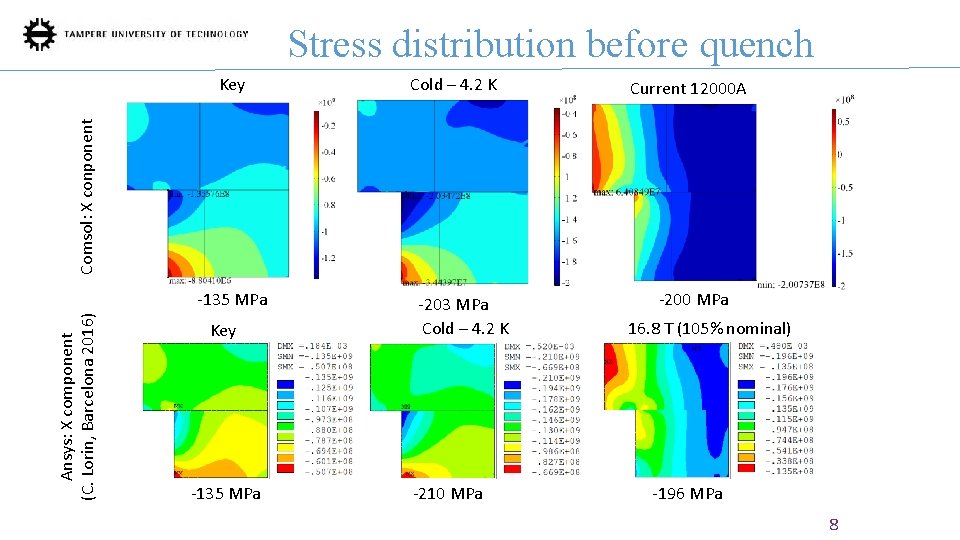
Stress distribution before quench Cold – 4. 2 K Current 12000 A Comsol: X conponent Key Ansys: X component (C. Lorin, Barcelona 2016) -135 MPa Key -135 MPa -203 MPa Cold – 4. 2 K -210 MPa -200 MPa 16. 8 T (105% nominal) -196 MPa 8
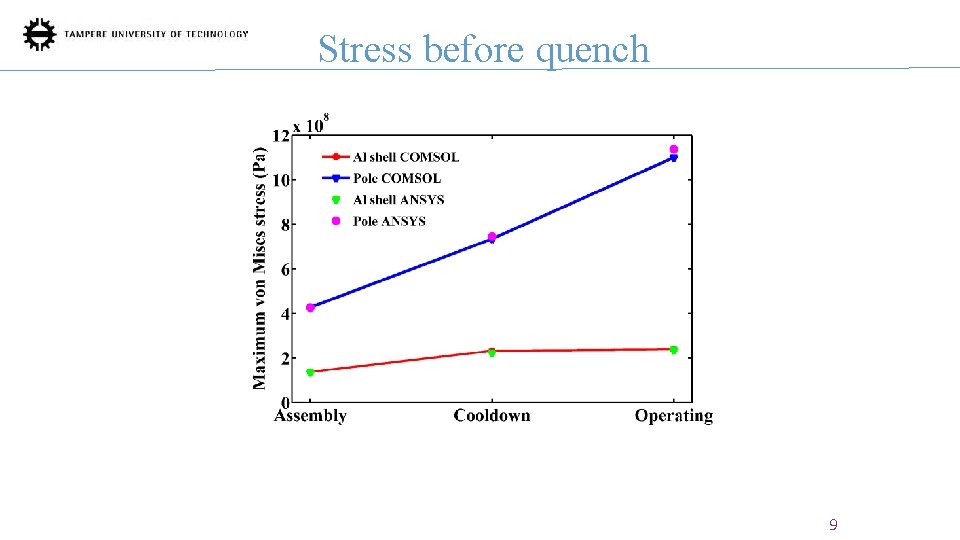
Stress before quench 9
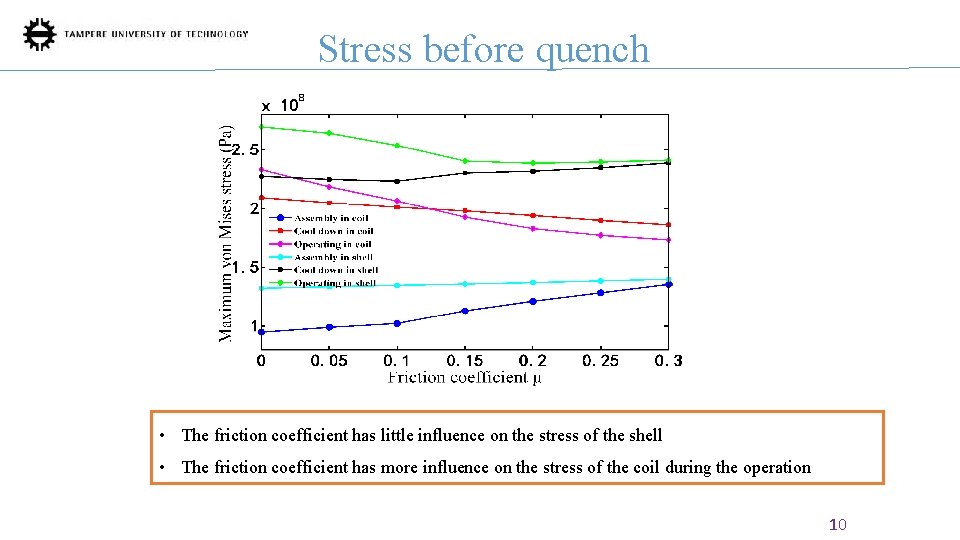
Stress before quench • The friction coefficient has little influence on the stress of the shell • The friction coefficient has more influence on the stress of the coil during the operation 10
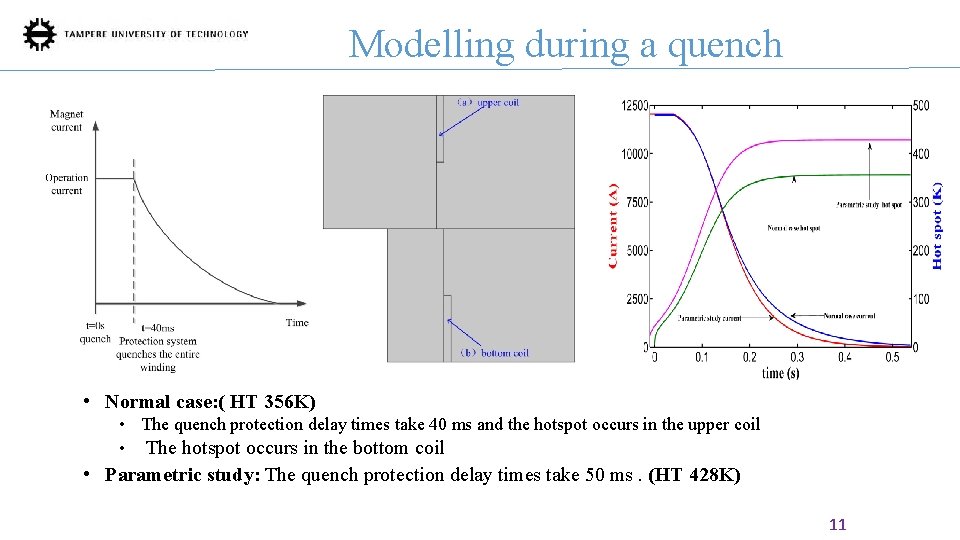
Modelling during a quench • Normal case: ( HT 356 K) • The quench protection delay times take 40 ms and the hotspot occurs in the upper coil • The hotspot occurs in the bottom coil • Parametric study: The quench protection delay times take 50 ms. (HT 428 K) 11
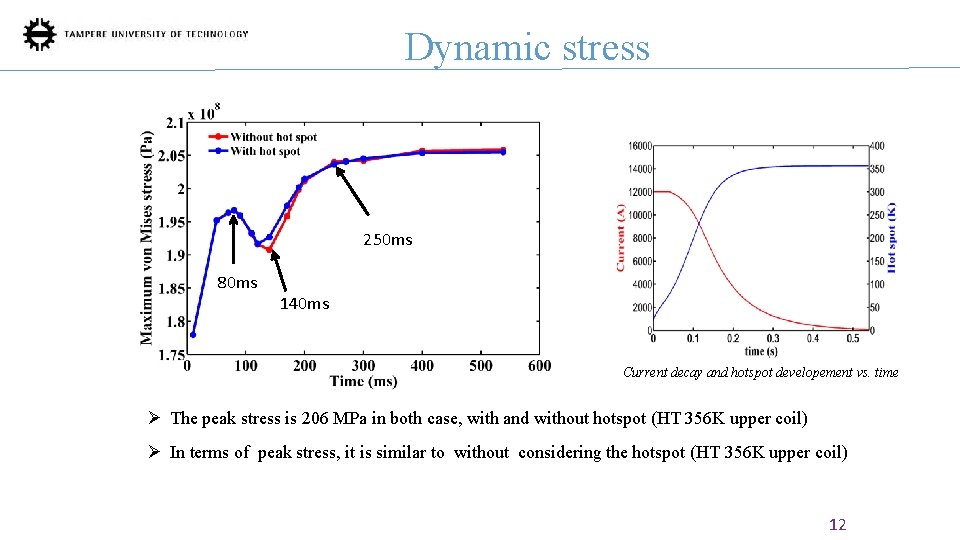
Dynamic stress 250 ms 80 ms 140 ms Current decay and hotspot developement vs. time Ø The peak stress is 206 MPa in both case, with and without hotspot (HT 356 K upper coil) Ø In terms of peak stress, it is similar to without considering the hotspot (HT 356 K upper coil) 12
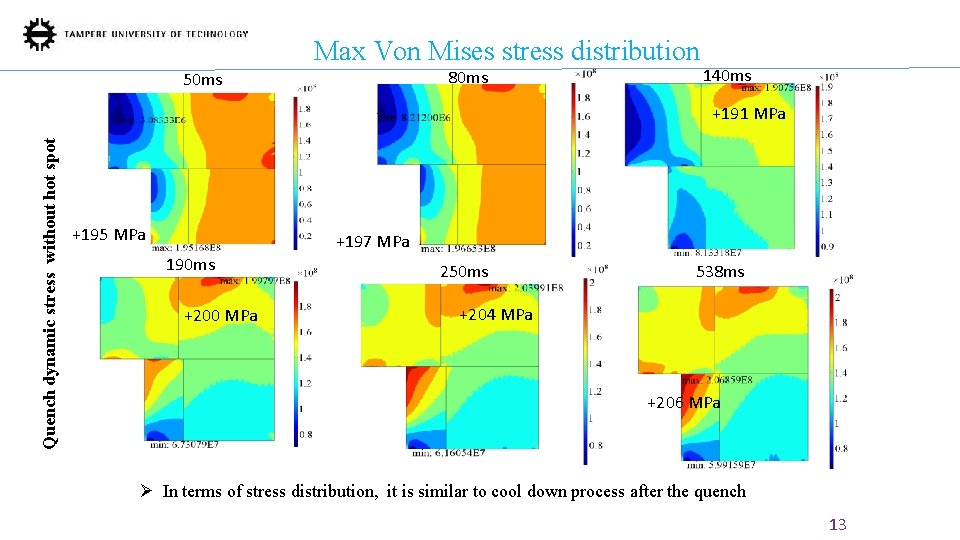
Max Von Mises stress distribution 80 ms 50 ms 140 ms Quench dynamic stress without hot spot +191 MPa +195 MPa +197 MPa 190 ms +200 MPa 250 ms 538 ms +204 MPa +206 MPa Ø In terms of stress distribution, it is similar to cool down process after the quench 13
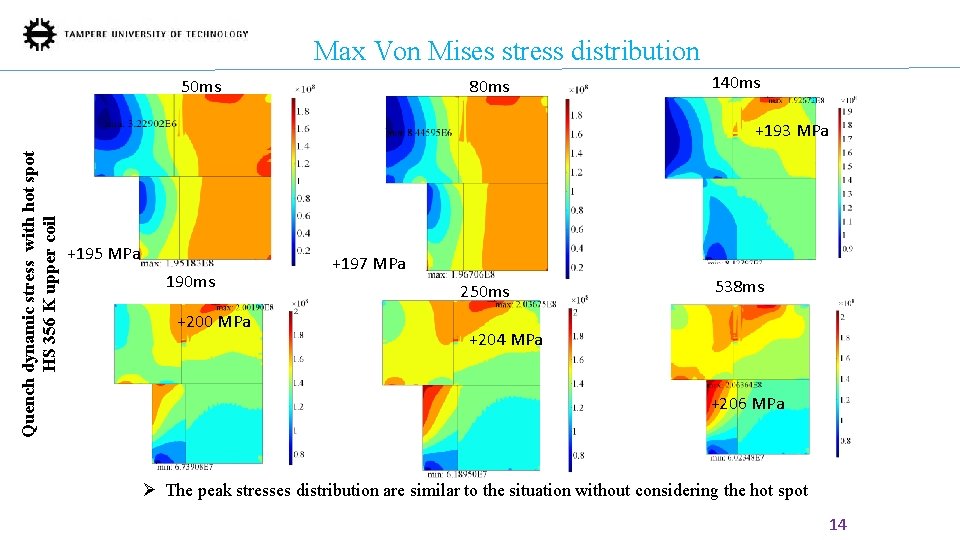
Max Von Mises stress distribution 80 ms 50 ms 140 ms Quench dynamic stress with hot spot HS 356 K upper coil +193 MPa +195 MPa 190 ms +200 MPa +197 MPa 250 ms 538 ms +204 MPa +206 MPa Ø The peak stresses distribution are similar to the situation without considering the hot spot 14
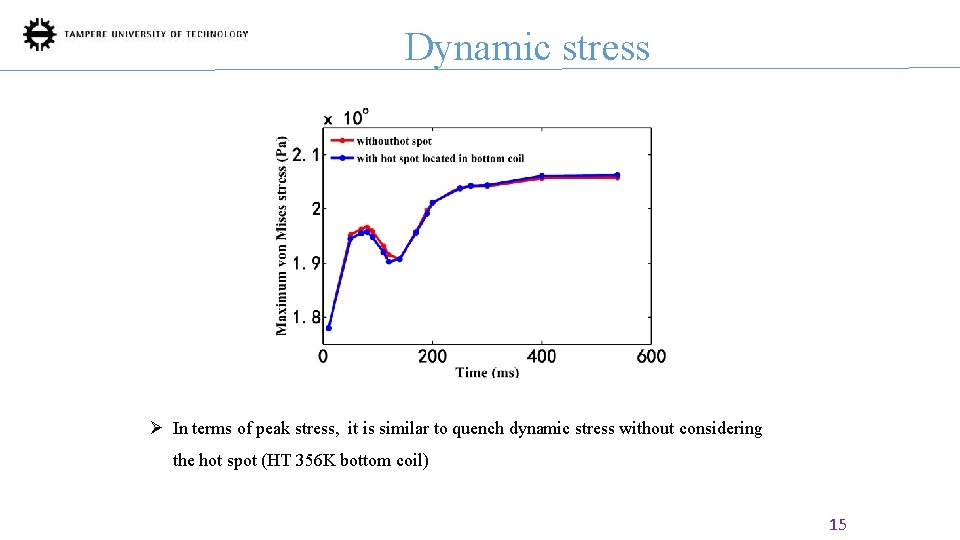
Dynamic stress Ø In terms of peak stress, it is similar to quench dynamic stress without considering the hot spot (HT 356 K bottom coil) 15
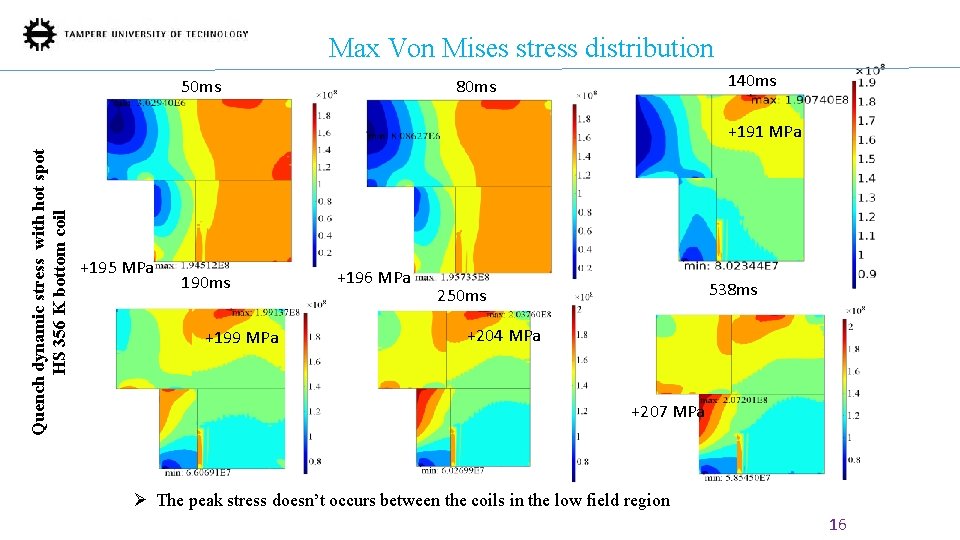
Max Von Mises stress distribution 50 ms 140 ms 80 ms Quench dynamic stress with hot spot HS 356 K bottom coil +191 MPa +195 MPa 190 ms +199 MPa +196 MPa 538 ms 250 ms +204 MPa +207 MPa Ø The peak stress doesn’t occurs between the coils in the low field region 16
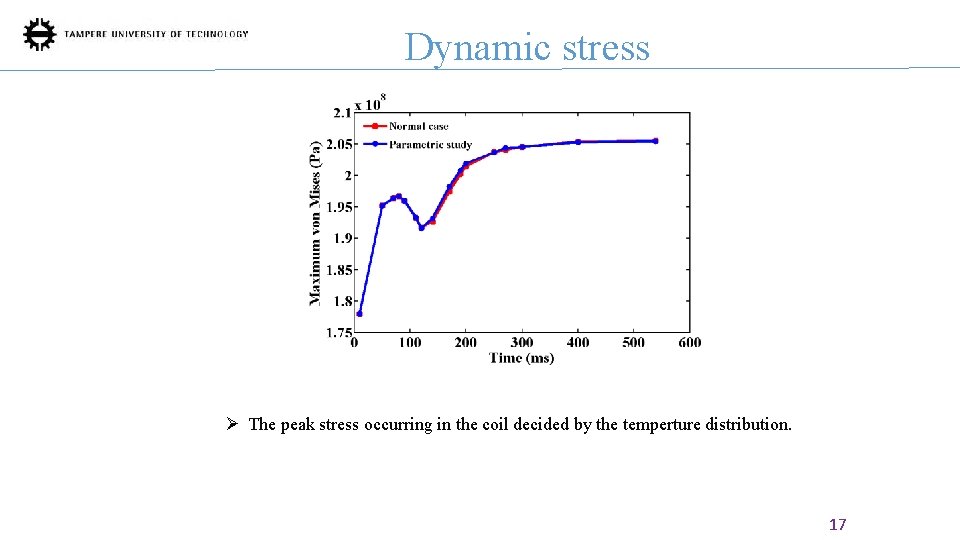
Dynamic stress Ø The peak stress occurring in the coil decided by the temperture distribution. 17
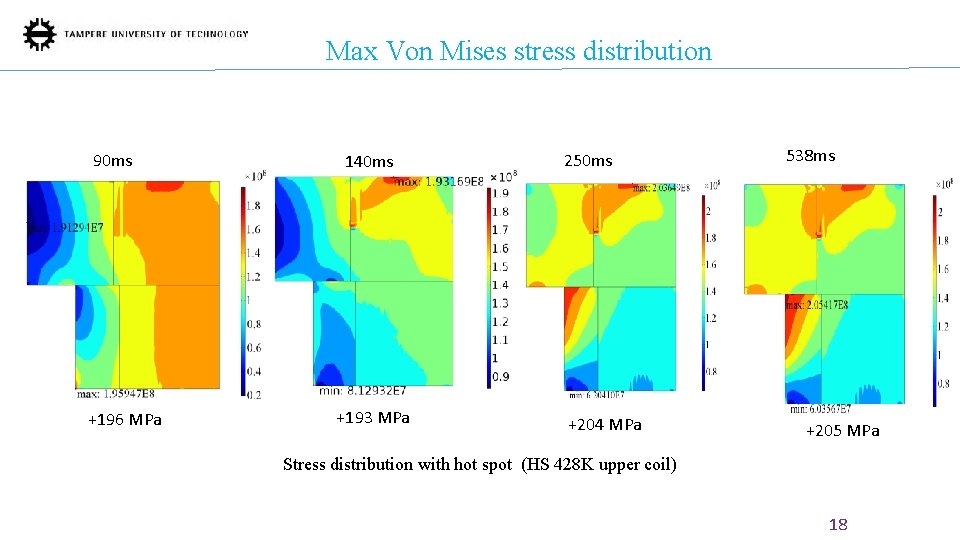
Max Von Mises stress distribution 90 ms +196 MPa 140 ms +193 MPa 250 ms +204 MPa 538 ms +205 MPa Stress distribution with hot spot (HS 428 K upper coil) 18
Conclusion § It is possible to analyze the mechanical behaviour of the FCC magnet using Comsol § The friction coefficient has influence on the magnet peak stress, the friction coefficient between different components is needed § The Lorentz force and thermal stress was considered during a quench § The peak stress behaviour is similar to consider the location of the hotspot occurring and the higher hotspot. § The stress distribution is decided by the temperature distribution without considering the hotspot 19
- Slides: 19