
MECH 3550 Simulation Visualization Basic Simulation Modeling The
MECH 3550 : Simulation & Visualization
Basic Simulation Modeling • The Nature of Simulation • The act of using computers to simulate the operations of various real-world processes • Analytical Solution
Systems, Models, and Simulation • A system is defined as a collection of entities that act and interact together to accomplish a logical goal. • There are two types of systems: • Discrete: Variables change instantaneously at separated points in time. • Continuous: Variables change continuously with respect to time. • Examples • Discrete-Bank • Continuous-? ? ?
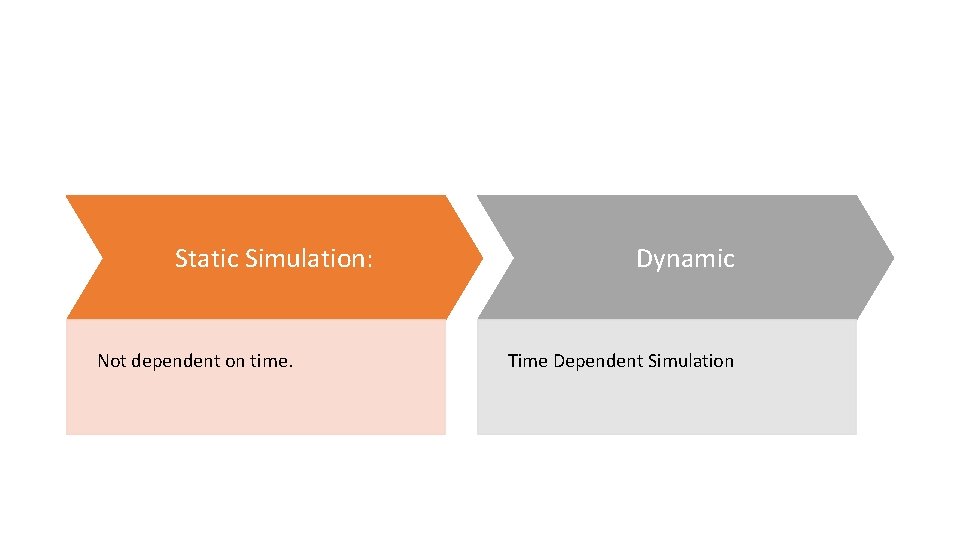
Static vs Dynamic Simulation Static Simulation: Not dependent on time. Dynamic Time Dependent Simulation
Deterministic vs Stochastic Deterministic • Contains no random components Stochastic • Contains random aspects of input and output as well
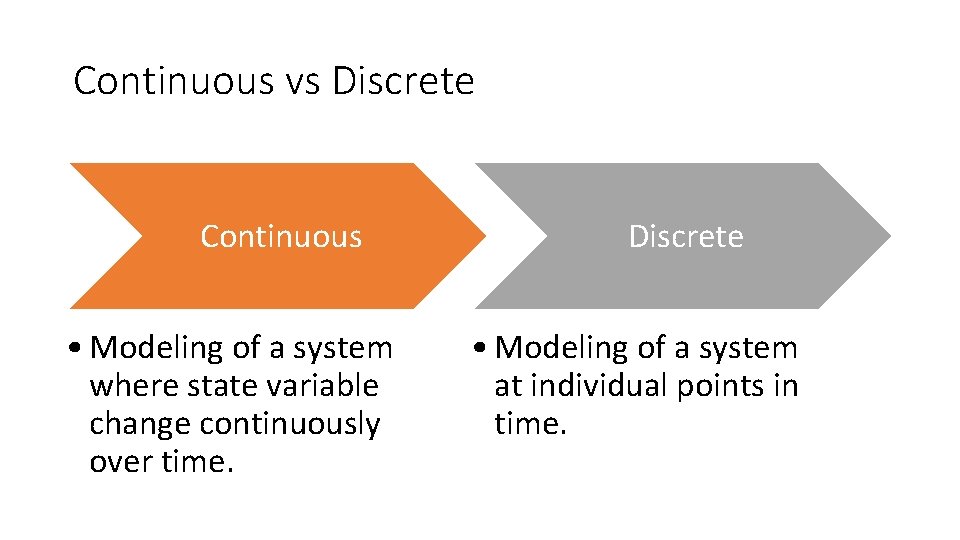
Continuous vs Discrete Continuous • Modeling of a system where state variable change continuously over time. Discrete • Modeling of a system at individual points in time.
Discrete Event Simulation • Discrete • Dynamic • Stochastic • We will mainly be discussing these
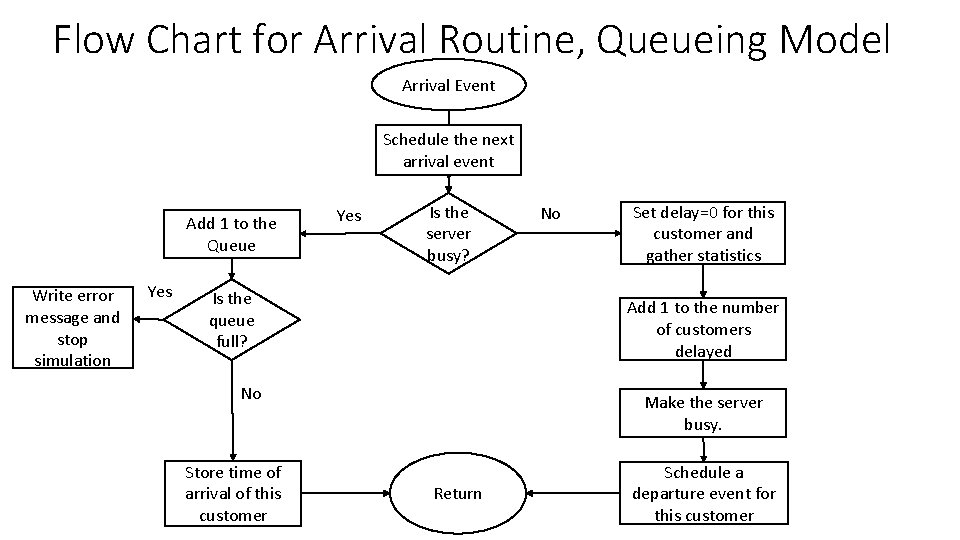
Flow Chart for Arrival Routine, Queueing Model Arrival Event Schedule the next arrival event Add 1 to the Queue Write error message and stop simulation Yes Is the server busy? Is the queue full? Set delay=0 for this customer and gather statistics Add 1 to the number of customers delayed No Store time of arrival of this customer No Make the server busy. Return Schedule a departure event for this customer
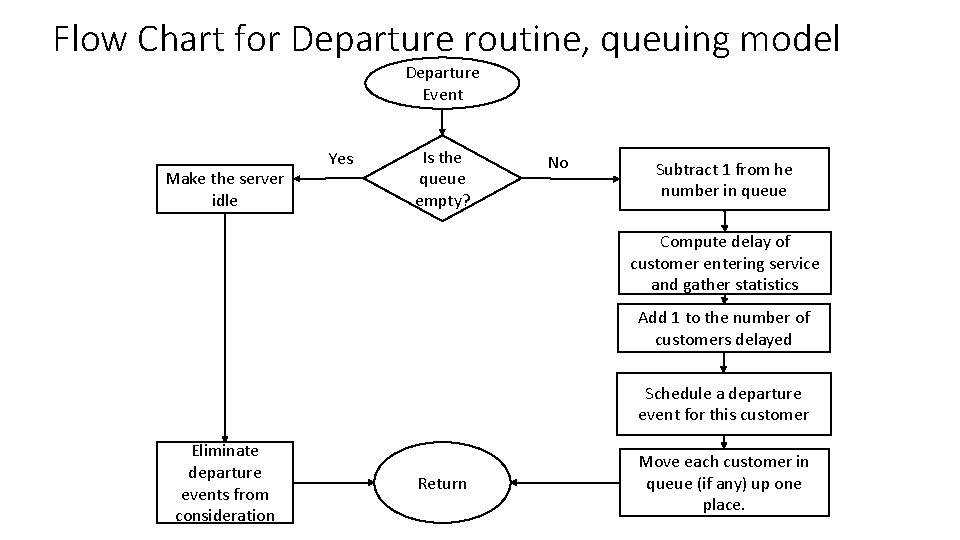
Flow Chart for Departure routine, queuing model Departure Event Make the server idle Yes Is the queue empty? No Subtract 1 from he number in queue Compute delay of customer entering service and gather statistics Add 1 to the number of customers delayed Schedule a departure event for this customer Eliminate departure events from consideration Return Move each customer in queue (if any) up one place.
- Slides: 10