
Meat Types of Meat Beef Meat of a
Meat

Types of Meat • Beef – Meat of a cow or steer over one year old. • Veal – Meat of a cow 3 to 14 weeks old. • Calf – Meat of a cow 14 weeks to one year old.
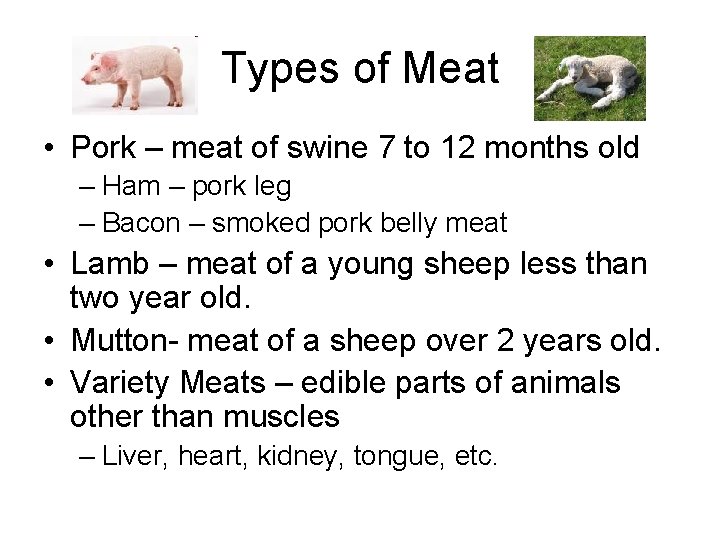
Types of Meat • Pork – meat of swine 7 to 12 months old – Ham – pork leg – Bacon – smoked pork belly meat • Lamb – meat of a young sheep less than two year old. • Mutton- meat of a sheep over 2 years old. • Variety Meats – edible parts of animals other than muscles – Liver, heart, kidney, tongue, etc.
Nutrients • Protein – has 8 essential amino acids that help to build, maintain and repair body tissue • B-Vitamins – Niacin – promotes healthy skin and nerves and aids in digestion – B-12 – needed for normal function of body cells and nervous system
Nutrients • Iron – carry oxygen to cells and carbon dioxide away from cells • Zinc – form enzymes and insulin • Cholesterol – helps the body form hormones and liver bile for digestion. • Fat – carry Vitamins A, D, E, and K – Fat in meat is needed for flavor and juiciness • Marbling vs. Visible fat

Forms of Meat • Fresh – ready to cook • Canned – fully cooked and sealed in containers • Frozen – raw or cooked • Cured – fresh meat treated with salt, sugar, spices, and chemically or wood smokes
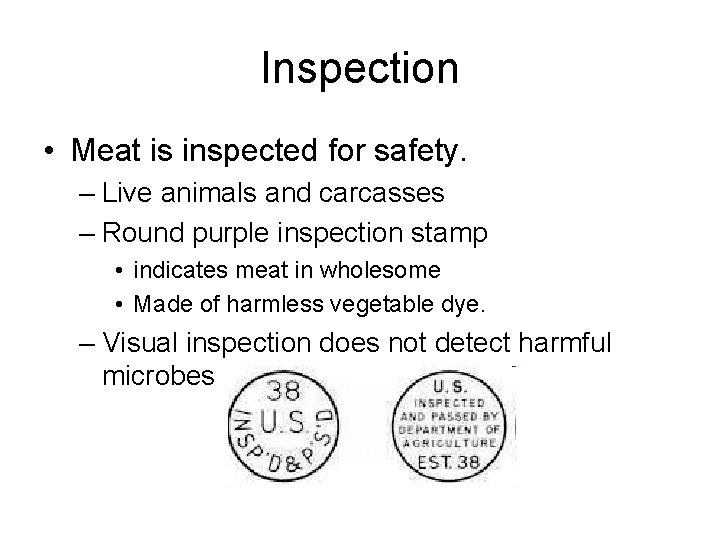
Inspection • Meat is inspected for safety. – Live animals and carcasses – Round purple inspection stamp • indicates meat in wholesome • Made of harmless vegetable dye. – Visual inspection does not detect harmful microbes

Grading • Meat is graded for quality. • 1. Marbling – flecks of fat throughout the meat. More marbling = more flavor and more tender (higher quality) • 2. Maturity – younger animals are more tender. • 3. Texture – fine muscle texture = higher quality • 4. Appearance – refers to meat color
Grade of Beef • Prime – most tender cut of meat; usually served in restaurants • Choice – high quality; good marbling • Select – leaner than choice and cost less – Choice & select are sold in supermarkets • Standard, Commercial, Utility, Cutter, & Canner – lower grades used in manufactured meat products
Cooking Meat • • Destroys harmful bacteria Makes meat tender Improves the flavor Improves the appearance
Dry Cooking Methods • Roasting: – Slow oven 325 to 350 F – Large cuts of meat – Cook fat side up, uncovered – Check for doneness – meat thermometer – thickest part with out touching bone or fat – Allow to stand for about 15 minutes before carving
Dry Cooking Methods • Broil – Cooked under or over a direct heat source • Pan Broil – Cook in a heavy skillet without any fat or liquid – Meat should be 1” or less thick • Grill – Cook on a barbecue
Dry Cooking Method • Frying – Deep-fry – food submerged in a large amount of fat – Panfry – cook in a skillet in a small amount of fat • Stirfry • Searing – Quickly brown exterior in oil to seal in juices
Moist Cooking Methods • Braising – – Small amount of liquid Tightly covered pan Low heat Used for less tender meat cuts • Stew – Cook small cuts of meat covered in liquid, covered – Do not boil – simmer about 2 hours – Helps tenderize meat
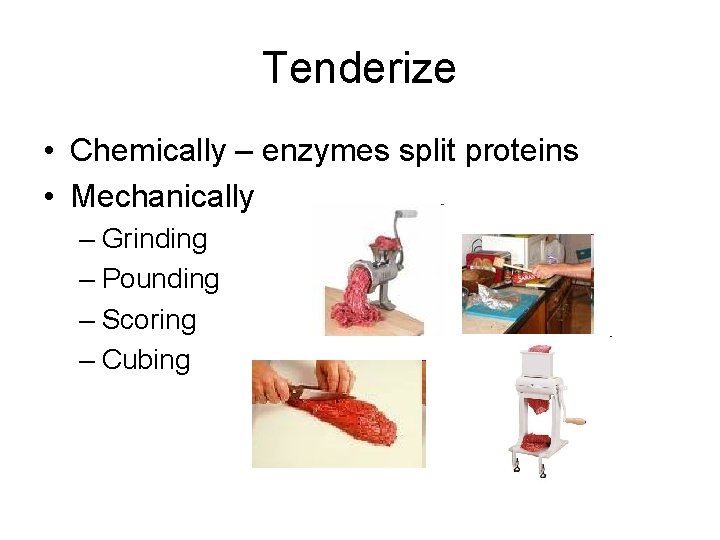
Tenderize • Chemically – enzymes split proteins • Mechanically – Grinding – Pounding – Scoring – Cubing
Storing Meat • Fresh – up to three days in the refrigerator • Frozen – – purchased frozen meats can be stored in their original packaging – Fresh meats should be rewrapped in moisture -proof material before freezing • Keep meat frozen until ready to thaw – Do not refreeze
- Slides: 16