
MEAT SLAUGHTER In the US there are over



- Slides: 14
MEAT SLAUGHTER
In the US there are over 5000 plants that slaughter animals
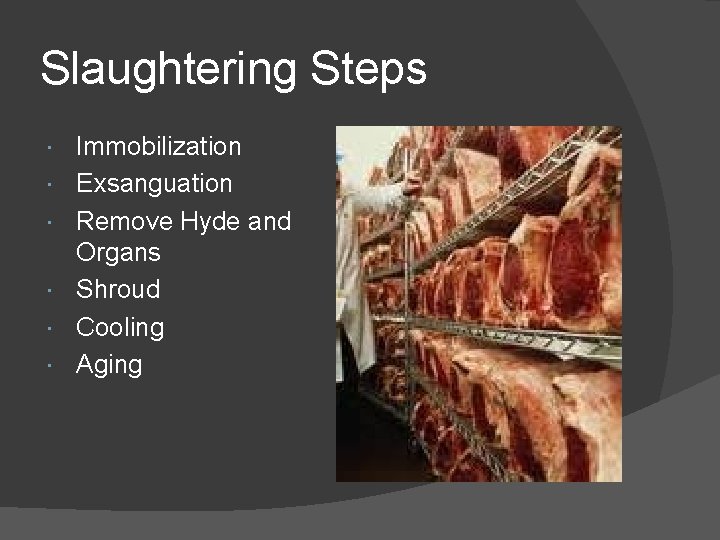
Slaughtering Steps Immobilization Exsanguation Remove Hyde and Organs Shroud Cooling Aging
Immobilization Animal is rendered unconscious Carbon dioxide chamber electric shock cartridge or mechanical bolt does not feel pain allows the heart to pump in order to drain the animal’s body of blood Methods If meat is Kosher Must be under Jewish regulations Do not need to be Immobilized
Exsanguination process of bleeding the animal usually done by severing the jugular vein with a sharp knife Hemorrhaging escape of blood from ruptured blood vessels caused by a rise in blood pressure bleeding must be done quickly to avoid can cause blood spots in the meat
Hide and organs removed liver brains pancreas intestines heart and kidneys Organs used for food liver - most common brains, pancreas, intestines, and heart kidneys may also be used for human consumption
Hog Hide removal are dipped into scalding water and placed on a machine that scrapes the hair from the hide some plants may skin hogs
Slaughter Inspectors are present to inspect carcass and internal organs detect any health concerns if a problem is found with the carcass, the entire carcass may be condemned each carcass to be sold must be inspected
Cooling Quick cooling of meat is important to minimize protein degradation inhibit growth of microorganisms During Cooling Carcasses are: wrapped in a shroud ○ Cloth of salt water ○ Prevents drying out goes through rigor mortis Aged Beef are split down the middle
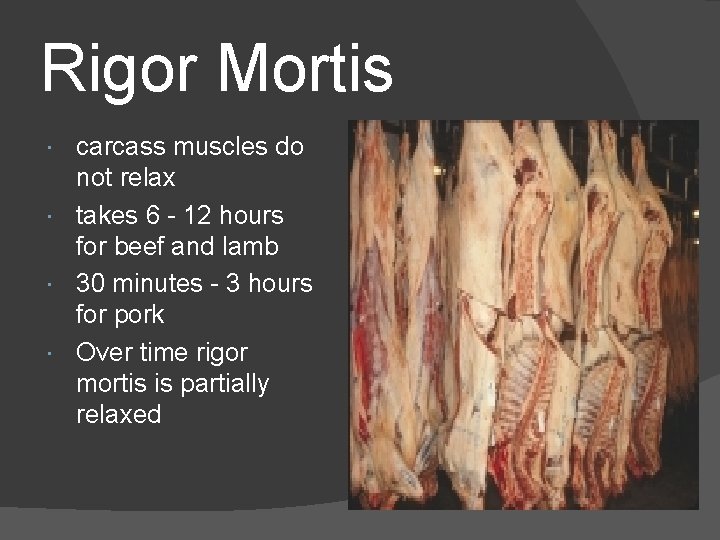
Rigor Mortis carcass muscles do not relax takes 6 - 12 hours for beef and lamb 30 minutes - 3 hours for pork Over time rigor mortis is partially relaxed
Cutting Beef Carcasses Cooled for 30+ Hours before cutting Cut straight down the backbone may be divided into quarters Sides are divided at the 12 th and 13 th rib to form quarters
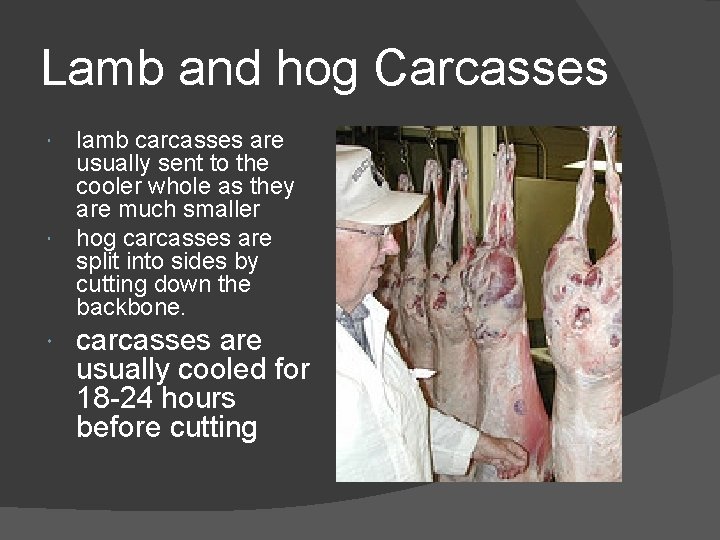
Lamb and hog Carcasses lamb carcasses are usually sent to the cooler whole as they are much smaller hog carcasses are split into sides by cutting down the backbone. carcasses are usually cooled for 18 -24 hours before cutting
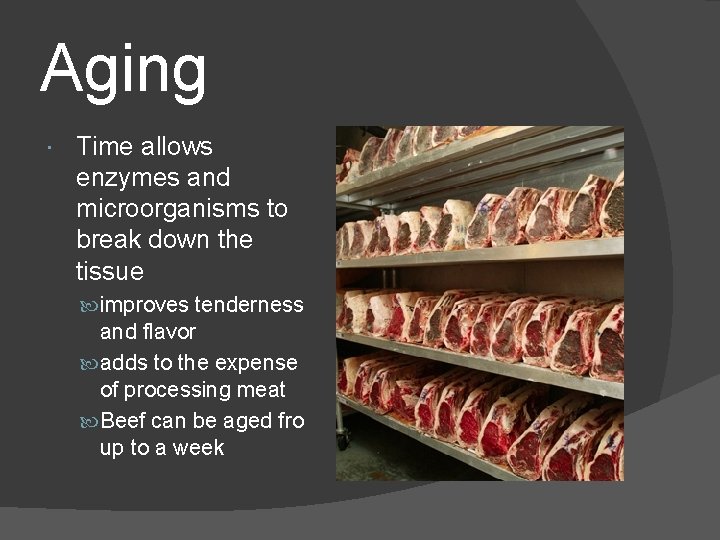
Aging Time allows enzymes and microorganisms to break down the tissue improves tenderness and flavor adds to the expense of processing meat Beef can be aged fro up to a week
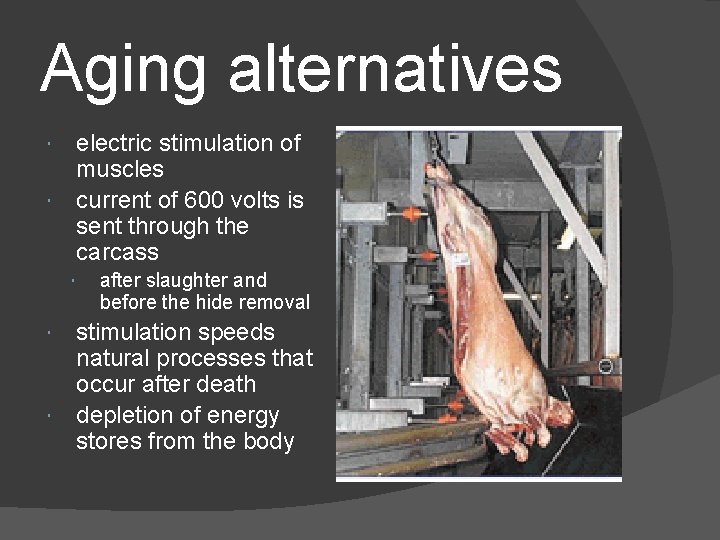
Aging alternatives electric stimulation of muscles current of 600 volts is sent through the carcass after slaughter and before the hide removal stimulation speeds natural processes that occur after death depletion of energy stores from the body