
Meat Consumption Eating higher on the food web

Meat Consumption: Eating higher on the food web
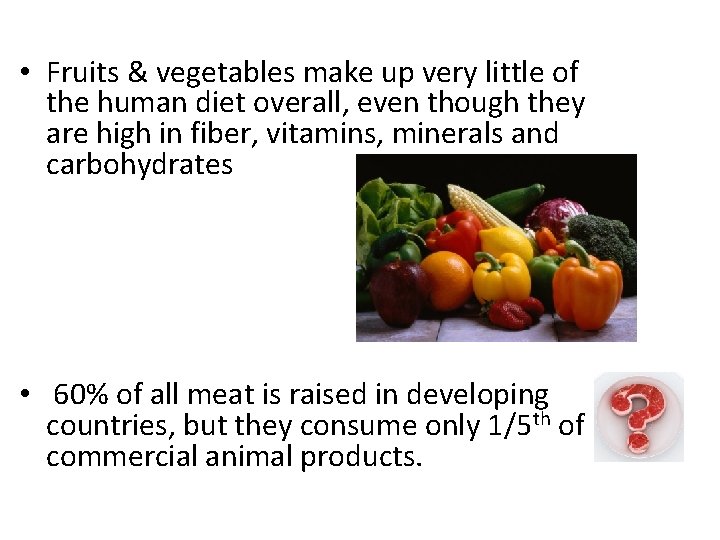
• Fruits & vegetables make up very little of the human diet overall, even though they are high in fiber, vitamins, minerals and carbohydrates • 60% of all meat is raised in developing countries, but they consume only 1/5 th of commercial animal products.
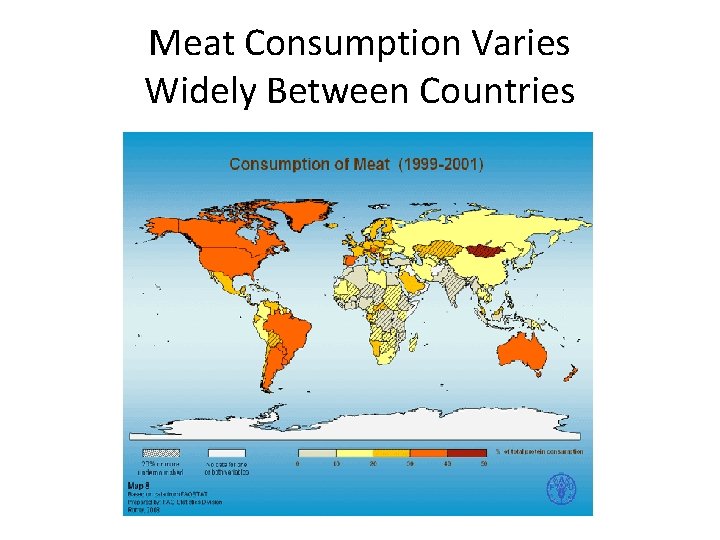
Meat Consumption Varies Widely Between Countries
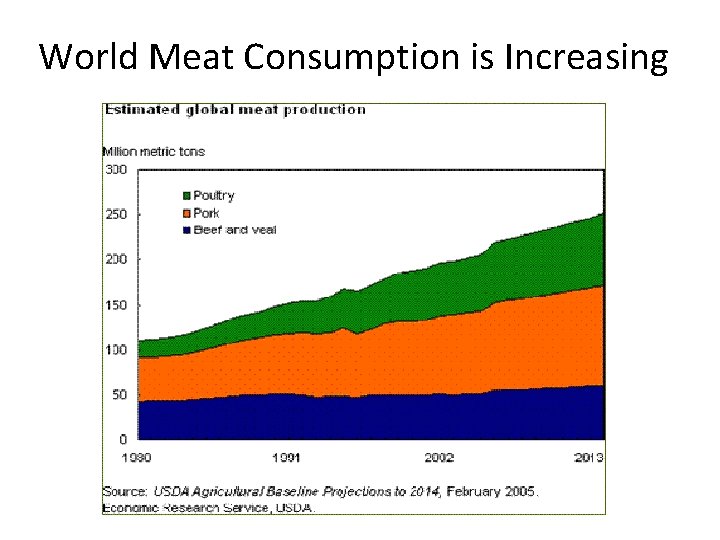
World Meat Consumption is Increasing
10_17. JPG
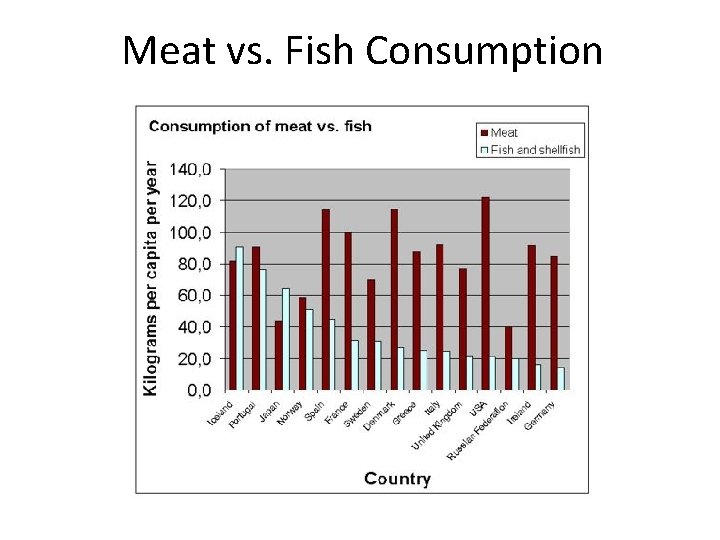
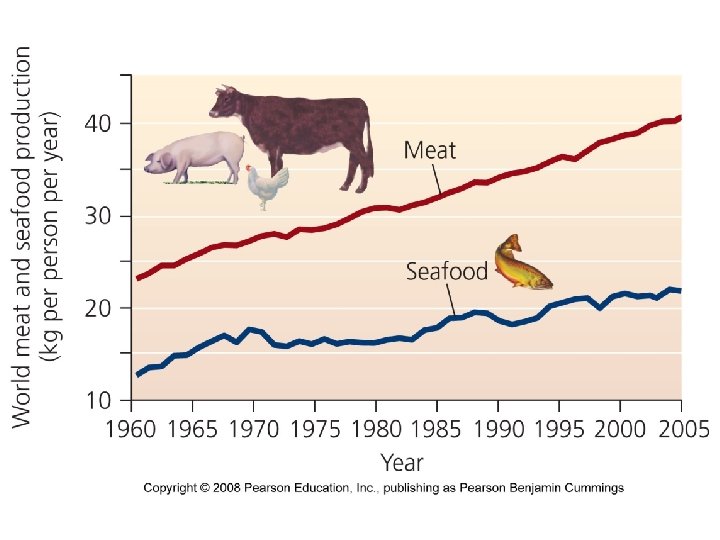
Meat vs. Fish Consumption
Most Americans enjoy eating meat, but are we aware of the environmental impacts?
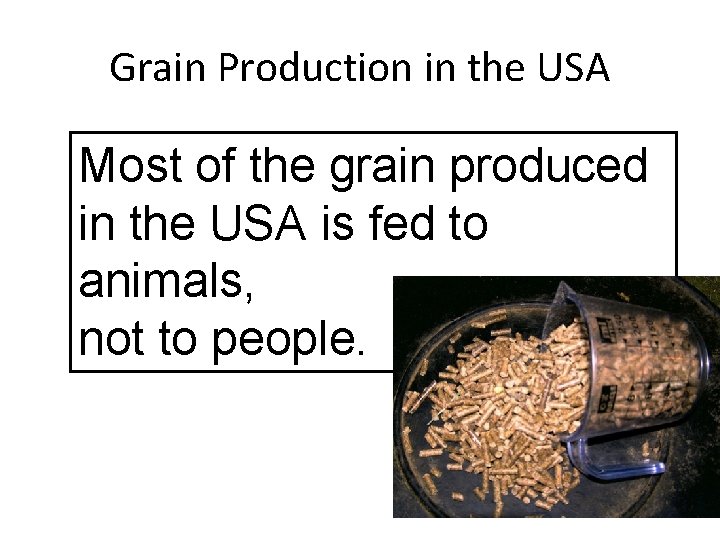
Grain Production in the USA Most of the grain produced in the USA is fed to animals, not to people.
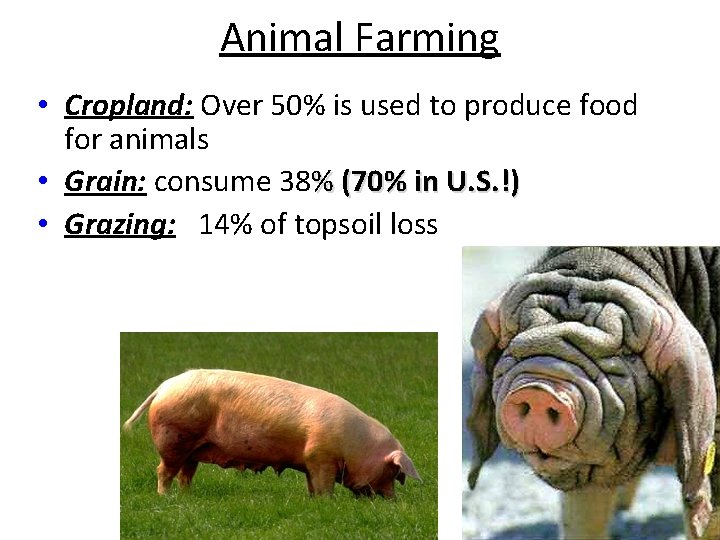
Animal Farming • Cropland: Over 50% is used to produce food for animals • Grain: consume 38% (70% in U. S. !) • Grazing: 14% of topsoil loss
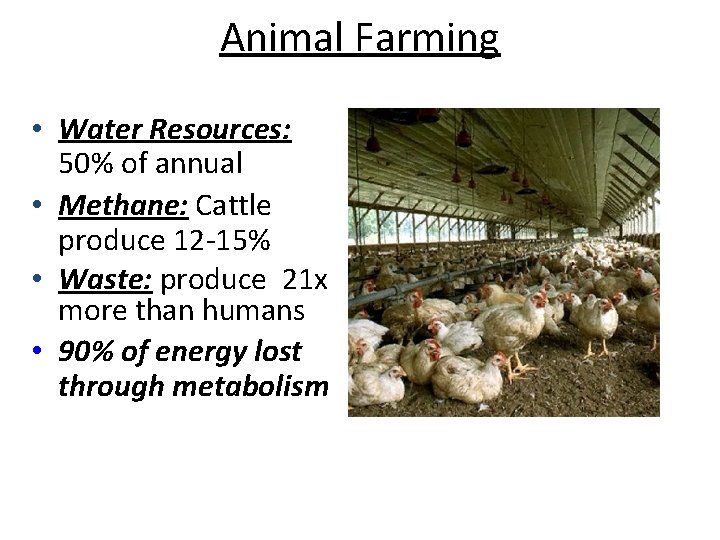
Animal Farming • Water Resources: 50% of annual • Methane: Cattle produce 12 -15% • Waste: produce 21 x more than humans • 90% of energy lost through metabolism
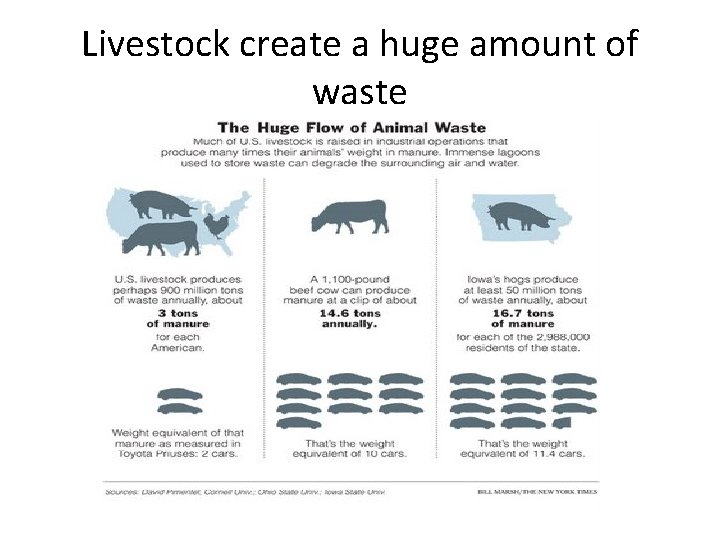
Livestock create a huge amount of waste
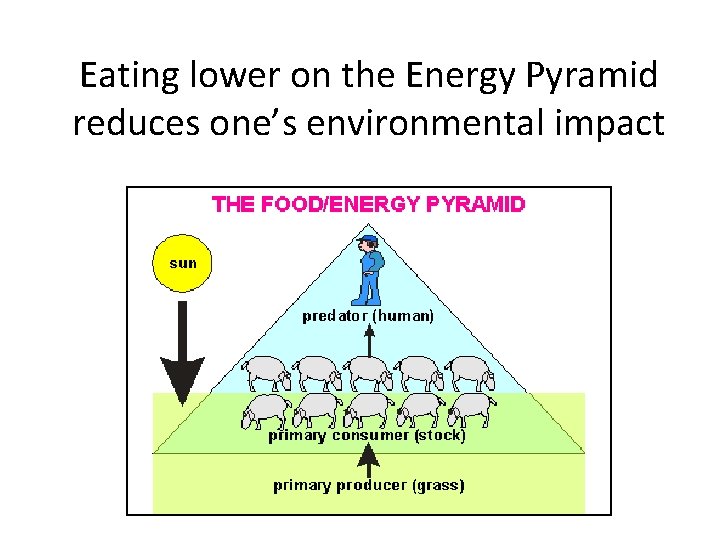
Eating lower on the Energy Pyramid reduces one’s environmental impact
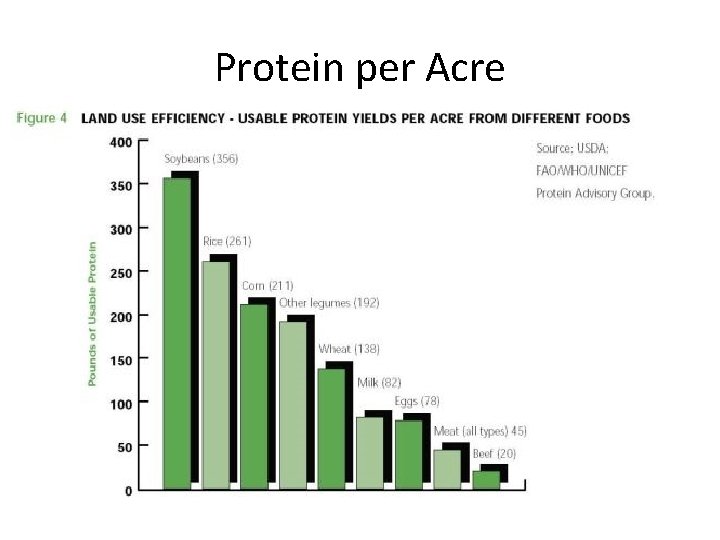
Protein per Acre
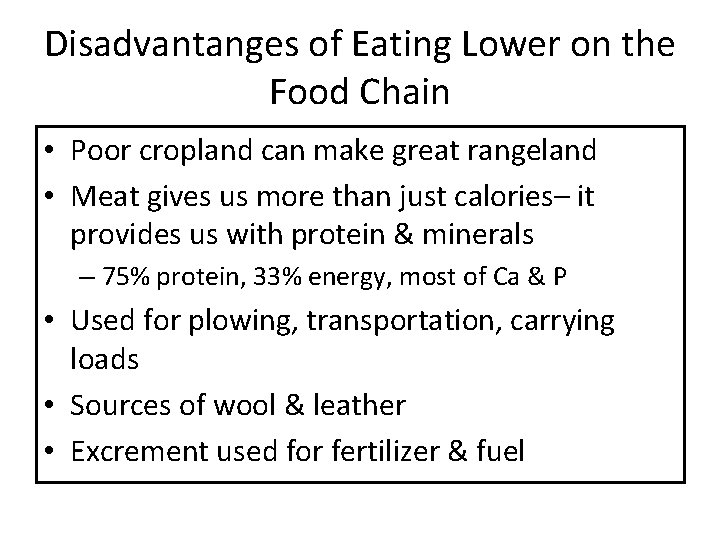
Disadvantanges of Eating Lower on the Food Chain • Poor cropland can make great rangeland • Meat gives us more than just calories– it provides us with protein & minerals – 75% protein, 33% energy, most of Ca & P • Used for plowing, transportation, carrying loads • Sources of wool & leather • Excrement used for fertilizer & fuel
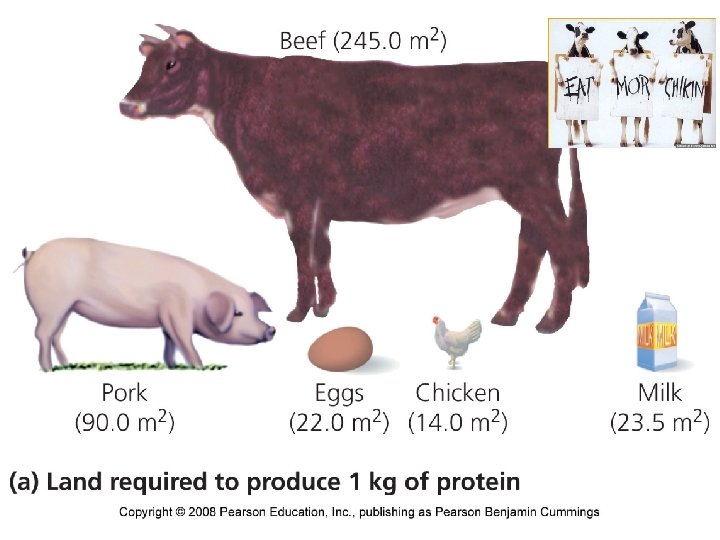
10_20 a. jpg
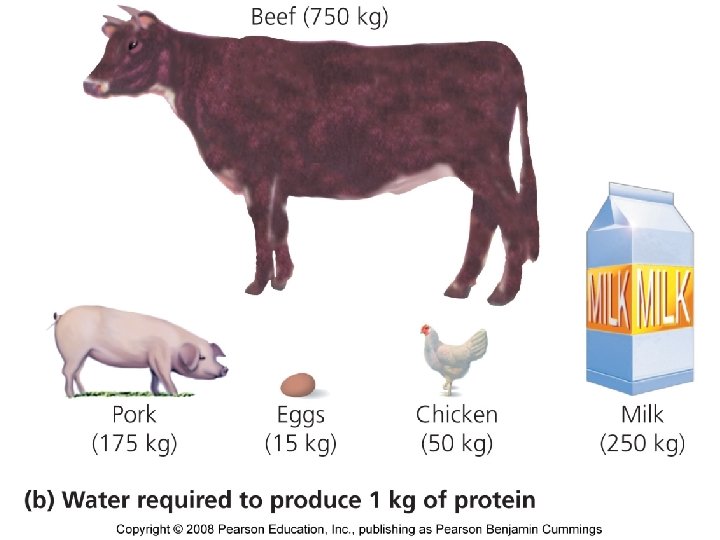
10_20 b. JPG
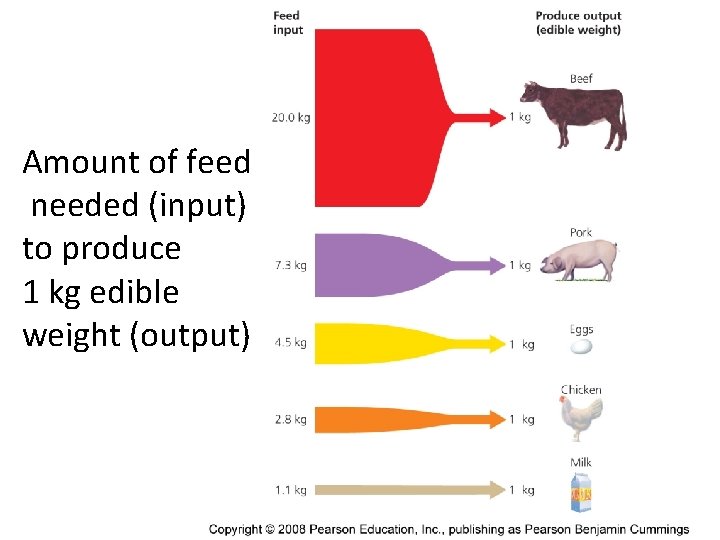
10_19. JPG Amount of feed needed (input) to produce 1 kg edible weight (output)
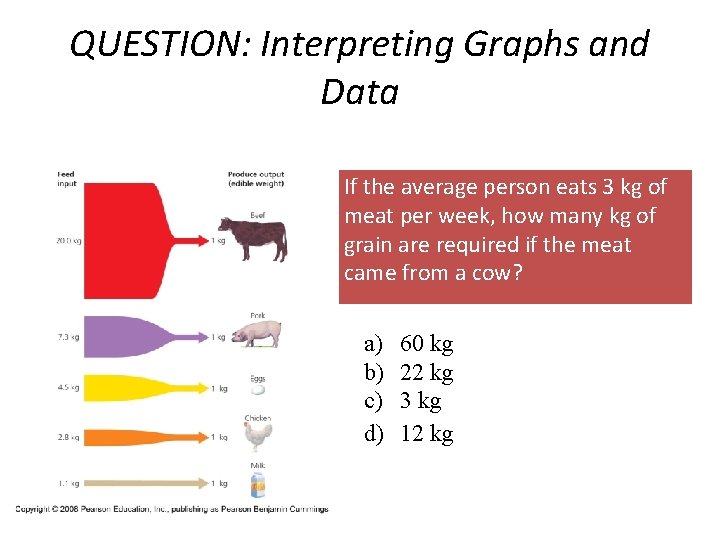
QUESTION: Interpreting Graphs and Data If the average person eats 3 kg of meat per week, how many kg of grain are required if the meat came from a cow? a) b) c) d) 60 kg 22 kg 3 kg 12 kg
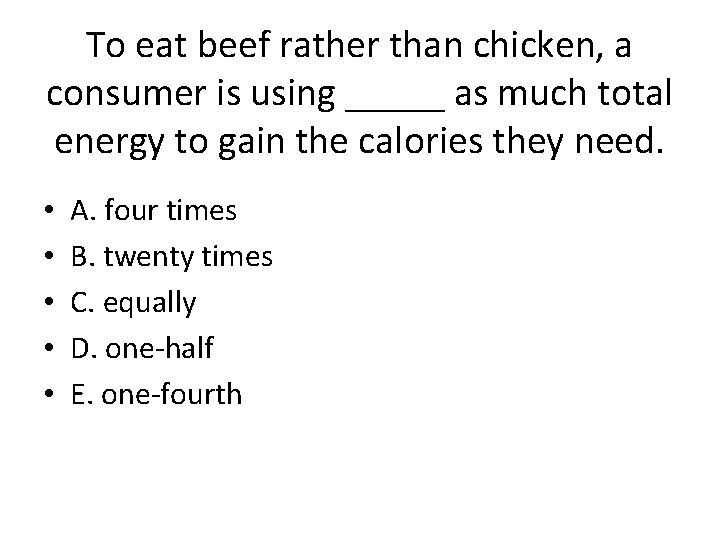
To eat beef rather than chicken, a consumer is using _____ as much total energy to gain the calories they need. • • • A. four times B. twenty times C. equally D. one-half E. one-fourth
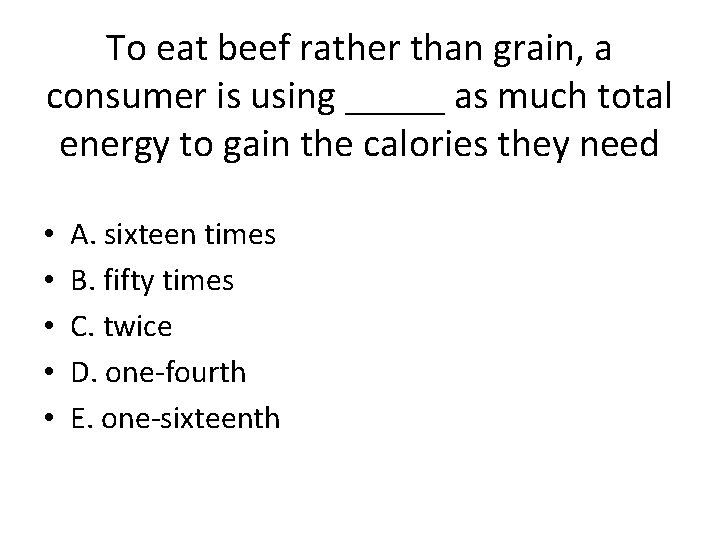
To eat beef rather than grain, a consumer is using _____ as much total energy to gain the calories they need • • • A. sixteen times B. fifty times C. twice D. one-fourth E. one-sixteenth
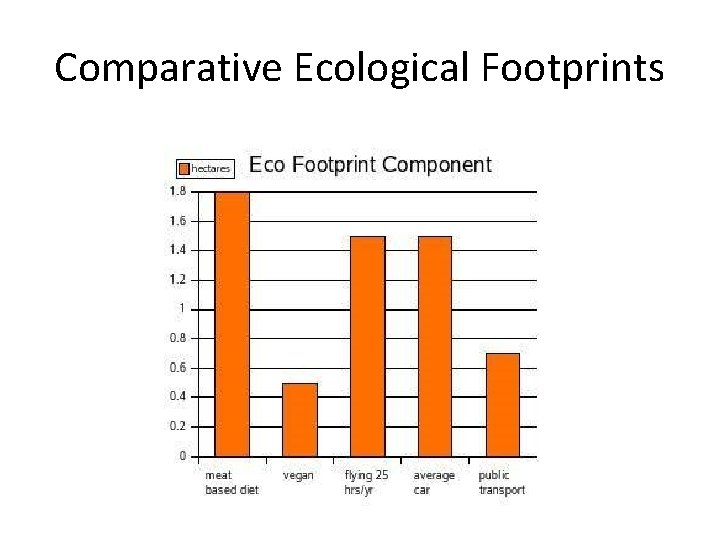
Comparative Ecological Footprints
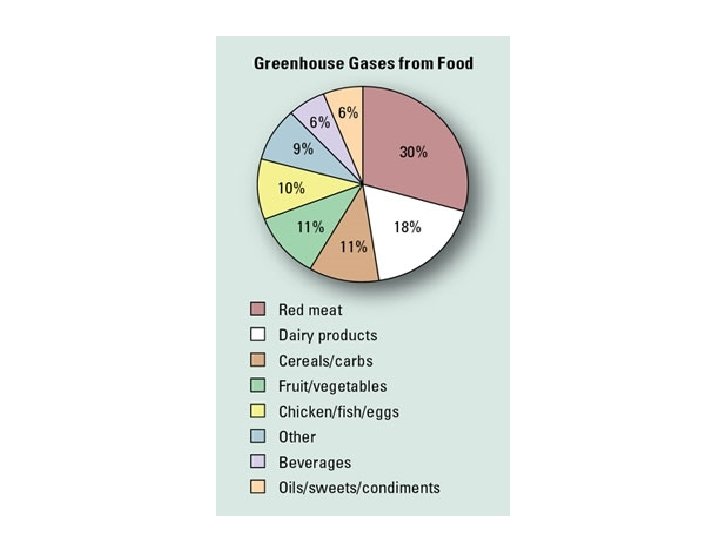
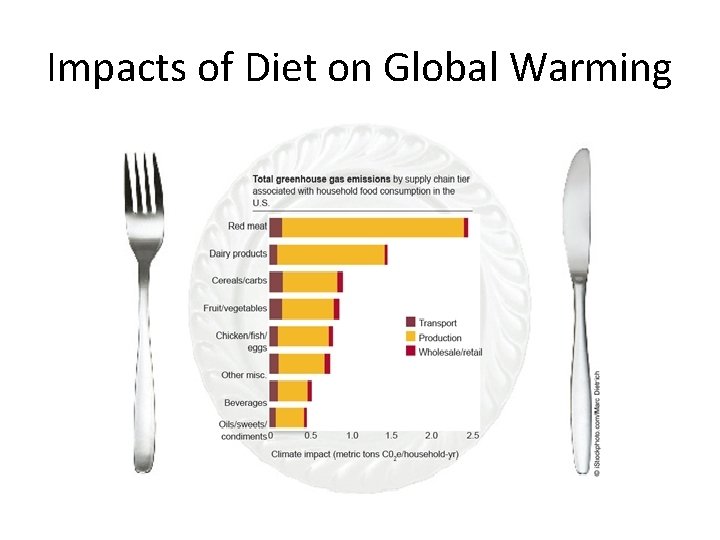
Impacts of Diet on Global Warming
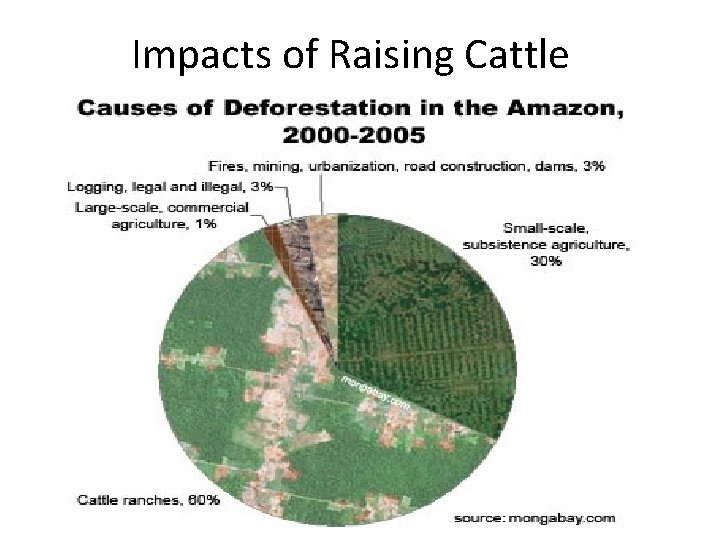
Impacts of Raising Cattle
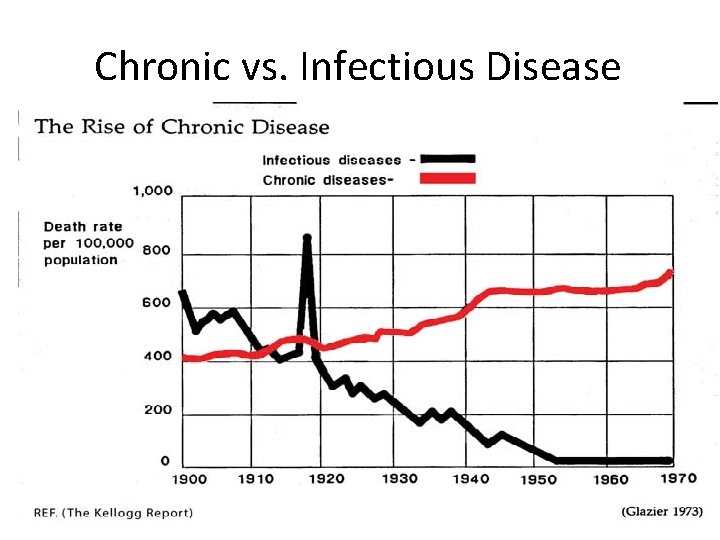
Chronic vs. Infectious Disease
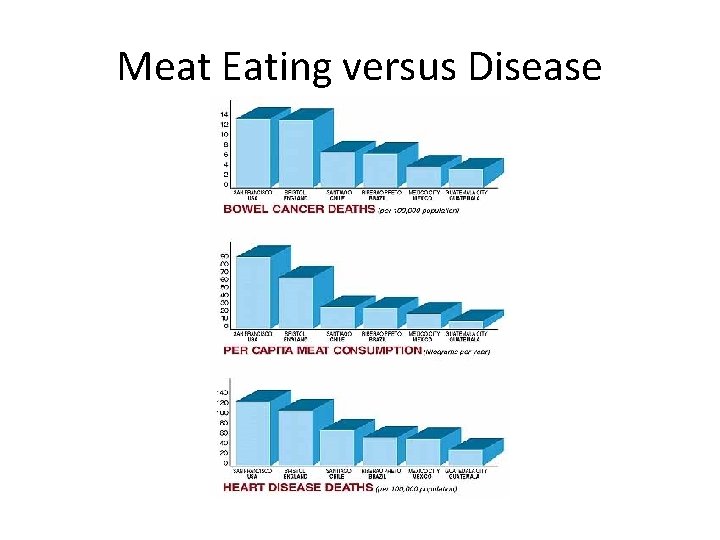
Meat Eating versus Disease
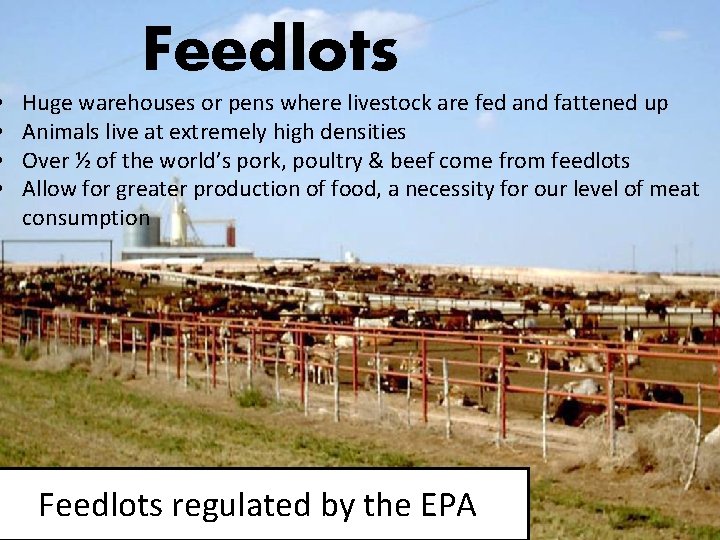
• • Feedlots Huge warehouses or pens where livestock are fed and fattened up Animals live at extremely high densities Over ½ of the world’s pork, poultry & beef come from feedlots Allow for greater production of food, a necessity for our level of meat consumption Feedlots regulated by the EPA
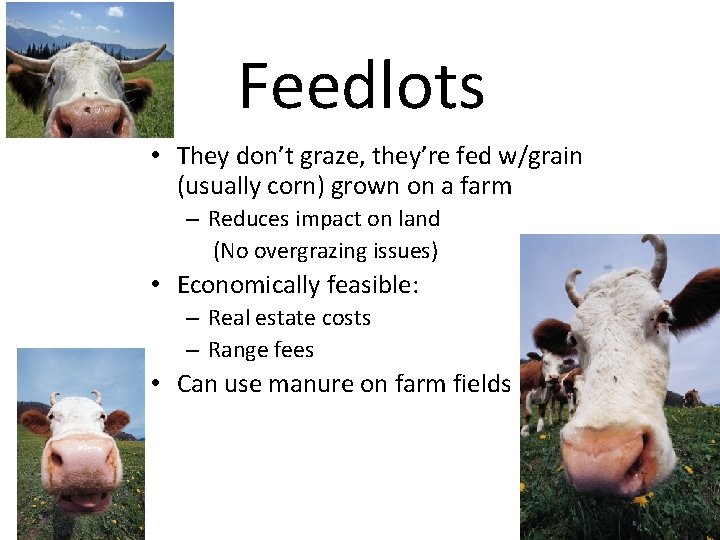
Feedlots • They don’t graze, they’re fed w/grain (usually corn) grown on a farm – Reduces impact on land (No overgrazing issues) • Economically feasible: – Real estate costs – Range fees • Can use manure on farm fields
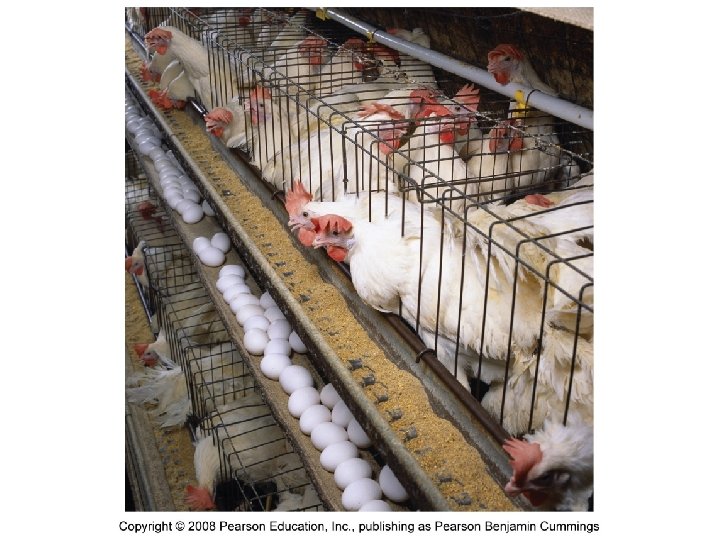
10_18. JPG
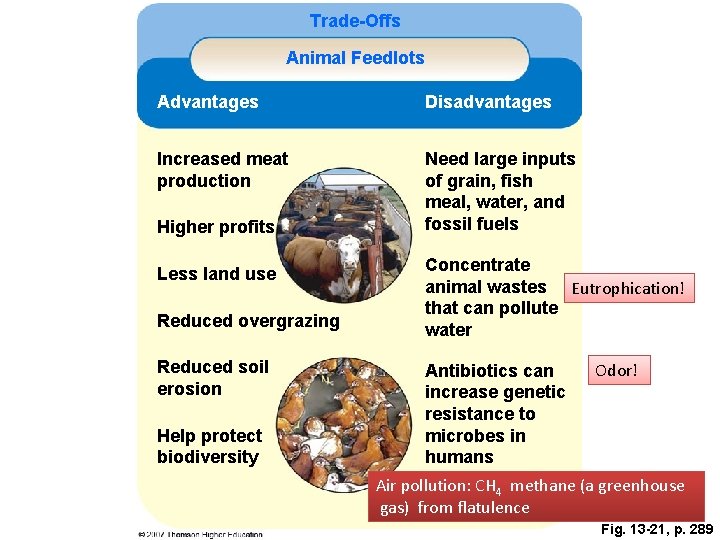
Trade-Offs Animal Feedlots Advantages Disadvantages Increased meat production Need large inputs of grain, fish meal, water, and fossil fuels Higher profits Less land use Reduced overgrazing Reduced soil erosion Help protect biodiversity Concentrate animal wastes Eutrophication! that can pollute water Antibiotics can increase genetic resistance to microbes in humans Odor! Air pollution: CH 4 methane (a greenhouse gas) from flatulence Fig. 13 -21, p. 289
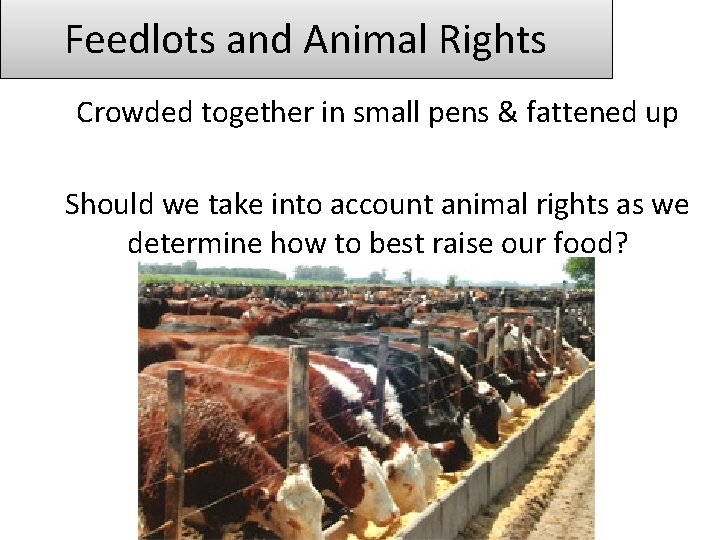
Feedlots and Animal Rights Crowded together in small pens & fattened up Should we take into account animal rights as we determine how to best raise our food?
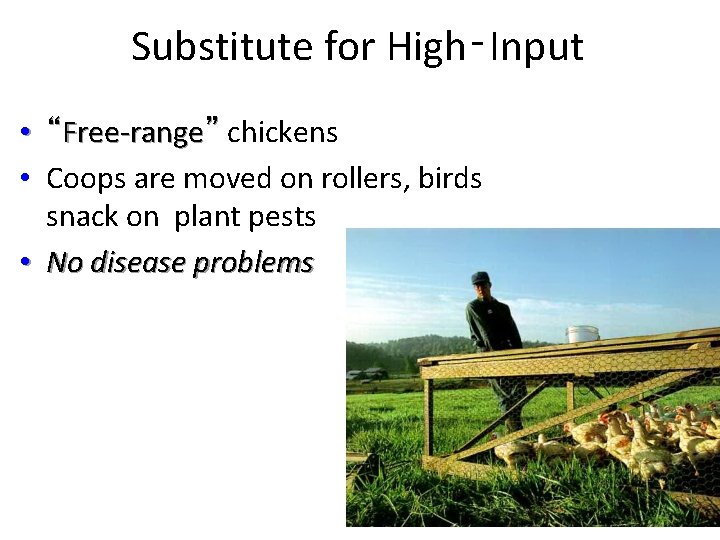
Substitute for High‑Input • “Free-range” chickens • Coops are moved on rollers, birds snack on plant pests • No disease problems
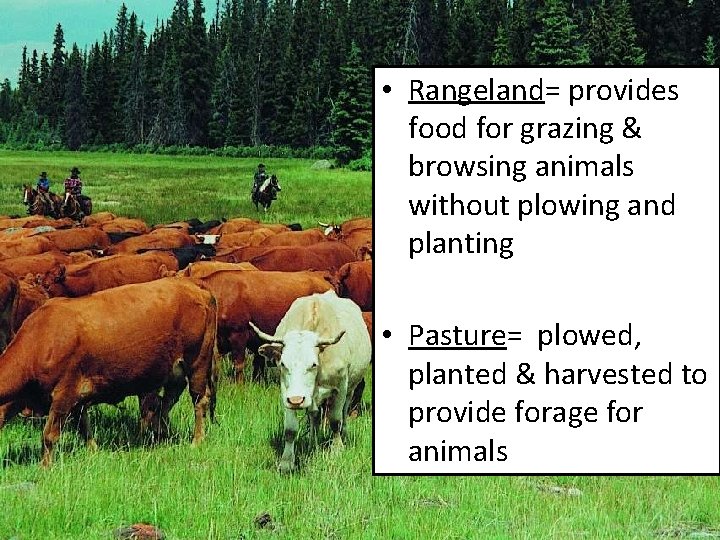
• Rangeland= provides food for grazing & browsing animals without plowing and planting • Pasture= plowed, planted & harvested to provide forage for animals
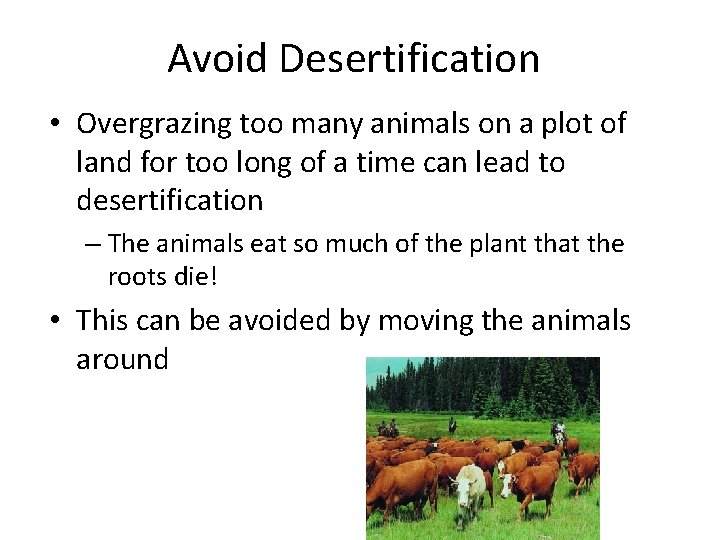
Avoid Desertification • Overgrazing too many animals on a plot of land for too long of a time can lead to desertification – The animals eat so much of the plant that the roots die! • This can be avoided by moving the animals around
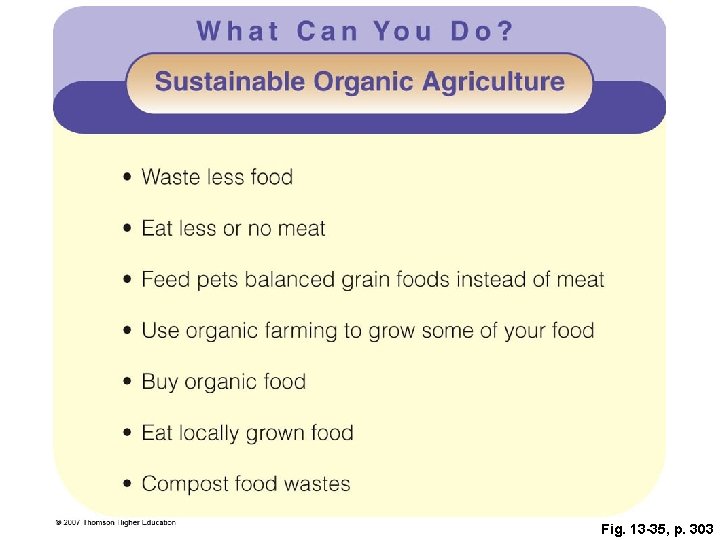
Fig. 13 -35, p. 303
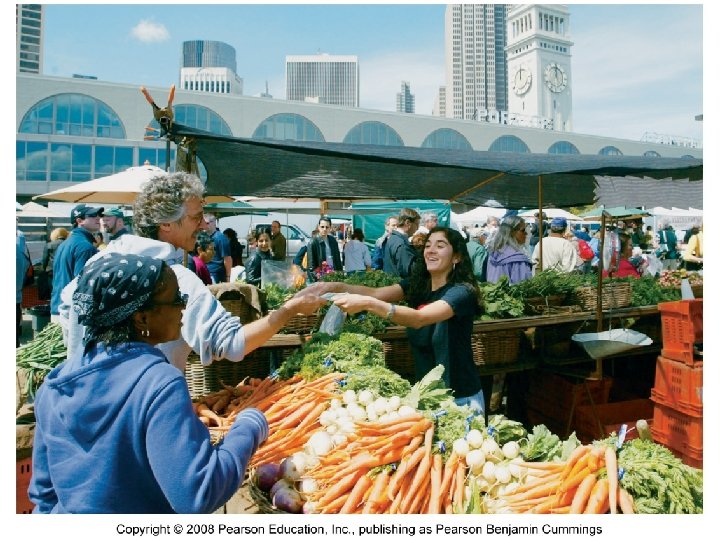
10_25. JPG
http: //lasvegasfarmersmarket. com/ • EVERY WEDNESDAY Las Vegas Farmers Market® Bruce Trent Park Wednesdays from 4 pm - 8 pm • EVERY THURSDAY Las Vegas Farmers Market® Gardens Park Thursdays from 4 pm - 8 pm • EVERY FIRST AND THIRD SATURDAY OF THE MONTH Las Vegas Farmers Market® Floyd Lamb Park at Tule Springs 10 am - 2 pm • SATURDAYS TIVOLI VILLAGE • SUNDAYS SANSONE PARK

The World is in Your Hands
- Slides: 38