
Meat Chemistry Conversion of muscles into meat Muscle


- Slides: 27
Meat Chemistry
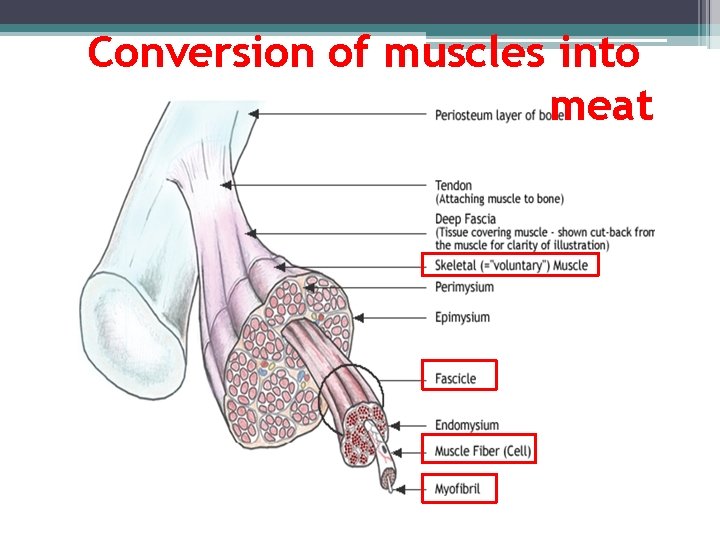
Conversion of muscles into meat
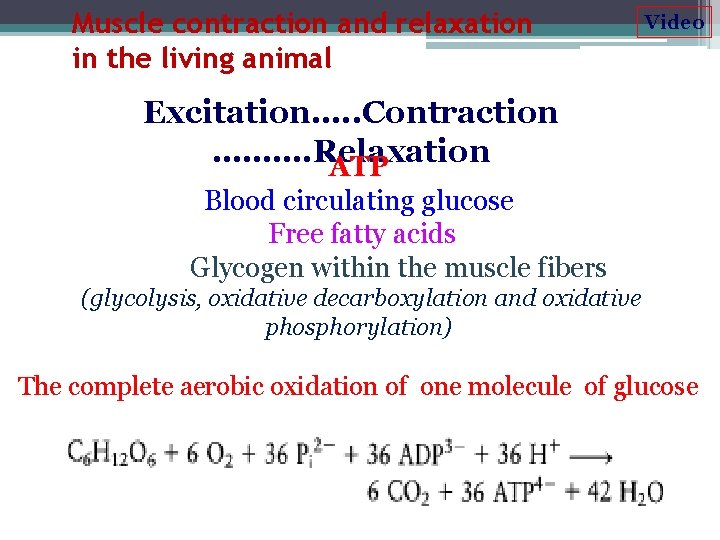
Muscle contraction and relaxation in the living animal Video Excitation…. . Contraction ………. Relaxation ATP Blood circulating glucose Free fatty acids Glycogen within the muscle fibers (glycolysis, oxidative decarboxylation and oxidative phosphorylation) The complete aerobic oxidation of one molecule of glucose produces 36 molecules of ATP:
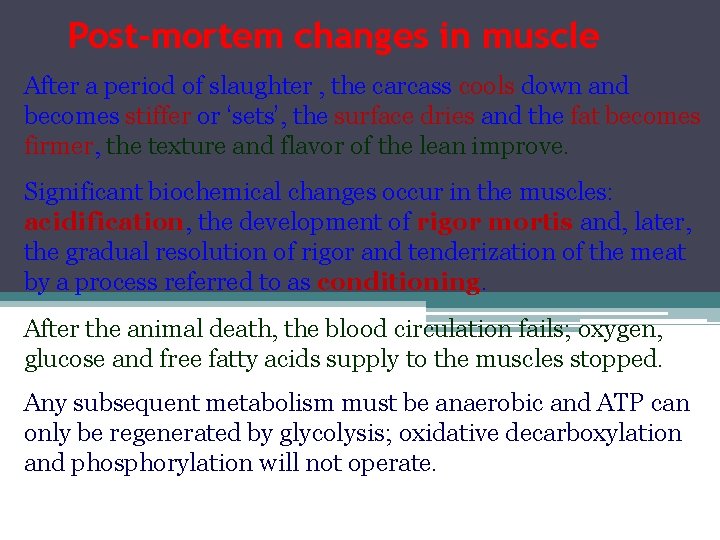
Post-mortem changes in muscle After a period of slaughter , the carcass cools down and becomes stiffer or ‘sets’, the surface dries and the fat becomes firmer, the texture and flavor of the lean improve. Significant biochemical changes occur in the muscles: acidification, the development of rigor mortis and, later, the gradual resolution of rigor and tenderization of the meat by a process referred to as conditioning. After the animal death, the blood circulation fails; oxygen, glucose and free fatty acids supply to the muscles stopped. Any subsequent metabolism must be anaerobic and ATP can only be regenerated by glycolysis; oxidative decarboxylation and phosphorylation will not operate.
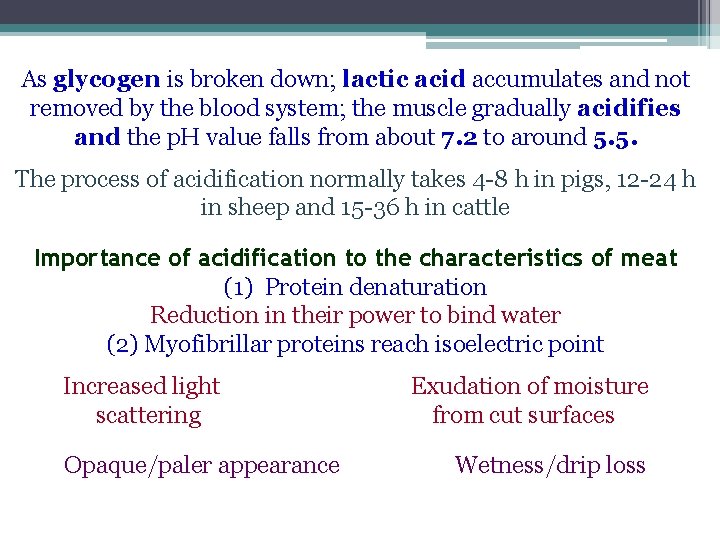
As glycogen is broken down; lactic acid accumulates and not removed by the blood system; the muscle gradually acidifies and the p. H value falls from about 7. 2 to around 5. 5. The process of acidification normally takes 4 -8 h in pigs, 12 -24 h in sheep and 15 -36 h in cattle Importance of acidification to the characteristics of meat (1) Protein denaturation Reduction in their power to bind water (2) Myofibrillar proteins reach isoelectric point Increased light scattering Opaque/paler appearance Exudation of moisture from cut surfaces Wetness/drip loss
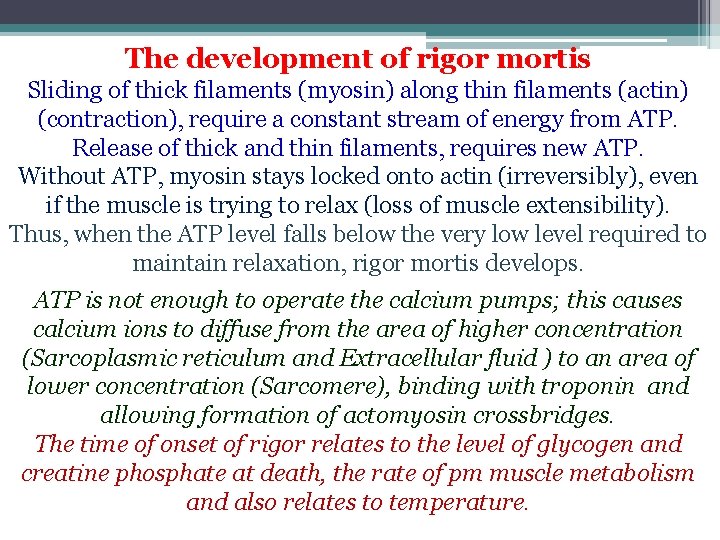
The development of rigor mortis Sliding of thick filaments (myosin) along thin filaments (actin) (contraction), require a constant stream of energy from ATP. Release of thick and thin filaments, requires new ATP. Without ATP, myosin stays locked onto actin (irreversibly), even if the muscle is trying to relax (loss of muscle extensibility). Thus, when the ATP level falls below the very low level required to maintain relaxation, rigor mortis develops. ATP is not enough to operate the calcium pumps; this causes calcium ions to diffuse from the area of higher concentration (Sarcoplasmic reticulum and Extracellular fluid ) to an area of lower concentration (Sarcomere), binding with troponin and allowing formation of actomyosin crossbridges. The time of onset of rigor relates to the level of glycogen and creatine phosphate at death, the rate of pm muscle metabolism and also relates to temperature.
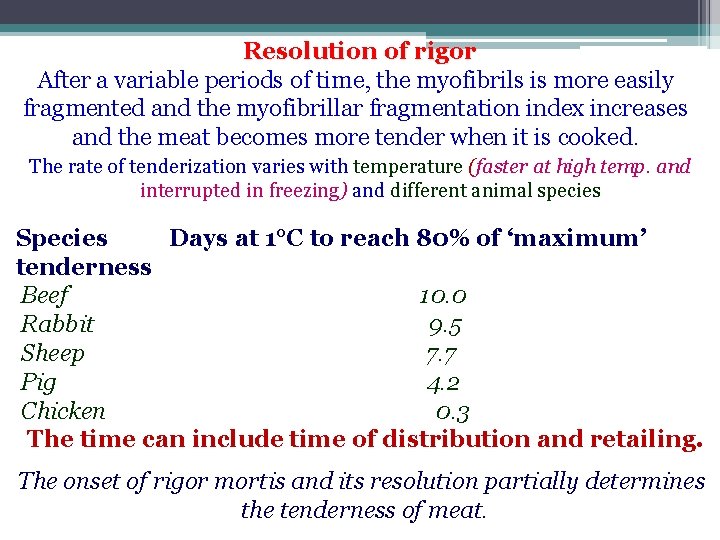
Resolution of rigor After a variable periods of time, the myofibrils is more easily fragmented and the myofibrillar fragmentation index increases and the meat becomes more tender when it is cooked. The rate of tenderization varies with temperature (faster at high temp. and interrupted in freezing) and different animal species Species Days at 1°C to reach 80% of ‘maximum’ tenderness Beef 10. 0 Rabbit 9. 5 Sheep 7. 7 Pig 4. 2 Chicken 0. 3 The time can include time of distribution and retailing. The onset of rigor mortis and its resolution partially determines the tenderness of meat.
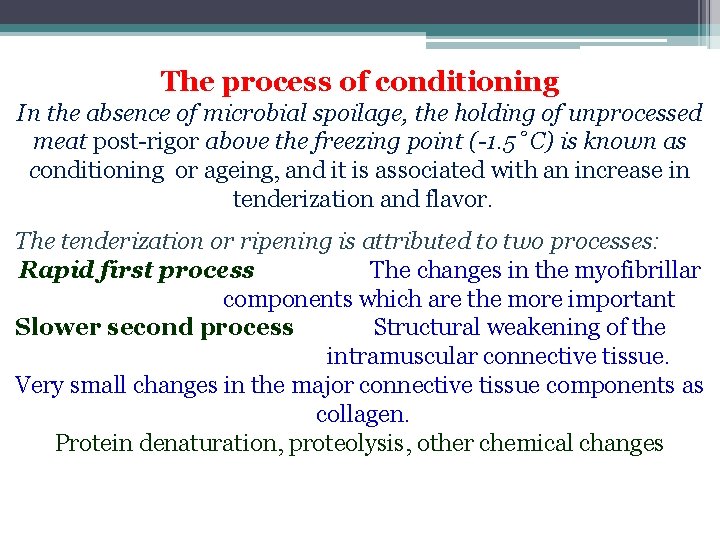
The process of conditioning In the absence of microbial spoilage, the holding of unprocessed meat post-rigor above the freezing point (-1. 5˚C) is known as conditioning or ageing, and it is associated with an increase in tenderization and flavor. The tenderization or ripening is attributed to two processes: Rapid first process The changes in the myofibrillar components which are the more important Slower second process Structural weakening of the intramuscular connective tissue. Very small changes in the major connective tissue components as collagen. Protein denaturation, proteolysis, other chemical changes
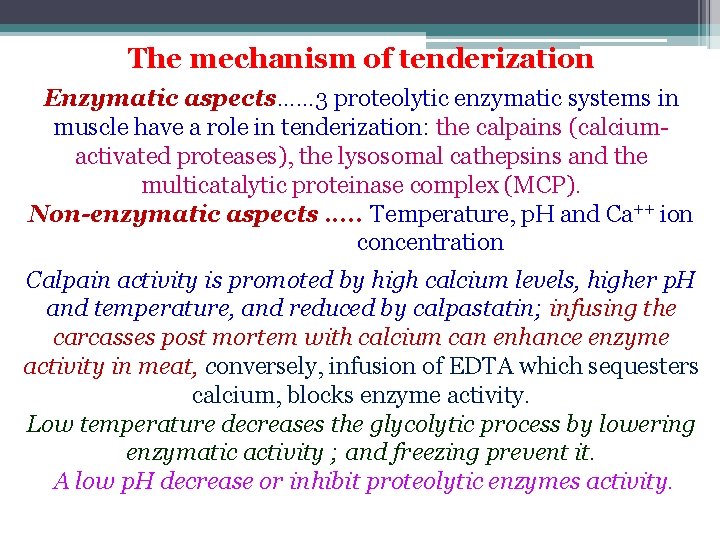
The mechanism of tenderization Enzymatic aspects…… 3 proteolytic enzymatic systems in muscle have a role in tenderization: the calpains (calciumactivated proteases), the lysosomal cathepsins and the multicatalytic proteinase complex (MCP). Non-enzymatic aspects. . . Temperature, p. H and Ca++ ion concentration Calpain activity is promoted by high calcium levels, higher p. H and temperature, and reduced by calpastatin; infusing the carcasses post mortem with calcium can enhance enzyme activity in meat, conversely, infusion of EDTA which sequesters calcium, blocks enzyme activity. Low temperature decreases the glycolytic process by lowering enzymatic activity ; and freezing prevent it. A low p. H decrease or inhibit proteolytic enzymes activity.
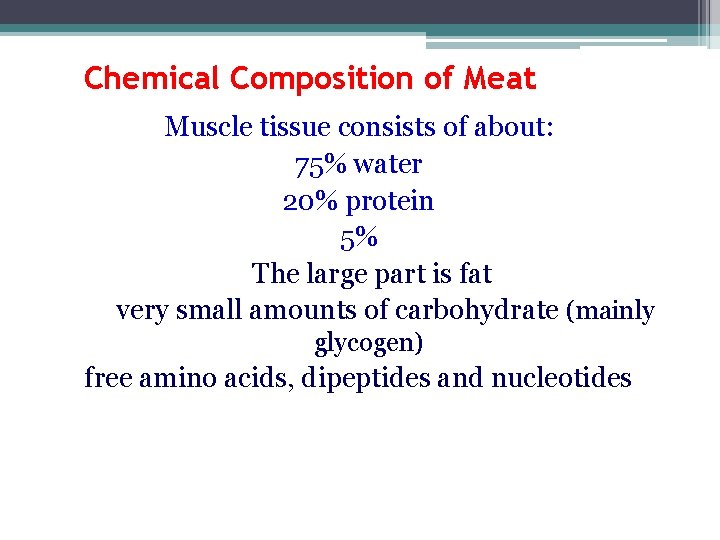
Chemical Composition of Meat Muscle tissue consists of about: 75% water 20% protein 5% The large part is fat very small amounts of carbohydrate (mainly glycogen) free amino acids, dipeptides and nucleotides
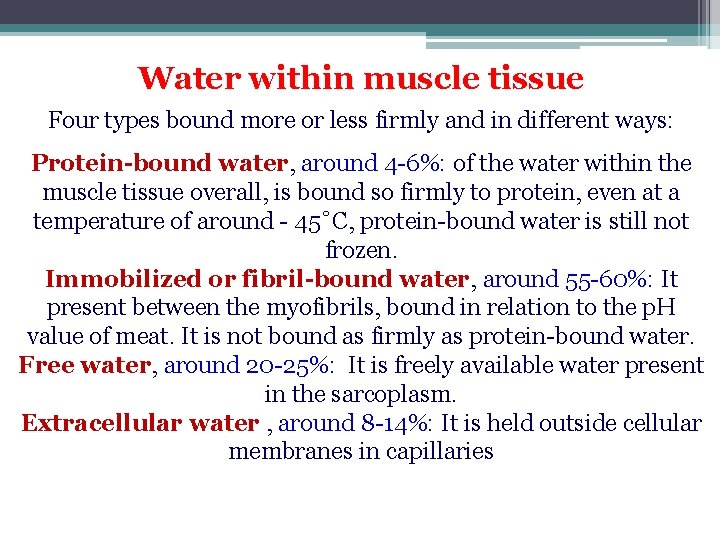
Water within muscle tissue Four types bound more or less firmly and in different ways: Protein-bound water, around 4 -6%: of the water within the muscle tissue overall, is bound so firmly to protein, even at a temperature of around - 45˚C, protein-bound water is still not frozen. Immobilized or fibril-bound water, around 55 -60%: It present between the myofibrils, bound in relation to the p. H value of meat. It is not bound as firmly as protein-bound water. Free water, around 20 -25%: It is freely available water present in the sarcoplasm. Extracellular water , around 8 -14%: It is held outside cellular membranes in capillaries
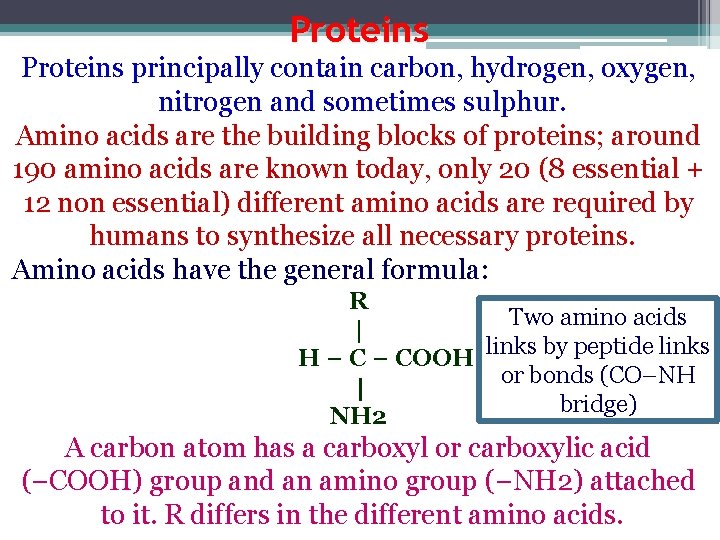
Proteins principally contain carbon, hydrogen, oxygen, nitrogen and sometimes sulphur. Amino acids are the building blocks of proteins; around 190 amino acids are known today, only 20 (8 essential + 12 non essential) different amino acids are required by humans to synthesize all necessary proteins. Amino acids have the general formula: R Two amino acids | links by peptide links H − COOH or bonds (CO–NH | bridge) NH 2 A carbon atom has a carboxyl or carboxylic acid (−COOH) group and an amino group (−NH 2) attached to it. R differs in the different amino acids.
Denaturation (irreversible process) Physical or intramolecular rearrangement which does not involve hydrolysis of the chemical bonds linking amino acids to polypeptide chains. Normal arrangement of protein components is maintained by the provision of energy (ATP); which is not available after death and the protein tend to denature. It is accompanied by an increase in the reactivity of various chemical groups, a loss of biological activity (enzymic or hormonal properties), a decrease in solubility in aqueous solutions and a change in molecular shape and size. It has a major effect on the structure and characteristics of meat, affecting its appearance and ability to hold or bind water. Factors that can induce denaturation are the temperature (cooking <60°C), p. H values (acidification), high concentration of salt (salting) or low levels of water-activity.
Muscle proteins 1 - Myofibrillar proteins around 50% (soluble in concentrated salt solution) The main protein is myosin (around 42%) and actin (around 16%) as well as tropomyosin, troponin and actinin. Technological properties: Addition of salt (2 -3 %) or alkaline phosphate during or before chopping or emulsification improve extraction of a salt solution of protein (myosin). The salt soluble extract of protein coats the fat during formation of emulsions. The myofibrillar- fat emulsion is not only efficient per unit of protein but is also very stable. Myofibrillar proteins denature at around 67– 72 ˚C
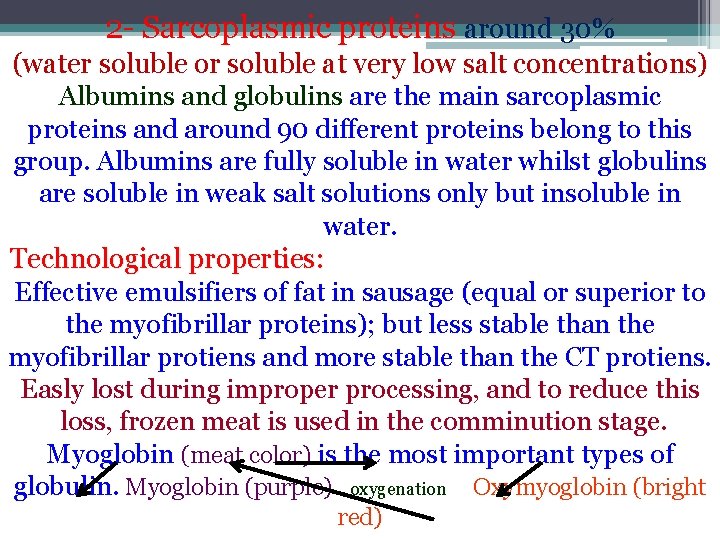
2 - Sarcoplasmic proteins around 30% (water soluble or soluble at very low salt concentrations) Albumins and globulins are the main sarcoplasmic proteins and around 90 different proteins belong to this group. Albumins are fully soluble in water whilst globulins are soluble in weak salt solutions only but insoluble in water. Technological properties: Effective emulsifiers of fat in sausage (equal or superior to the myofibrillar proteins); but less stable than the myofibrillar protiens and more stable than the CT protiens. Easly lost during improper processing, and to reduce this loss, frozen meat is used in the comminution stage. Myoglobin (meat color) is the most important types of globulin. Myoglobin (purple) oxygenation Oxymyoglobin (bright red)
Sarcoplasmic proteins denature generally at around 62– 70 ˚C. Some of them denature at temperatures as low as 50 ˚C. 3 - Structural or Connective tissue proteins around 20% (insoluble in salt and water) The main protein is collagen (40– 60%); tropocollagen, and elastin (around 10%); other insoluble proteins (around 30%) Technological properties: The technological property of collagen is thermal shrinkage at a given temperature Around 70˚C Collagen fibers shorten by 1/3 its original length Around 80˚C moist environment collagen changed to gelatin Exhaustive heating collagen changed to glue During heating, collagen changed to gelatin leading to release and accumulation of fat; so collagen shoud be added in a limited percentage (not more 25 %)
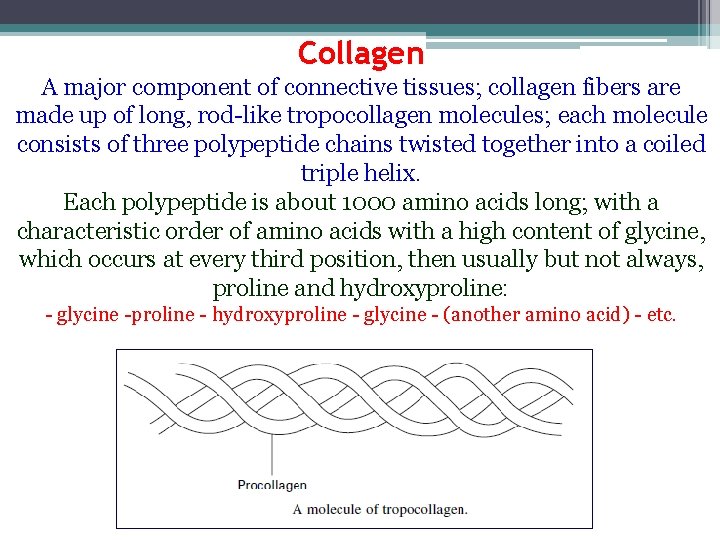
Collagen A major component of connective tissues; collagen fibers are made up of long, rod-like tropocollagen molecules; each molecule consists of three polypeptide chains twisted together into a coiled triple helix. Each polypeptide is about 1000 amino acids long; with a characteristic order of amino acids with a high content of glycine, which occurs at every third position, then usually but not always, proline and hydroxyproline: - glycine -proline - hydroxyproline - glycine - (another amino acid) - etc.
The amino acid hydroxyproline (collagen contains 12. 5% hydroxyproline) is relatively uncommon in proteins; hence, analysis of its concentration in meat can be used to estimate connective tissue content. As animals get older the collagen cross-links are stabilized and the average diameter of the fibrils increases. The collagen from old animals is much less soluble. After cooking, the cross-links weaken but do not break, so contributing to the toughness of meat from old animals. Cooking collagen from young animals produces gelatin, which is soft and soluble. The gelatin forms a gel on cooling.
Fats are of vital importance as a source of energy and essential fatty acids, and as carriers of fat soluble vitamins. Fats have considerable effects on the binding and structural properties of meat products; play important roles in stabilizing meat emulsions, reducing cooking loss, improving water holding capacity and providing juiciness and hardness. High fat contents provide high amounts of saturated fatty acids and cholesterol; several types of obesity, hypertension, cardiovascular diseases and coronary heart diseases Fats are triglycerides (three fatty acid molecules+ glycerol). The nature of the individual fatty acid making up the triglyceride determine its melting point, potential for oxidation and, to a degree, its nutritional value.
Triglycerides contain mainly saturated fatty acids are solid at room temperature (20°C, fats). By contrast, those containing a mainly unsaturated fatty acids are, usually liquid (oils). Triglyceride composition is very significant in determining softness or hardness of animal fats. Most animal fats are solids and plant fats are liquid at room temperature. Lipid Oxidation affects both color and flavorof meat; unattractive brown metmyoglobin and lipid oxidation (rancidity). Lipid oxidation is promoted by processes that damage the muscle structure, such as mincing or comminuting; which exposes the fatty acids to oxygen and catalysing factors such as iron and haem pigment concentration ; the added sodium chloride; and the storage temperature. Antioxidants vitamin C, E, synthetic antioxidants; nitrite, citrates and phosphates inhibit it.
The nutritional value of meat and meat products a. Proteins High quality protein; contains essential amino acids which cannot be synthesized by our body but must be supplied through our food. The myofibrillar proteins are the most important; quantitatively (65%) and qualitatively (highest biological value). Connective tissues proteins contain mainly collagen, which has a low biological value and is devoid of the essential aminoacid tryptophan. Elastin is completely indigestible. Blood proteins have a high content of tryptophan but are of a lower biological value than meat due to their deficiency of the essential amino acid isoleucine.
b. Fats The major contributor of the diet with energy or calories. The unsaturated fatty acids (linoleic, linolenic and arachidonic acid) are physiologically and nutritionally important as the human body cannot readily produce any of them, hence they must be available in the diet. A high ratio of unsaturated / saturated fatty acids in the diet is desirable as this may lower the individual’s susceptibility to cardiovascular diseases and coronary heart disease. Because meat predominantly contains saturated fats raises the level of cholesterol in the blood; to avoid possible health risks, the animal fat intake should be reduced.
Hiding high fat contents in processed meat Dietary problem Improved processing equipment and techniques and/or new or refined ingredients has made it possible to produce meat products with relatively high fat contents, which may be difficult to recognize by consumers. In particular in products like meat loaves and frankfurter, where meat and fat are finely comminuted and the fat particles are enclosed in protein structures, the fat is difficult to detect visibly. Fat contents of up to 40% may be hidden this way, which is profitable for the producer as fat is a relatively cheap. Such diets are not recommended for some consumer groups. On the other hand, there are many physically active hard working people or undernourished people, in particular in the developing world, where meat products with higher fat content may be beneficial as energy sources.
c. Vitamins Meat is an excellent source of the B-complex vitamins. Pork is the best food source of Thiamine (vit. B 1) with more than 1 mg/100 g, beef contains only about 1/10 of this amount. Meat is a good source of vitamin B 12 for children, on the other hand, meat is poor in the fat soluble vitamins A, D, E, K and vitamin C. However, internal organs, especially liver and kidney contain an appreciable percentage of vitamin A, C, D, E and K. Most of the vitamins in meat are relatively stable during cooking or processing, although Thiamine (vitamin B 1) and vitamin B 6 are heat-labile; partially destroyed during cooking and canning. The drip exuding from frozen meat during thawing contains Bvitamins; so, it is better to use frozen meat for processing without thawing.
d. Minerals The mineral contents of meat include calcium, phosphorus, sodium, potassium, chlorine, magnesium with the level of each of these minerals above 0. 1%, and trace elements such as iron, copper, zinc and many others. Blood, liver, kidney, other red organs and to a lesser extent lean meat, in particular beef are good sources of iron. Iron intake is important to combat anemia, which particularly in developing countries is still widespread amongst children and pregnant women. Iron in meat has a higher bio-availability, better resorption and metabolism than iron in plant products.
THANK YOU