
Measuring with Microscopes Measuring with microscopes We can

- Slides: 15
Measuring with Microscopes
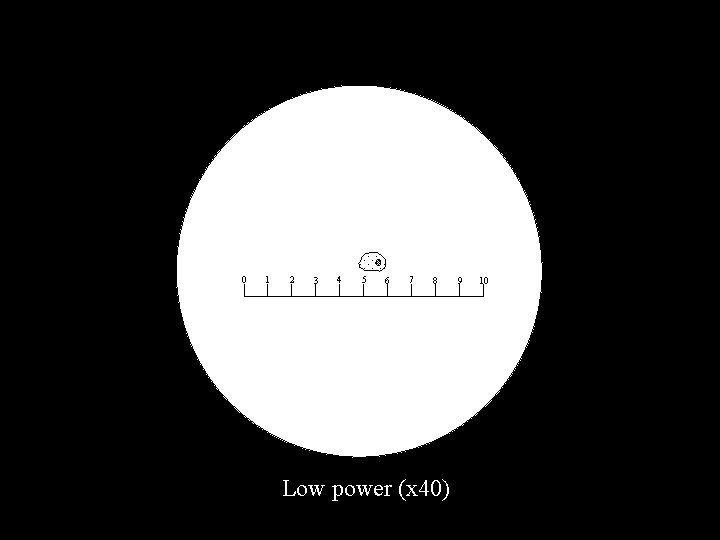
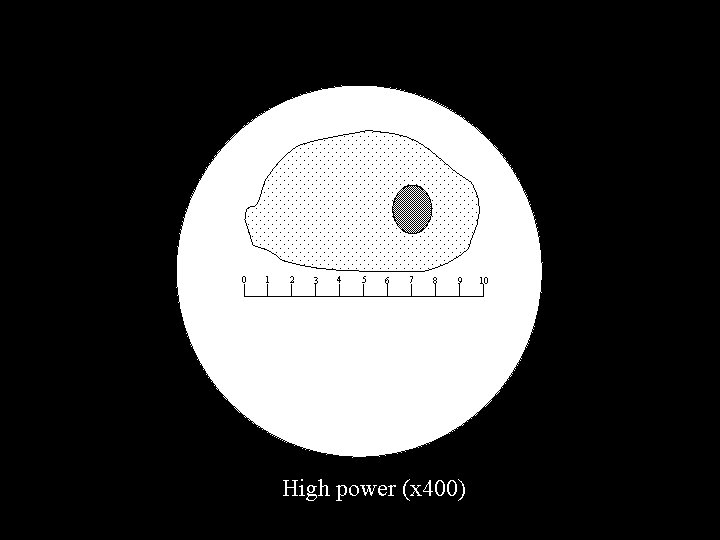
Measuring with microscopes We can measure the size of objects using an eyepiece graticule. This scale is typically 10 mm long and is divided into 100 sub-divisions. The scale on the eyepiece graticule cannot be used directly to measure the size of objects under a microscope’s objective lens because each objective lens will magnify to a different degree. The graticule must be calibrated for each different objective lens. It is sensible to record the results of the calibration for a particular objective lens attached to the microscope.
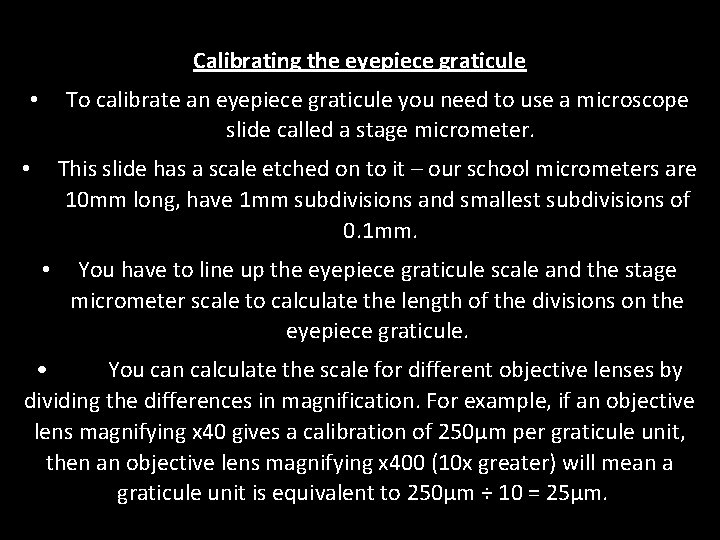
Calibrating the eyepiece graticule To calibrate an eyepiece graticule you need to use a microscope slide called a stage micrometer. • This slide has a scale etched on to it – our school micrometers are 10 mm long, have 1 mm subdivisions and smallest subdivisions of 0. 1 mm. • • You have to line up the eyepiece graticule scale and the stage micrometer scale to calculate the length of the divisions on the eyepiece graticule. • You can calculate the scale for different objective lenses by dividing the differences in magnification. For example, if an objective lens magnifying x 40 gives a calibration of 250µm per graticule unit, then an objective lens magnifying x 400 (10 x greater) will mean a graticule unit is equivalent to 250µm ÷ 10 = 25µm.
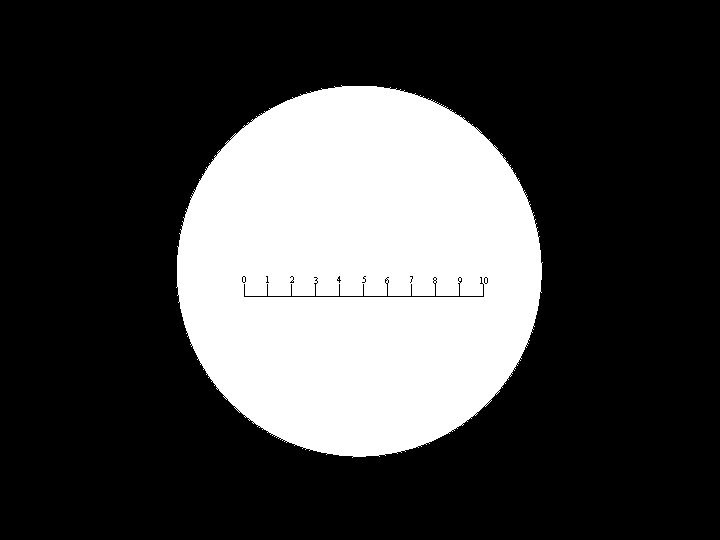
0 1 2 3 4 5 6 7 8 9 10
0 1 2 3 4 5 6 7 8 Low power (x 40) 9 10
0 1 2 3 4 5 6 7 8 9 High power (x 400) 10
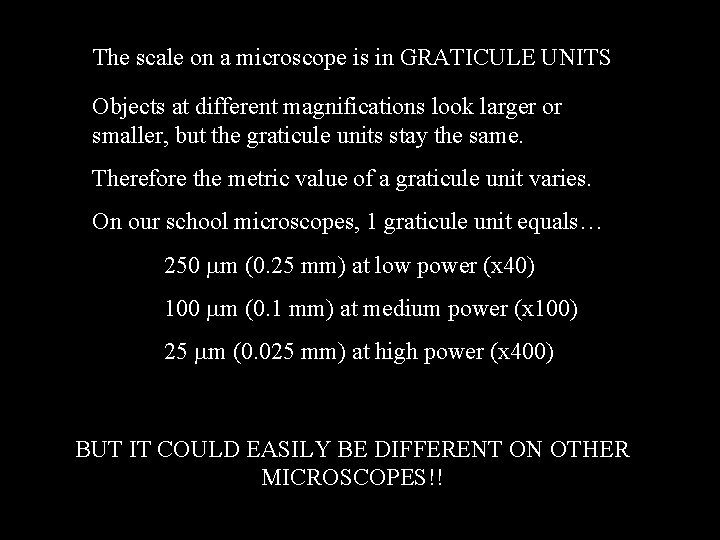
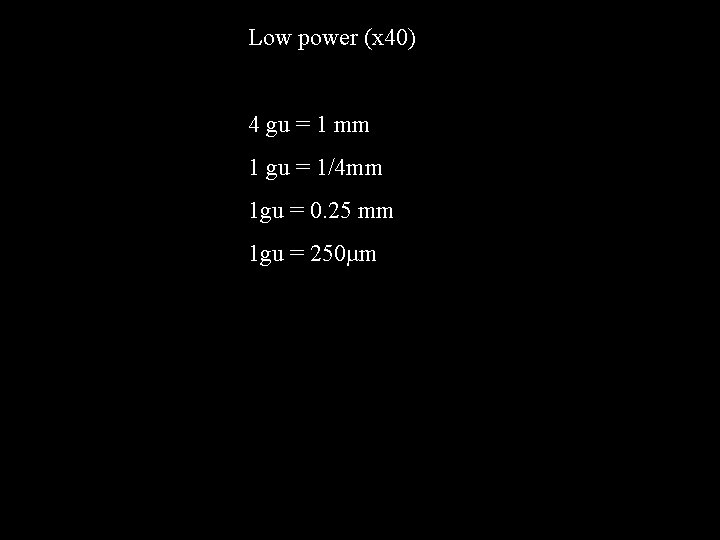
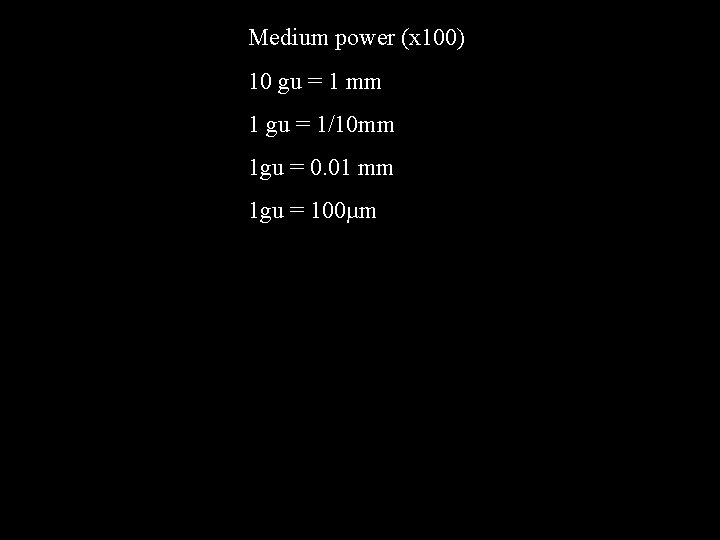
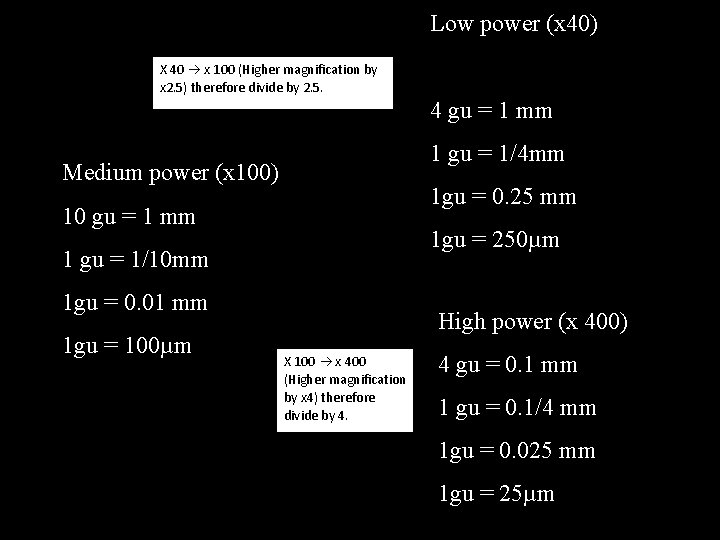
The scale on a microscope is in GRATICULE UNITS Objects at different magnifications look larger or smaller, but the graticule units stay the same. Therefore the metric value of a graticule unit varies. On our school microscopes, 1 graticule unit equals… 250 m (0. 25 mm) at low power (x 40) 100 m (0. 1 mm) at medium power (x 100) 25 m (0. 025 mm) at high power (x 400) BUT IT COULD EASILY BE DIFFERENT ON OTHER MICROSCOPES!!
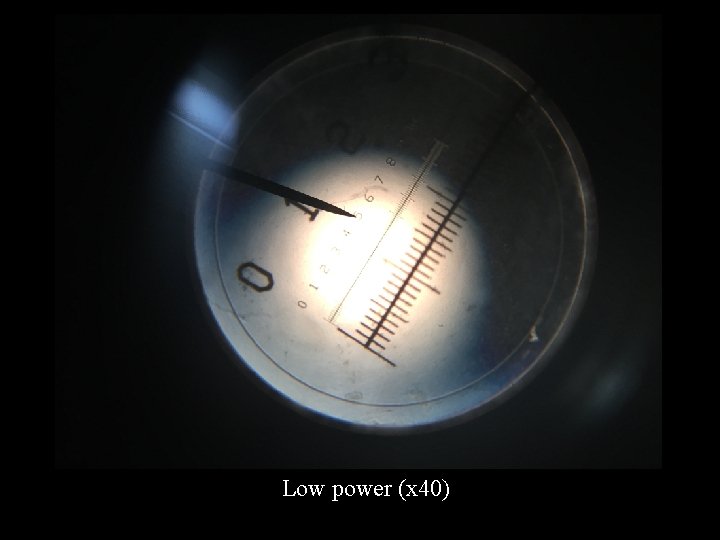
Low power (x 40)
Low power (x 40) 4 gu = 1 mm 1 gu = 1/4 mm 1 gu = 0. 25 mm 1 gu = 250µm
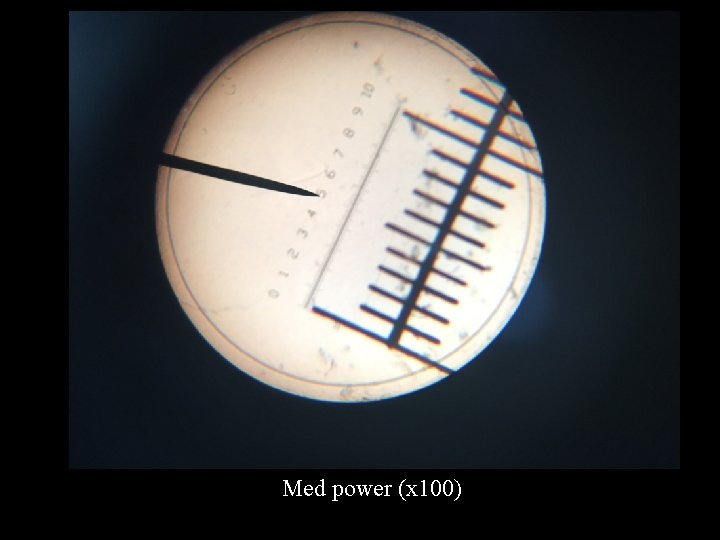
Med power (x 100)
Medium power (x 100) 10 gu = 1 mm 1 gu = 1/10 mm 1 gu = 0. 01 mm 1 gu = 100µm
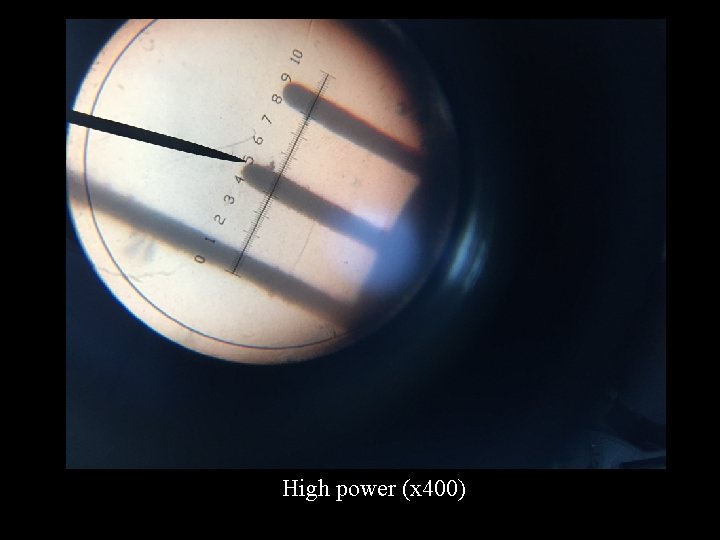
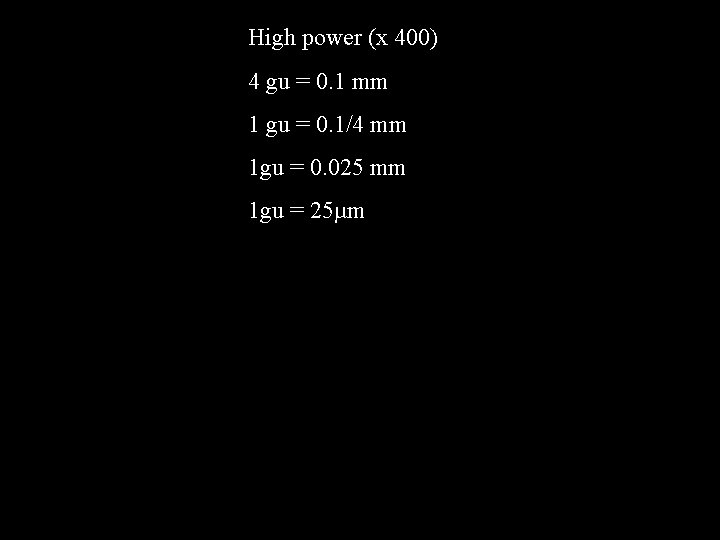
High power (x 400)
High power (x 400) 4 gu = 0. 1 mm 1 gu = 0. 1/4 mm 1 gu = 0. 025 mm 1 gu = 25µm
Low power (x 40) X 40 x 100 (Higher magnification by x 2. 5) therefore divide by 2. 5. 4 gu = 1 mm 1 gu = 1/4 mm Medium power (x 100) 1 gu = 0. 25 mm 10 gu = 1 mm 1 gu = 250µm 1 gu = 1/10 mm 1 gu = 0. 01 mm 1 gu = 100µm High power (x 400) X 100 x 400 (Higher magnification by x 4) therefore divide by 4. 4 gu = 0. 1 mm 1 gu = 0. 1/4 mm 1 gu = 0. 025 mm 1 gu = 25µm