
Measuring the Sustainability of Water Management in the
Measuring the Sustainability of Water Management in the U. S. SWRR on the Potomac Rhonda Kranz and John Wells Sustainable Water Resources Roundtable April 25, 2006
Sustainable Water Resources Roundtable A national collaboration of federal, state, local, corporate, non-profit and academic interests

SWRR Progress § A conceptual framework for understanding water resources sustainability § Principles, criteria and indicators to support decision-making § Collaboration on research needs
Principles of Water Resources Sustainability 1. The value & limits of water People need to understand the value and appreciate the limits of water resources and the risks to people and ecosystems of unbounded water and land use
Principles of Water Resources Sustainability 2. Shared responsibility Because water does not respect political boundaries, its management requires shared consideration of the needs of people and ecosystems up- and downstream and throughout the hydrologic cycle
Principles of Water Resources Sustainability 3. Equitable access Sustainability suggests fair and equitable access to water, water dependent resources and related infrastructure
Principles of Water Resources Sustainability 4. Stewardship Managing water to achieve sustainability challenges us in meeting today’s needs to address the implications of our decisions on future generations and the ecosystems upon which they will rely
Outreach § 300 active participants from federal, state and local governments; corporations; nonprofits and academia § Meetings in California, Minnesota, Michigan, Washington DC, Maryland, Virginia § Publications and conference presentations
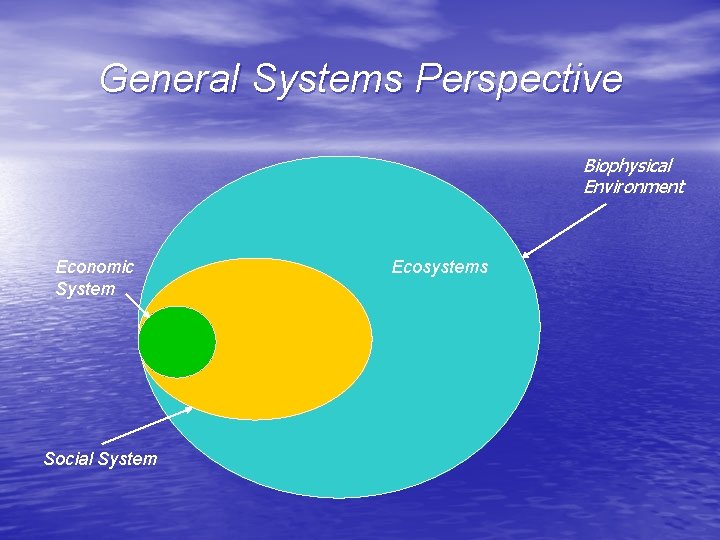
General Systems Perspective Biophysical Environment Economic System Social System Ecosystems
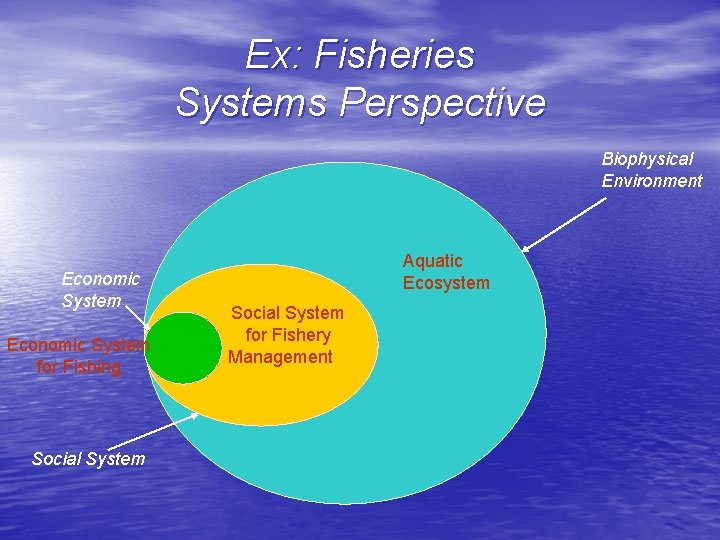
Ex: Fisheries Systems Perspective Biophysical Environment Economic System for Fishing Social System Aquatic Ecosystem Social System for Fishery Management
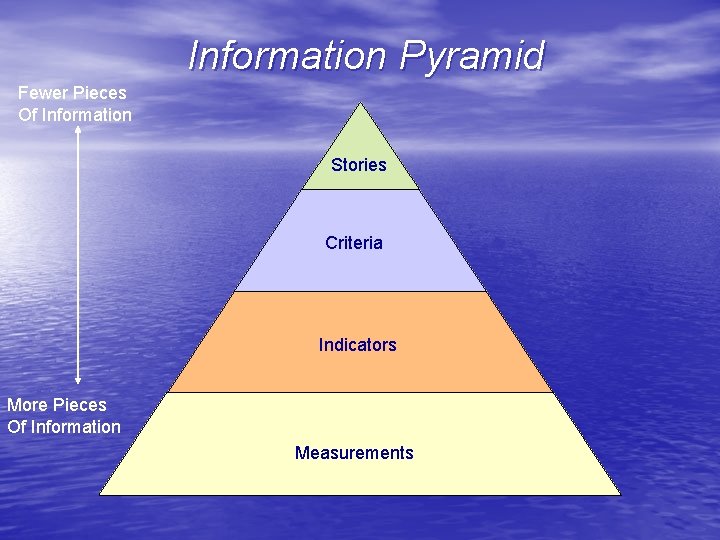
Information Pyramid Fewer Pieces Of Information Stories Criteria Indicators More Pieces Of Information Measurements
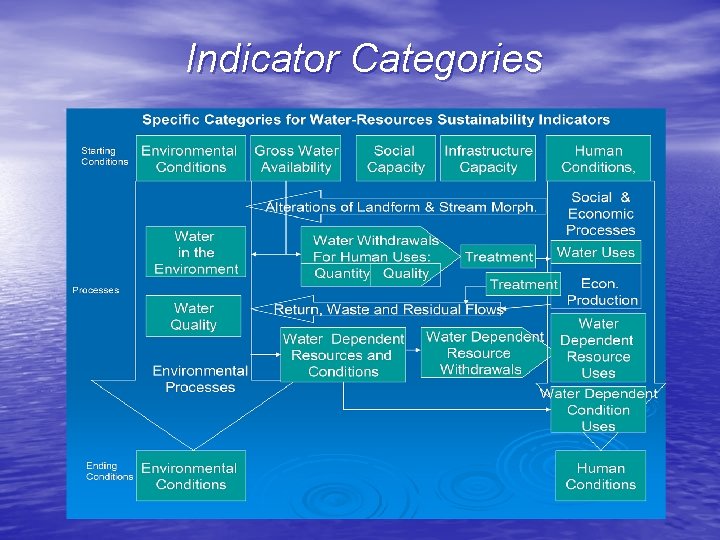
Indicator Categories
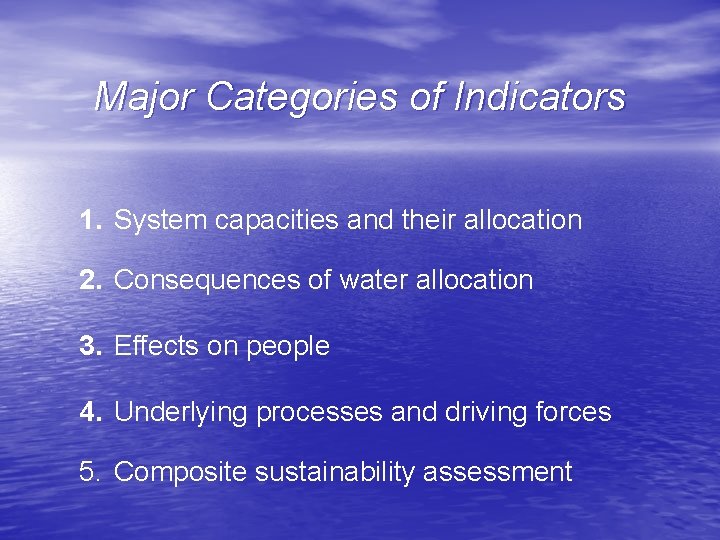
Major Categories of Indicators 1. System capacities and their allocation 2. Consequences of water allocation 3. Effects on people 4. Underlying processes and driving forces 5. Composite sustainability assessment
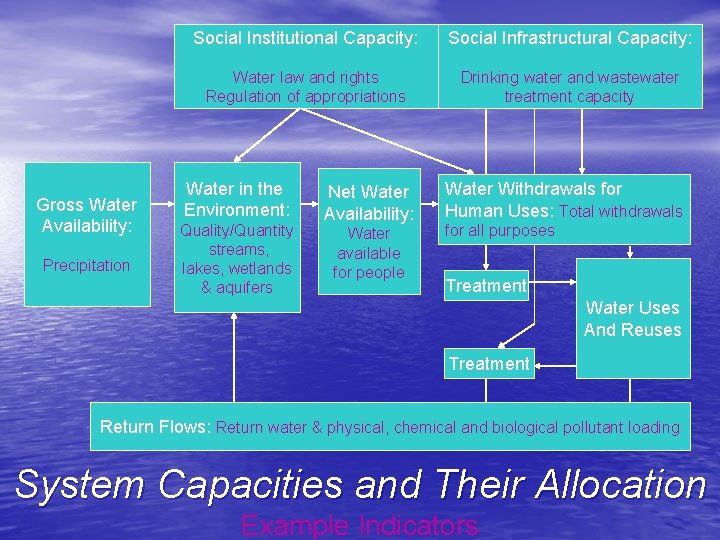
Gross Water Availability: Precipitation Social Institutional Capacity: Social Infrastructural Capacity: Water law and rights Regulation of appropriations Drinking water and wastewater treatment capacity Water in the Environment: Quality/Quantity streams, lakes, wetlands & aquifers Net Water Availability: Water available for people Water Withdrawals for Human Uses: Total withdrawals for all purposes Treatment Water Uses And Reuses Treatment Return Flows: Return water & physical, chemical and biological pollutant loading System Capacities and Their Allocation Example Indicators
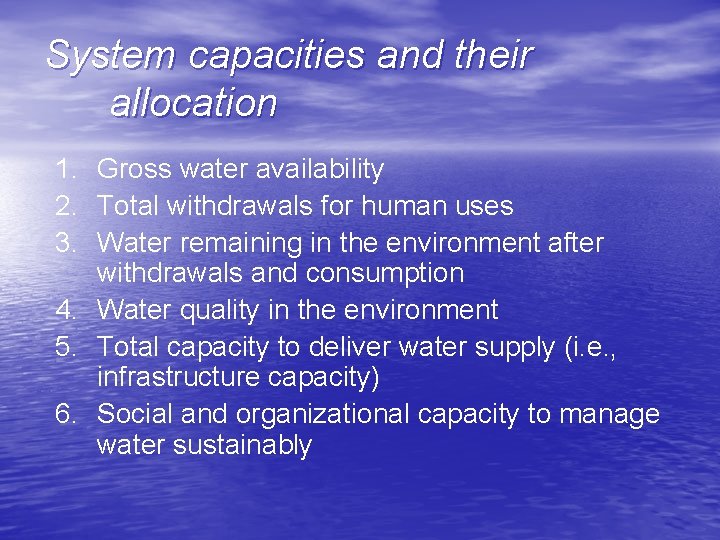
System capacities and their allocation 1. Gross water availability 2. Total withdrawals for human uses 3. Water remaining in the environment after withdrawals and consumption 4. Water quality in the environment 5. Total capacity to deliver water supply (i. e. , infrastructure capacity) 6. Social and organizational capacity to manage water sustainably
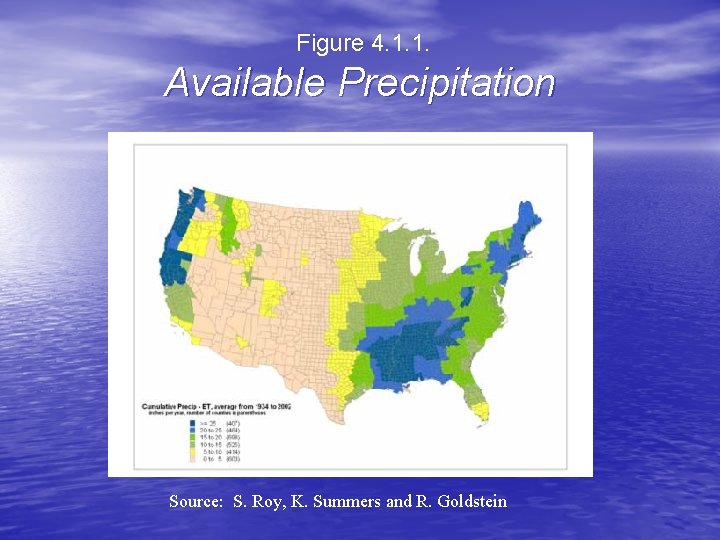
Figure 4. 1. 1. Available Precipitation Source: S. Roy, K. Summers and R. Goldstein
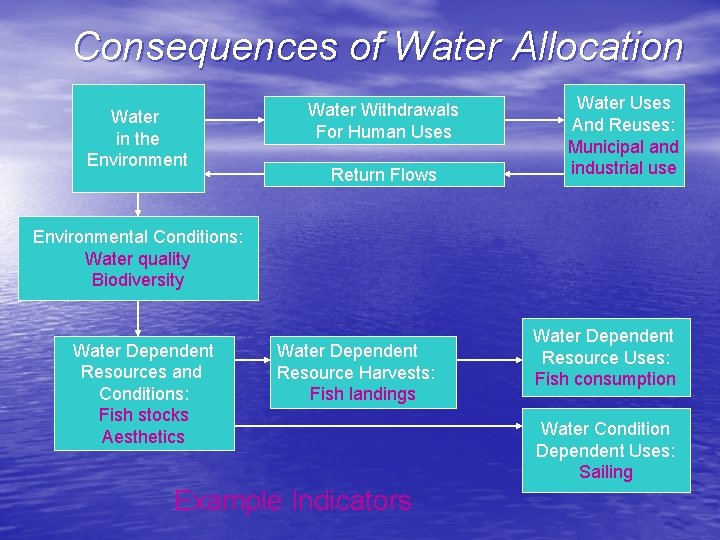
Consequences of Water Allocation Water in the Environment Water Withdrawals For Human Uses Return Flows Water Uses And Reuses: Municipal and industrial use Environmental Conditions: Water quality Biodiversity Water Dependent Resources and Conditions: Fish stocks Aesthetics Water Dependent Resource Harvests: Fish landings Example Indicators Water Dependent Resource Uses: Fish consumption Water Condition Dependent Uses: Sailing
Consequences of the way we allocate water capacity 7. Environmental conditions 8. Resource conditions 9. The quality and quantity of water for human uses 10. Resources withdrawals and use
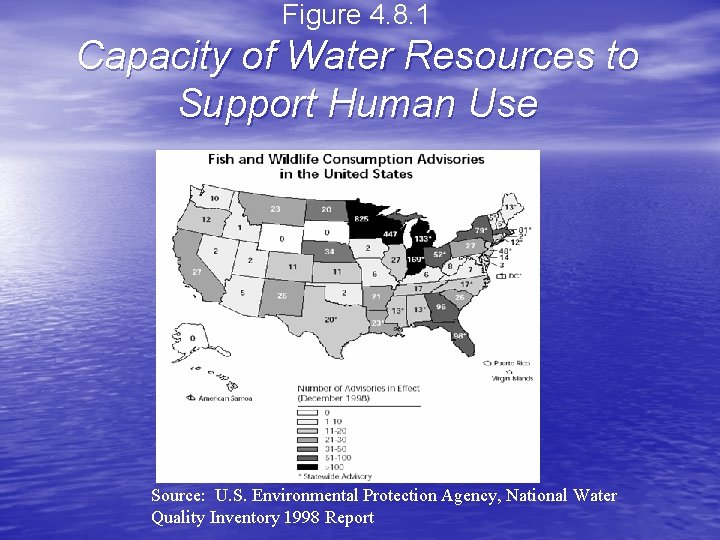
Figure 4. 8. 1 Capacity of Water Resources to Support Human Use Source: U. S. Environmental Protection Agency, National Water Quality Inventory 1998 Report
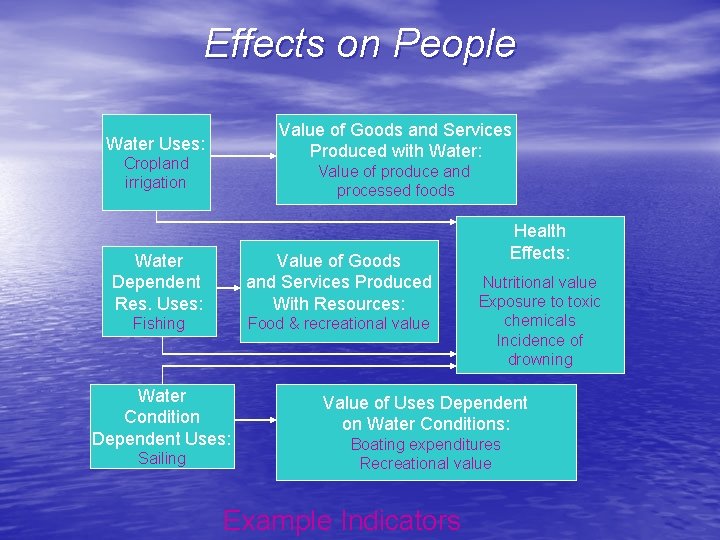
Effects on People Value of Goods and Services Produced with Water: Water Uses: Cropland irrigation Value of produce and processed foods Water Dependent Res. Uses: Value of Goods and Services Produced With Resources: Fishing Food & recreational value Water Condition Dependent Uses: Sailing Health Effects: Nutritional value Exposure to toxic chemicals Incidence of drowning Value of Uses Dependent on Water Conditions: Boating expenditures Recreational value Example Indicators
Effects on people of the conditions and uses of water resources 11. Human conditions – measures of the value people receive from the uses of water and the costs they incur, including health effects
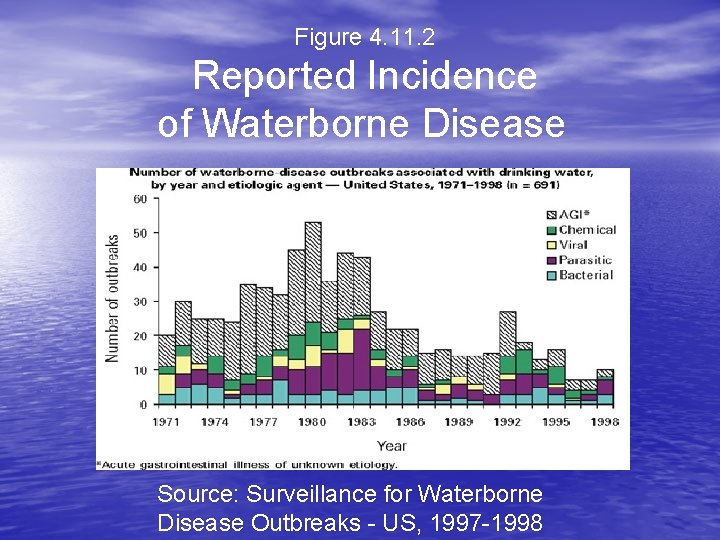
Figure 4. 11. 2 Reported Incidence of Waterborne Disease Source: Surveillance for Waterborne Disease Outbreaks - US, 1997 -1998
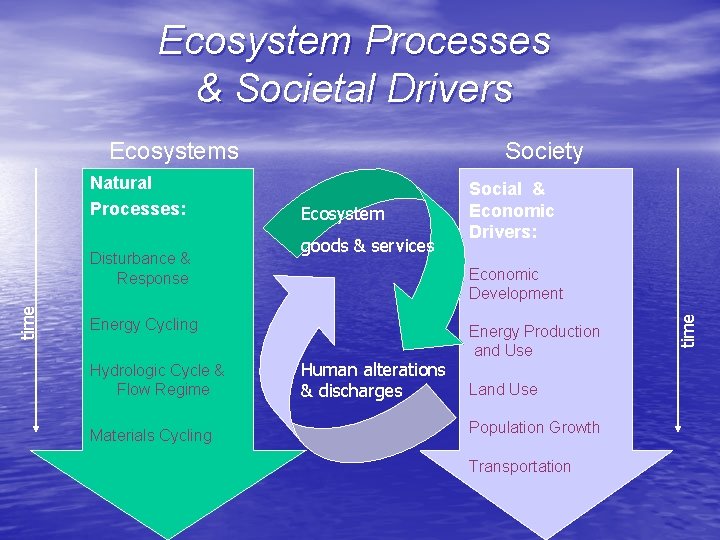
Ecosystem Processes & Societal Drivers Ecosystems time Disturbance & Response Ecosystem goods & services Economic Development Energy Cycling Hydrologic Cycle & Flow Regime Materials Cycling Social & Economic Drivers: Human alterations & discharges Energy Production and Use Land Use Population Growth Transportation time Natural Processes: Society
Underlying processes and driving forces 12. Land use 13. Residual flows – the flow of water and wastes back into the water system 12. Social and economic processes – the systems people and organizations develop to influence water resources and sustainability 12. Ecosystem processes
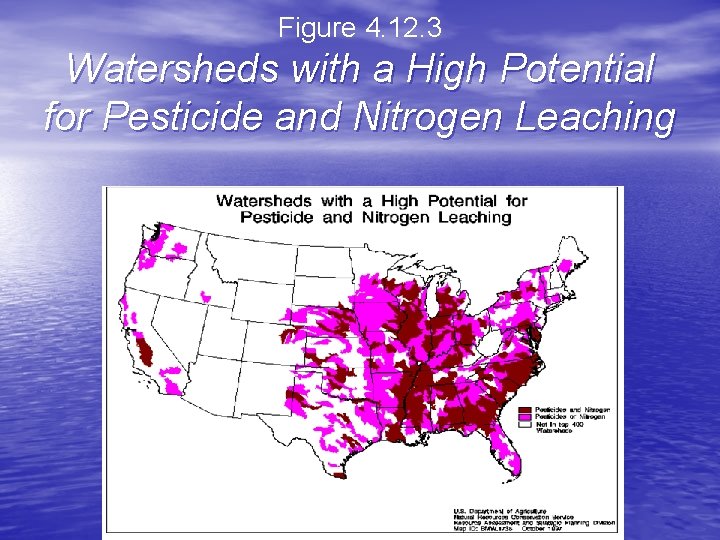
Figure 4. 12. 3 Watersheds with a High Potential for Pesticide and Nitrogen Leaching
Composite sustainability assessment 16. Water use sustainability – in each watershed, the ratio of water withdrawn to renewable supply 17. Water quality sustainability – in each watershed, indicators of the suitability of water quality for the uses desired, including ecosystem uses
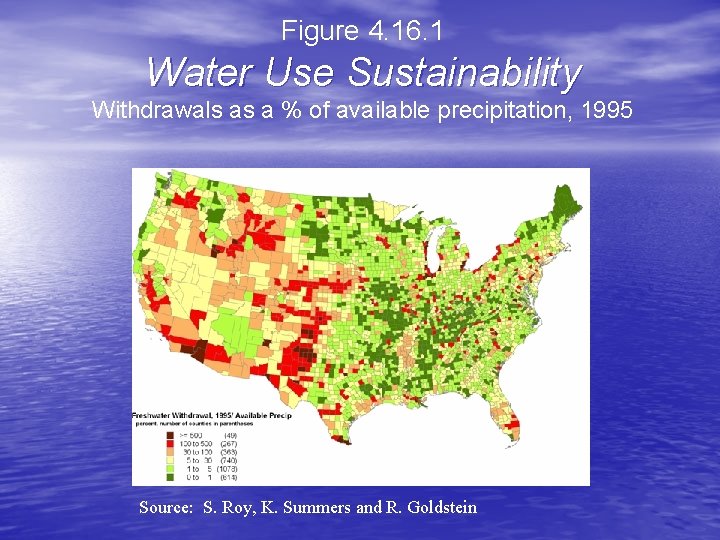
Figure 4. 16. 1 Water Use Sustainability Withdrawals as a % of available precipitation, 1995 Source: S. Roy, K. Summers and R. Goldstein
The Work Ahead § Complete, revise and refine indicators – § Assist agencies – § including indicators scalable to national, state and local levels describing the need for programs to collect the information necessary for generating indicators Increase representation – incorporating indicators of regional water management programs
Future Work, cont’d § § Expand relationships with the scientific community Consult with other programs on water related indicators – – – § National Research Council Key National Indicator Initiative Council on Environmental Quality Heinz Foundation Plan a National Forum
Contact Information § John. wells@state. mn. us John Wells § Kranz@kranzcons. com Rhonda Kranz § http: //water. usgs. gov/wicp/acwi/swrr
- Slides: 30