
MEASURING THE STARS How Do Astronomers Measure the
- Slides: 14
MEASURING THE STARS
How Do Astronomers Measure the Brightness of a Star? Stars vary greatly in brightness Early peoples observed bright stars and grouped them into constellations (88) Ancient Greeks established classification system based on star brightness Apparent magnitude- brightness of a star as viewed from Earth A difference of 1 magnitude corresponds to a factor of 2. 5 in brightness The smaller (more negative) the #, the brighter the star
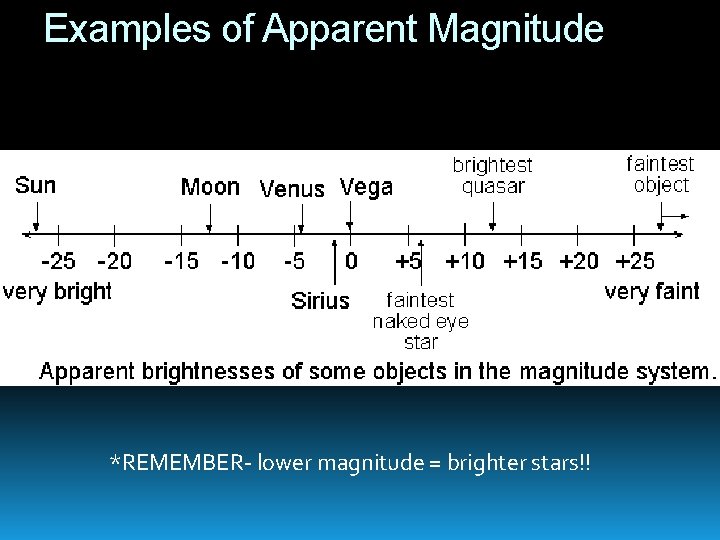
Examples of Apparent Magnitude *REMEMBER- lower magnitude = brighter stars!!
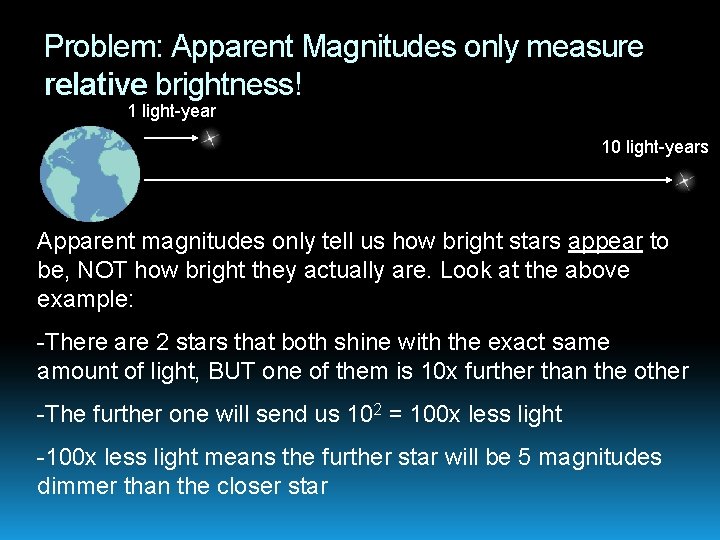
Problem: Apparent Magnitudes only measure relative brightness! 1 light-year 10 light-years Apparent magnitudes only tell us how bright stars appear to be, NOT how bright they actually are. Look at the above example: -There are 2 stars that both shine with the exact same amount of light, BUT one of them is 10 x further than the other -The further one will send us 102 = 100 x less light -100 x less light means the further star will be 5 magnitudes dimmer than the closer star
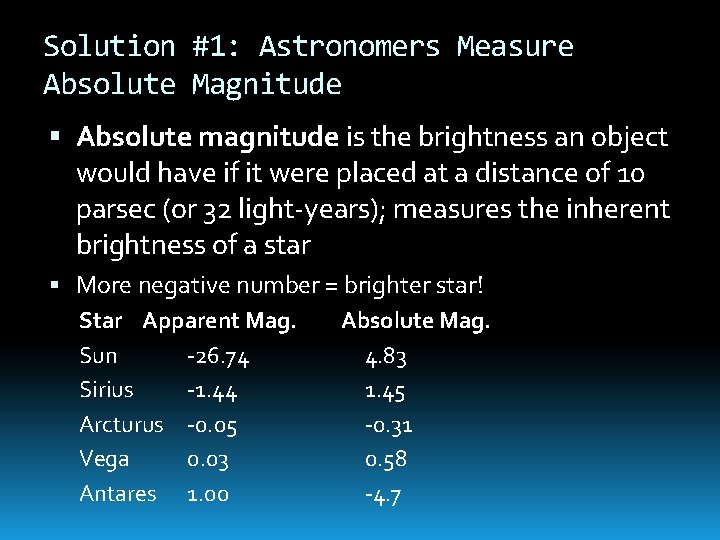
Solution #1: Astronomers Measure Absolute Magnitude Absolute magnitude is the brightness an object would have if it were placed at a distance of 10 parsec (or 32 light-years); measures the inherent brightness of a star More negative number = brighter star! Star Apparent Mag. Absolute Mag. Sun -26. 74 4. 83 Sirius -1. 44 1. 45 Arcturus -0. 05 -0. 31 Vega 0. 03 0. 58 Antares 1. 00 -4. 7
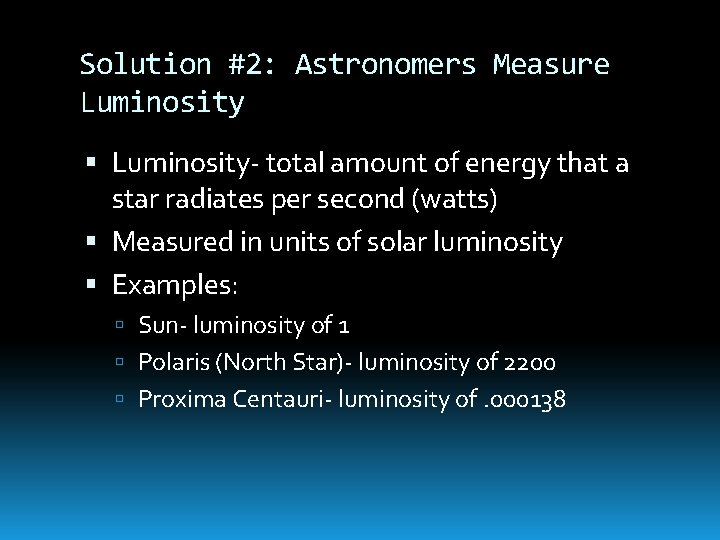
Solution #2: Astronomers Measure Luminosity- total amount of energy that a star radiates per second (watts) Measured in units of solar luminosity Examples: Sun- luminosity of 1 Polaris (North Star)- luminosity of 2200 Proxima Centauri- luminosity of. 000138
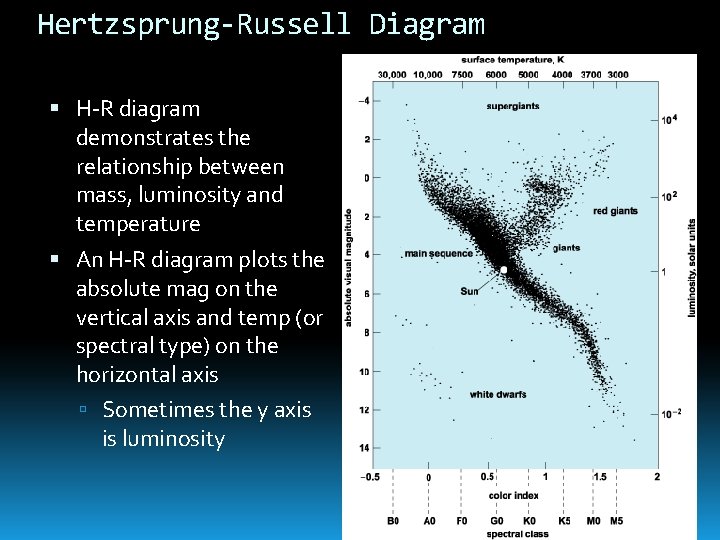
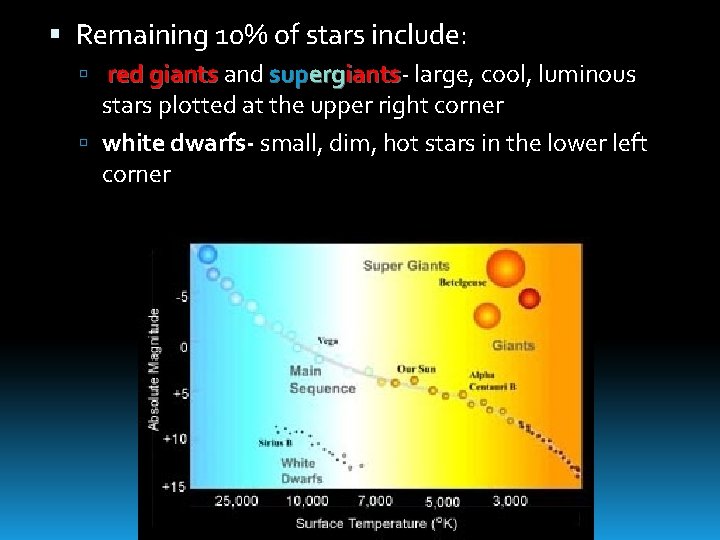
Hertzsprung-Russell Diagram H-R diagram demonstrates the relationship between mass, luminosity and temperature An H-R diagram plots the absolute mag on the vertical axis and temp (or spectral type) on the horizontal axis Sometimes the y axis is luminosity
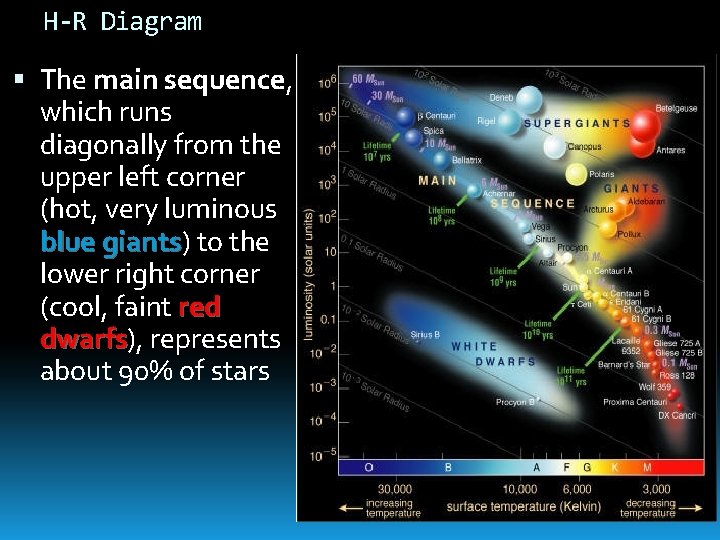
H-R Diagram The main sequence, which runs diagonally from the upper left corner (hot, very luminous blue giants) giants to the lower right corner (cool, faint red dwarfs), dwarfs represents about 90% of stars
Remaining 10% of stars include: red giants and supergiants large, cool, luminous stars plotted at the upper right corner white dwarfs- small, dim, hot stars in the lower left corner
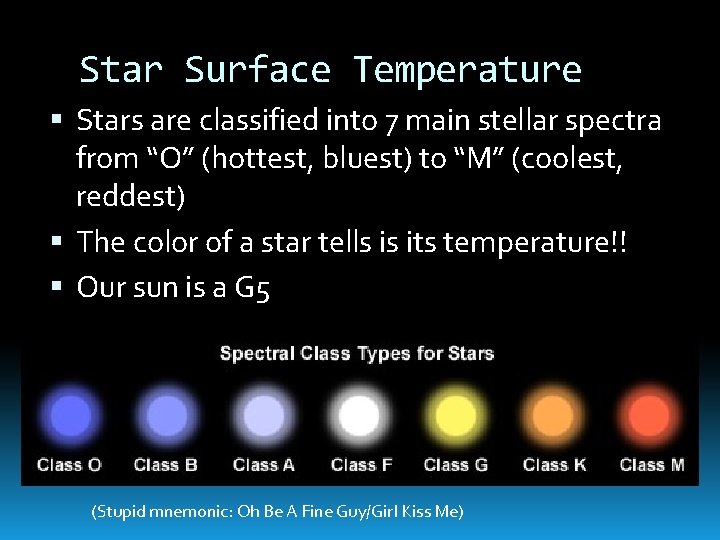
Star Surface Temperature Stars are classified into 7 main stellar spectra from “O” (hottest, bluest) to “M” (coolest, reddest) The color of a star tells is its temperature!! Our sun is a G 5 (Stupid mnemonic: Oh Be A Fine Guy/Girl Kiss Me)
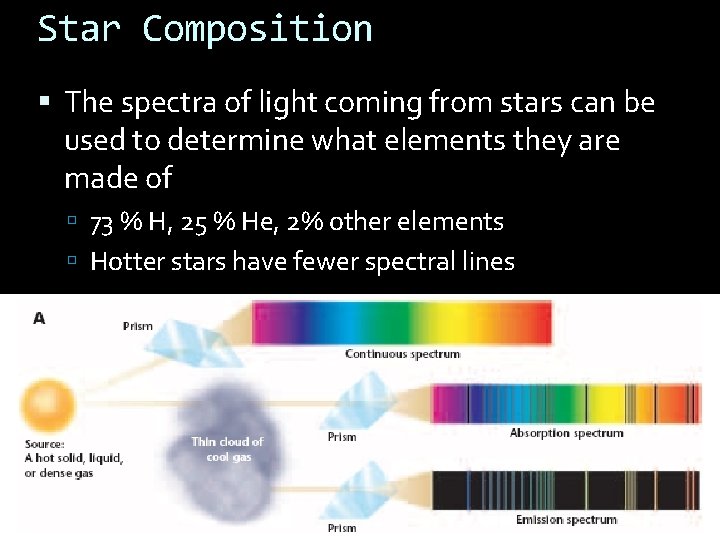
Star Composition The spectra of light coming from stars can be used to determine what elements they are made of 73 % H, 25 % He, 2% other elements Hotter stars have fewer spectral lines
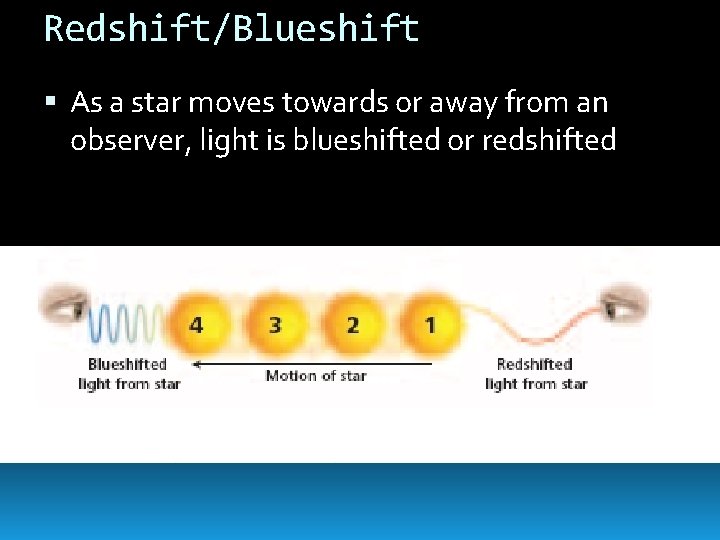
Redshift/Blueshift As a star moves towards or away from an observer, light is blueshifted or redshifted
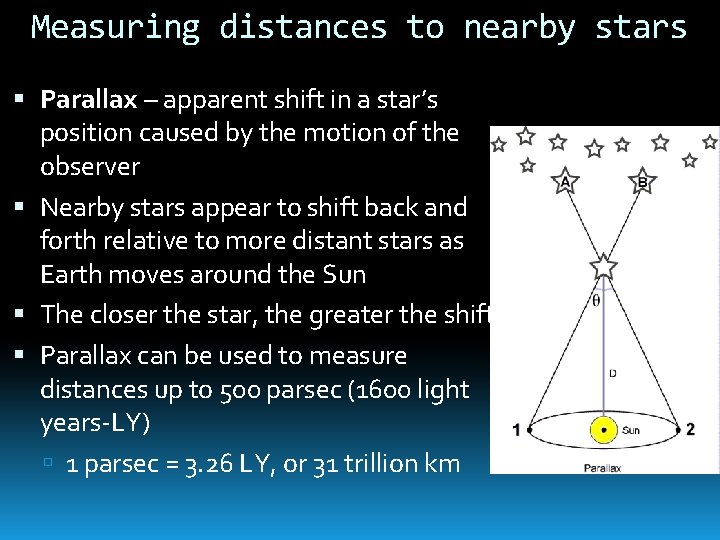
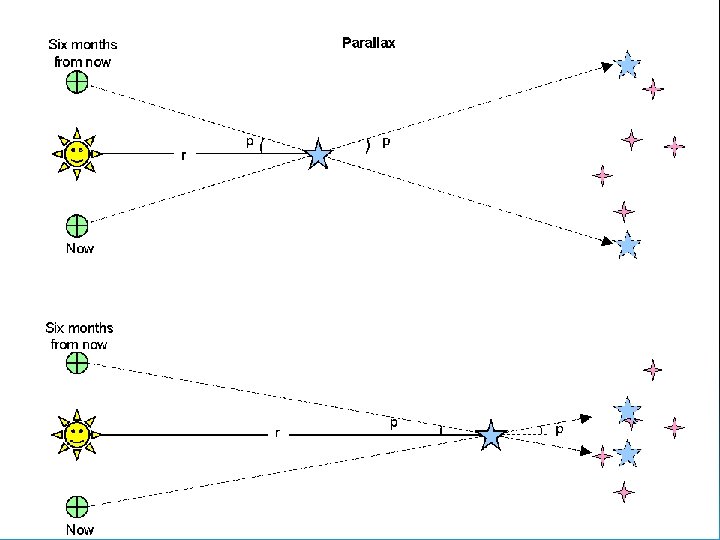
Measuring distances to nearby stars Parallax – apparent shift in a star’s position caused by the motion of the observer Nearby stars appear to shift back and forth relative to more distant stars as Earth moves around the Sun The closer the star, the greater the shift Parallax can be used to measure distances up to 500 parsec (1600 light years-LY) 1 parsec = 3. 26 LY, or 31 trillion km
http: //astronomy. nmsu. edu/aruiter/ASTRONOMY 110/parallax. gif