
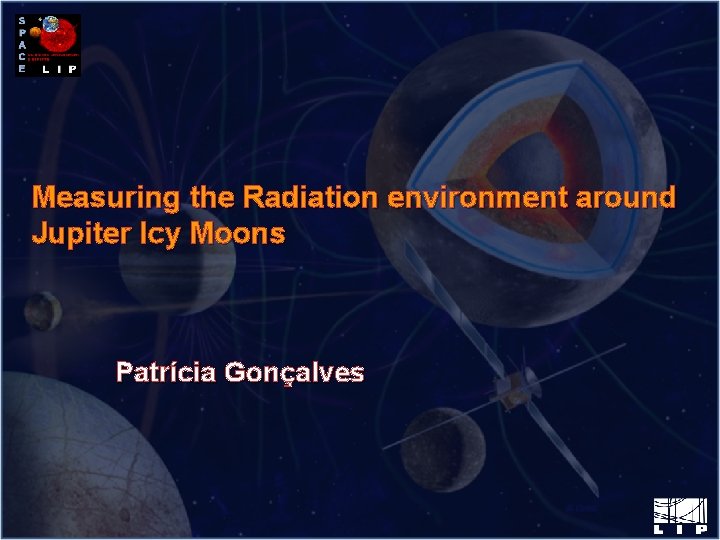
Measuring the Radiation environment around Jupiter Icy Moons

![Technology Readiness Levels in the European Space Agency (ESA)[4] Technology Readiness Level Description TRL](https://slidetodoc.com/presentation_image/9926b5038758fde78451181225d048c3/image-34.jpg "Technology Readiness Levels in the European Space Agency (ESA)[4] Technology Readiness Level Description TRL")
- Slides: 37
Measuring the Radiation environment around Jupiter Icy Moons Patrícia Gonçalves
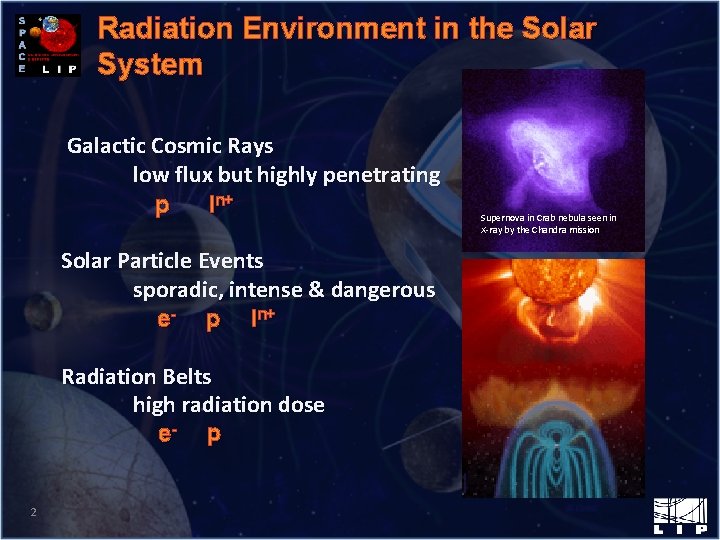
Radiation Environment in the Solar System Galactic Cosmic Rays low flux but highly penetrating p In+ Solar Particle Events sporadic, intense & dangerous e- p In+ Radiation Belts high radiation dose e- p 2 Supernova in Crab nebula seen in X‐ray by the Chandra mission
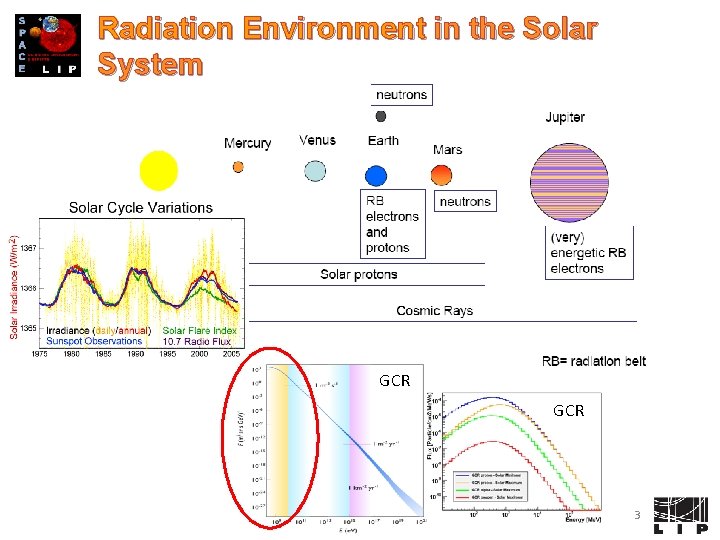
Radiation Environment in the Solar System GCR 3
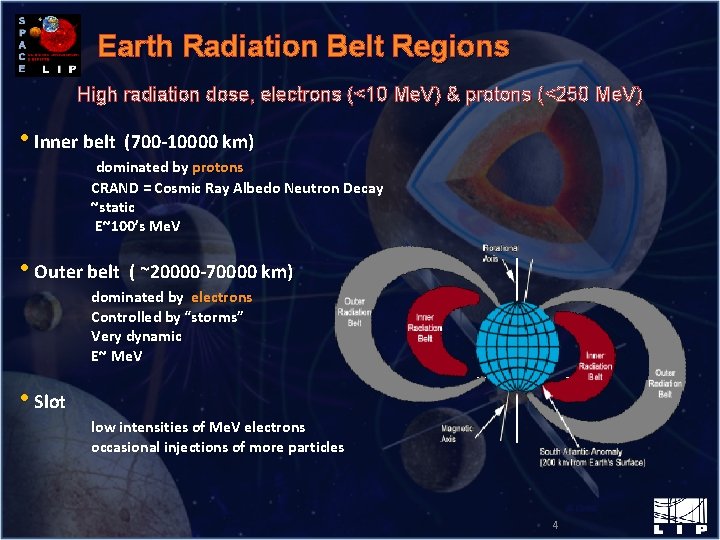
Earth Radiation Belt Regions High radiation dose, electrons (<10 Me. V) & protons (<250 Me. V) • Inner belt (700 -10000 km) dominated by protons CRAND = Cosmic Ray Albedo Neutron Decay ~static E~100’s Me. V • Outer belt ( ~20000 -70000 km) dominated by electrons Controlled by “storms” Very dynamic E~ Me. V • Slot low intensities of Me. V electrons occasional injections of more particles 4
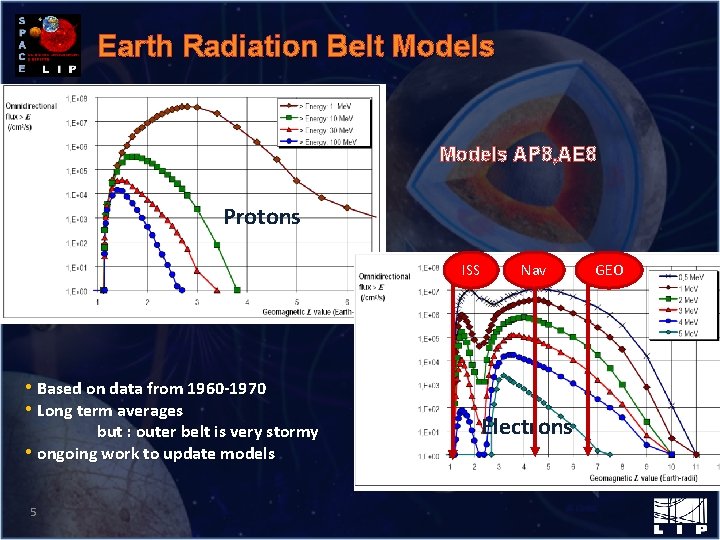
Earth Radiation Belt Models AP 8, AE 8 Protons ISS • Based on data from 1960 -1970 • Long term averages but : outer belt is very stormy • ongoing work to update models 5 Nav Electrons GEO
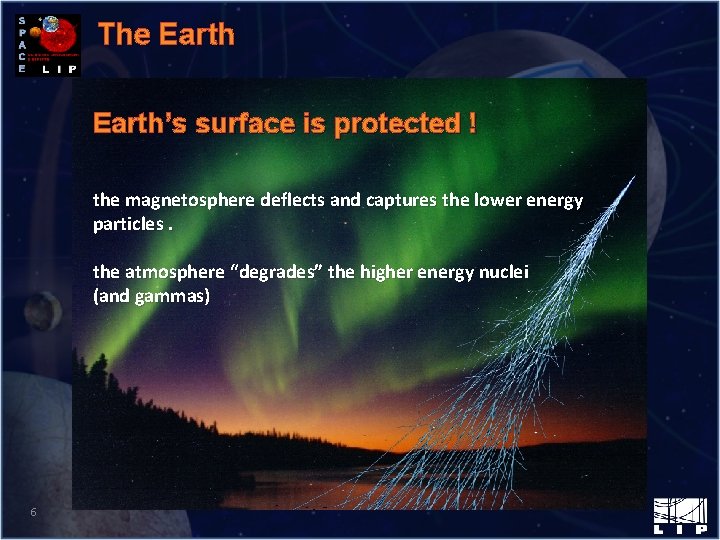
The Earth’s surface is protected ! the magnetosphere deflects and captures the lower energy particles. the atmosphere “degrades” the higher energy nuclei (and gammas) 6
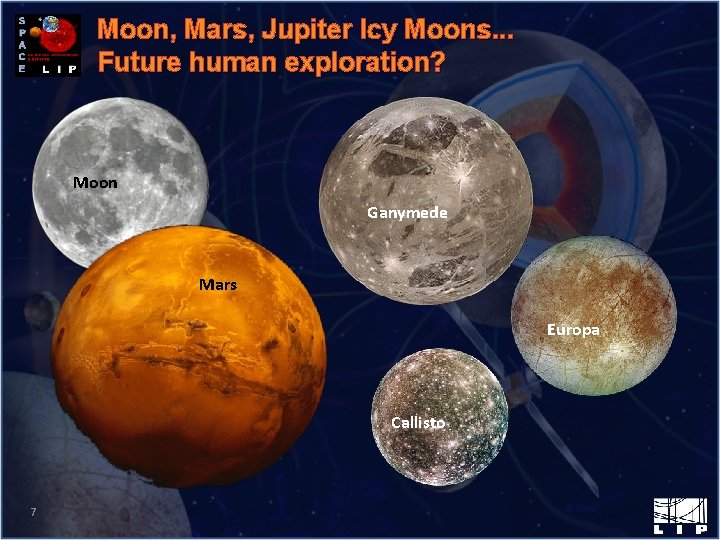
Moon, Mars, Jupiter Icy Moons. . . Future human exploration? Moon Ganymede Mars Europa Callisto 7
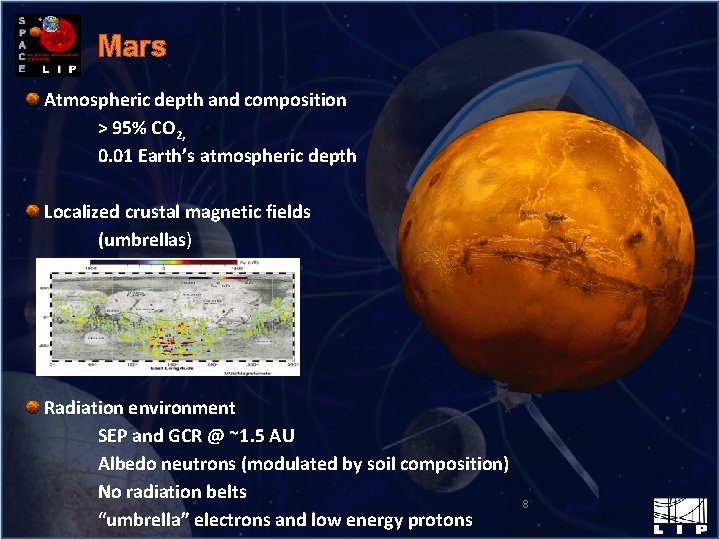
Mars Atmospheric depth and composition > 95% CO 2, 0. 01 Earth’s atmospheric depth Localized crustal magnetic fields (umbrellas) Radiation environment SEP and GCR @ ~1. 5 AU Albedo neutrons (modulated by soil composition) No radiation belts “umbrella” electrons and low energy protons 8
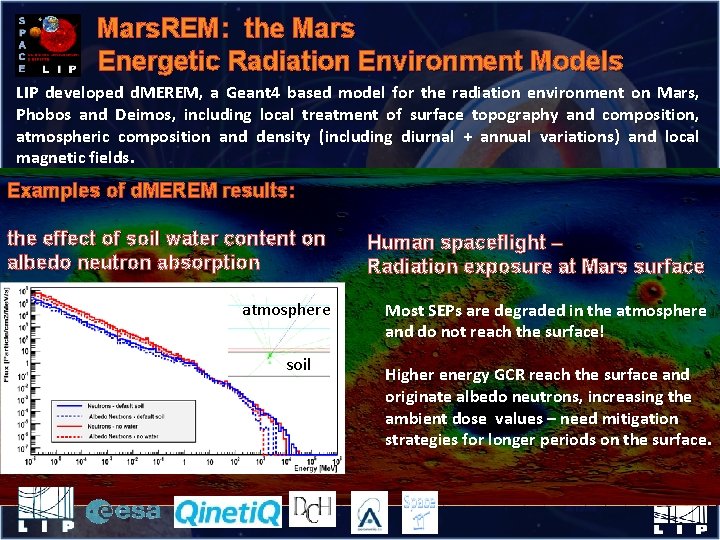
Mars. REM: the Mars Energetic Radiation Environment Models LIP developed d. MEREM, a Geant 4 based model for the radiation environment on Mars, Phobos and Deimos, including local treatment of surface topography and composition, atmospheric composition and density (including diurnal + annual variations) and local magnetic fields. Examples of d. MEREM results: the effect of soil water content on albedo neutron absorption Human spaceflight – Radiation exposure at Mars surface atmosphere Most SEPs are degraded in the atmosphere and do not reach the surface! soil Higher energy GCR reach the surface and originate albedo neutrons, increasing the ambient dose values – need mitigation strategies for longer periods on the surface.
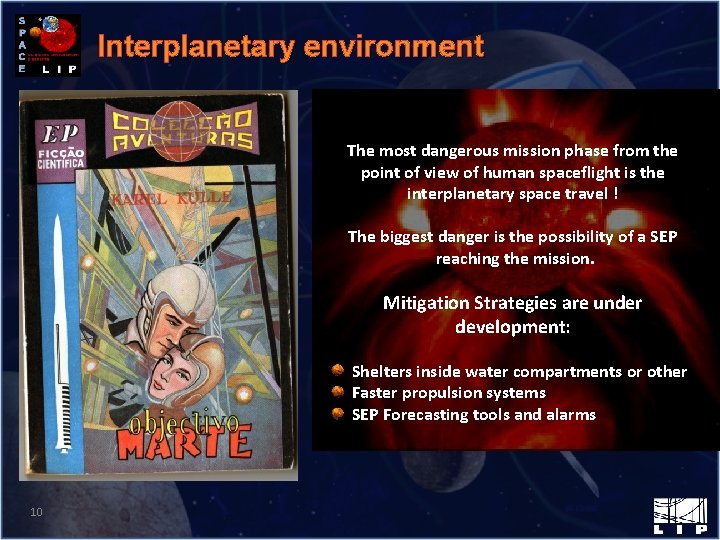
Interplanetary environment The most dangerous mission phase from the point of view of human spaceflight is the interplanetary space travel ! The biggest danger is the possibility of a SEP reaching the mission. Mitigation Strategies are under development: Shelters inside water compartments or other Faster propulsion systems SEP Forecasting tools and alarms 10
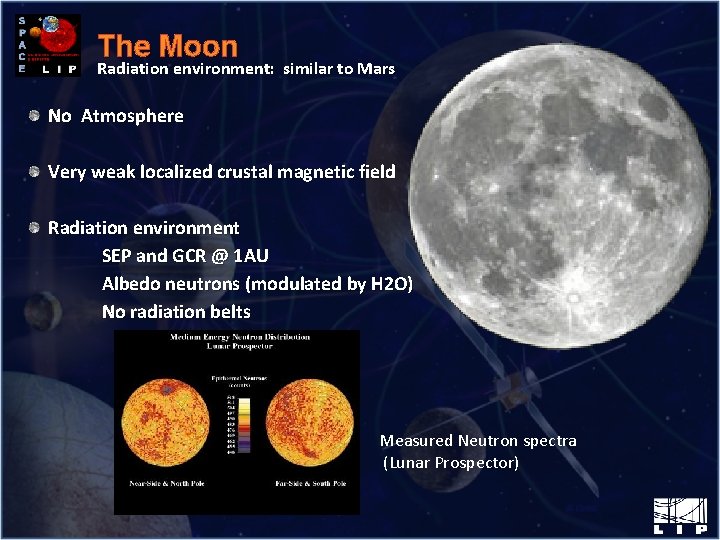
The Moon Radiation environment: similar to Mars No Atmosphere Very weak localized crustal magnetic field Radiation environment SEP and GCR @ 1 AU Albedo neutrons (modulated by H 2 O) No radiation belts Measured Neutron spectra (Lunar Prospector)
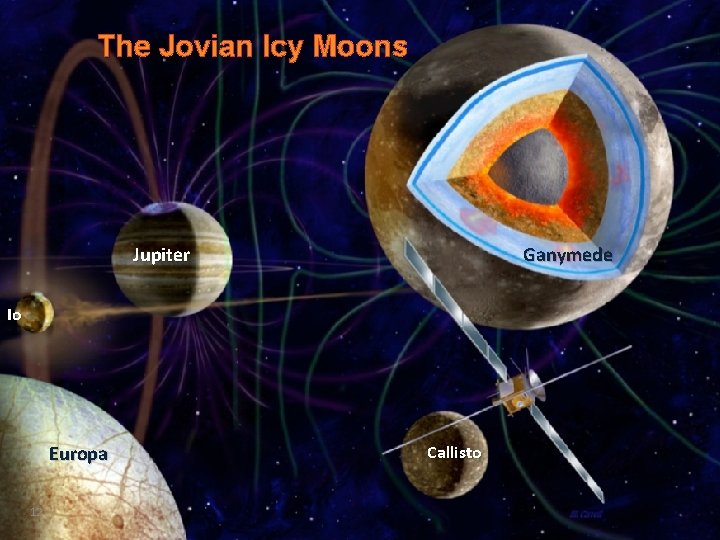
The Jovian Icy Moons Jupiter Ganymede Io Europa 12 Callisto
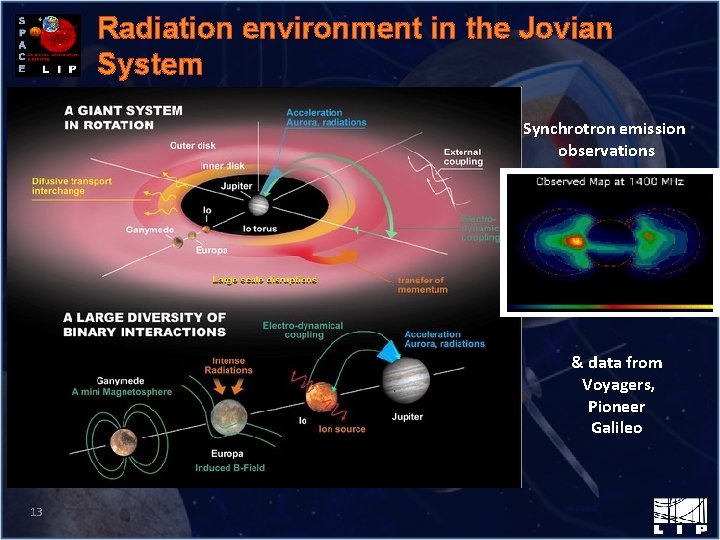
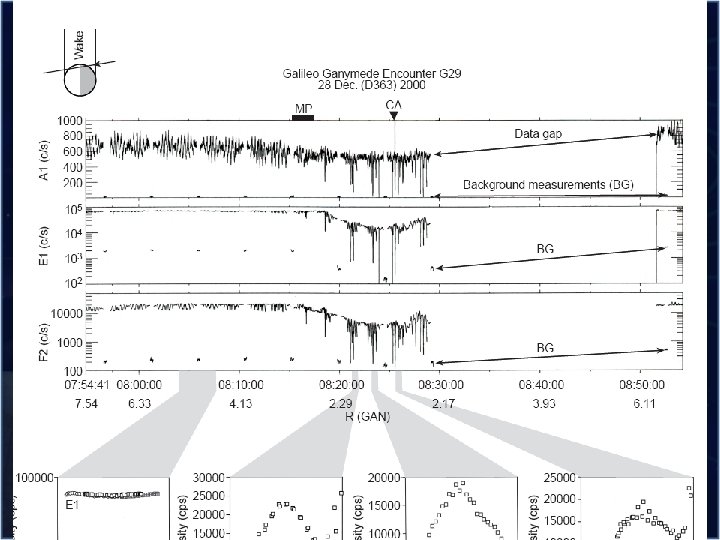
Radiation environment in the Jovian System Synchrotron emission observations & data from Voyagers, Pioneer Galileo 13
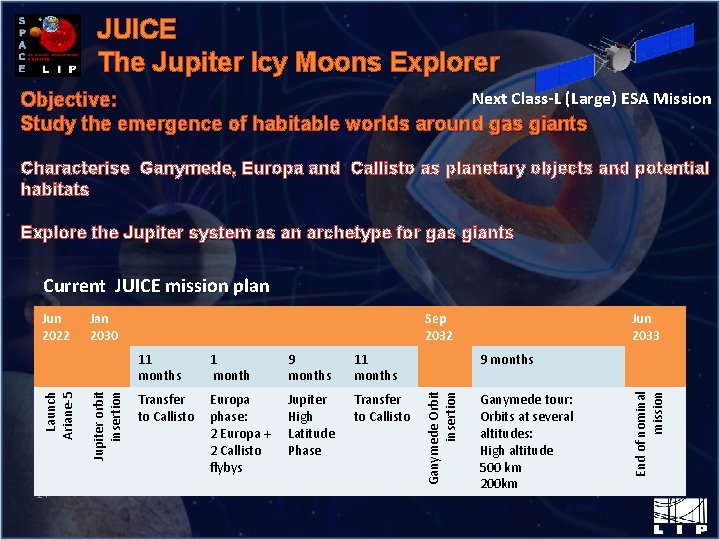
JUICE The Jupiter Icy Moons Explorer Next Class-L (Large) ESA Mission Objective: Study the emergence of habitable worlds around gas giants Characterise Ganymede, Europa and Callisto as planetary objects and potential habitats Explore the Jupiter system as an archetype for gas giants Current JUICE mission plan Sep 2032 14 Jupiter orbit insertion Launch Ariane‐ 5 11 months 1 month Transfer Europa to Callisto phase: 2 Europa + 2 Callisto flybys 9 months 11 months Jupiter High Latitude Phase Transfer to Callisto Jun 2033 9 months Ganymede tour: Orbits at several altitudes: High altitude 500 km 200 km End of nominal mission Jan 2030 Ganymede Orbit insertion Jun 2022
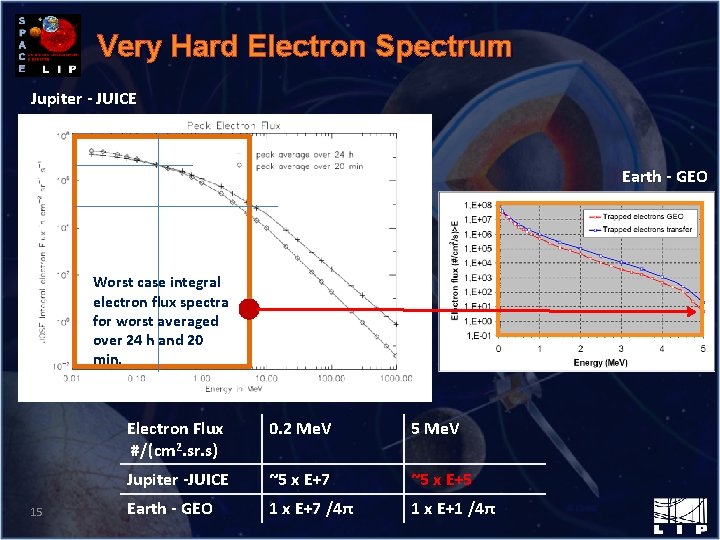
Very Hard Electron Spectrum Jupiter - JUICE Earth - GEO Worst case integral electron flux spectra for worst averaged over 24 h and 20 min. 15 Electron Flux #/(cm 2. sr. s) 0. 2 Me. V 5 Me. V Jupiter -JUICE ~5 x E+7 ~5 x E+5 Earth - GEO 1 x E+7 /4π 1 x E+1 /4π
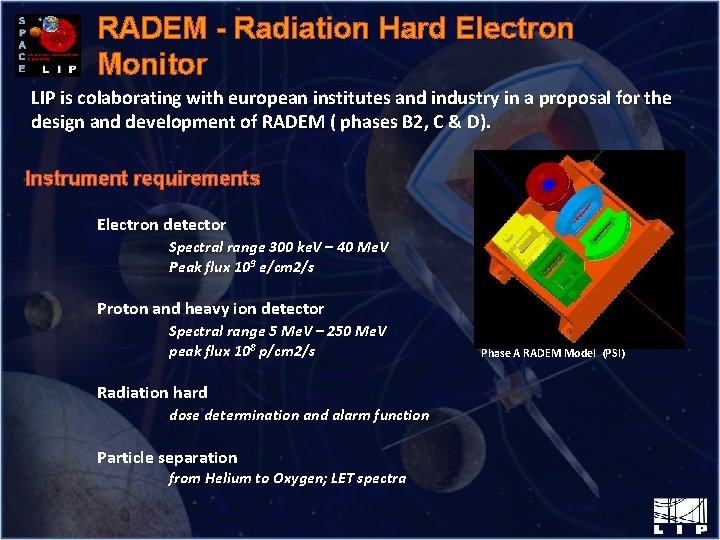
RADEM - Radiation Hard Electron Monitor LIP is colaborating with european institutes and industry in a proposal for the design and development of RADEM ( phases B 2, C & D). Instrument requirements Electron detector Spectral range 300 ke. V – 40 Me. V Peak flux 109 e/cm 2/s Proton and heavy ion detector Spectral range 5 Me. V – 250 Me. V peak flux 108 p/cm 2/s Radiation hard dose determination and alarm function Particle separation from Helium to Oxygen; LET spectra Phase A RADEM Model (PSI)
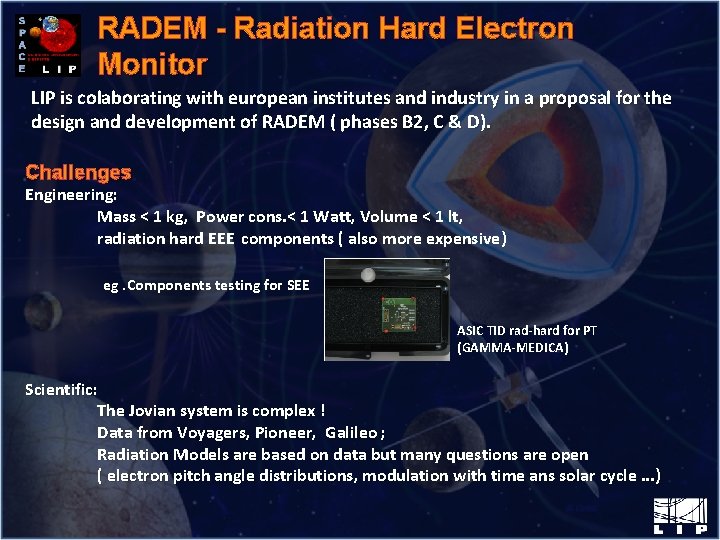
RADEM - Radiation Hard Electron Monitor LIP is colaborating with european institutes and industry in a proposal for the design and development of RADEM ( phases B 2, C & D). Challenges Engineering: Mass < 1 kg, Power cons. < 1 Watt, Volume < 1 lt, radiation hard EEE components ( also more expensive) eg. Components testing for SEE ASIC TID rad-hard for PT (GAMMA-MEDICA) Scientific: The Jovian system is complex ! Data from Voyagers, Pioneer, Galileo ; Radiation Models are based on data but many questions are open ( electron pitch angle distributions, modulation with time ans solar cycle. . . )
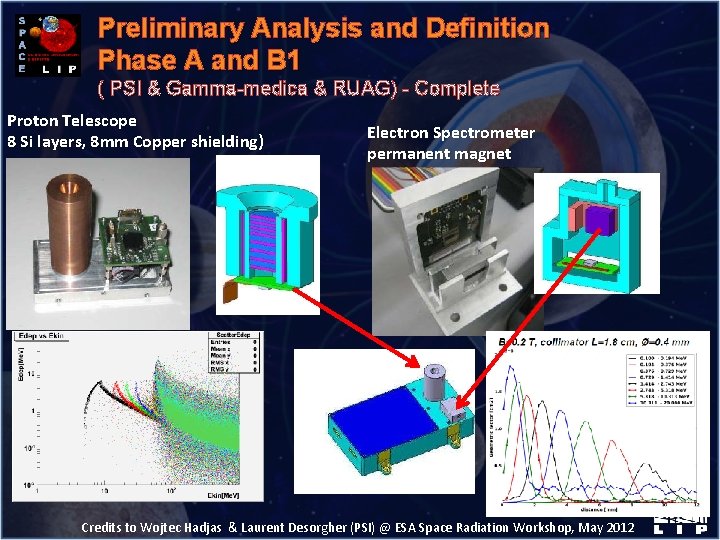
Preliminary Analysis and Definition Phase A and B 1 ( PSI & Gamma-medica & RUAG) - Complete Proton Telescope 8 Si layers, 8 mm Copper shielding) Electron Spectrometer permanent magnet Credits to Wojtec Hadjas & Laurent Desorgher (PSI) @ ESA Space Radiation Workshop, May 2012
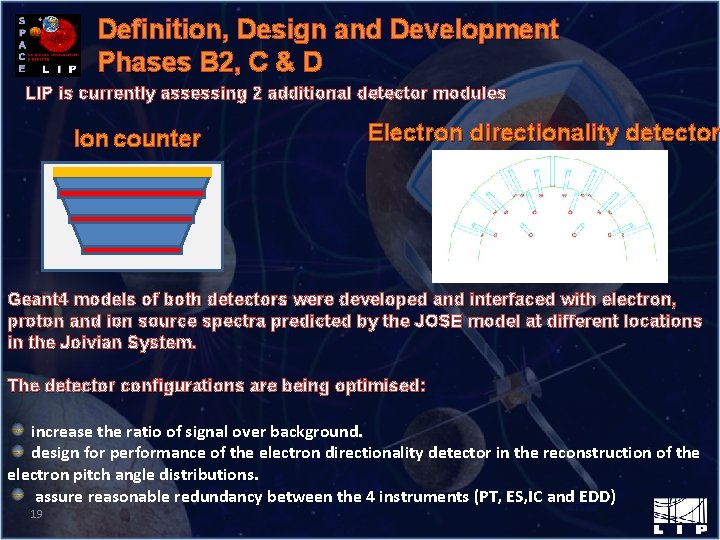
Definition, Design and Development Phases B 2, C & D LIP is currently assessing 2 additional detector modules Ion counter Electron directionality detector Geant 4 models of both detectors were developed and interfaced with electron, proton and ion source spectra predicted by the JOSE model at different locations in the Joivian System. The detector configurations are being optimised: increase the ratio of signal over background. design for performance of the electron directionality detector in the reconstruction of the electron pitch angle distributions. assure reasonable redundancy between the 4 instruments (PT, ES, IC and EDD) 19
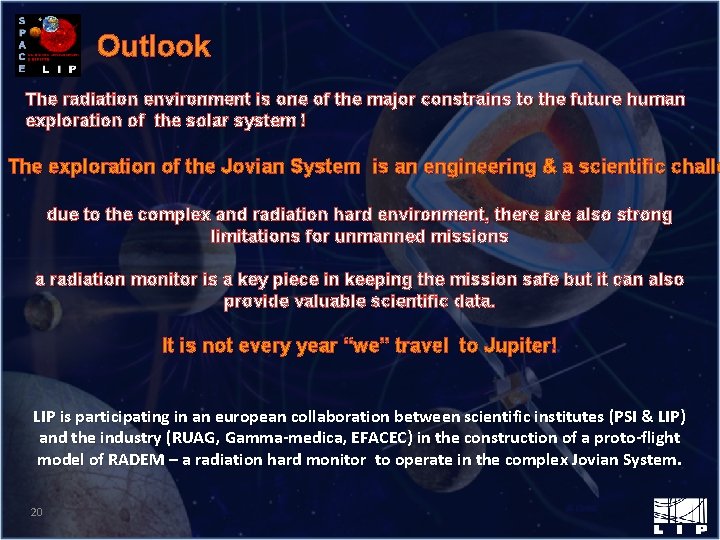
Outlook The radiation environment is one of the major constrains to the future human exploration of the solar system ! The exploration of the Jovian System is an engineering & a scientific challe due to the complex and radiation hard environment, there also strong limitations for unmanned missions a radiation monitor is a key piece in keeping the mission safe but it can also provide valuable scientific data. It is not every year “we” travel to Jupiter! LIP is participating in an european collaboration between scientific institutes (PSI & LIP) and the industry (RUAG, Gamma-medica, EFACEC) in the construction of a proto-flight model of RADEM – a radiation hard monitor to operate in the complex Jovian System. 20
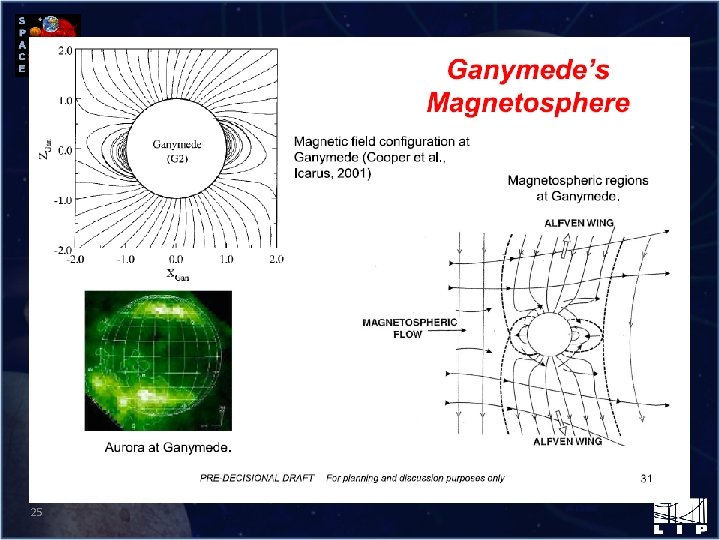
21
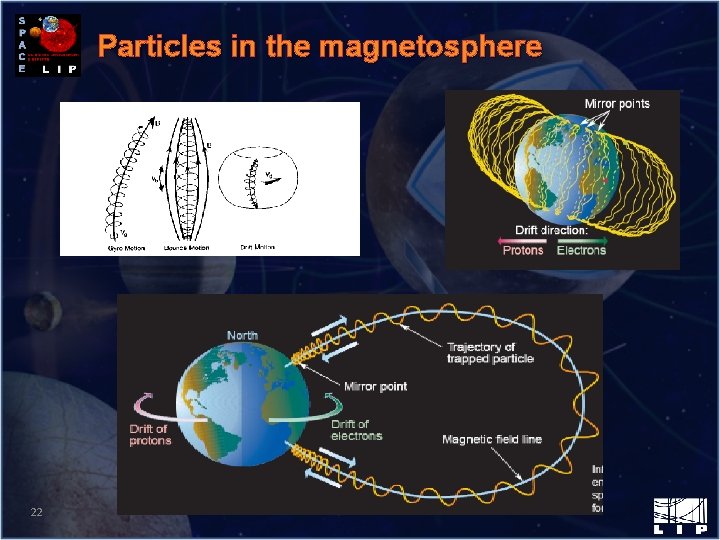
Particles in the magnetosphere 22
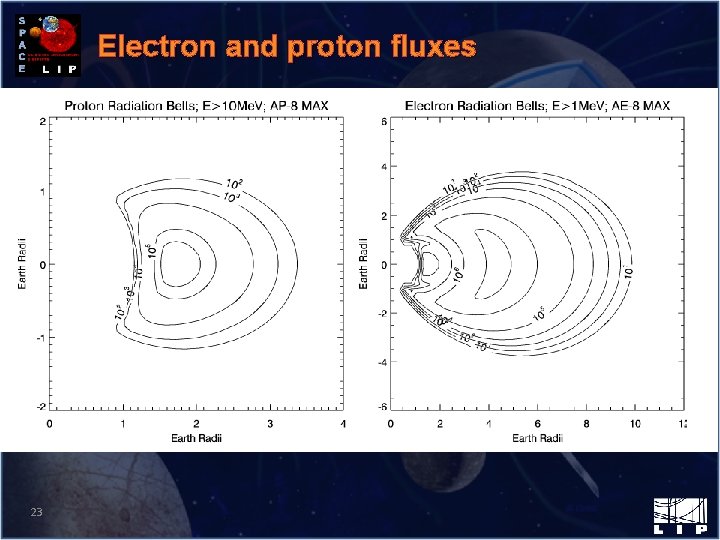
Electron and proton fluxes 23
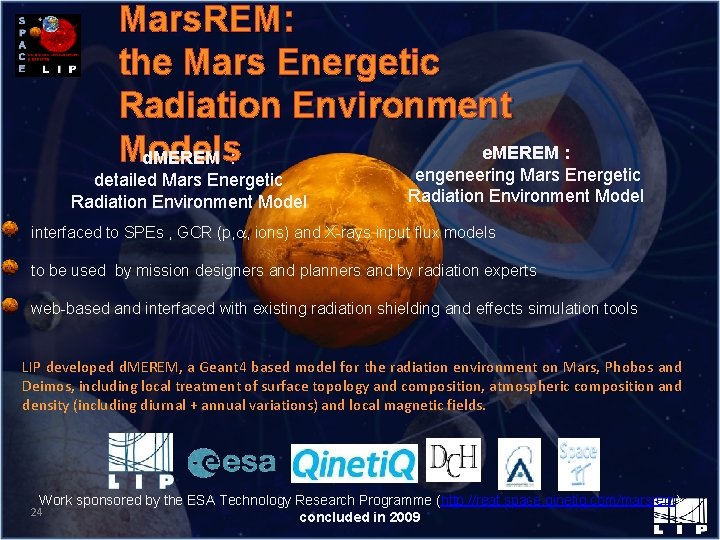
Mars. REM: the Mars Energetic Radiation Environment e. MEREM : Models d. MEREM : detailed Mars Energetic Radiation Environment Model engeneering Mars Energetic Radiation Environment Model interfaced to SPEs , GCR (p, , ions) and X-rays input flux models to be used by mission designers and planners and by radiation experts web-based and interfaced with existing radiation shielding and effects simulation tools LIP developed d. MEREM, a Geant 4 based model for the radiation environment on Mars, Phobos and Deimos, including local treatment of surface topology and composition, atmospheric composition and density (including diurnal + annual variations) and local magnetic fields. Work sponsored by the ESA Technology Research Programme (http: //reat. space. qinetiq. com/marsrem) concluded in 2009 24
25
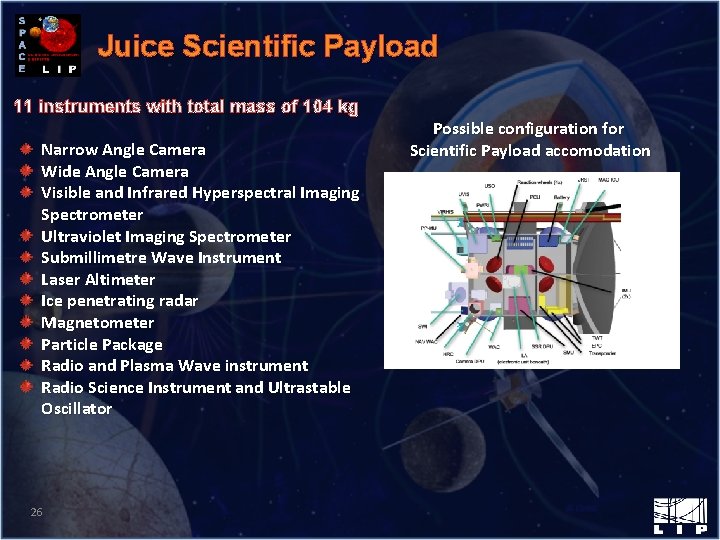
Juice Scientific Payload 11 instruments with total mass of 104 kg Narrow Angle Camera Wide Angle Camera Visible and Infrared Hyperspectral Imaging Spectrometer Ultraviolet Imaging Spectrometer Submillimetre Wave Instrument Laser Altimeter Ice penetrating radar Magnetometer Particle Package Radio and Plasma Wave instrument Radio Science Instrument and Ultrastable Oscillator 26 Possible configuration for Scientific Payload accomodation
What is a radiation monitor? “Depending on their use and their performance, radiation monitoring devices can be classified into 2 general classes and 4 categories. Devices designed for providing in-situ environment data to the host spacecraft: 1. Coarse radiation housekeeping 2. Alert and safeguarding function 3. Support to platform and payload systems Devices designed for providing data usable for engineering models improvement or for general space weather services: 4. Future mission preparation and provision of science data Categories (3) and (4) have quite similar specifications…” 27 The ESCC/CTB Radiation Working Group requirements
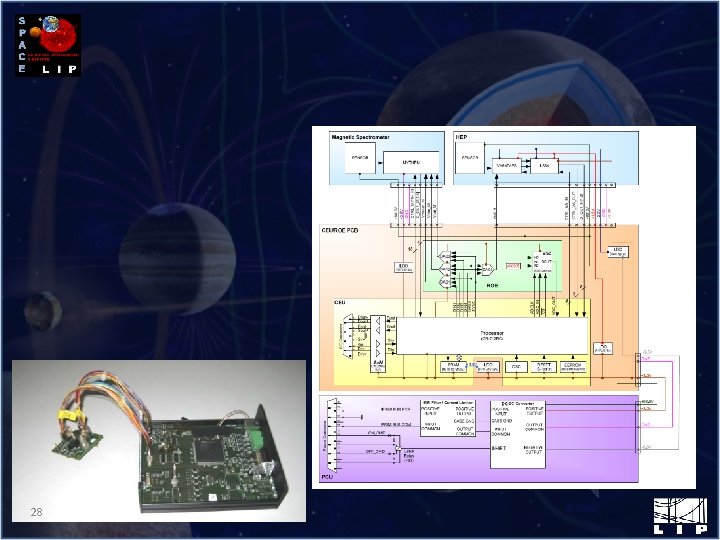
28
29
30
31 Interaction of Titan's ionosphere with Saturn's magnetosphere. Coates AJ. Source Mullard Space Science Laboratory, University College London, Holmbury St Mary, Dorking RH 5 6 NT, UK. ajc@mssl. ucl. ac. uk Abstract Titan is the only Moon in the Solar System with a significant permanent atmosphere. Within this nitrogen‐methane atmosphere, an ionosphere forms. Titan has no significant magnetic dipole moment, and is usually located inside Saturn's magnetosphere. Atmospheric particles are ionized both by sunlight and by particles from Saturn's magnetosphere, mainly electrons, which reach the top of the atmosphere. So far, the Cassini spacecraft has made over 45 close flybys of Titan, allowing measurements in the ionosphere and the surrounding magnetosphere under different conditions. Here we review how Titan's ionosphere and Saturn's magnetosphere interact, using measurements from Cassini low‐energy particle detectors. In particular, we discuss ionization processes and ionospheric photoelectrons, including their effect on ion escape from the ionosphere. We also discuss one of the unexpected discoveries in Titan's ionosphere, the existence of extremely heavy negative ions up to 10000 amu at 950 km altitude
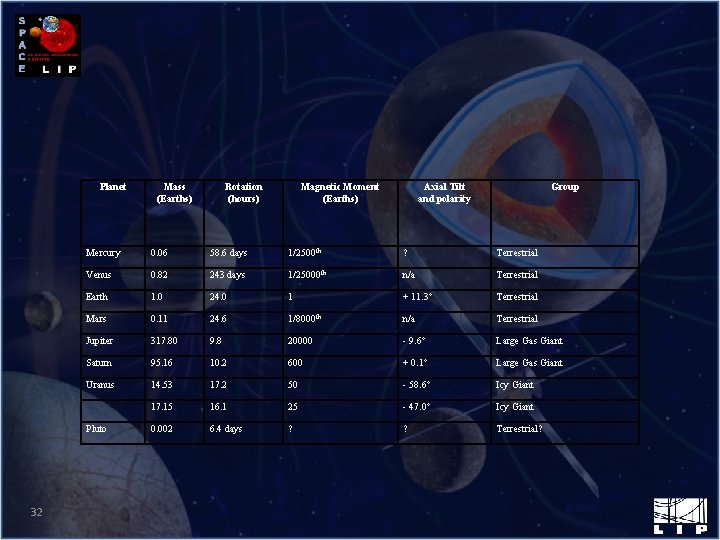
Planet Rotation (hours) Magnetic Moment (Earths) Axial Tilt and polarity Group Mercury 0. 06 58. 6 days 1/2500 th ? Terrestrial Venus 0. 82 243 days 1/25000 th n/a Terrestrial Earth 1. 0 24. 0 1 + 11. 3º Terrestrial Mars 0. 11 24. 6 1/8000 th n/a Terrestrial Jupiter 317. 80 9. 8 20000 - 9. 6º Large Gas Giant Saturn 95. 16 10. 2 600 + 0. 1º Large Gas Giant Uranus 14. 53 17. 2 50 - 58. 6º Icy Giant 17. 15 16. 1 25 - 47. 0º Icy Giant 0. 002 6. 4 days ? ? Terrestrial? Pluto 32 Mass (Earths)
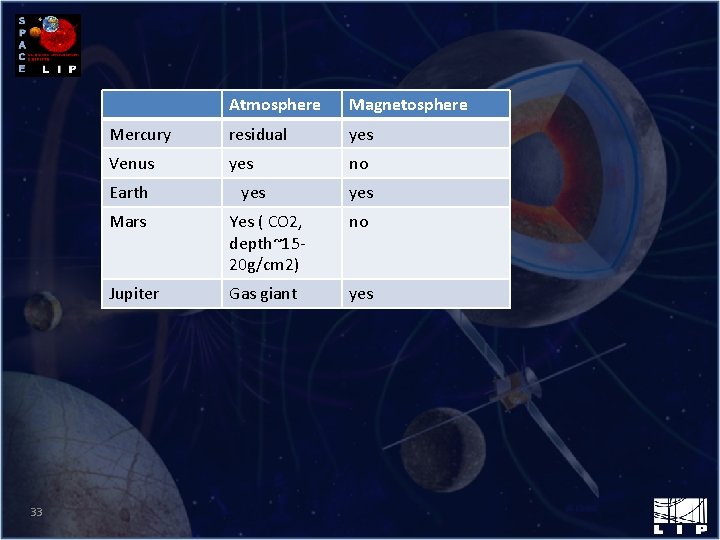
33 Atmosphere Magnetosphere Mercury residual yes Venus yes no Earth yes Mars Yes ( CO 2, depth~15‐ 20 g/cm 2) no Jupiter Gas giant yes
Technology Readiness Levels in the European Space Agency (ESA)[4] Technology Readiness Level Description TRL 1. Basic principles observed and reported TRL 2. Technology concept and/or application formulated TRL 3. Analytical & experimental critical function and/or characteristic proof‐of‐ concept TRL 4. Component and/or breadboard validation in laboratory environment TRL 5. Component and/or breadboard validation in relevant environment TRL 6. System/subsystem model or prototype demonstration in a relevant environment (ground or space) TRL 7. System prototype demonstration in a space environment TRL 8. Actual system completed and "Flight qualified" through test and demonstration (ground or space) TRL 9. Actual system "Flight proven" through successful mission operations 34
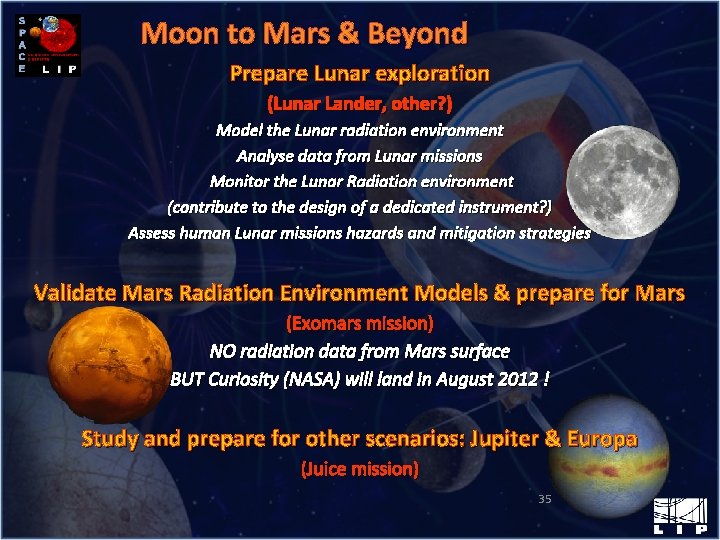
Moon to Mars & Beyond Prepare Lunar exploration (Lunar Lander, other? ) Model the Lunar radiation environment Analyse data from Lunar missions Monitor the Lunar Radiation environment (contribute to the design of a dedicated instrument? ) Assess human Lunar missions hazards and mitigation strategies Validate Mars Radiation Environment Models & prepare for Mars (Exomars mission) NO radiation data from Mars surface BUT Curiosity (NASA) will land in August 2012 ! Study and prepare for other scenarios: Jupiter & Europa (Juice mission) 35
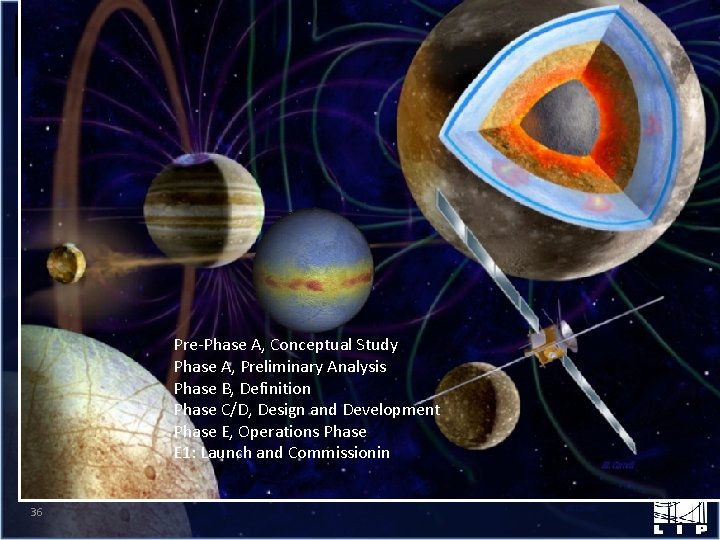
Pre‐Phase A, Conceptual Study Phase A, Preliminary Analysis Phase B, Definition Phase C/D, Design and Development Phase E, Operations Phase E 1: Launch and Commissionin 36
Three models are currently available, see JOSE Figure I‐ 8: Galileo data and validated with all relevant • The Divine and Garett model which is data measured by spacecraft having flown by constructed using data from Pioneer 10 and or orbited Jupiter, in order to obtain an easy‐to 11 and which extends to 10 jovian radii RJ for Models ‐use engineering model for Jupiter's protons and more than 100 RJ for environment. This model has been developed electrons [RD. 20]. for protons and electrons from several tens of • GIRE (Galileo Interim Electron Environment) ke. V to several hundreds of Me. V. based on Galileo and Pioneer electron data between 8 to 16 RJ [RD. 83] and developed at ONERA [RN. 17] using a physical model. This model has been validated by comparing calculated synchroton radiation with that measured from the ground by the VLA telescope and extends to 10 RJ. The NASA Galileo Mission data 37