
Measuring the Occurrence of Disease 1 Sue Lindsay


- Slides: 39
Measuring the Occurrence of Disease 1 Sue Lindsay, Ph. D. , MSW, MPH Division of Epidemiology and Biostatistics Institute for Public Health San Diego State University
Pandemic Preparedness www. readysandiego. org http: //www. ready. gov
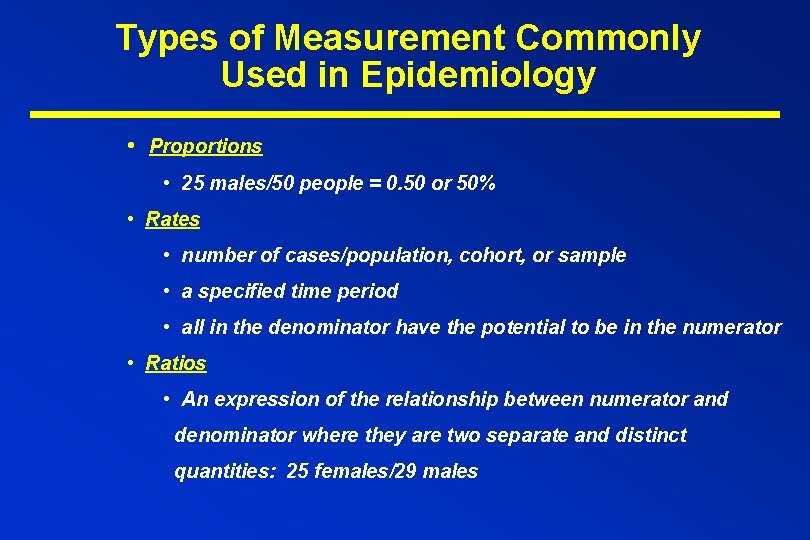
Types of Measurement Commonly Used in Epidemiology • Proportions • 25 males/50 people = 0. 50 or 50% • Rates • number of cases/population, cohort, or sample • a specified time period • all in the denominator have the potential to be in the numerator • Ratios • An expression of the relationship between numerator and denominator where they are two separate and distinct quantities: 25 females/29 males
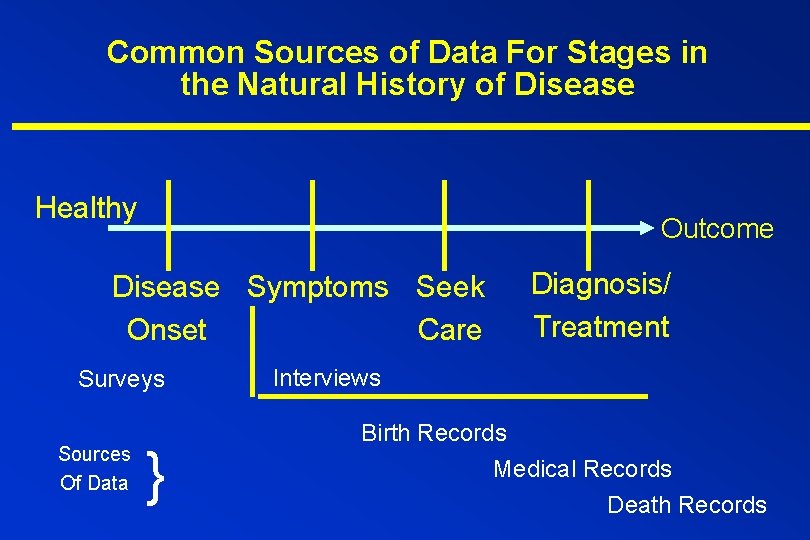
Common Sources of Data For Stages in the Natural History of Disease Healthy Outcome Disease Symptoms Seek Onset Care Surveys Sources Of Data } Diagnosis/ Treatment Interviews Birth Records Medical Records Death Records
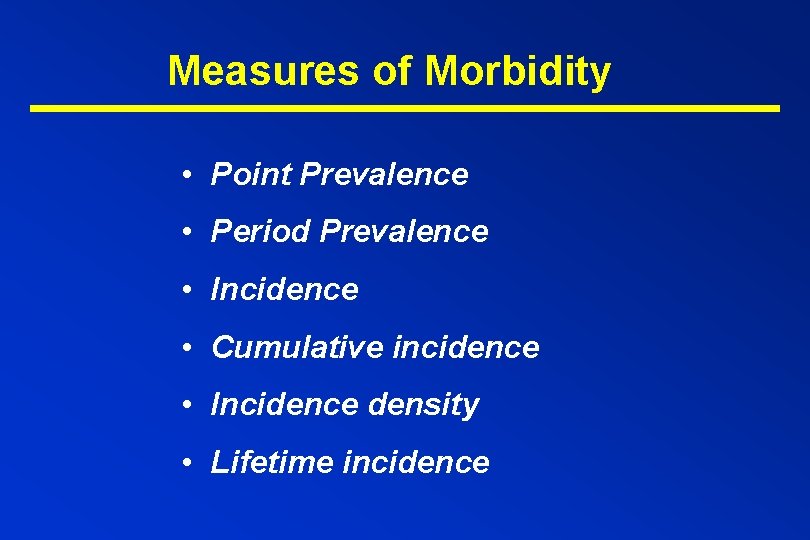
Measures of Morbidity • Point Prevalence • Period Prevalence • Incidence • Cumulative incidence • Incidence density • Lifetime incidence
Types of Populations • Dynamic Population • Fixed Population
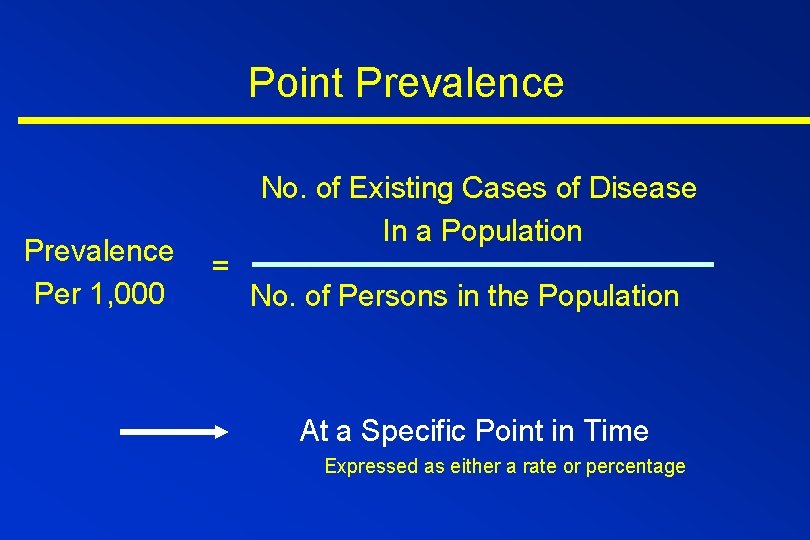
Point Prevalence Per 1, 000 No. of Existing Cases of Disease In a Population = No. of Persons in the Population At a Specific Point in Time Expressed as either a rate or percentage
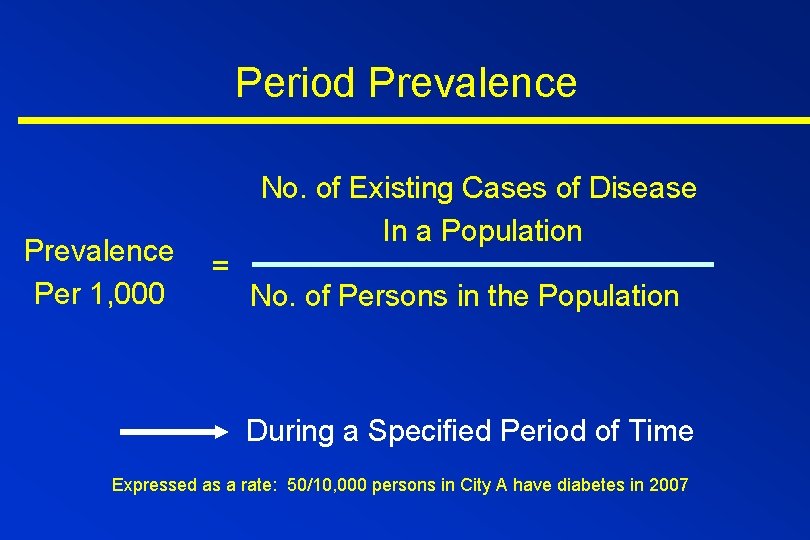
Period Prevalence Per 1, 000 No. of Existing Cases of Disease In a Population = No. of Persons in the Population During a Specified Period of Time Expressed as a rate: 50/10, 000 persons in City A have diabetes in 2007
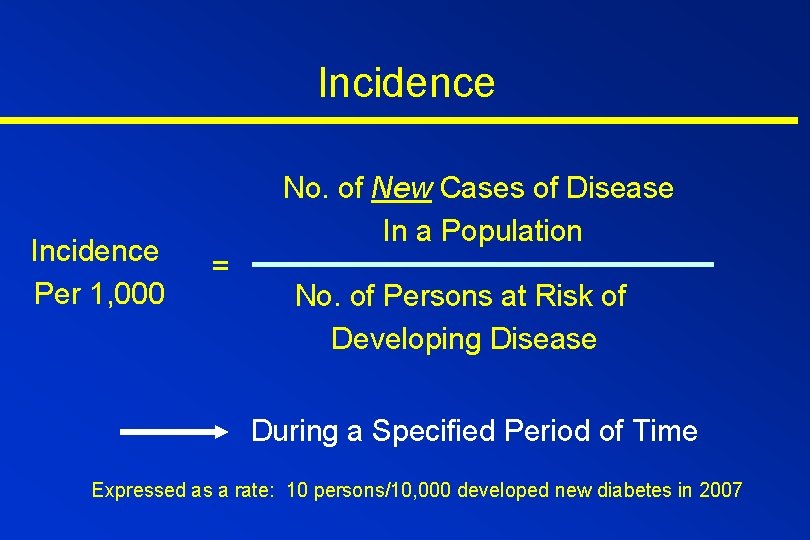
Incidence Per 1, 000 No. of New Cases of Disease In a Population = No. of Persons at Risk of Developing Disease During a Specified Period of Time Expressed as a rate: 10 persons/10, 000 developed new diabetes in 2007
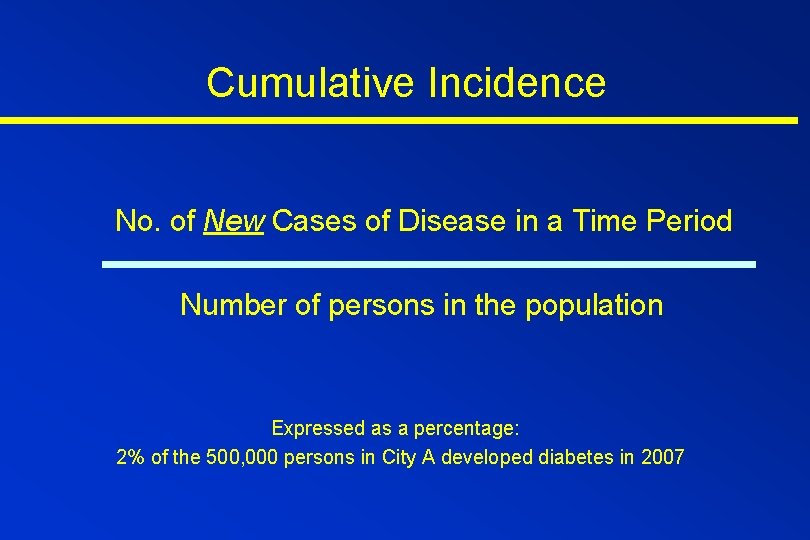
Cumulative Incidence No. of New Cases of Disease in a Time Period Number of persons in the population Expressed as a percentage: 2% of the 500, 000 persons in City A developed diabetes in 2007
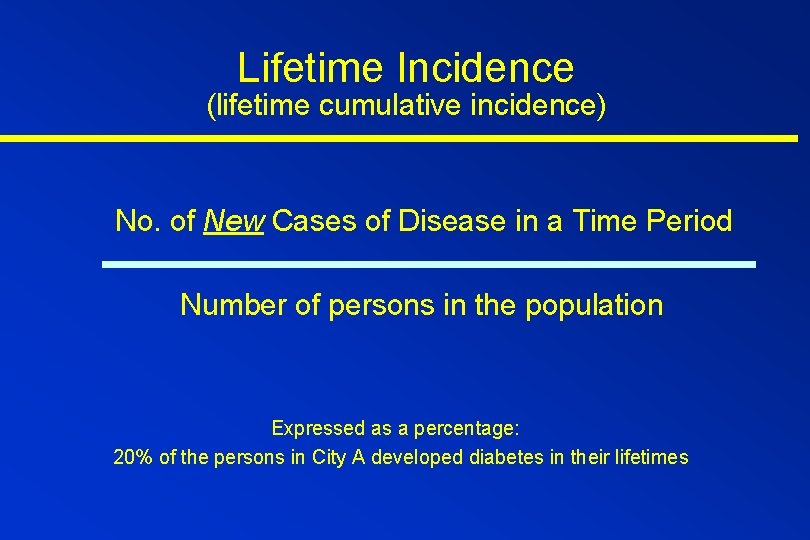
Lifetime Incidence (lifetime cumulative incidence) No. of New Cases of Disease in a Time Period Number of persons in the population Expressed as a percentage: 20% of the persons in City A developed diabetes in their lifetimes
Fixed Populations (study populations)
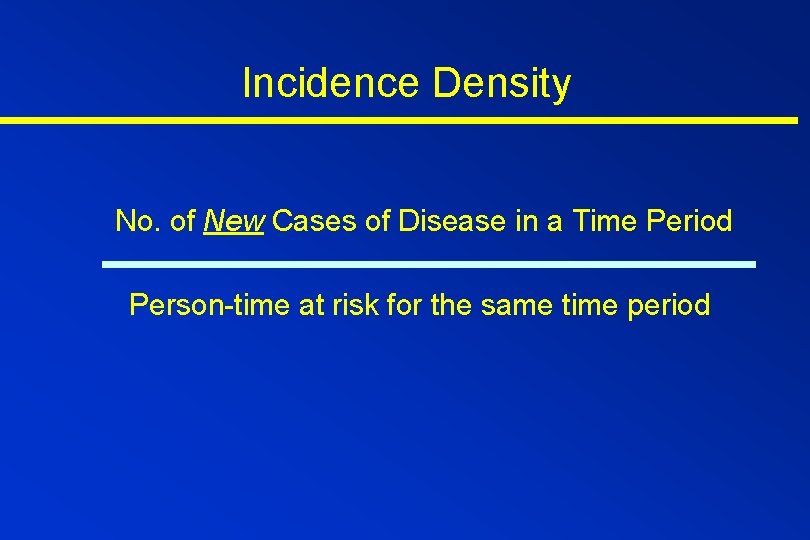
Incidence Density No. of New Cases of Disease in a Time Period Person-time at risk for the same time period
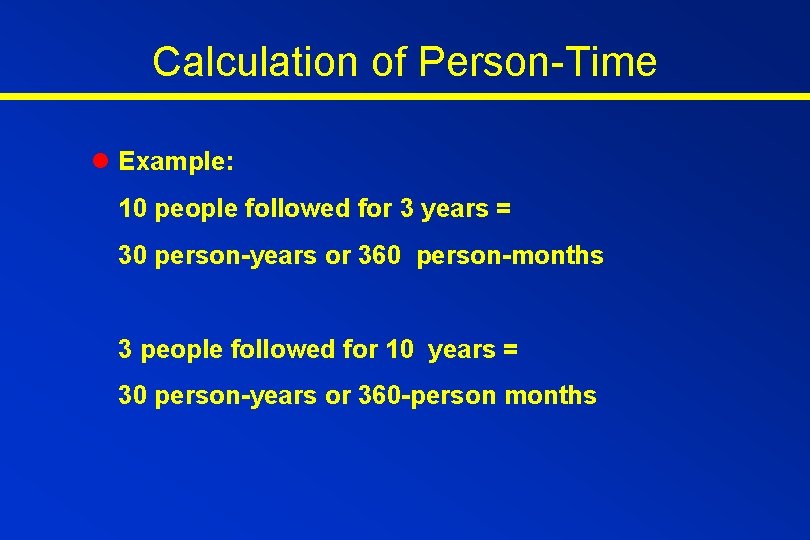
Calculation of Person-Time l Example: 10 people followed for 3 years = 30 person-years or 360 person-months 3 people followed for 10 years = 30 person-years or 360 -person months
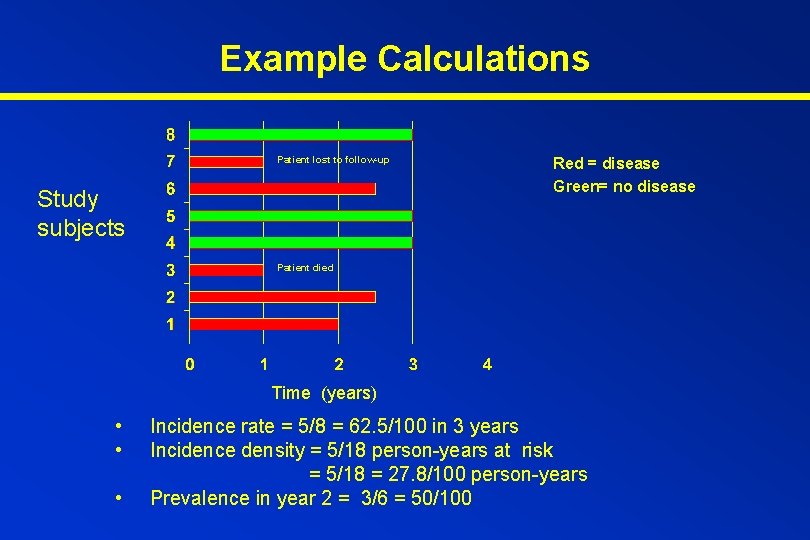
Example Calculations Patient lost to follow-up Study subjects Red = disease Green= no disease Patient died Time (years) • • • Incidence rate = 5/8 = 62. 5/100 in 3 years Incidence density = 5/18 person-years at risk = 5/18 = 27. 8/100 person-years Prevalence in year 2 = 3/6 = 50/100
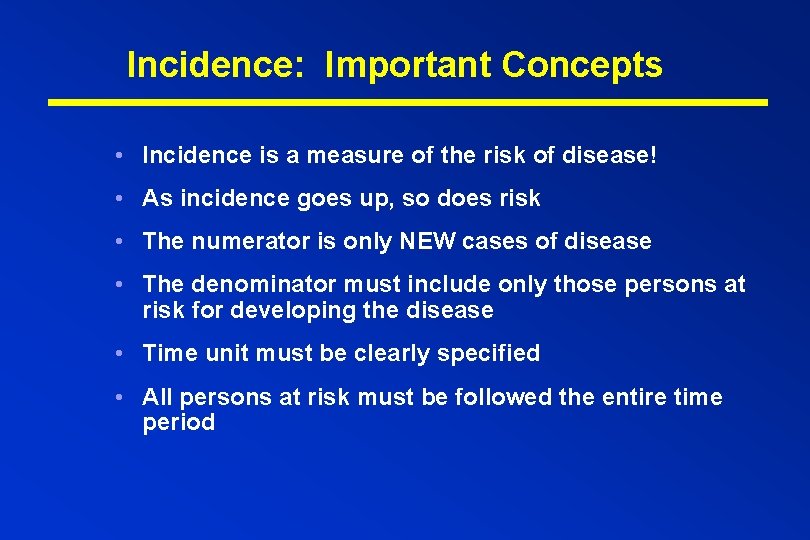
Incidence: Important Concepts • Incidence is a measure of the risk of disease! • As incidence goes up, so does risk • The numerator is only NEW cases of disease • The denominator must include only those persons at risk for developing the disease • Time unit must be clearly specified • All persons at risk must be followed the entire time period
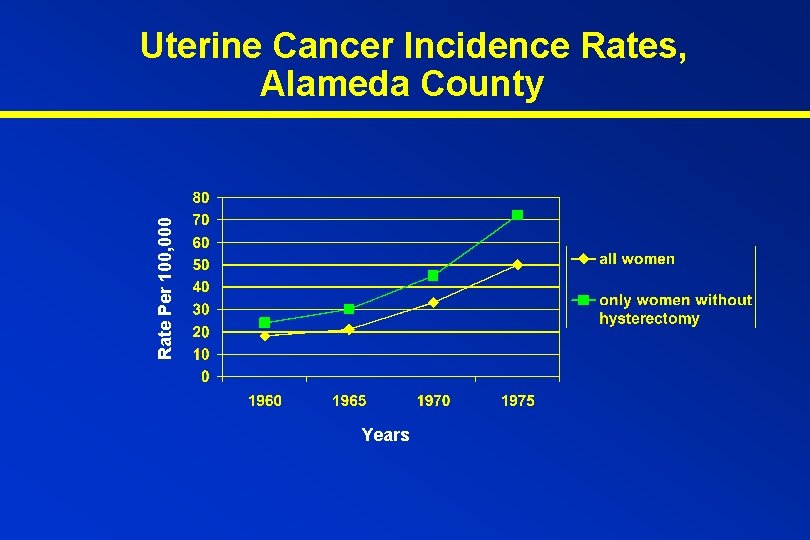
Rate Per 100, 000 Uterine Cancer Incidence Rates, Alameda County Years
Differences Between Incidence and Prevalence • Prevalence is only a snapshot of the population at a point or period in time - who has the disease and who does not • Prevalence tells you nothing about how long patients have had the disease in the population • Incidence includes only new cases or events among those at risk, and is a measure of risk of disease
Factors that Affect Prevalence: • Prevalence rates are increased by: • Immigration of cases or those with a high potential to become cases (elderly) • Emigration of healthy individuals • Increases in the duration of the disease (earlier detection, better treatment, reduced fatality, etc. ) • Increases in incidence (occurrence of new cases)
Factors that Affect Prevalence: • Prevalence rates are decreased by: • • • Immigration of healthy persons Emigration of persons with disease Improved cure rates Increased death rates Decreases in incidence (occurrence of new cases) • Shorter duration of the disease
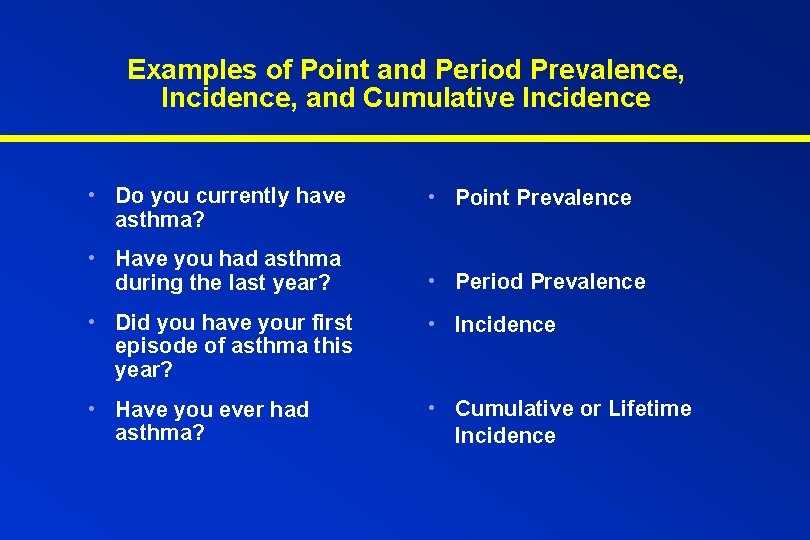
Examples of Point and Period Prevalence, Incidence, and Cumulative Incidence • Do you currently have asthma? • Have you had asthma during the last year? • Point Prevalence • Period Prevalence • Did you have your first episode of asthma this year? • Incidence • Have you ever had asthma? • Cumulative or Lifetime Incidence
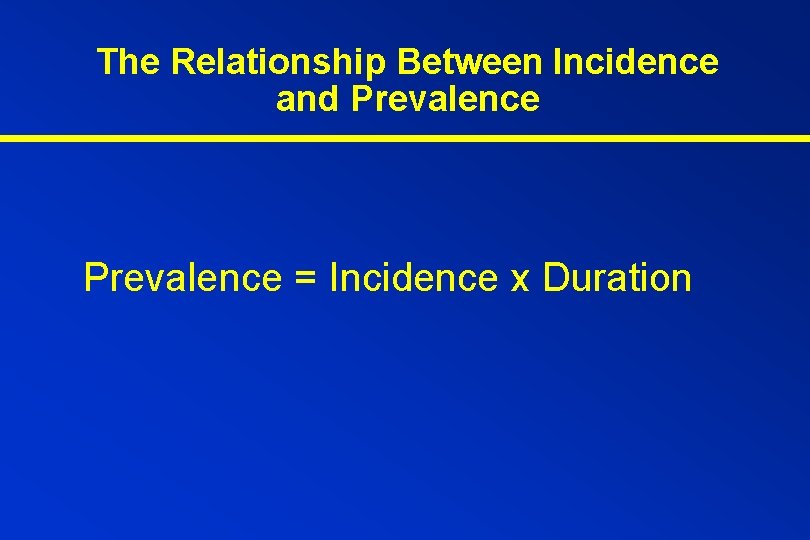
The Relationship Between Incidence and Prevalence = Incidence x Duration
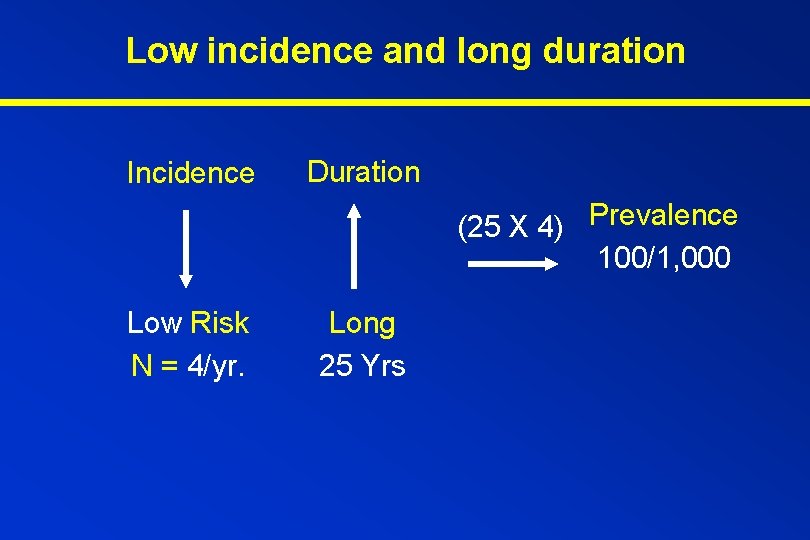
Low incidence and long duration Incidence Duration (25 X 4) Prevalence 100/1, 000 Low Risk N = 4/yr. Long 25 Yrs
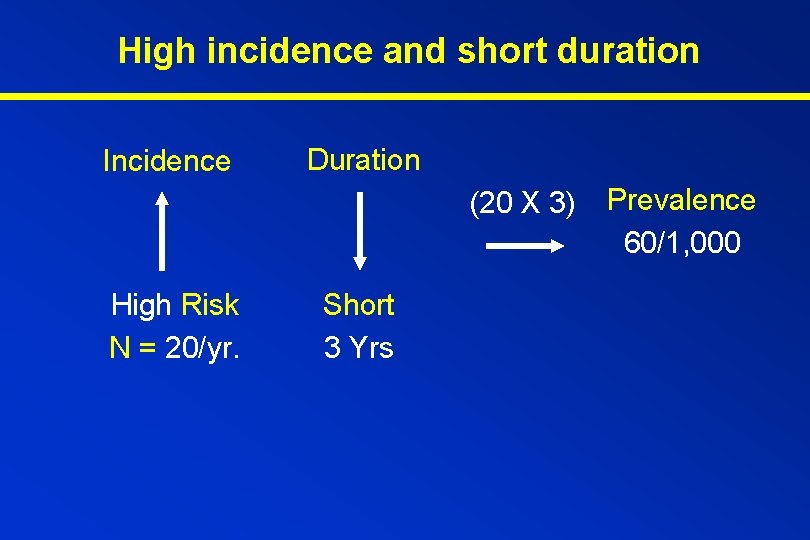
High incidence and short duration Incidence Duration (20 X 3) High Risk N = 20/yr. Short 3 Yrs Prevalence 60/1, 000
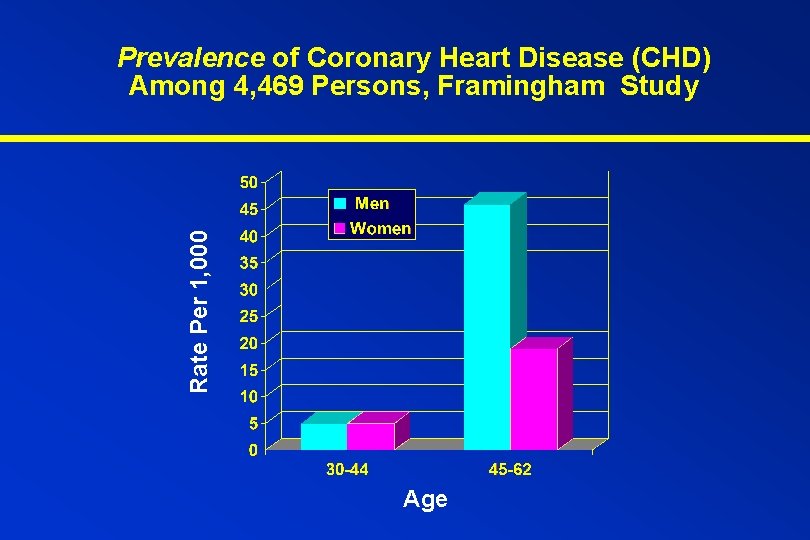
Rate Per 1, 000 Prevalence of Coronary Heart Disease (CHD) Among 4, 469 Persons, Framingham Study Age
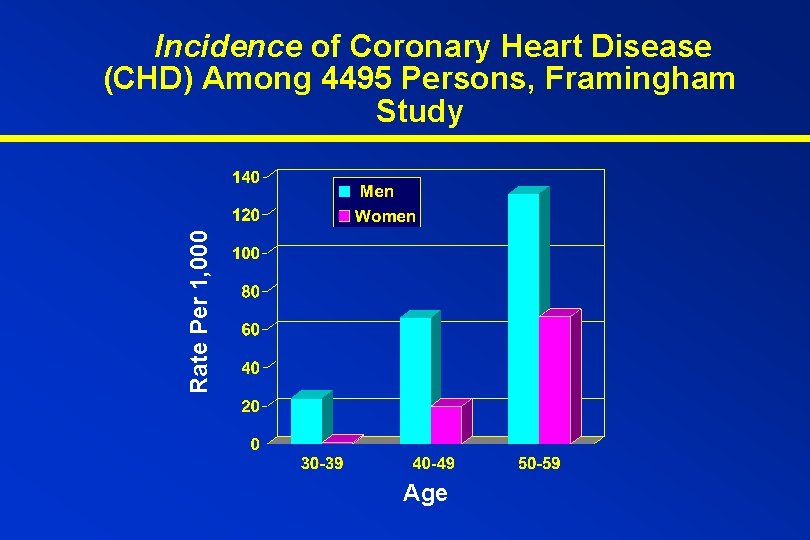
Rate Per 1, 000 Incidence of Coronary Heart Disease (CHD) Among 4495 Persons, Framingham Study Age
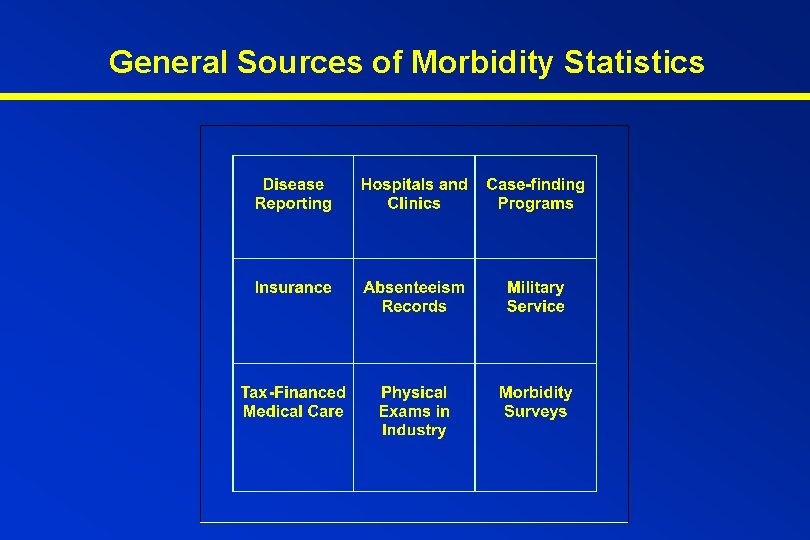
General Sources of Morbidity Statistics
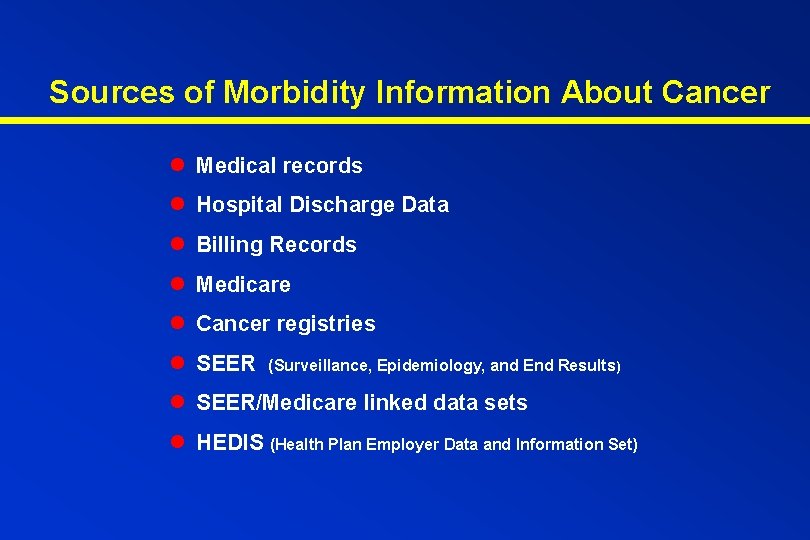
Sources of Morbidity Information About Cancer l Medical records l Hospital Discharge Data l Billing Records l Medicare l Cancer registries l SEER (Surveillance, Epidemiology, and End Results) l SEER/Medicare linked data sets l HEDIS (Health Plan Employer Data and Information Set)
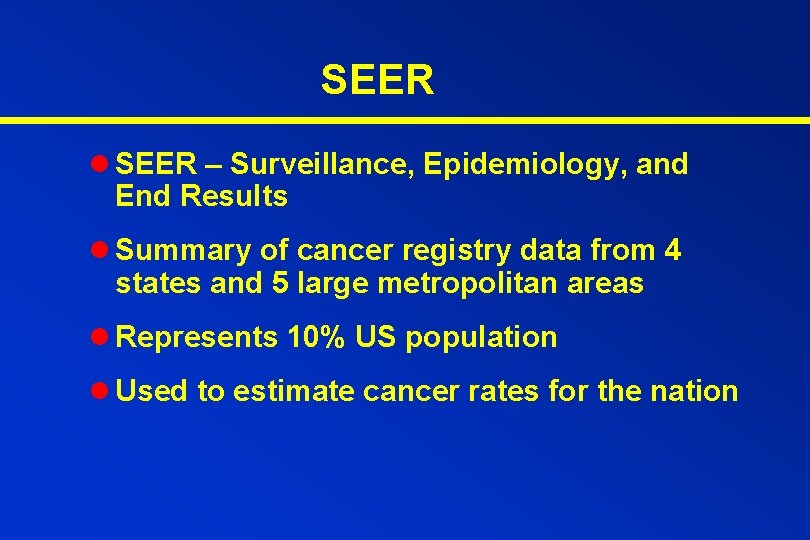
SEER l SEER – Surveillance, Epidemiology, and End Results l Summary of cancer registry data from 4 states and 5 large metropolitan areas l Represents 10% US population l Used to estimate cancer rates for the nation
HEDIS l Health Plan Employer Data and Information Set l Established by National Committee for Quality Assurance l Quality measures to compare health insurance plans
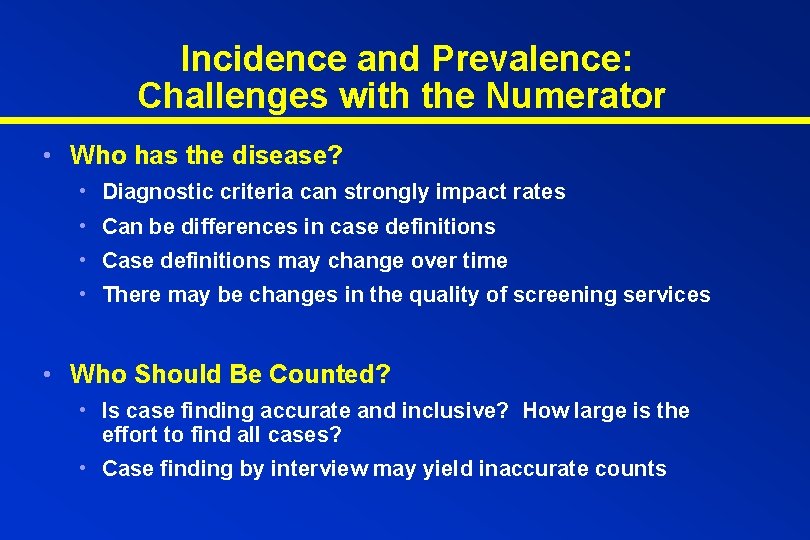
Incidence and Prevalence: Challenges with the Numerator • Who has the disease? • Diagnostic criteria can strongly impact rates • Can be differences in case definitions • Case definitions may change over time • There may be changes in the quality of screening services • Who Should Be Counted? • Is case finding accurate and inclusive? How large is the effort to find all cases? • Case finding by interview may yield inaccurate counts
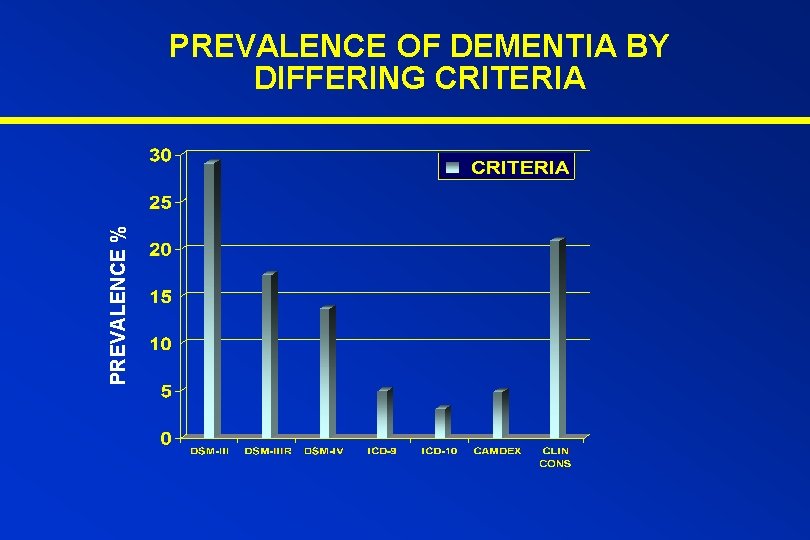
PREVALENCE % PREVALENCE OF DEMENTIA BY DIFFERING CRITERIA
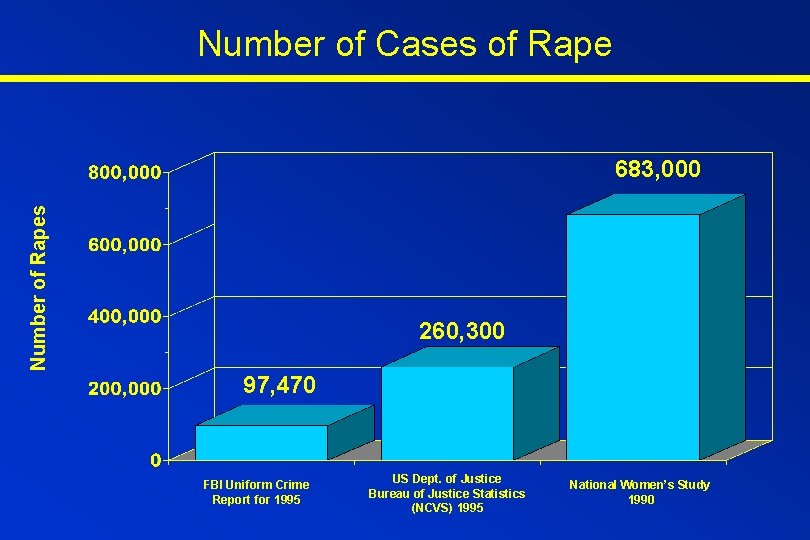
Number of Cases of Rape Number of Rapes 683, 000 260, 300 97, 470 FBI Uniform Crime Report for 1995 US Dept. of Justice Bureau of Justice Statistics (NCVS) 1995 National Women’s Study 1990
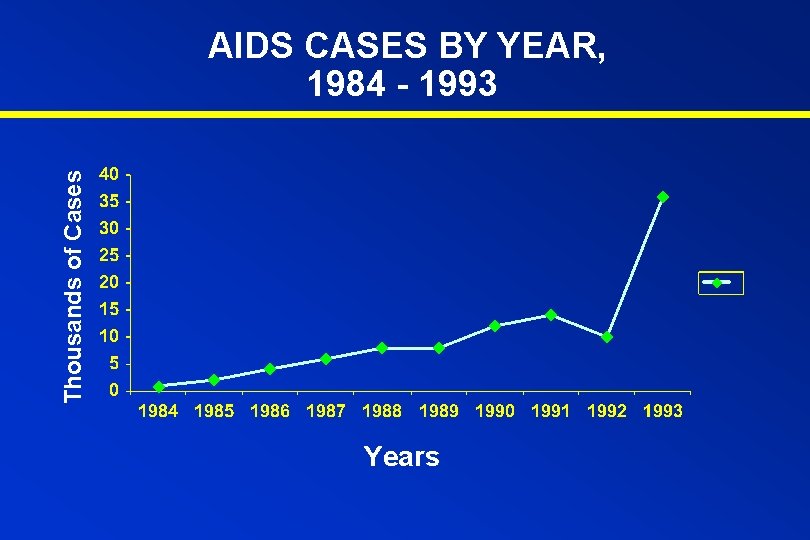
Thousands of Cases AIDS CASES BY YEAR, 1984 - 1993 Years
SOURCES OF ERROR IN INTERVIEW SURVEYS • Patient: • Interviewer : • Unaware of Disease • Interviewer Bias • Misunderstanding of Diagnosis • Selection of Subjects • Inaccurate Recall • Lack of standardization of interview format • Refusal to Respond • Altering of Response
Limitations of Hospital Data Sources • Admissions are selective • Hospital records are not designed for research • The denominator or population at risk is usually not known
Incidence and Prevalence: Problems with the Denominator • Selective Undercounting – Who doesn’t get counted? • Census Geographic Boundary changes • Changes in Defined Populations Over Time
Surveillance A comprehensive system designed for the on-going detection and monitoring of the occurrence of health-related events or exposures in a target population
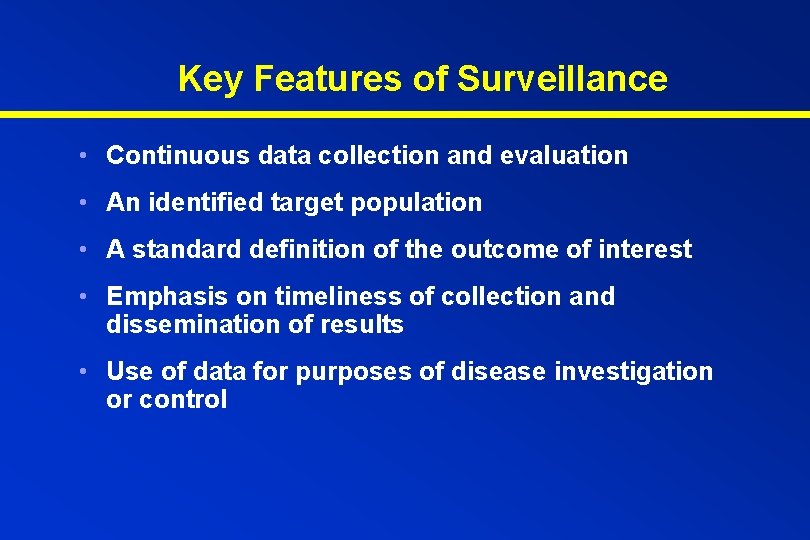
Key Features of Surveillance • Continuous data collection and evaluation • An identified target population • A standard definition of the outcome of interest • Emphasis on timeliness of collection and dissemination of results • Use of data for purposes of disease investigation or control