
Measuring the Multiple Dimensions of Medication Adherence in













- Slides: 43
Measuring the Multiple Dimensions of Medication Adherence in Behavior Change Research Ian M. Kronish, MD, MPH; Corrine I. Voils, Ph. D; Carolyn T. Thorpe, Ph. D, MPH December 12, 2019 SOBC Grand Rounds Speaker Series
Disclosures • None of the authors had any financial conflicts of interest • This project was supported by the National Institutes of Health 2
Rationale for Study Emerged from needs assessment conducted for the NIH’s Science of Behavior Change (SOBC) Initiative SOBC Mission: To promote a mechanisms-focused, experimental medicine approach to behavior change research Research Network of 22 academic sites and 1 Coordinating Center Medication nonadherence is one of the key health behaviors https: //scienceofbehaviorchange. org/ 3
“What is the best way to measure medication nonadherence? ” Systematic reviews on adherence measurement Scoping Review Other reviews NIH’s GEM database https: //www. gem-beta. org/Public/Home. aspx 4
Systematic reviews of self-report questionnaires • No consensus for specific measure 1, 2 Other reviews Findings • Suggest principles for good self-report measures but no optimal measure 3 • ESPACOMP’s EMERGE initiative provides consensus on adherence reporting, but not how to select measures 4 NIH GEM database • 1 Nguyen Only 3 adherence measures listed; no recent updates et al. Brit J Clin Pharmacol 2015; 2 Shi et al. Pharmacoeconomics 2018; 3 Stirratt et al. TBJ. 2015; 4 de Geest et al. Ann Intern Med, 2018 5
Is There a “Best” Way to Measure Adherence? Adherence is a multidimensional behavior Different measures may be needed to measure different adherence behaviors 6
Goals 1. Obtain consensus for a framework for classifying and measuring nonadherence behaviors 2. Identify recommended measurement methods for each nonadherence behavior in this framework 7
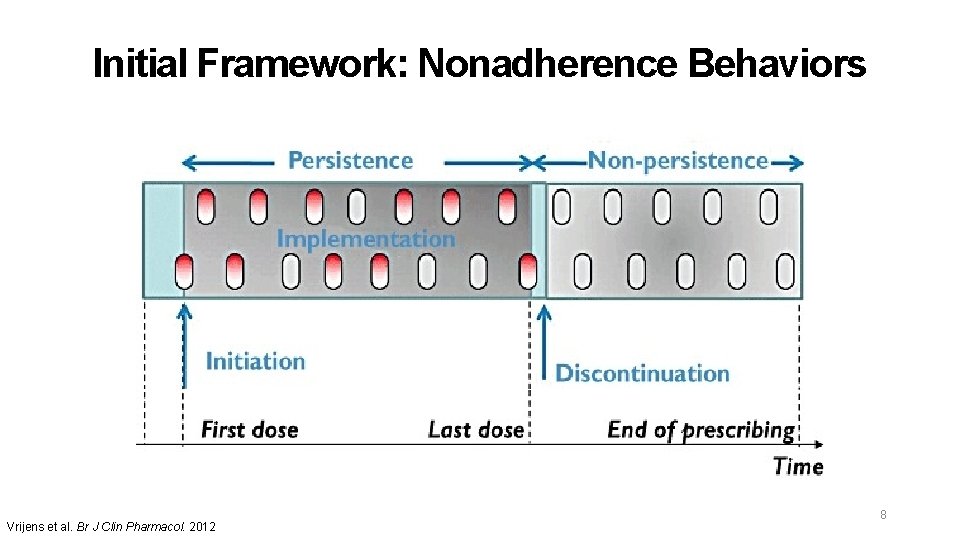
Initial Framework: Nonadherence Behaviors Vrijens et al. Br J Clin Pharmacol. 2012 8
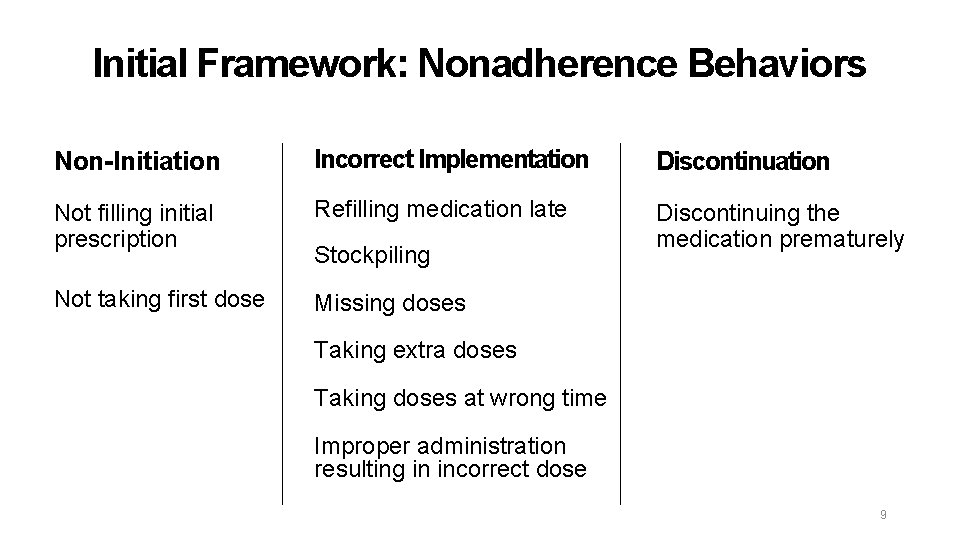
Initial Framework: Nonadherence Behaviors Non-Initiation Incorrect Implementation Discontinuation Not filling initial prescription Refilling medication late Discontinuing the medication prematurely Not taking first dose Missing doses Stockpiling Taking extra doses Taking doses at wrong time Improper administration resulting in incorrect dose 9
Initial Framework: Measurement Methods Self-report Pill/dose count Pharmacy refill Biomarker Drug or metabolite level Electronic medication monitor Ingestible sensor Direct observation 10
Survey 1 12/15/17 -1/30/2018 Assess agreement with proposed framework comprised of nonadherence behaviors and measurement methods 11
>5 years experience in medication adherence research Eligibility Criteria for Experts International reputation per publications and presentations English proficiency Geographic and discipline diversity 12
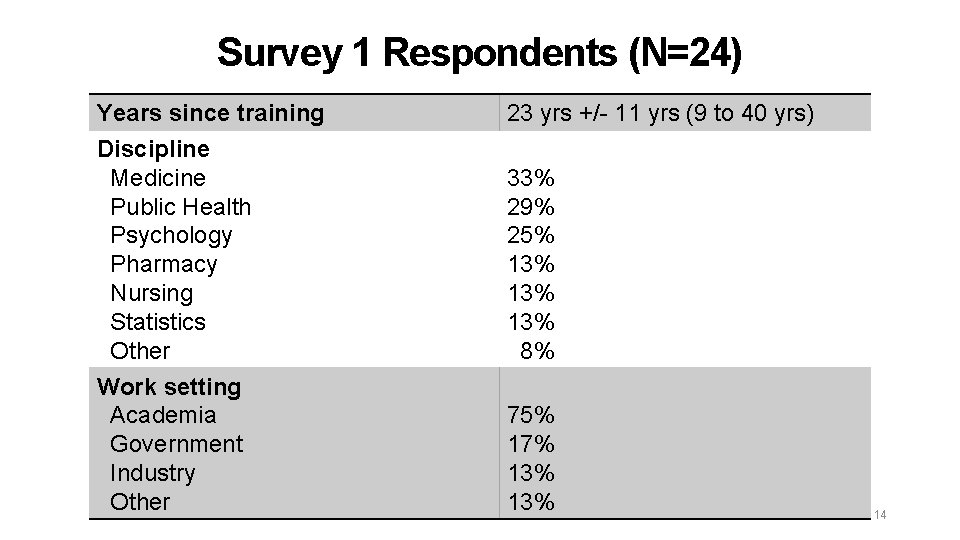
Survey 1 Results Response Rate: 24 of 30 (N=80%)
Survey 1 Respondents (N=24) Years since training Discipline Medicine Public Health Psychology Pharmacy Nursing Statistics Other Work setting Academia Government Industry Other 23 yrs +/- 11 yrs (9 to 40 yrs) 33% 29% 25% 13% 13% 8% 75% 17% 13% 14
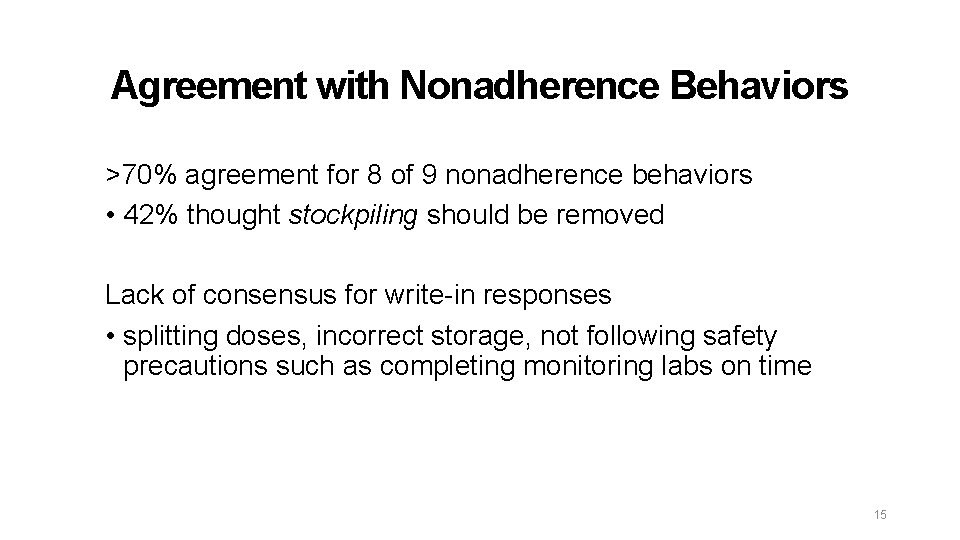
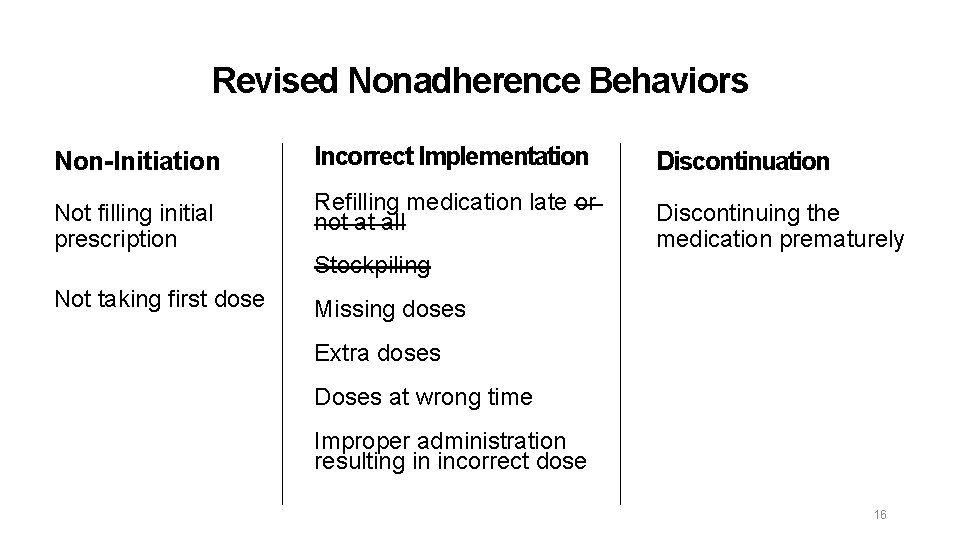
Agreement with Nonadherence Behaviors >70% agreement for 8 of 9 nonadherence behaviors • 42% thought stockpiling should be removed Lack of consensus for write-in responses • splitting doses, incorrect storage, not following safety precautions such as completing monitoring labs on time 15
Revised Nonadherence Behaviors Non-Initiation Incorrect Implementation Discontinuation Not filling initial prescription Refilling medication late or not at all Discontinuing the medication prematurely Not taking first dose Missing doses Stockpiling Extra doses Doses at wrong time Improper administration resulting in incorrect dose 16
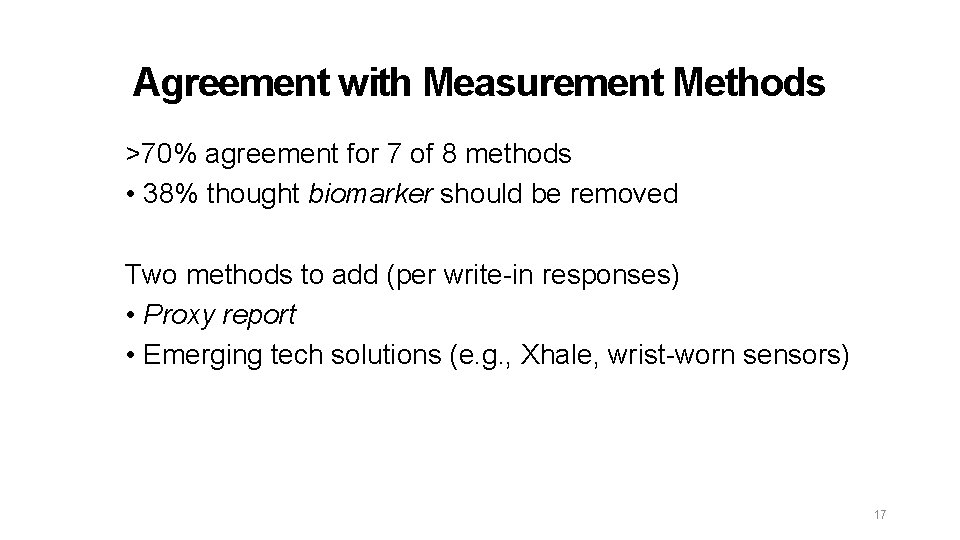
Agreement with Measurement Methods >70% agreement for 7 of 8 methods • 38% thought biomarker should be removed Two methods to add (per write-in responses) • Proxy report • Emerging tech solutions (e. g. , Xhale, wrist-worn sensors) 17
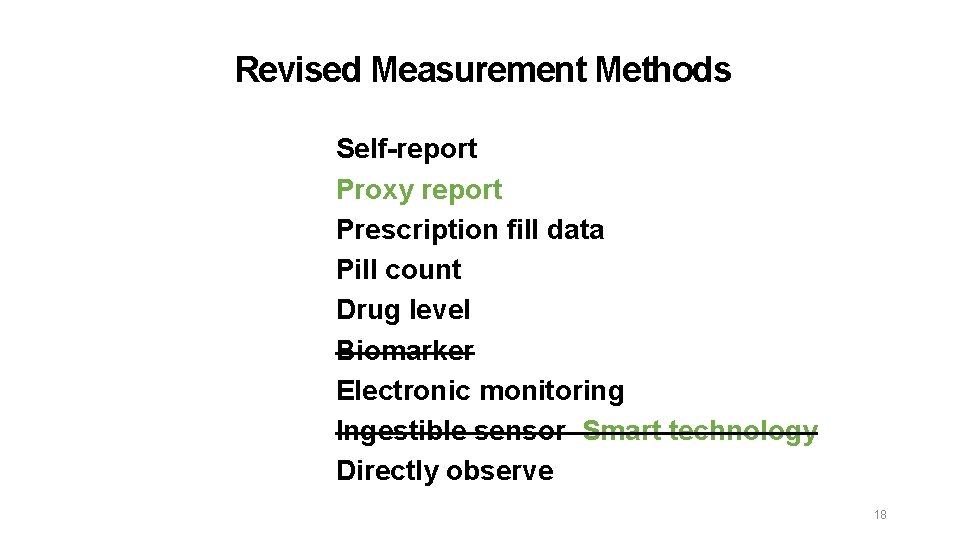
Revised Measurement Methods Self-report Proxy report Prescription fill data Pill count Drug level Biomarker Electronic monitoring Ingestible sensor Smart technology Directly observe 18
Survey 2 6/4/2018 -8/14/2018 Assess agreement with revised framework Identify which methods are suitable and optimal for measuring each specific nonadherence behavior 19
Task: Rate Suitability of Measurement Methods Instructions: Rate how suitable (0, not at all suitable; 1, somewhat suitable; 2, very suitable) each measurement approach is for assessing the corresponding nonadherence behavior. Consider factors such as the reliability, validity, cost, and feasibility of each measurement method in the context of health and behavior change research Behavior NON INITIATION Non-Adherence Measurement Approach Self Proxy report Refills Pill count Drug level Electronic Smart Directly monitor technology observe Not filling initial prescription Not taking first dose 20
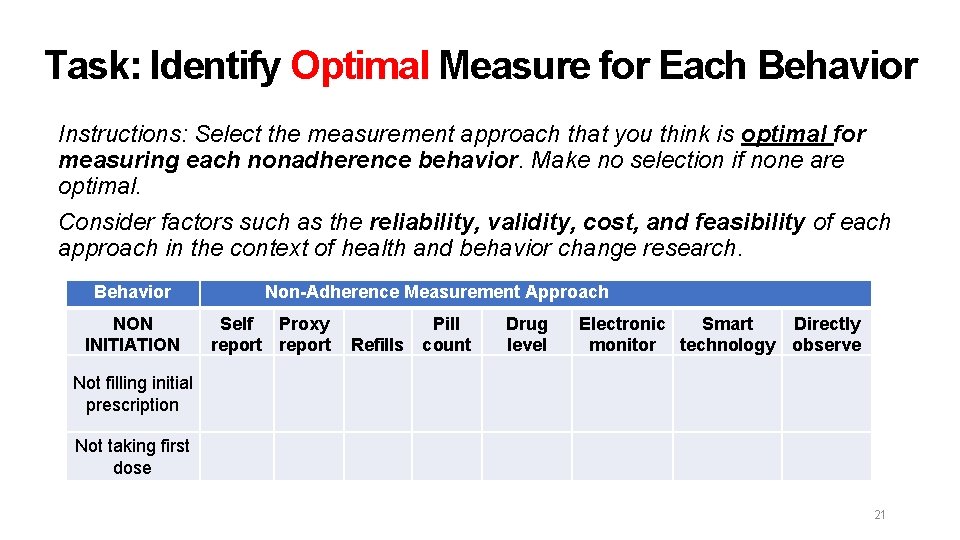
Task: Identify Optimal Measure for Each Behavior Instructions: Select the measurement approach that you think is optimal for measuring each nonadherence behavior. Make no selection if none are optimal. Consider factors such as the reliability, validity, cost, and feasibility of each approach in the context of health and behavior change research. Behavior NON INITIATION Non-Adherence Measurement Approach Self Proxy report Refills Pill count Drug level Electronic Smart Directly monitor technology observe Not filling initial prescription Not taking first dose 21
Survey 2 Results Response Rate: 22 of 30 (N=73%)
>85% Agreement with Revised Nonadherence Behaviors Non-Initiation Incorrect Implementation Discontinuation Not filling initial prescription Refilling medication late Discontinuing the medication prematurely Not taking first dose Missing doses Extra doses Doses at wrong time Improper administration resulting in incorrect dose 23
>85% Agreement with Revised Measurement Methods Self-report Proxy report Prescription fill data Pill count Drug level Electronic monitoring Smart technology Directly observe 24
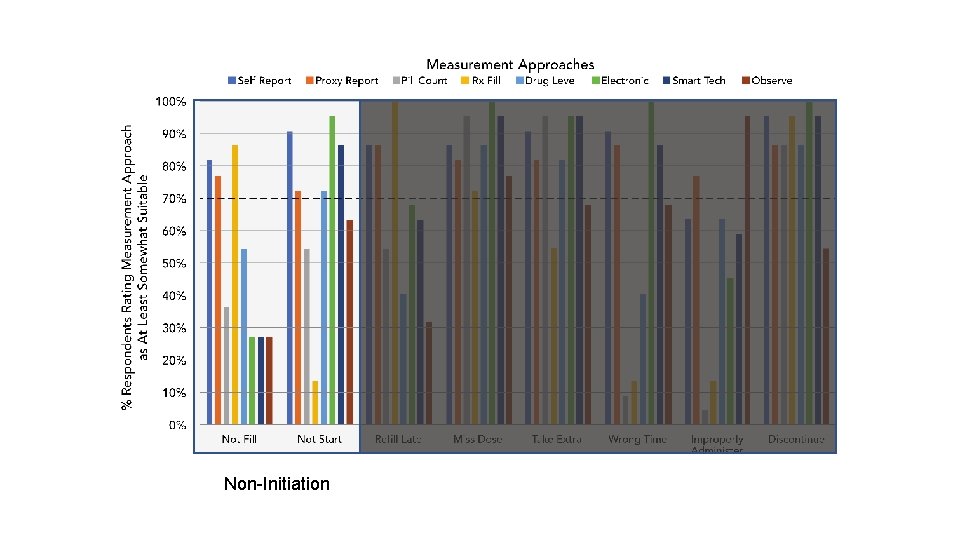
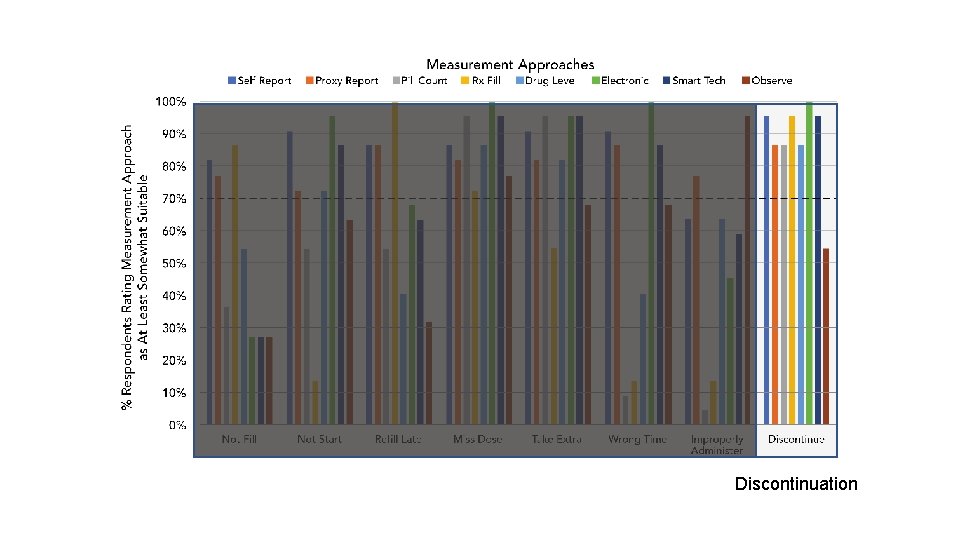
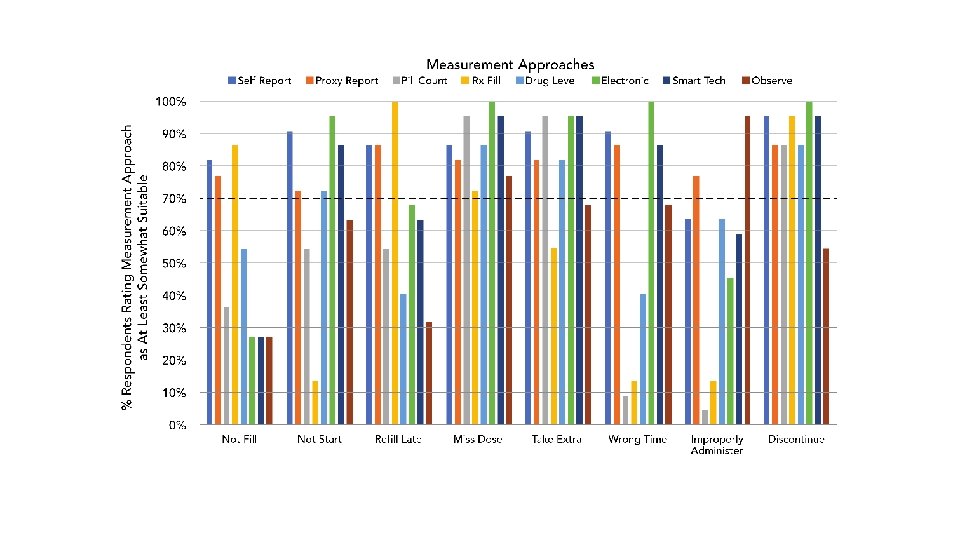
Suitable* Measurement Methods (*somewhat or very suitable)
Non-Initiation
Incorrect Implementation
Discontinuation
Optimal Measurement Methods
Achieved consensus for a framework of classifying nonadherence behaviors Conclusions Suitable and optimal measurement methods varied by nonadherence behavior 32
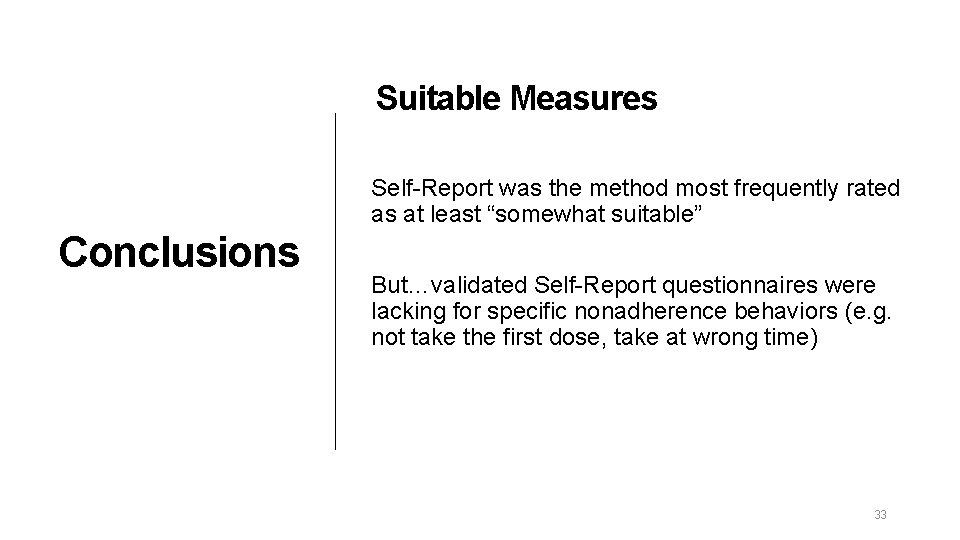
Suitable Measures Self-Report was the method most frequently rated as at least “somewhat suitable” Conclusions But…validated Self-Report questionnaires were lacking for specific nonadherence behaviors (e. g. not take the first dose, take at wrong time) 33
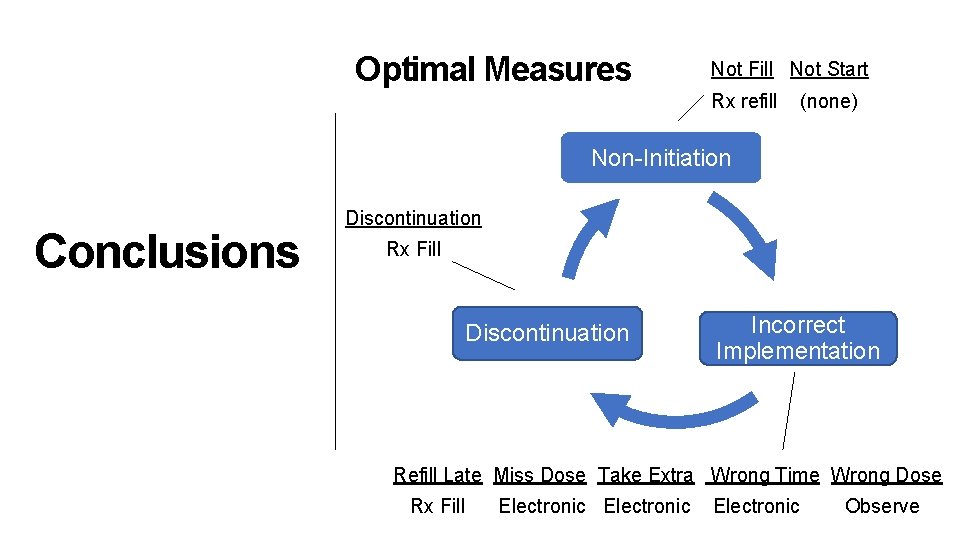
Optimal Measures Not Fill Not Start Rx refill (none) Non-Initiation Conclusions Discontinuation Rx Fill Discontinuation Incorrect Implementation Refill Late Miss Dose Take Extra Wrong Time Wrong Dose Rx Fill Electronic Observe
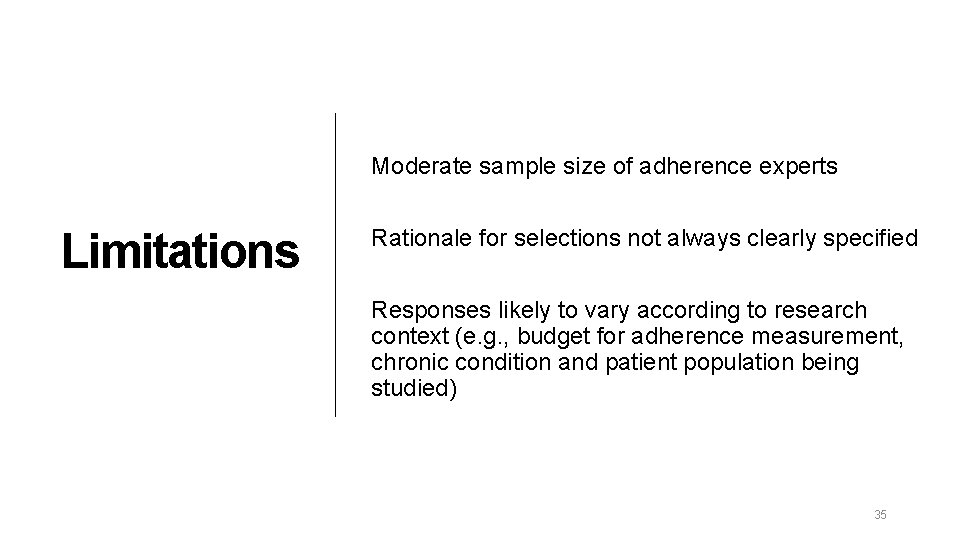
Moderate sample size of adherence experts Limitations Rationale for selections not always clearly specified Responses likely to vary according to research context (e. g. , budget for adherence measurement, chronic condition and patient population being studied) 35
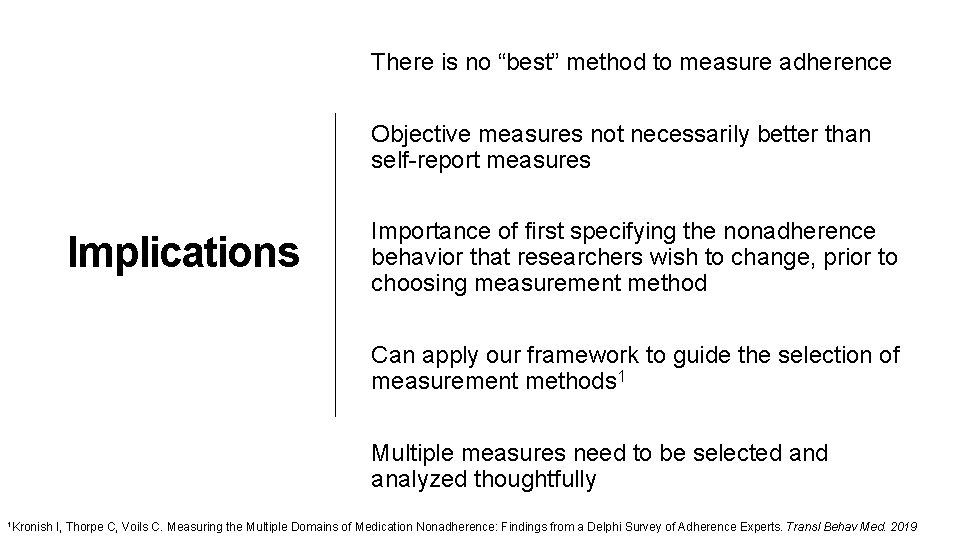
There is no “best” method to measure adherence Objective measures not necessarily better than self-report measures Implications Importance of first specifying the nonadherence behavior that researchers wish to change, prior to choosing measurement method Can apply our framework to guide the selection of measurement methods 1 Multiple measures need to be selected analyzed thoughtfully 1 Kronish I, Thorpe C, Voils C. Measuring the Multiple Domains of Medication Nonadherence: Findings from a Delphi Survey of Adherence Experts. Transl Behav Med. 2019
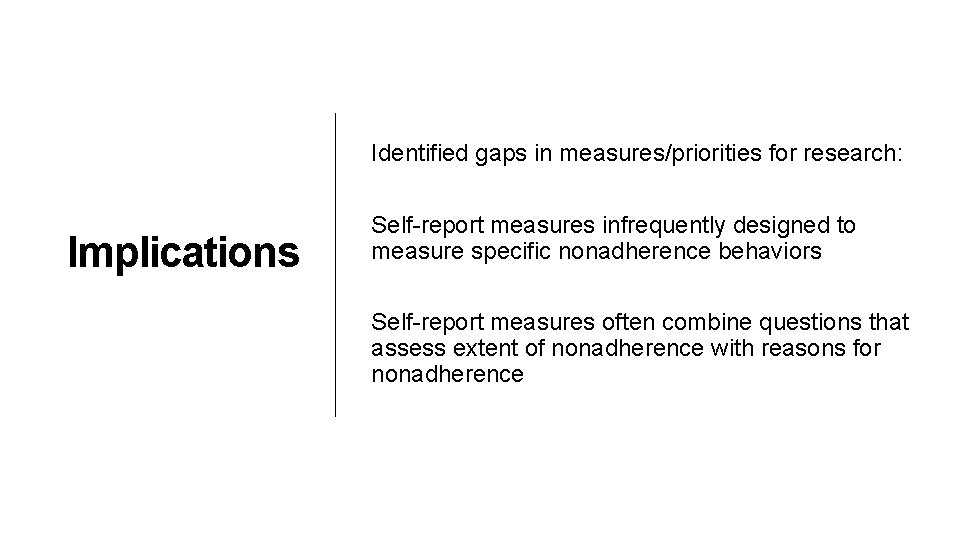
Identified gaps in measures/priorities for research: Implications Self-report measures infrequently designed to measure specific nonadherence behaviors Self-report measures often combine questions that assess extent of nonadherence with reasons for nonadherence
Thank you. Contacts: Ian M. Kronish, MD, MPH, ik 2293@columbia. edu Carolyn Thorpe, Ph. D, MPH carolyn_thope@unc. edu Corrine Voils, Ph. D voils@surgery. wisc. edu Citation for published paper: Kronish I, Thorpe C, Voils C. Measuring the Multiple Domains of Medication Nonadherence: Findings from a Delphi Survey of Adherence Experts. Transl Behav Med. 2019
Extra slides
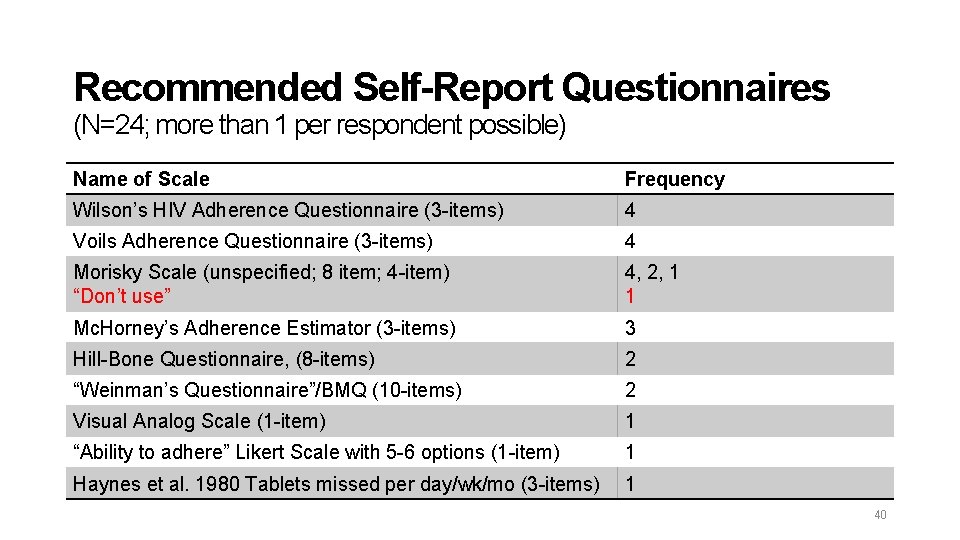
Recommended Self-Report Questionnaires (N=24; more than 1 per respondent possible) Name of Scale Frequency Wilson’s HIV Adherence Questionnaire (3 -items) 4 Voils Adherence Questionnaire (3 -items) 4 Morisky Scale (unspecified; 8 item; 4 -item) “Don’t use” 4, 2, 1 1 Mc. Horney’s Adherence Estimator (3 -items) 3 Hill-Bone Questionnaire, (8 -items) 2 “Weinman’s Questionnaire”/BMQ (10 -items) 2 Visual Analog Scale (1 -item) 1 “Ability to adhere” Likert Scale with 5 -6 options (1 -item) 1 Haynes et al. 1980 Tablets missed per day/wk/mo (3 -items) 1 40
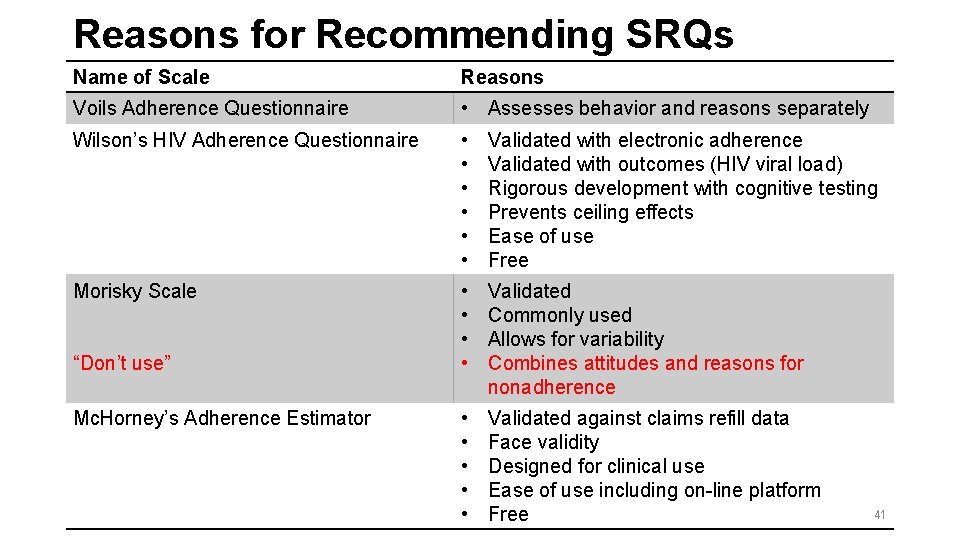
Reasons for Recommending SRQs Name of Scale Reasons Voils Adherence Questionnaire • Assesses behavior and reasons separately Wilson’s HIV Adherence Questionnaire • • • Validated with electronic adherence Validated with outcomes (HIV viral load) Rigorous development with cognitive testing Prevents ceiling effects Ease of use Free Morisky Scale • • Validated Commonly used Allows for variability Combines attitudes and reasons for nonadherence • • • Validated against claims refill data Face validity Designed for clinical use Ease of use including on-line platform Free “Don’t use” Mc. Horney’s Adherence Estimator 41
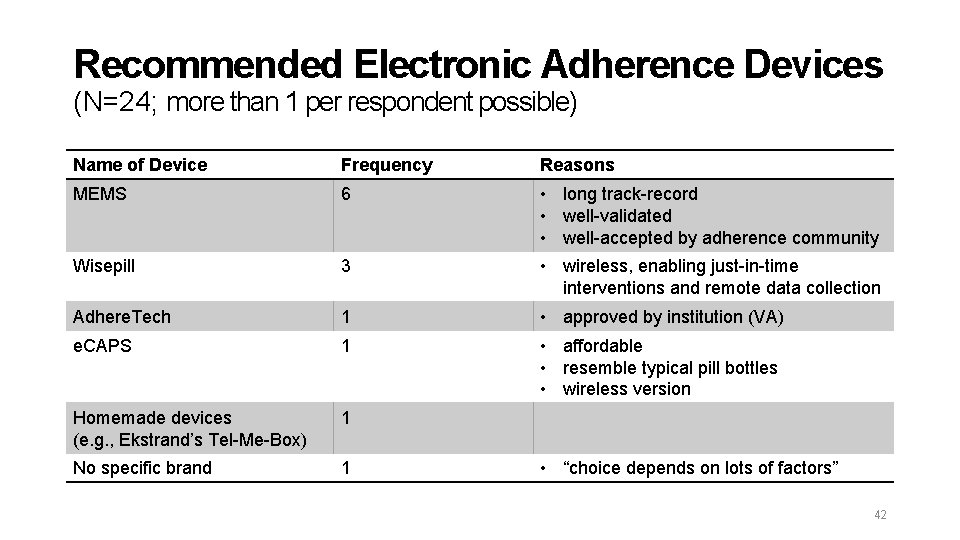
Recommended Electronic Adherence Devices (N=24; more than 1 per respondent possible) Name of Device Frequency Reasons MEMS 6 • long track-record • well-validated • well-accepted by adherence community Wisepill 3 • wireless, enabling just-in-time interventions and remote data collection Adhere. Tech 1 • approved by institution (VA) e. CAPS 1 • affordable • resemble typical pill bottles • wireless version Homemade devices (e. g. , Ekstrand’s Tel-Me-Box) 1 No specific brand 1 • “choice depends on lots of factors” 42
• From PA-18 -722 Improving Patient Adherence to Treatment and Prevention Regimens to Promote Health • Future studies should clearly define adherence, address intervention mechanisms of action, and compliment self-reported measures with objective assessment of behavior. 43