
Measuring the frequency of visible light The measurement
Measuring the frequency of visible light The measurement of frequency of visible light is not known yet. Franc Rozman fr. rozman@gmail. com
The described frequency measurement is based on: repeatable, direct, illustrative and technologically undemanding measurements with unambiguous measurement results. We measure light from a comet or from a planet (Mars, Jupiter, …).
The measurement gives a definitive answer about the speed of light. Measuring the frequency of light gives an unambiguous answer to the question of always the same speed of light. The measurement may indicate that dark matter does not exist, that the idea of dark matter is merely the result of a misunderstanding of light. Attachment to the postulate of the speed of light can therefore be a serious emotional barrier in measuring the frequency of light.
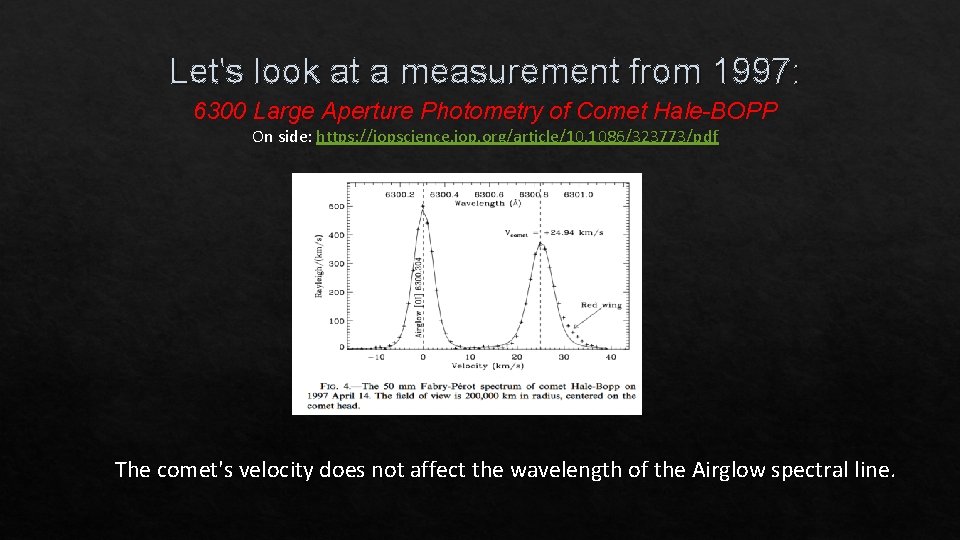
Let's look at a measurement from 1997: 6300 Large Aperture Photometry of Comet Hale-BOPP On side: https: //iopscience. iop. org/article/10. 1086/323773/pdf The comet's velocity does not affect the wavelength of the Airglow spectral line.
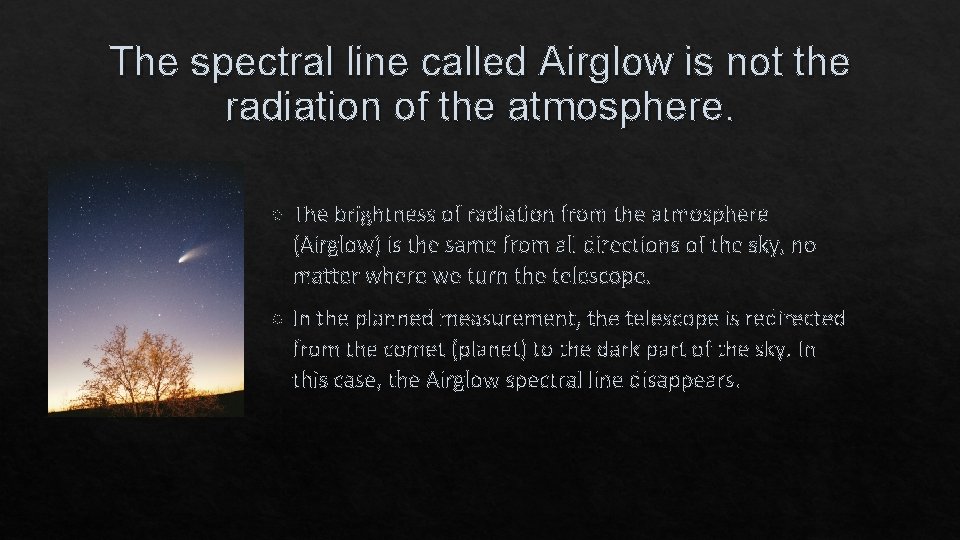
The spectral line called Airglow is not the radiation of the atmosphere. The brightness of radiation from the atmosphere (Airglow) is the same from all directions of the sky, no matter where we turn the telescope. In the planned measurement, the telescope is redirected from the comet (planet) to the dark part of the sky. In this case, the Airglow spectral line disappears.

The double spectral line is created by a diffraction grating. The devices have a built-in diffraction grating. By removing the diffraction grating, one spectral line disappears.
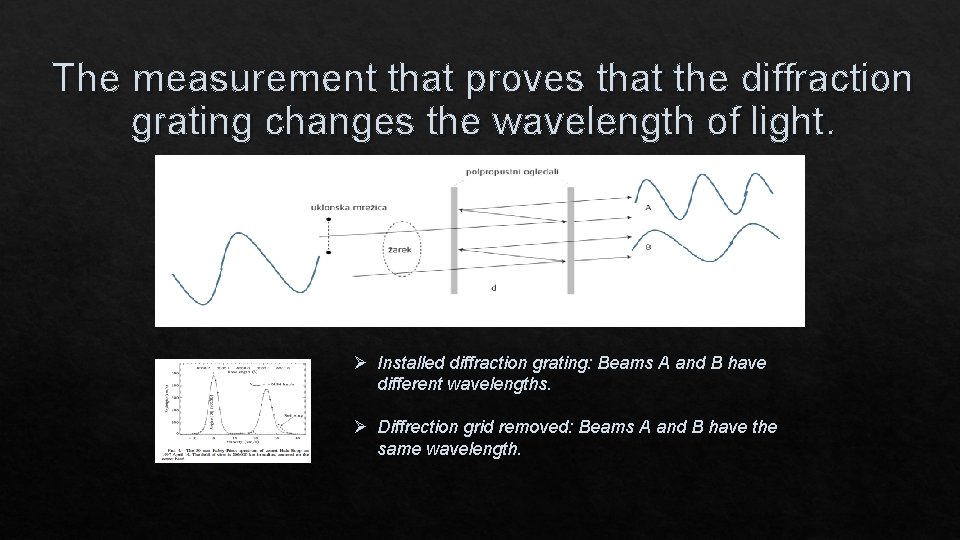
The measurement that proves that the diffraction grating changes the wavelength of light. Ø Installed diffraction grating: Beams A and B have different wavelengths. Ø Diffrection grid removed: Beams A and B have the same wavelength.
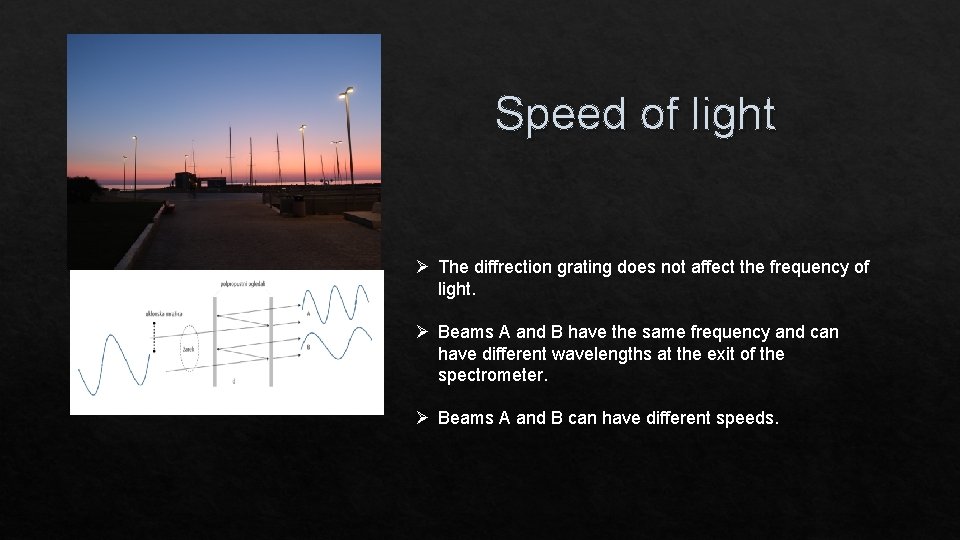
Speed of light Ø The diffrection grating does not affect the frequency of light. Ø Beams A and B have the same frequency and can have different wavelengths at the exit of the spectrometer. Ø Beams A and B can have different speeds.
Great decision Ø The measurement results show different beam velocities. Ø These are inconsistent with the postulate of the speed of light. Ø Science is thus before deciding whether to follow: § the result of the measurements or § the postulate of the speed of light.
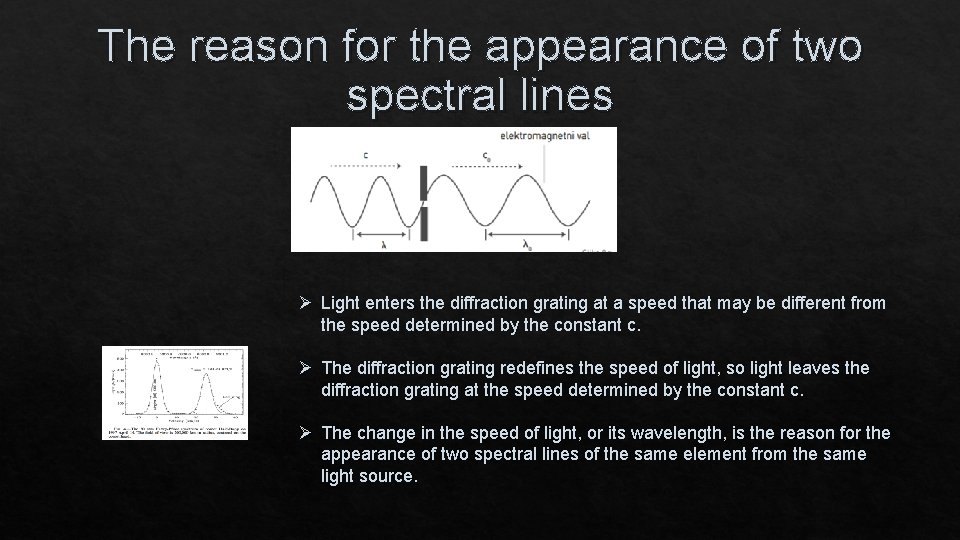
The reason for the appearance of two spectral lines Ø Light enters the diffraction grating at a speed that may be different from the speed determined by the constant c. Ø The diffraction grating redefines the speed of light, so light leaves the diffraction grating at the speed determined by the constant c. Ø The change in the speed of light, or its wavelength, is the reason for the appearance of two spectral lines of the same element from the same light source.
Visual light frequency measurement Beams A and B have the same frequency all the way. The diffraction grating redefines the velocity of the beam A (as it is determined by constant c) and changes its wavelength. Another spectral line appears. We know the speed of the beam A (but not the beam B). We measure the wavelength of both beams. The frequency of light in the beam A is determined by the ratio f = c / λ. The measured frequency is the same as the frequency of the light from the comet.
Independent measurement confirmations The measurement touches the physical foundations, so it must be performed in several independent environments before its results are generally accepted. You are invited to repeat the measurement and publish the findings. A detailed description of the measurement is in the book: Merim frekvenco svetlobe http: //www. frozman. si/pdf/MFS. pdf Thanks
- Slides: 12