
Measuring SoilWater Evaporation Josh Heitman Robert Horton Tom

Measuring Soil-Water Evaporation Josh Heitman, Robert Horton, Tom Sauer, Tom De. Sutter Acknowledgement National Science Foundation Grant No. 0337553
Two approaches to estimate soil water evaporation Water Balance Energy Balance
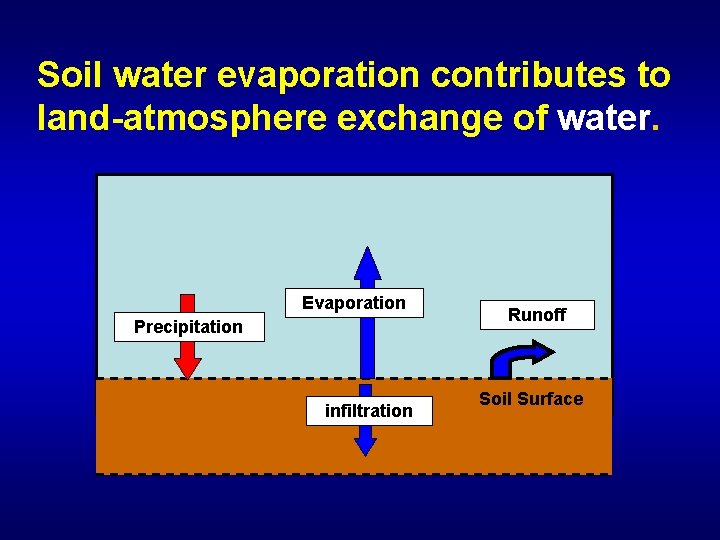
Soil water evaporation contributes to land-atmosphere exchange of water. Evaporation Precipitation infiltration Runoff Soil Surface

Water Balance Micro-lysimeter
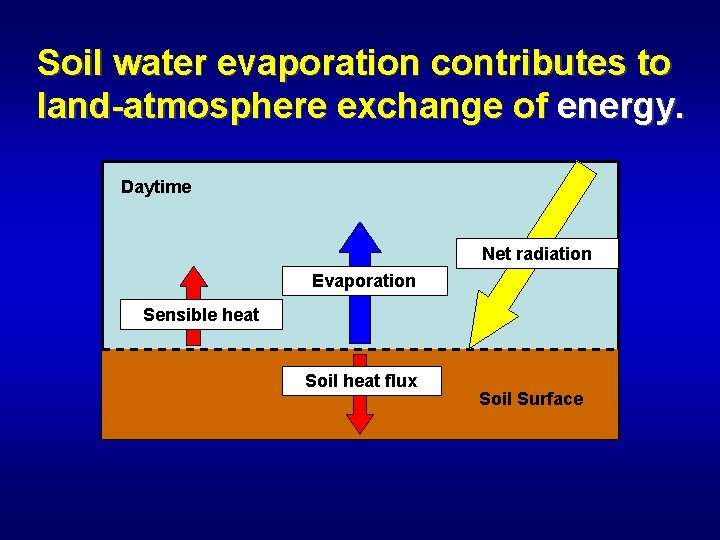
Soil water evaporation contributes to land-atmosphere exchange of energy. Daytime Net radiation Evaporation Sensible heat Soil heat flux Soil Surface
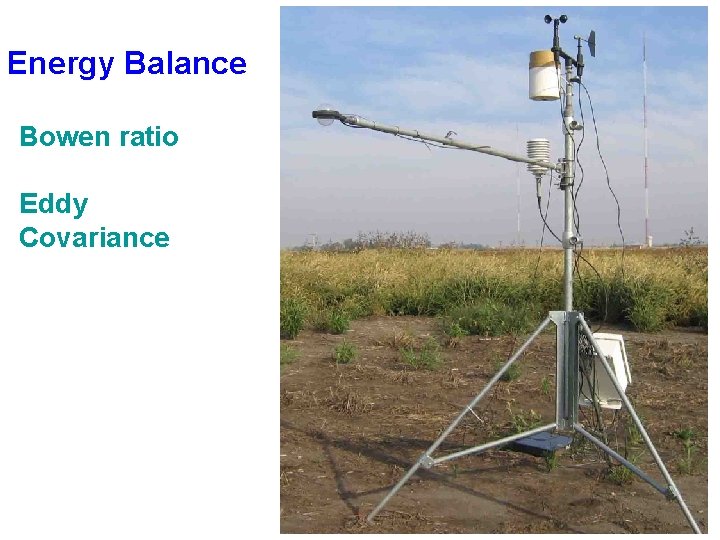
Energy Balance Bowen ratio Eddy Covariance
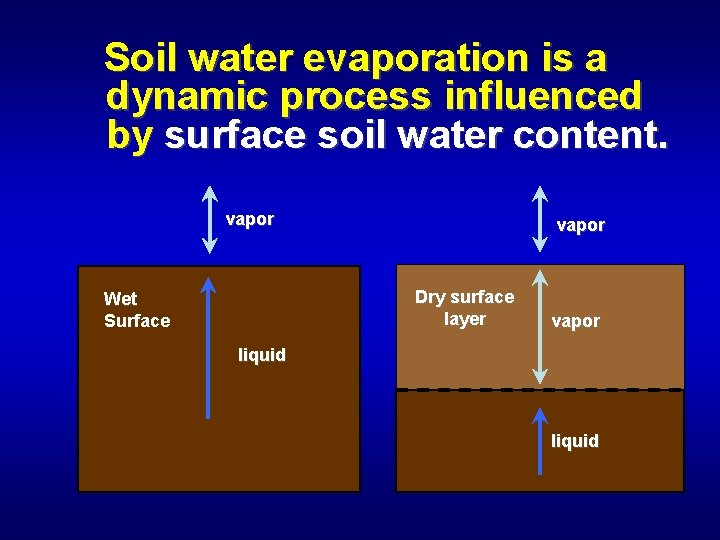
Soil water evaporation is a dynamic process influenced by surface soil water content. vapor Dry surface layer Wet Surface vapor liquid
Objectives To develop a soil measurement-based approach for determining in situ soil water evaporation. To observe the location of the transient evaporation front within the soil Note: Use measurements rather than relying on transfer coefficients that are difficult to determine
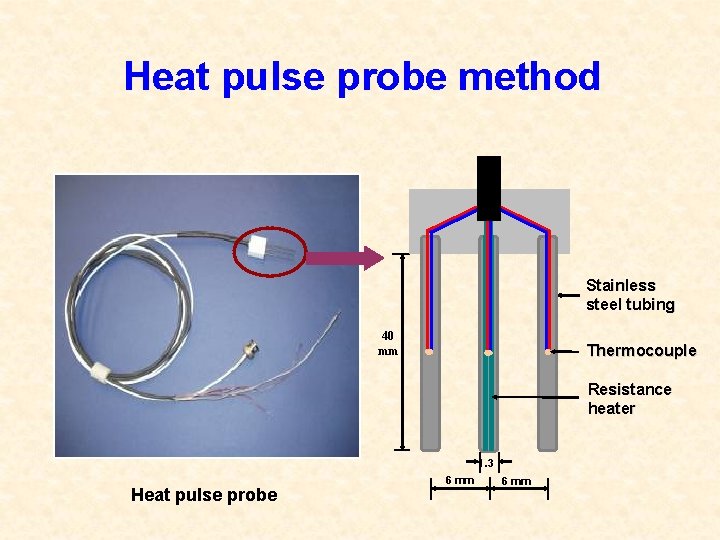
Heat pulse probe method Stainless steel tubing 40 mm Thermocouple Resistance heater 1. 3 Heat pulse probe 6 mm
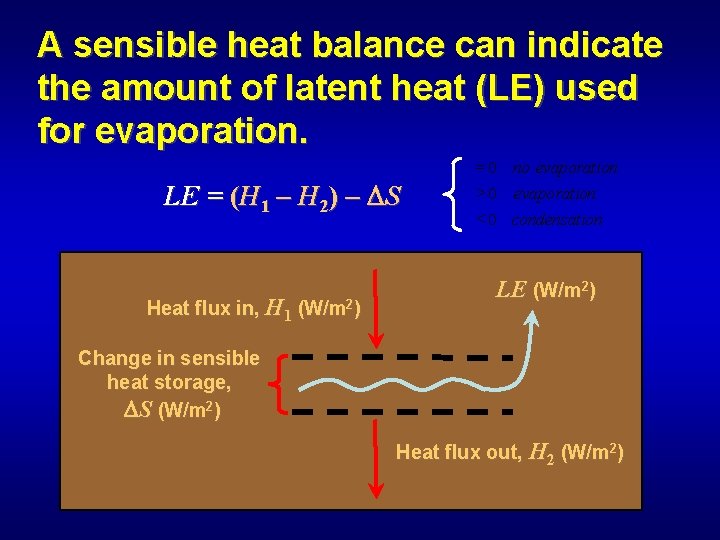
A sensible heat balance can indicate the amount of latent heat (LE) used for evaporation. LE = (H 1 – H 2) – DS Heat flux in, H 1 (W/m 2) = 0 no evaporation > 0 evaporation < 0 condensation LE (W/m 2) Change in sensible heat storage, DS (W/m 2) Heat flux out, H 2 (W/m 2)
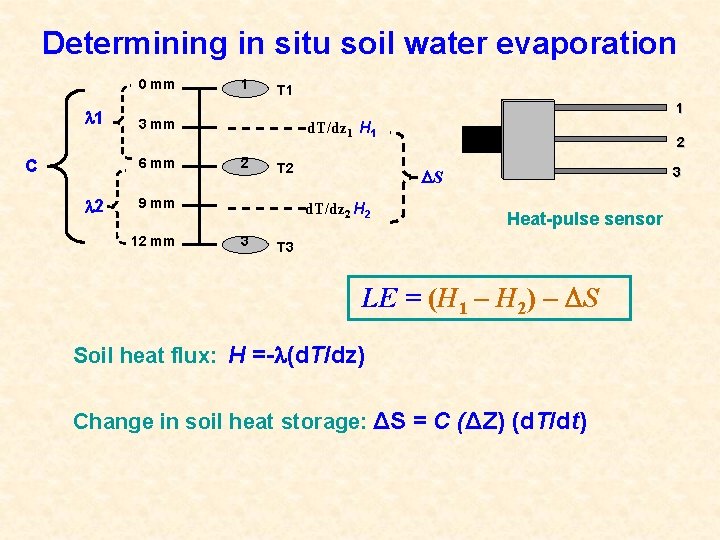
Determining in situ soil water evaporation 0 mm 1 2 T 1 1 3 mm 6 mm C 1 d. T/dz 1 H 1 2 T 2 9 mm 12 mm 3 DS d. T/dz 2 H 2 3 2 Heat-pulse sensor T 3 LE = (H 1 – H 2) – DS Soil heat flux: H =- (d. T/dz) Change in soil heat storage: ΔS = C (ΔZ) (d. T/dt)
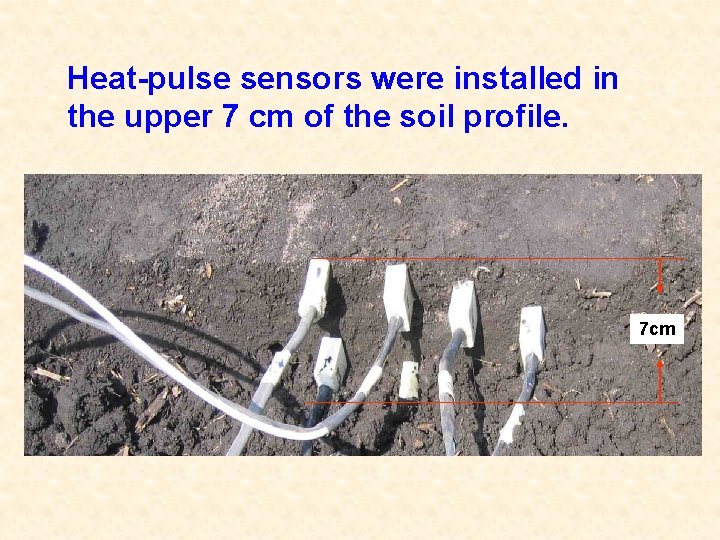
Heat-pulse sensors were installed in the upper 7 cm of the soil profile. 7 cm
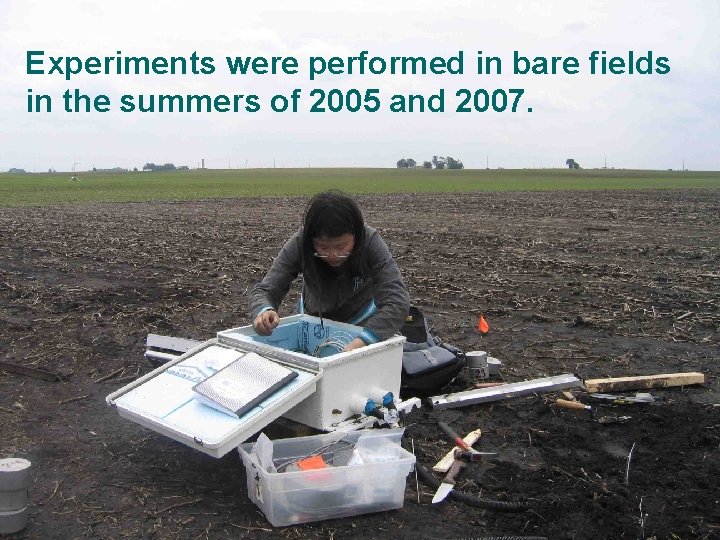
Experiments were performed in bare fields in the summers of 2005 and 2007.
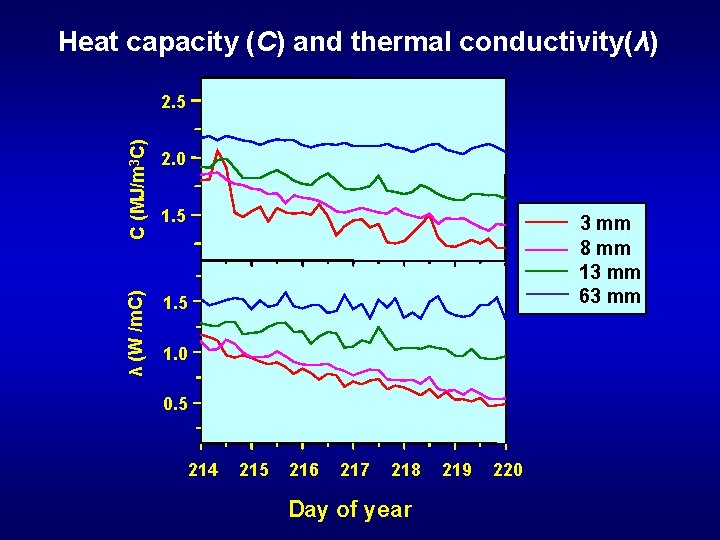
Heat capacity (C) and thermal conductivity(λ) λ (W /m. C) C (MJ/m 3 C) 2. 5 2. 0 1. 5 3 mm 8 mm 13 mm 63 mm 1. 5 1. 0 0. 5 214 215 216 217 218 Day of year 219 220
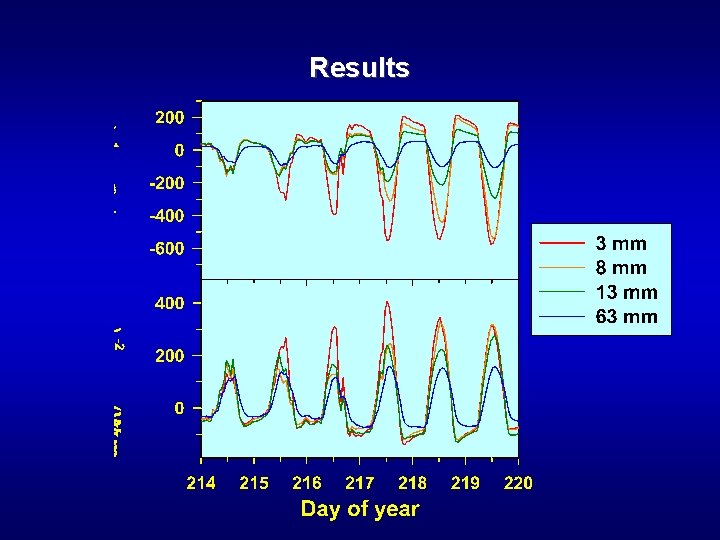
Results
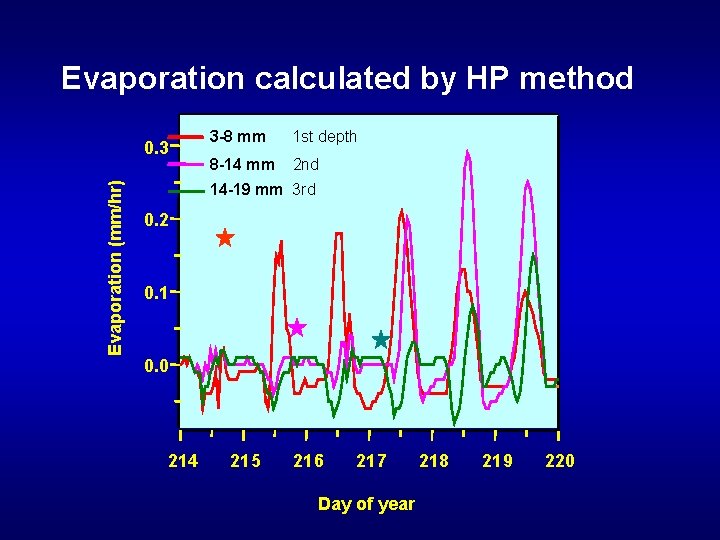
Evaporation calculated by HP method Evaporation (mm/hr) 0. 3 3 -8 mm 1 st depth 8 -14 mm 2 nd 14 -19 mm 3 rd 0. 2 0. 1 0. 0 214 215 216 217 Day of year 218 219 220
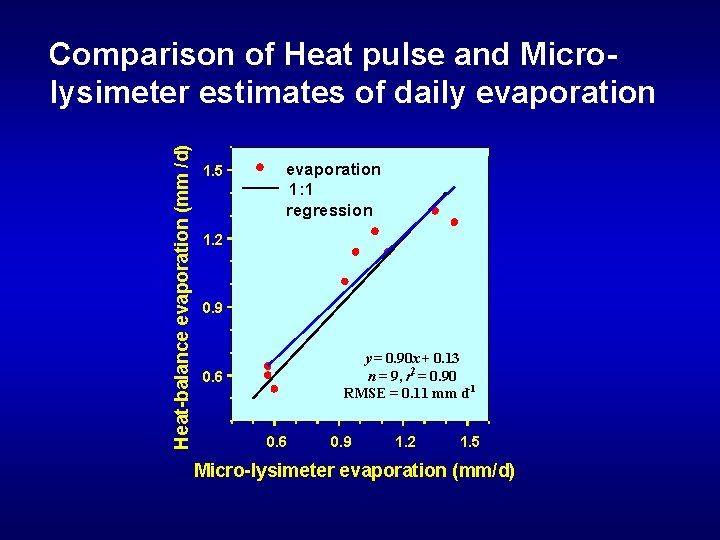
Heat-balance evaporation (mm /d) Comparison of Heat pulse and Microlysimeter estimates of daily evaporation 1. 5 evaporation 1: 1 regression 1. 2 0. 9 y = 0. 90 x + 0. 13 n = 9, r 2 = 0. 90 RMSE = 0. 11 mm d-1 0. 6 0. 9 1. 2 1. 5 Micro-lysimeter evaporation (mm/d)
Conclusions • Heat-pulse sensors provide unique opportunity to observe temperature, thermal properties and water content dynamics. • The heat-balance method allows calculation of heat energy partitioning and provides estimation of in situ soil water evaporation. • Further development is needed to determine evaporation immediately after rainfall events (Stage 1) and in more complex soil environments.
- Slides: 18