
Measuring Social Class Learning objectives DE Explain what
Measuring Social Class Learning objectives (D-E) Explain what social class is and state a way of measuring it (C) Describe two different methods for measuring social class (A*-B) Be able to explain and critique (evaluate) different methods for measuring social class
How is social class measured? Occupation is often used to measure social class because it is related to factors such as status and life chances: • Skilled – need qualifications • Non-skilled – no qualifications needed • Manual – hands on jobs – wear an overall • Non-manual – doesn’t involve getting your handed dirty/ no overall/ suit wearing
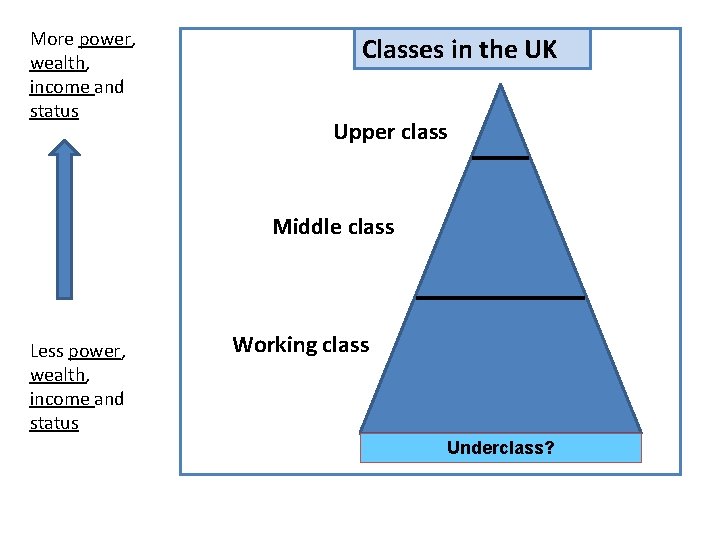
More power, wealth, income and status Less power, wealth, income and status Classes in the UK Upper class Middle class Working class Underclass?
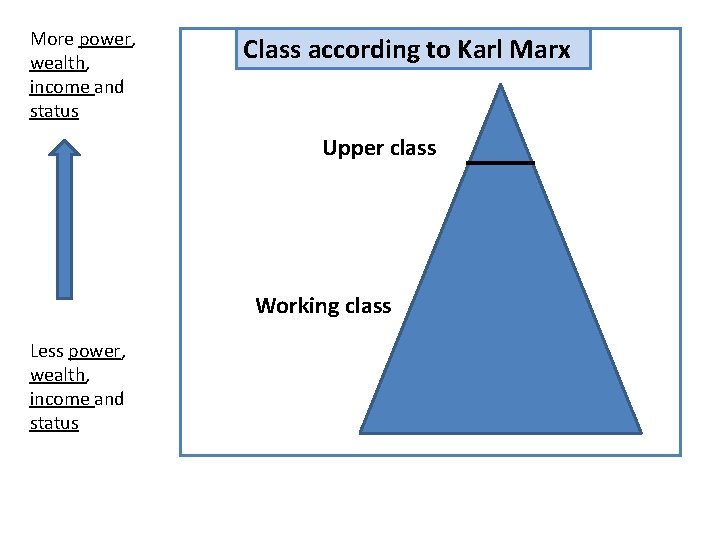
More power, wealth, income and status Less power, wealth, income and status Class according to Karl Marx Upper class Working class
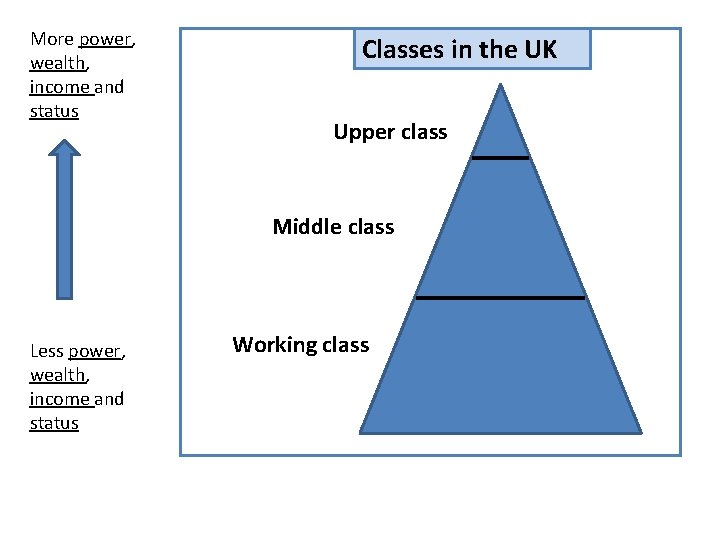
More power, wealth, income and status Less power, wealth, income and status Classes in the UK Upper class Middle class Working class
The Registrar General’s social class scale UK’s official government class scale 1911 -1998 Distinguishes between manual and non-manual occupations Manual = physical -> Skilled, semi-skilled, unskilled -> working class jobs Non-manual = no physical effort -> skilled non-manual, intermediate and professional occupations = Middle class jobs
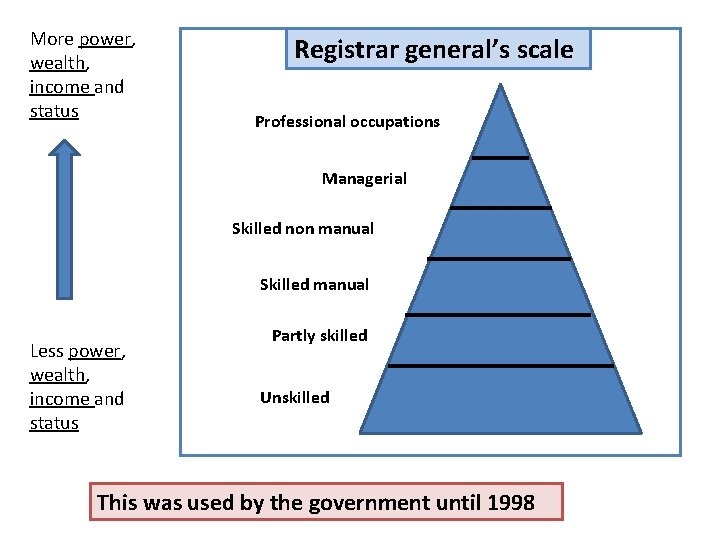
More power, wealth, income and status Registrar general’s scale Professional occupations Managerial Skilled non manual Skilled manual Less power, wealth, income and status Partly skilled Unskilled This was used by the government until 1998
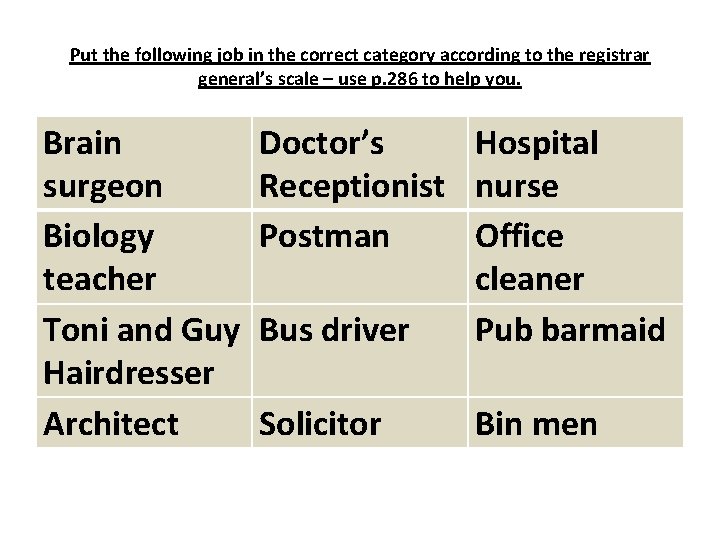
Put the following job in the correct category according to the registrar general’s scale – use p. 286 to help you. Brain surgeon Biology teacher Toni and Guy Hairdresser Architect Doctor’s Hospital Receptionist nurse Postman Office cleaner Bus driver Pub barmaid Solicitor Bin men
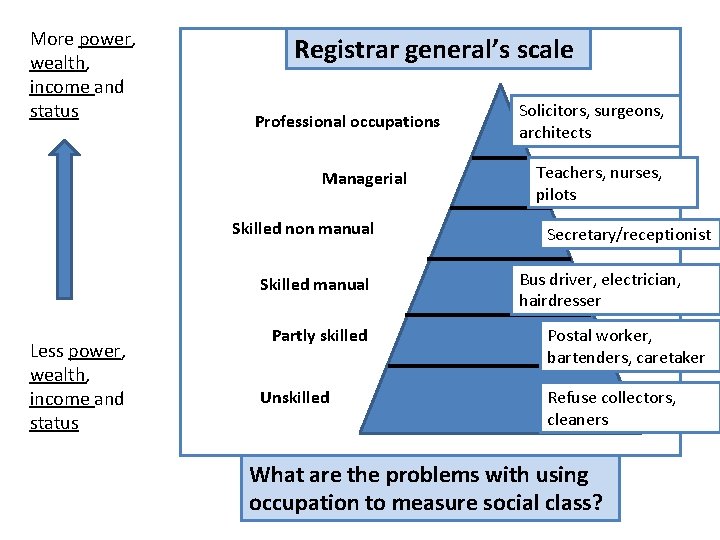
More power, wealth, income and status Less power, wealth, income and status Registrar general’s scale Professional occupations Managerial Skilled non manual Skilled manual Partly skilled Unskilled Solicitors, surgeons, architects Teachers, nurses, pilots Secretary/receptionist Bus driver, electrician, hairdresser Postal worker, bartenders, caretaker Refuse collectors, cleaners What are the problems with using occupation to measure social class?
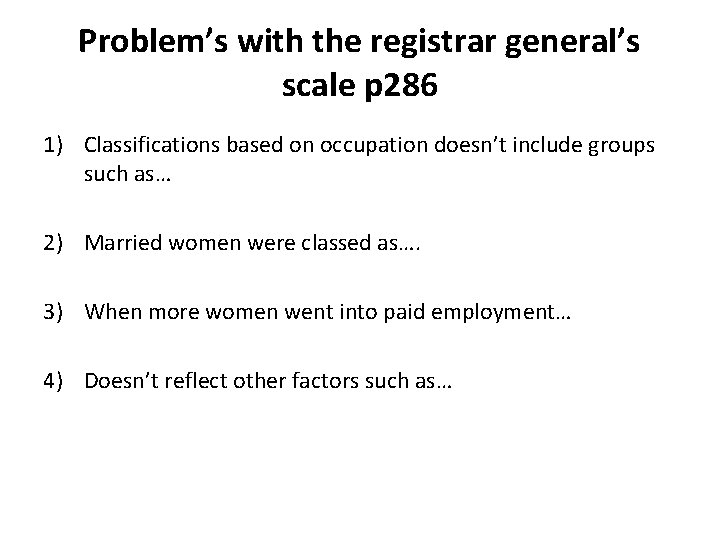
Problem’s with the registrar general’s scale p 286 1) Classifications based on occupation doesn’t include groups such as… 2) Married women were classed as…. 3) When more women went into paid employment… 4) Doesn’t reflect other factors such as…
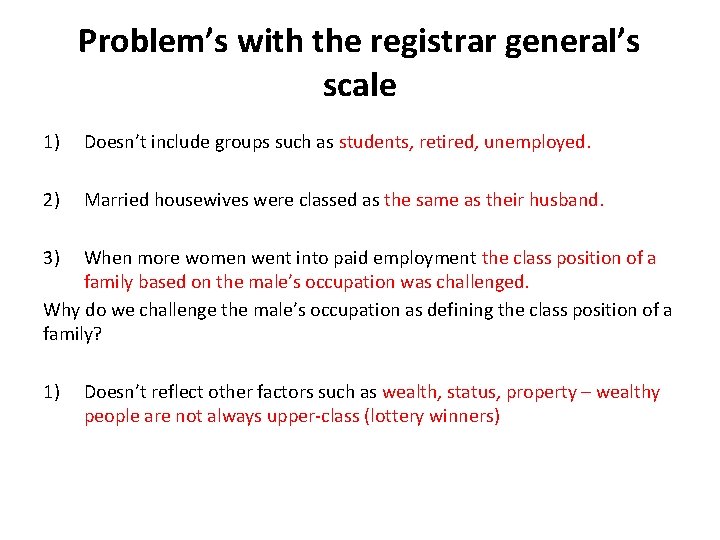
Problem’s with the registrar general’s scale 1) Doesn’t include groups such as students, retired, unemployed. 2) Married housewives were classed as the same as their husband. 3) When more women went into paid employment the class position of a family based on the male’s occupation was challenged. Why do we challenge the male’s occupation as defining the class position of a family? 1) Doesn’t reflect other factors such as wealth, status, property – wealthy people are not always upper-class (lottery winners)
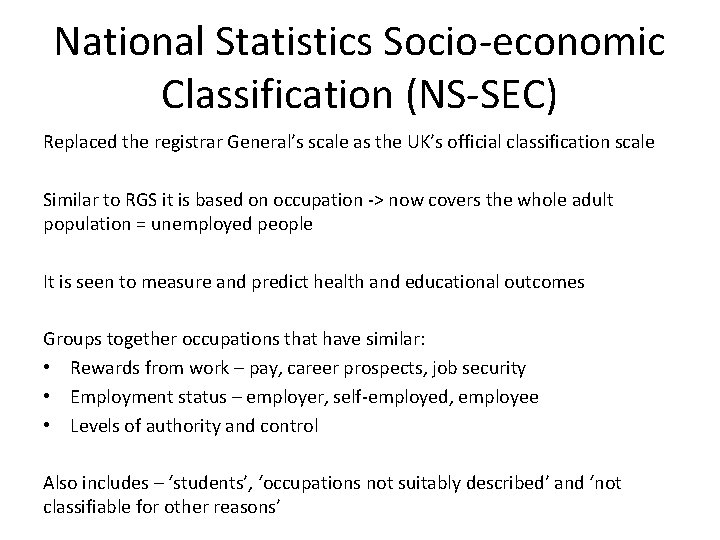
National Statistics Socio-economic Classification (NS-SEC) Replaced the registrar General’s scale as the UK’s official classification scale Similar to RGS it is based on occupation -> now covers the whole adult population = unemployed people It is seen to measure and predict health and educational outcomes Groups together occupations that have similar: • Rewards from work – pay, career prospects, job security • Employment status – employer, self-employed, employee • Levels of authority and control Also includes – ‘students’, ‘occupations not suitably described’ and ‘not classifiable for other reasons’
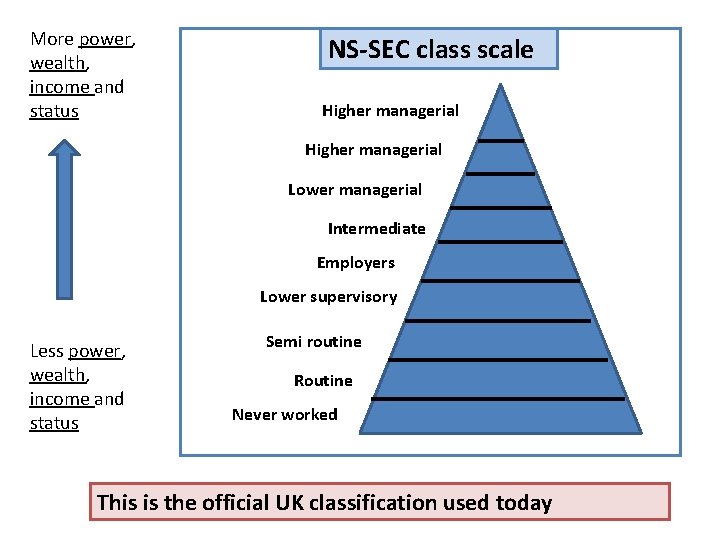
More power, wealth, income and status NS-SEC class scale Higher managerial Lower managerial Intermediate Employers Lower supervisory Less power, wealth, income and status Semi routine Routine Never worked This is the official UK classification used today
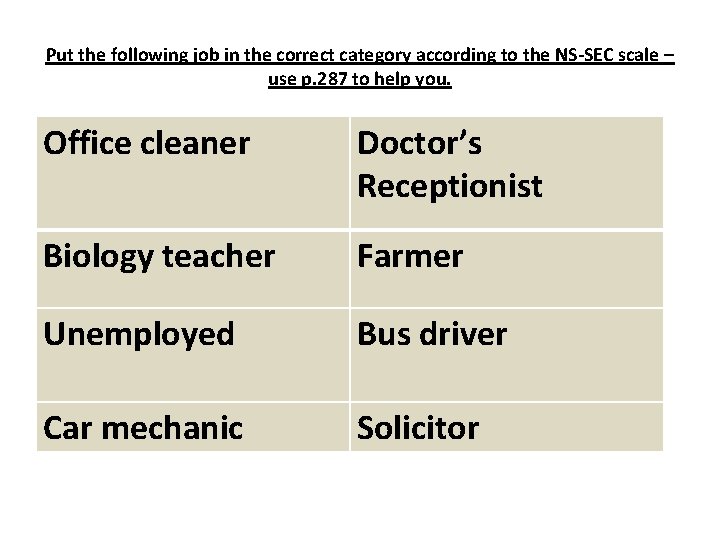
Put the following job in the correct category according to the NS-SEC scale – use p. 287 to help you. Office cleaner Doctor’s Receptionist Biology teacher Farmer Unemployed Bus driver Car mechanic Solicitor
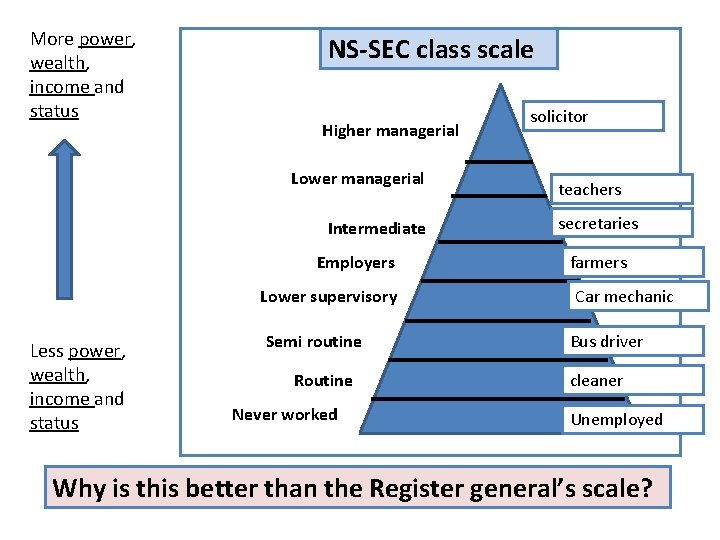
More power, wealth, income and status NS-SEC class scale Higher managerial Lower managerial Intermediate Employers Lower supervisory Less power, wealth, income and status Semi routine Routine Never worked solicitor teachers secretaries farmers Car mechanic Bus driver cleaner Unemployed Why is this better than the Register general’s scale?
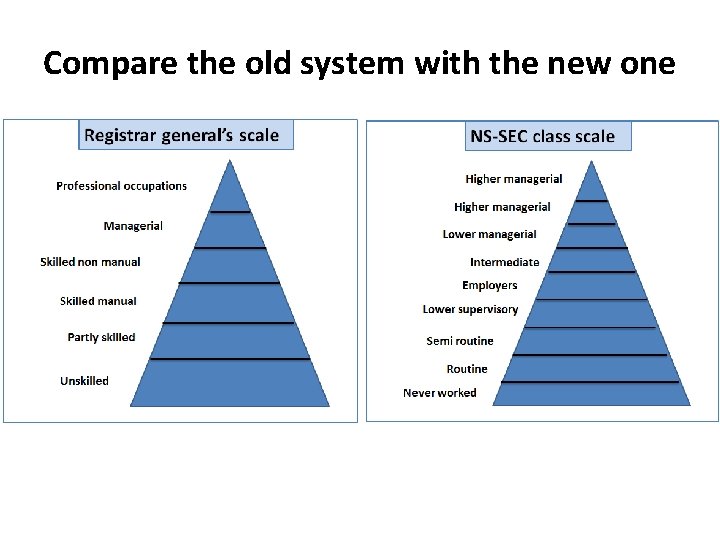
Compare the old system with the new one
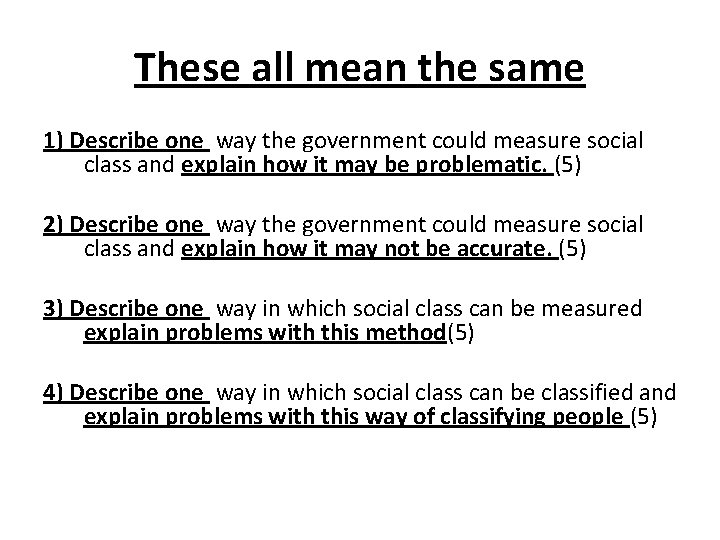
These all mean the same 1) Describe one way the government could measure social class and explain how it may be problematic. (5) 2) Describe one way the government could measure social class and explain how it may not be accurate. (5) 3) Describe one way in which social class can be measured explain problems with this method(5) 4) Describe one way in which social class can be classified and explain problems with this way of classifying people (5)
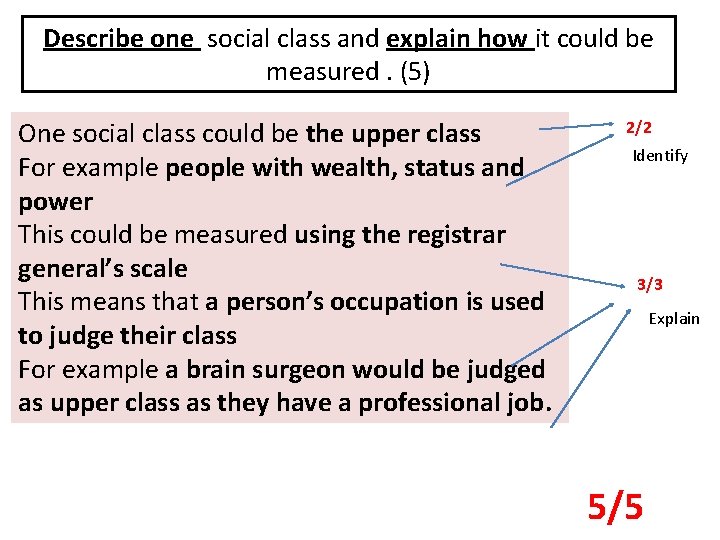
Describe one social class and explain how it could be measured. (5) One social class could be the upper class For example people with wealth, status and power This could be measured using the registrar general’s scale This means that a person’s occupation is used to judge their class For example a brain surgeon would be judged as upper class as they have a professional job. 2/2 Identify 3/3 Explain 5/5
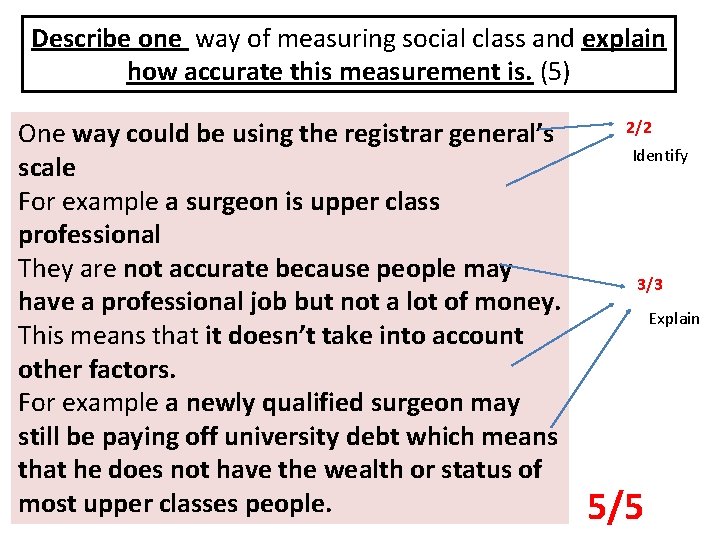
Describe one way of measuring social class and explain how accurate this measurement is. (5) One way could be using the registrar general’s scale For example a surgeon is upper class professional They are not accurate because people may have a professional job but not a lot of money. This means that it doesn’t take into account other factors. For example a newly qualified surgeon may still be paying off university debt which means that he does not have the wealth or status of most upper classes people. 2/2 Identify 3/3 Explain 5/5
- Slides: 19