
MEASURING MILITARY CAPABILITIES MILITARY EXPENDITURE ARMS ACQUISITIONS AND
MEASURING MILITARY CAPABILITIES MILITARY EXPENDITURE & ARMS ACQUISITIONS AND THEIR RELATION TO MILITARY CAPABILITIES Presentation for OAS meeting 1 Dec. 2006 1
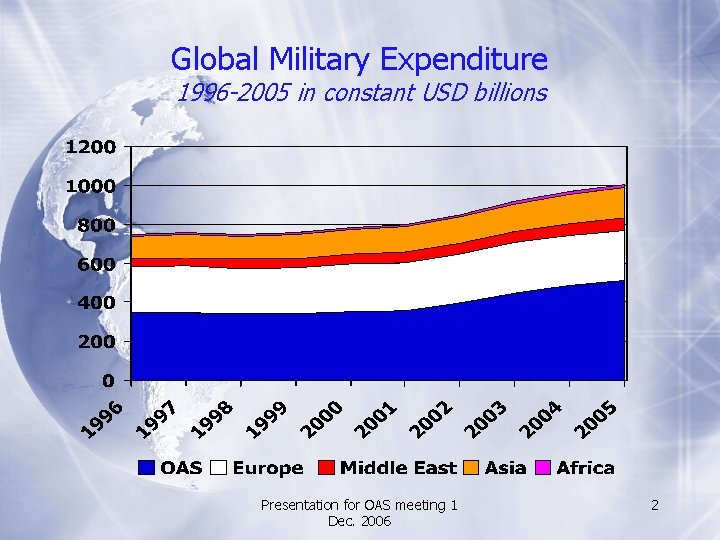
Global Military Expenditure 1996 -2005 in constant USD billions Presentation for OAS meeting 1 Dec. 2006 2
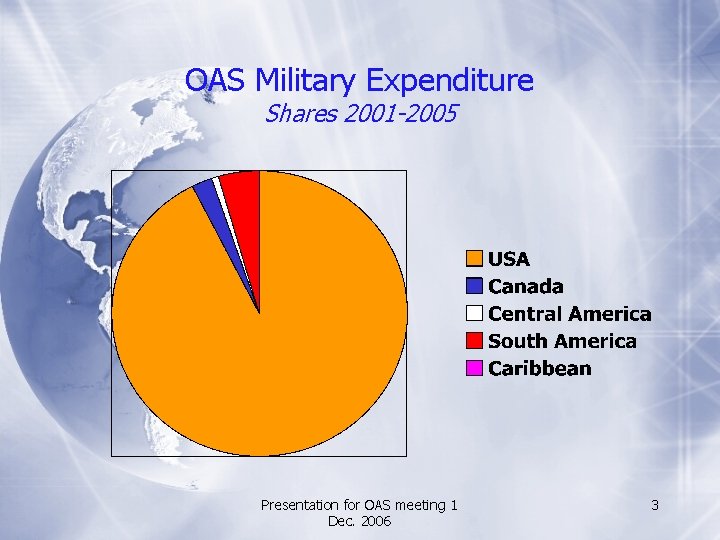
OAS Military Expenditure Shares 2001 -2005 Presentation for OAS meeting 1 Dec. 2006 3
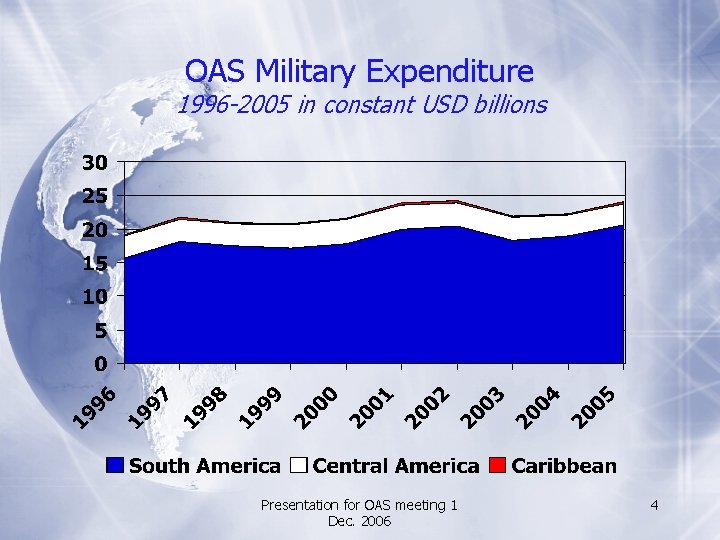
OAS Military Expenditure 1996 -2005 in constant USD billions Presentation for OAS meeting 1 Dec. 2006 4
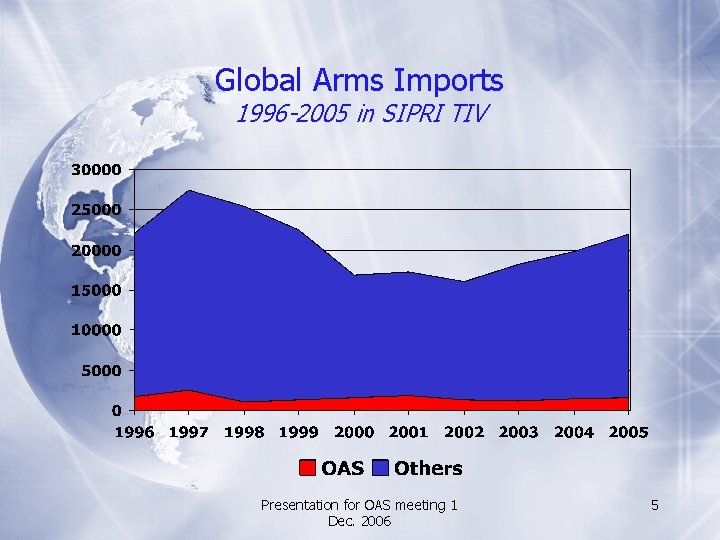
Global Arms Imports 1996 -2005 in SIPRI TIV Presentation for OAS meeting 1 Dec. 2006 5
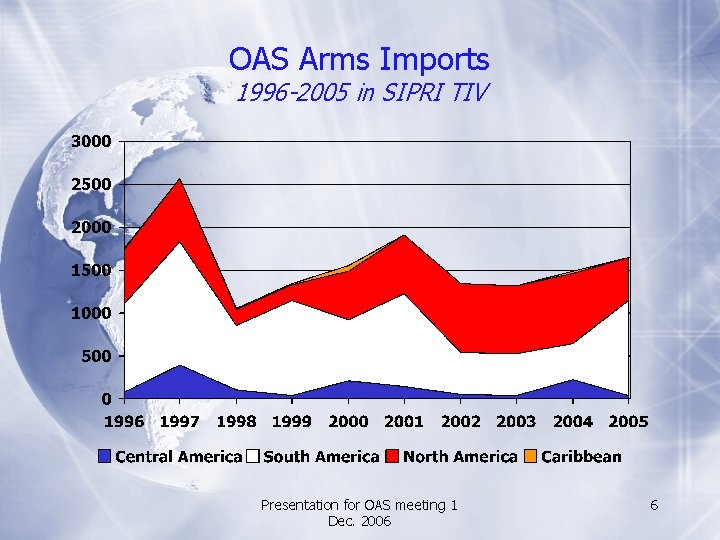
OAS Arms Imports 1996 -2005 in SIPRI TIV Presentation for OAS meeting 1 Dec. 2006 6
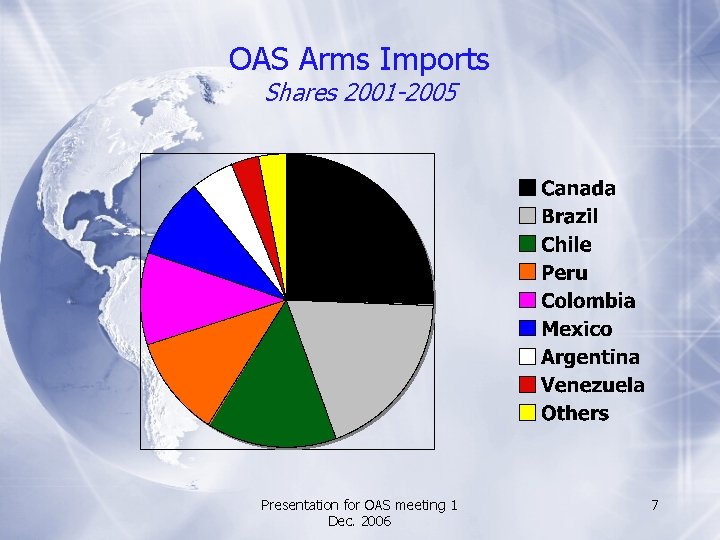
OAS Arms Imports Shares 2001 -2005 Presentation for OAS meeting 1 Dec. 2006 7
What is wrong with the previous pictures? They do NOT give good indications of military capability Bean Counting Military expenditure and arms acquisitions do NOT make military capability - they are ONLY two of many indicators They are very weak indicators - certainly when not disaggregated Presentation for OAS meeting 1 Dec. 2006 8

How then to measure military capability? Military capability is in the end only really measurable on the battlefield Second (and preferred) option is using different quantitative and qualitative data Presentation for OAS meeting 1 Dec. 2006 9
What data are needed? Quantity What is there? Holdings = existing inventory + acquisition + modernization - deletion) Quality How good is it? Technical parameters + age How is it used? How good are the users? What logistic support is there? How long will the platforms last? What is the balance of equipment? Presentation for OAS meeting 1 Dec. 2006 10
Equipment data needed Numbers Platforms Types (detailed) Age and modernizations Consumption goods Ammunition Spares Presentation for OAS meeting 1 Dec. 2006 11
Context data needed Military context Basing Doctrine Training Network or integration of forces Policy context Defence and foreign policy Culture - national will to use military force Presentation for OAS meeting 1 Dec. 2006 12
Where to get data? Numbers Registers (UNROCA, OAS - with as much detail as possible) Budgets (disaggregated) Background Policy statements (white papers) and policy practice Training and operation ‘manuals’ Observation (exchanges) Joint exercises and operations Presentation for OAS meeting 1 Dec. 2006 13
How relevant is measuring of military capabilities? A must in areas of tension Of much less relevance for international relations in peaceful environments But relevant for internal use (measuring of own military capabilities) Synchronizing defence with foreign policy Presentation for OAS meeting 1 Dec. 2006 14
Where does that leave UN MILEX mechanism? Good - disaggregated data Good - standardization Bad - voluntary Bad - very few report Never meant really to be used for measuring military capabilities, recognizing threats and early warning Presentation for OAS meeting 1 Dec. 2006 15
Where does that leave UNROCA? Good - numbers and types Good - possibility for background info and data Bad - only imports Bad - only traditional ‘aggressive’ weapons Bad - voluntary Bad - important importers do not report Presentation for OAS meeting 1 Dec. 2006 16
Where does that leave OSCE exchange of information? Good - mandatory Good - numbers and types Good - including some support/force multiplier systems Good - verification Good - reporting on planned acquisition Good - acquisitions and holdings Good - info on doctrine and policy But not in region in much need of it Presentation for OAS meeting 1 Dec. 2006 17
Where does that leave OAS Convention? Good - mandatory Good - numbers and types Good - includes all acquisitions Bad - no holdings Bad - only traditional ‘aggressive’ weapons Bad - no background info Bad? - very few report But not in a region in much need of it Presentation for OAS meeting 1 Dec. 2006 18
- Slides: 18