
Measuring Managing and Enhancing Procedural Justice in Policing
- Slides: 25
Measuring, Managing, and Enhancing Procedural Justice in Policing: Promise and Pitfalls NACOLE Academic Symposium April 22, 2016 Robert E. Worden, Ph. D. Sarah J. Mc. Lean, Ph. D. The John F. Finn Institute for Public Safety, Inc.
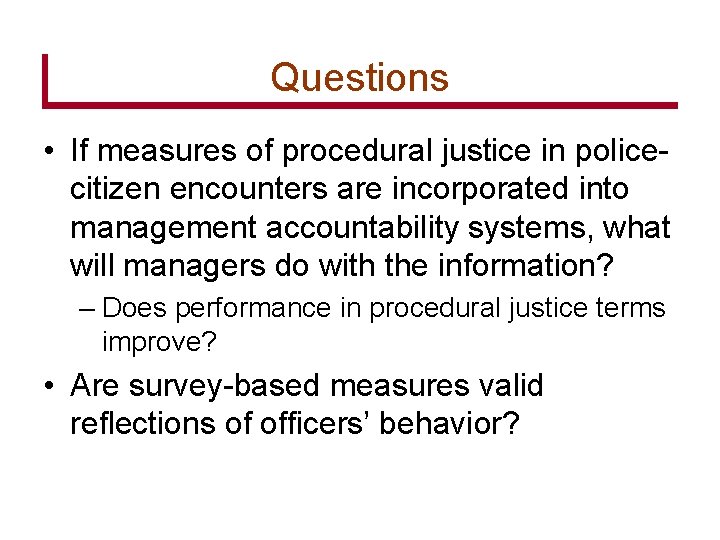
Questions • If measures of procedural justice in policecitizen encounters are incorporated into management accountability systems, what will managers do with the information? – Does performance in procedural justice terms improve? • Are survey-based measures valid reflections of officers’ behavior?
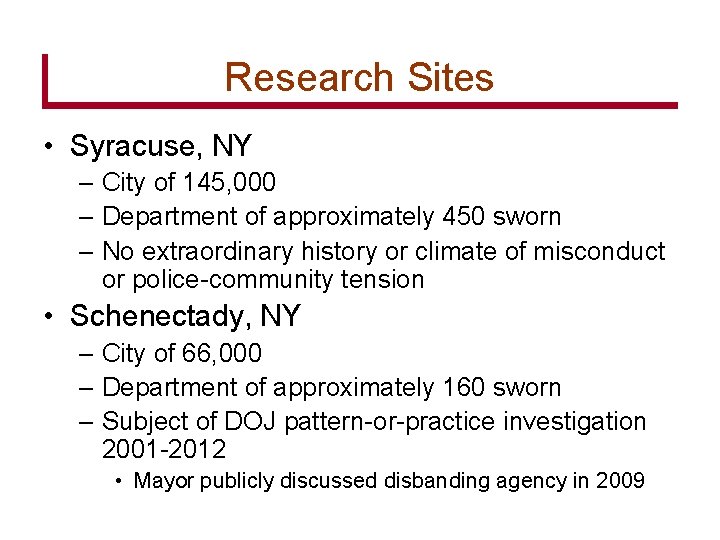
Research Sites • Syracuse, NY – City of 145, 000 – Department of approximately 450 sworn – No extraordinary history or climate of misconduct or police-community tension • Schenectady, NY – City of 66, 000 – Department of approximately 160 sworn – Subject of DOJ pattern-or-practice investigation 2001 -2012 • Mayor publicly discussed disbanding agency in 2009
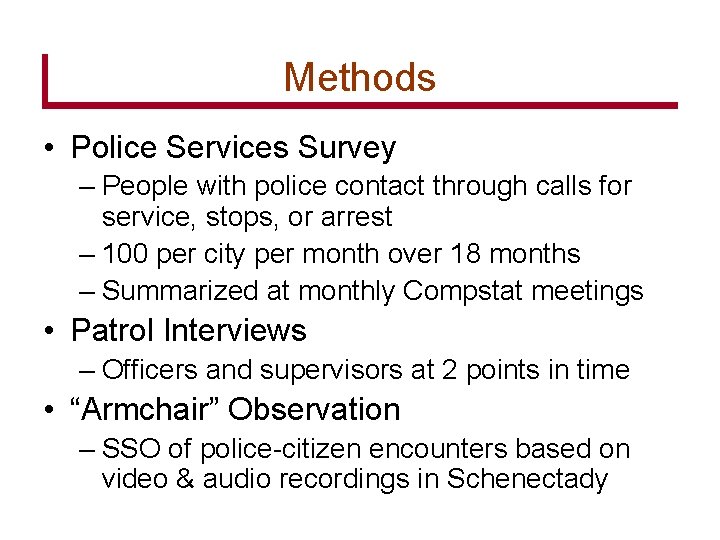
Methods • Police Services Survey – People with police contact through calls for service, stops, or arrest – 100 per city per month over 18 months – Summarized at monthly Compstat meetings • Patrol Interviews – Officers and supervisors at 2 points in time • “Armchair” Observation – SSO of police-citizen encounters based on video & audio recordings in Schenectady
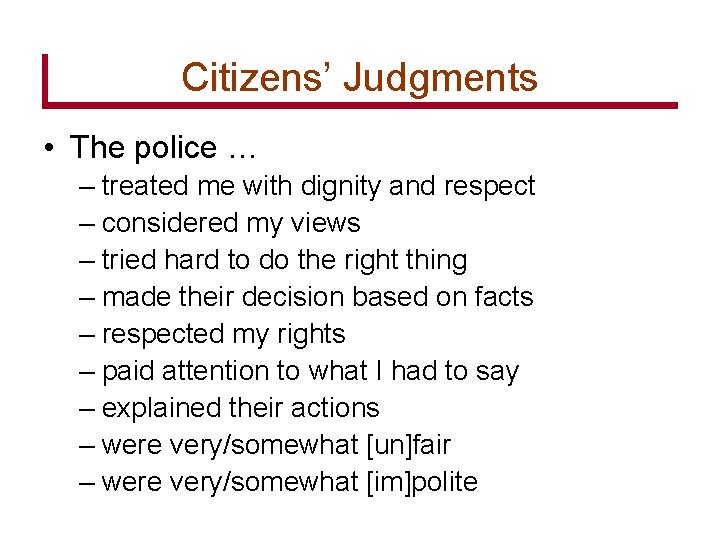
Citizens’ Judgments • The police … – treated me with dignity and respect – considered my views – tried hard to do the right thing – made their decision based on facts – respected my rights – paid attention to what I had to say – explained their actions – were very/somewhat [un]fair – were very/somewhat [im]polite
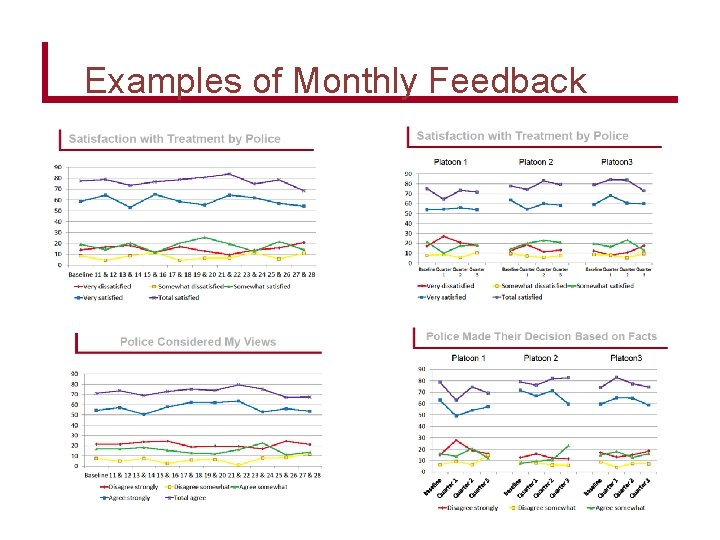
Examples of Monthly Feedback
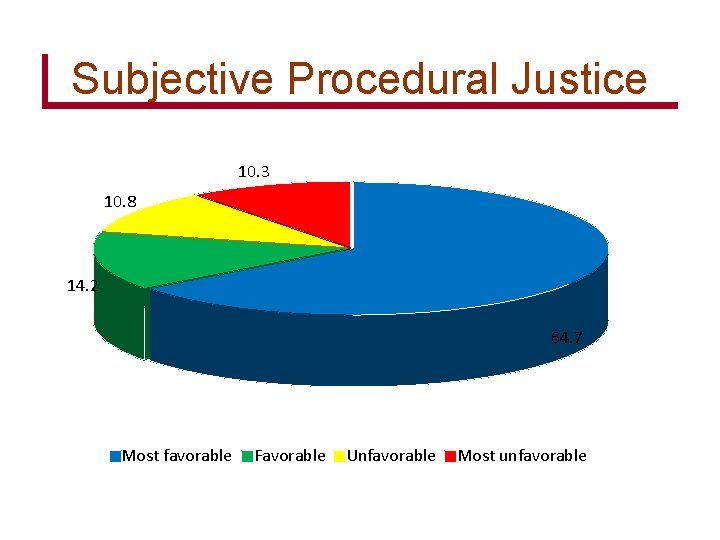
Subjective Procedural Justice 10. 3 10. 8 14. 2 64. 7 Most favorable Favorable Unfavorable Most unfavorable
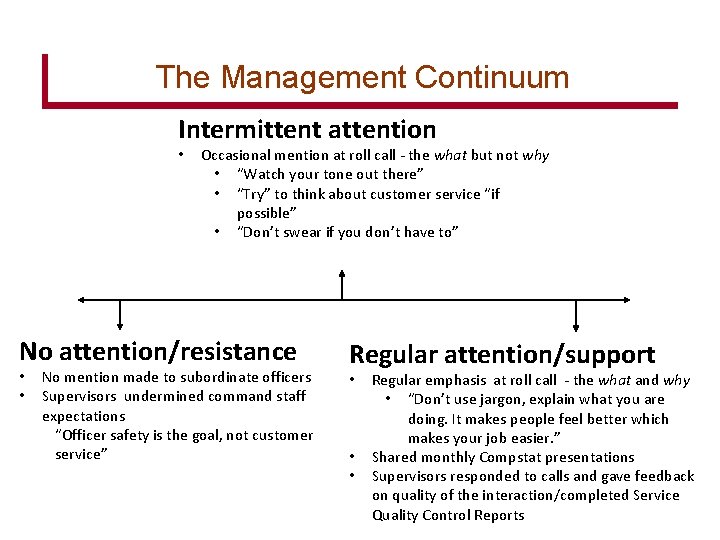
The Management Continuum Intermittent attention • Occasional mention at roll call - the what but not why • “Watch your tone out there” • “Try” to think about customer service “if possible” • “Don’t swear if you don’t have to” No attention/resistance • • No mention made to subordinate officers Supervisors undermined command staff expectations “Officer safety is the goal, not customer service” Regular attention/support • • • Regular emphasis at roll call - the what and why • “Don’t use jargon, explain what you are doing. It makes people feel better which makes your job easier. ” Shared monthly Compstat presentations Supervisors responded to calls and gave feedback on quality of the interaction/completed Service Quality Control Reports
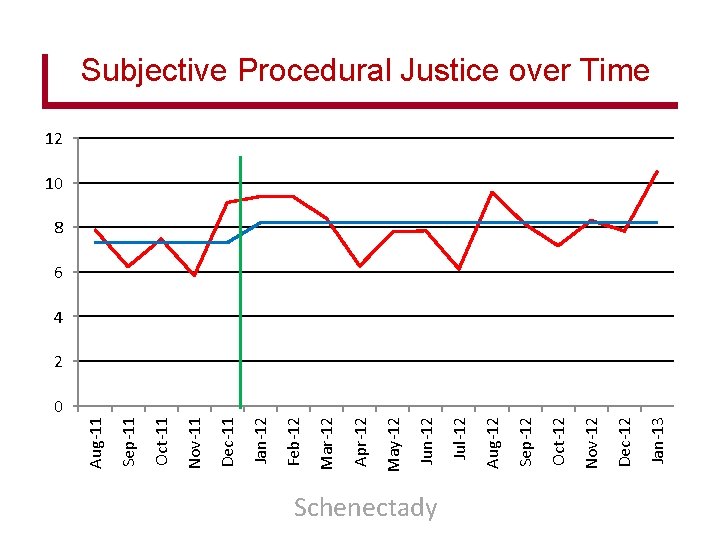
Schenectady Jan-13 Dec-12 Nov-12 Oct-12 Sep-12 Aug-12 Jul-12 Jun-12 May-12 Apr-12 Mar-12 Feb-12 Jan-12 Dec-11 Nov-11 Oct-11 Sep-11 Aug-11 Subjective Procedural Justice over Time 12 10 8 6 4 2 0
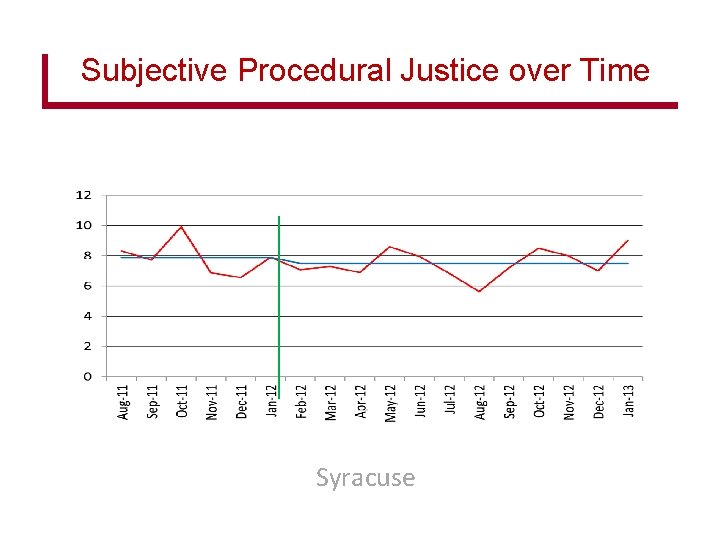
Subjective Procedural Justice over Time Syracuse
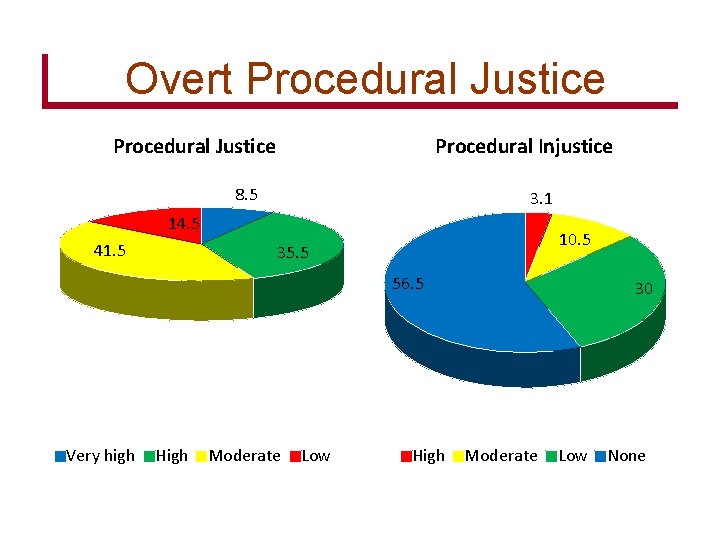
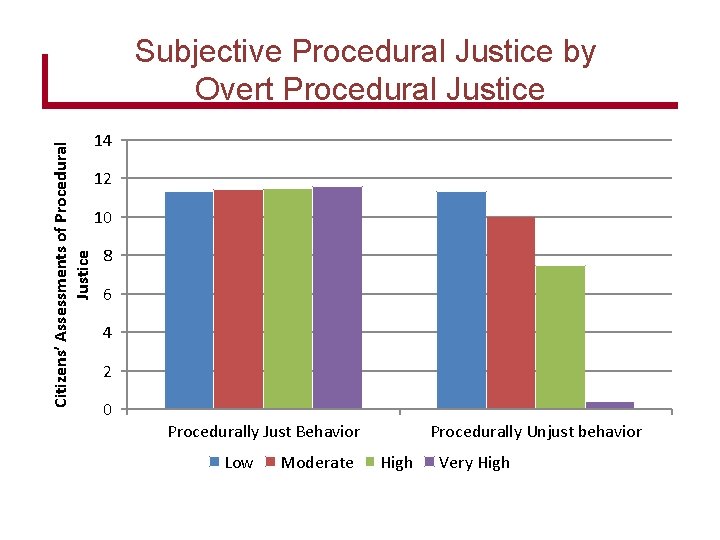
Overt Procedural Justice Procedural Injustice 8. 5 3. 1 14. 5 41. 5 10. 5 35. 5 56. 5 Very high High Moderate Low High 30 Moderate Low None
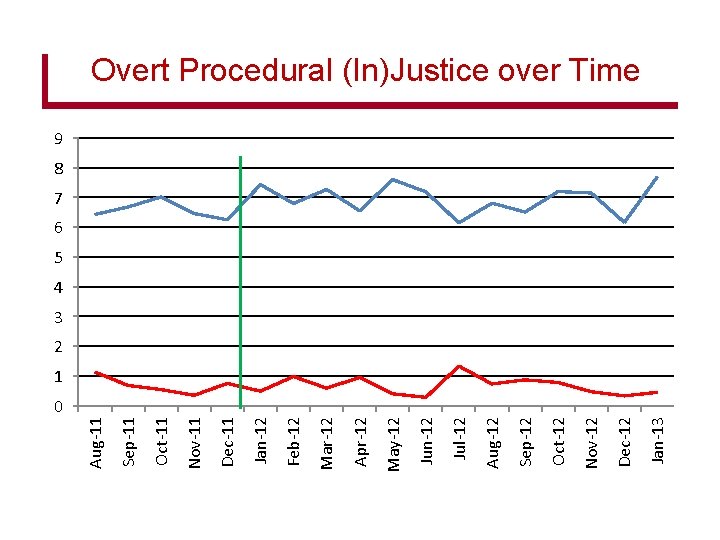
Jan-13 Dec-12 Nov-12 Oct-12 Sep-12 Aug-12 Jul-12 Jun-12 May-12 Apr-12 Mar-12 Feb-12 Jan-12 Dec-11 Nov-11 Oct-11 Sep-11 Aug-11 Overt Procedural (In)Justice over Time 9 8 7 6 5 4 3 2 1 0
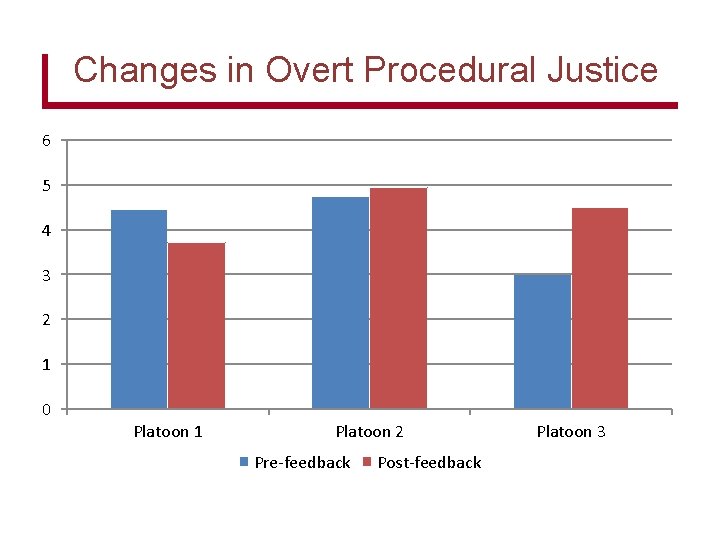
Changes in Overt Procedural Justice 6 5 4 3 2 1 0 Platoon 1 Platoon 2 Pre-feedback Post-feedback Platoon 3
Conclusions • In organizations like police departments, what gets measured may not get managed – Structures – such as Compstat – may be loosely coupled with practice – Process-based policing is subject to interpretation by officers & supervisors • Needle of public trust is difficult to move – Baseline levels of subjective and overt procedural justice are high – Citizens’ judgments are not strongly affected by officers’ behavior
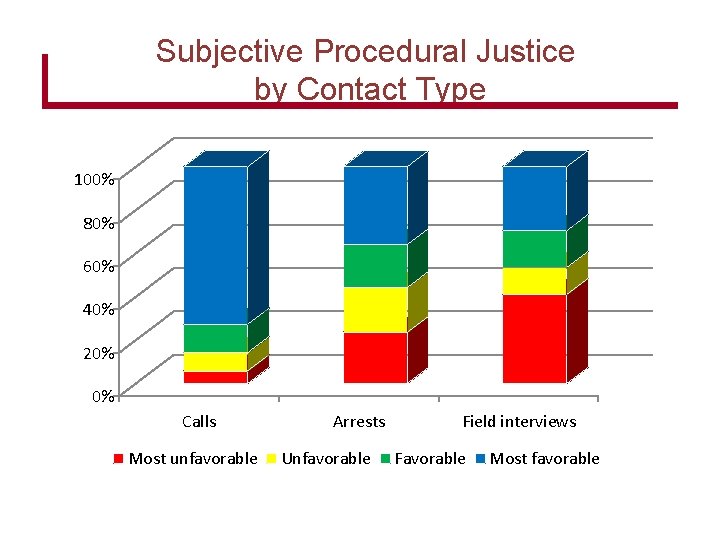
Subjective Procedural Justice by Contact Type 100% 80% 60% 40% 20% 0% Calls Most unfavorable Arrests Unfavorable Field interviews Favorable Most favorable
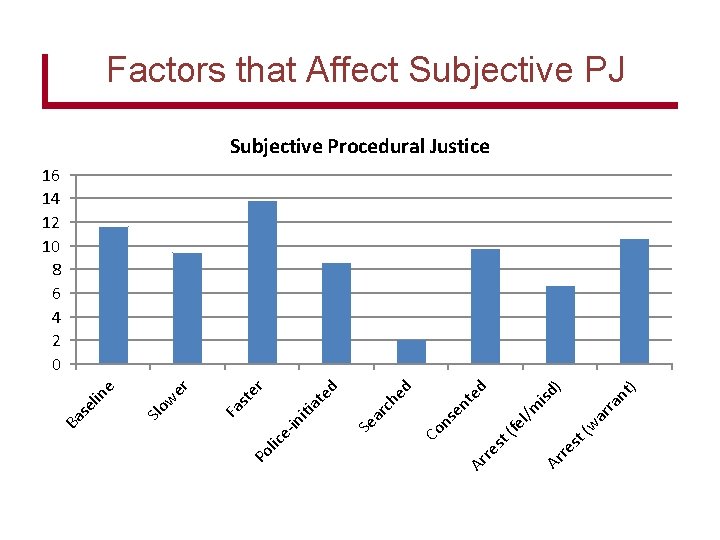
st Ar re (w ) ) nt ar ra l/m isd (fe ed se nt Co n d he ar c r ed at iti in Se lic e- Po st e Fa e er w Slo lin Ba se Factors that Affect Subjective PJ Subjective Procedural Justice 16 14 12 10 8 6 4 2 0
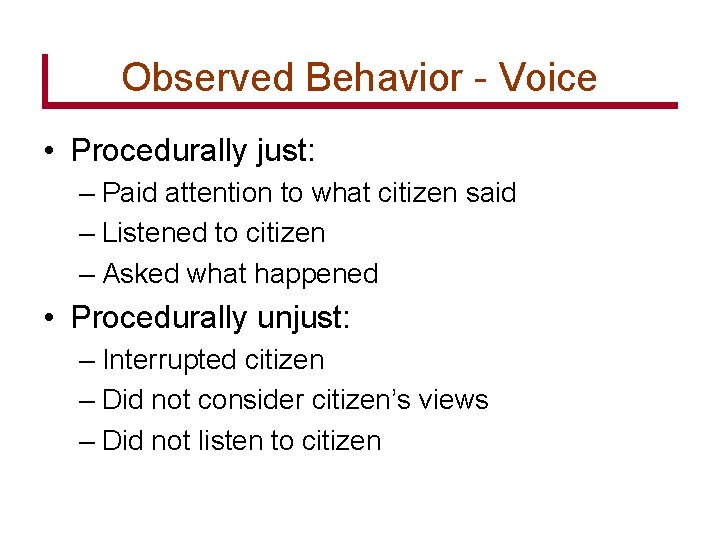
Observed Behavior - Voice • Procedurally just: – Paid attention to what citizen said – Listened to citizen – Asked what happened • Procedurally unjust: – Interrupted citizen – Did not consider citizen’s views – Did not listen to citizen
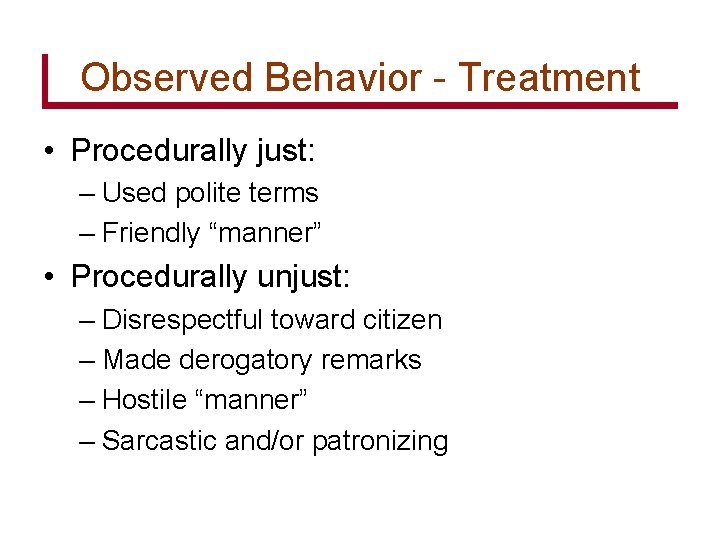
Observed Behavior - Treatment • Procedurally just: – Used polite terms – Friendly “manner” • Procedurally unjust: – Disrespectful toward citizen – Made derogatory remarks – Hostile “manner” – Sarcastic and/or patronizing
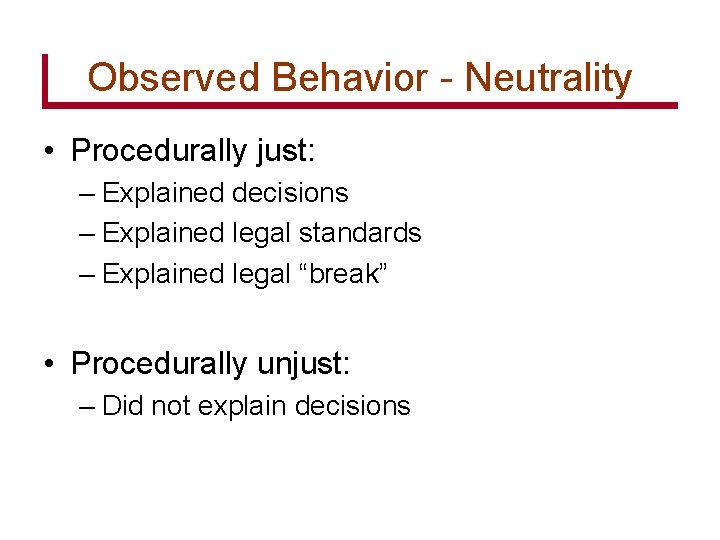
Observed Behavior - Neutrality • Procedurally just: – Explained decisions – Explained legal standards – Explained legal “break” • Procedurally unjust: – Did not explain decisions
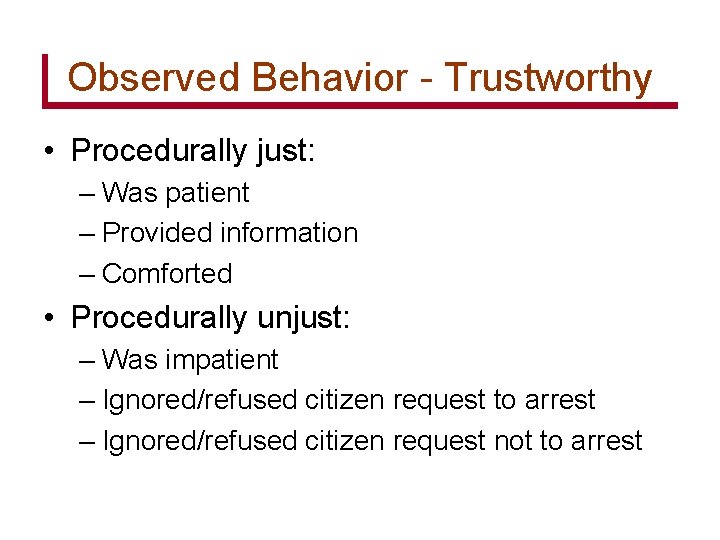
Observed Behavior - Trustworthy • Procedurally just: – Was patient – Provided information – Comforted • Procedurally unjust: – Was impatient – Ignored/refused citizen request to arrest – Ignored/refused citizen request not to arrest
Citizens’ Assessments of Procedural Justice Subjective Procedural Justice by Overt Procedural Justice 14 12 10 8 6 4 2 0 Procedurally Just Behavior Low Moderate Procedurally Unjust behavior High Very High
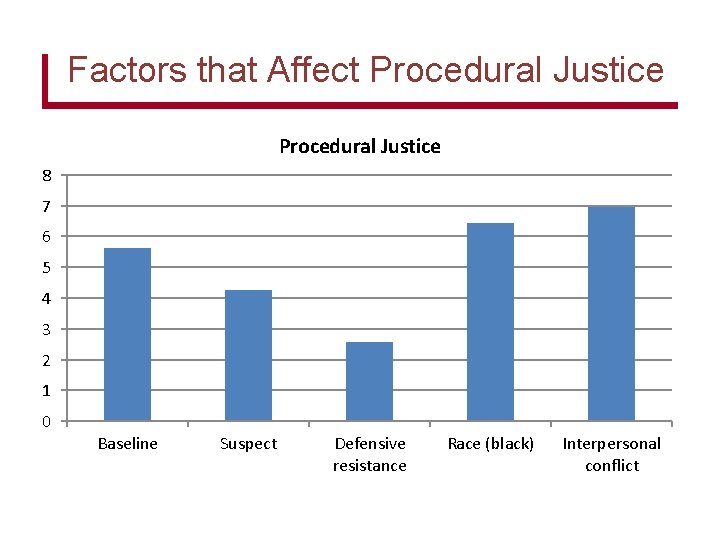
Factors that Affect Procedural Justice 8 7 6 5 4 3 2 1 0 Baseline Suspect Defensive resistance Race (black) Interpersonal conflict
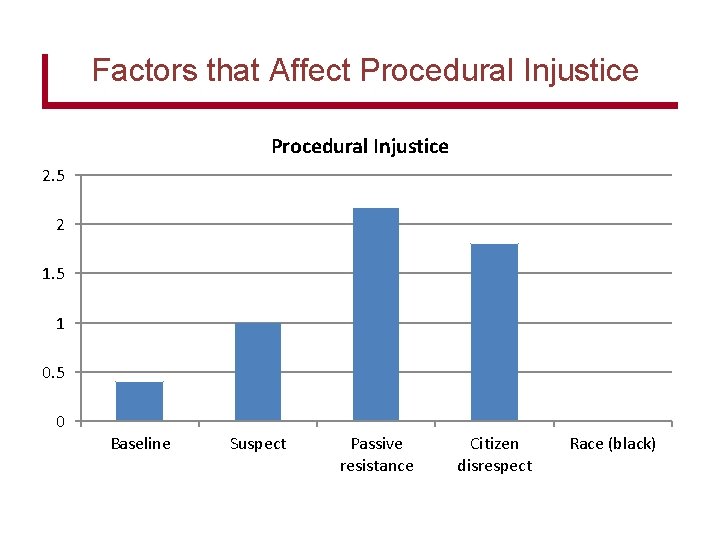
Factors that Affect Procedural Injustice 2. 5 2 1. 5 1 0. 5 0 Baseline Suspect Passive resistance Citizen disrespect Race (black)
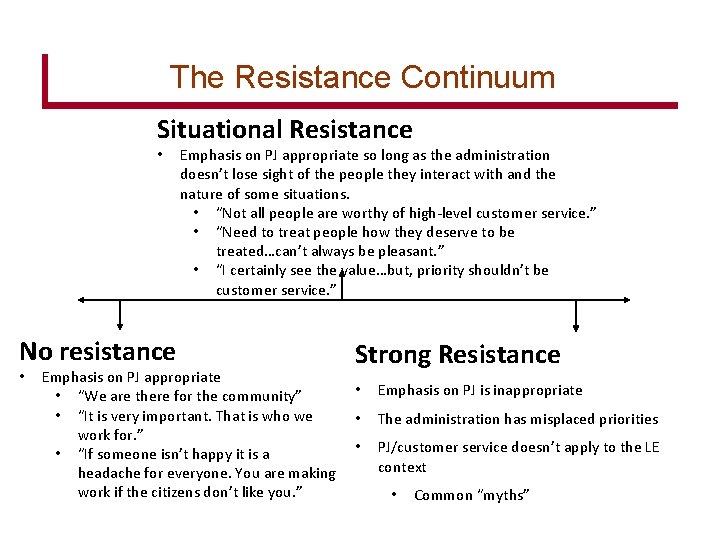
The Resistance Continuum Situational Resistance • No resistance • Emphasis on PJ appropriate so long as the administration doesn’t lose sight of the people they interact with and the nature of some situations. • “Not all people are worthy of high-level customer service. ” • “Need to treat people how they deserve to be treated…can’t always be pleasant. ” • “I certainly see the value…but, priority shouldn’t be customer service. ” Emphasis on PJ appropriate • “We are there for the community” • “It is very important. That is who we work for. ” • “If someone isn’t happy it is a headache for everyone. You are making work if the citizens don’t like you. ” Strong Resistance • Emphasis on PJ is inappropriate • The administration has misplaced priorities • PJ/customer service doesn’t apply to the LE context • Common “myths”
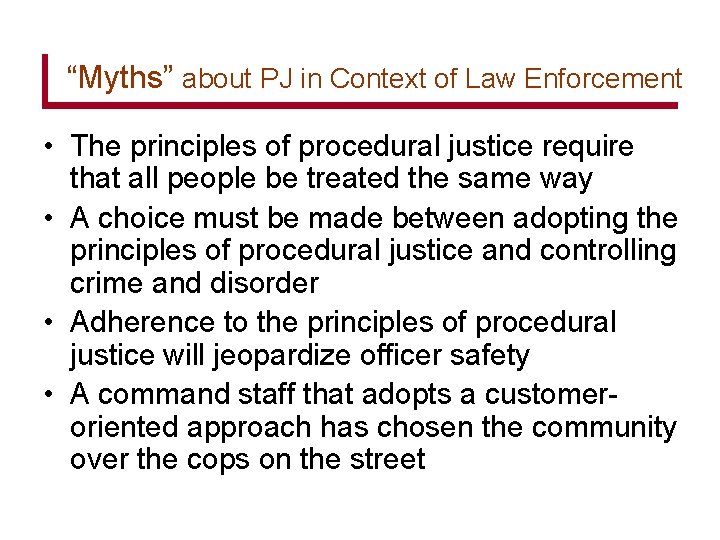
“Myths” about PJ in Context of Law Enforcement • The principles of procedural justice require that all people be treated the same way • A choice must be made between adopting the principles of procedural justice and controlling crime and disorder • Adherence to the principles of procedural justice will jeopardize officer safety • A command staff that adopts a customeroriented approach has chosen the community over the cops on the street