
Measuring Intensity of Exercise Lactate Sampling Accumulation of

- Slides: 6
Measuring Intensity of Exercise
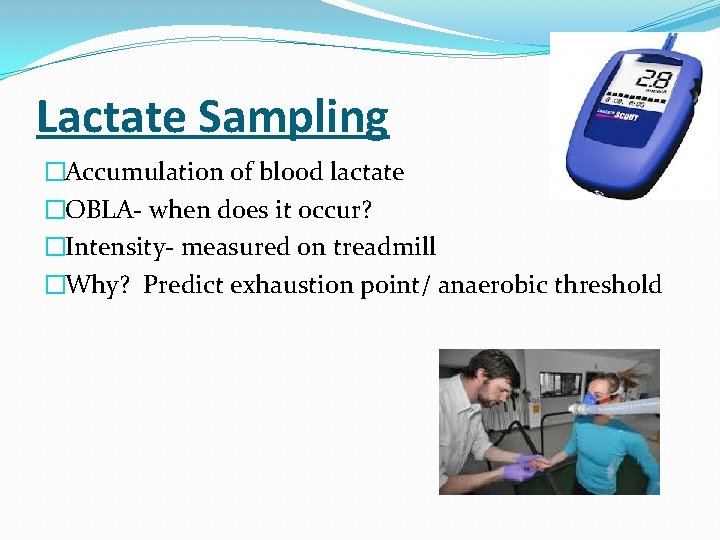
Lactate Sampling �Accumulation of blood lactate �OBLA- when does it occur? �Intensity- measured on treadmill �Why? Predict exhaustion point/ anaerobic threshold
Explain the term Lactate Sampling �Taking blood samples (to measure the level of �lactic acid) �Ensures training is at the correct intensity/monitor improvements over time �Provides accurate/objective measure �Measures OBLA/lactate threshold/occurs at 4 mmols
Respiratory Exchange Ratio Amount of O 2 consumed (VO 2) ___________________________________ Amount of CO 2 produced (VCO 2) Quantity of O 2 consumed against quantity of exhaled CO 2 Higher intensity ex- consume more O 2, produce more CO 2.
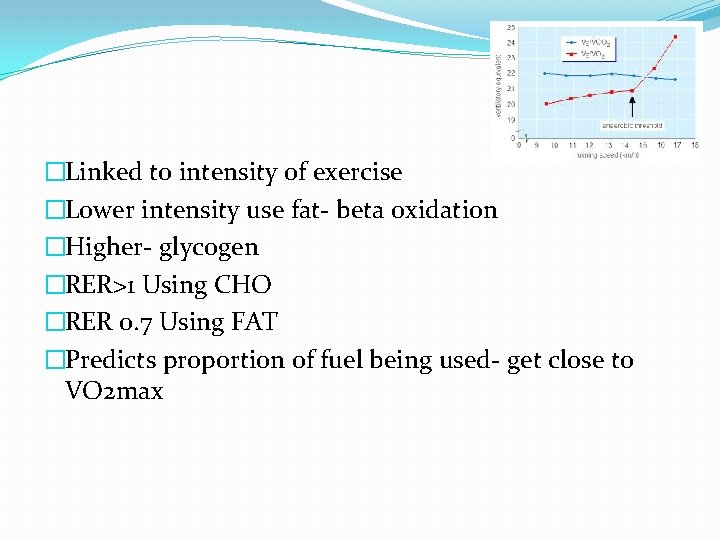
�Linked to intensity of exercise �Lower intensity use fat- beta oxidation �Higher- glycogen �RER>1 Using CHO �RER 0. 7 Using FAT �Predicts proportion of fuel being used- get close to VO 2 max
Explain the term RER �(Respiratory Exchange Ratio) – ratio of carbon dioxide released compared to oxygen used by the body �Estimates use of fats and carbohydrates used during exercise/calculates energy expenditure �Tells if performer working aerobically/anaerobically/energy system used �RER close to 1 performer using carbohydrates/close to 0. 7 using fats/respiratory quotient