
Measuring Gene Expression Part 2 David Wishart Bioinformatics
Measuring Gene Expression Part 2 David Wishart Bioinformatics 301 david. wishart@ualberta. ca
Objectives • Review of detailed principles of microarrays (methods, data collection) • Understand differences between spotted arrays versus Affy gene chips (advantages/disadvantages) • Steps to doing microarrays and possible sources of error

Measuring Gene Expression* • Differential Display • Serial Analysis of Gene Expression (SAGE) • RNA-Seq • RT-PCR (real-time PCR) • Northern/Southern Blotting • DNA Microarrays or Gene Chips
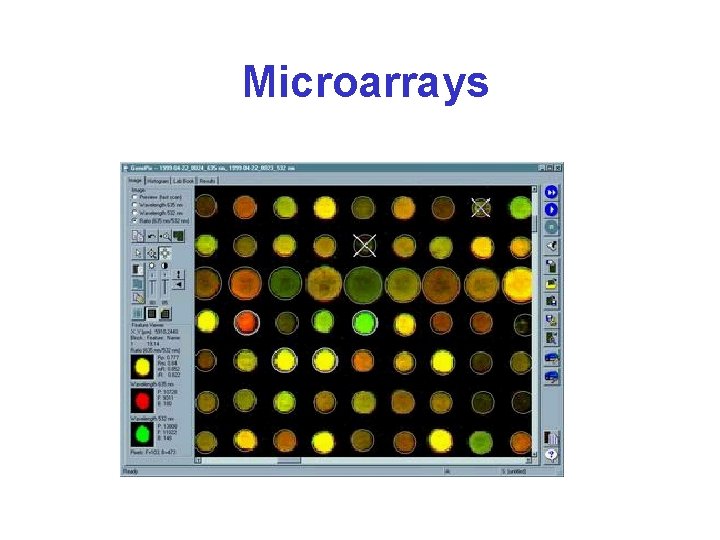
Microarrays
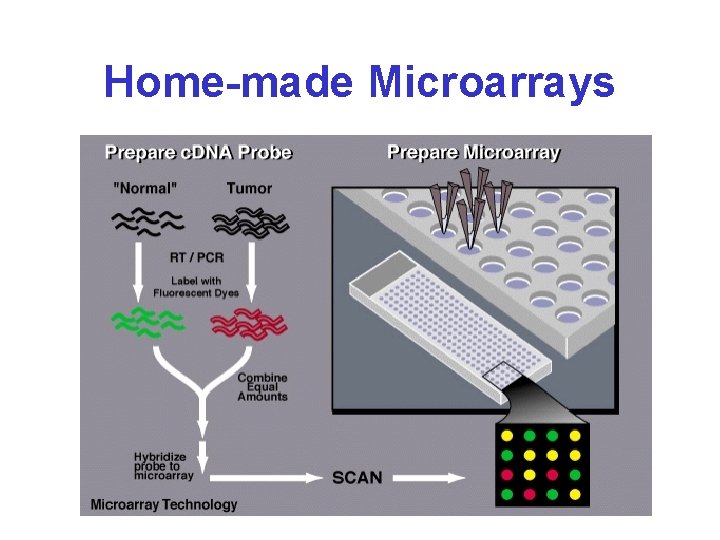
DNA Microarrays* • Principle is to analyze gene (m. RNA) or protein expression through large scale non-radioactive Northern (RNA) or Southern (DNA) hybridization analysis • Essentially high throughput Northern Blotting method that uses Cy 3 and Cy 5 fluorescence for detection • Allows expressional analysis of up to 20, 000 genes simultaneously
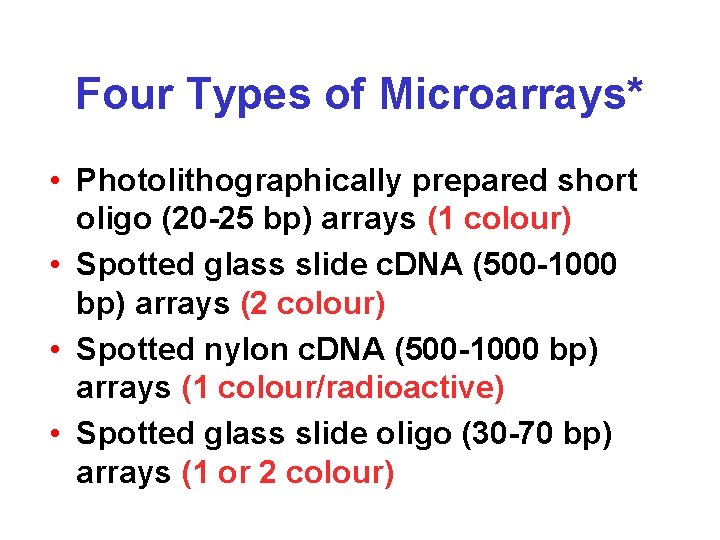
Four Types of Microarrays* • Photolithographically prepared short oligo (20 -25 bp) arrays (1 colour) • Spotted glass slide c. DNA (500 -1000 bp) arrays (2 colour) • Spotted nylon c. DNA (500 -1000 bp) arrays (1 colour/radioactive) • Spotted glass slide oligo (30 -70 bp) arrays (1 or 2 colour)
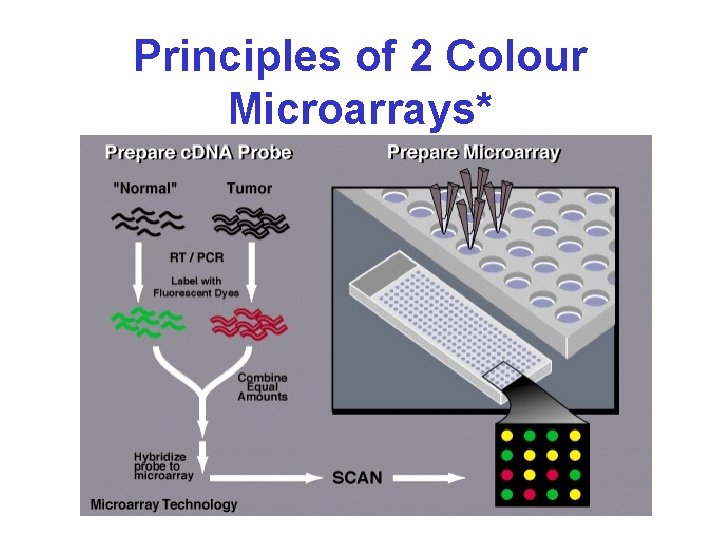
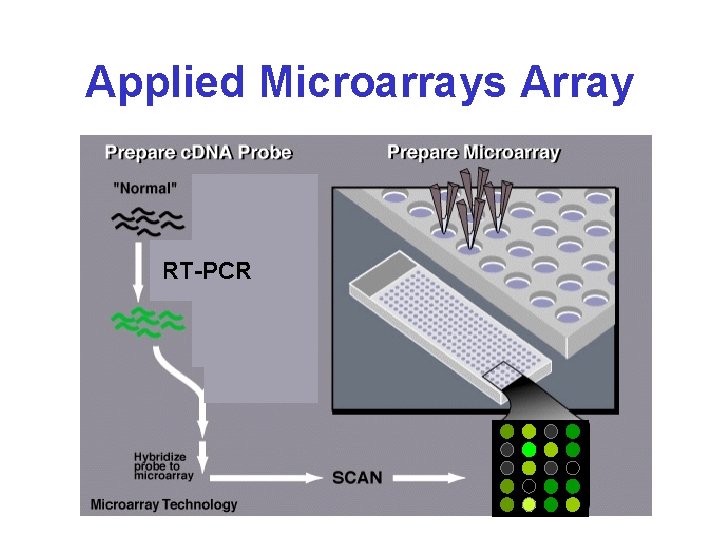
Principles of 2 Colour Microarrays*
Microarray Definition of Probe and Target • There are two acceptable and completely opposite definitions. We will use: • Target = the DNA that is spotted on the array • Probe = the DNA that is labeled with the fluorescent probe
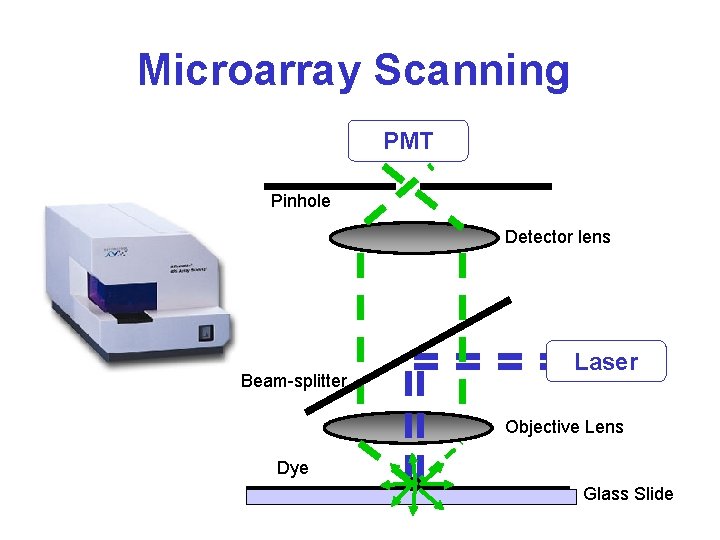
Microarray Scanning PMT Pinhole Detector lens Beam-splitter Laser Objective Lens Dye Glass Slide
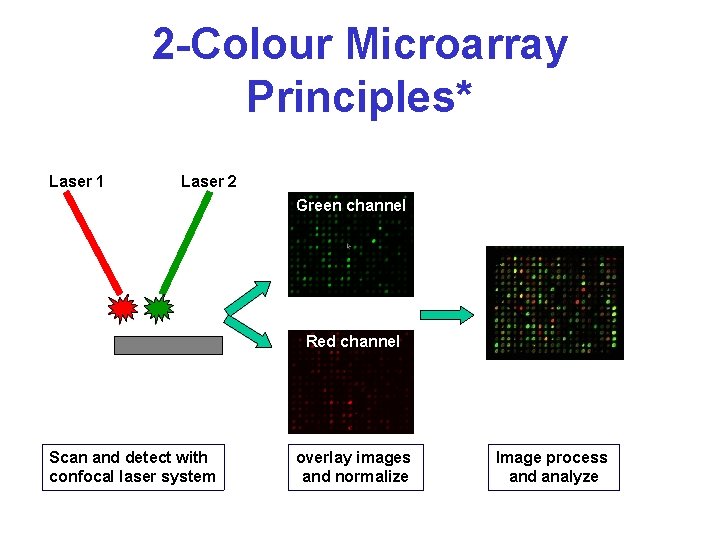
2 -Colour Microarray Principles* Laser 1 Laser 2 Green channel Red channel Scan and detect with confocal laser system overlay images and normalize Image process and analyze
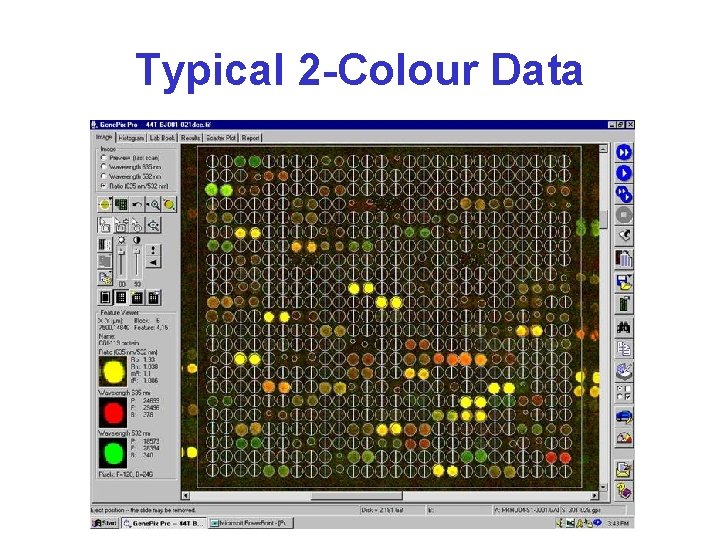
Typical 2 -Colour Data
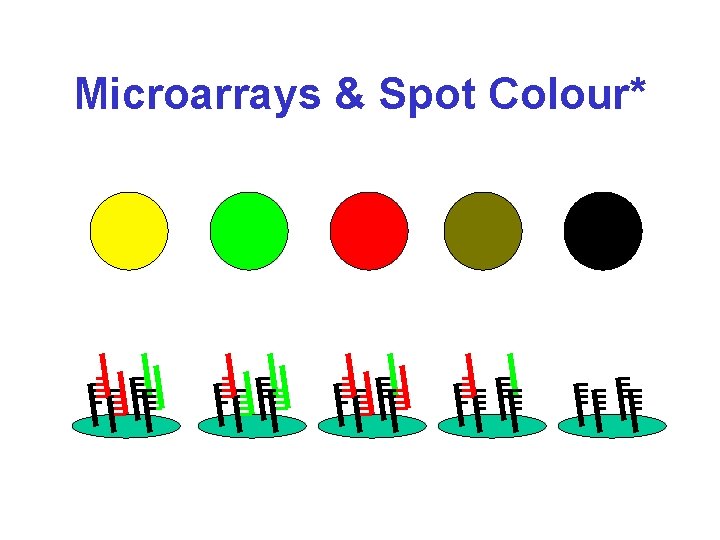
Microarrays & Spot Colour*
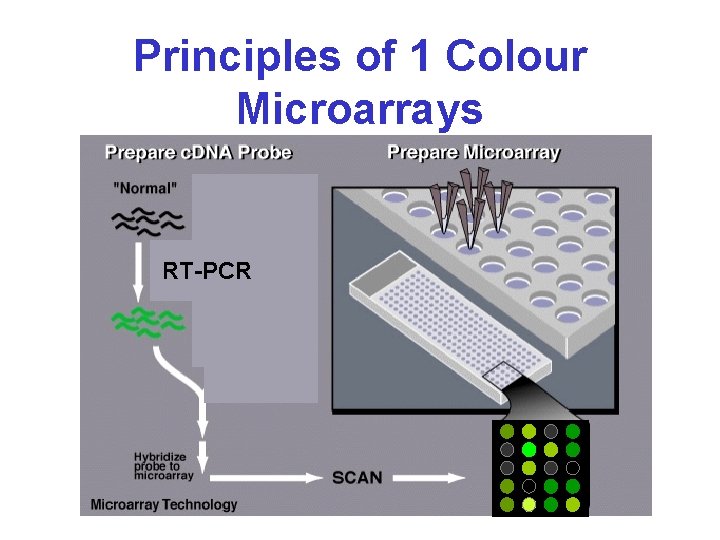
Principles of 1 Colour Microarrays RT-PCR
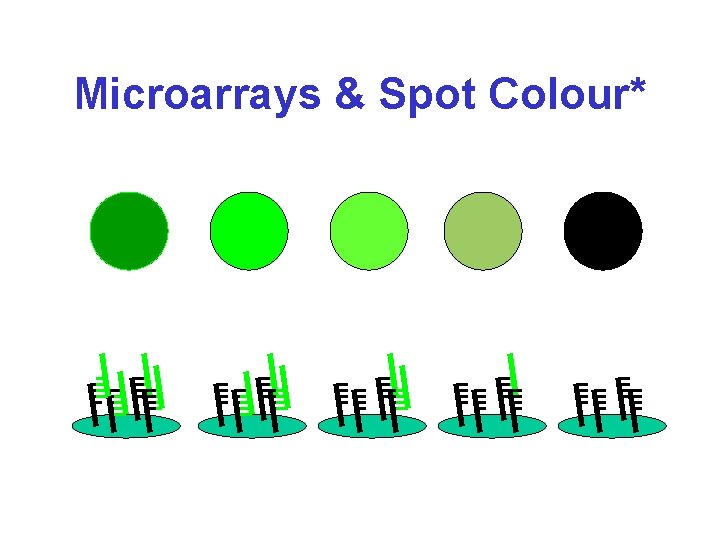
Microarrays & Spot Colour*
Two Colour vs. One Colour • Two-colour hybridization eliminates artifacts due to variation in: – quantity of DNA spotted – stringency of hybridization – local concentration of label • However, – both samples *must* label with equivalent efficiency – Information is lost for genes not expressed in the reference or control sample
Two Colour vs. One Colour • One-colour hybridization may have artifacts due to variation in: – quantity of DNA spotted – stringency of hybridization – local concentration of label • However good quality control (QC) means, – fewer artifacts – less manipulation, lower cost – reduced loss of information (due to reference sample transcript content)
Specific Arrays of Interest • Home-made Spotted Oligo Arrays – Made using glass slides, Operon oligos and robotic spotting equipment • Applied Microarrays Code. Link Arrays – Made using specially treated slides, QC’d oligos and robotic spotting equipment • Affymetrix Gene Chips – Made using photolithographically produced systems with multi-copy oligos
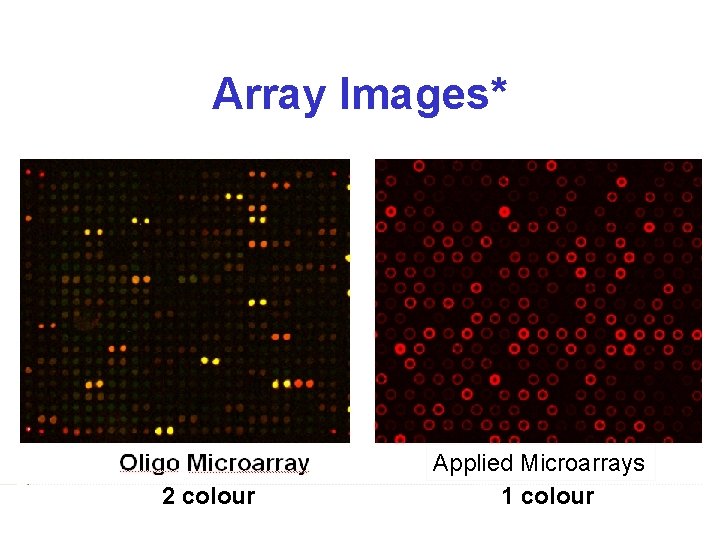
Array Images* 2 colour Applied Microarrays 1 colour
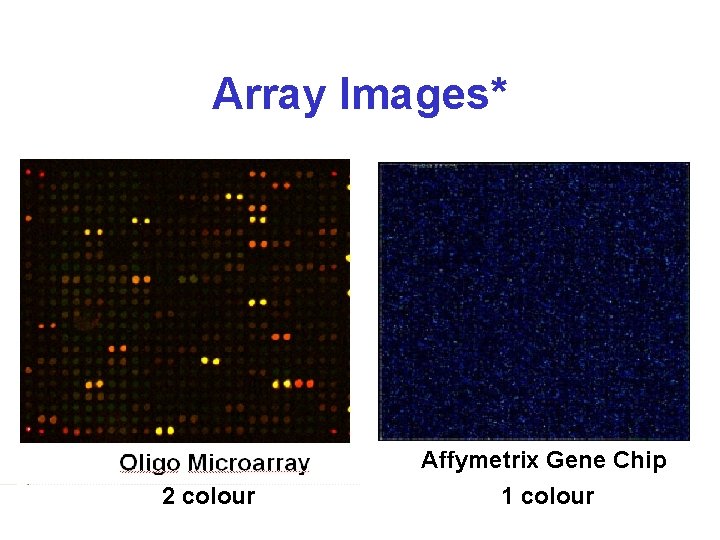
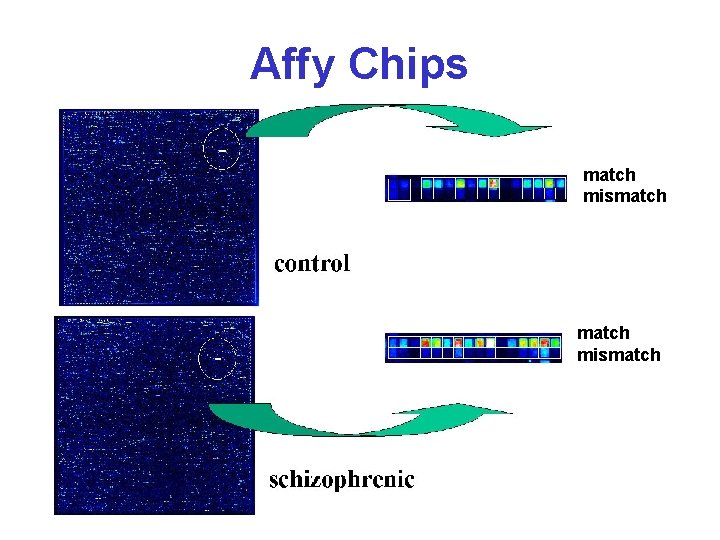
Array Images* 2 colour Affymetrix Gene Chip 1 colour
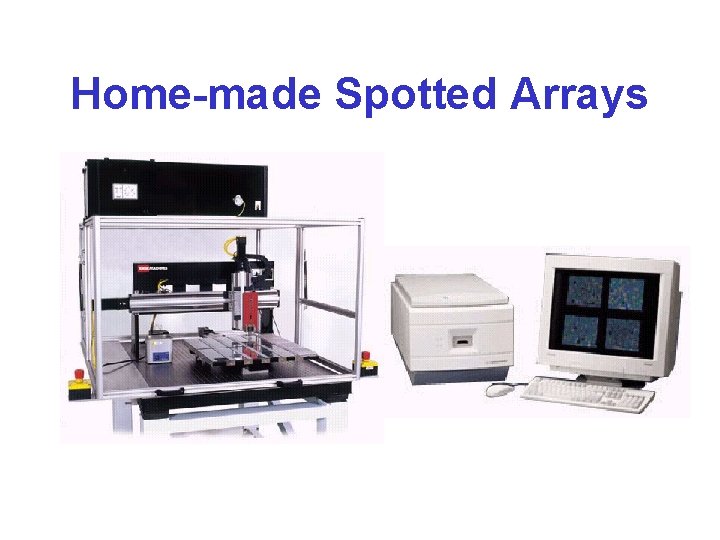
Home-made Spotted Arrays
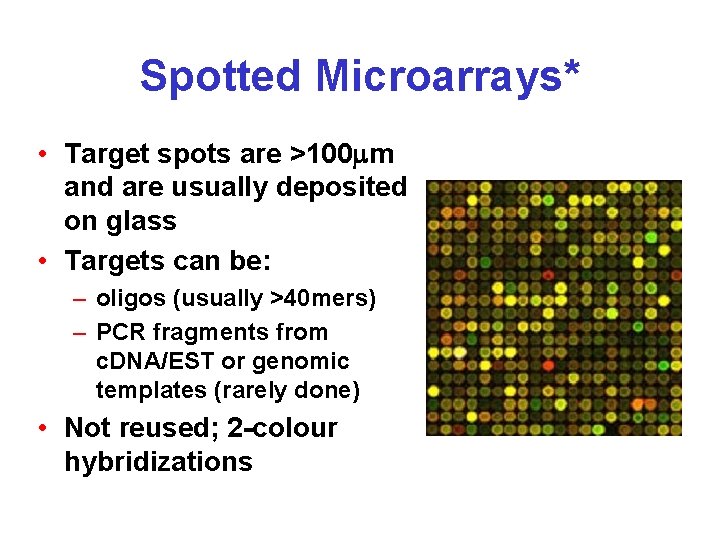
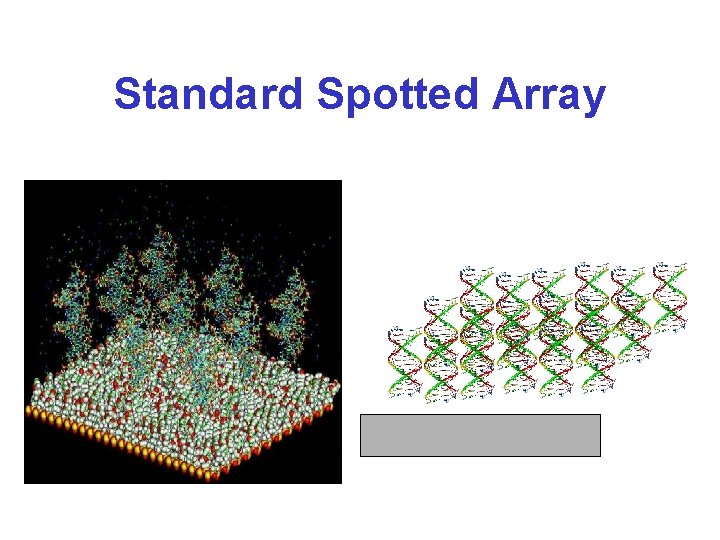
Spotted Microarrays* • Target spots are >100 m and are usually deposited on glass • Targets can be: – oligos (usually >40 mers) – PCR fragments from c. DNA/EST or genomic templates (rarely done) • Not reused; 2 -colour hybridizations
Standard Spotted Array
Home-made Microarrays
Common Home-made Microarray Errors* Irregular Spot Comet Tail Streaking Hi Background Low Intensity A Good Array
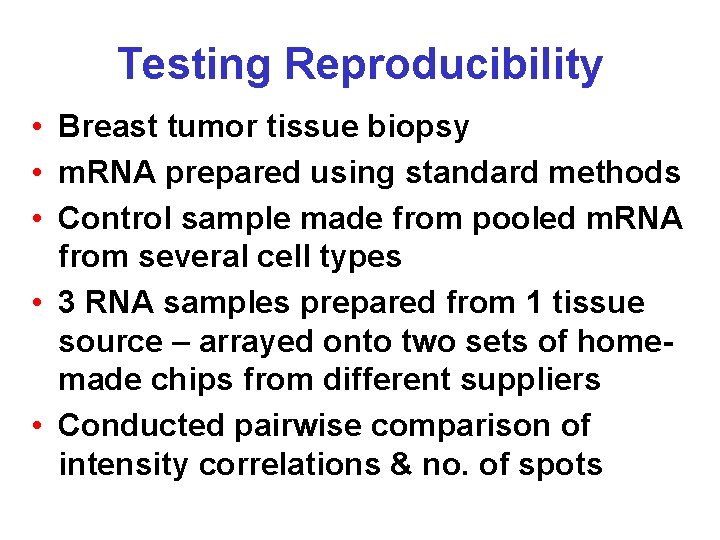
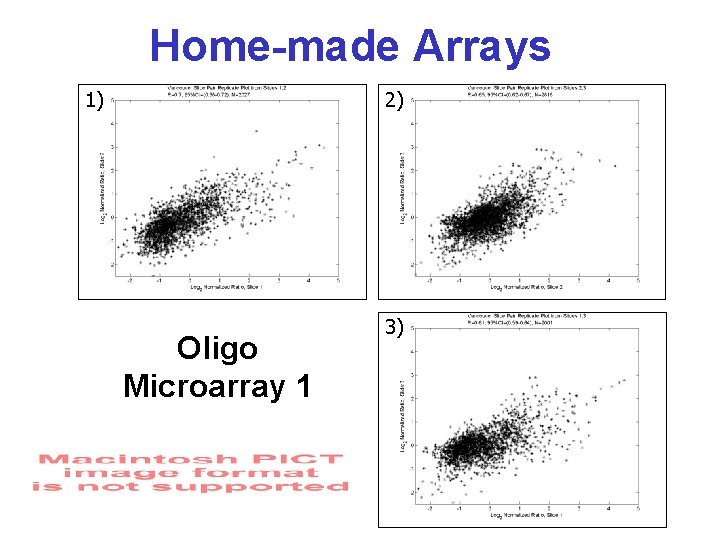
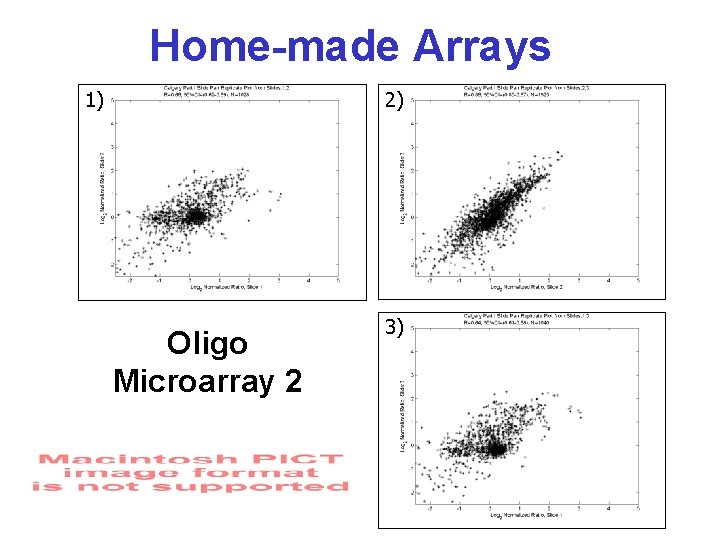
Testing Reproducibility • Breast tumor tissue biopsy • m. RNA prepared using standard methods • Control sample made from pooled m. RNA from several cell types • 3 RNA samples prepared from 1 tissue source – arrayed onto two sets of homemade chips from different suppliers • Conducted pairwise comparison of intensity correlations & no. of spots
Home-made Arrays 1) 2) Oligo Microarray 1 3)
Home-made Arrays 1) 2) Oligo Microarray 2 3)
Advantages to Home-made Systems* • Cheapest method to produce arrays ($100 to $300/slide) • Allows lab full control over design and printing of arrays (customizable) • Allows quick adaptation to new technologies, new target sets • Allows more control over analysis
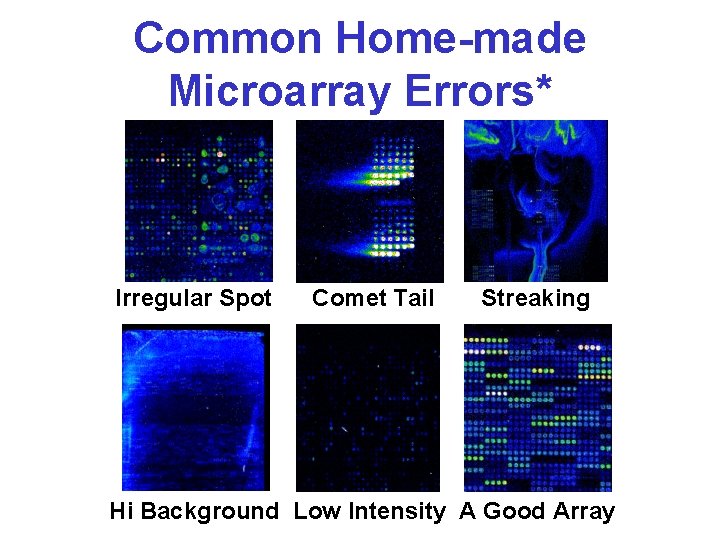
Disadvantages to Home-made Systems* • Quality and quality-control of oligo target set is highly variable • Quality of spotting and spot geometry is highly variable • Technology is very advanced, difficult and expensive to maintain (robotics) • Reproducibility is poor
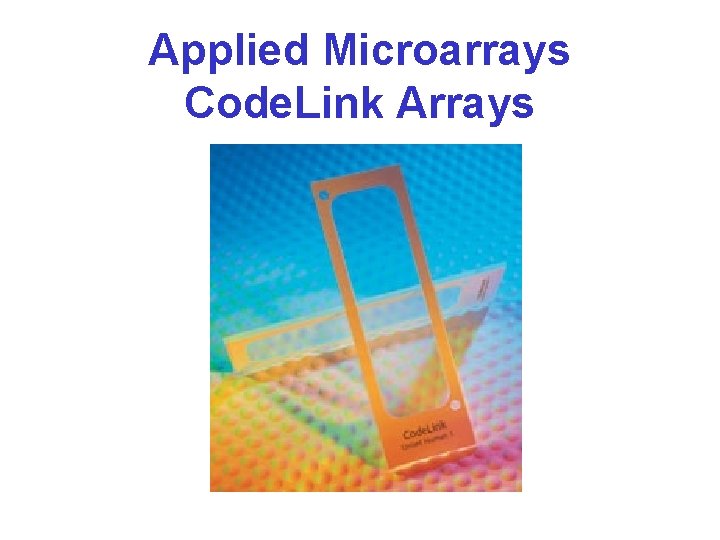
Applied Microarrays Code. Link Arrays
Applied Microarrays Code. Link Arrays • Applied Microarrays synthesizes its 30 -nucleotide oligos offline, tests them by mass spectrometry, deposits them on specially coated (polyacrylamide) array, and then assays them for quality control • Uses a special Flex Chamber™—a disposable hybridization chamber already attached to the slide to improve hybridization consistency
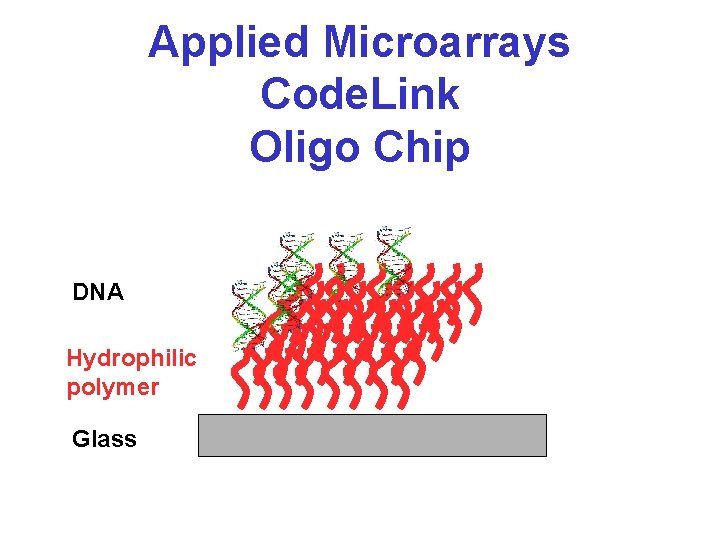
Applied Microarrays Code. Link Oligo Chip DNA Hydrophilic polymer Glass
Code. Link Special Coating • Most glass substrates are quite hydrophobic • This hydrophobicity affects the local binding and surface chemistry of most glass-slide chips making most of the attached DNA oligo inaccessible • Coating the slide with a hydrophilic polymer allows the c. DNA to pair up with the substrate oligos much better
Applied Microarrays Array RT-PCR
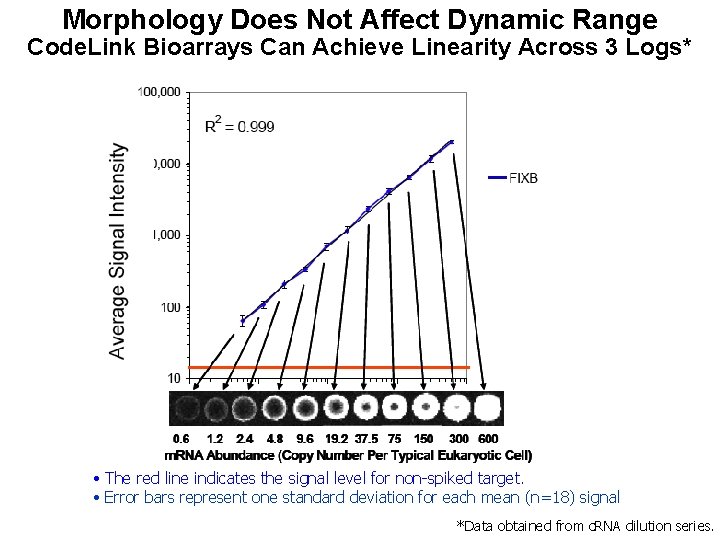
Morphology Does Not Affect Dynamic Range Code. Link Bioarrays Can Achieve Linearity Across 3 Logs* • The red line indicates the signal level for non-spiked target. • Error bars represent one standard deviation for each mean (n=18) signal *Data obtained from c. RNA dilution series.
Testing Reproducibility • Breast tumor tissue biopsy • m. RNA prepared using standard methods • 3 RNA samples prepared from 1 tissue source – arrayed onto 3 different sets of Code. Link chips • Conducted pairwise comparison of intensity correlations, intensity ratio correlations & number of “passed” spots
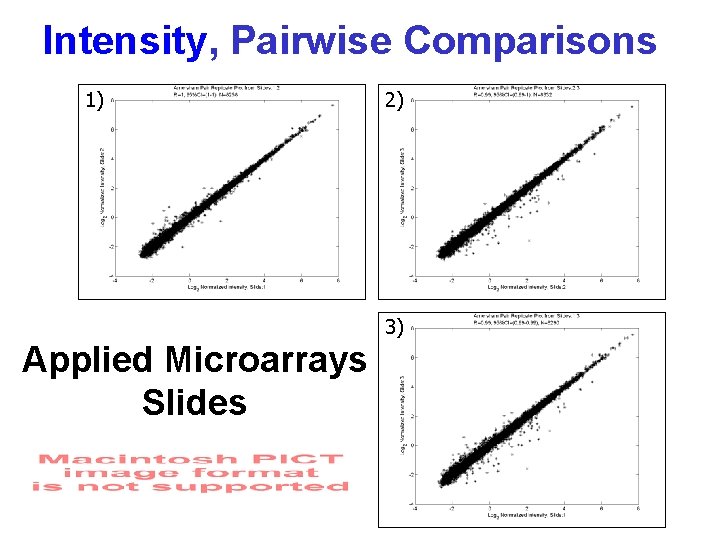
Intensity, Pairwise Comparisons 1) 2) 3) Applied Microarrays Slides
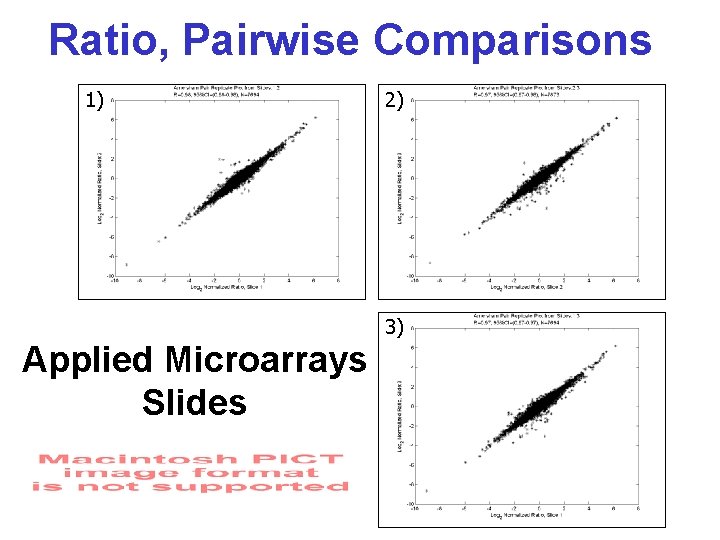
Ratio, Pairwise Comparisons 1) 2) 3) Applied Microarrays Slides
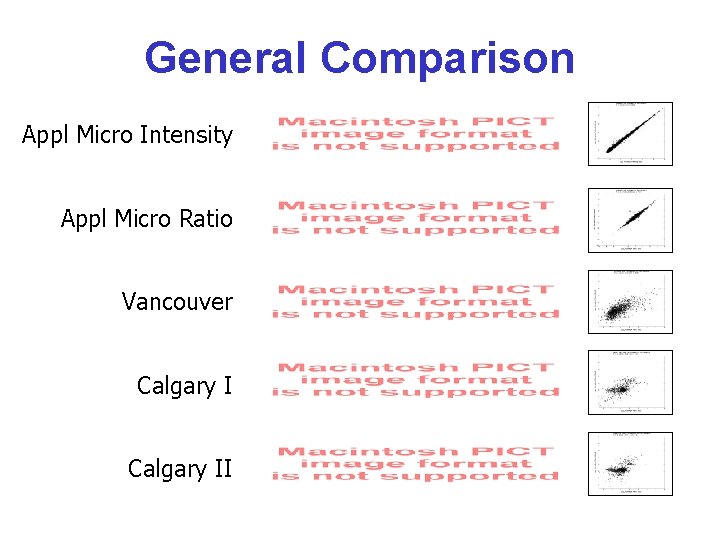
General Comparison Appl Micro Intensity Appl Micro Ratio Vancouver Calgary II
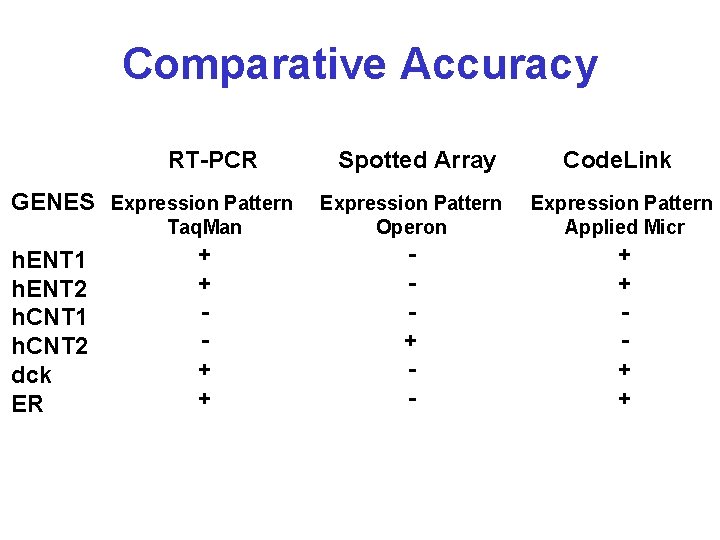
Comparative Accuracy RT-PCR GENES Expression Pattern h. ENT 1 h. ENT 2 h. CNT 1 h. CNT 2 dck ER Spotted Array Code. Link Taq. Man Expression Pattern Operon Expression Pattern Applied Micr + + + - + +
Code. Link Advantages* • Exceptional reproducibility because of: – careful target design – QC of oligo preparations and spotting – high proportion of oligo binding to c. DNA substrate due to hydrophilic coating – well controlled/uniform hybridization • Allows users to continue using same scanners/software as in spotted arrays
Code. Link Disadvantages* • Lack of flexibility or customizability (users depend on Applied Microarrays to provide & design chips) • Dependent on proprietary kits and reagents • More expensive than spotted arrays ($700/chip)
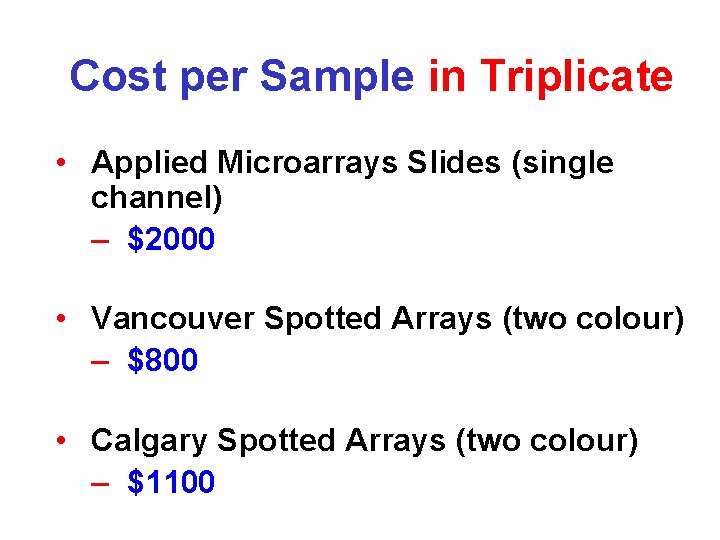
Cost per Sample in Triplicate • Applied Microarrays Slides (single channel) – $2000 • Vancouver Spotted Arrays (two colour) – $800 • Calgary Spotted Arrays (two colour) – $1100
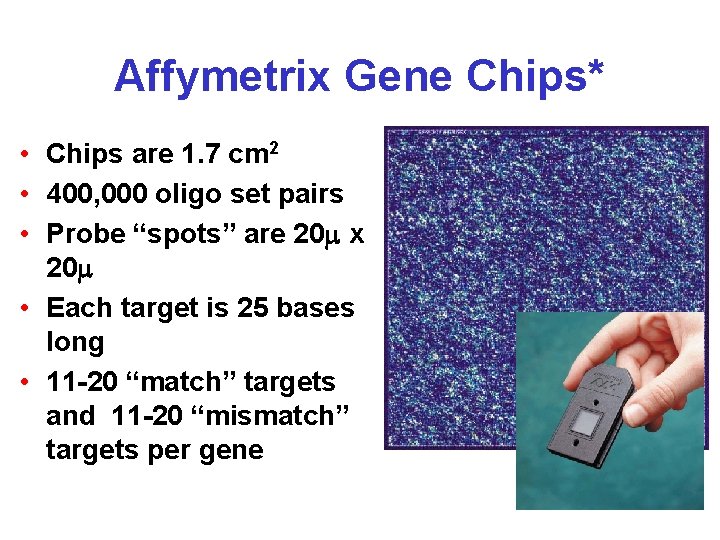
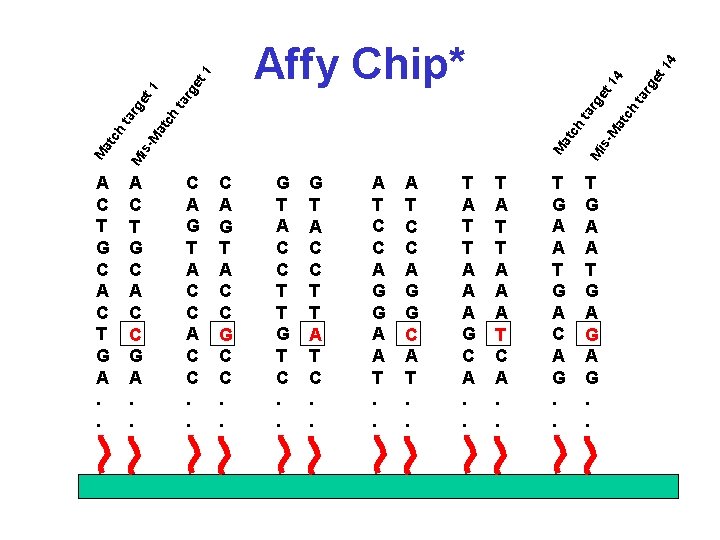
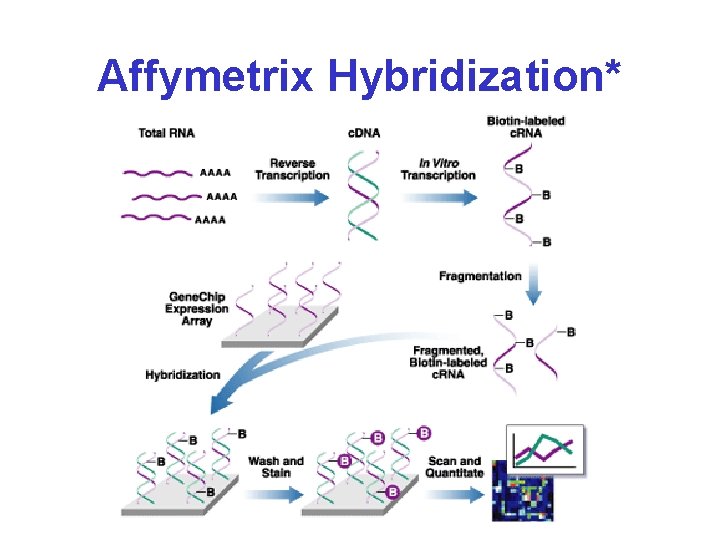
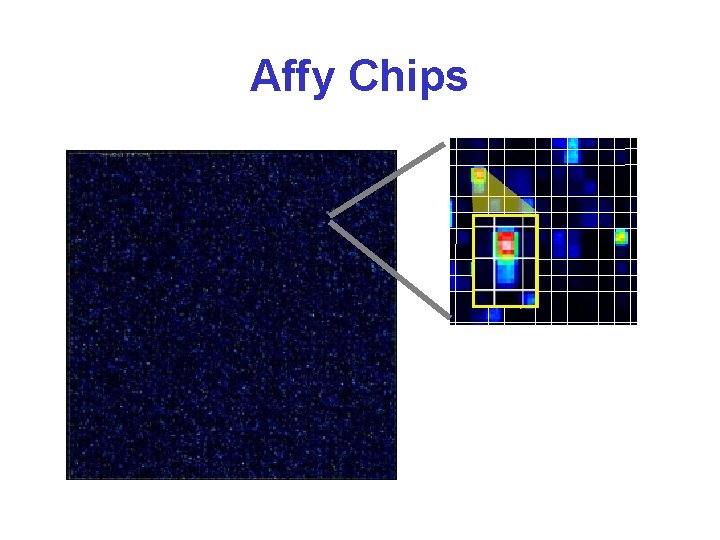
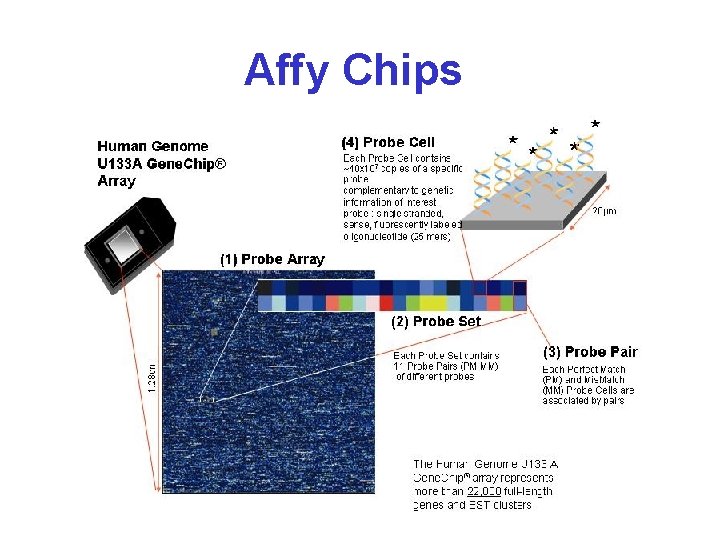
Affymetrix Gene Chips* • Chips are 1. 7 cm 2 • 400, 000 oligo set pairs • Probe “spots” are 20 x 20 • Each target is 25 bases long • 11 -20 “match” targets and 11 -20 “mismatch” targets per gene
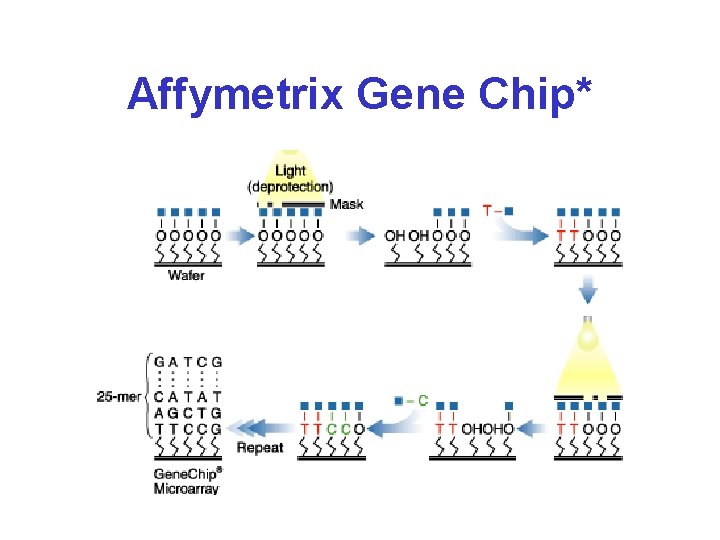
Affymetrix Gene Chip*
C A G T A C C. . C A G T A C C G C C. . G T A C C T T G T C. . G T A C C T T A T C. . A T C C A G G A A T. . A T C C A G G C A T. . T A T T A A A G C A. . t 1 4 T A T T A A A T C A. . is ta -M at ch rg ta ch at M A C T G C A C C G A. . rg e 14 et rg e ta at ch -M is M A C T G C A C T G A. . T G A A T G A C A G. . T G A A T G A G. . M M at ch ta rg et 1 Affy Chip*
Affy Chip* • 11 -20 targets for each gene/EST • Each target is 25 bases long • 1 has exact match, the other is mismatched in the middle base • Match (M) and mismatch (MM) pairs are placed next to each other • Expression levels calculated using intensity difference between M & MM for all target pairs
Affymetrix Hybridization*
Affy Chips
Affy Chips match mismatch
Affy Chips
Kuo et al. (2002) Bioinformatics Comparison of Affymetrix and Spotted c. DNA Arrays Spotted Array 161 620 matched pairs of measurements from 56 cell lines Affymetrix
Affymetrix Gene. Chip Advantages* • High precision because of: – careful target design – up to 20 targets per gene – up to 20 mismatch targets • Very precise measurements • Very high density (500, 000 elements/array)
Affymetrix Gene. Chips Disadvantages* • Inflexible: each array requires custom photolithographic masks • More expensive than spotted arrays ($600 -$800 per chip) • Proprietary technology – not all algorithms, information public – only one manufacturer of readers, etc.
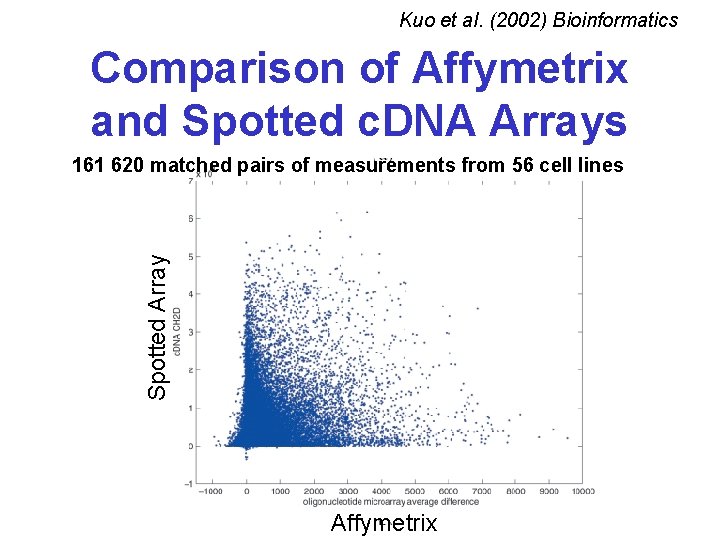
General Comments* • Spotted arrays are still wildly popular and widely used – a great learning tool for expression analysis • Problems have been resolved but spotted arrays are generally less reliable than commercial systems • Commercial systems (Code. Link and Affy) offer much greater reliability but are expensive & inflexible
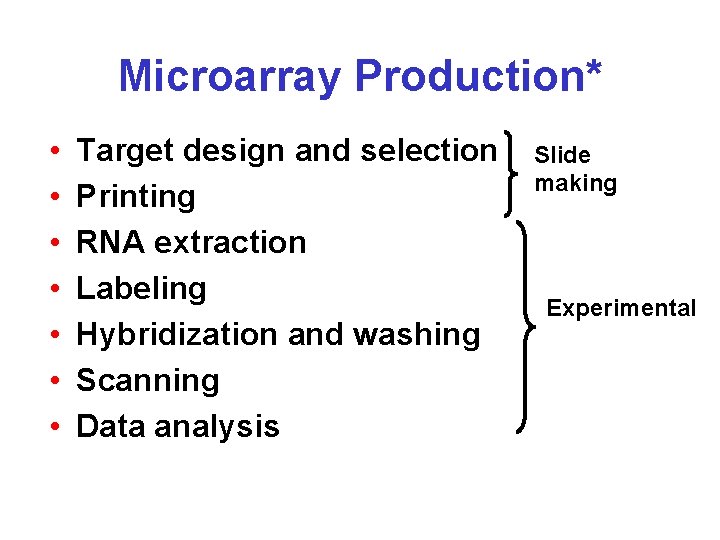
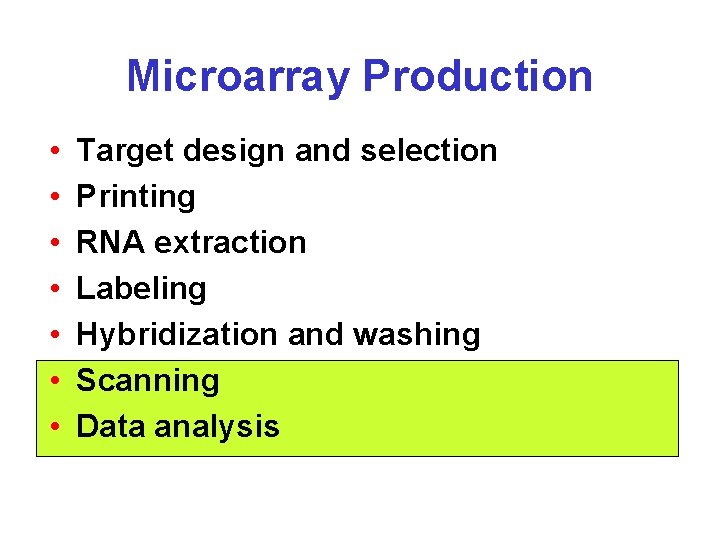
Microarray Production* • • Target design and selection Printing RNA extraction Labeling Hybridization and washing Scanning Data analysis Slide making Experimental
Target Design & Selection* • Synthetic oligos 25 -70 bases in length • Choose sequences complementary to m. RNA of interest • Random base distribution and average GC content for organism • Avoid long A+T or G+C rich regions • Minimize internal secondary structure (hairpins or other loops) • 1 M salt + 65 o. C thermostability
Target Design & Selection* • Design and select oligo sequences that are less than 75% identical to existing genes elsewhere in the genome (i. e. do a BLAST search) • Sequences with >75% sequence identity to other sequences will cross -hybridize – leading to confounding results
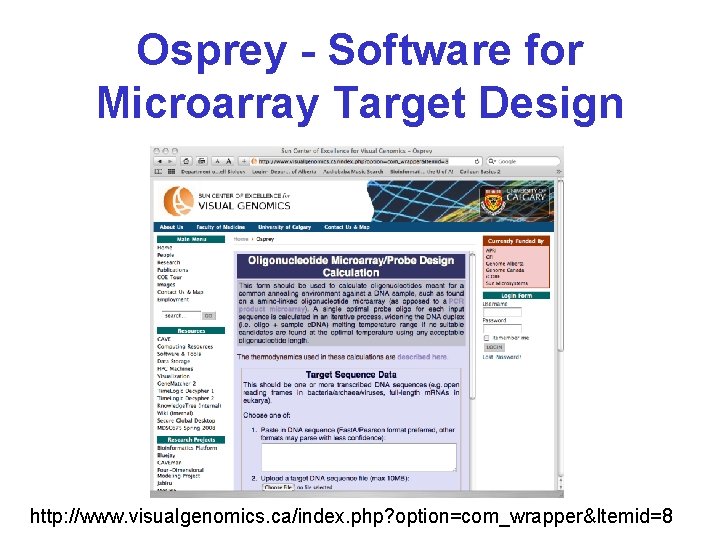
Osprey - Software for Microarray Target Design http: //www. visualgenomics. ca/index. php? option=com_wrapper&Itemid=8
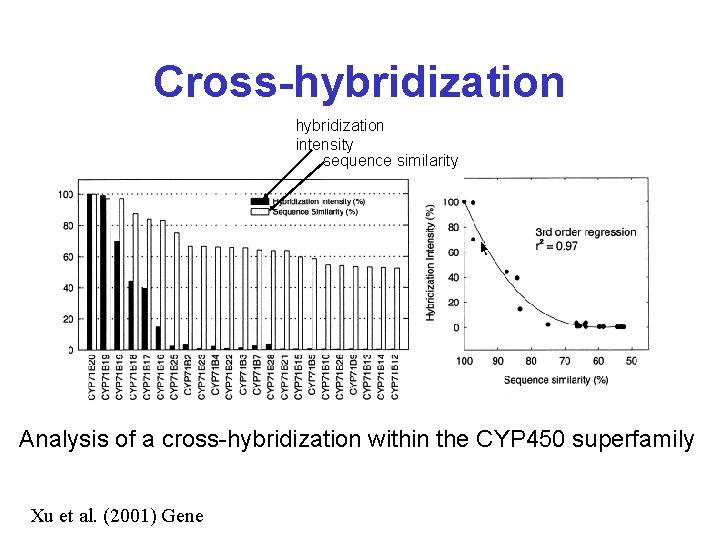
Cross-hybridization intensity sequence similarity Analysis of a cross-hybridization within the CYP 450 superfamily Xu et al. (2001) Gene
Microarray Printing
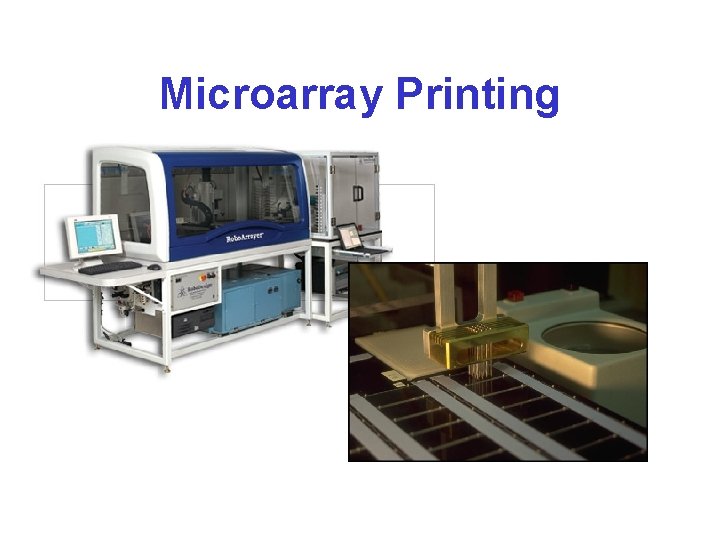
Microarray Printing • Targets are deposited by robots using: – piezo-electric jets – microcapillaries – split or solid pins • Coated glass is the most common substrate – aminosilane, poly-lysine, etc. give non-covalent linkages – covalent linkage is possible with modified oligos + aldehyde (etc. ) coatings
RNA Extraction • RNA is extremely unstable • Probably the most problematic step in all microarray analysis • RNA is extracted as “total RNA” – only 1 -2% is m. RNA – remainder is r. RNA, t. RNA, etc. • RNA extracted from tissue is often very heterogeneous (many cells and cell types) – watch selectivity
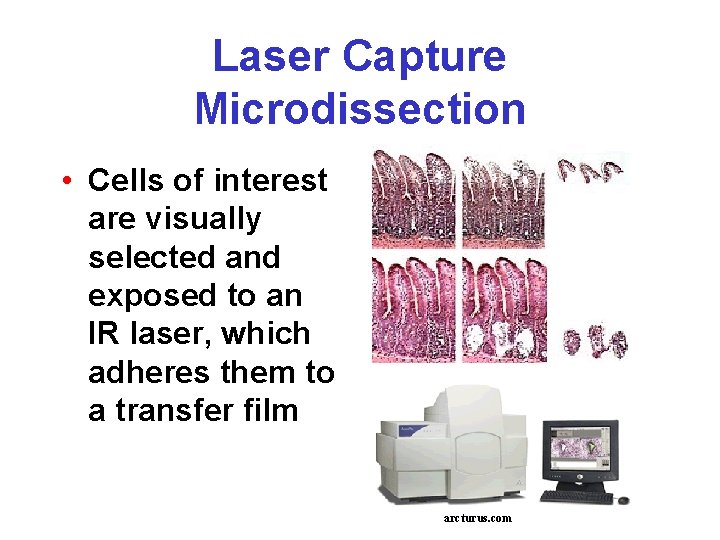
Laser Capture Microdissection • Cells of interest are visually selected and exposed to an IR laser, which adheres them to a transfer film arcturus. com
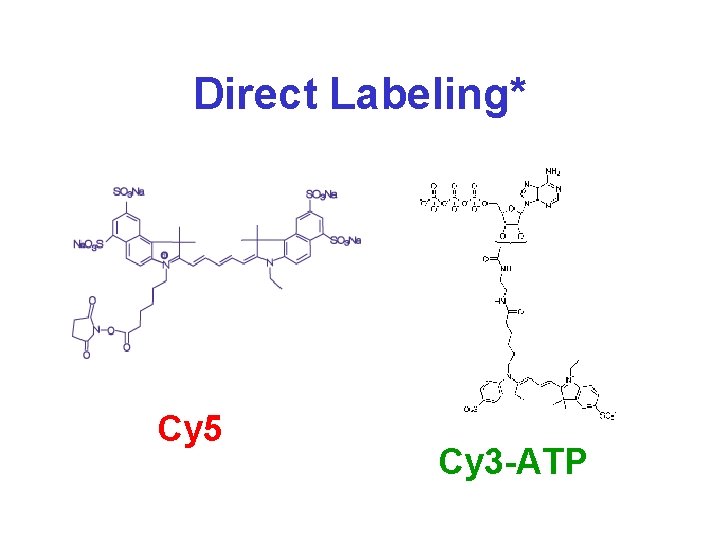
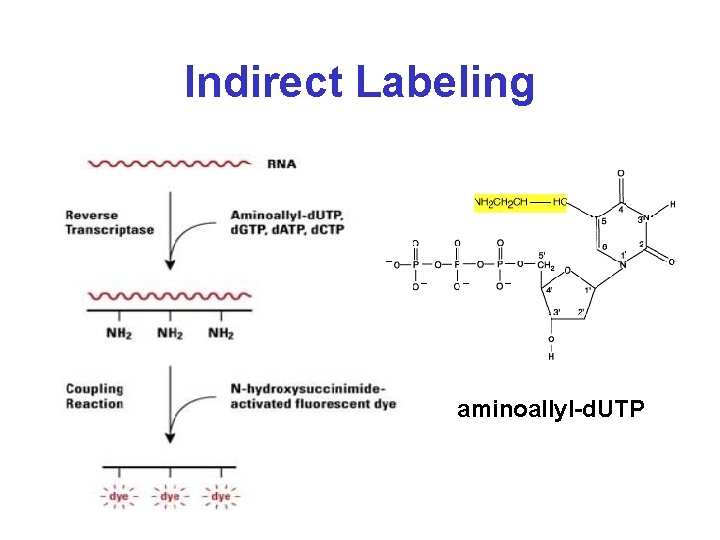
RNA Labeling* • Common source of systematic error (freshness, contaminants) • Direct labeling – fluorescent nucleotides are incorporated during reverse transcription (“first strand”) • Indirect labeling – reactive nucleotides (aminoallyl-d. UTP) are incorporated during RT; first strand product is mixed with reactive fluorescent dyes that bind to amino group
Direct Labeling* Cy 5 Cy 3 -ATP
Indirect Labeling aminoallyl-d. UTP
Hybridization • Stringency of hybridization is affected by ions, detergents, formamide, temperature, time. . . • Hybridization may be an important source of systematic error • Automated hybridization systems exist; value is debatable
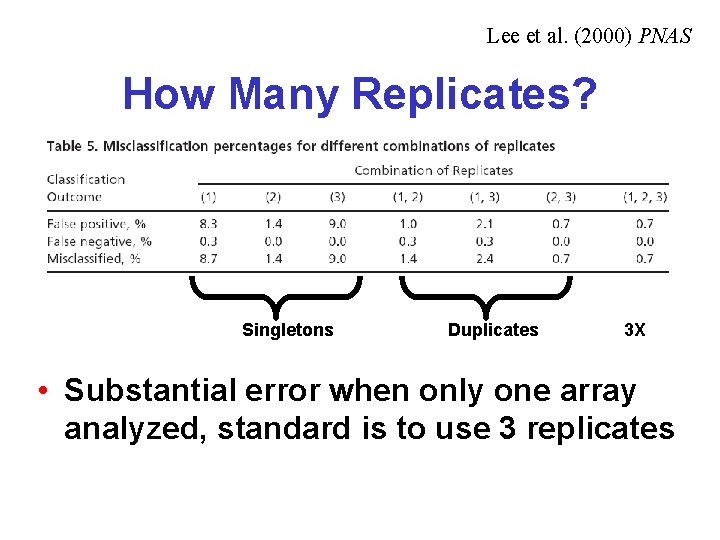
Lee et al. (2000) PNAS How Many Replicates? Singletons Duplicates 3 X • Substantial error when only one array analyzed, standard is to use 3 replicates
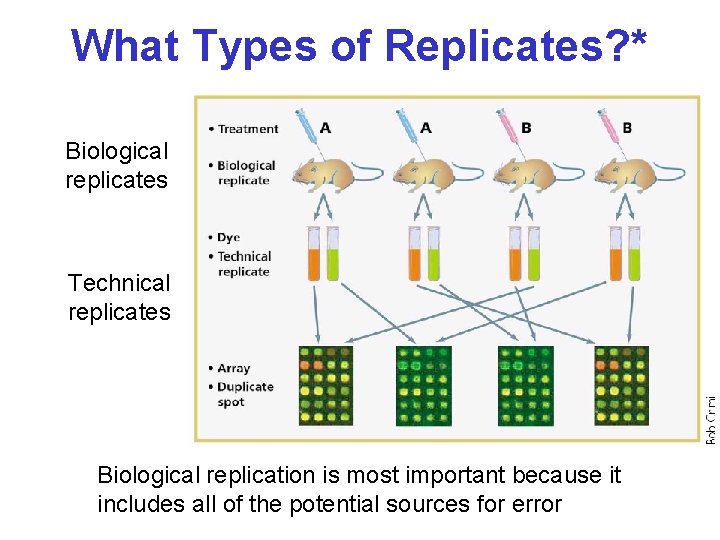
What Types of Replicates? * Biological replicates Technical replicates Biological replication is most important because it includes all of the potential sources for error
Microarray Production • • Target design and selection Printing RNA extraction Labeling Hybridization and washing Scanning Data analysis
- Slides: 71