
Measuring Evolution of Populations Hardy Weinberg AP Biology
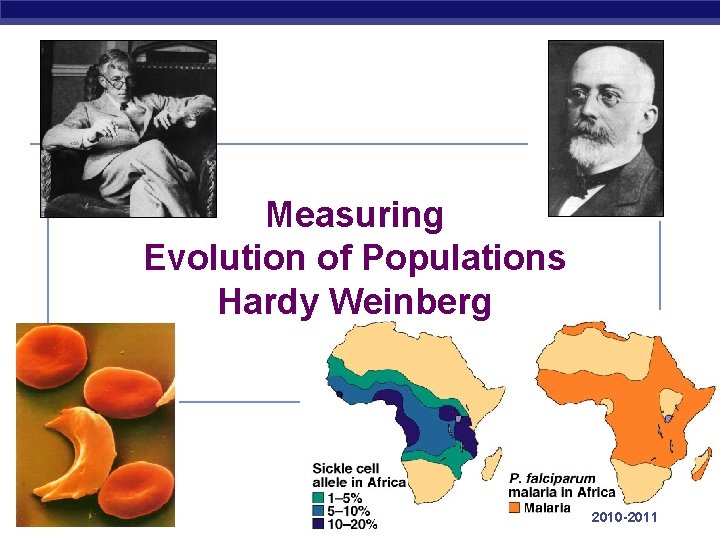
Measuring Evolution of Populations Hardy Weinberg AP Biology 2010 -2011
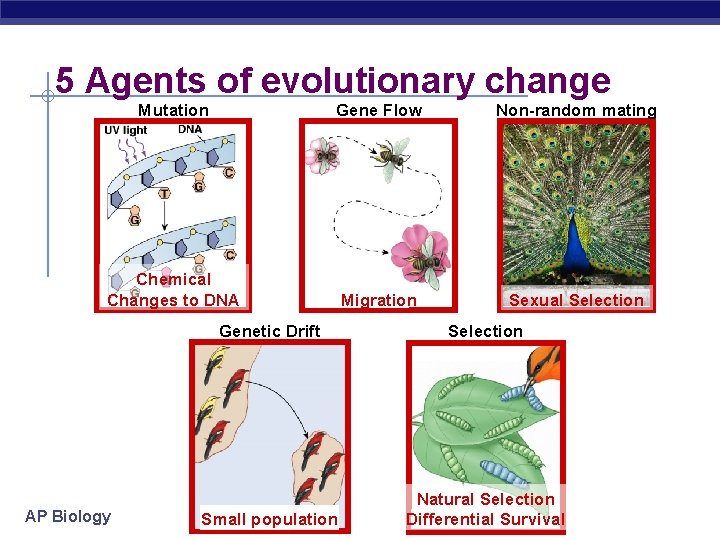
5 Agents of evolutionary change Mutation Gene Flow Non-random mating Chemical Changes to DNA Migration Sexual Selection AP Biology Genetic Drift Selection Small population Natural Selection Differential Survival
III. Genetic Equilibrium § Researchers know whether or not a population is § § evolving by tracking deviations from a baseline of genetic equilibrium. If you notice, they violate all the mechanisms of microevolution. Five conditions required for a stable gene pool: 1. 2. 3. 4. 5. Mutations do not occur Population is infinitely large (genetic drift eliminated) No gene flow Random mating (no sexual selection) All individuals survive and reproduce equally (no NS) § If these 5 things happen, new alleles are not introduced § to a population and therefore, the population isn’t evolving. This doesn’t happen in reality but the rate these change has a direct affect on the rate of evolution. AP Biology
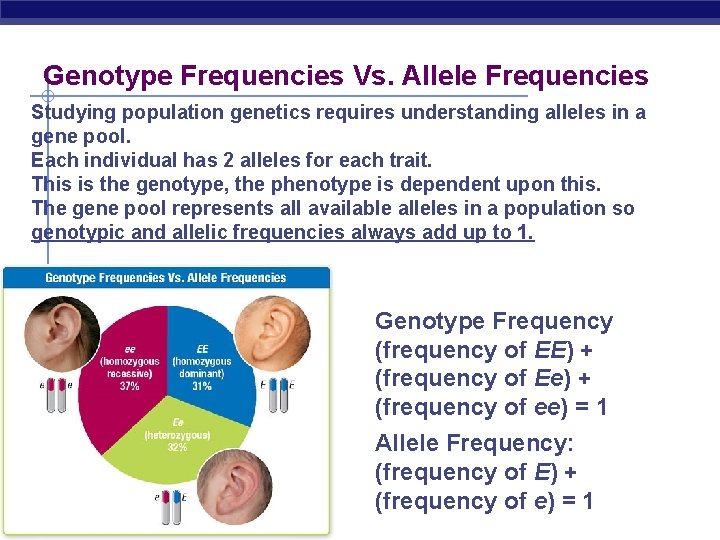
Genotype Frequencies Vs. Allele Frequencies Studying population genetics requires understanding alleles in a gene pool. Each individual has 2 alleles for each trait. This is the genotype, the phenotype is dependent upon this. The gene pool represents all available alleles in a population so genotypic and allelic frequencies always add up to 1. AP Biology Genotype Frequency (frequency of EE) + (frequency of Ee) + (frequency of ee) = 1 Allele Frequency: (frequency of E) + (frequency of e) = 1
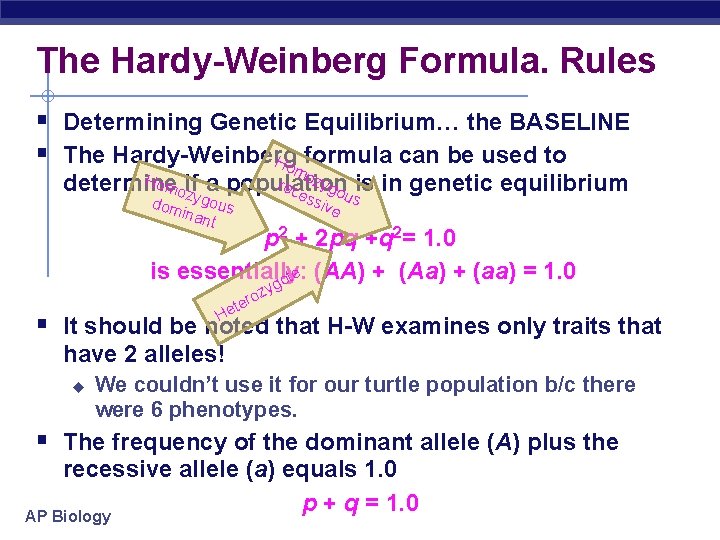
The Hardy-Weinberg Formula. Rules § Determining Genetic Equilibrium… the BASELINE § The Hardy-Weinberg Ho formula can be used to m ozy Hom if a population r determine is in genetic equilibrium e c ozy es gou inan s t siv dom e s p 2 + 2 pq +q 2= 1. 0 is essentially: te (AA) + (Aa) + (aa) = 1. 0 go y oz ter He § It should be noted that H-W examines only traits that have 2 alleles! u We couldn’t use it for our turtle population b/c there were 6 phenotypes. § The frequency of the dominant allele (A) plus the recessive allele (a) equals 1. 0 p + q = 1. 0 AP Biology
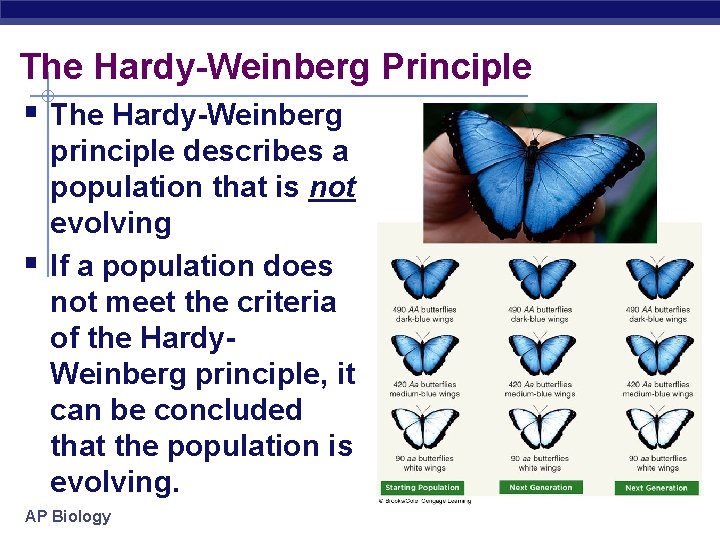
The Hardy-Weinberg Principle § The Hardy-Weinberg § principle describes a population that is not evolving If a population does not meet the criteria of the Hardy. Weinberg principle, it can be concluded that the population is evolving. AP Biology
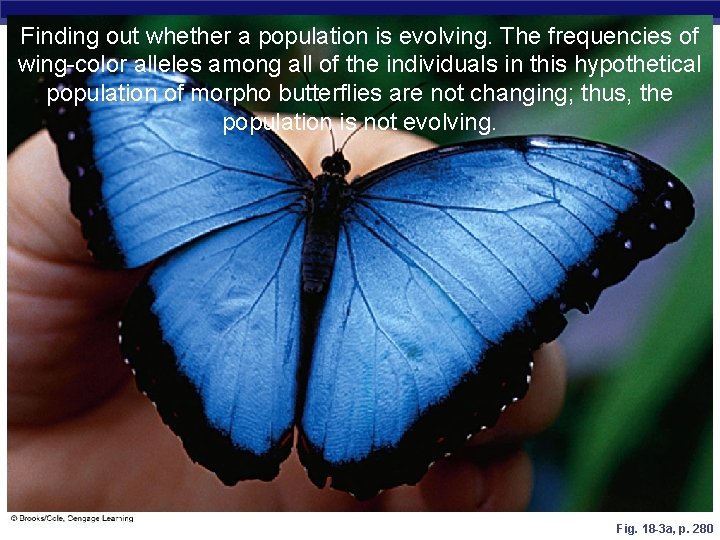
Finding out whether a population is evolving. The frequencies of wing-color alleles among all of the individuals in this hypothetical population of morpho butterflies are not changing; thus, the population is not evolving. AP Biology Fig. 18 -3 a, p. 280
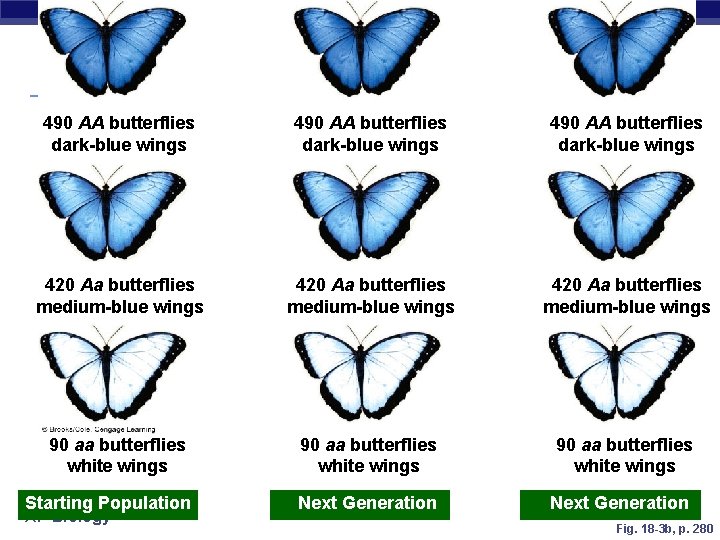
490 AA butterflies dark-blue wings 420 Aa butterflies medium-blue wings 90 aa butterflies white wings Starting Population Next Generation AP Biology Fig. 18 -3 b, p. 280
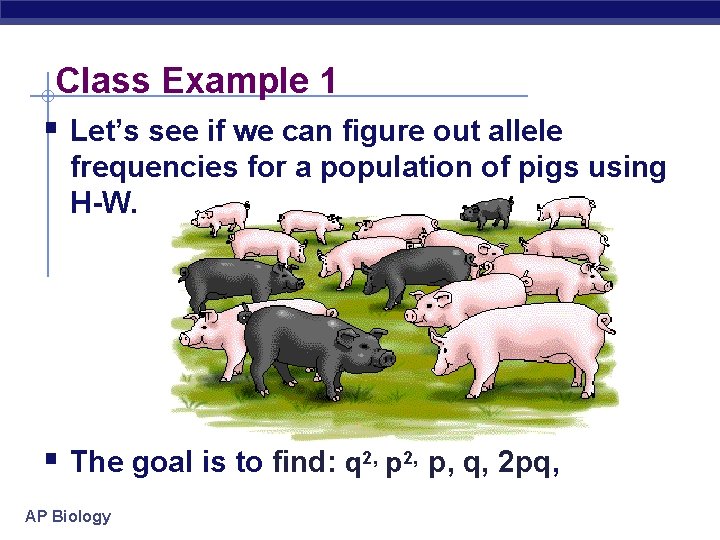
Class Example 1 § Let’s see if we can figure out allele frequencies for a population of pigs using H-W. § The goal is to find: q 2, p, q, 2 pq, AP Biology
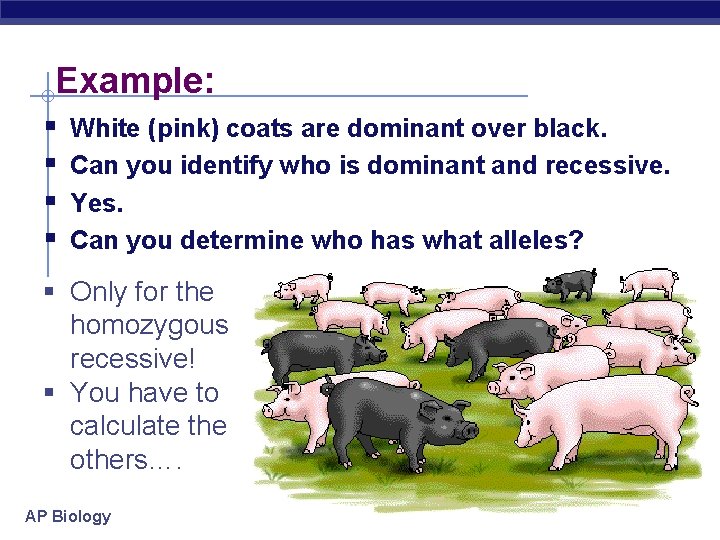
Example: § § White (pink) coats are dominant over black. Can you identify who is dominant and recessive. Yes. Can you determine who has what alleles? § Only for the homozygous recessive! § You have to calculate the others…. AP Biology
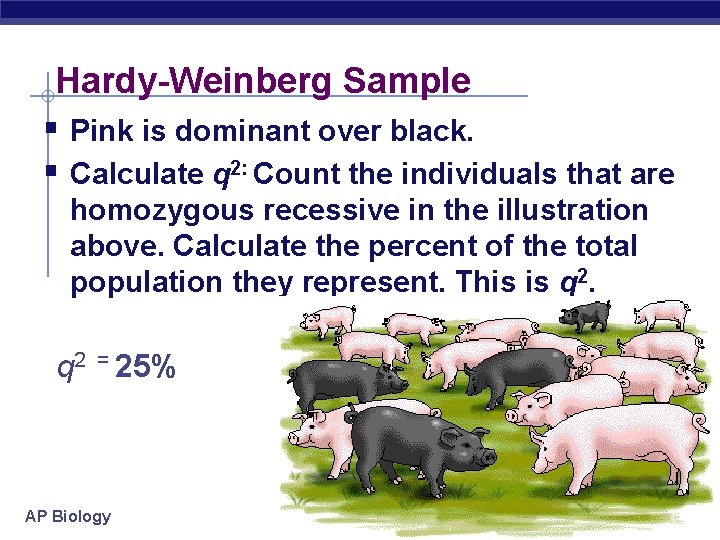
Hardy-Weinberg Sample § Pink is dominant over black. § Calculate q 2: Count the individuals that are homozygous recessive in the illustration above. Calculate the percent of the total population they represent. This is q 2 = 25% AP Biology
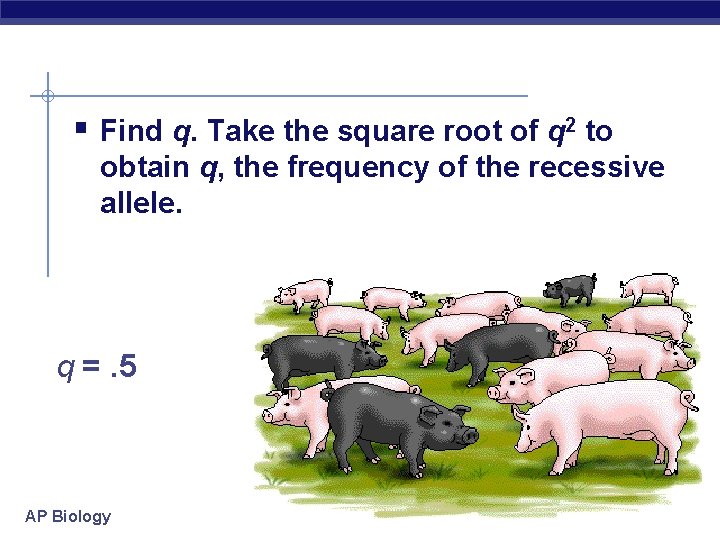
§ Find q. Take the square root of q 2 to obtain q, the frequency of the recessive allele. q =. 5 AP Biology
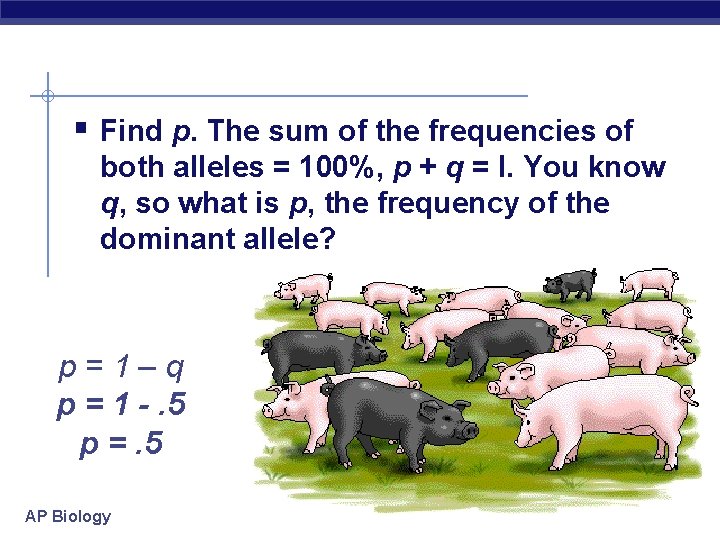
§ Find p. The sum of the frequencies of both alleles = 100%, p + q = l. You know q, so what is p, the frequency of the dominant allele? p=1–q p = 1 -. 5 p =. 5 AP Biology
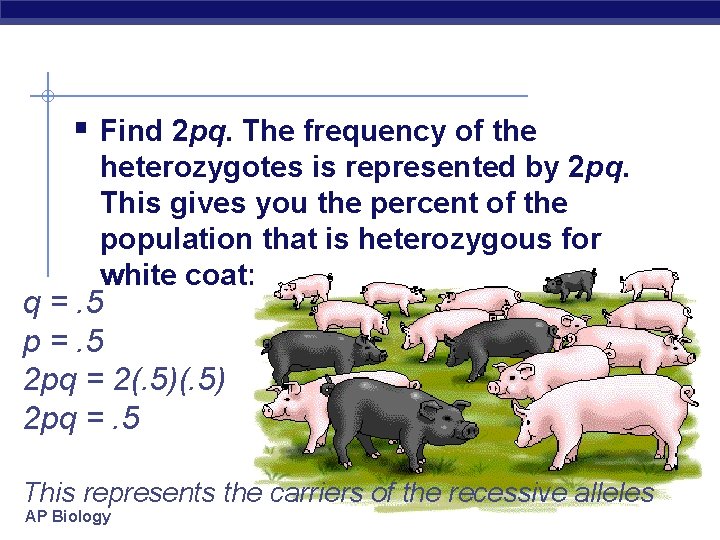
§ Find 2 pq. The frequency of the heterozygotes is represented by 2 pq. This gives you the percent of the population that is heterozygous for white coat: q =. 5 p =. 5 2 pq = 2(. 5) 2 pq =. 5 This represents the carriers of the recessive alleles AP Biology
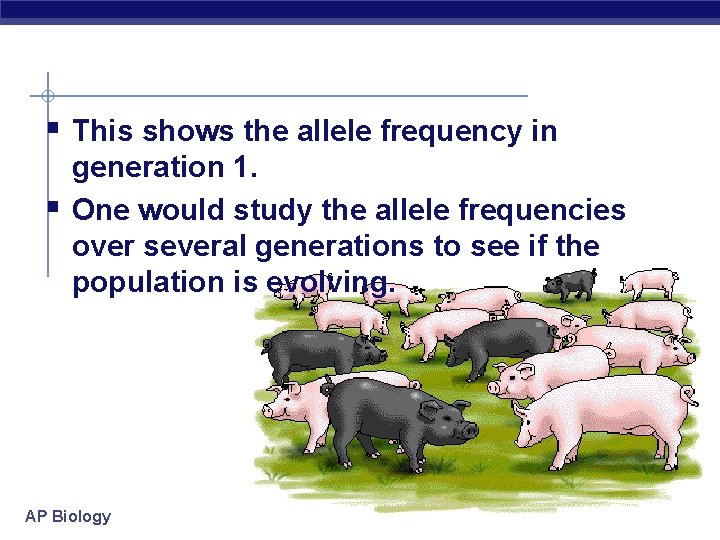
§ This shows the allele frequency in § generation 1. One would study the allele frequencies over several generations to see if the population is evolving. AP Biology
What is the Point of H-W? § Why we use the H-W equation is to § § determine if a population is evolving. By calculating the equilibrium in the beginning of a population we know the distribution of alleles. If we examine a population later in time we can see if there is a change. According to H-W, if there is no change there is no evolution. If there is change evolution has occurred. AP Biology
Independent Practice § § § Complete Question #1 on the handout. You may ask questions – share out answers. The goal is to find: q 2, p, q, 2 pq You start by determining the % of homozygous recessives in a population (this is q 2) It is also important why you are doing this… it is to determine the genetic equilibrium baseline for the population. Complete the rest of the worksheet for classwork/homework. AP Biology
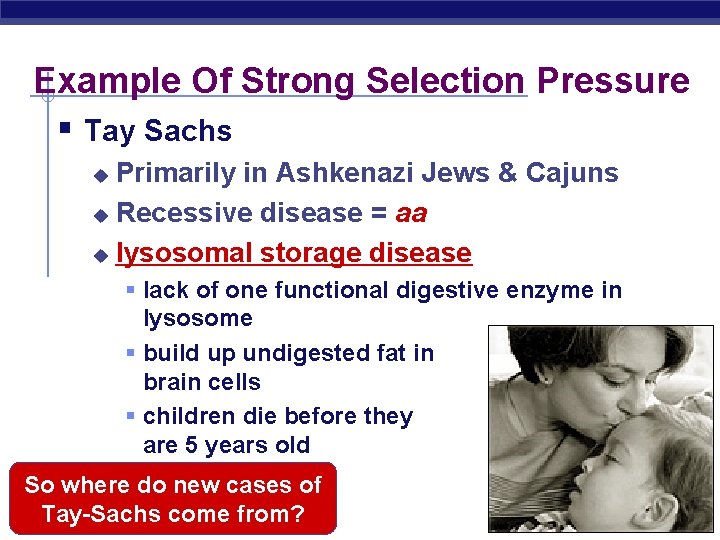
Example Of Strong Selection Pressure § Tay Sachs Primarily in Ashkenazi Jews & Cajuns u Recessive disease = aa u lysosomal storage disease u § lack of one functional digestive enzyme in lysosome § build up undigested fat in brain cells § children die before they are 5 years old So where do new cases of come from? APTay-Sachs Biology
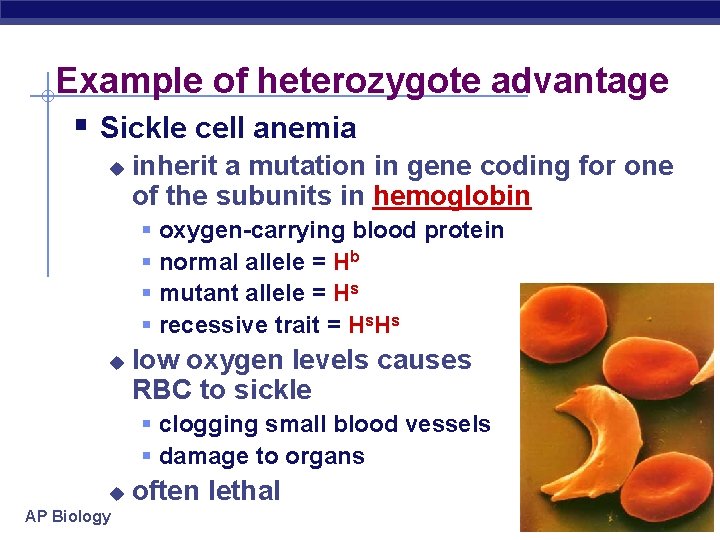
Example of heterozygote advantage § Sickle cell anemia u inherit a mutation in gene coding for one of the subunits in hemoglobin § § u oxygen-carrying blood protein normal allele = Hb mutant allele = Hs recessive trait = Hs. Hs low oxygen levels causes RBC to sickle § clogging small blood vessels § damage to organs u AP Biology often lethal
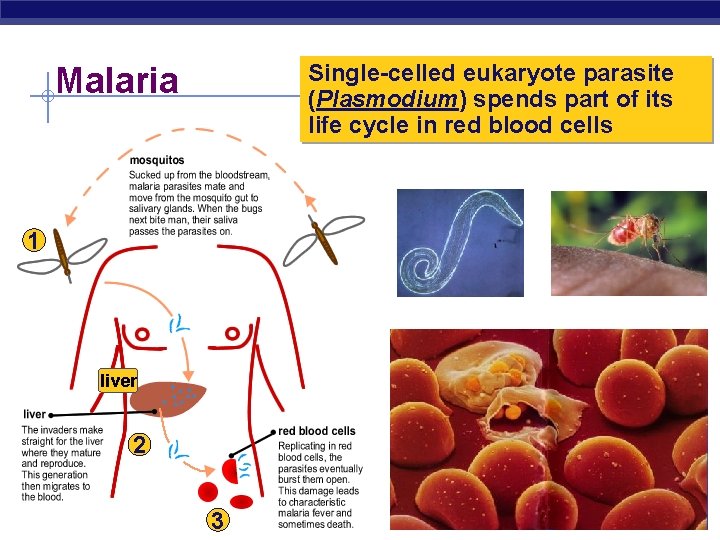
Single-celled eukaryote parasite (Plasmodium) spends part of its life cycle in red blood cells Malaria 1 liver 2 AP Biology 3
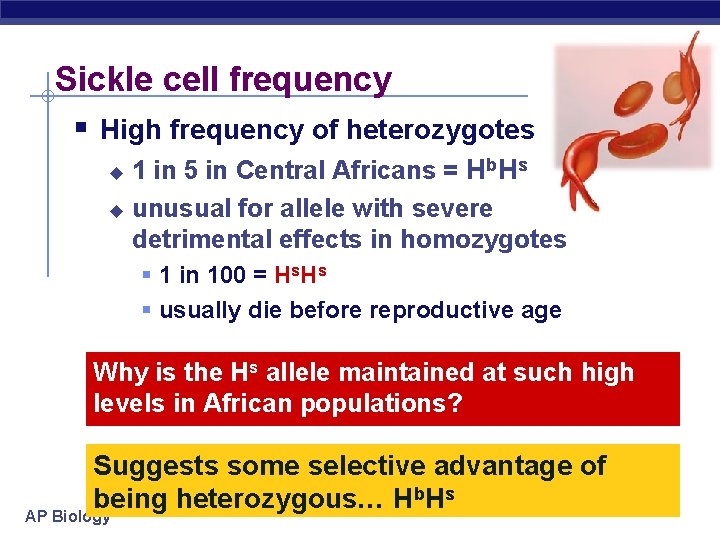
Sickle cell frequency § High frequency of heterozygotes 1 in 5 in Central Africans = Hb. Hs u unusual for allele with severe detrimental effects in homozygotes u § 1 in 100 = Hs. Hs § usually die before reproductive age Why is the Hs allele maintained at such high levels in African populations? Suggests some selective advantage of b Hs being heterozygous… H AP Biology
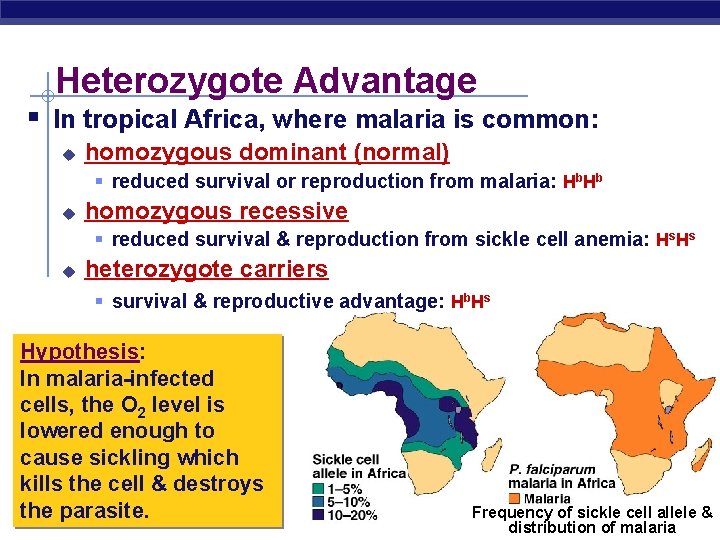
Heterozygote Advantage § In tropical Africa, where malaria is common: u homozygous dominant (normal) § reduced survival or reproduction from malaria: Hb. Hb u homozygous recessive § reduced survival & reproduction from sickle cell anemia: Hs. Hs u heterozygote carriers § survival & reproductive advantage: Hb. Hs Hypothesis: In malaria-infected cells, the O 2 level is lowered enough to cause sickling which kills the cell & destroys the parasite. AP Biology Frequency of sickle cell allele & distribution of malaria
Concept Check § What is the usefulness of the H-W Law? § Homework Complete the H-W Online Tutorial by your next period. u http: //www. montereyinstitute. org/cou rses/AP%20 Biology%20 I/course%20 fi les/multimedia/lesson 23/lessonp. html ? show. Topic=2 u AP Biology
Any Questions? ? AP Biology 2010 -2011
- Slides: 24