
Measuring Distances in Astronomy Basic Principles Geometric methods
Measuring Distances in Astronomy Basic Principles: • Geometric methods • Standard candles • Standard rulers [the last two methods relate quantities that are independent of distance to quantities that depend on distance] www. assignmentpoint. com
![Parallax and Proper Motion • Angular size: degree [º], arcminute ['], arcsecond ["] •](http://slidetodoc.com/presentation_image_h2/463ada045b83062701b02612a75aba85/image-2.jpg "Parallax and Proper Motion • Angular size: degree [º], arcminute ['], arcsecond [\"] •")
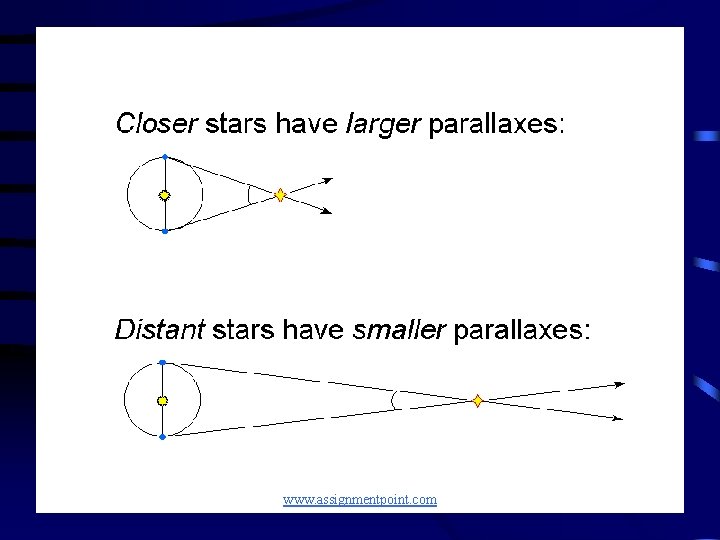
Parallax and Proper Motion • Angular size: degree [º], arcminute ['], arcsecond ["] • θ [in arcseconds] = 206265 (L/D) where: θ = angular size; L = linear (or “true”) size; D = distance • Definitions: parallax (p), Astronomical Unit [AU], parsec [pc] D [in parsec] = 1/p [in arcseconds] where: 1 pc = 206265 AU = 3. 26 light yr • Parallax can only be used on nearby stars (D < 100 pc) [Atmospheric blurring (seeing); Hipparcos satellite; Hubble Space Telescope] www. assignmentpoint. com
www. assignmentpoint. com
![Motion of stars within a cluster • Proper motion [arcsec/s] = change of angular](http://slidetodoc.com/presentation_image_h2/463ada045b83062701b02612a75aba85/image-4.jpg "Motion of stars within a cluster • Proper motion [arcsec/s] = change of angular")
Motion of stars within a cluster • Proper motion [arcsec/s] = change of angular position • Line-of-sight motion [km/s] - measured via Doppler shift • Comparison of average stellar proper motion in cluster with average line-of-sight speed yields distance to cluster www. assignmentpoint. com

www. assignmentpoint. com

Luminosity and Flux • Inverse square law: f = L / (4πD 2) where: f = flux [erg/s/cm 2]; L = luminosity [erg/s]; D = distance [cm] • Magnitude scale: brightnesses of astronomical sources www. assignmentpoint. com
Standard Candles and Rulers • Variable stars: Cepheids and RR Lyrae stars Period-luminosity relation; measure P & infer L; measure f & infer D • Other standard candles: brightest red giants, HII regions, planetary nebulae, supernovae, globular cluster luminosity • Galaxies: Luminosity is seen to be correlated with the typical speed of internal motion of stars and gas [Tully-Fisher relation: rotation of disks of spiral galaxies] [Faber-Jackson relation: random stellar motion in elliptical galaxies] • Galaxies: Size correlated with typical speed of (random) stellar motion [Dn-σ relation for elliptical galaxies] www. assignmentpoint. com
Redshift as Distance Indicator • Expansion of the Universe • Hubble's law: v = H 0 D where: H 0 = Hubble constant [km/s/Mpc] • Doppler shift used to measure recession velocity: v ≈ c (Δλ / λ) where: Δλ/λ = fractional change in wavelength www. assignmentpoint. com
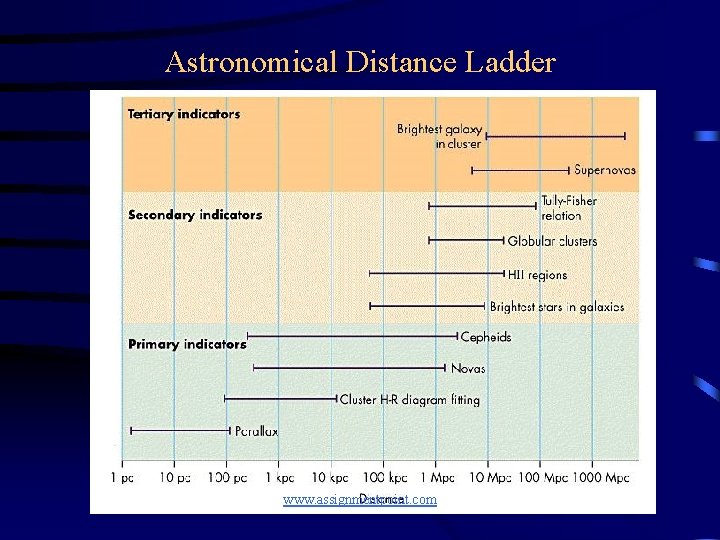
Astronomical Distance Ladder www. assignmentpoint. com
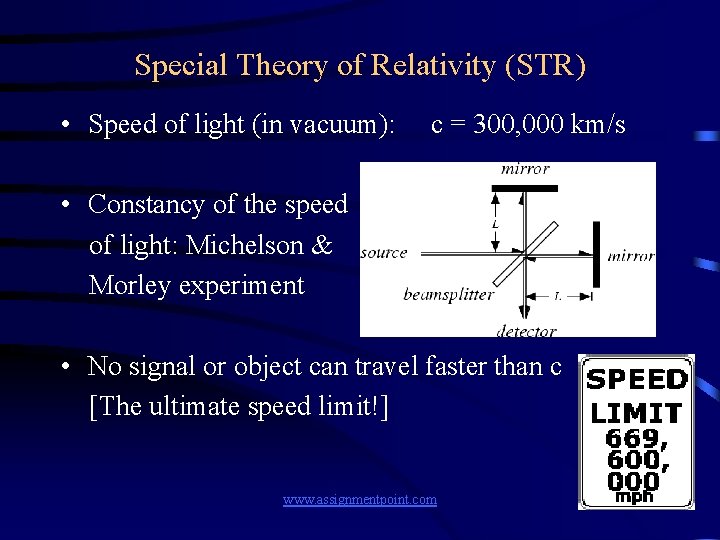
Special Theory of Relativity (STR) • Speed of light (in vacuum): c = 300, 000 km/s • Constancy of the speed of light: Michelson & Morley experiment • No signal or object can travel faster than c [The ultimate speed limit!] www. assignmentpoint. com
Special Theory of Relativity (STR) Basic Principles • The speed of light is the same to all observers • The laws of physics are the same to all observers Observable Consequences • Simultaneity is a relative concept • Length contraction: moving rulers appear to be short • Time dilation: moving clocks appear to run slow • The apparent mass (inertia) of an object increases as its speed increases (impossible to accelerate it up to c) • Equivalence of masswww. assignmentpoint. com and energy: E = mc 2
Special relativistic effects are important when the SPEED of an object is CLOSE TO THE SPEED OF LIGHT: v ≈ c www. assignmentpoint. com
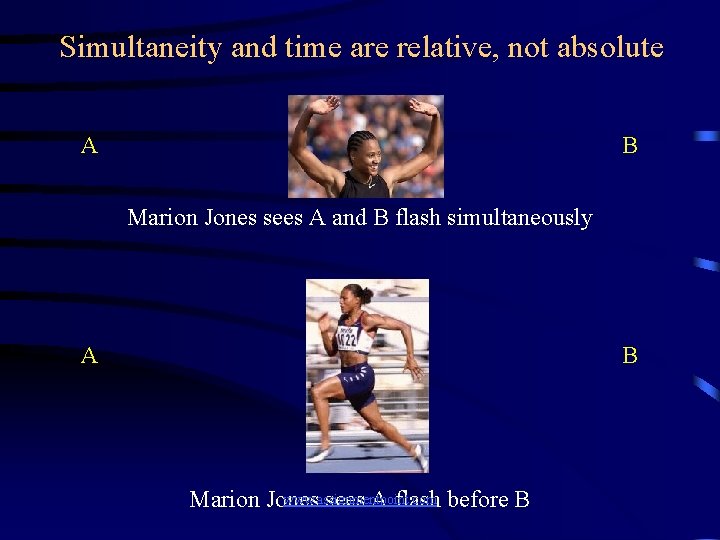
Simultaneity and time are relative, not absolute A B Marion Jones sees A and B flash simultaneously A B www. assignmentpoint. com Marion Jones sees A flash before B
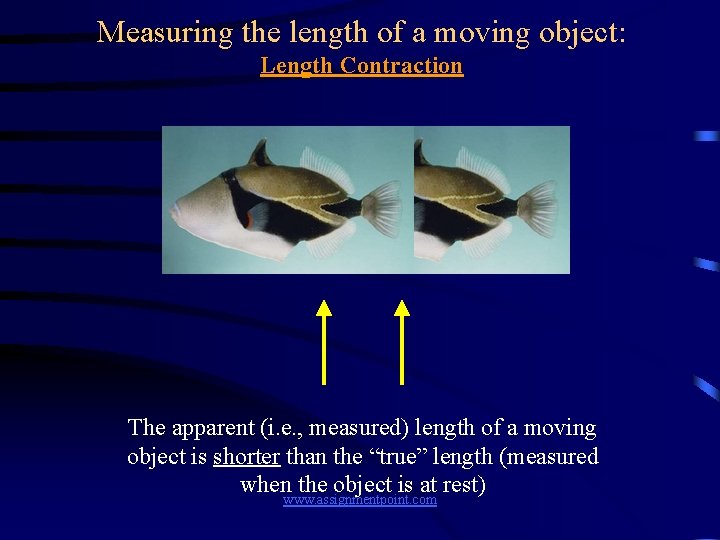
Measuring the length of a moving object: Length Contraction The apparent (i. e. , measured) length of a moving object is shorter than the “true” length (measured whenwww. assignmentpoint. com the object is at rest)
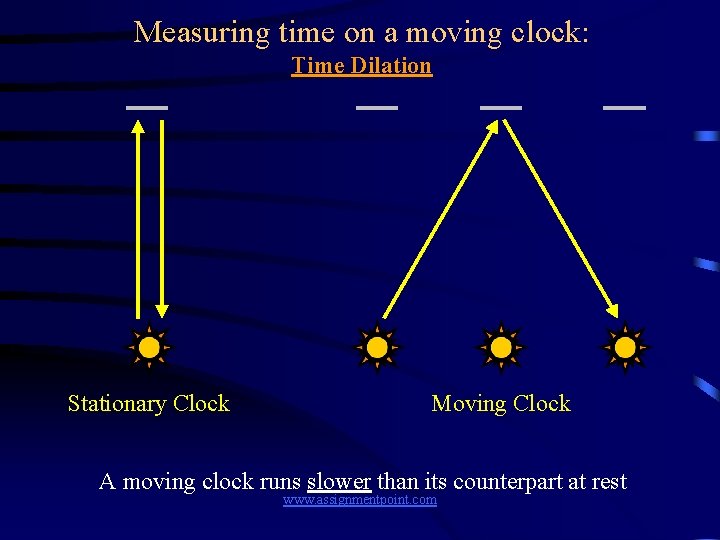
Measuring time on a moving clock: Time Dilation Stationary Clock Moving Clock A moving clock runs slower than its counterpart at rest www. assignmentpoint. com
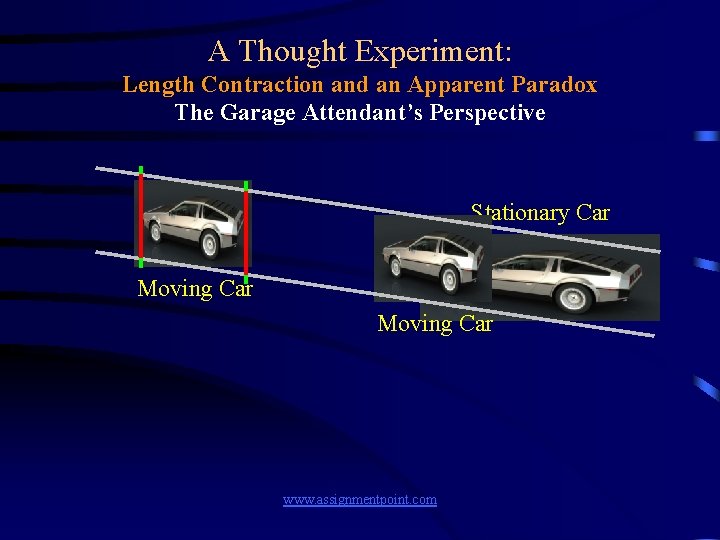
A Thought Experiment: Length Contraction and an Apparent Paradox The Garage Attendant’s Perspective Stationary Car Moving Car www. assignmentpoint. com
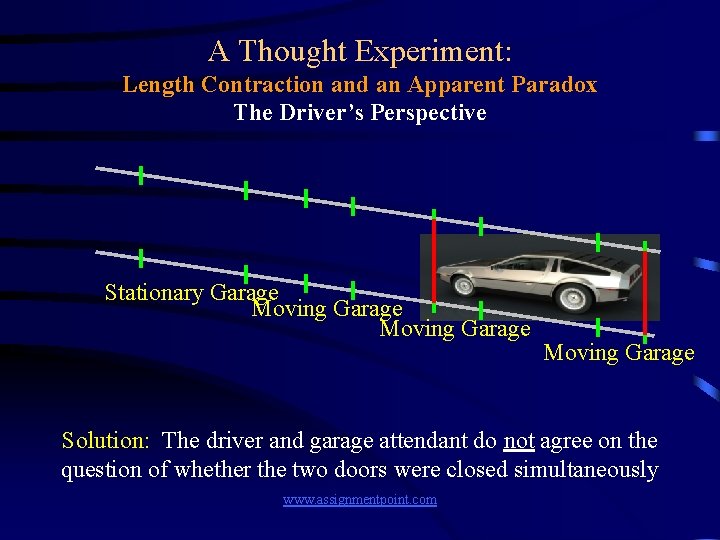
A Thought Experiment: Length Contraction and an Apparent Paradox The Driver’s Perspective Stationary Garage Moving Garage Solution: The driver and garage attendant do not agree on the question of whether the two doors were closed simultaneously www. assignmentpoint. com
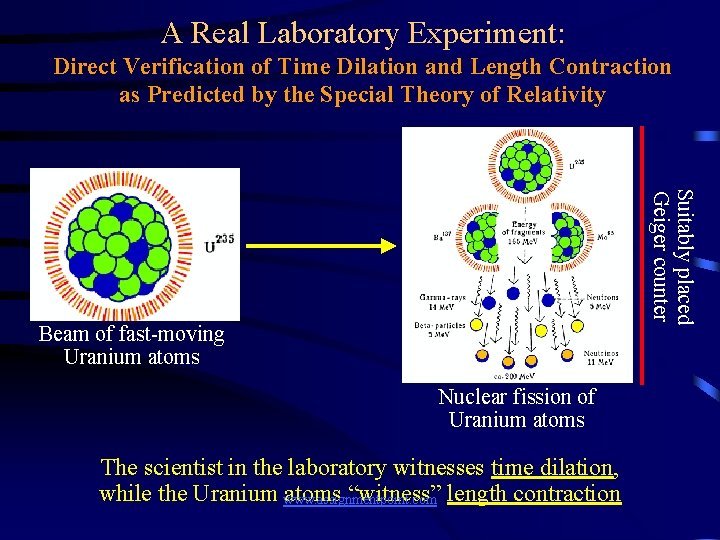
A Real Laboratory Experiment: Direct Verification of Time Dilation and Length Contraction as Predicted by the Special Theory of Relativity Suitably placed Geiger counter Beam of fast-moving Uranium atoms Nuclear fission of Uranium atoms The scientist in the laboratory witnesses time dilation, while the Uranium www. assignmentpoint. com atoms “witness” length contraction
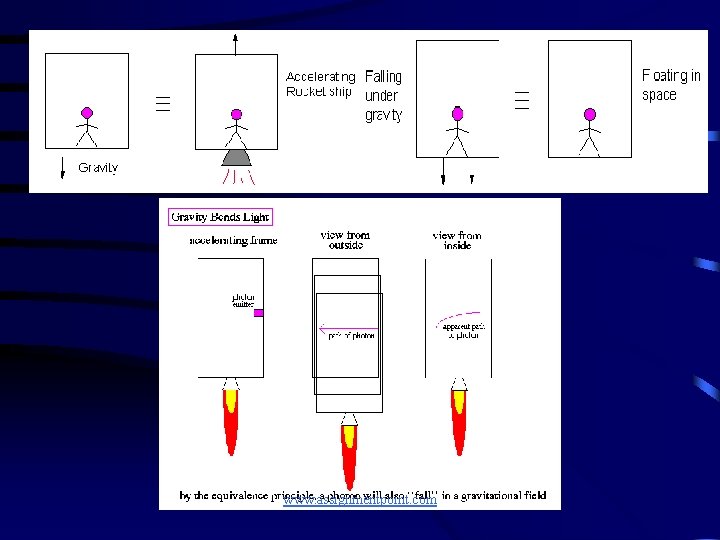
General Theory of Relativity (GTR) Principle of Equivalence • All objects experience the same motion in a given gravitational field, irrespective of their mass [Galileo's experiment at the leaning tower of Pisa] • Gravitational field <===> Accelerated reference frame • Gravity can be thought of as a distortion of space-time www. assignmentpoint. com
www. assignmentpoint. com
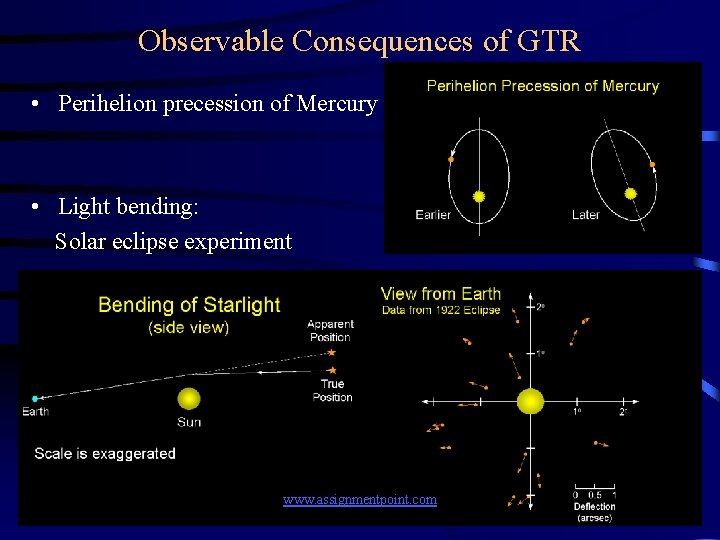
Observable Consequences of GTR • Perihelion precession of Mercury • Light bending: Solar eclipse experiment www. assignmentpoint. com
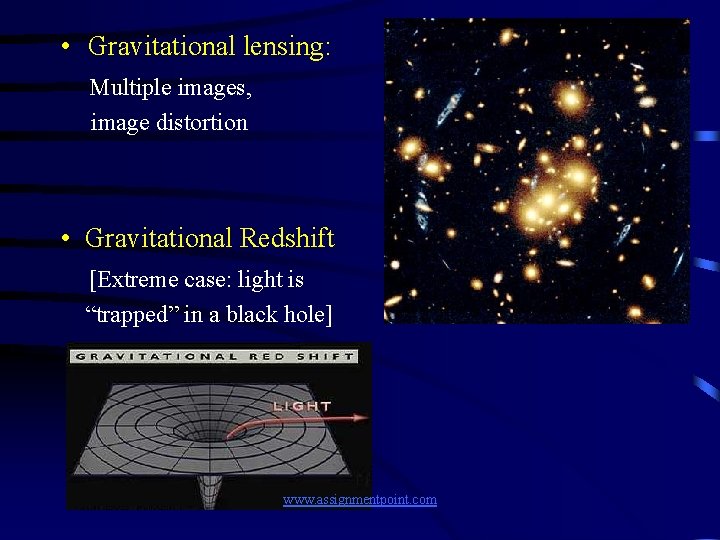
• Gravitational lensing: Multiple images, image distortion • Gravitational Redshift [Extreme case: light is “trapped” in a black hole] www. assignmentpoint. com
General relativistic effects are important in a STRONG GRAVITATIONAL FIELD www. assignmentpoint. com
- Slides: 23