
Measuring Dew Point for Process Safety Quality and














- Slides: 43
Measuring Dew Point for Process Safety, Quality and Efficiency Ron Marshall, Marshall Compressed Air Consulting Keynote Speaker The recording and slides of this webinar will be made available to attendees via email later today. PDH Certificates will be e-mailed to attendees on within 2 days. Sponsored by
Q&A Format • Panelists will answer your questions during the Q&A session at the end of the Webinar. • Please post your questions in the Questions Window in your Go. To. Webinar interface. • Direct all questions to Compressed Air Best Practices® Magazine Sponsored by
Handouts
Disclaimer All rights are reserved. The contents of this publication may not be reproduced in whole or in part without consent of Smith Onandia Communications LLC does not assume and hereby disclaims any liability to any person for any loss or damage caused by errors or omissions in the material contained herein, regardless of whether such errors result from negligence, accident, or any other cause whatsoever. All materials presented are educational. Each system is unique and must be evaluated on its own merits.
Measuring Dew Point for Process Safety, Quality and Efficiency Introduction Compressed Air Best Practices® Magazine Sponsored by
About the Speaker • • • Ron Marshall Compressed Air Consulting • Consultant MCAC 38 years with Power Utility 24 years Technical CA Support CAC Level 2 Instructor International Trainer UNIDO 600+ projects completed Sponsored by
Wanted Energy Wasters
Coming Up • • • What is dew point? Needs in CA – Air Quality What happens if quality not maintained Why measurement is important Dryer controls – EE concerns Problem examples regarding dew point
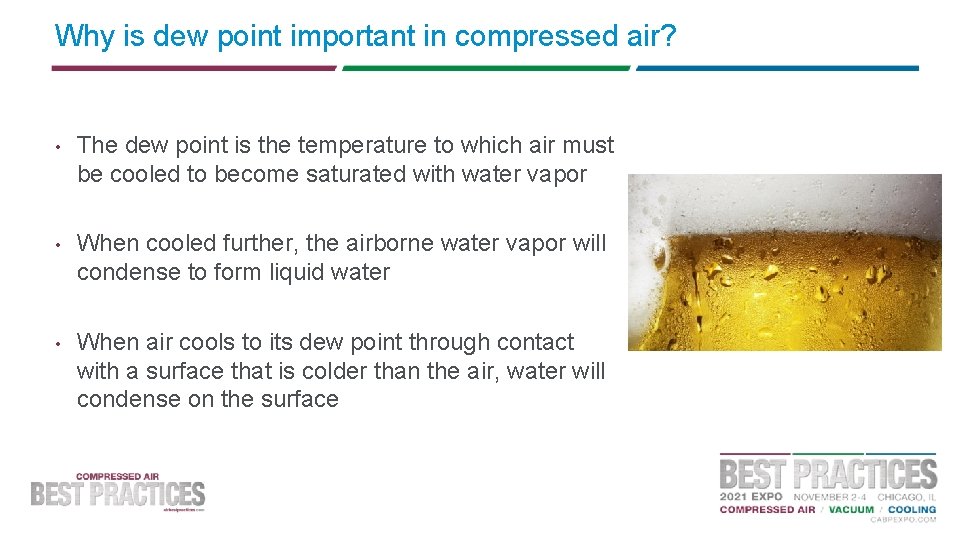
Why is dew point important in compressed air? • The dew point is the temperature to which air must be cooled to become saturated with water vapor • When cooled further, the airborne water vapor will condense to form liquid water • When air cools to its dew point through contact with a surface that is colder than the air, water will condense on the surface
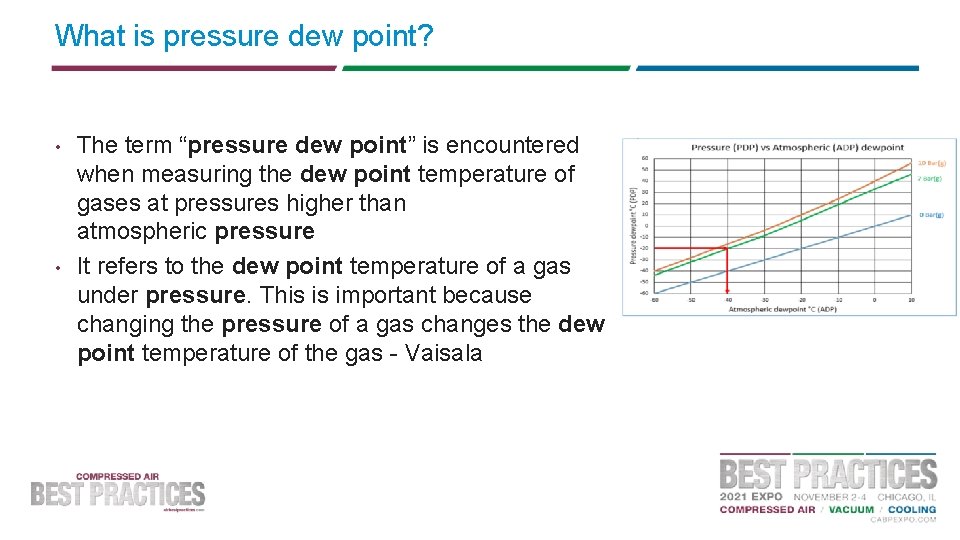
What is pressure dew point? • • The term “pressure dew point” is encountered when measuring the dew point temperature of gases at pressures higher than atmospheric pressure It refers to the dew point temperature of a gas under pressure. This is important because changing the pressure of a gas changes the dew point temperature of the gas - Vaisala
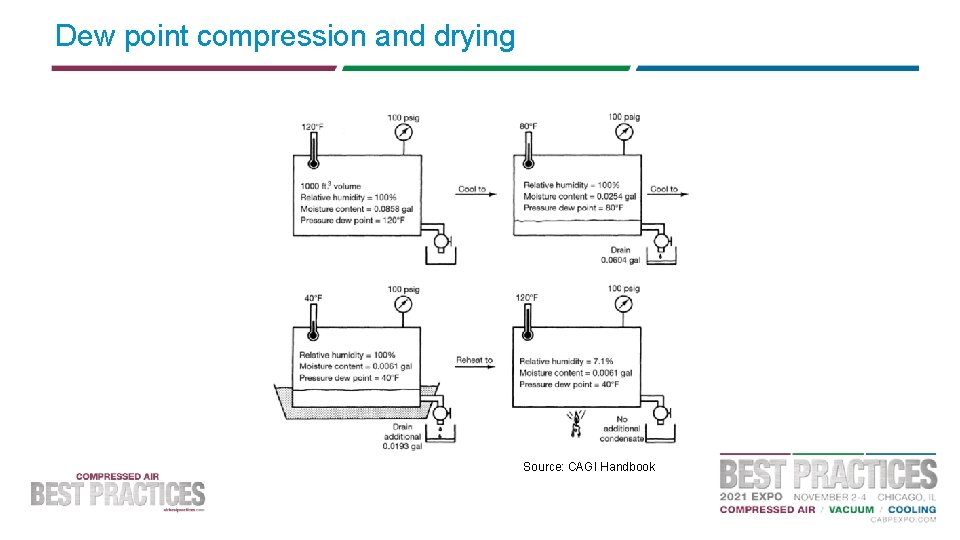
Dew point compression and drying Source: CAGI Handbook
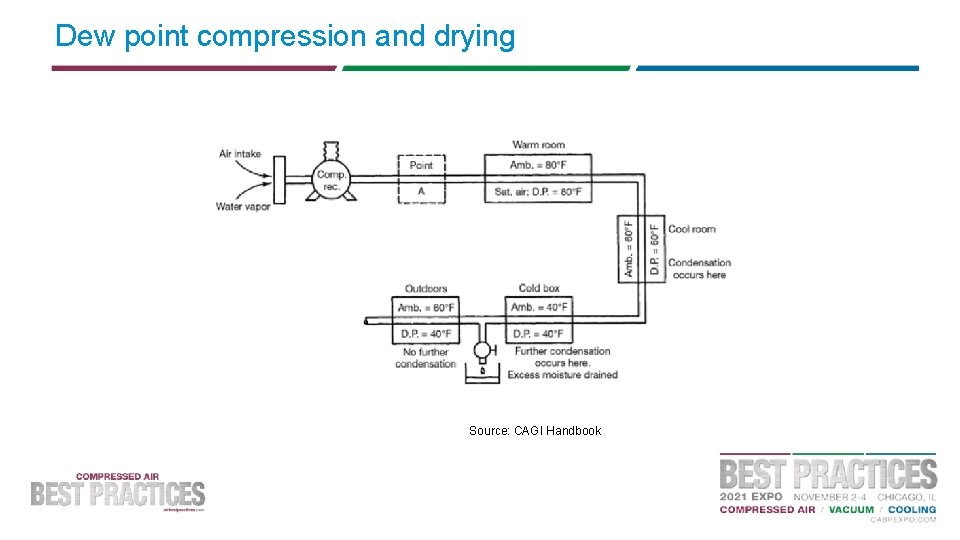
Dew point compression and drying Source: CAGI Handbook
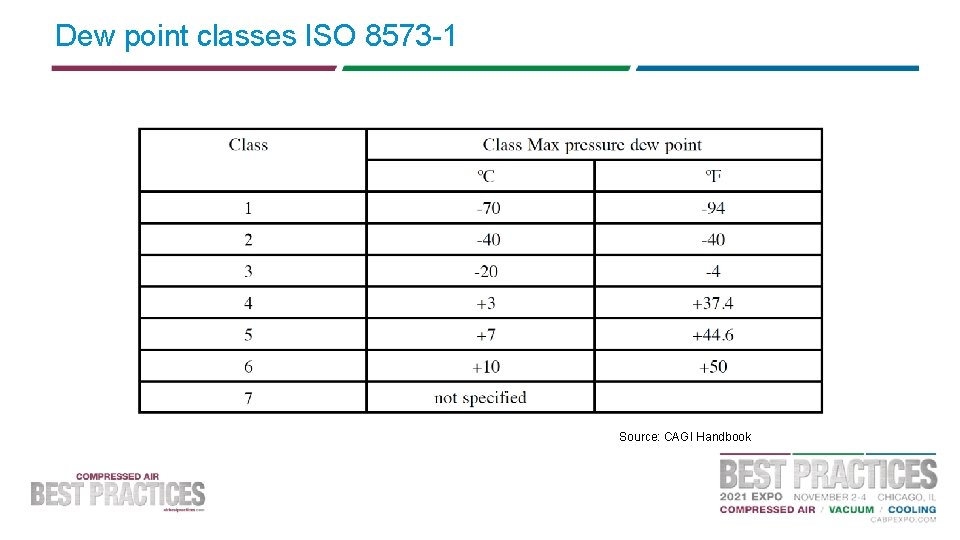
Dew point classes ISO 8573 -1 Source: CAGI Handbook
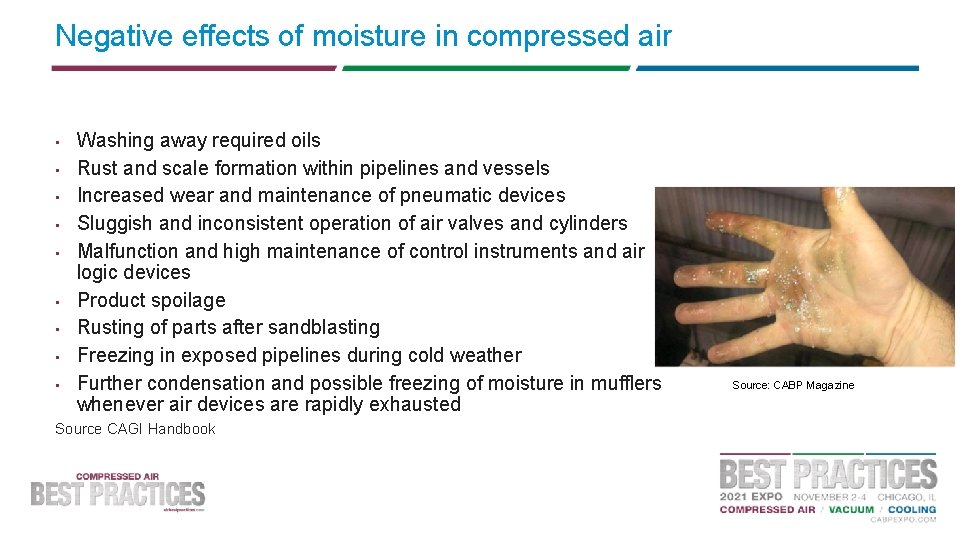
Negative effects of moisture in compressed air • • • Washing away required oils Rust and scale formation within pipelines and vessels Increased wear and maintenance of pneumatic devices Sluggish and inconsistent operation of air valves and cylinders Malfunction and high maintenance of control instruments and air logic devices Product spoilage Rusting of parts after sandblasting Freezing in exposed pipelines during cold weather Further condensation and possible freezing of moisture in mufflers whenever air devices are rapidly exhausted Source CAGI Handbook Source: CABP Magazine
Growth of microorganisms “To support microorganism growth, it is necessary to establish conditions that will permit organism reproduction. All microorganisms require the following to remain viable and grow on culture media: • Nutrients • Proper p. H • Appropriate temperature • Gasses • Moisture Source: Atlas Copco compressed air and microorganisms white paper Source: CABP Magazine
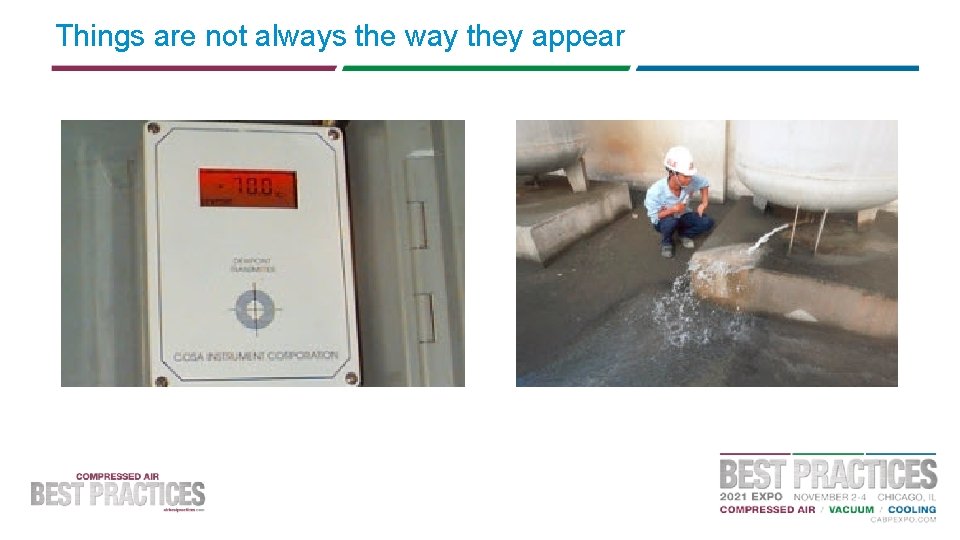
Things are not always the way they appear
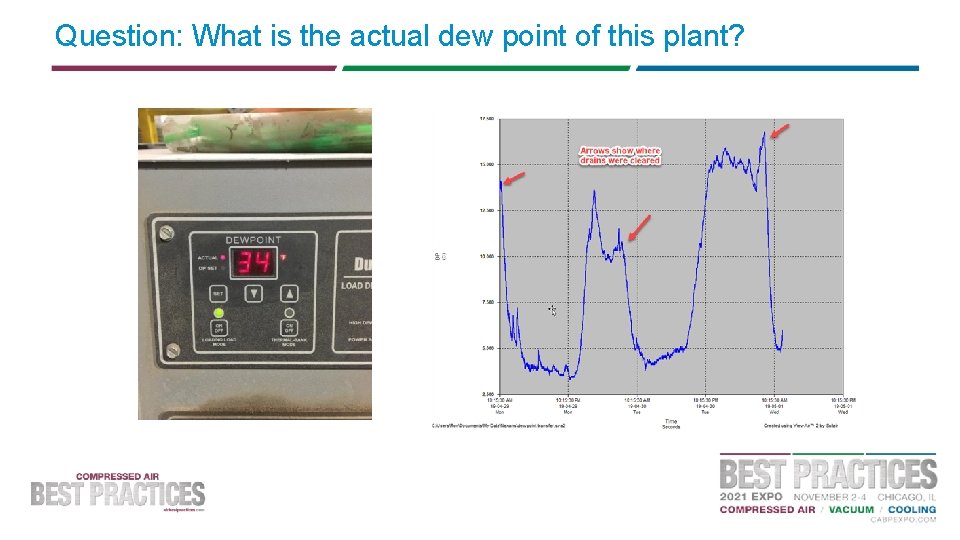
Question: What is the actual dew point of this plant?
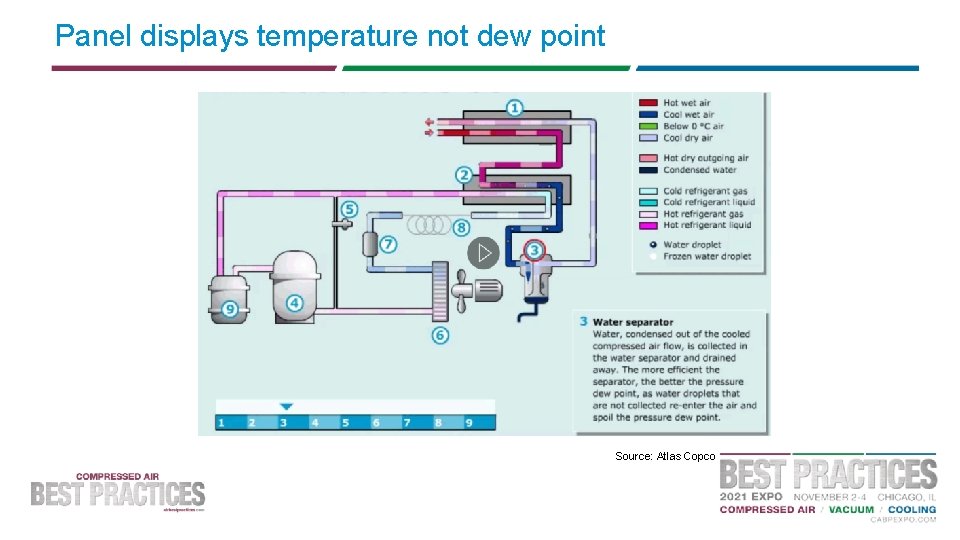
Panel displays temperature not dew point Source: Atlas Copco
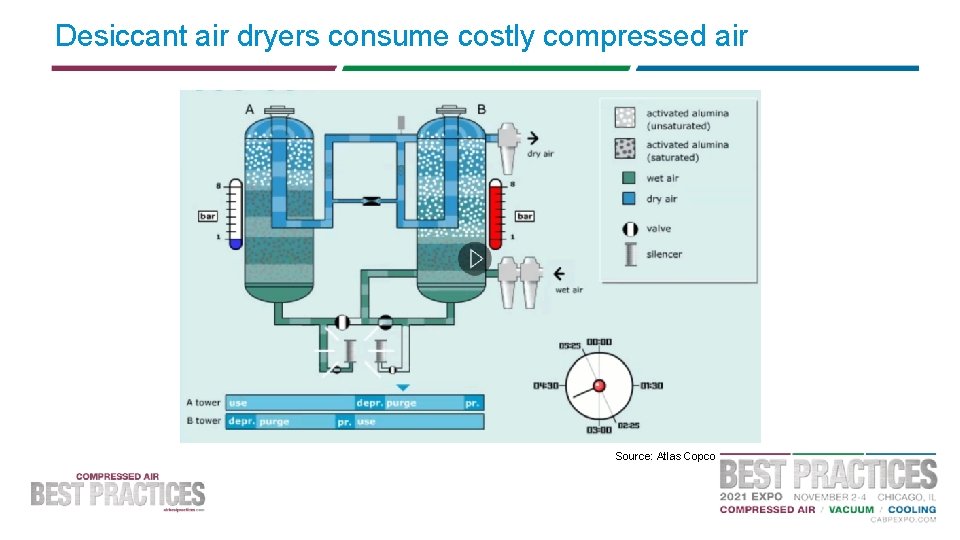
Desiccant air dryers consume costly compressed air Source: Atlas Copco
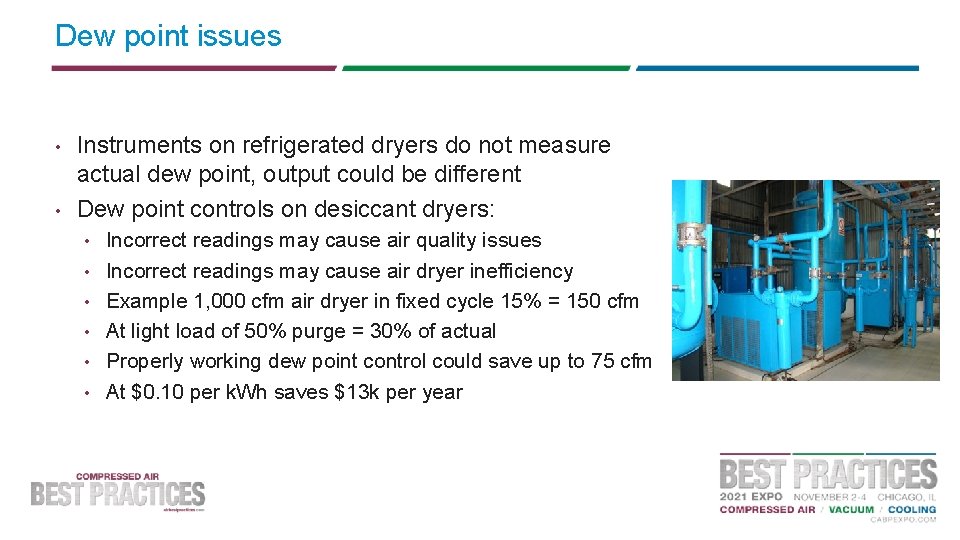
Dew point issues • • Instruments on refrigerated dryers do not measure actual dew point, output could be different Dew point controls on desiccant dryers: • • • Incorrect readings may cause air quality issues Incorrect readings may cause air dryer inefficiency Example 1, 000 cfm air dryer in fixed cycle 15% = 150 cfm At light load of 50% purge = 30% of actual Properly working dew point control could save up to 75 cfm At $0. 10 per k. Wh saves $13 k per year
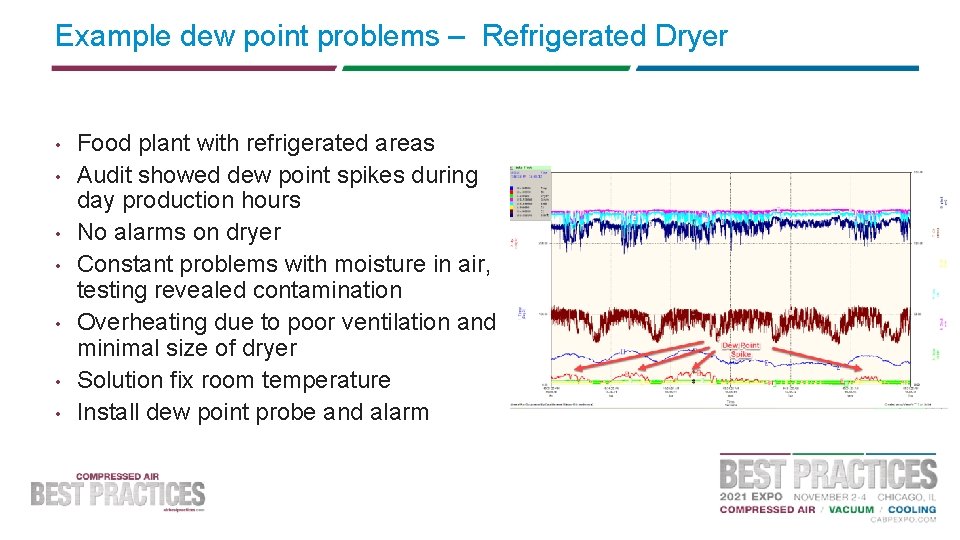
Example dew point problems – Refrigerated Dryer • • Food plant with refrigerated areas Audit showed dew point spikes during day production hours No alarms on dryer Constant problems with moisture in air, testing revealed contamination Overheating due to poor ventilation and minimal size of dryer Solution fix room temperature Install dew point probe and alarm
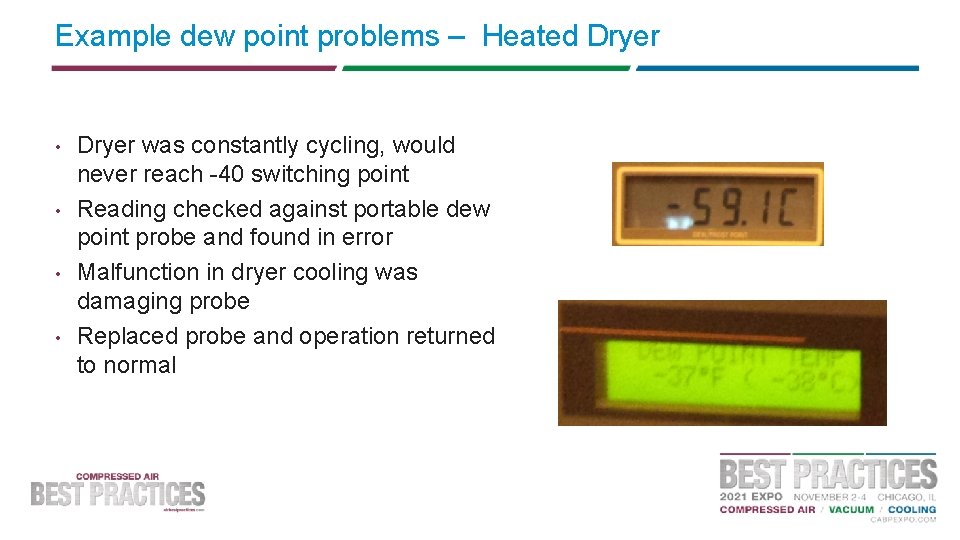
Example dew point problems – Heated Dryer • • Dryer was constantly cycling, would never reach -40 switching point Reading checked against portable dew point probe and found in error Malfunction in dryer cooling was damaging probe Replaced probe and operation returned to normal
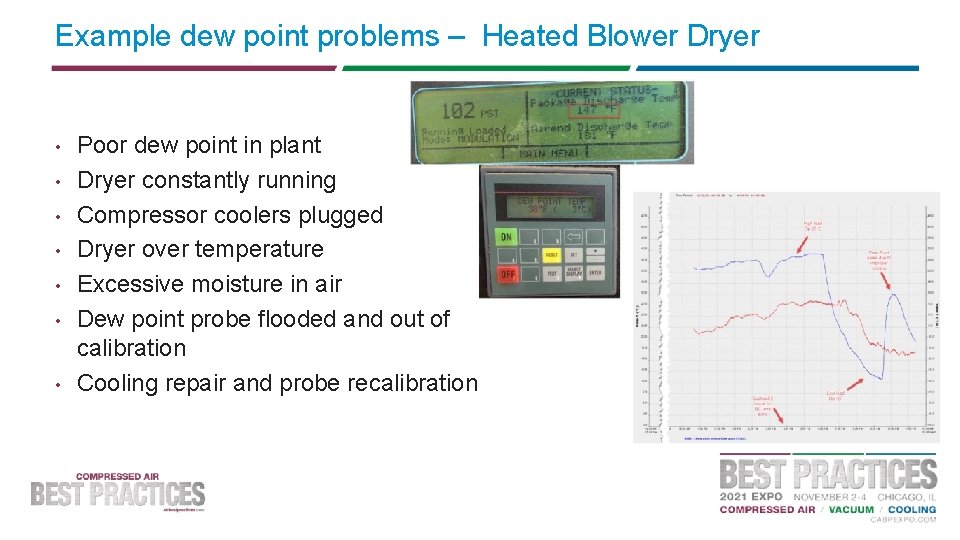
Example dew point problems – Heated Blower Dryer • • Poor dew point in plant Dryer constantly running Compressor coolers plugged Dryer over temperature Excessive moisture in air Dew point probe flooded and out of calibration Cooling repair and probe recalibration
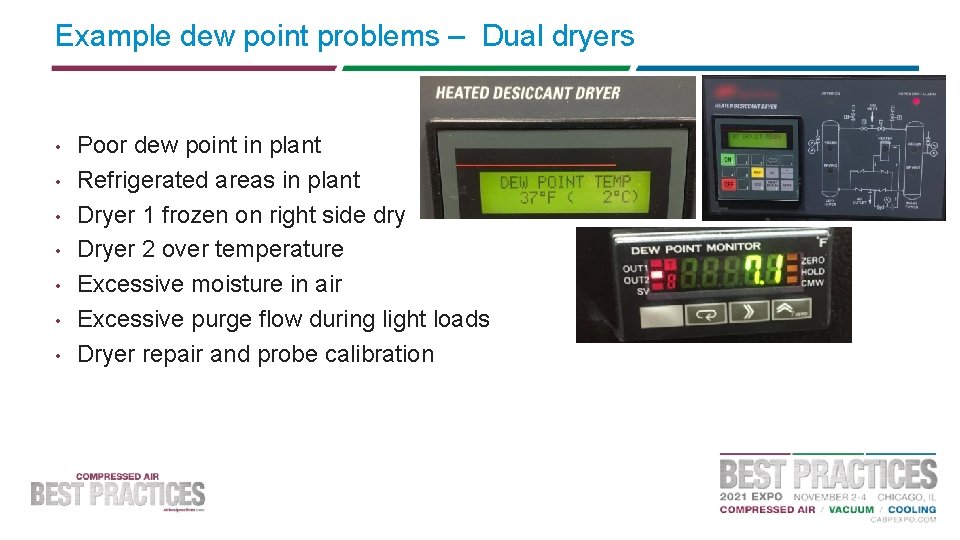
Example dew point problems – Dual dryers • • Poor dew point in plant Refrigerated areas in plant Dryer 1 frozen on right side dry Dryer 2 over temperature Excessive moisture in air Excessive purge flow during light loads Dryer repair and probe calibration
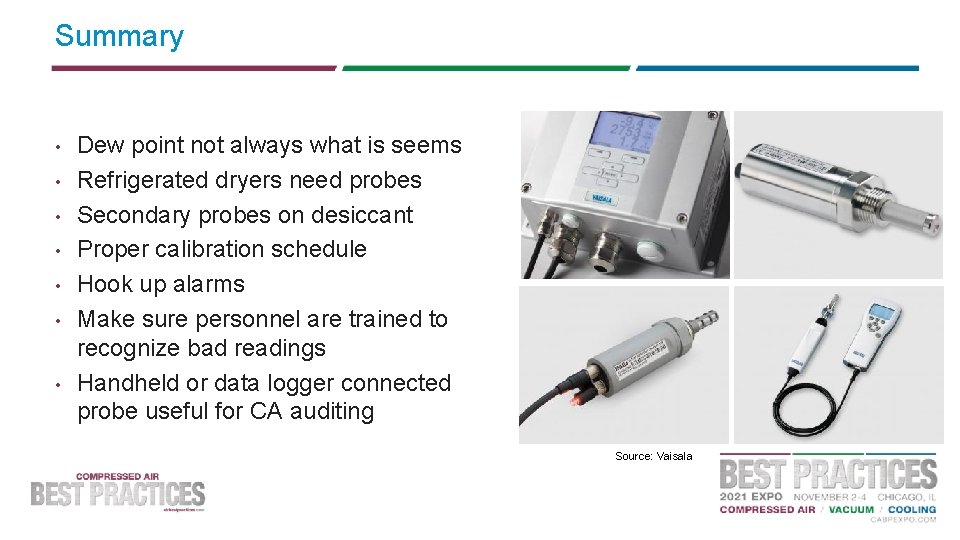
Summary • • Dew point not always what is seems Refrigerated dryers need probes Secondary probes on desiccant Proper calibration schedule Hook up alarms Make sure personnel are trained to recognize bad readings Handheld or data logger connected probe useful for CA auditing Source: Vaisala
About the Speaker • Business Development Engineer, VAISALA • Over 16 years of experience Justin Walsh VAISALA • Justin. Walsh@Vaisala. com Sponsored by
Topics § Energy Efficiency with Dew Point Control § Dew Point Sensor Technologies and their Performance § Selecting the Right Instrument for your Operation § Maintenance & Calibration Preserves Efficiency
Vaisala § 80+ years of experience providing measurement products and services § Trusted supplier of instrumentation to protect processes and explore the unknown § Measurement solutions for indoor and industrial environments ensure, product quality, cost/energy efficiency and personal safety and wellbeing January 1997 Vaisala launched the first ever polymer sensor for dew point measurements. DRYCAP® technology is now used in a wide variety of industrial applications. §
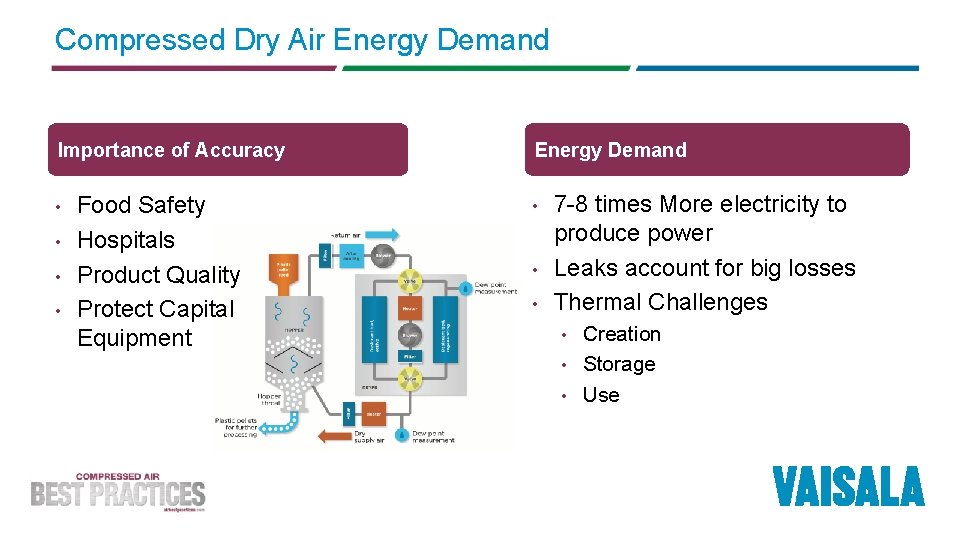
Compressed Dry Air Energy Demand Importance of Accuracy • • Food Safety Hospitals Product Quality Protect Capital Equipment Energy Demand • • • 7 -8 times More electricity to produce power Leaks account for big losses Thermal Challenges Creation • Storage • Use •
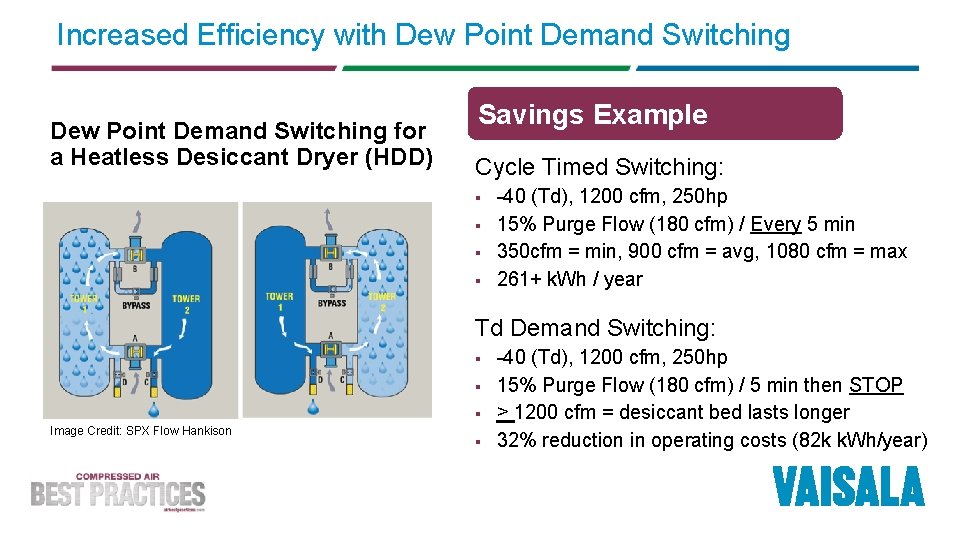
Increased Efficiency with Dew Point Demand Switching for a Heatless Desiccant Dryer (HDD) Savings Example Cycle Timed Switching: § § -40 (Td), 1200 cfm, 250 hp 15% Purge Flow (180 cfm) / Every 5 min 350 cfm = min, 900 cfm = avg, 1080 cfm = max 261+ k. Wh / year Td Demand Switching: § § § Image Credit: SPX Flow Hankison § -40 (Td), 1200 cfm, 250 hp 15% Purge Flow (180 cfm) / 5 min then STOP > 1200 cfm = desiccant bed lasts longer 32% reduction in operating costs (82 k k. Wh/year)
Dew Point Sensing Technologies § § § Chilled Mirror Metal (Al) Oxide Polymer Sensors
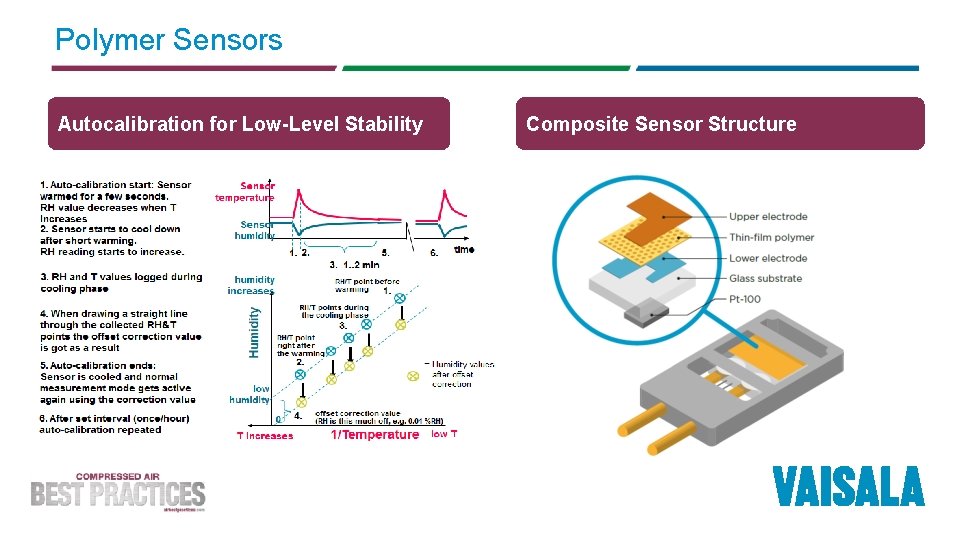
Polymer Sensors Autocalibration for Low-Level Stability Composite Sensor Structure
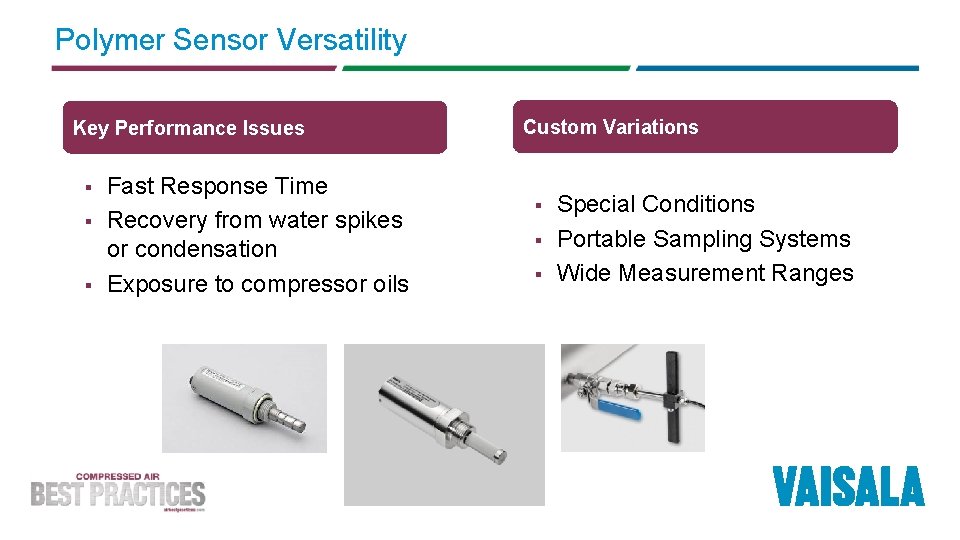
Polymer Sensor Versatility Key Performance Issues § § § Fast Response Time Recovery from water spikes or condensation Exposure to compressor oils Custom Variations § § § Special Conditions Portable Sampling Systems Wide Measurement Ranges
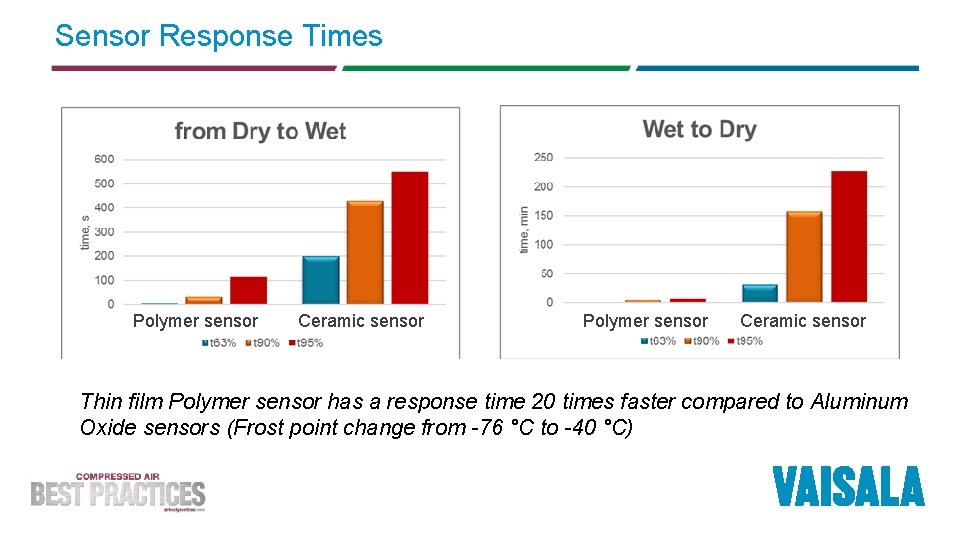
Sensor Response Times Polymer sensor Ceramic sensor Thin film Polymer sensor has a response time 20 times faster compared to Aluminum Oxide sensors (Frost point change from -76 °C to -40 °C)
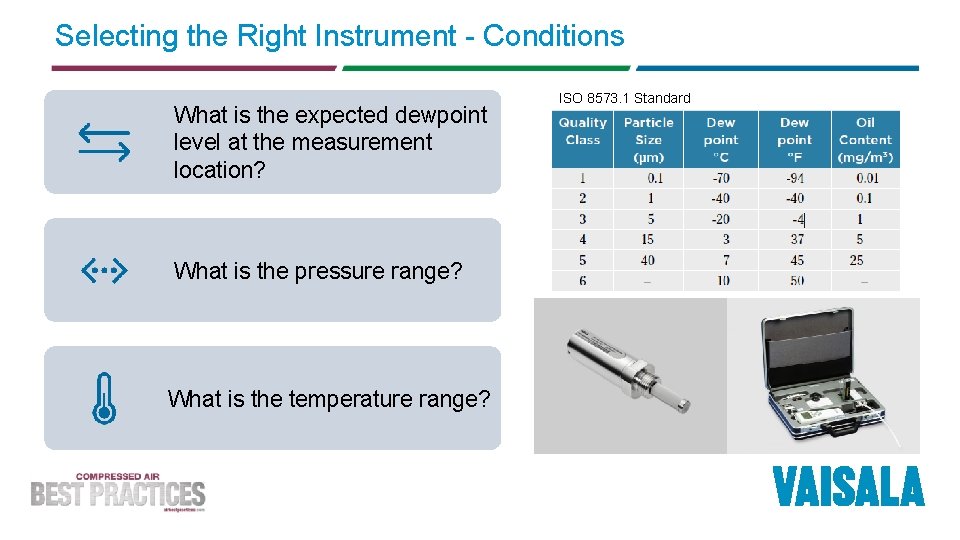
Selecting the Right Instrument - Conditions What is the expected dewpoint level at the measurement location? What is the pressure range? What is the temperature range? ISO 8573. 1 Standard
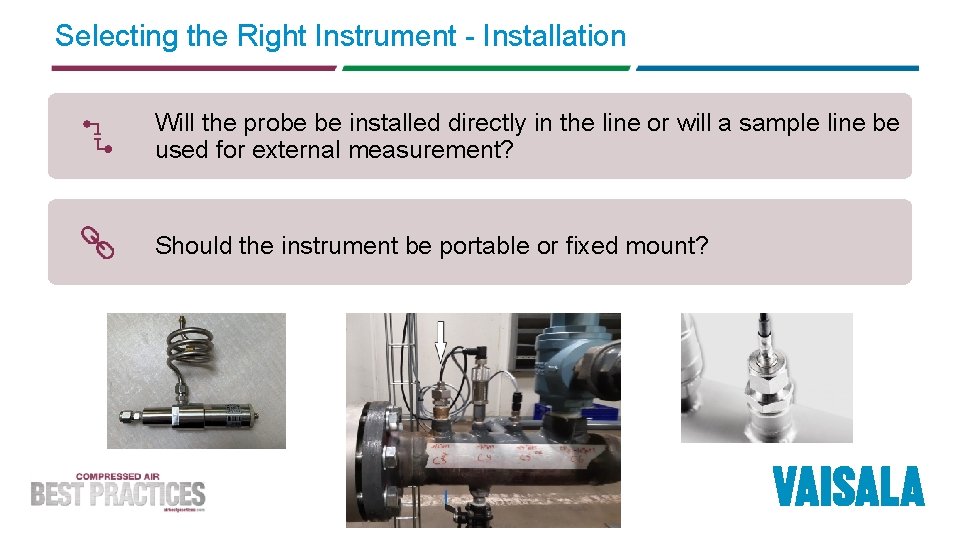
Selecting the Right Instrument - Installation Will the probe be installed directly in the line or will a sample line be used for external measurement? Should the instrument be portable or fixed mount?
Selecting the Right Instrument - Communication Signal output type– local display, analog, serial, Io. T Other features of interest – power supply, datalogging, alarm relays
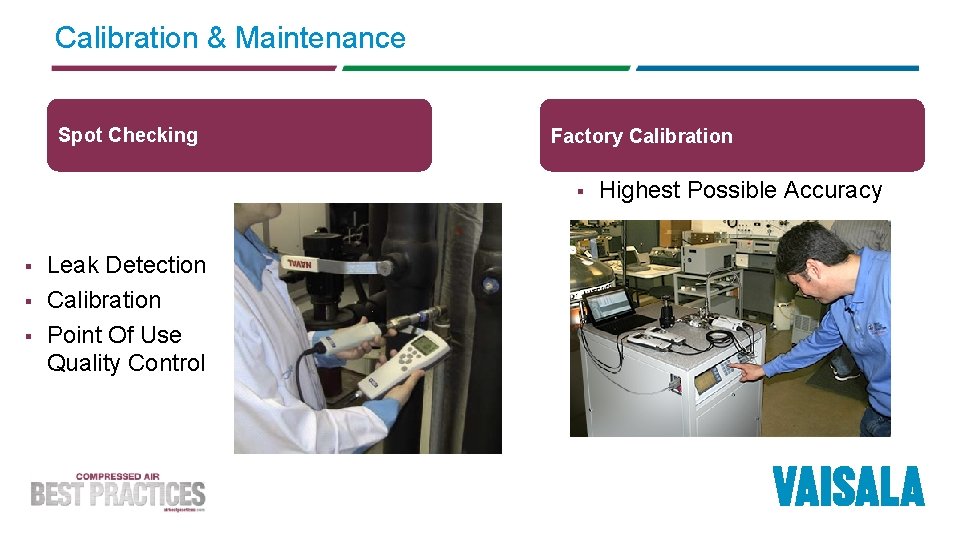
Calibration & Maintenance Spot Checking Factory Calibration § § Leak Detection Calibration Point Of Use Quality Control Highest Possible Accuracy
Field Calibration Resources Portable Instruments § § § Portable Direct Connection Interfacing Software Solutions
…it’s more important than ever to base decisions on accurate and reliable data. Thank You
Measuring Dew Point for Process Safety, Quality and Efficiency Q&A Please submit any questions through the Question Window on your Go. To. Webinar interface, directing them to Compressed Air Best Practices Magazine. Our panelists will do their best to address your questions and will follow up with you on anything that goes unanswered during this session. Thank you for attending! Sponsored by
Thank you for attending! The recording and slides of this webinar will be made available to attendees via email later today. PDH Certificates will be e-mailed to Attendees within 2 days.
November Webinar Measuring KPI’s: k. W, Flow, Pressure, Dew Point Sponsored by Tim Dugan Keynote Speaker Compression Engineering Corporation Thursday, November 12, 2020 – 2: 00 PM EST Register for free at www. airbestpractices. com/magazine/webinars