
Measuring dark matter distribution around supermassive black hole
Measuring dark matter distribution around supermassive black hole with LISA Speaker: Rongzi ZHOU The Chinese University of Hong Kong WHO I WAS ?

Team Supervisor Tjonnie Li Ph. D Student Otto Hannuksela MPhil Student Undergraduate Student Kaye Li Rongzi Zhou
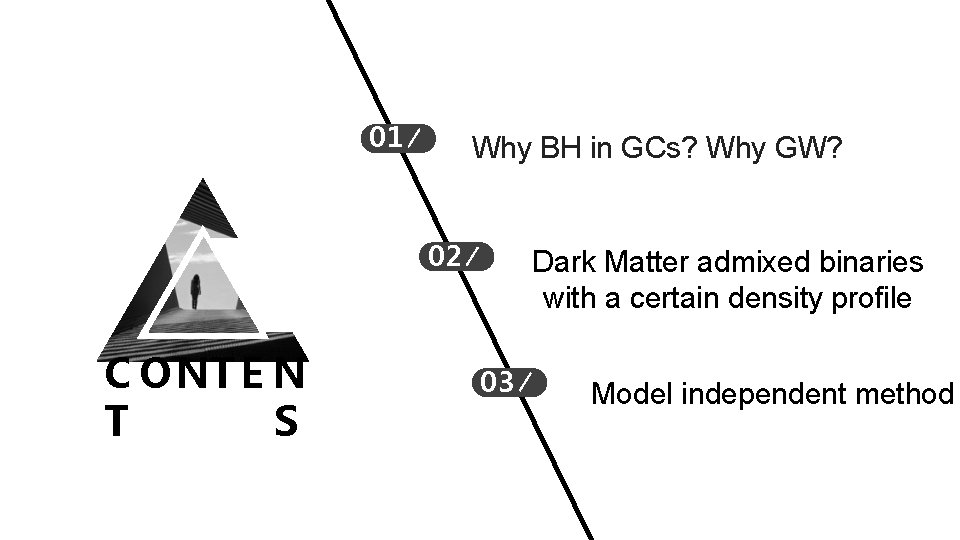
01 Why BH in GCs? Why GW? 02 C ONT E N T S Dark Matter admixed binaries with a certain density profile 03 Model independent method

What are we interested in? Methods to detecting dark matter 01
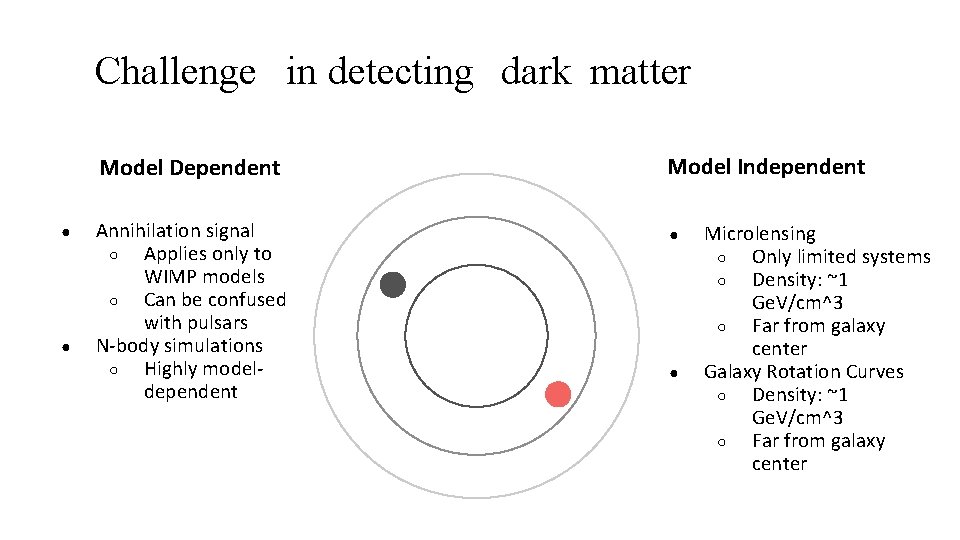
Challenge in detecting dark matter Model Dependent ● ● Annihilation signal ○ Applies only to WIMP models ○ Can be confused with pulsars N-body simulations ○ Highly modeldependent Model Independent ● ● Microlensing ○ Only limited systems ○ Density: ~1 Ge. V/cm^3 ○ Far from galaxy center Galaxy Rotation Curves ○ Density: ~1 Ge. V/cm^3 ○ Far from galaxy center
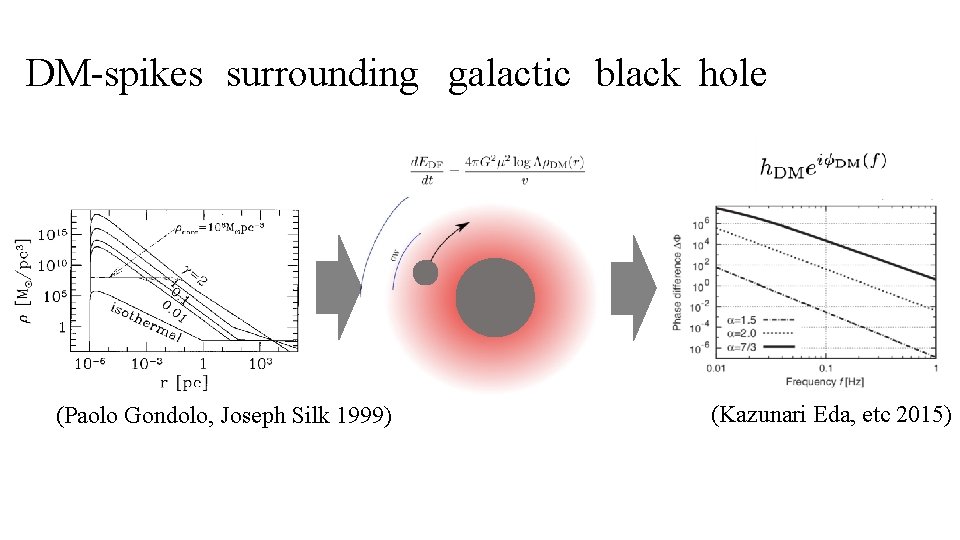
DM-spikes surrounding galactic black hole (Paolo Gondolo, Joseph Silk 1999) (Kazunari Eda, etc 2015)
What have we done? Dark Matter Admixed Binaries Study 02
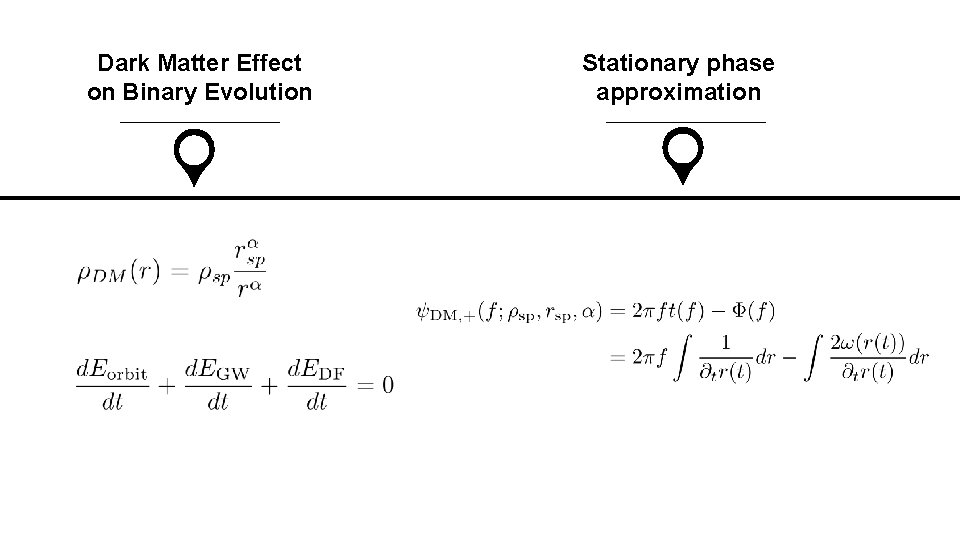
Dark Matter Effect on Binary Evolution Stationary phase approximation

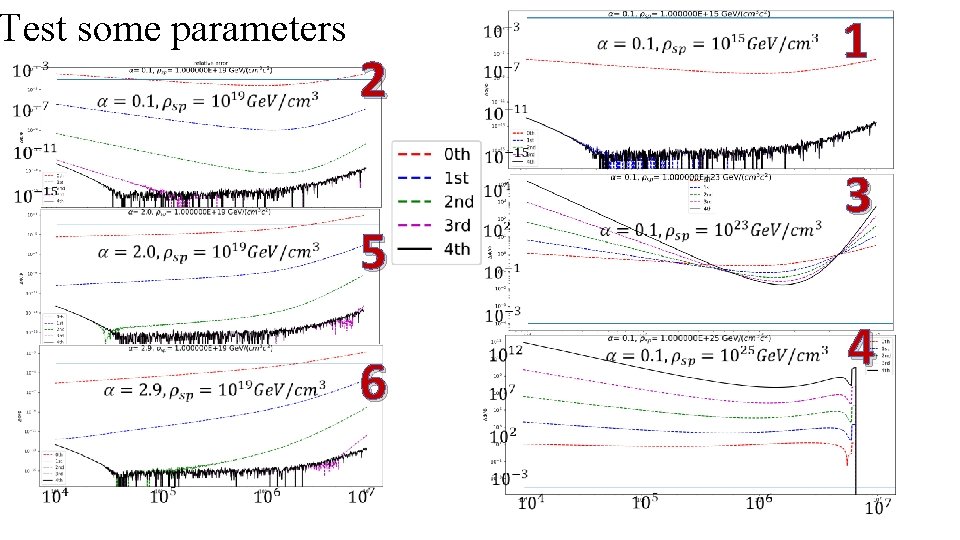
Test some parameters 2 5 1 3 6 4
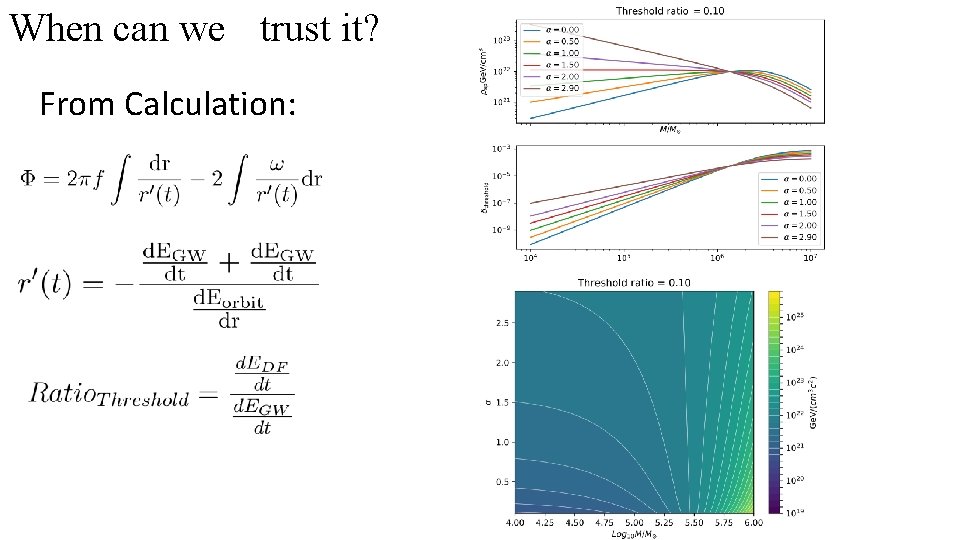
When can we trust it? From Calculation:
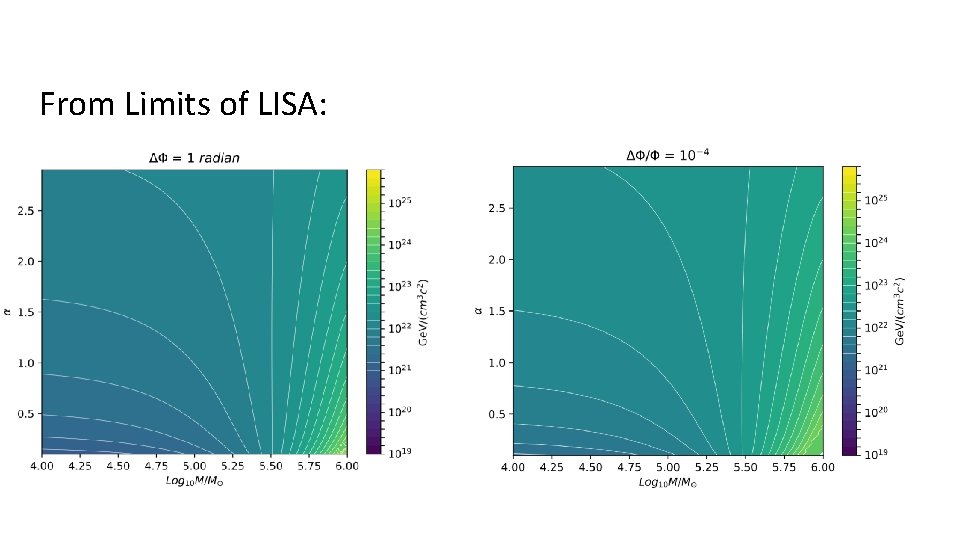
From Limits of LISA:
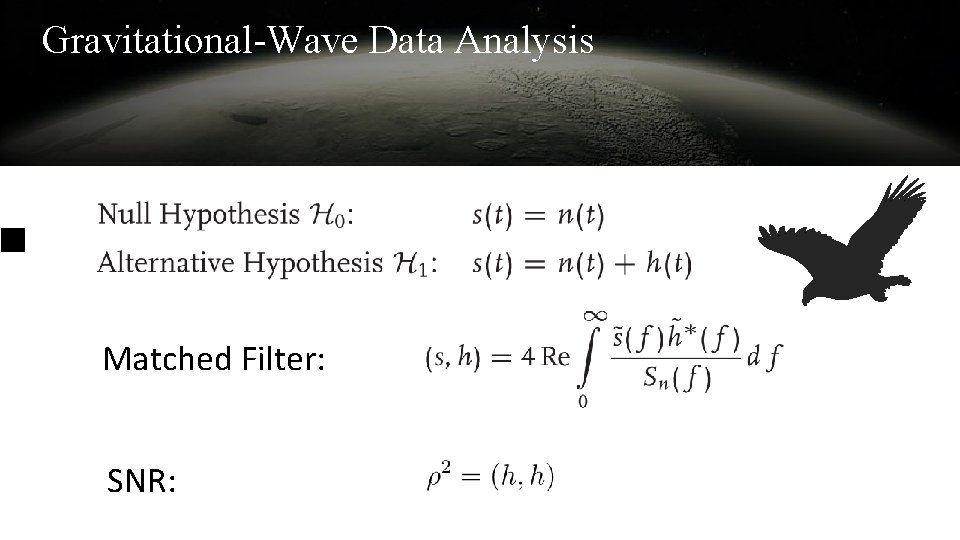
Gravitational-Wave Data Analysis Matched Filter: SNR:
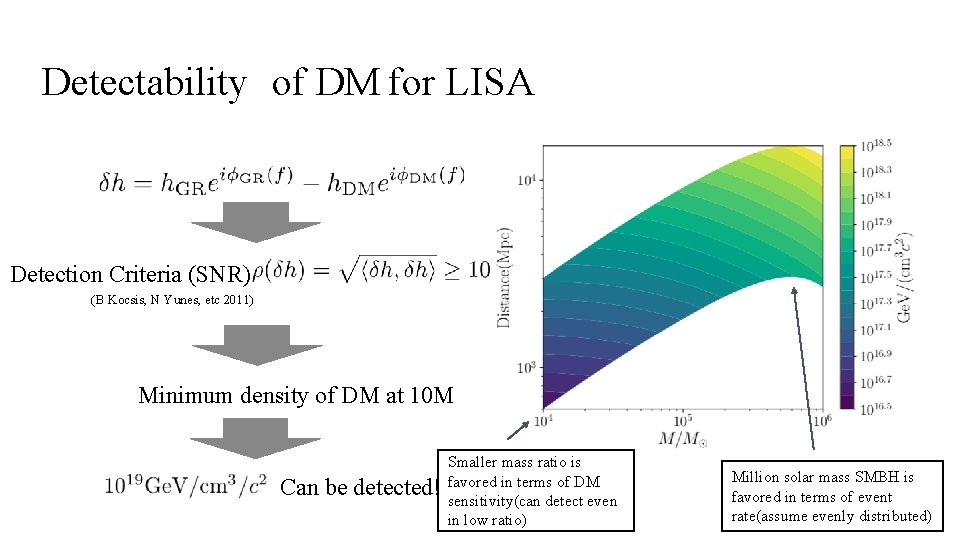
Detectability of DM for LISA Detection Criteria (SNR) (B Kocsis, N Yunes, etc 2011) Minimum density of DM at 10 M Can be detected! Smaller mass ratio is favored in terms of DM sensitivity(can detect even in low ratio) Million solar mass SMBH is favored in terms of event rate(assume evenly distributed)
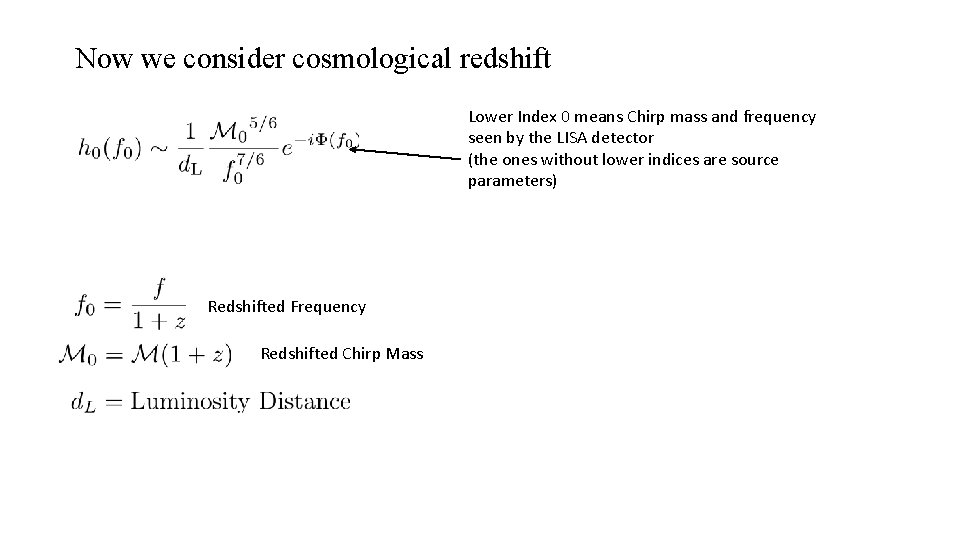
Now we consider cosmological redshift Lower Index 0 means Chirp mass and frequency seen by the LISA detector (the ones without lower indices are source parameters) Redshifted Frequency Redshifted Chirp Mass
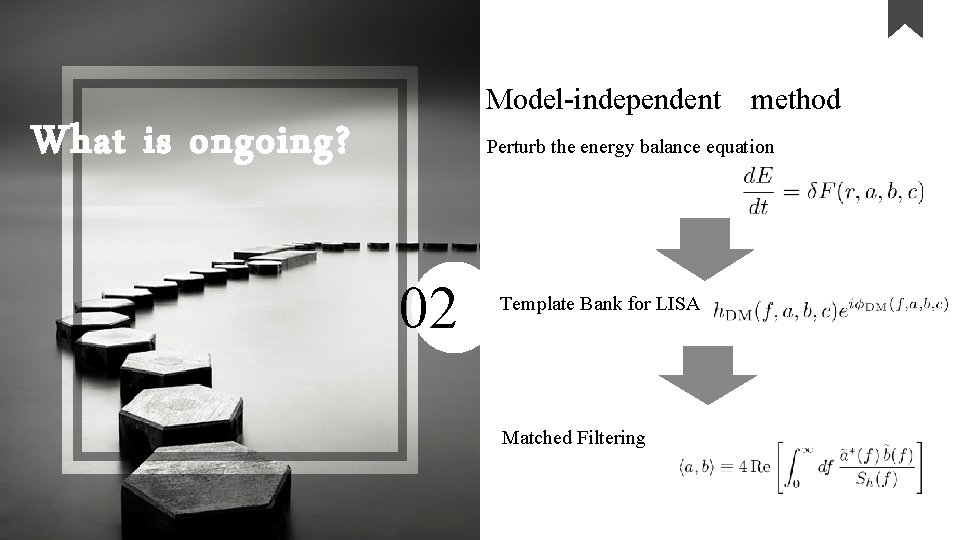
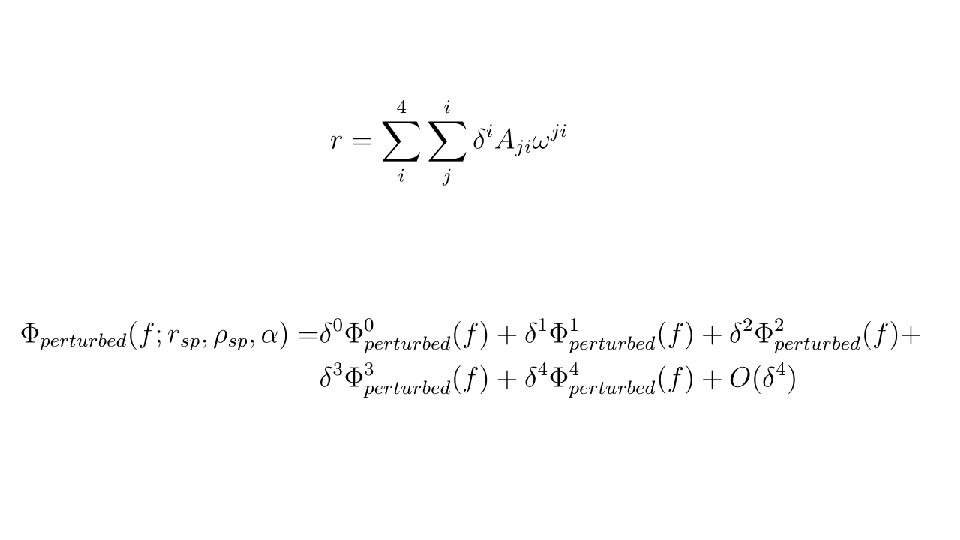
Model-independent What is ongoing? method Perturb the energy balance equation 02 Template Bank for LISA Matched Filtering

That’s our journey casing for the whisper from our universe Thank you!
- Slides: 18