
Measuring Civic Competence Across Europe A Complex Picture

- Slides: 29
Measuring Civic Competence Across Europe: A Complex Picture Bryony Hoskins European Commission Centre for Research on Lifelong Learning (CRELL) 1
Active Citizenship in a Learning Context Aims of the Project: • To propose indicators on active citizenship and learning active citizenship • Evaluate and monitor the success of education and training policies on active citizenship • To explore the relationship between the learning for and the practice of active citizenship 2
Policy Context • Lisbon Strategy • Progress report 2004 onwards • Need indicators on active citizenship 2005 Council • European Framework on Key Competence 2006 • Council Conclusion coherent framework indicators and benchmarks 2007 • First indicators on Active Citizenship 2007 EC reporting 3
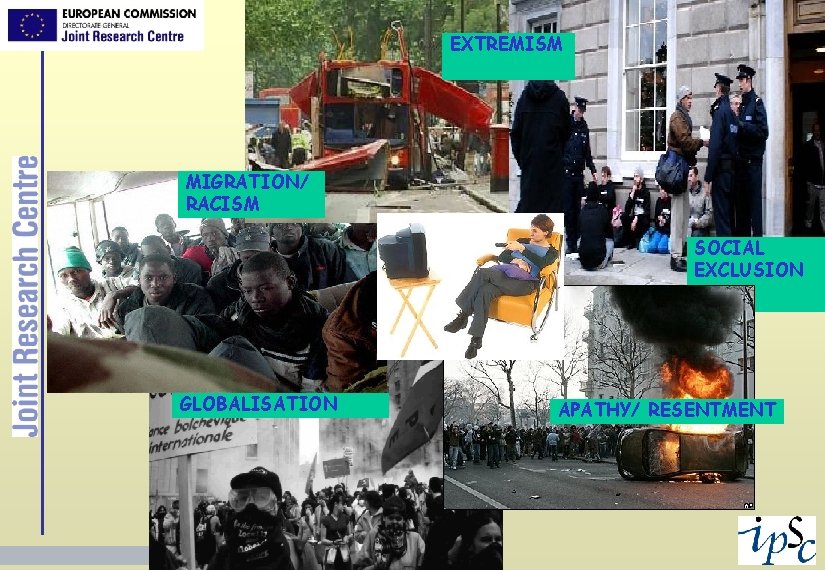
EXTREMISM MIGRATION/ RACISM SOCIAL EXCLUSION GLOBALISATION 4 APATHY/ RESENTMENT
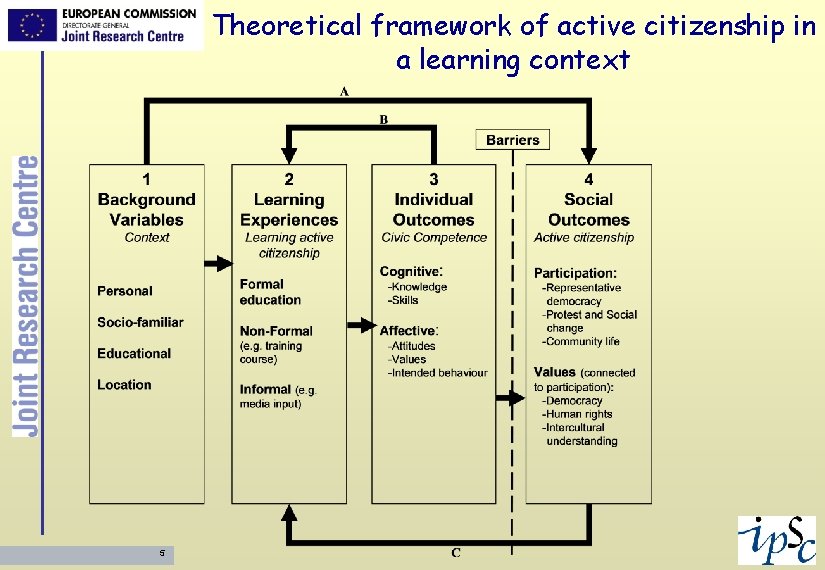
Theoretical framework of active citizenship in a learning context 5
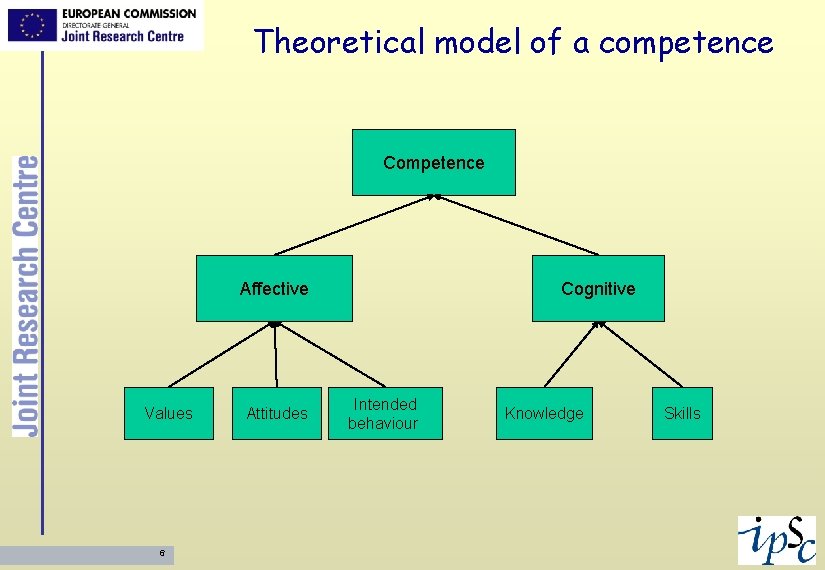
Theoretical model of a competence Competence Affective Values 6 Attitudes Cognitive Intended behaviour Knowledge Skills
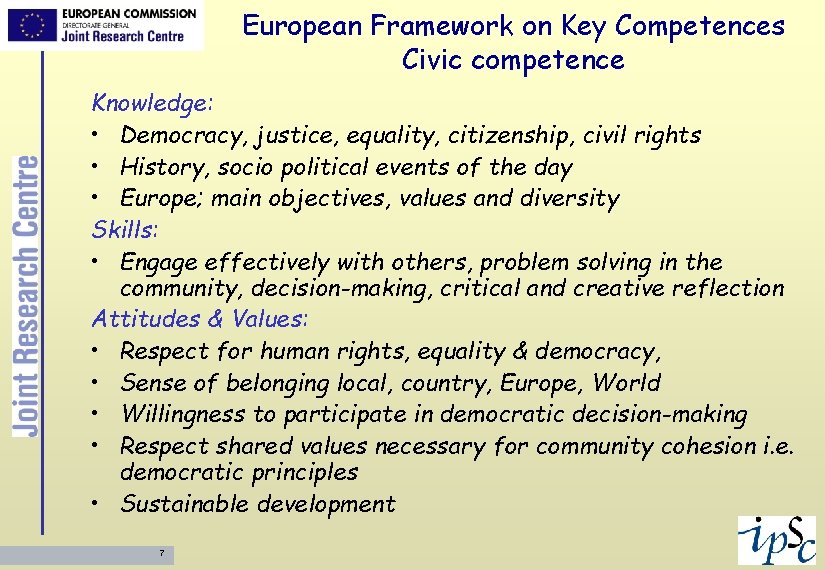
European Framework on Key Competences Civic competence Knowledge: • Democracy, justice, equality, citizenship, civil rights • History, socio political events of the day • Europe; main objectives, values and diversity Skills: • Engage effectively with others, problem solving in the community, decision-making, critical and creative reflection Attitudes & Values: • Respect for human rights, equality & democracy, • Sense of belonging local, country, Europe, World • Willingness to participate in democratic decision-making • Respect shared values necessary for community cohesion i. e. democratic principles • Sustainable development 7
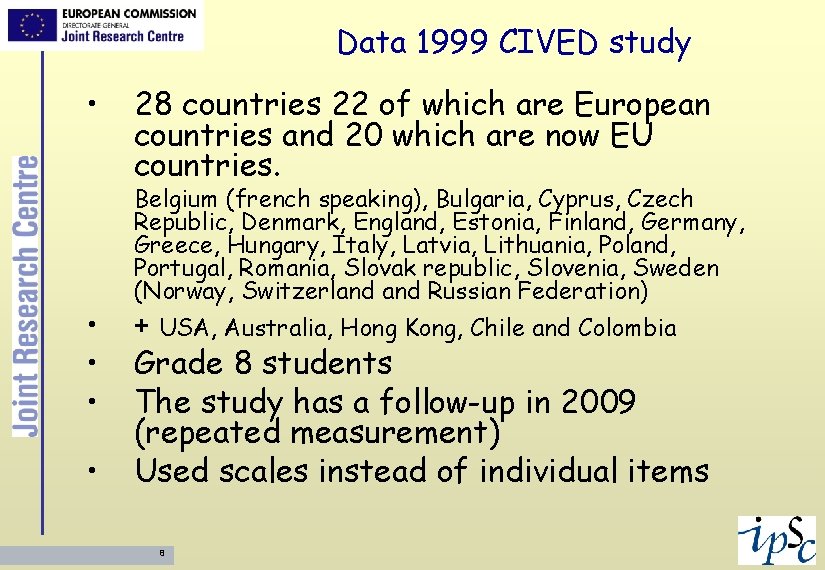
Data 1999 CIVED study • • • 28 countries 22 of which are European countries and 20 which are now EU countries. Belgium (french speaking), Bulgaria, Cyprus, Czech Republic, Denmark, England, Estonia, Finland, Germany, Greece, Hungary, Italy, Latvia, Lithuania, Poland, Portugal, Romania, Slovak republic, Slovenia, Sweden (Norway, Switzerland Russian Federation) + USA, Australia, Hong Kong, Chile and Colombia Grade 8 students The study has a follow-up in 2009 (repeated measurement) Used scales instead of individual items 8
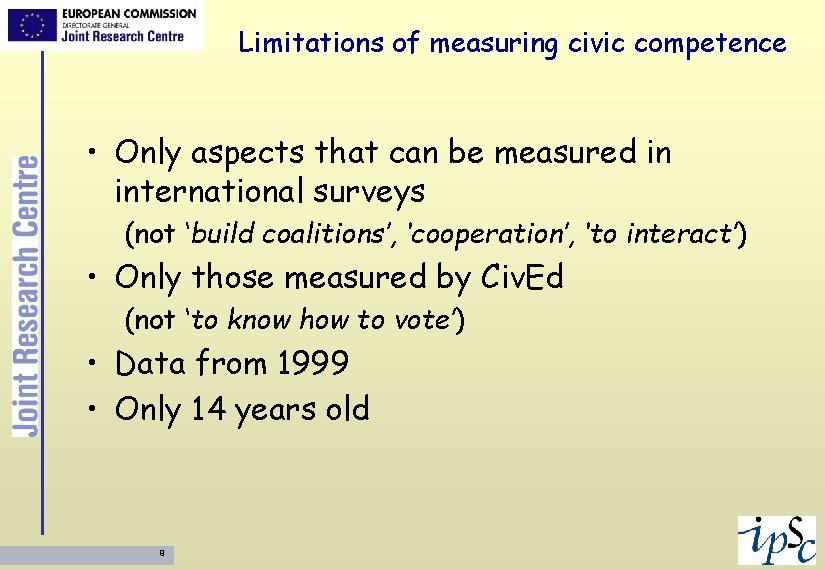
Limitations of measuring civic competence • Only aspects that can be measured in international surveys (not ‘build coalitions’, ‘cooperation’, ‘to interact’) • Only those measured by Civ. Ed (not ‘to know how to vote’) • Data from 1999 • Only 14 years old 9
Civic competence & CIVED Compared lists • Some uncovered: history & culture • Most partially or poorly covered Removed • Questions formulated to take left or right political positions removed (e. g. Immigration) 10
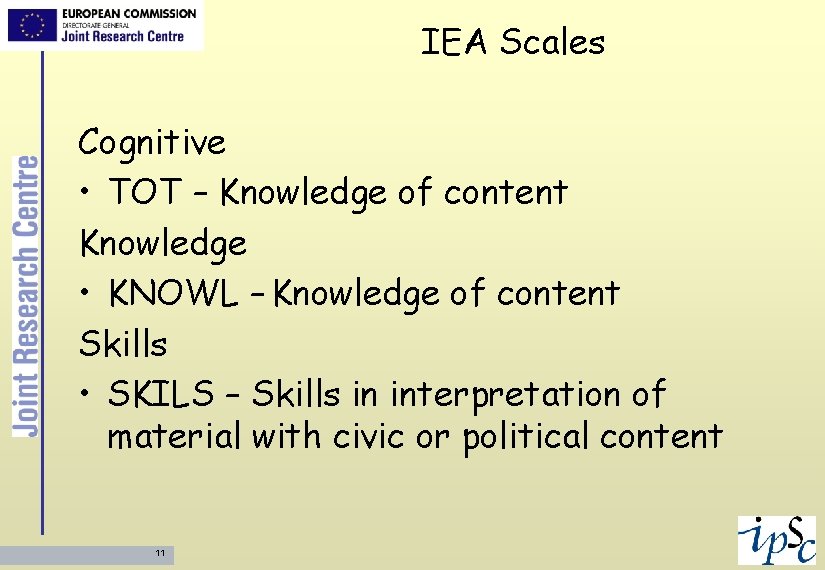
IEA Scales Cognitive • TOT – Knowledge of content Knowledge • KNOWL – Knowledge of content Skills • SKILS – Skills in interpretation of material with civic or political content 11
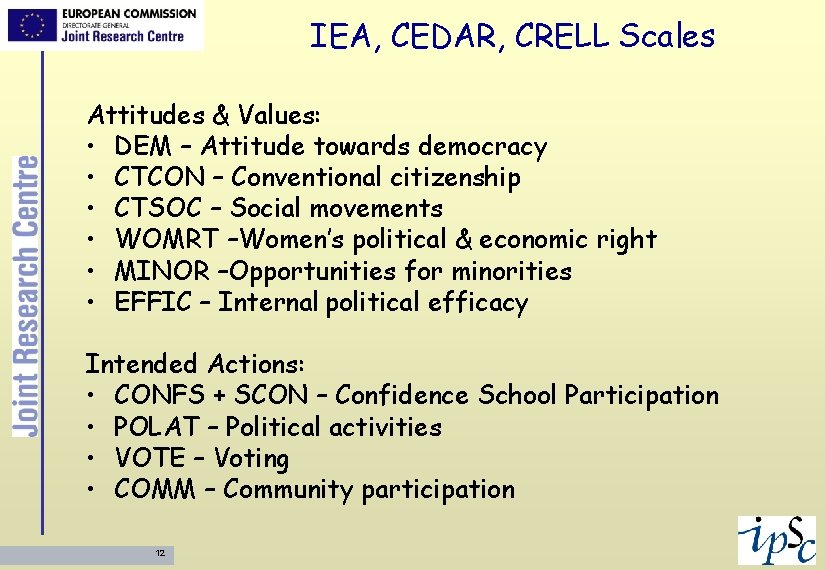
IEA, CEDAR, CRELL Scales Attitudes & Values: • DEM – Attitude towards democracy • CTCON – Conventional citizenship • CTSOC – Social movements • WOMRT –Women’s political & economic right • MINOR –Opportunities for minorities • EFFIC – Internal political efficacy Intended Actions: • CONFS + SCON – Confidence School Participation • POLAT – Political activities • VOTE – Voting • COMM – Community participation 12
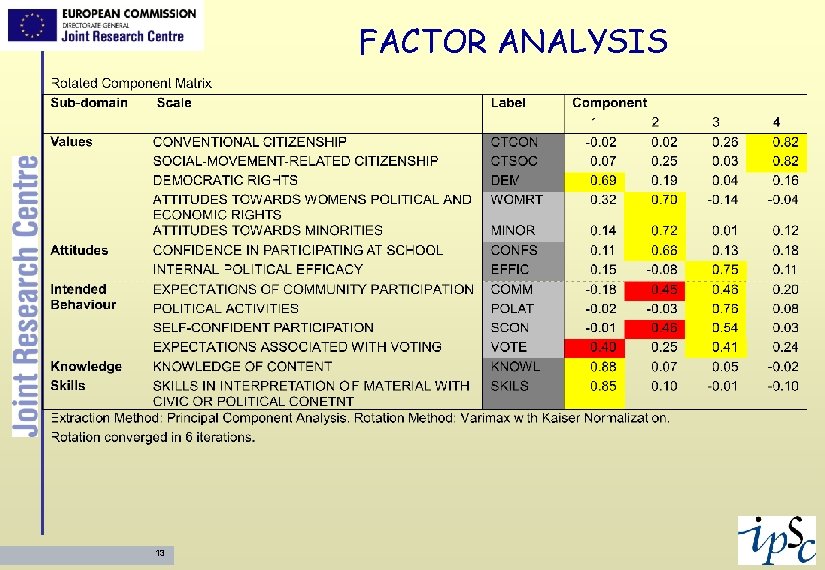
FACTOR ANALYSIS 13
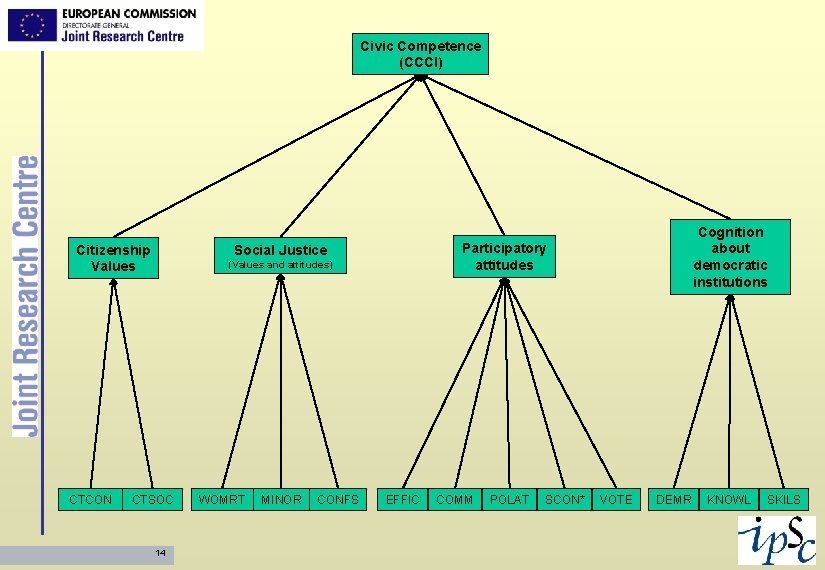
Civic Competence (CCCI) Citizenship Values CTCON Participatory attitudes Social Justice (Values and attitudes) CTSOC 14 WOMRT MINOR CONFS Cognition about democratic institutions EFFIC COMM POLAT SCON* VOTE DEMR KNOWL SKILS
Results of the Composite Indicator 15
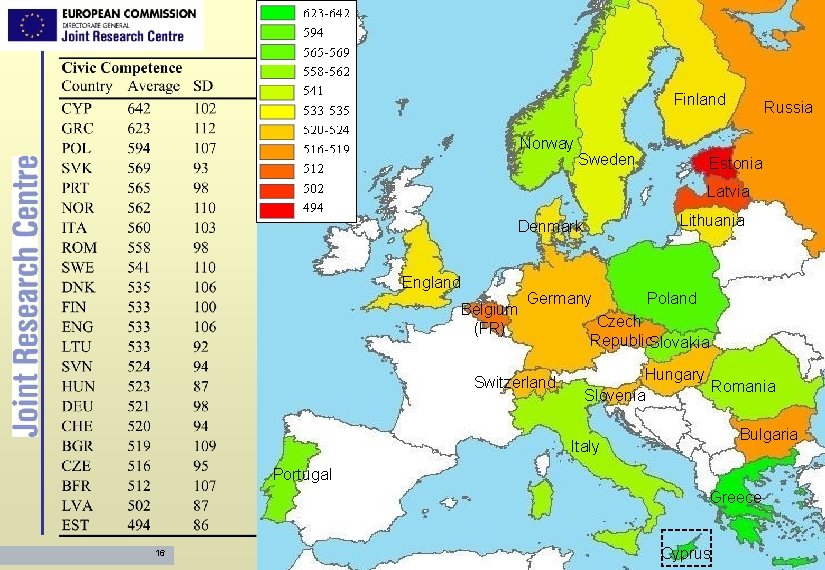
Finland Norway Sweden Russia Estonia Latvia Lithuania Denmark England Belgium (FR) Germany Switzerland Poland Czech Republic. Slovakia Hungary Romania Slovenia Bulgaria Italy Portugal Greece 16 Cyprus
Civic Competence Composite Indicator • Overall mixed results • Not typical score board results • Greece & Cyprus highest score 17
18
19
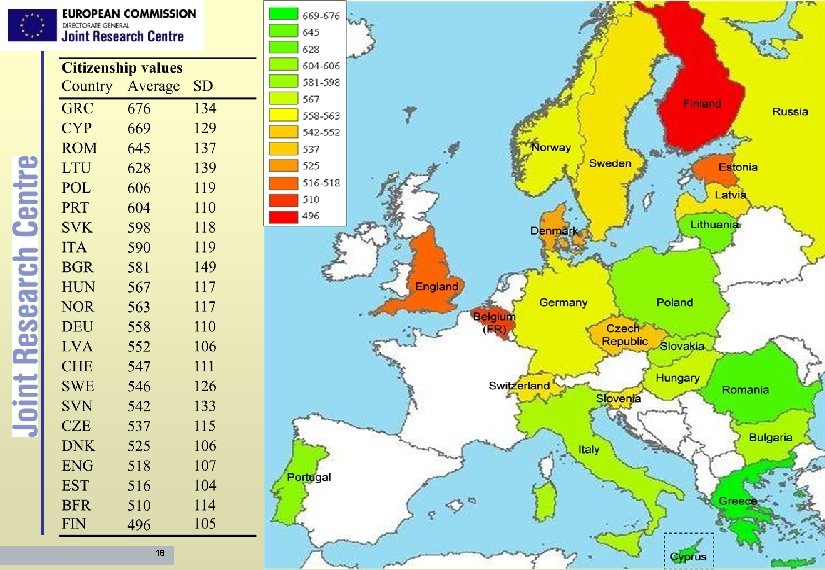
Citizenship Values & Attitudes towards participation • South and East Europe perform well for Participatory attitudes and Citizenship values: • Romania and Lithuania high • Southern European top (Greece and Cyprus) • North and West Europe low • Denmark, England, Belgium-Fr and Finland lowest 20
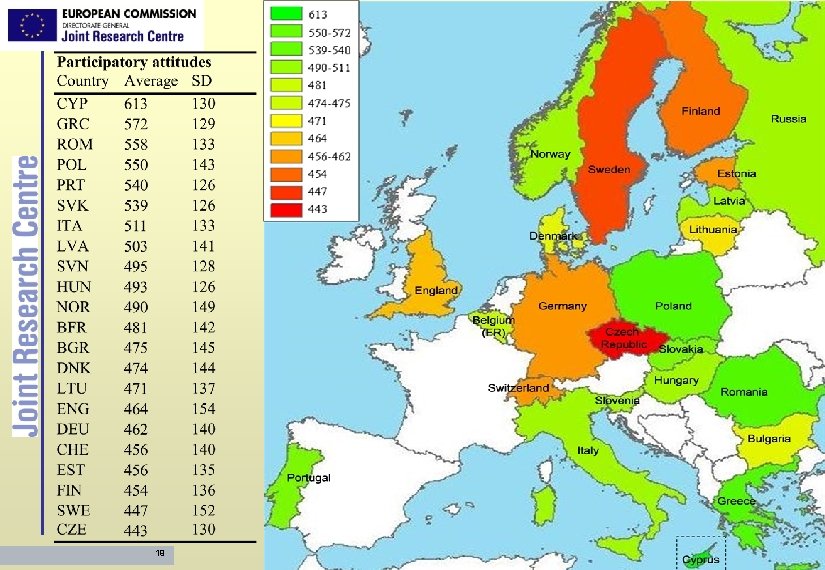
Citizenship Values & Attitudes towards participation • South and East Europe perform well for Participatory attitudes and Citizenship values Participatory attitudes: • South & East High: Cyprus, Portugal, Romania, Poland & Slovakia • Most North & West Low: Denmark, Sweden & Finland/ Germany, England & Switzerland 21
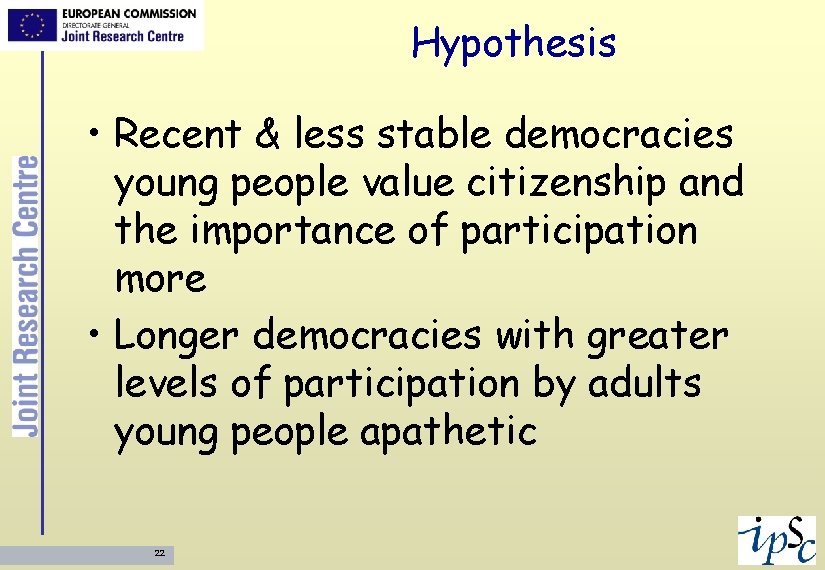
Hypothesis • Recent & less stable democracies young people value citizenship and the importance of participation more • Longer democracies with greater levels of participation by adults young people apathetic 22
23
24
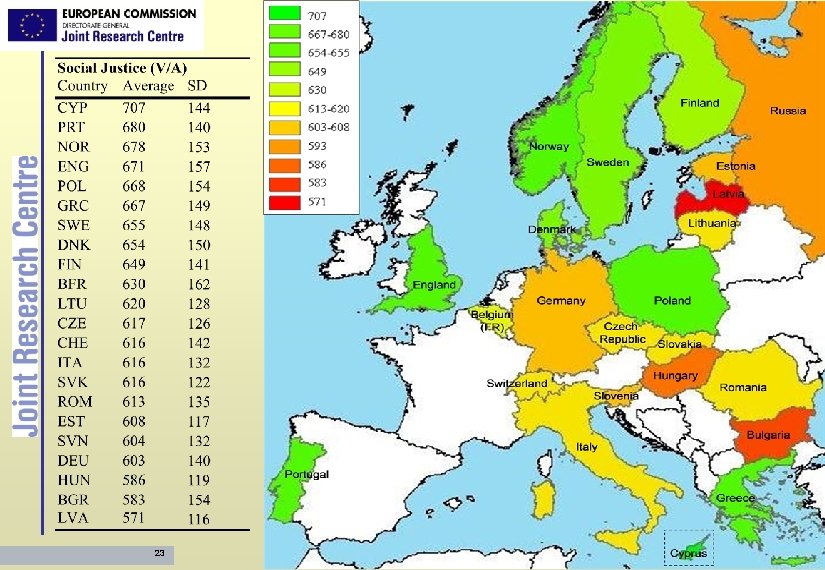
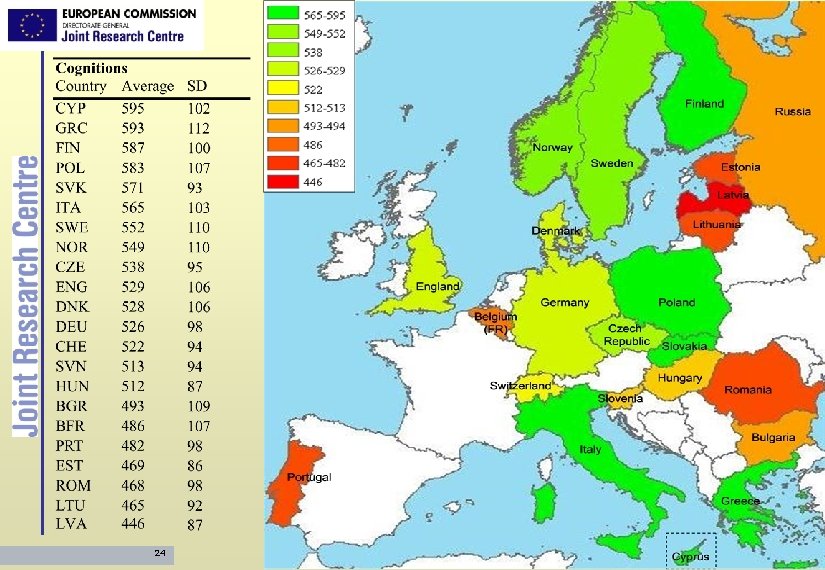
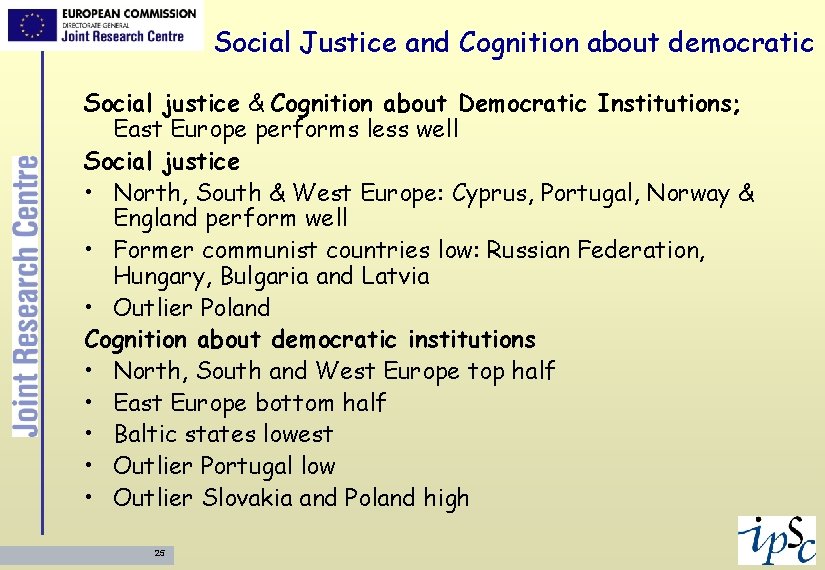
Social Justice and Cognition about democratic Social justice & Cognition about Democratic Institutions; East Europe performs less well Social justice • North, South & West Europe: Cyprus, Portugal, Norway & England perform well • Former communist countries low: Russian Federation, Hungary, Bulgaria and Latvia • Outlier Poland Cognition about democratic institutions • North, South and West Europe top half • East Europe bottom half • Baltic states lowest • Outlier Portugal low • Outlier Slovakia and Poland high 25
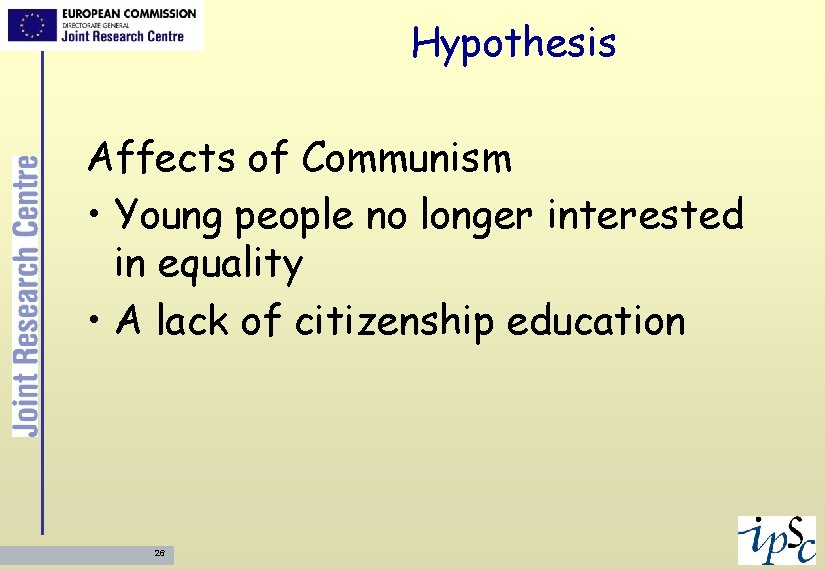
Hypothesis Affects of Communism • Young people no longer interested in equality • A lack of citizenship education 26
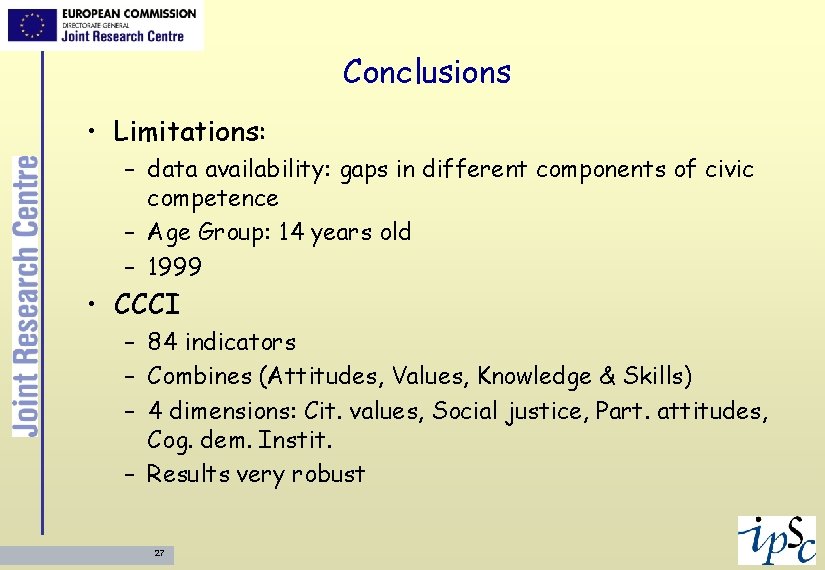
Conclusions • Limitations: – data availability: gaps in different components of civic competence – Age Group: 14 years old – 1999 • CCCI – 84 indicators – Combines (Attitudes, Values, Knowledge & Skills) – 4 dimensions: Cit. values, Social justice, Part. attitudes, Cog. dem. Instit. – Results very robust 27
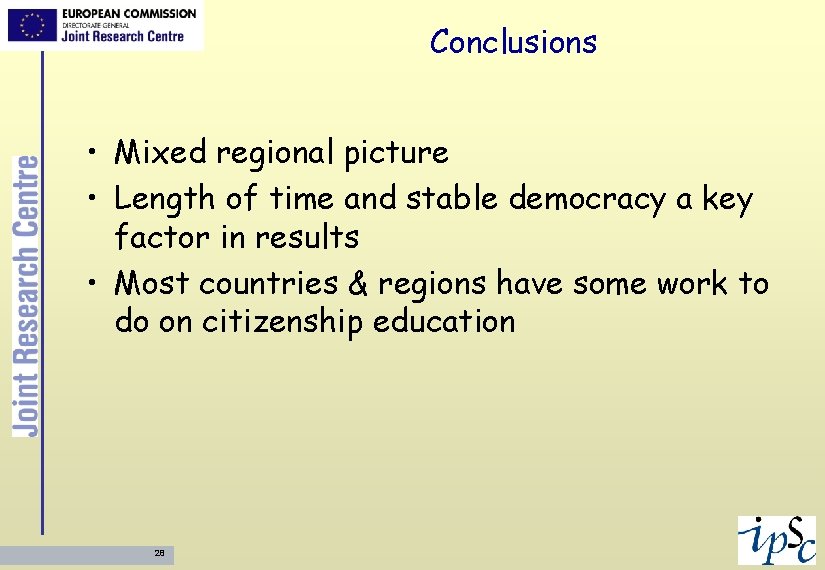
Conclusions • Mixed regional picture • Length of time and stable democracy a key factor in results • Most countries & regions have some work to do on citizenship education 28
Thank you 29