
Measures to Prevent Control Vancomycin Resistant Enterococci VRE





- Slides: 52
Measures to Prevent & Control Vancomycin. Resistant Enterococci (VRE). Do they matter? Hilary Humphreys Royal College of Surgeons in Ireland (RCSI) & Beaumont Hospital Dublin Hosted by Prof. Jean-Yves Maillard Cardiff University, Wales www. webbertraining. com September 5, 2019
Declarations The views expressed are in a professional but personal context & are not necessarily those of the RCSI & Beaumont Hospital, Dublin. I have recently received research funding from Pfizer & Astellas. I have also provided professional advice to Pfizer 2
Objectives A. To be fully appraised on the current understanding of the clinical importance of VRE B. To be fully cognizant of the significance of environmental contamination in the spread of VRE C. To understand the arguments for & against maintaining contact precautions as a VRE prevention & control measure 3
Outline Introductory Remarks Clinical Importance - Impact - Costs Surveillance, Contact Precautions & VRE - For & Against Environmental Contamination Conclusions 4
Introductory Comments 5
Enterococci • Previously, ‘faecal streptococci’ • Normal inhabitants of the gut & genitourinary tract • Low grade pathogens, less virulent than Staph. aureus • Commonest species are Enterococcus faecalis, E. faecium (EFm) 6
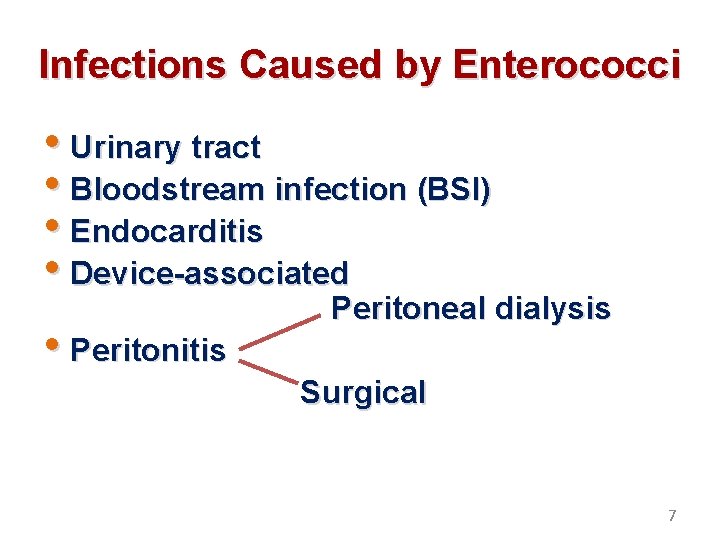
Infections Caused by Enterococci • Urinary tract • Bloodstream infection (BSI) • Endocarditis • Device-associated • Peritonitis Peritoneal dialysis Surgical 7
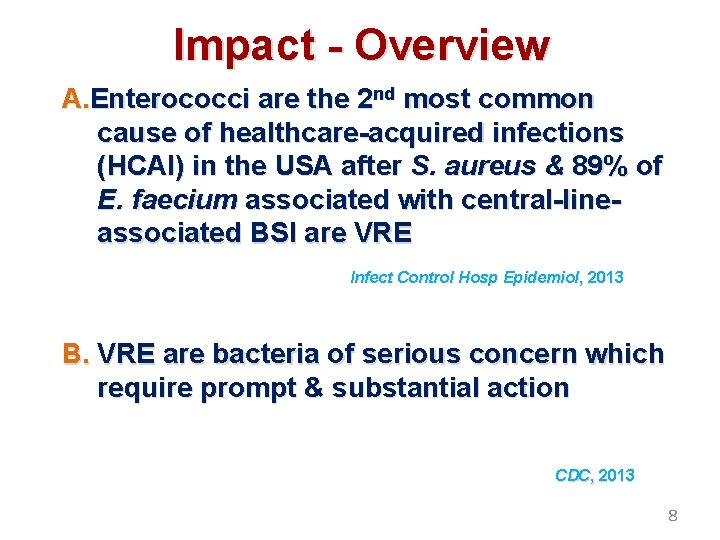
Impact - Overview A. Enterococci are the 2 nd most common cause of healthcare-acquired infections (HCAI) in the USA after S. aureus & 89% of E. faecium associated with central-lineassociated BSI are VRE Infect Control Hosp Epidemiol, 2013 B. VRE are bacteria of serious concern which require prompt & substantial action CDC, 2013 8
Clinical Importance 9
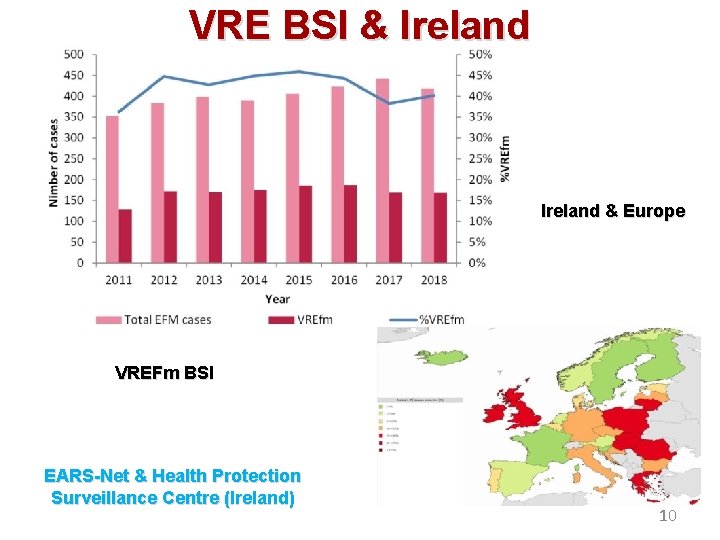
VRE BSI & Ireland & Europe VREFm BSI EARS-Net & Health Protection Surveillance Centre (Ireland) 10
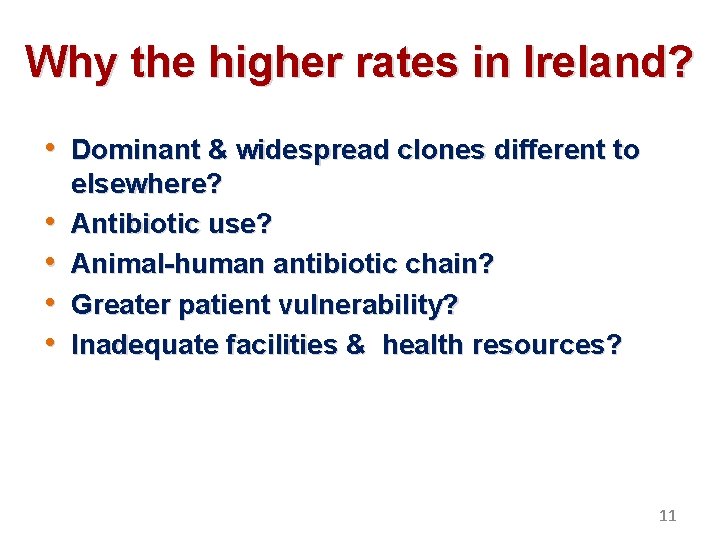
Why the higher rates in Ireland? • Dominant & widespread clones different to • • elsewhere? Antibiotic use? Animal-human antibiotic chain? Greater patient vulnerability? Inadequate facilities & health resources? 11
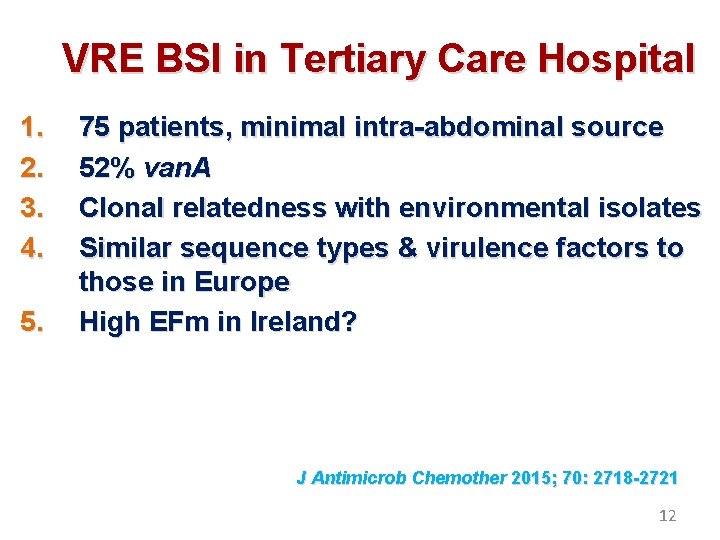
VRE BSI in Tertiary Care Hospital 1. 2. 3. 4. 5. 75 patients, minimal intra-abdominal source 52% van. A Clonal relatedness with environmental isolates Similar sequence types & virulence factors to those in Europe High EFm in Ireland? J Antimicrob Chemother 2015; 70: 2718 -2721 12
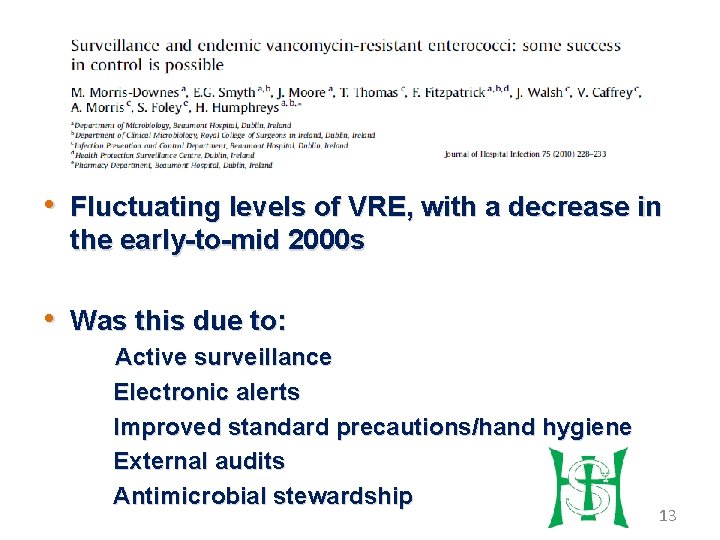
• Fluctuating levels of VRE, with a decrease in the early-to-mid 2000 s • Was this due to: Active surveillance Electronic alerts Improved standard precautions/hand hygiene External audits Antimicrobial stewardship 13
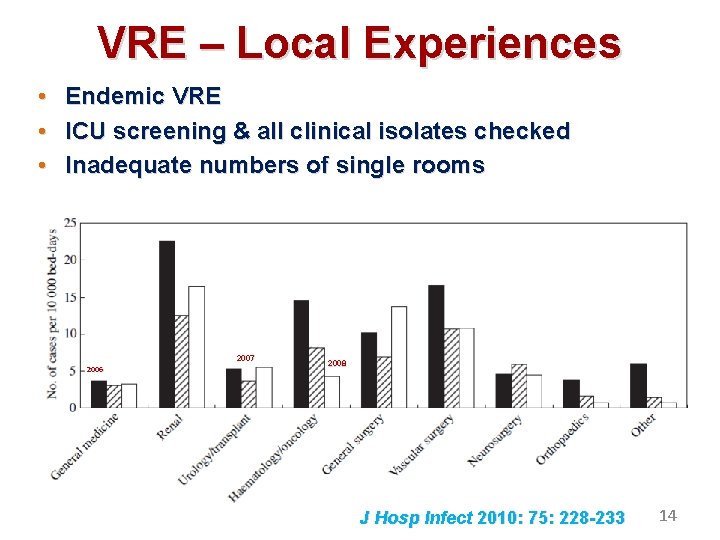
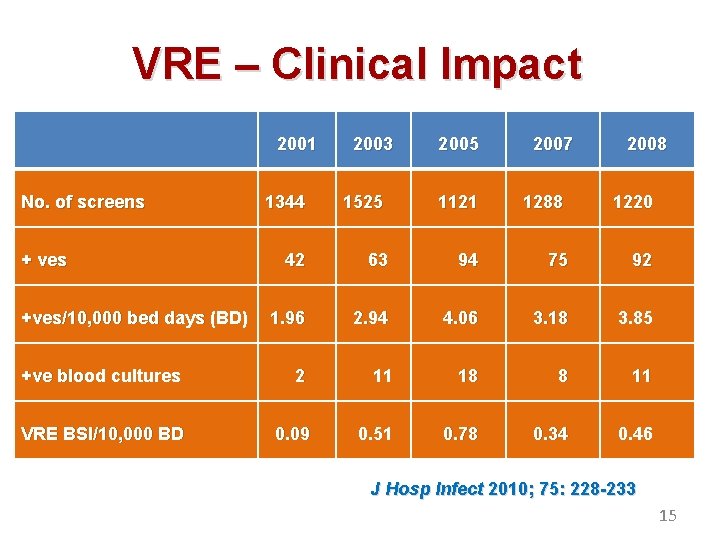
VRE – Local Experiences • Endemic VRE • ICU screening & all clinical isolates checked • Inadequate numbers of single rooms 2007 2006 2008 J Hosp Infect 2010: 75: 228 -233 14
VRE – Clinical Impact 2001 No. of screens 2003 2005 2007 2008 1344 1525 1121 1288 1220 42 63 94 75 92 1. 96 2. 94 4. 06 3. 18 3. 85 +ve blood cultures 2 11 18 8 11 VRE BSI/10, 000 BD 0. 09 0. 51 0. 78 0. 34 0. 46 + ves +ves/10, 000 bed days (BD) J Hosp Infect 2010; 75: 228 -233 15
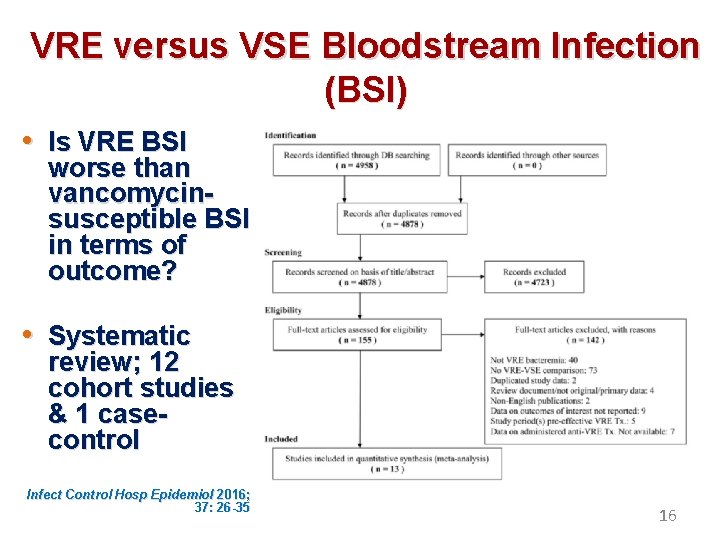
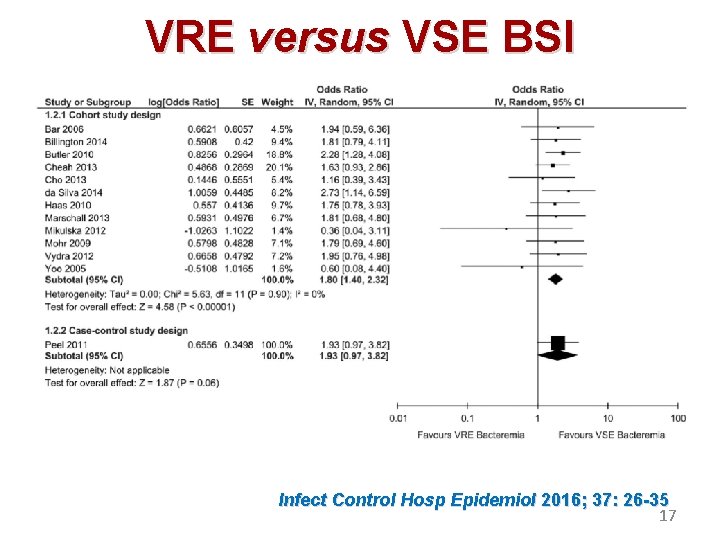
VRE versus VSE Bloodstream Infection (BSI) • Is VRE BSI worse than vancomycinsusceptible BSI in terms of outcome? • Systematic review; 12 cohort studies & 1 casecontrol Infect Control Hosp Epidemiol 2016; 37: 26 -35 16
VRE versus VSE BSI Infect Control Hosp Epidemiol 2016; 37: 26 -35 17
VRE & Renal Dialysis Patients • Meta-analysis from 1982 -2014 of prevalence, risk factors • • & significance 23 studies from 100 dialysis centres involving 4, 842 patients Prevalence, 6. 2% (5. 2% North America) Risk of infection increases x 21. 6 if VRE +ve Heterogeneity may reflect differences in infection prevention & control practices & use of antibiotics Am J Kidney Dis 2015; 65: 88 -97 18
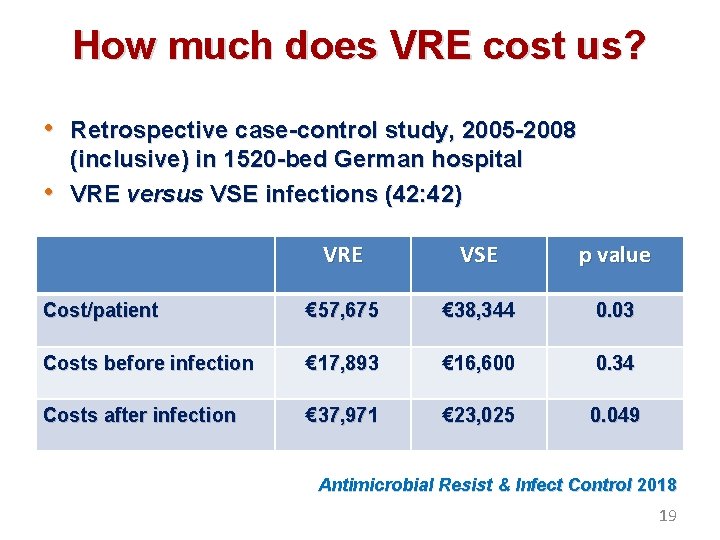
How much does VRE cost us? • Retrospective case-control study, 2005 -2008 • (inclusive) in 1520 -bed German hospital VRE versus VSE infections (42: 42) VRE VSE p value Cost/patient € 57, 675 € 38, 344 0. 03 Costs before infection € 17, 893 € 16, 600 0. 34 Costs after infection € 37, 971 € 23, 025 0. 049 Antimicrobial Resist & Infect Control 2018 19
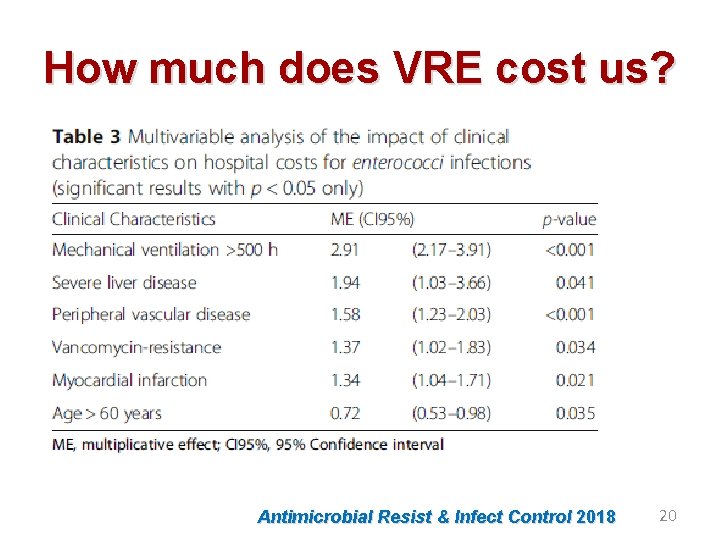
How much does VRE cost us? Antimicrobial Resist & Infect Control 2018 20
Surveillance, Contact Precautions & VRE 21
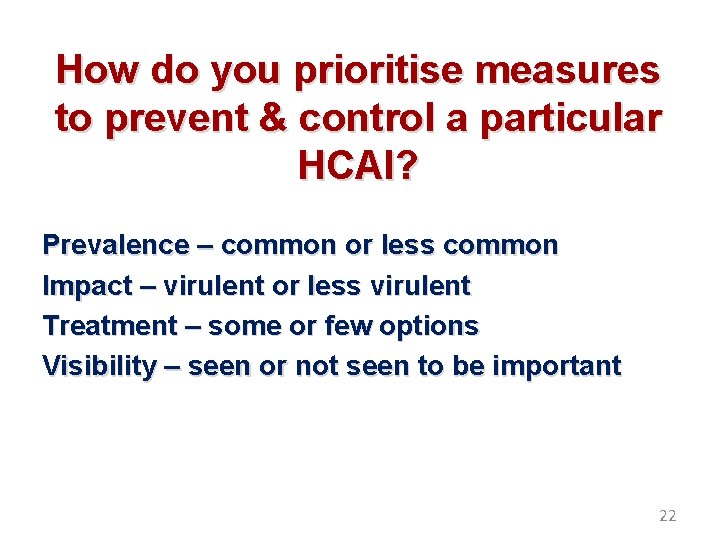
How do you prioritise measures to prevent & control a particular HCAI? Prevalence – common or less common Impact – virulent or less virulent Treatment – some or few options Visibility – seen or not seen to be important 22
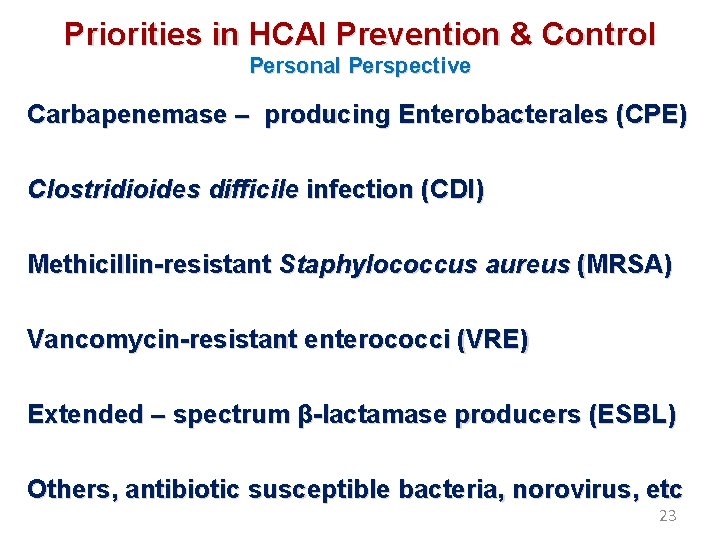
Priorities in HCAI Prevention & Control Personal Perspective Carbapenemase – producing Enterobacterales (CPE) Clostridioides difficile infection (CDI) Methicillin-resistant Staphylococcus aureus (MRSA) Vancomycin-resistant enterococci (VRE) Extended – spectrum β-lactamase producers (ESBL) Others, antibiotic susceptible bacteria, norovirus, etc 23
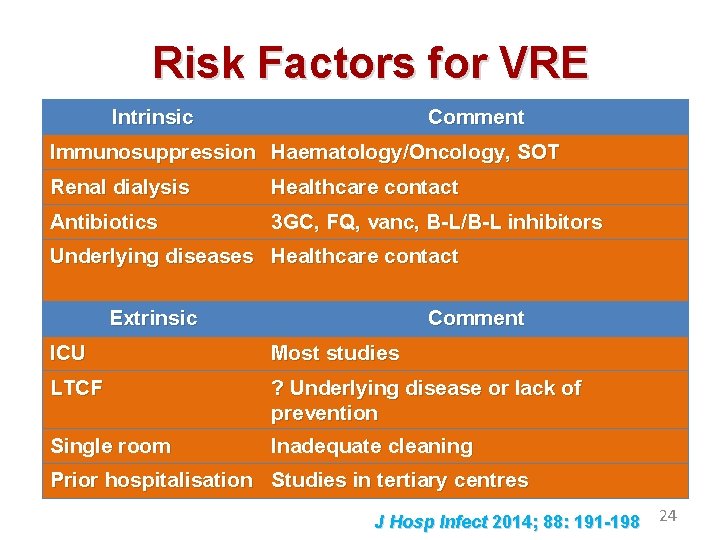
Risk Factors for VRE Intrinsic Comment Immunosuppression Haematology/Oncology, SOT Renal dialysis Healthcare contact Antibiotics 3 GC, FQ, vanc, B-L/B-L inhibitors Underlying diseases Healthcare contact Extrinsic Comment ICU Most studies LTCF ? Underlying disease or lack of prevention Single room Inadequate cleaning Prior hospitalisation Studies in tertiary centres J Hosp Infect 2014; 88: 191 -198 24
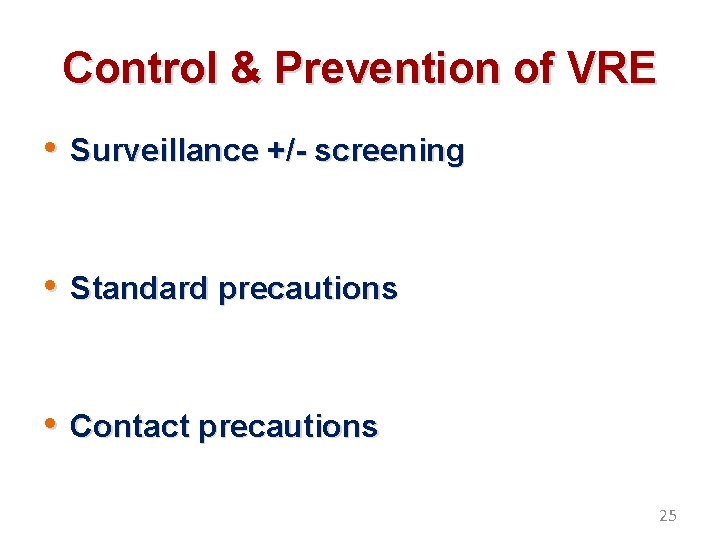
Control & Prevention of VRE • Surveillance +/- screening • Standard precautions • Contact precautions 25
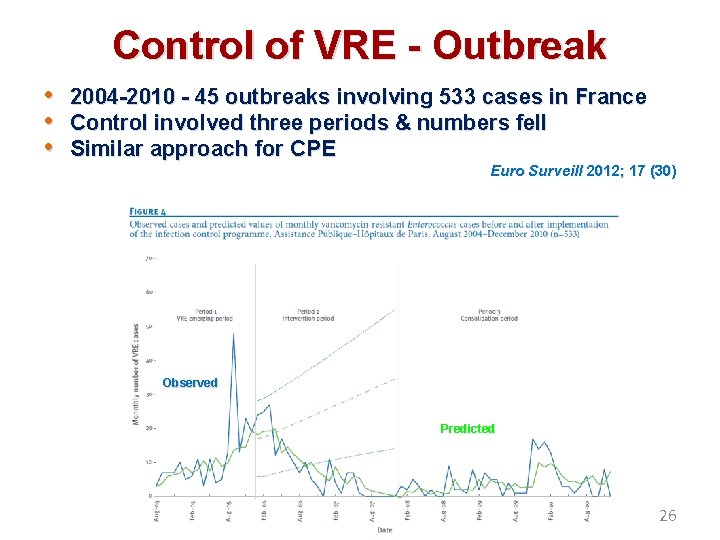
Control of VRE - Outbreak • • • 2004 -2010 - 45 outbreaks involving 533 cases in France Control involved three periods & numbers fell Similar approach for CPE Euro Surveill 2012; 17 (30) Observed Predicted 26
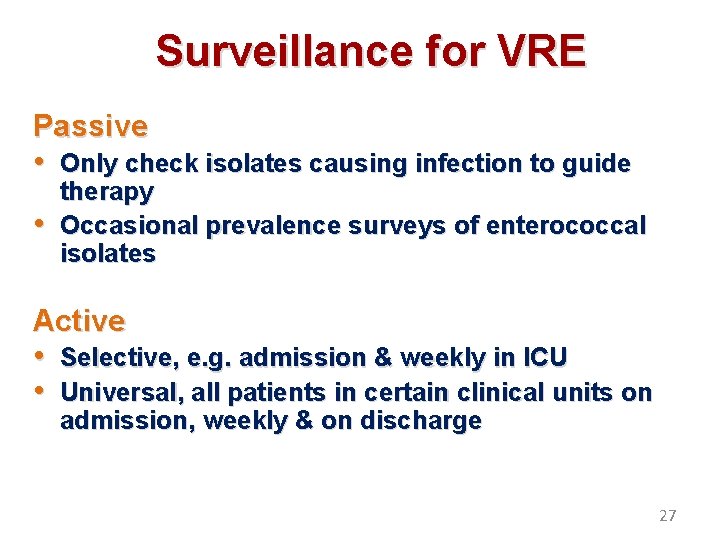
Surveillance for VRE Passive • Only check isolates causing infection to guide • therapy Occasional prevalence surveys of enterococcal isolates Active • Selective, e. g. admission & weekly in ICU • Universal, all patients in certain clinical units on admission, weekly & on discharge 27
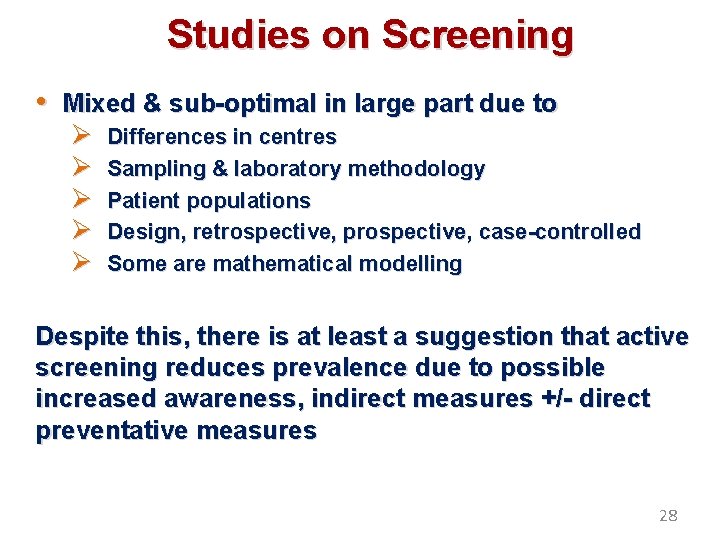
Studies on Screening • Mixed & sub-optimal in large part due to Ø Ø Ø Differences in centres Sampling & laboratory methodology Patient populations Design, retrospective, prospective, case-controlled Some are mathematical modelling Despite this, there is at least a suggestion that active screening reduces prevalence due to possible increased awareness, indirect measures +/- direct preventative measures 28
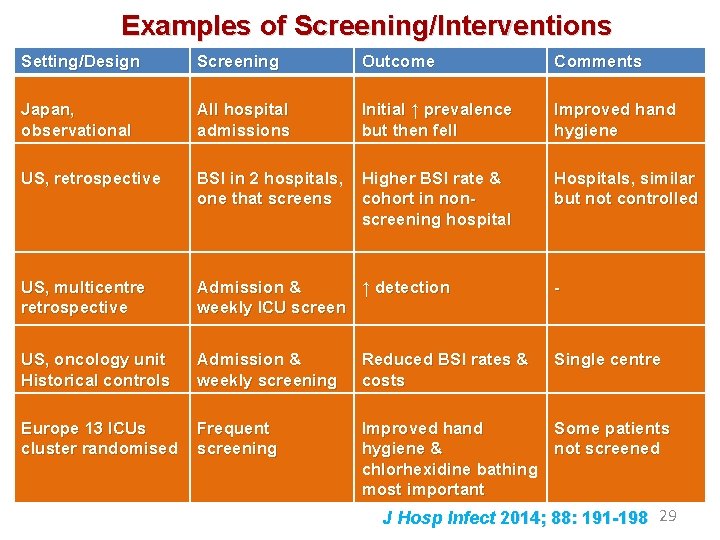
Examples of Screening/Interventions Setting/Design Screening Outcome Comments Japan, observational All hospital admissions Initial ↑ prevalence but then fell Improved hand hygiene US, retrospective BSI in 2 hospitals, one that screens Higher BSI rate & cohort in nonscreening hospital Hospitals, similar but not controlled US, multicentre retrospective Admission & ↑ detection weekly ICU screen - US, oncology unit Historical controls Admission & weekly screening Reduced BSI rates & costs Single centre Europe 13 ICUs cluster randomised Frequent screening Improved hand Some patients hygiene & not screened chlorhexidine bathing most important J Hosp Infect 2014; 88: 191 -198 29
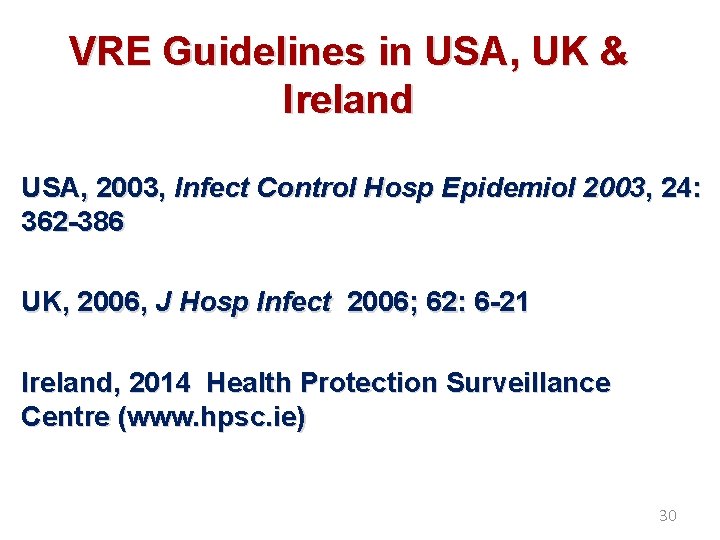
VRE Guidelines in USA, UK & Ireland USA, 2003, Infect Control Hosp Epidemiol 2003, 24: 362 -386 UK, 2006, J Hosp Infect 2006; 62: 6 -21 Ireland, 2014 Health Protection Surveillance Centre (www. hpsc. ie) 30
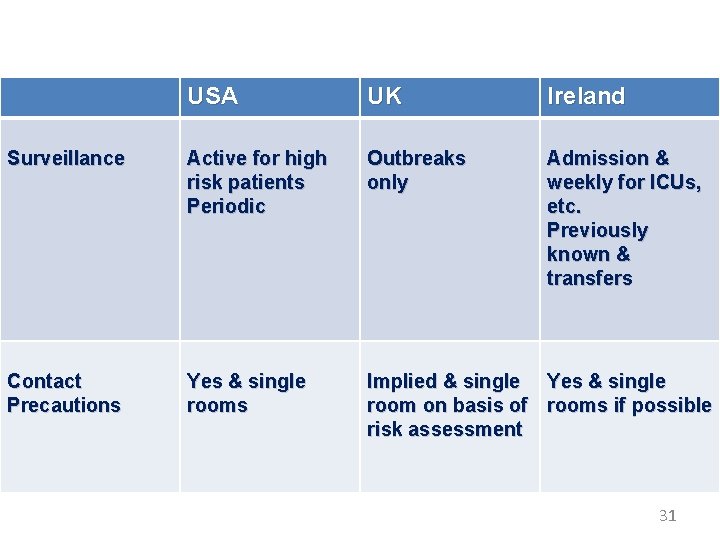
USA UK Ireland Surveillance Active for high risk patients Periodic Outbreaks only Admission & weekly for ICUs, etc. Previously known & transfers Contact Precautions Yes & single rooms Implied & single Yes & single room on basis of rooms if possible risk assessment 31
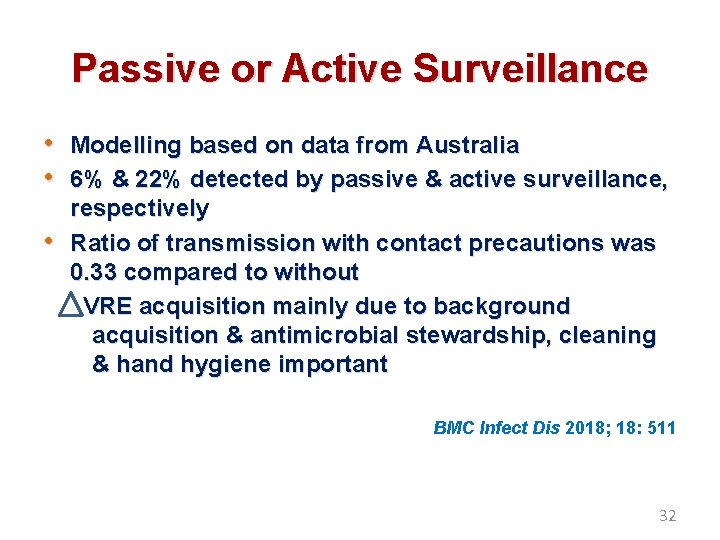
Passive or Active Surveillance • Modelling based on data from Australia • 6% & 22% detected by passive & active surveillance, • respectively Ratio of transmission with contact precautions was 0. 33 compared to without VRE acquisition mainly due to background acquisition & antimicrobial stewardship, cleaning & hand hygiene important BMC Infect Dis 2018; 18: 511 32
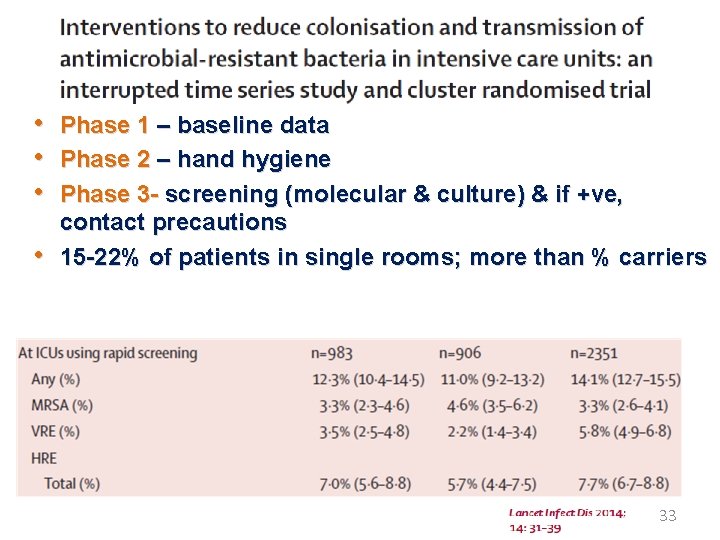
• • Phase 1 – baseline data Phase 2 – hand hygiene Phase 3 - screening (molecular & culture) & if +ve, contact precautions 15 -22% of patients in single rooms; more than % carriers 33
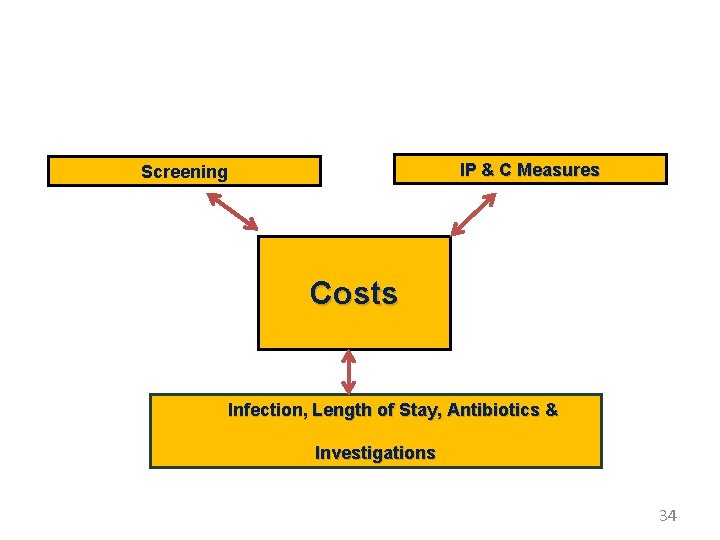
IP & C Measures Screening Costs Infection, Length of Stay, Antibiotics & Investigations 34
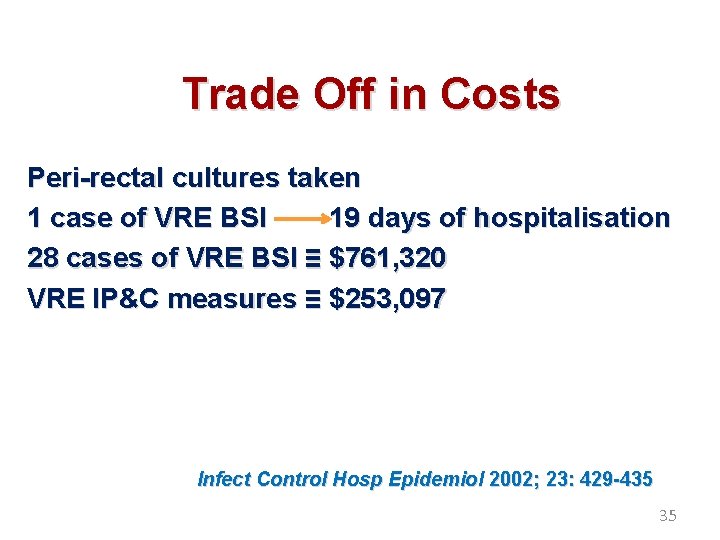
Trade Off in Costs Peri-rectal cultures taken 1 case of VRE BSI 19 days of hospitalisation 28 cases of VRE BSI ≡ $761, 320 VRE IP&C measures ≡ $253, 097 Infect Control Hosp Epidemiol 2002; 23: 429 -435 35
What happens when you stop surveillance & contact precautions? • Comparison of different time periods & effect on BSI But, single centre, malignant haematology patients, no details on hand hygiene & cleaning, & all admissions in single rooms Infect Control Hosp Epidemiol 2016; 37: 398 -403 36
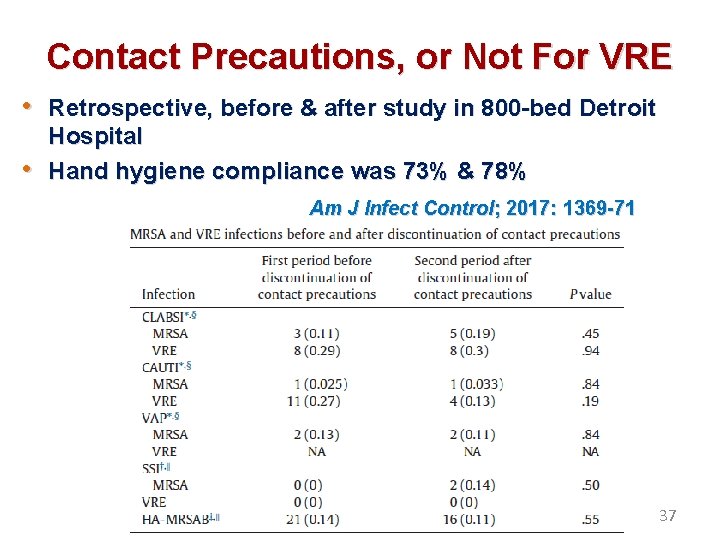
Contact Precautions, or Not For VRE • Retrospective, before & after study in 800 -bed Detroit • Hospital Hand hygiene compliance was 73% & 78% Am J Infect Control; 2017: 1369 -71 37
Environmental Contamination 38
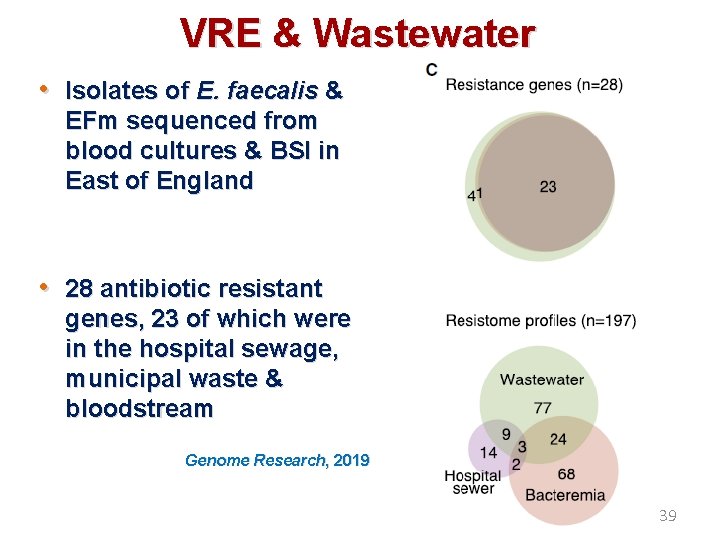
VRE & Wastewater • Isolates of E. faecalis & EFm sequenced from blood cultures & BSI in East of England • 28 antibiotic resistant genes, 23 of which were in the hospital sewage, municipal waste & bloodstream Genome Research, 2019 39
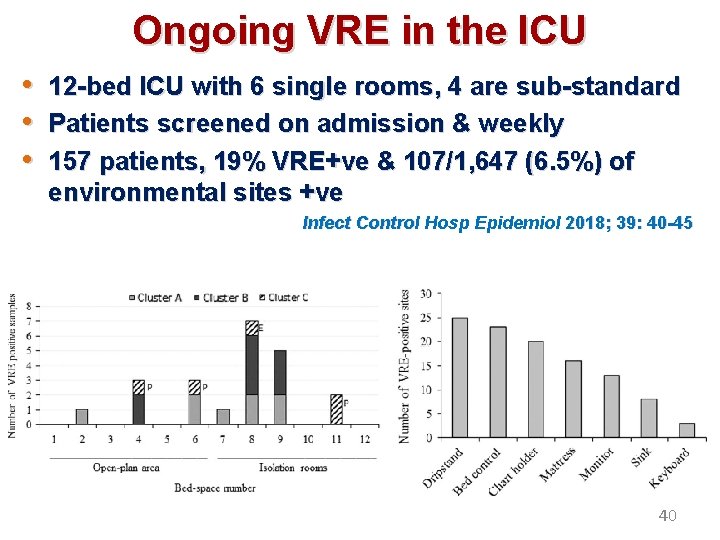
Ongoing VRE in the ICU • 12 -bed ICU with 6 single rooms, 4 are sub-standard • Patients screened on admission & weekly • 157 patients, 19% VRE+ve & 107/1, 647 (6. 5%) of environmental sites +ve Infect Control Hosp Epidemiol 2018; 39: 40 -45 40
Cleaning Bundle to Reduce HCAI • 11 hospitals in Australia that used audit, feedback & • • • was low cost Objective was to reduce Clostridioides difficile infection (CDI), Staphylococcus aureus BSI & enterococcal infection Cleaning improved but no fall in CDI or S. aureus BSI There was a statistically significant reduction in VRE infections (37%) Lancet Infect Dis 2019; 19: 410 -418 41
Can we decolonise patients with VRE as with MRSA? Not specifically………. . but there may be some possible options 42
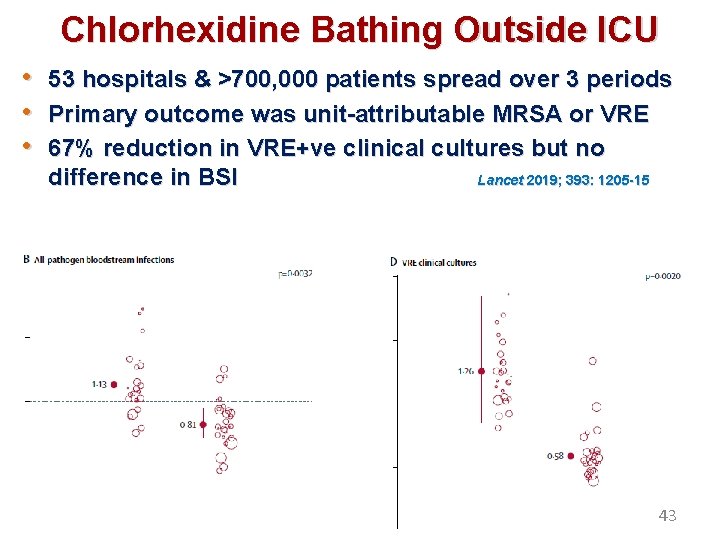
Chlorhexidine Bathing Outside ICU • • • 53 hospitals & >700, 000 patients spread over 3 periods Primary outcome was unit-attributable MRSA or VRE 67% reduction in VRE+ve clinical cultures but no difference in BSI Lancet 2019; 393: 1205 -15 43
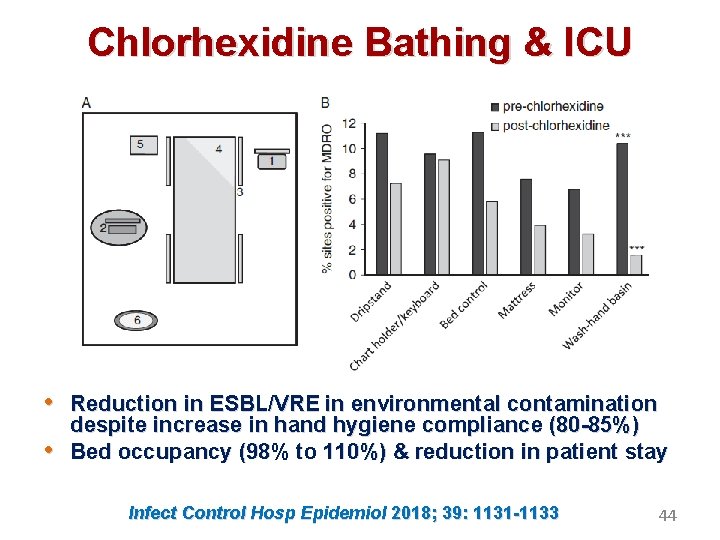
Chlorhexidine Bathing & ICU • Reduction in ESBL/VRE in environmental contamination • despite increase in hand hygiene compliance (80 -85%) Bed occupancy (98% to 110%) & reduction in patient stay Infect Control Hosp Epidemiol 2018; 39: 1131 -1133 44
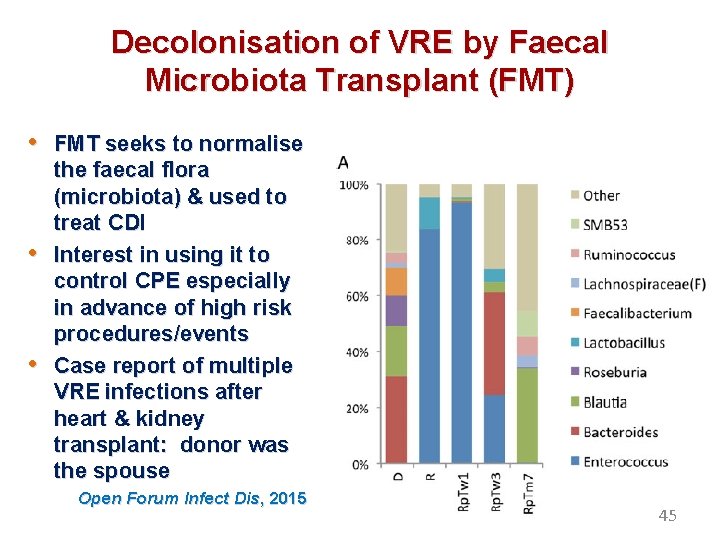
Decolonisation of VRE by Faecal Microbiota Transplant (FMT) • FMT seeks to normalise • • the faecal flora (microbiota) & used to treat CDI Interest in using it to control CPE especially in advance of high risk procedures/events Case report of multiple VRE infections after heart & kidney transplant: donor was the spouse Open Forum Infect Dis, 2015 45
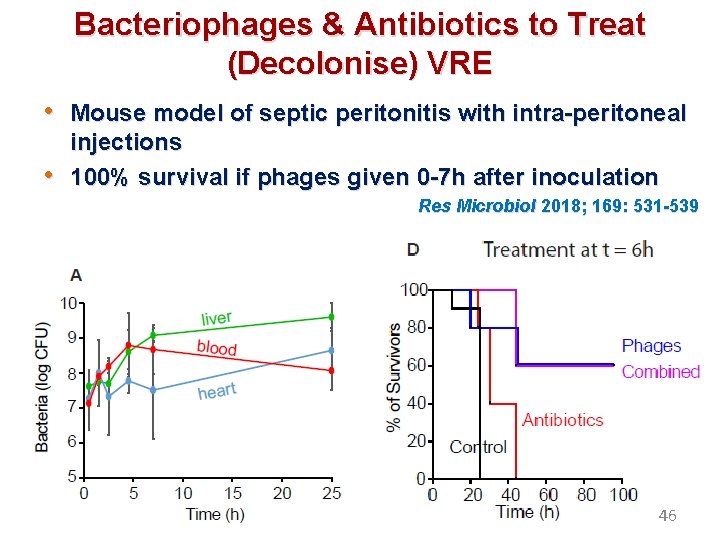
Bacteriophages & Antibiotics to Treat (Decolonise) VRE • Mouse model of septic peritonitis with intra-peritoneal • injections 100% survival if phages given 0 -7 h after inoculation Res Microbiol 2018; 169: 531 -539 46
Conclusions 47
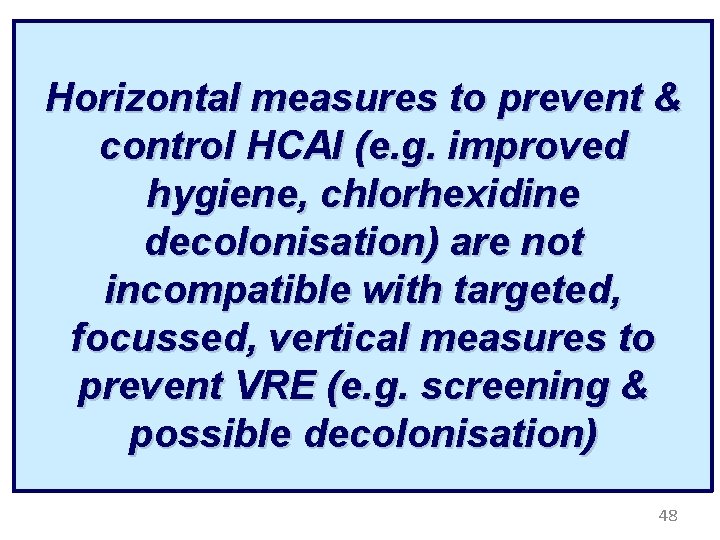
Horizontal measures to prevent & control HCAI (e. g. improved hygiene, chlorhexidine decolonisation) are not incompatible with targeted, focussed, vertical measures to prevent VRE (e. g. screening & possible decolonisation) 48
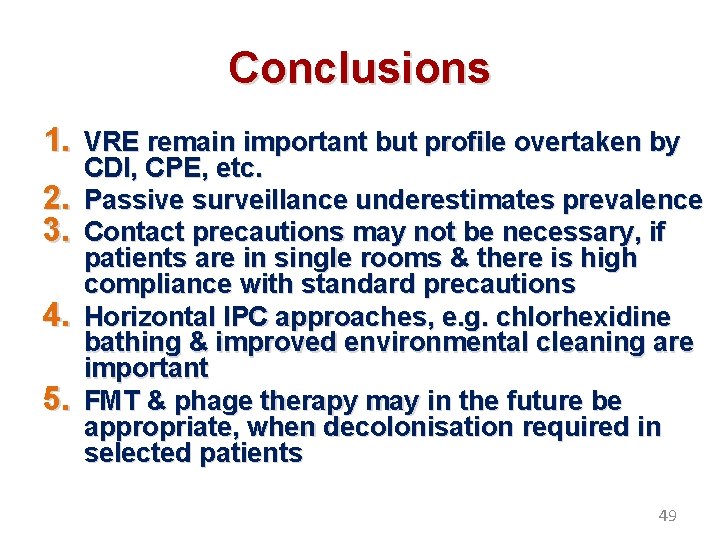
Conclusions 1. VRE remain important but profile overtaken by 2. 3. 4. 5. CDI, CPE, etc. Passive surveillance underestimates prevalence Contact precautions may not be necessary, if patients are in single rooms & there is high compliance with standard precautions Horizontal IPC approaches, e. g. chlorhexidine bathing & improved environmental cleaning are important FMT & phage therapy may in the future be appropriate, when decolonisation required in selected patients 49