
Measures of transition readiness in adolescents and young


- Slides: 8
Measures of transition readiness in adolescents and young adults with chronic disease: A Systematic Review SARAH PARFENIUK, RN BSCN MASTERS OF NURSING STUDENT Athabasca University Graduate Research Conference
What is the problem? Surgical and medical advancements have improved the likelihood of chronically ill children surviving into adulthood. The development of guidelines and tools to facilitate the transition for adolescents with chronic health conditions are in the early phases, and poor patient outcomes have been linked to a lack of transitional care and support.
Background & Rationale Currently, there is no consensus in the literature about wellvalidated tools and measurements in transition readiness in adolescents and young adults transitioning to adult healthcare. This study aims to systematically review all transitionreadiness tools and measures for adolescents with chronic illnesses in peer-reviewed journals, and will assess the psychometric measurements qualities of each tool.
Research Question "What validated psychometric measurement tools are found in the literature from 2014 to present? "
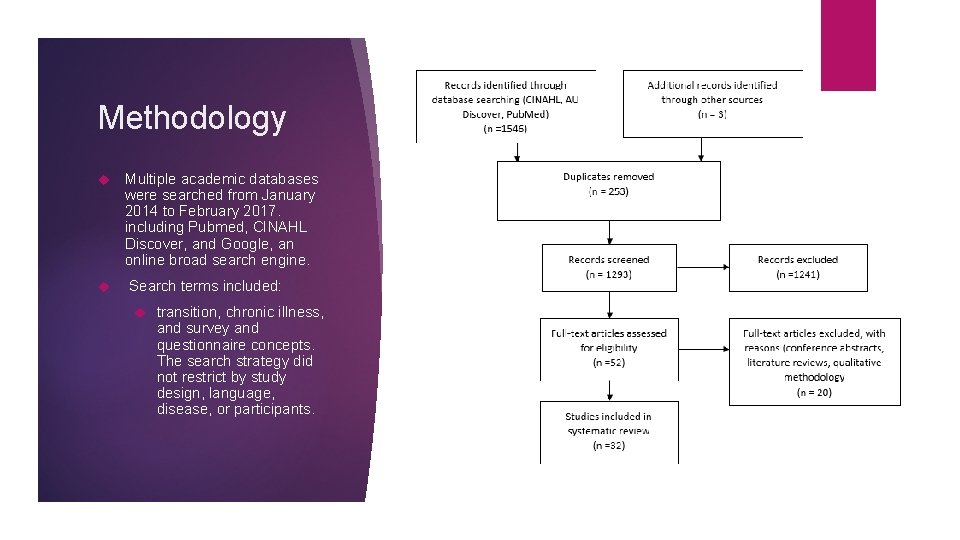
Methodology Multiple academic databases were searched from January 2014 to February 2017. including Pubmed, CINAHL Discover, and Google, an online broad search engine. Search terms included: transition, chronic illness, and survey and questionnaire concepts. The search strategy did not restrict by study design, language, disease, or participants.
Findings & Results This research study is currently in progress. Following a review of the literature, 32 articles have been identified and data abstraction is in progress. Disease specific and non disease specific tools were identified. Non disease specific: The Transition Readiness Assessment Questionnaire (TRAQ) developed by Sawicki et al. , 2011 is the most evidenced based transition readiness measure currently available.
Implications This review brings light to the growing interest in transition readiness tools and measures. Both current and new measures are needed to track progress of transition readiness and inform targets of interventions that will ultimately facilitate a successful transfer of care (Schwartz et al. , 2014).
Acknowledgements Co-Supervisors: Dr. G. Rempel & K. Petrovic Committee member: K. Cook Faculty of Health Disciplines