
Measures of Academic Progress Using MAP Data to
- Slides: 25
Measures of Academic Progress Using MAP Data to Inform Instruction Research and Evaluation Santa Ana Unified School District August 28, 2015 1
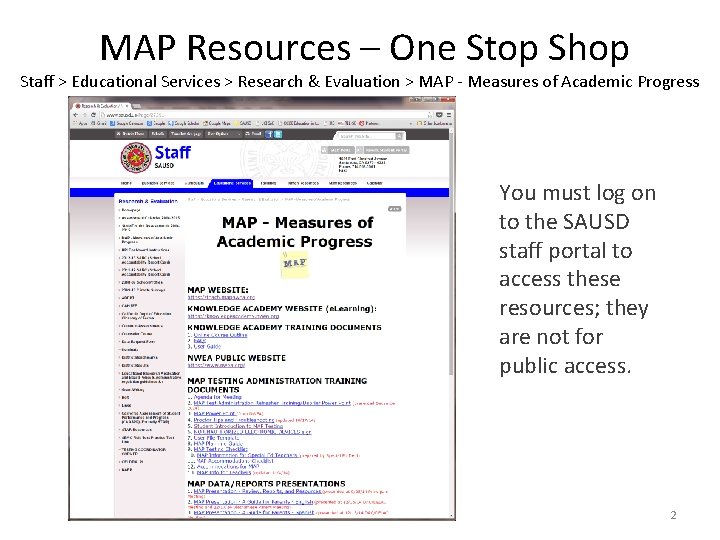
MAP Resources – One Stop Shop Staff > Educational Services > Research & Evaluation > MAP - Measures of Academic Progress You must log on to the SAUSD staff portal to access these resources; they are not for public access. 2
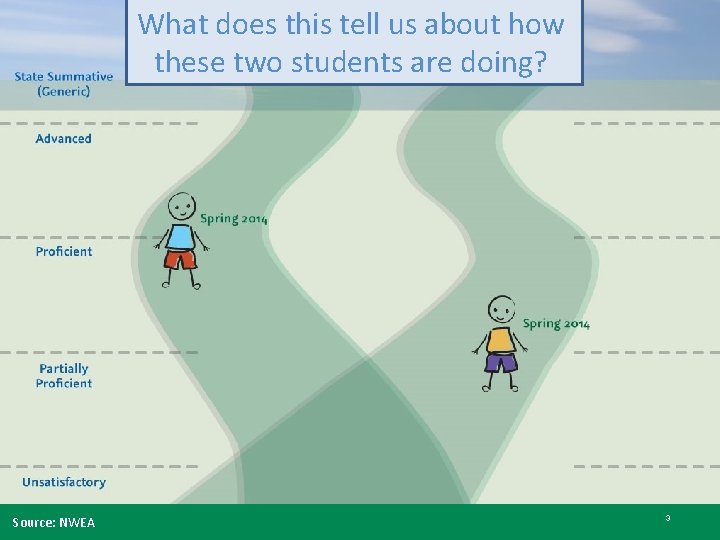
What does this tell us about how these two students are doing? Source: NWEA 3
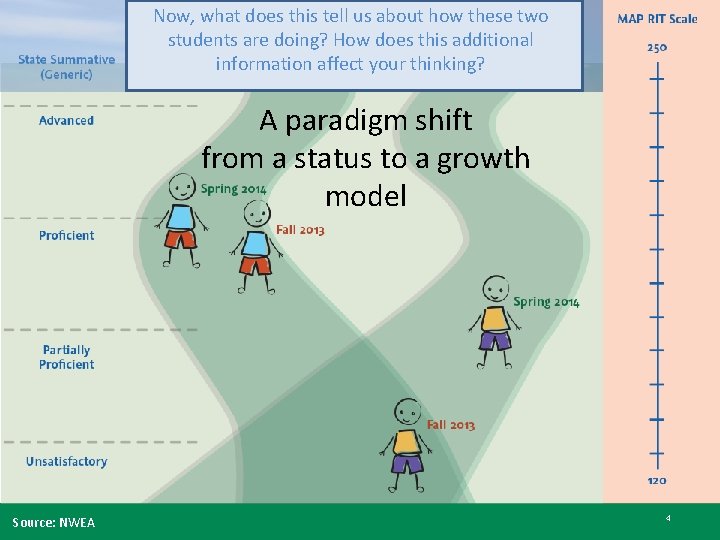
Now, what does this tell us about how these two students are doing? How does this additional information affect your thinking? A paradigm shift from a status to a growth model Source: NWEA 4
Today, we will. . . • Review MAP key concepts and vocabulary • Explore the Teacher/Class Report and the Class Breakdown Report • Discuss a way to use the Learning Continuum to optimize learning • Share resources that can be used to differentiate instruction 5
MAP Key concepts and vocabulary. . . 6
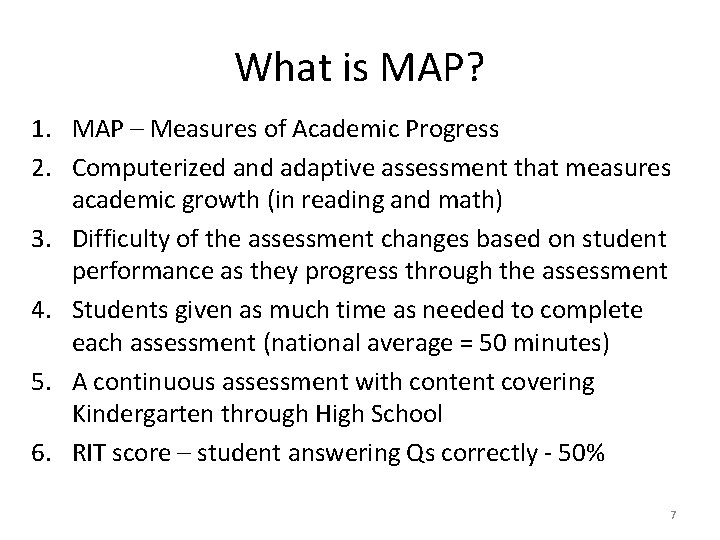
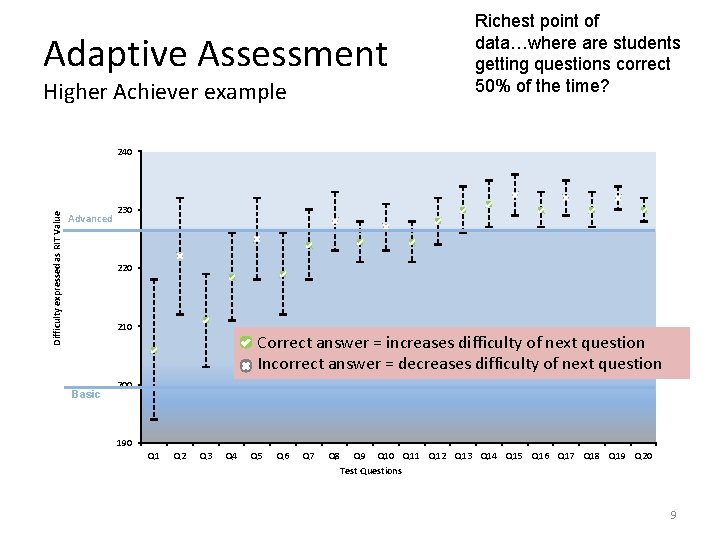
What is MAP? 1. MAP – Measures of Academic Progress 2. Computerized and adaptive assessment that measures academic growth (in reading and math) 3. Difficulty of the assessment changes based on student performance as they progress through the assessment 4. Students given as much time as needed to complete each assessment (national average = 50 minutes) 5. A continuous assessment with content covering Kindergarten through High School 6. RIT score – student answering Qs correctly - 50% 7
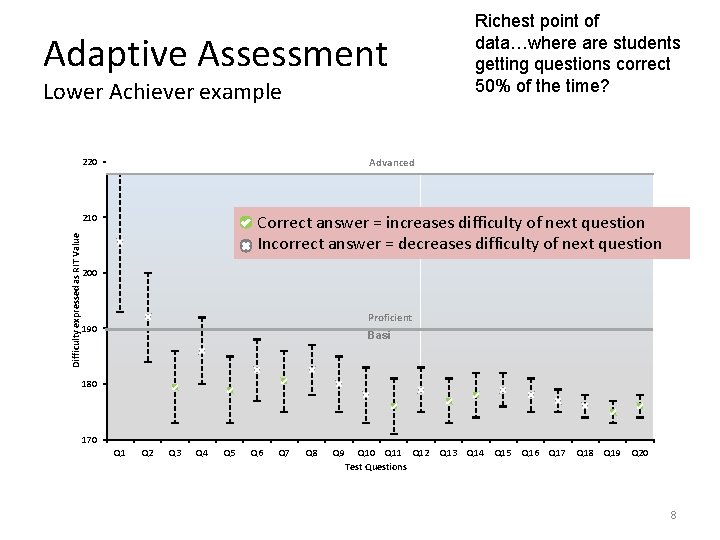
Richest point of data…where are students getting questions correct 50% of the time? Adaptive Assessment Lower Achiever example Advanced 220 Correct answer = increases difficulty of next question Incorrect answer = decreases difficulty of next question Difficulty expressed as RIT Value 210 200 Proficient 190 Basi 180 170 Q 1 Q 2 Q 3 Q 4 Q 5 Q 6 Q 7 Q 8 Q 9 Q 10 Q 11 Q 12 Test Questions Q 13 Q 14 Q 15 Q 16 Q 17 Q 18 Q 19 Q 20 8
Adaptive Assessment Higher Achiever example Richest point of data…where are students getting questions correct 50% of the time? Difficulty expressed as RIT Value 240 Advanced 230 220 210 Basic Correct answer = increases difficulty of next question Incorrect answer = decreases difficulty of next question 200 190 Q 1 Q 2 Q 3 Q 4 Q 5 Q 6 Q 7 Q 8 Q 9 Q 10 Q 11 Q 12 Q 13 Q 14 Q 15 Q 16 Q 17 Q 18 Q 19 Q 20 Test Questions 9
ZPD - zone of proximal development • Coined by psychologist Lev Vygotsky (1930 s) • The sweet spot where instruction is most beneficial for each student – just beyond his or her current level of independent capability • The difference between what a child can do independently and what he or she is capable of doing with targeted assistance (scaffolding) • The skills and knowledge that are attainable for students (not too easy, not too difficult, but just right) 10
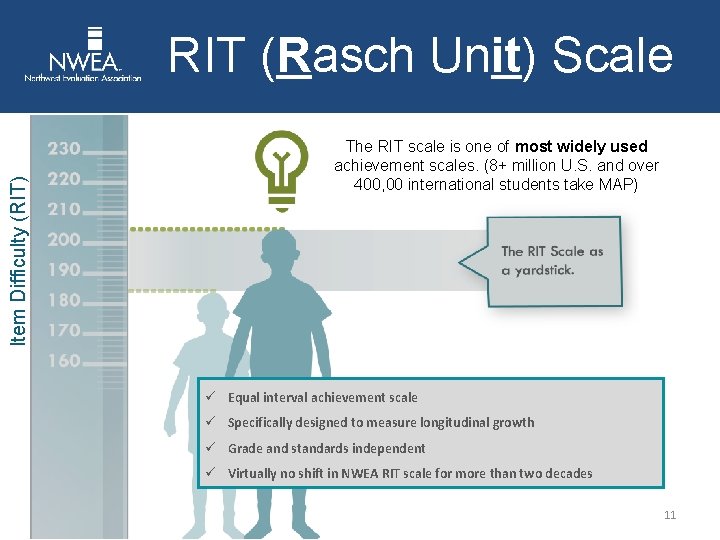
Item Difficulty (RIT) RIT (Rasch Unit) Scale The RIT scale is one of most widely used achievement scales. (8+ million U. S. and over 400, 00 international students take MAP) ü Equal interval achievement scale ü Specifically designed to measure longitudinal growth ü Grade and standards independent ü Virtually no shift in NWEA RIT scale for more than two decades 11
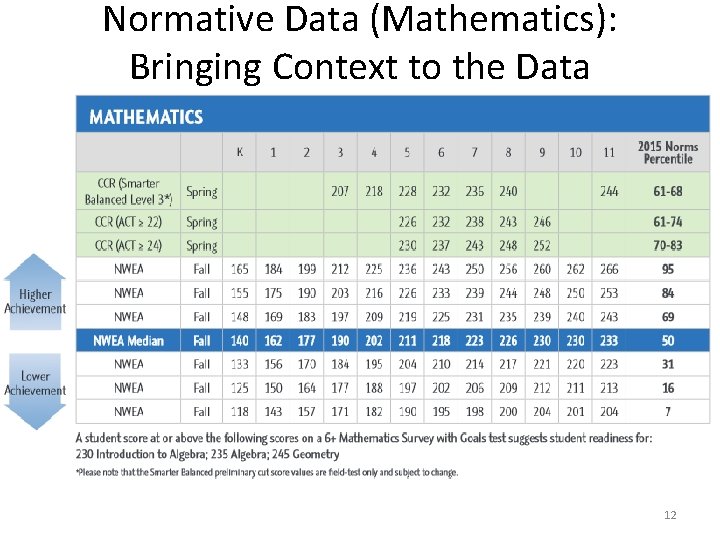
Normative Data (Mathematics): Bringing Context to the Data 12
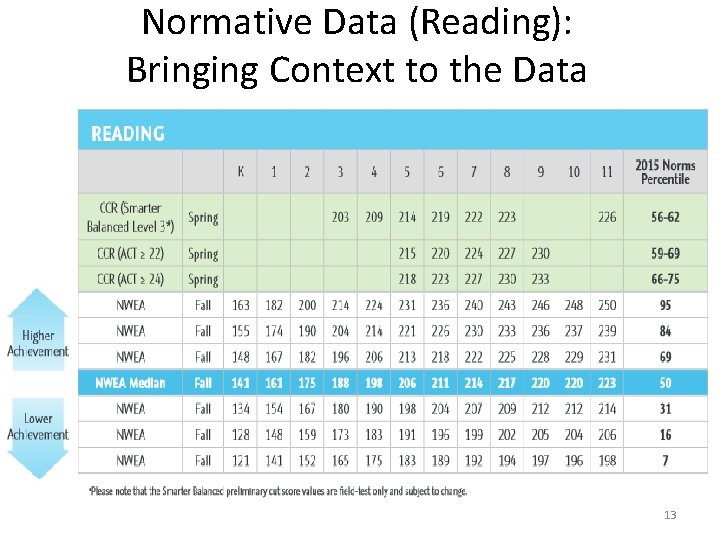
Normative Data (Reading): Bringing Context to the Data 13
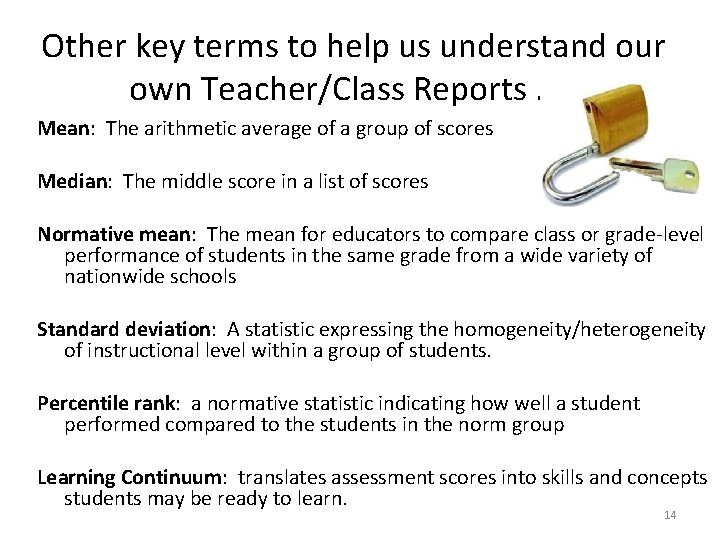
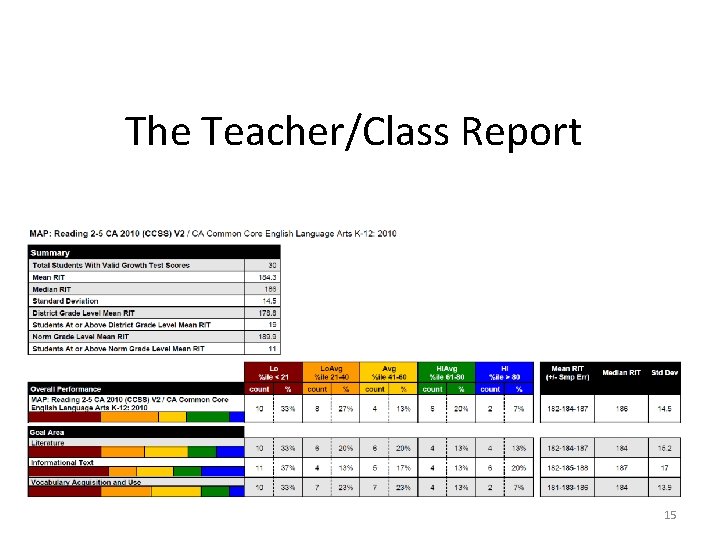
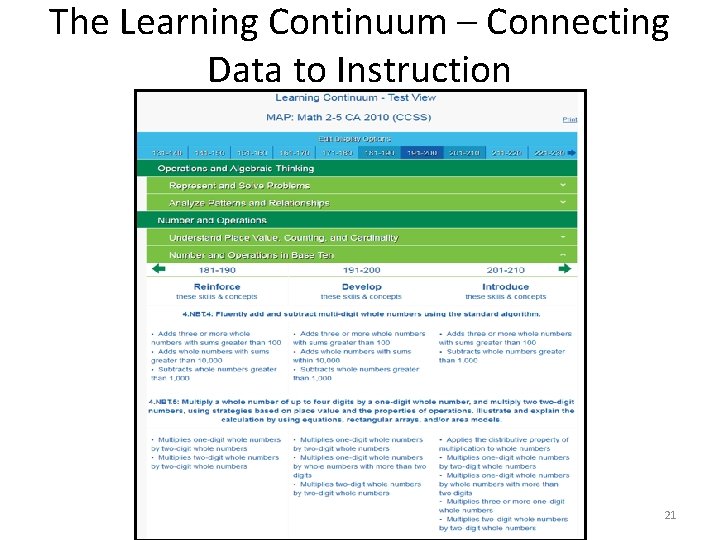
Other key terms to help us understand our own Teacher/Class Reports. . . Mean: The arithmetic average of a group of scores Median: The middle score in a list of scores Normative mean: The mean for educators to compare class or grade-level performance of students in the same grade from a wide variety of nationwide schools Standard deviation: A statistic expressing the homogeneity/heterogeneity of instructional level within a group of students. Percentile rank: a normative statistic indicating how well a student performed compared to the students in the norm group Learning Continuum: translates assessment scores into skills and concepts students may be ready to learn. 14
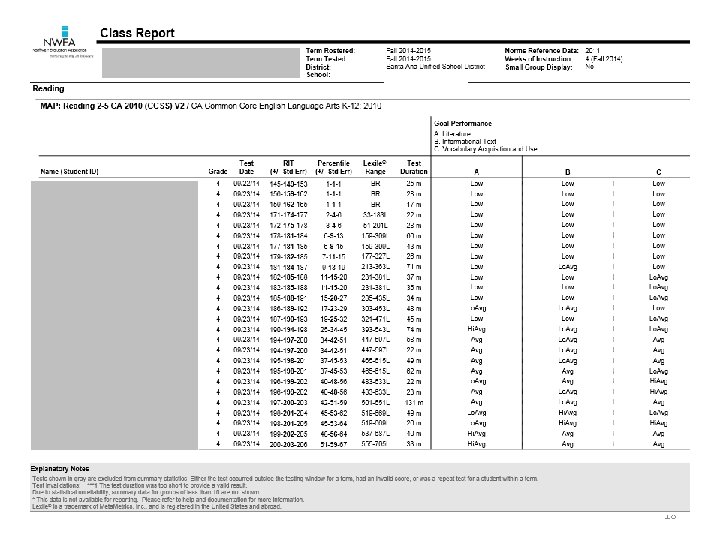
The Teacher/Class Report 15
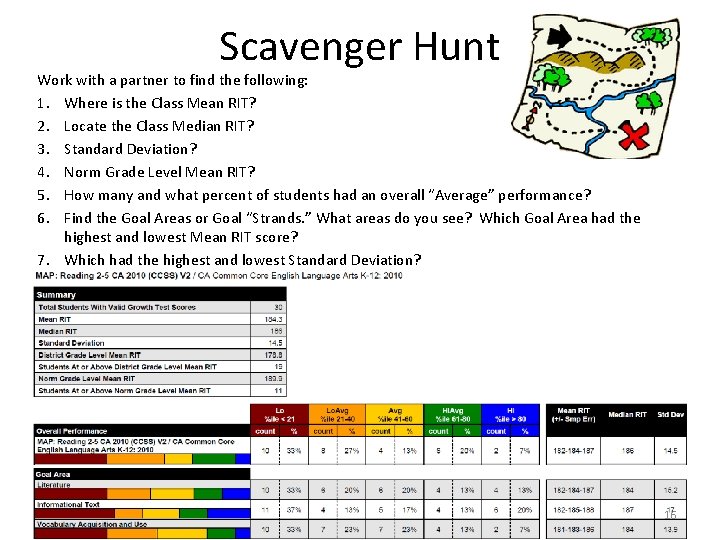
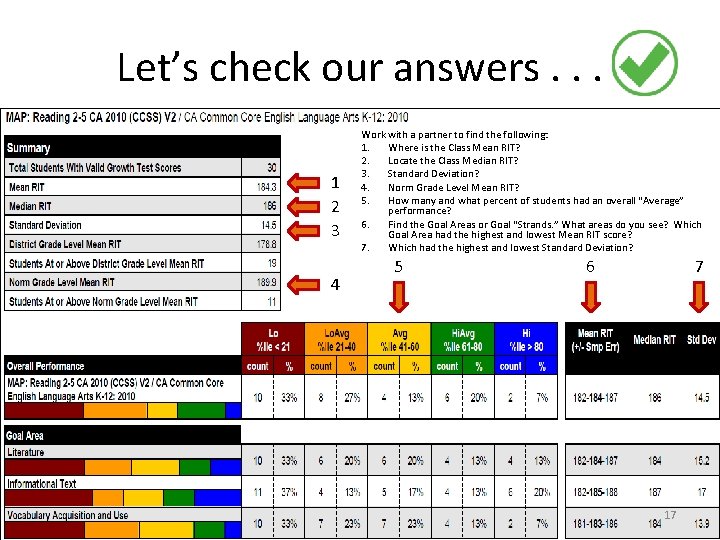
Scavenger Hunt Work with a partner to find the following: 1. Where is the Class Mean RIT? 2. Locate the Class Median RIT? 3. Standard Deviation? 4. Norm Grade Level Mean RIT? 5. How many and what percent of students had an overall “Average” performance? 6. Find the Goal Areas or Goal “Strands. ” What areas do you see? Which Goal Area had the highest and lowest Mean RIT score? 7. Which had the highest and lowest Standard Deviation? 16
Let’s check our answers. . . 1 2 3 4 Work with a partner to find the following: 1. Where is the Class Mean RIT? 2. Locate the Class Median RIT? 3. Standard Deviation? 4. Norm Grade Level Mean RIT? 5. How many and what percent of students had an overall “Average” performance? 6. Find the Goal Areas or Goal “Strands. ” What areas do you see? Which Goal Area had the highest and lowest Mean RIT score? 7. Which had the highest and lowest Standard Deviation? 5 6 7 17
18
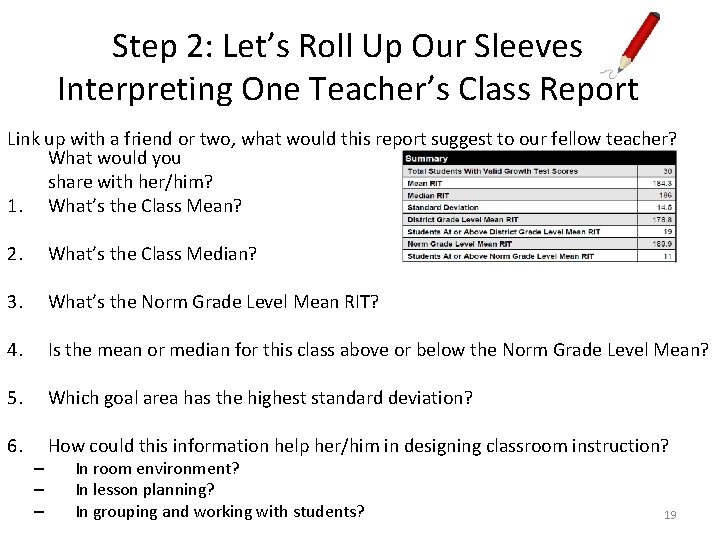
Step 2: Let’s Roll Up Our Sleeves Interpreting One Teacher’s Class Report Link up with a friend or two, what would this report suggest to our fellow teacher? What would you share with her/him? 1. What’s the Class Mean? 2. What’s the Class Median? 3. What’s the Norm Grade Level Mean RIT? 4. Is the mean or median for this class above or below the Norm Grade Level Mean? 5. Which goal area has the highest standard deviation? 6. How could this information help her/him in designing classroom instruction? – – – In room environment? In lesson planning? In grouping and working with students? 19
The Class Breakdown by Goal Report – A Demo and Recommended To-Do 20
The Learning Continuum – Connecting Data to Instruction 21
Learning Continuum (Activity) Highlighting • Using a highlighter, – Select a couple of standards – Highlight the similar skills as you move left to right across the continuum – What do you notice? – What implications might this have for planning and instruction? 22
Video link • https: //www. youtube. com/watch? v=LGYa 6 Za c. UTM Carol Tomlinson 23
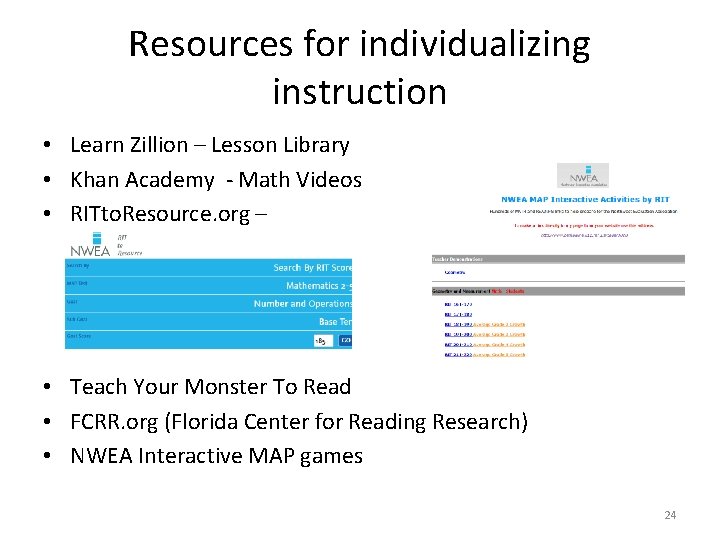
Resources for individualizing instruction • Learn Zillion – Lesson Library • Khan Academy - Math Videos • RITto. Resource. org – • Teach Your Monster To Read • FCRR. org (Florida Center for Reading Research) • NWEA Interactive MAP games 24
Contact Information Research and Evaluation Santa Ana Unified School District (714) 558 -5850 25