
Measurements Tables and Graphs Unit When scientists do
Measurements, Tables and Graphs Unit When scientists do experiments, they sometimes show their results using tables and graphs. In these tables and graphs they use the metric system (meters) instead of the English system (feet). So lets talk metric.
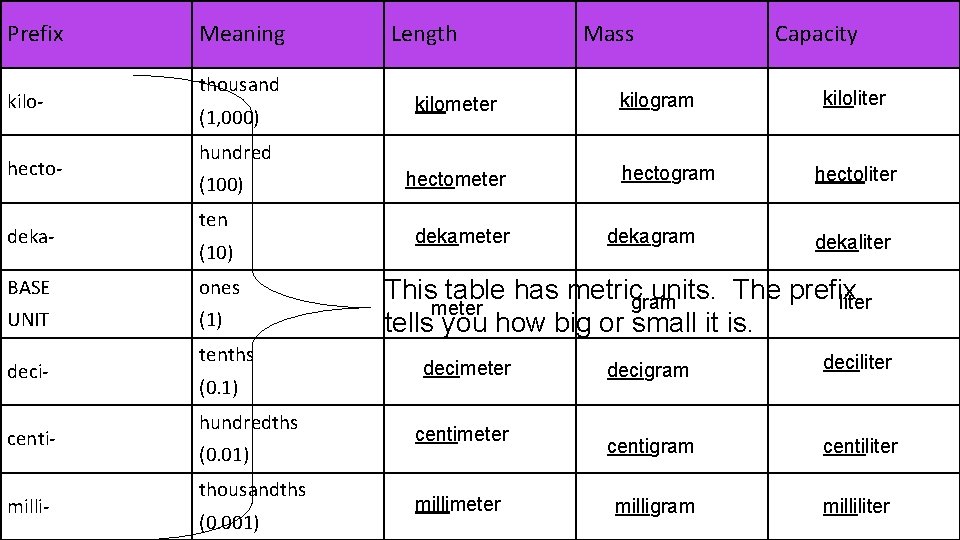
Prefix kilohectodeka- Meaning thousand (1, 000) (100) ten (10) ones UNIT (1) centimilli- kilometer hundred BASE deci- Length tenths (0. 1) hundredths (0. 01) thousandths (0. 001) hectometer dekameter Mass kilogram hectogram dekagram Capacity kiloliter hectoliter dekaliter This table has metricgram units. The prefix liter meter tells you how big or small it is. decimeter centimeter millimeter decigram deciliter centigram centiliter milligram milliliter
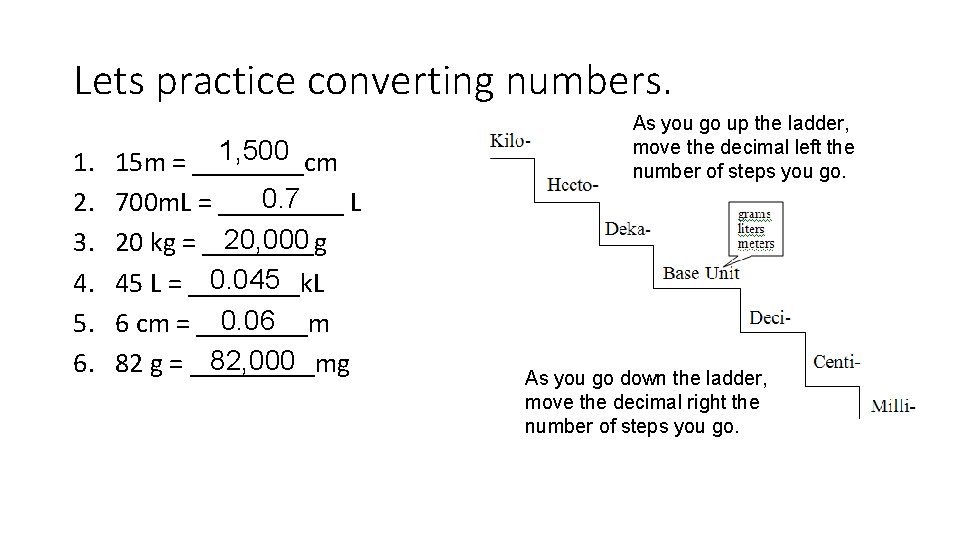
Lets practice converting numbers. 1. 2. 3. 4. 5. 6. 1, 500 15 m = ____cm 0. 7 700 m. L = _____ L 20, 000 20 kg = ____g 0. 045 45 L = ____k. L 0. 06 6 cm = ____m 82, 000 82 g = _____mg As you go up the ladder, move the decimal left the number of steps you go. As you go down the ladder, move the decimal right the number of steps you go.
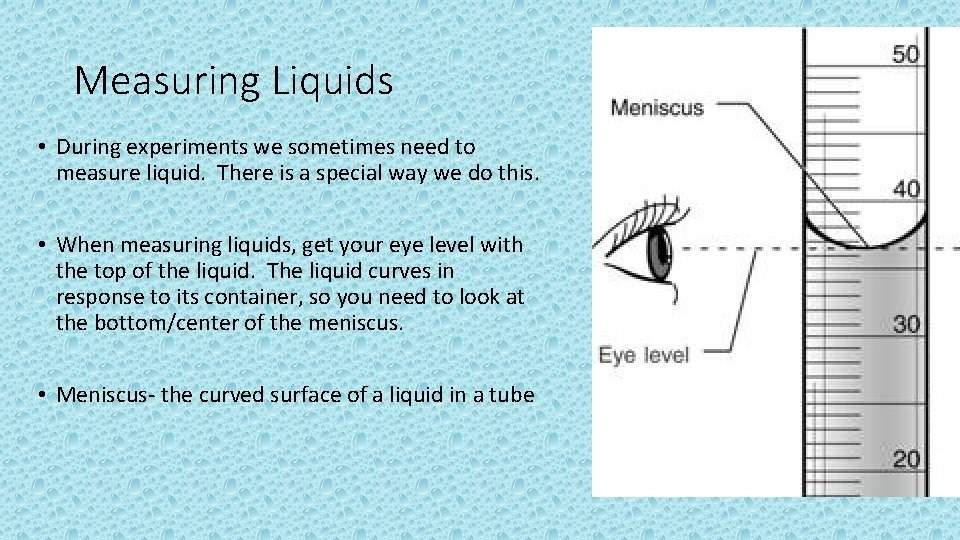
Measuring Liquids • During experiments we sometimes need to measure liquid. There is a special way we do this. • When measuring liquids, get your eye level with the top of the liquid. The liquid curves in response to its container, so you need to look at the bottom/center of the meniscus. • Meniscus- the curved surface of a liquid in a tube
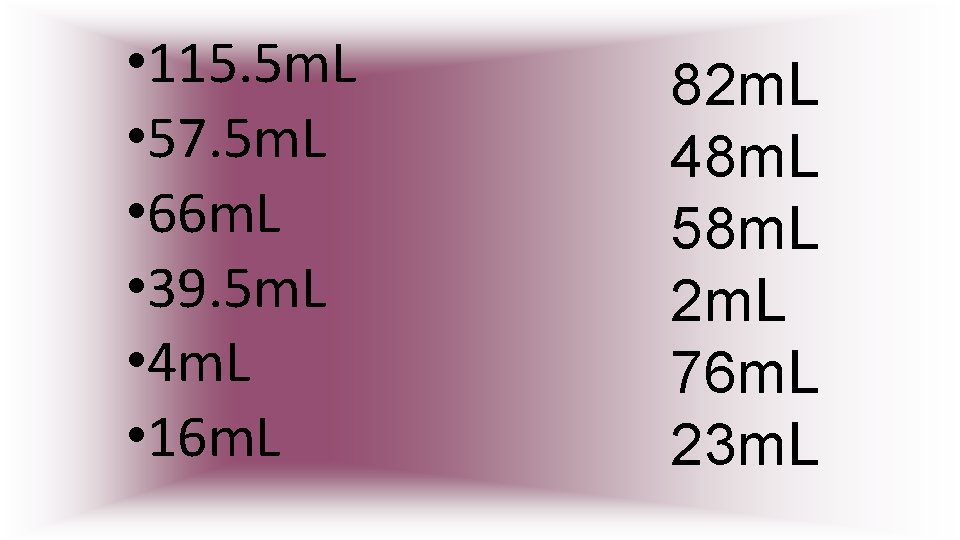
• 115. 5 m. L • 57. 5 m. L • 66 m. L • 39. 5 m. L • 4 m. L • 16 m. L 82 m. L 48 m. L 58 m. L 2 m. L 76 m. L 23 m. L
Definitions • mass- a measurement of how much matter is in an object. • volume- the amount of space an object occupies (takes up) • SI- the system of measurement used worldwide in science • meter- SI unit of length • gram- SI unit of mass • liter- unit used for volume • Celsius- temperature scale used for temperature

Finding volume
Tables and Graphs When you gather data in an investigation, you and others may have a hard time making sense of the information unless you organize it. When data are organized in a table or a graph, you can understand their meaning more easily.
Where to put it all A data table can be organized in any way that lets you compare data easily. A data table is made of columns and rows. To find information, you read down columns and across rows. Here are some tips about how to fill in a data table: • Be sure to record data in the correct column and row. • Record each piece of data as soon as you collect it. • Write neatly and clearly.
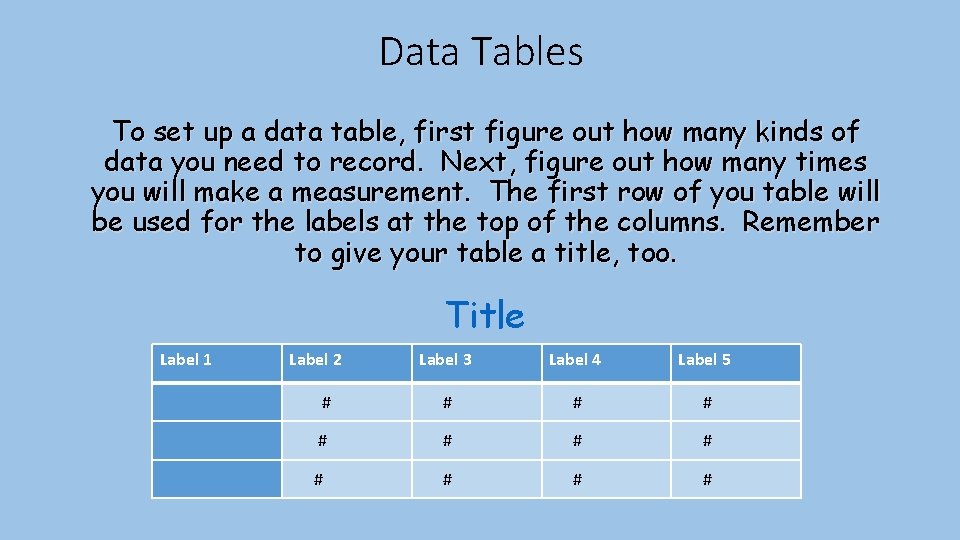
Data Tables To set up a data table, first figure out how many kinds of data you need to record. Next, figure out how many times you will make a measurement. The first row of you table will be used for the labels at the top of the columns. Remember to give your table a title, too. Title Label 1 Label 2 Label 3 Label 4 Label 5 # # #
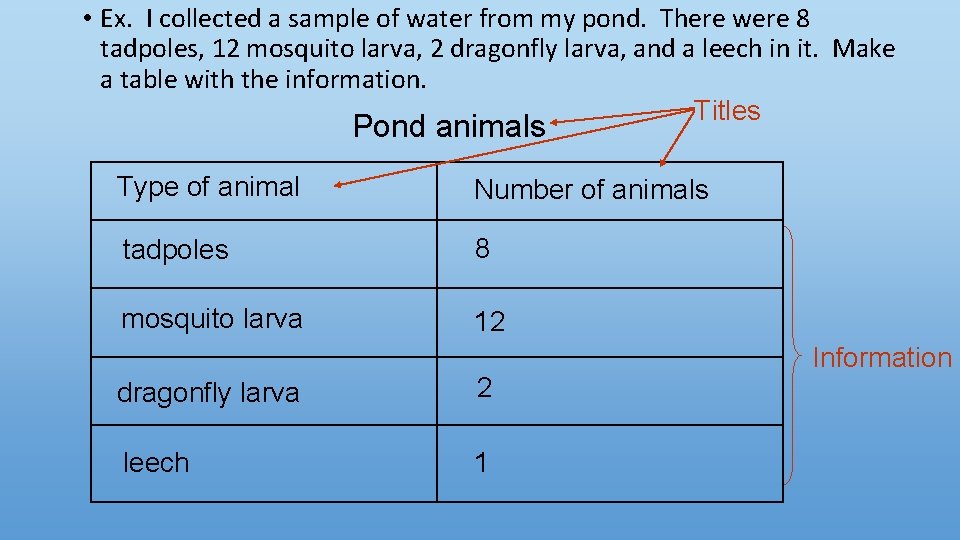
• Ex. I collected a sample of water from my pond. There were 8 tadpoles, 12 mosquito larva, 2 dragonfly larva, and a leech in it. Make a table with the information. Titles Pond animals Type of animal Number of animals tadpoles 8 mosquito larva 12 dragonfly larva 2 leech 1 Information
Once you have made a data table, you can put your information into a graph. circle graphs line plots bar graphs line graphs
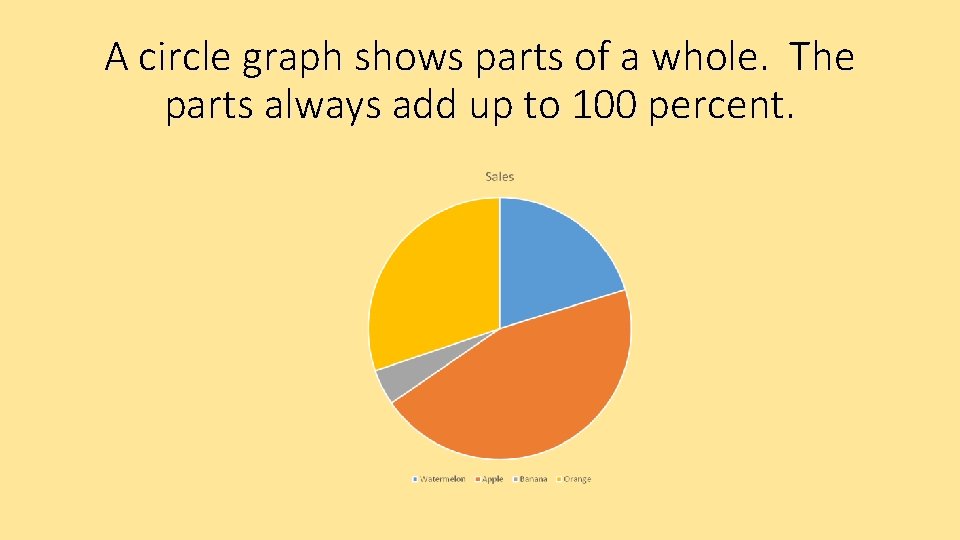
A circle graph shows parts of a whole. The parts always add up to 100 percent.
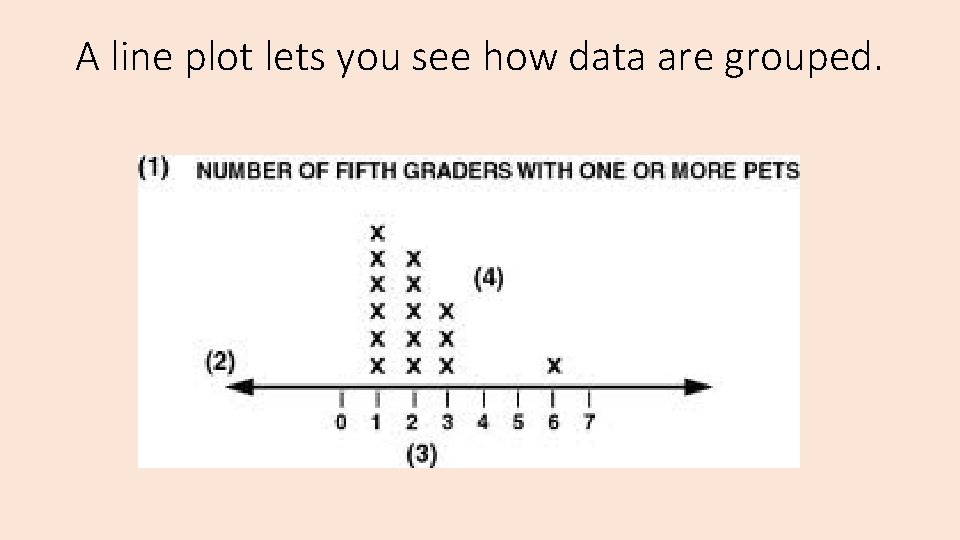
A line plot lets you see how data are grouped.
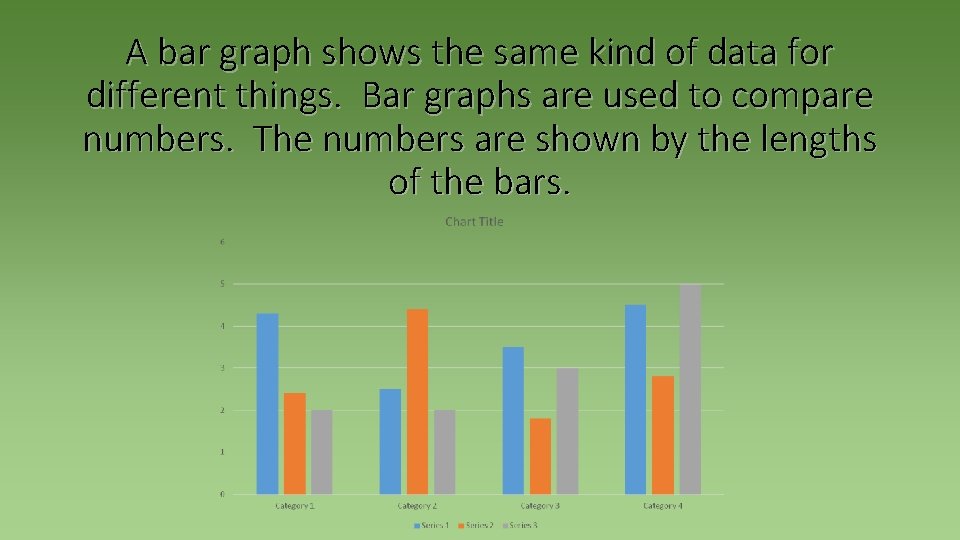
A bar graph shows the same kind of data for different things. Bar graphs are used to compare numbers. The numbers are shown by the lengths of the bars.
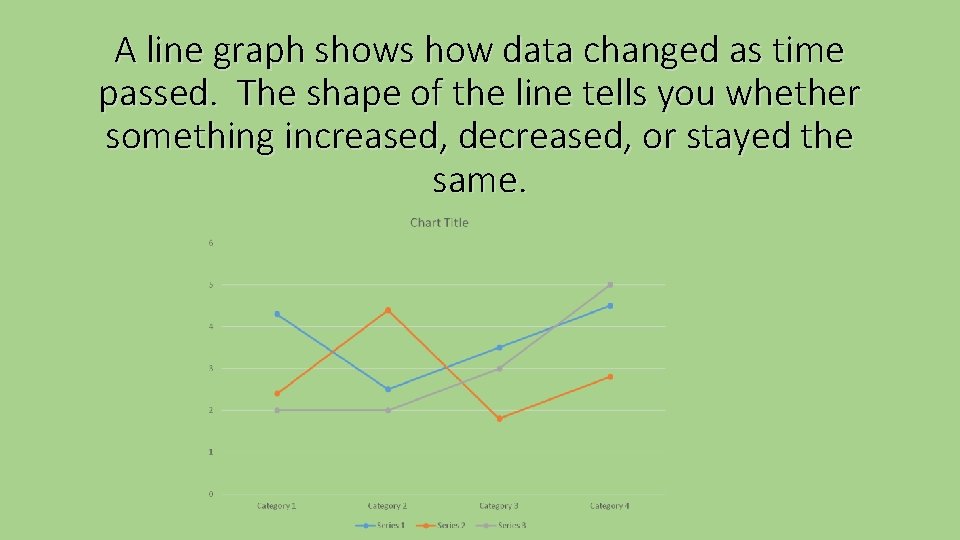
A line graph shows how data changed as time passed. The shape of the line tells you whether something increased, decreased, or stayed the same.
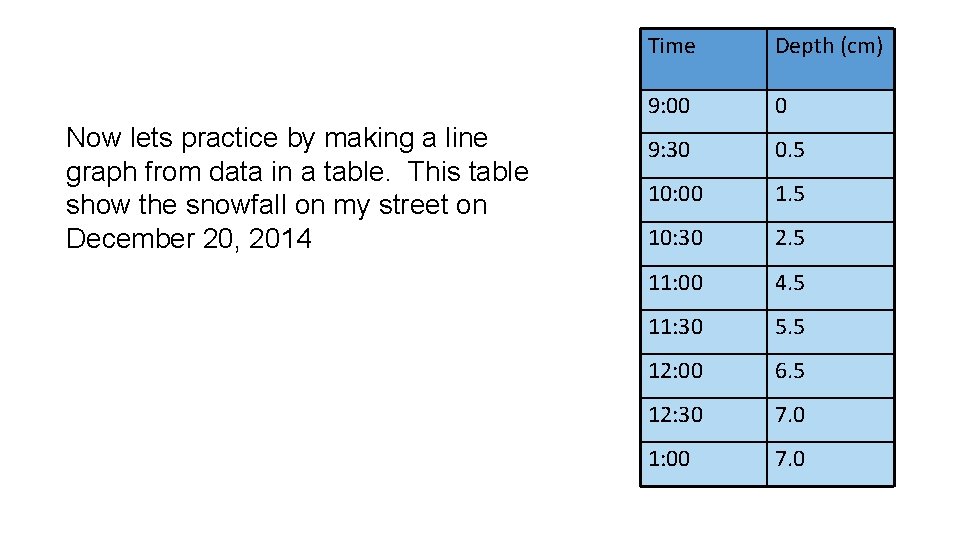
Now lets practice by making a line graph from data in a table. This table show the snowfall on my street on December 20, 2014 Time Depth (cm) 9: 00 0 9: 30 0. 5 10: 00 1. 5 10: 30 2. 5 11: 00 4. 5 11: 30 5. 5 12: 00 6. 5 12: 30 7. 0 1: 00 7. 0
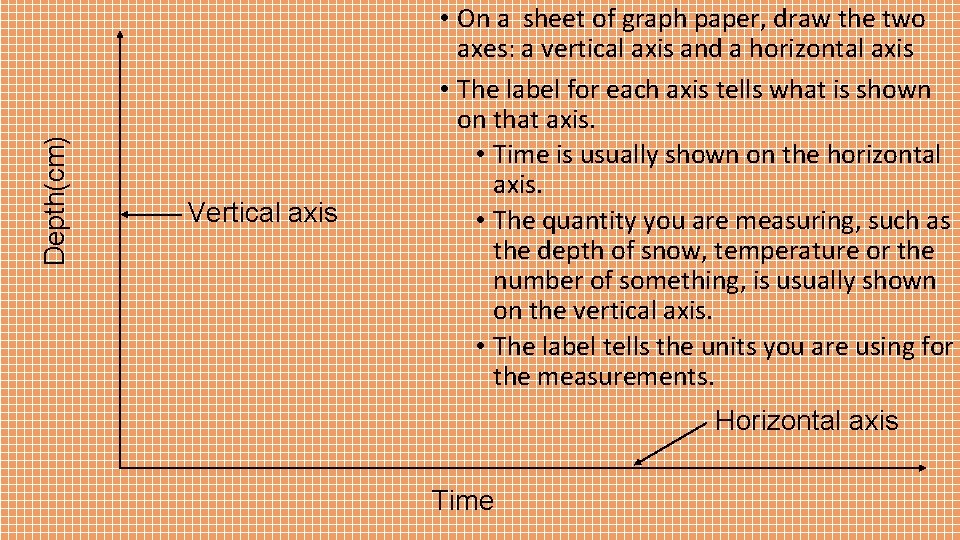
Depth(cm) Vertical axis • On a sheet of graph paper, draw the two axes: a vertical axis and a horizontal axis • The label for each axis tells what is shown on that axis. • Time is usually shown on the horizontal axis. • The quantity you are measuring, such as the depth of snow, temperature or the number of something, is usually shown on the vertical axis. • The label tells the units you are using for the measurements. Horizontal axis Time
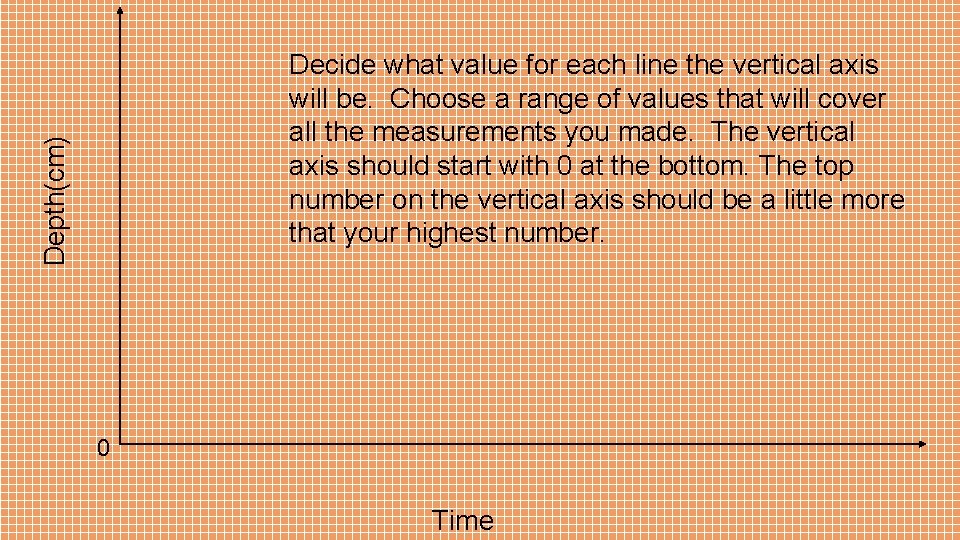
Depth(cm) Decide what value for each line the vertical axis will be. Choose a range of values that will cover all the measurements you made. The vertical axis should start with 0 at the bottom. The top number on the vertical axis should be a little more that your highest number. 0 Time
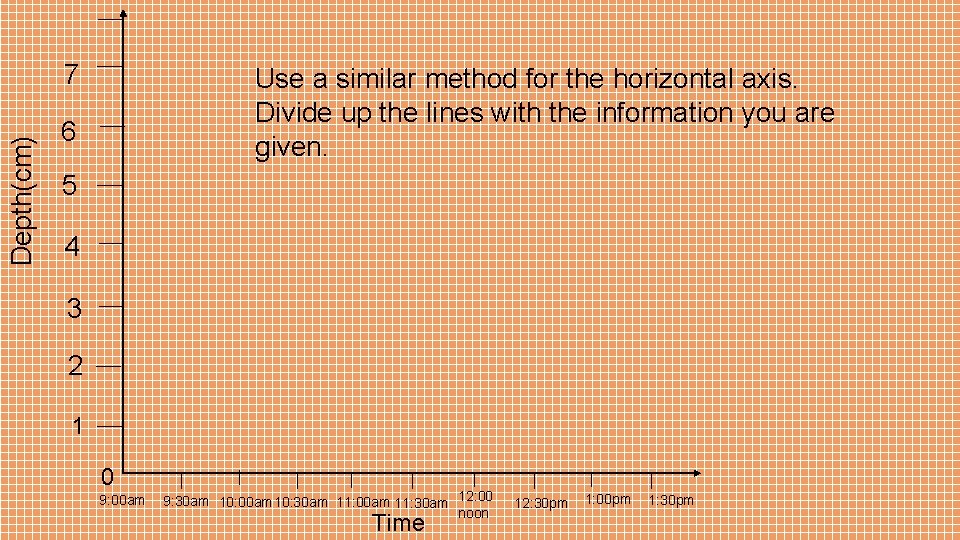
Depth(cm) 7 Use a similar method for the horizontal axis. Divide up the lines with the information you are given. 6 5 4 3 2 1 0 9: 00 am 9: 30 am 10: 00 am 10: 30 am 11: 00 am 11: 30 am 12: 00 noon Time 12: 30 pm 1: 00 pm 1: 30 pm
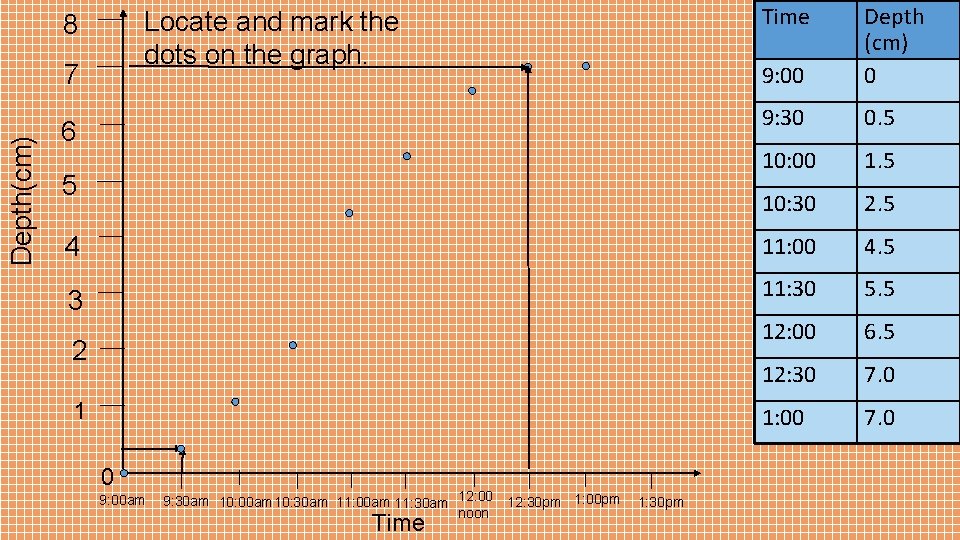
9: 00 Depth (cm) 0 9: 30 0. 5 10: 00 1. 5 10: 30 2. 5 4 11: 00 4. 5 3 11: 30 5. 5 12: 00 6. 5 12: 30 7. 0 1: 00 7. 0 7 Depth(cm) Time Locate and mark the dots on the graph. 8 6 5 2 1 0 9: 00 am 9: 30 am 10: 00 am 10: 30 am 11: 00 am 11: 30 am 12: 00 12: 30 pm 1: 00 pm noon Time 1: 30 pm
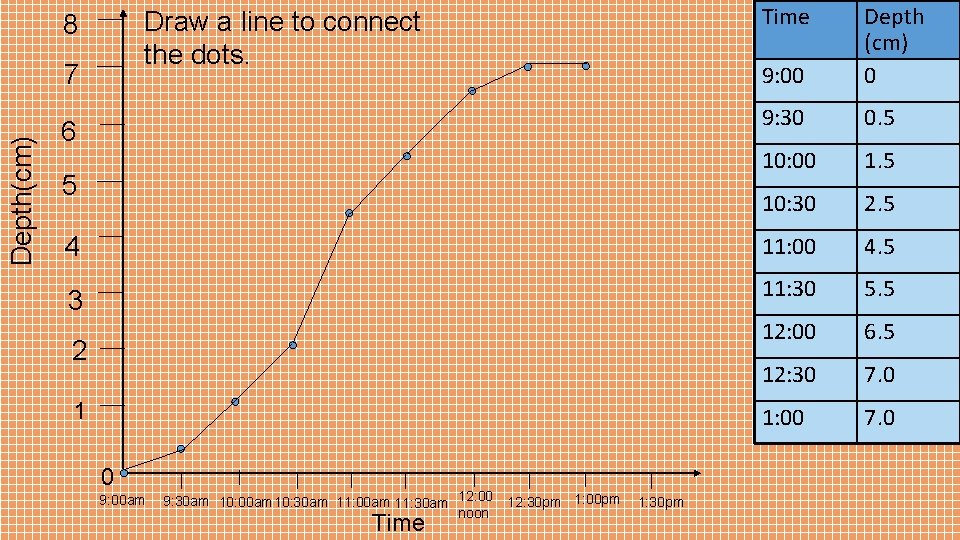
9: 00 Depth (cm) 0 9: 30 0. 5 10: 00 1. 5 10: 30 2. 5 4 11: 00 4. 5 3 11: 30 5. 5 12: 00 6. 5 12: 30 7. 0 1: 00 7. 0 7 Depth(cm) Time Draw a line to connect the dots. 8 6 5 2 1 0 9: 00 am 9: 30 am 10: 00 am 10: 30 am 11: 00 am 11: 30 am 12: 00 12: 30 pm 1: 00 pm noon Time 1: 30 pm
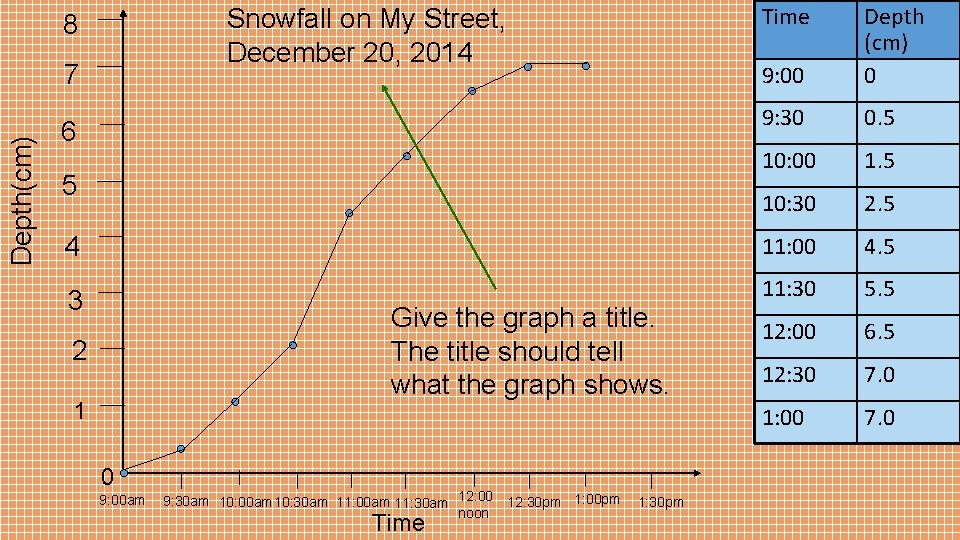
9: 00 Depth (cm) 0 9: 30 0. 5 10: 00 1. 5 10: 30 2. 5 4 11: 00 4. 5 3 11: 30 5. 5 12: 00 6. 5 12: 30 7. 0 1: 00 7. 0 7 Depth(cm) Time Snowfall on My Street, December 20, 2014 8 6 5 Give the graph a title. The title should tell what the graph shows. 2 1 0 9: 00 am 9: 30 am 10: 00 am 10: 30 am 11: 00 am 11: 30 am 12: 00 12: 30 pm 1: 00 pm noon Time 1: 30 pm
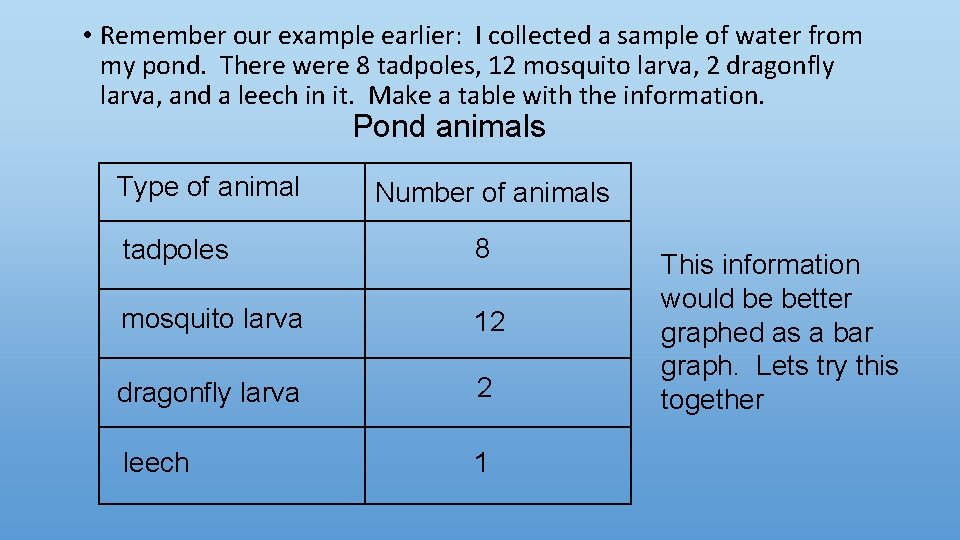
• Remember our example earlier: I collected a sample of water from my pond. There were 8 tadpoles, 12 mosquito larva, 2 dragonfly larva, and a leech in it. Make a table with the information. Pond animals Type of animal Number of animals tadpoles 8 mosquito larva 12 dragonfly larva 2 leech 1 This information would be better graphed as a bar graph. Lets try this together
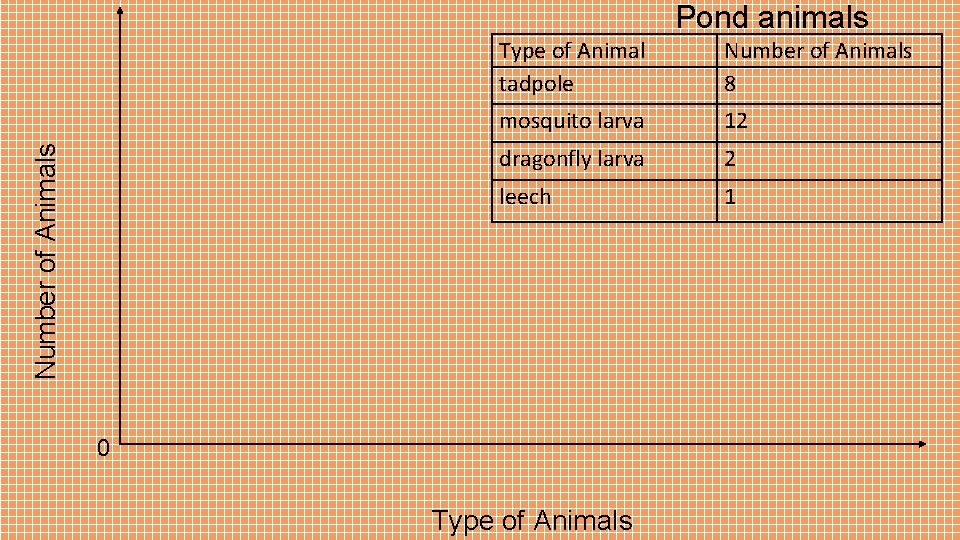
Number of Animals Pond animals Type of Animal tadpole Number of Animals 8 mosquito larva 12 dragonfly larva 2 leech 1 0 Type of Animals
- Slides: 25