
Measurements of Condensation Nuclei and PM10 at San

- Slides: 14
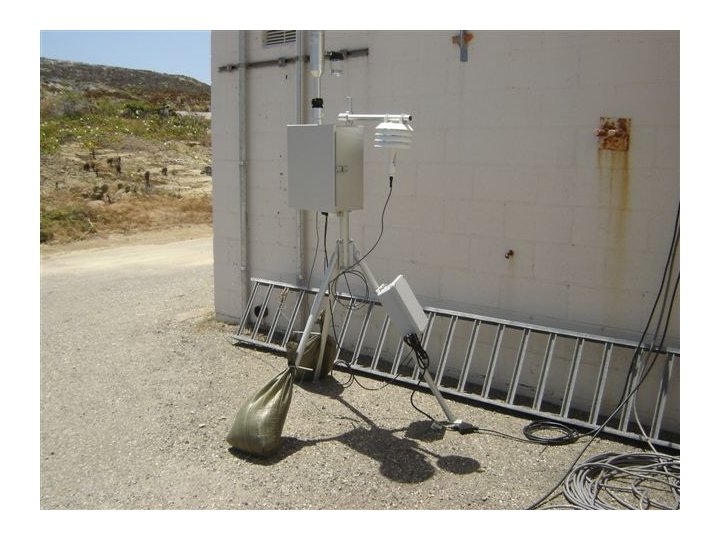
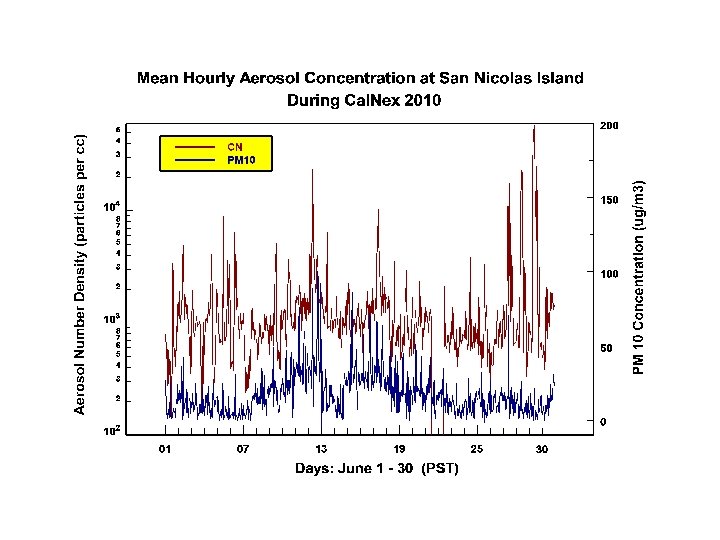
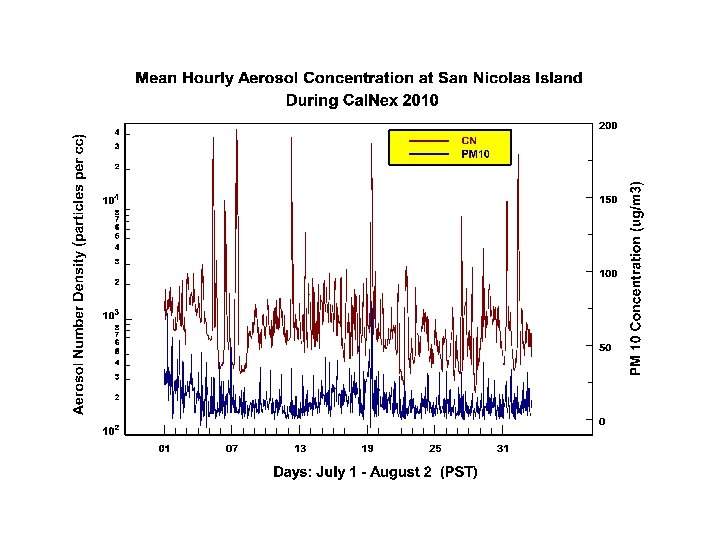
Measurements of Condensation Nuclei and PM-10 at San Nicolas Island during Cal. Nex 2010 Terry E. Battalino and Matthew Mc. Govern Meteorology, Ocean & Geophysics Branch Naval Air Systems Command WD Point Mugu, CA Cal. Nex Atlantis Data Workshop January 11 -13, 2011 3102 Ghausi Hall, UC Davis Campus
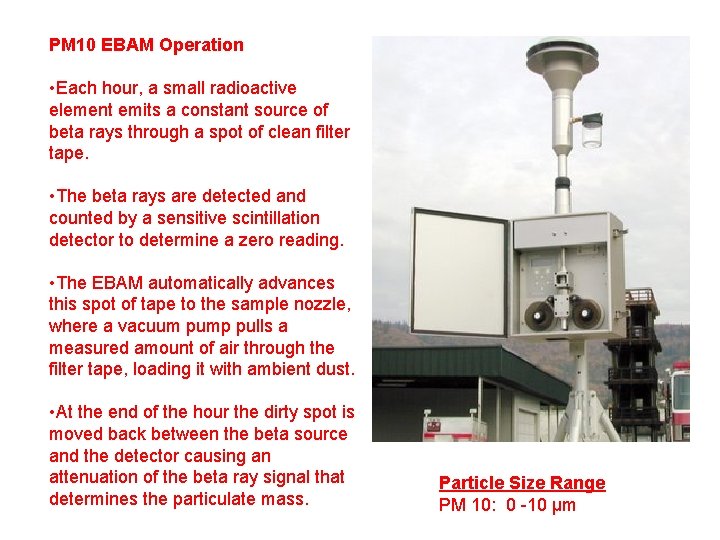
PM 10 EBAM Operation • Each hour, a small radioactive element emits a constant source of beta rays through a spot of clean filter tape. • The beta rays are detected and counted by a sensitive scintillation detector to determine a zero reading. • The EBAM automatically advances this spot of tape to the sample nozzle, where a vacuum pump pulls a measured amount of air through the filter tape, loading it with ambient dust. • At the end of the hour the dirty spot is moved back between the beta source and the detector causing an attenuation of the beta ray signal that determines the particulate mass. Particle Size Range PM 10: 0 -10 µm
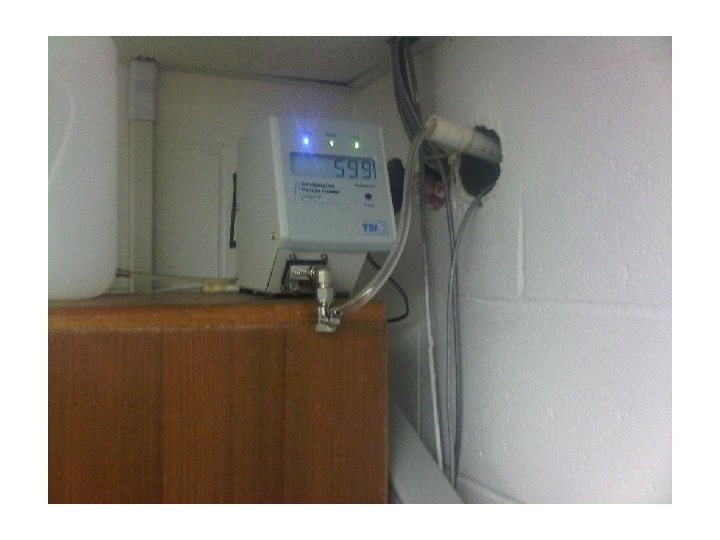
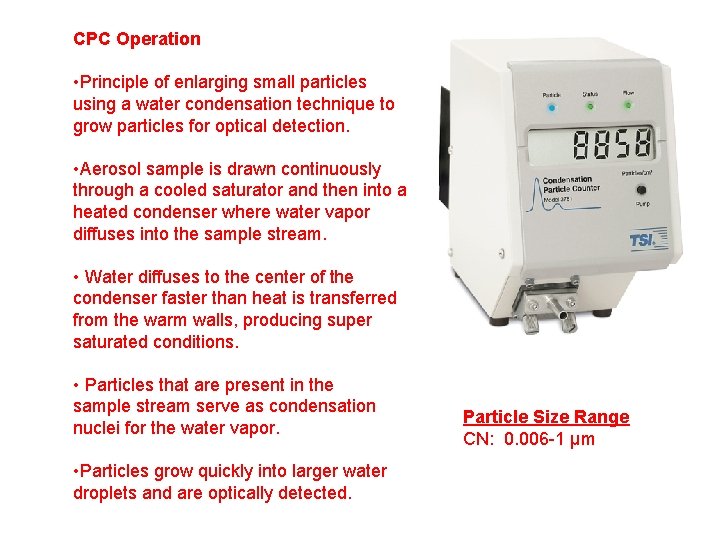
CPC Operation • Principle of enlarging small particles using a water condensation technique to grow particles for optical detection. • Aerosol sample is drawn continuously through a cooled saturator and then into a heated condenser where water vapor diffuses into the sample stream. • Water diffuses to the center of the condenser faster than heat is transferred from the warm walls, producing super saturated conditions. • Particles that are present in the sample stream serve as condensation nuclei for the water vapor. • Particles grow quickly into larger water droplets and are optically detected. Particle Size Range CN: 0. 006 -1 µm
Extra Slides
Navy Aerosol Model