
MEASUREMENT Units of Measurement Types of Data refers

- Slides: 29
MEASUREMENT Units of Measurement
Types of Data refers to information Qualitative Data Describes something Texture, Color, etc Quantitative Data Measures Something Length, Mass, Time, etc
Determine if each of the following is a qualitative or quantitative measurement. A. The sandwich has ham in it. B. There are four eggs in the carton. C. I used 230 grams of Na. OH. D. I added water to the solution.
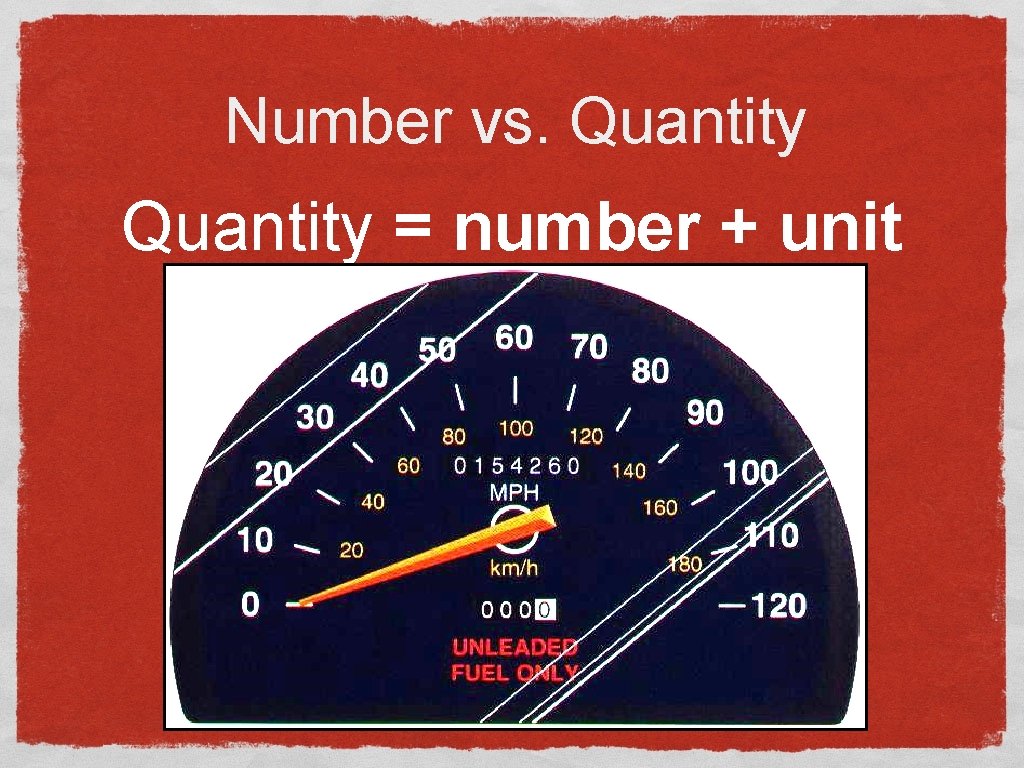
Measurement A quantity with both a NUMBER and a UNIT Provides a reference point NO NAKED NUMBERS!
Number vs. Quantity = number + unit
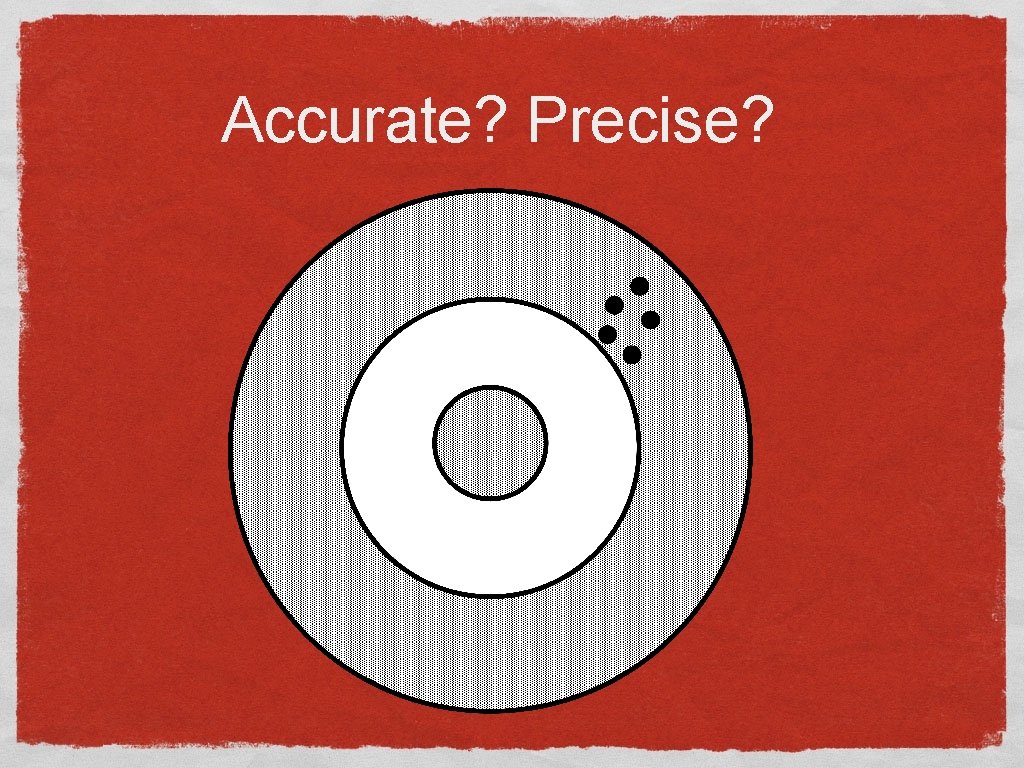
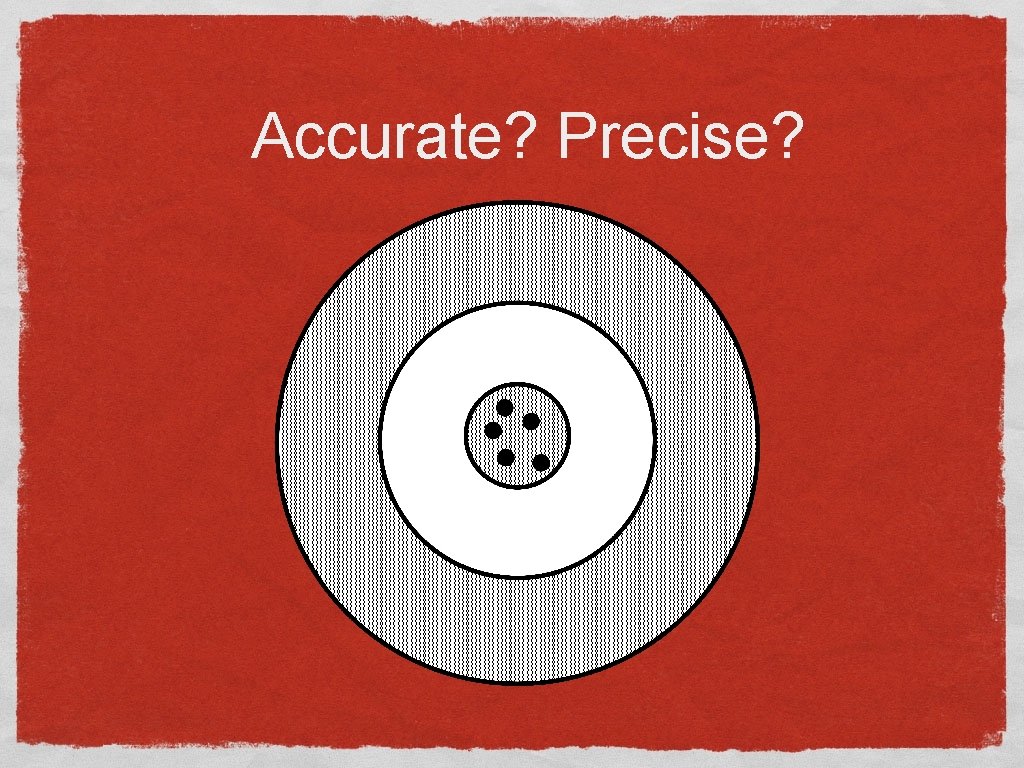
Measurements Accuracy How close a measurement comes to the accepted answer Precision How close a series of measurements are to each other. How specific an measurement is 10 vs. 10. 01 vs. 10. 007
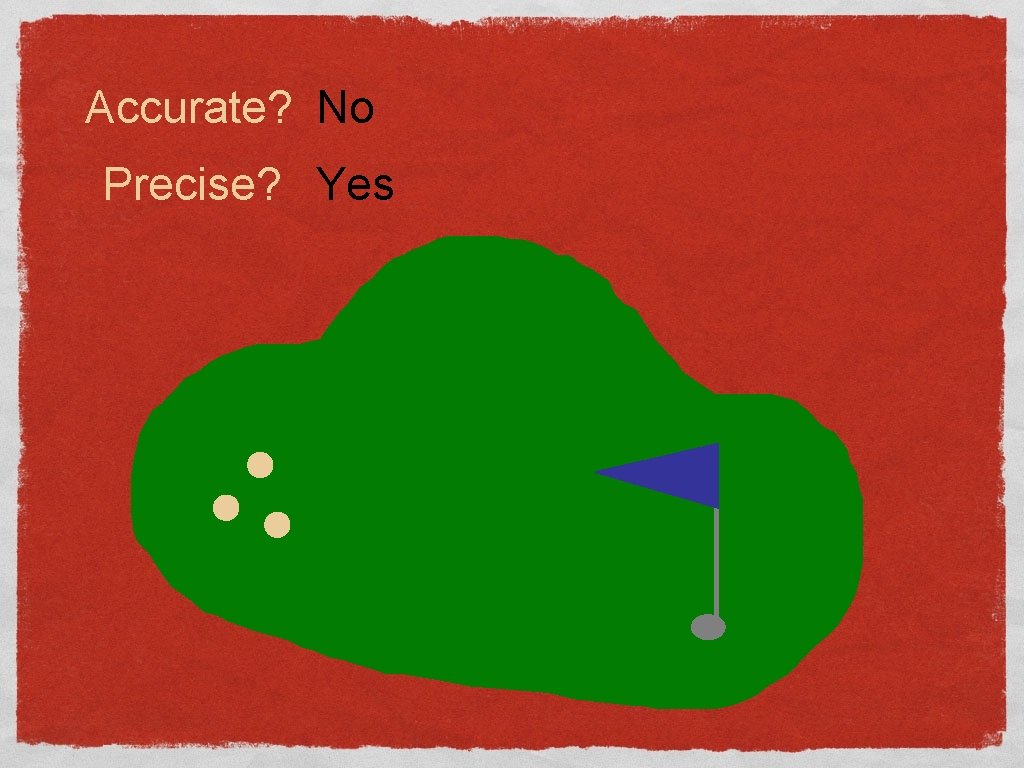
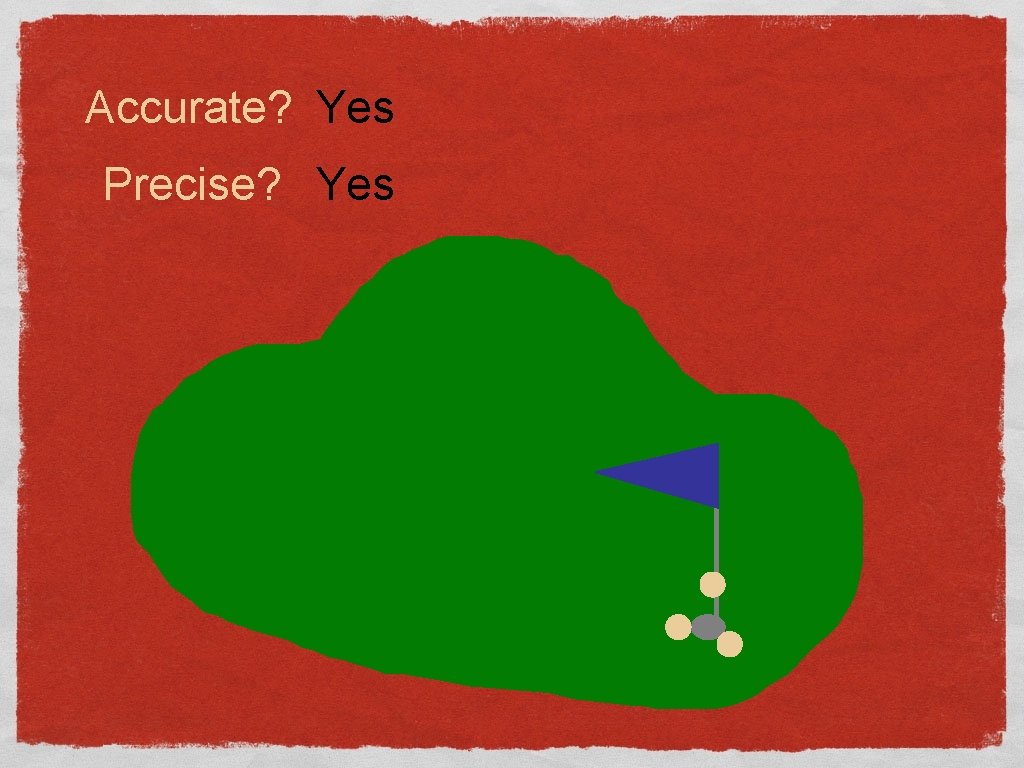
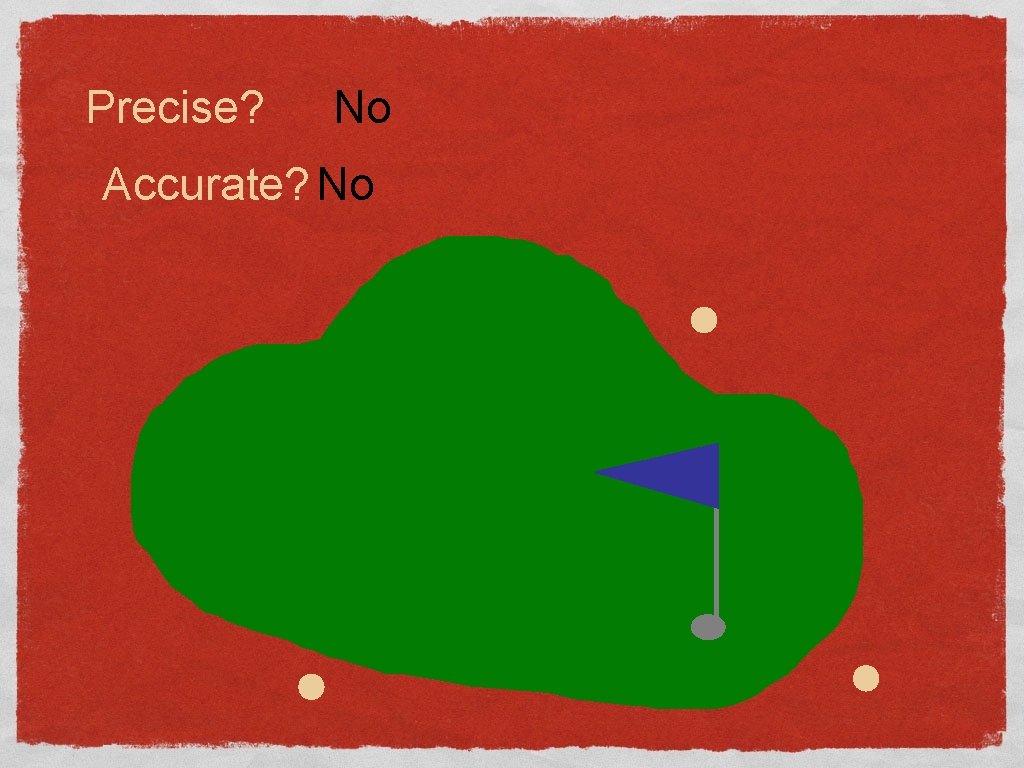
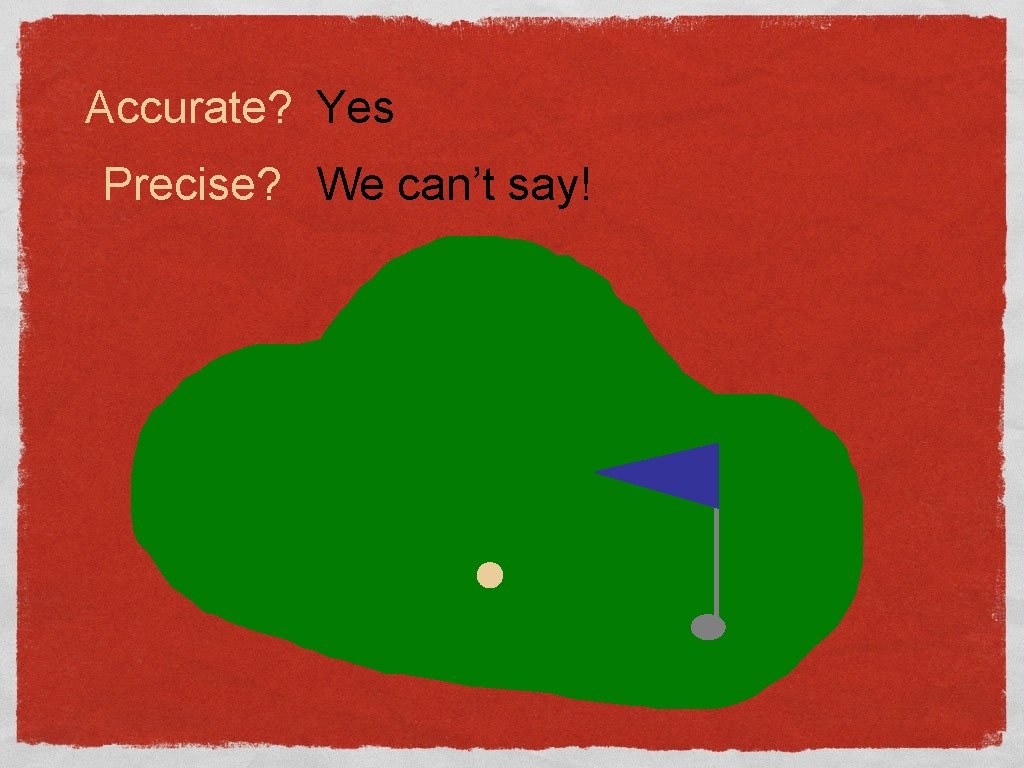
Let’s use a golf analogy
Accurate? No Precise? Yes
Accurate? Yes Precise? Yes
Precise? No Accurate? No
Accurate? Yes Precise? We can’t say!
Accurate? Precise?
Accurate? Precise?
Accurate? Precise?
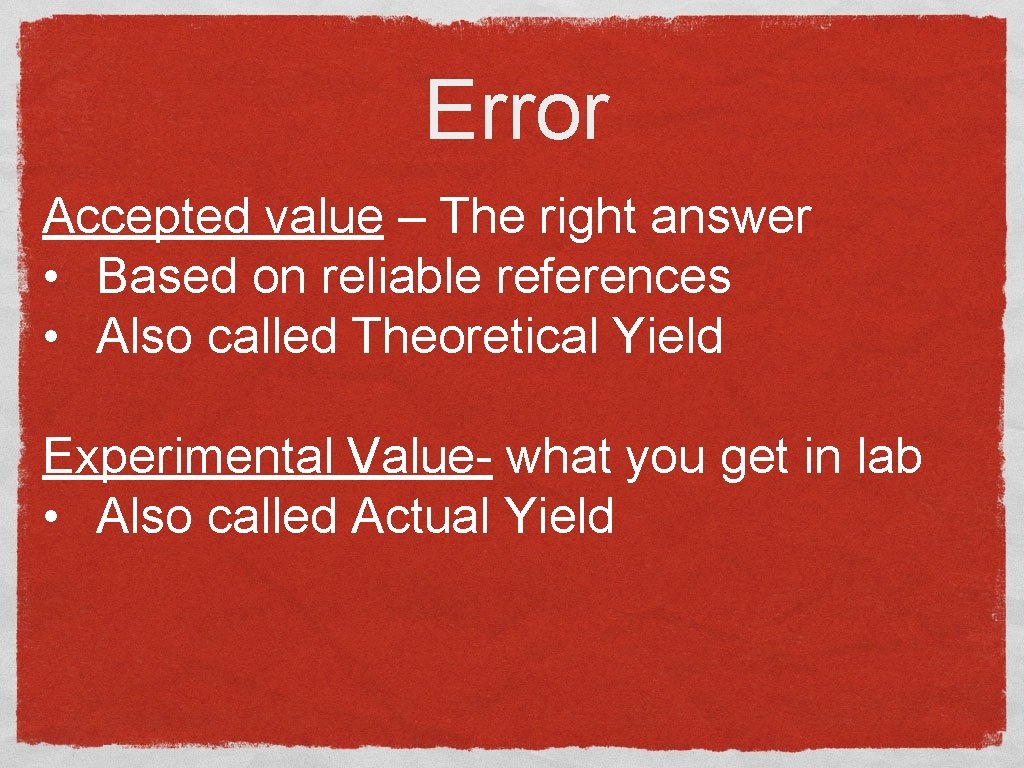
Error Accepted value – The right answer • Based on reliable references • Also called Theoretical Yield Experimental Value- what you get in lab • Also called Actual Yield
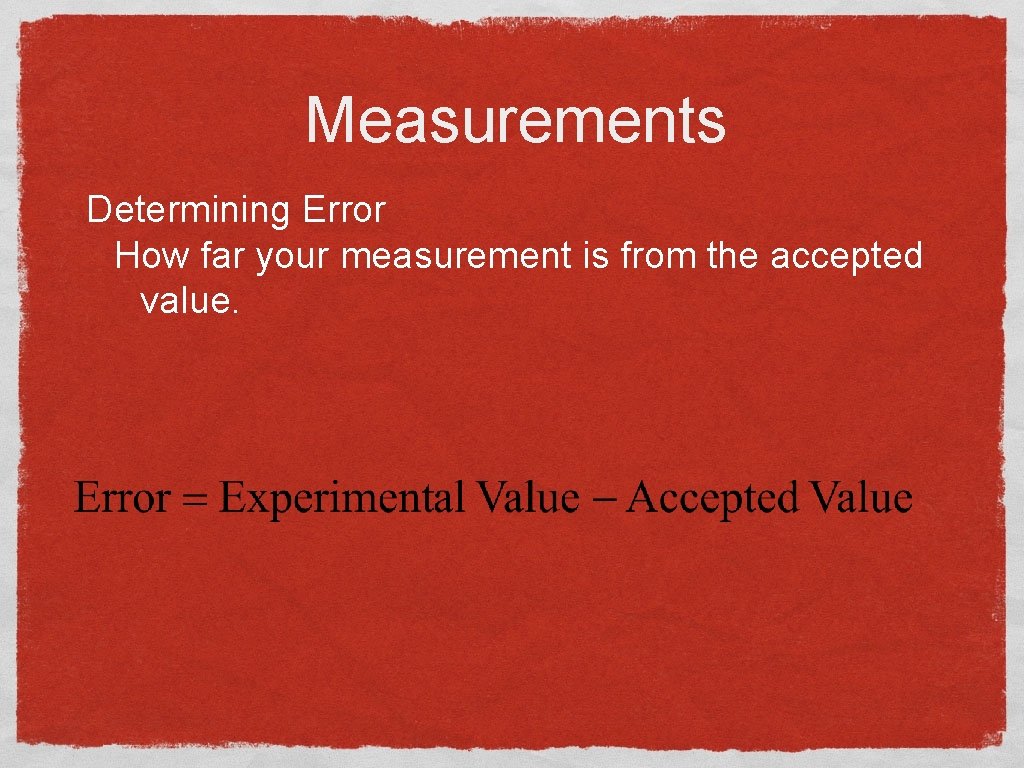
Measurements Determining Error How far your measurement is from the accepted value.
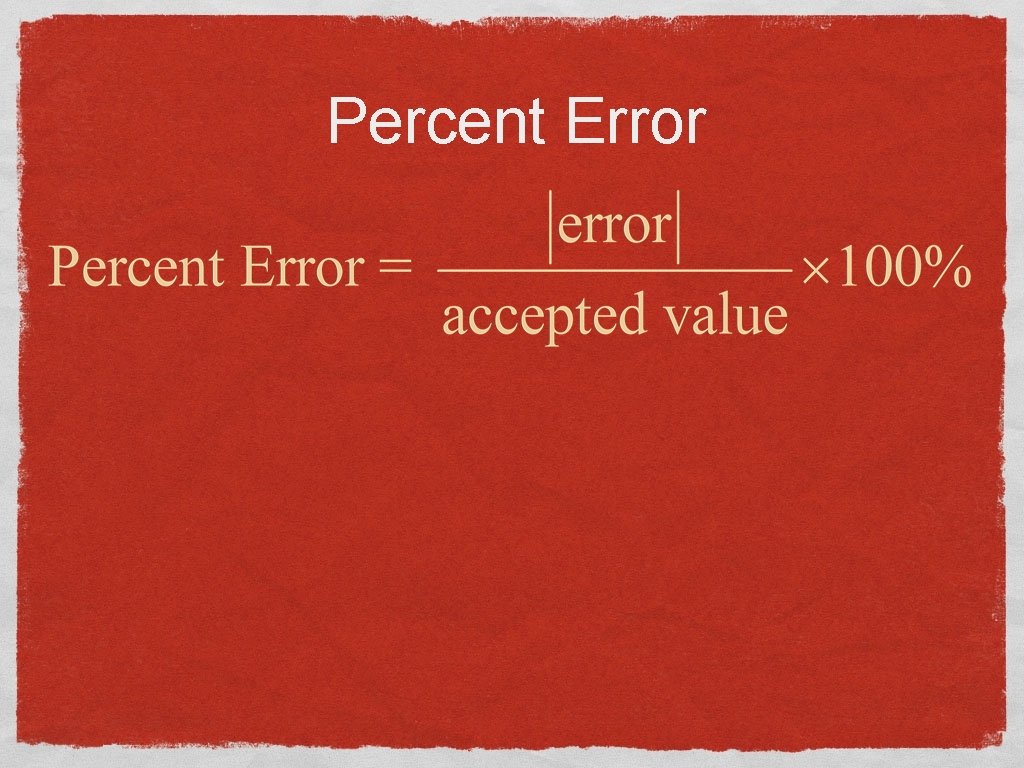
Percent Error
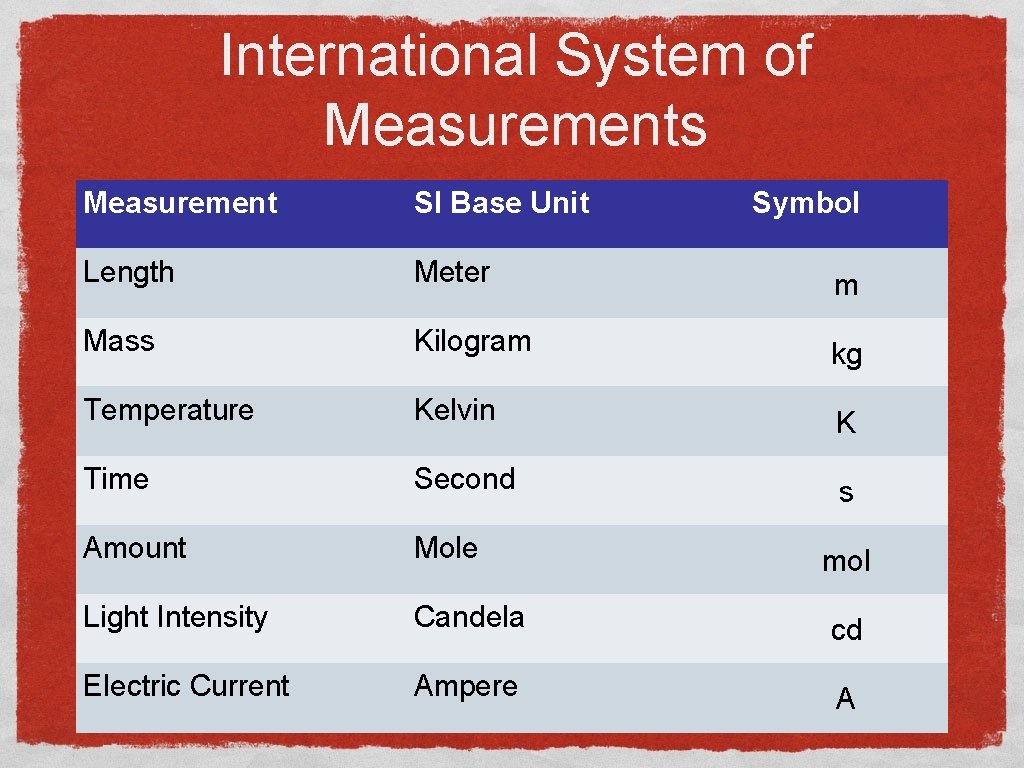
International System of Measurements Measurement SI Base Unit Symbol Length Meter m Mass Kilogram kg Temperature Kelvin K Time Second s Amount Mole mol Light Intensity Candela cd Electric Current Ampere A
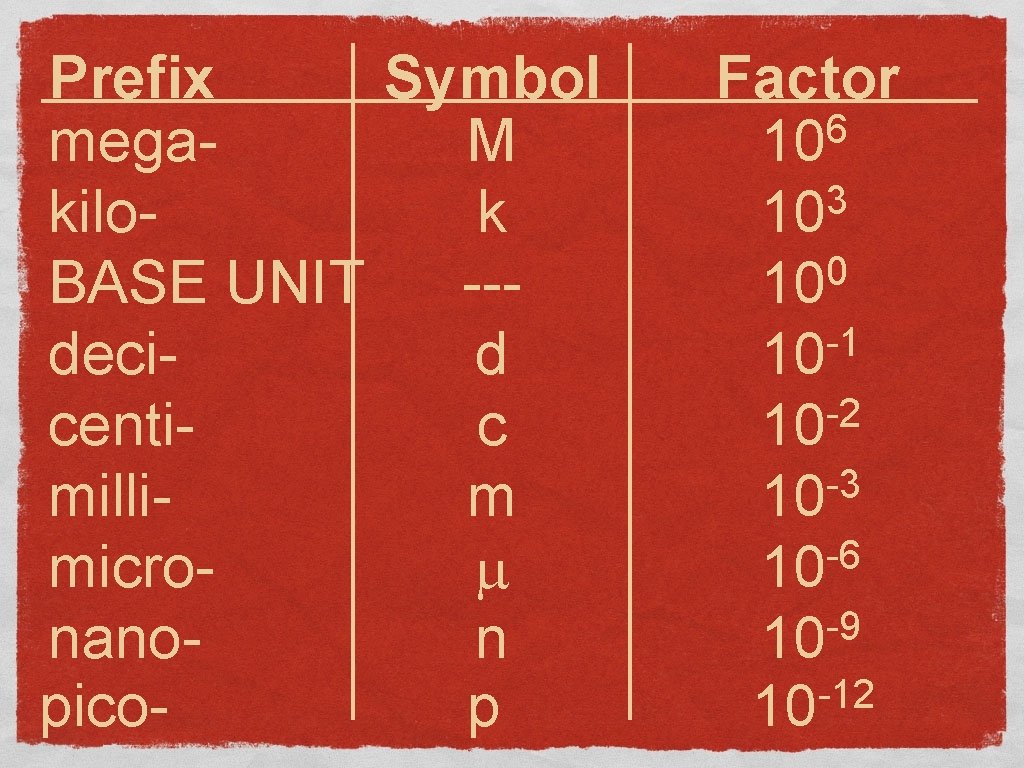
Prefix Symbol mega. M kilok BASE UNIT --decid centic millim micro nanon picop Factor 6 10 3 10 0 10 -1 10 -2 10 -3 10 -6 10 -9 10 -12 10
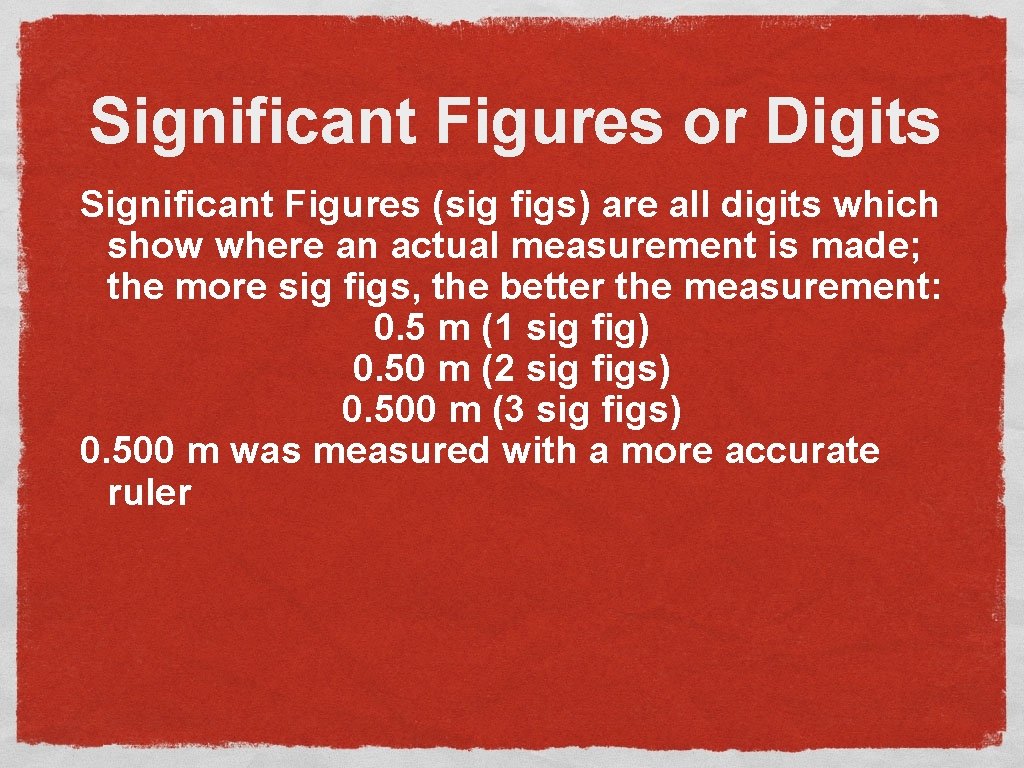
Significant Figures or Digits Significant Figures (sig figs) are all digits which show where an actual measurement is made; the more sig figs, the better the measurement: 0. 5 m (1 sig fig) 0. 50 m (2 sig figs) 0. 500 m (3 sig figs) 0. 500 m was measured with a more accurate ruler
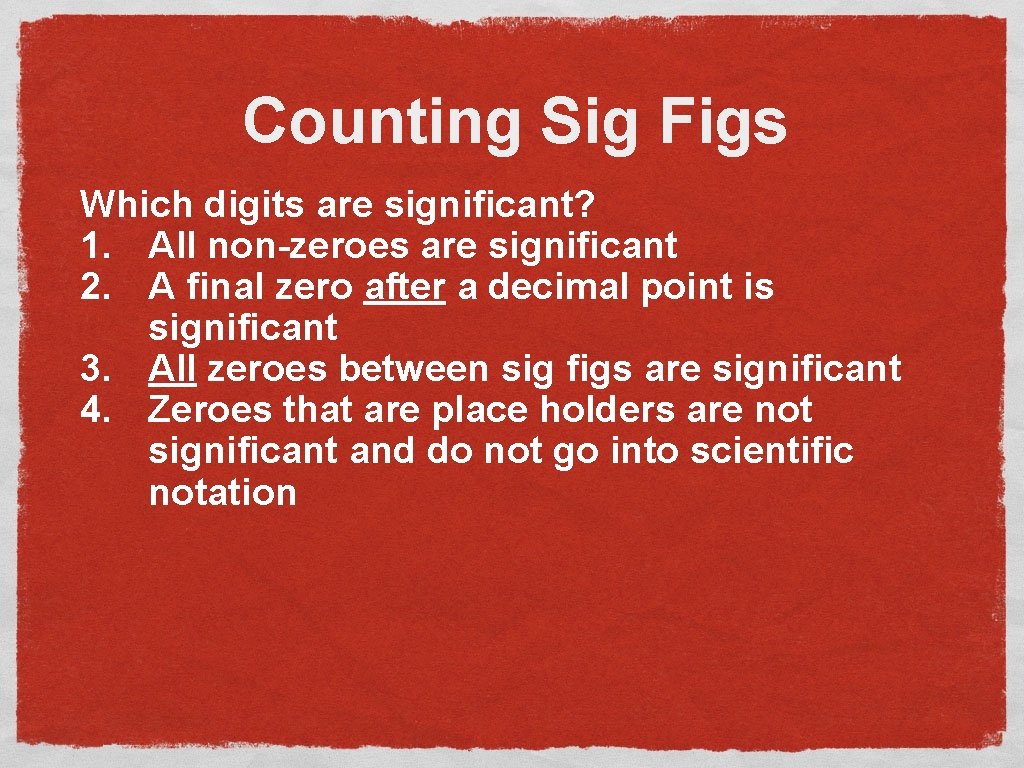
Counting Sig Figs Which digits are significant? 1. All non-zeroes are significant 2. A final zero after a decimal point is significant 3. All zeroes between sig figs are significant 4. Zeroes that are place holders are not significant and do not go into scientific notation
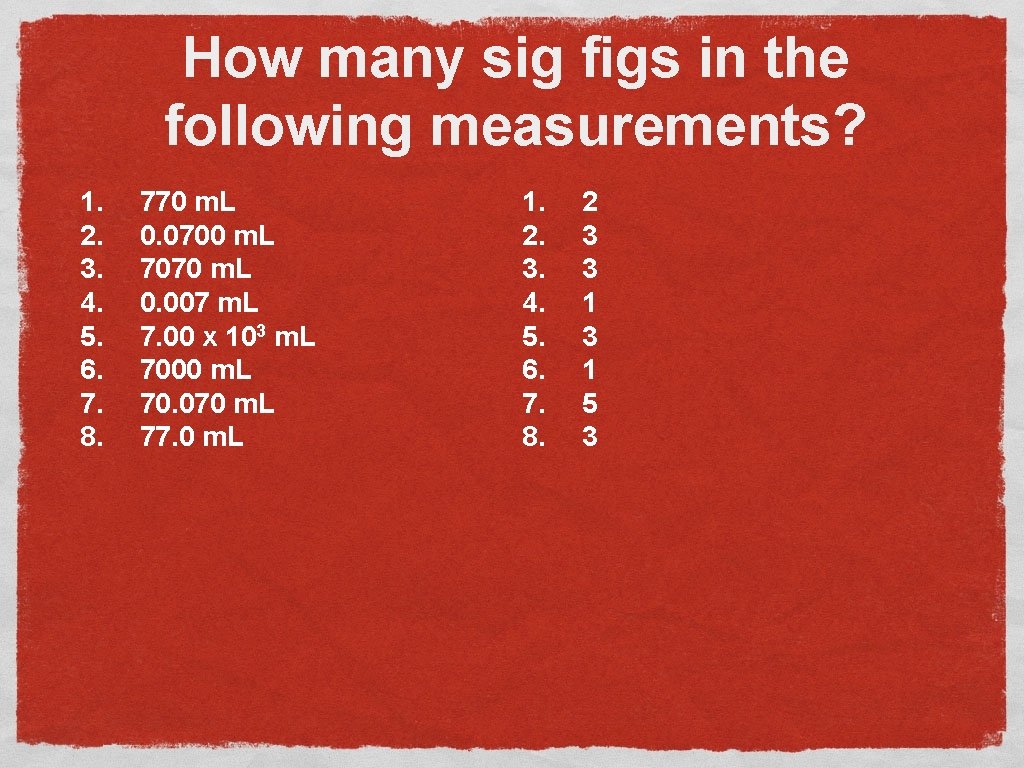
How many sig figs in the following measurements? 1. 2. 3. 4. 5. 6. 7. 8. 770 m. L 0. 0700 m. L 7070 m. L 0. 007 m. L 7. 00 x 103 m. L 7000 m. L 70. 070 m. L 77. 0 m. L 1. 2. 3. 4. 5. 6. 7. 8. 2 3 3 1 5 3
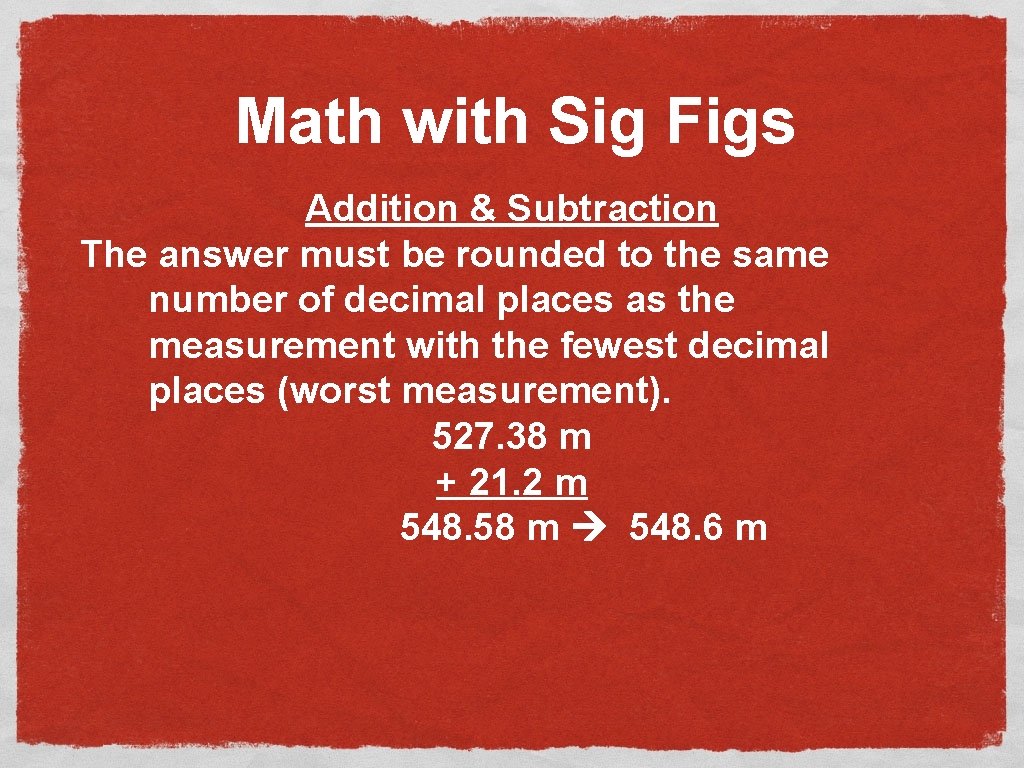
Math with Sig Figs Addition & Subtraction The answer must be rounded to the same number of decimal places as the measurement with the fewest decimal places (worst measurement). 527. 38 m + 21. 2 m 548. 58 m 548. 6 m
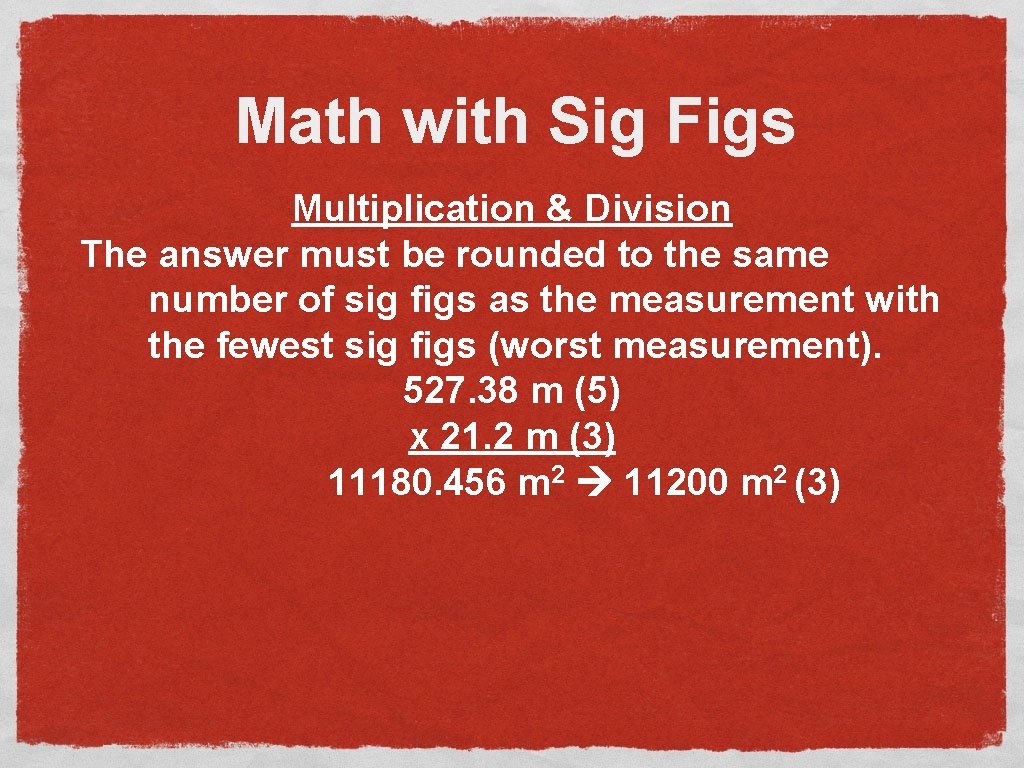
Math with Sig Figs Multiplication & Division The answer must be rounded to the same number of sig figs as the measurement with the fewest sig figs (worst measurement). 527. 38 m (5) x 21. 2 m (3) 11180. 456 m 2 11200 m 2 (3)
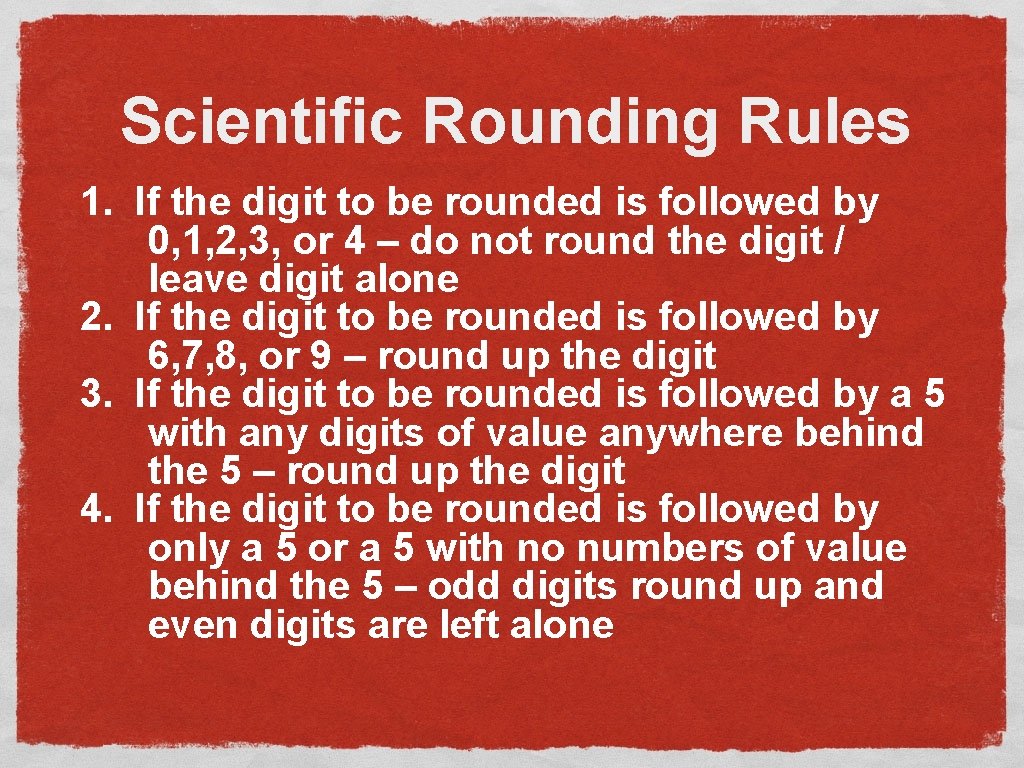
Scientific Rounding Rules 1. If the digit to be rounded is followed by 0, 1, 2, 3, or 4 – do not round the digit / leave digit alone 2. If the digit to be rounded is followed by 6, 7, 8, or 9 – round up the digit 3. If the digit to be rounded is followed by a 5 with any digits of value anywhere behind the 5 – round up the digit 4. If the digit to be rounded is followed by only a 5 or a 5 with no numbers of value behind the 5 – odd digits round up and even digits are left alone
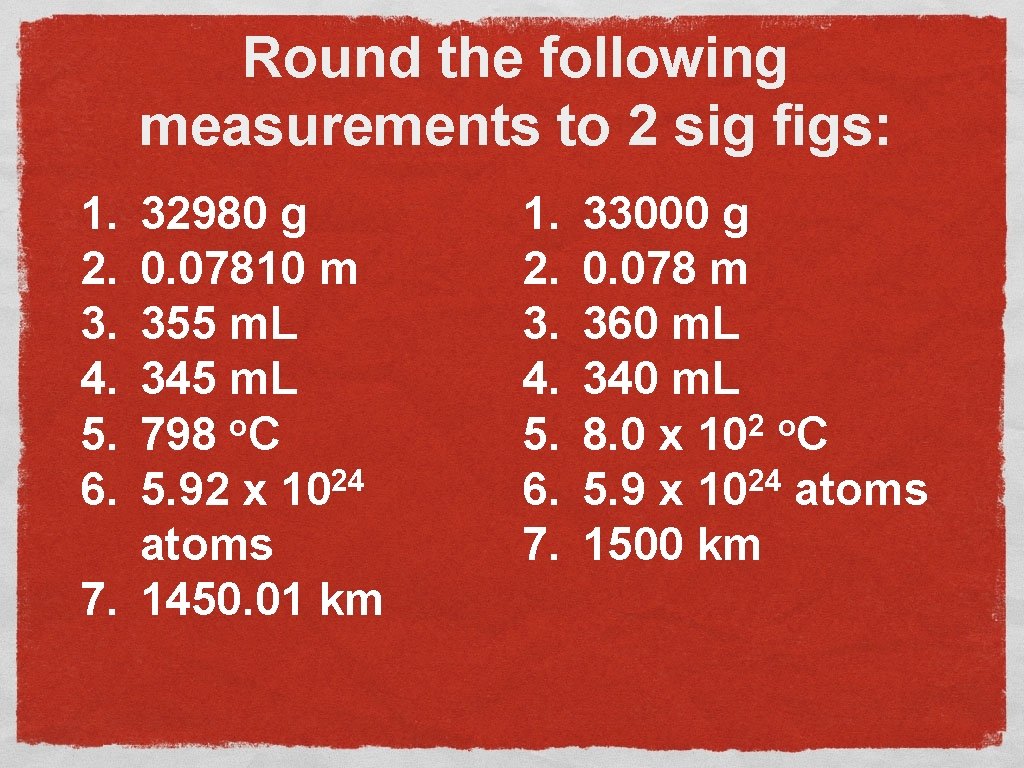
Round the following measurements to 2 sig figs: 1. 2. 3. 4. 5. 6. 32980 g 0. 07810 m 355 m. L 345 m. L o 798 C 24 5. 92 x 10 atoms 7. 1450. 01 km 1. 2. 3. 4. 5. 6. 7. 33000 g 0. 078 m 360 m. L 340 m. L 2 o 8. 0 x 10 C 24 5. 9 x 10 atoms 1500 km