
Measurement Tools and Units Length Unit meter m
- Slides: 10
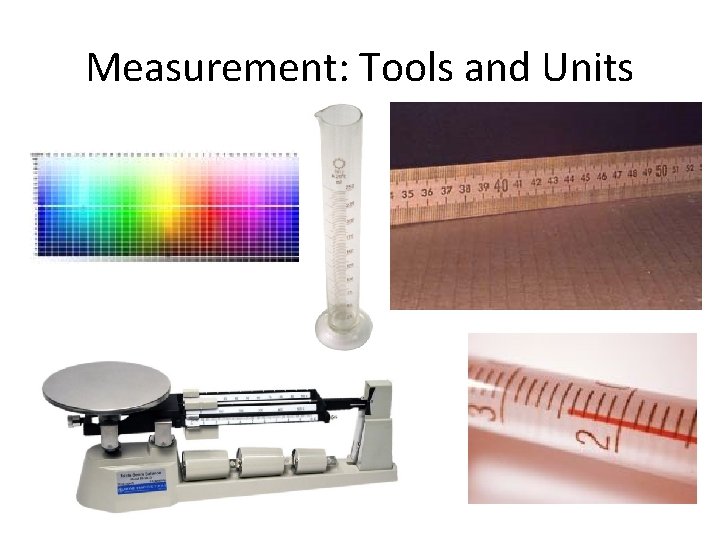
Measurement: Tools and Units
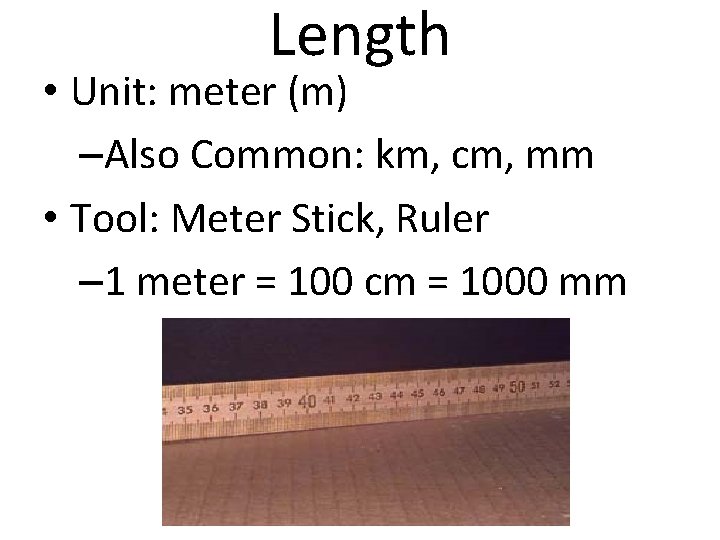
Length • Unit: meter (m) –Also Common: km, cm, mm • Tool: Meter Stick, Ruler – 1 meter = 100 cm = 1000 mm
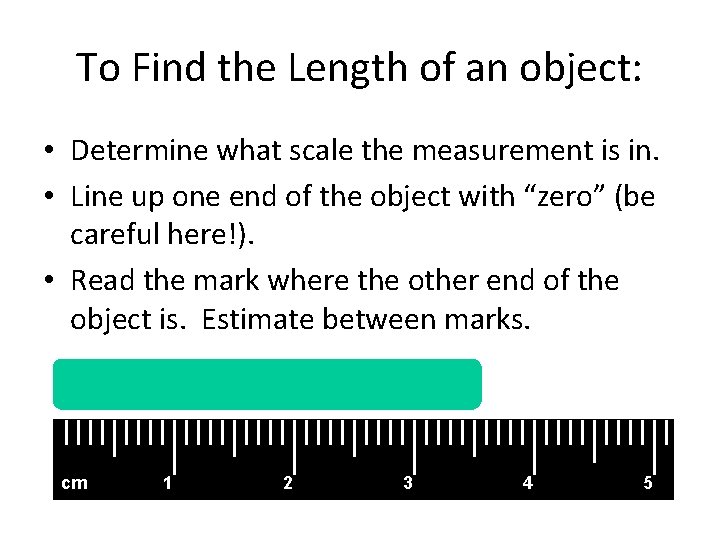
To Find the Length of an object: • Determine what scale the measurement is in. • Line up one end of the object with “zero” (be careful here!). • Read the mark where the other end of the object is. Estimate between marks. cm 1 2 3 4 5
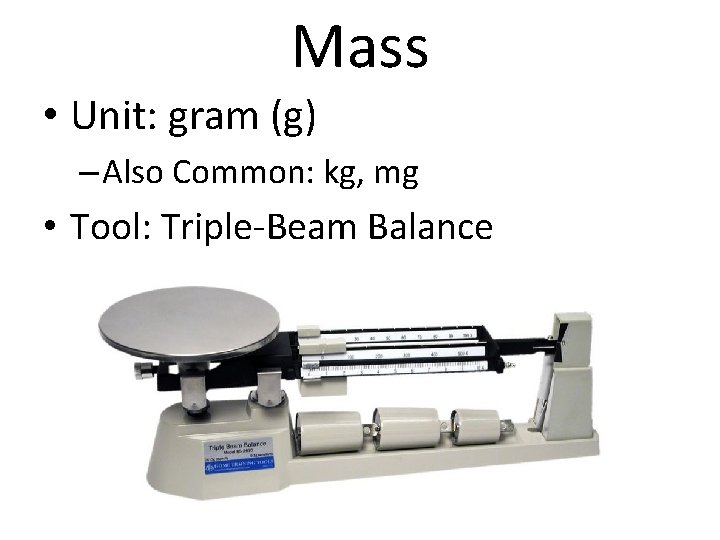
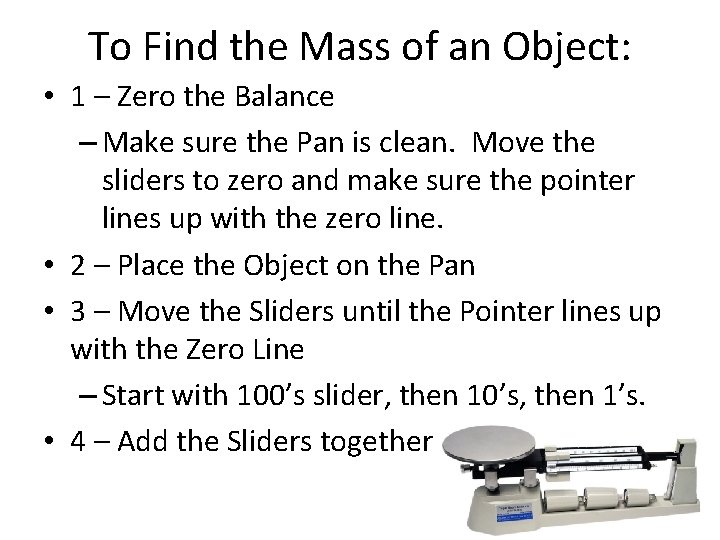
Mass • Unit: gram (g) – Also Common: kg, mg • Tool: Triple-Beam Balance
To Find the Mass of an Object: • 1 – Zero the Balance – Make sure the Pan is clean. Move the sliders to zero and make sure the pointer lines up with the zero line. • 2 – Place the Object on the Pan • 3 – Move the Sliders until the Pointer lines up with the Zero Line – Start with 100’s slider, then 10’s, then 1’s. • 4 – Add the Sliders together
The “Cup” Method • If you are trying to find the mass of an object that will not stay on the pan (marble): 1. Place an empty cup on the pan and find its mass. 2. Place the object in the cup and find the new mass. 3. Subtract the mass of the cup (1) from the mass of the object and cup together (2). You are left with the mass of the object.
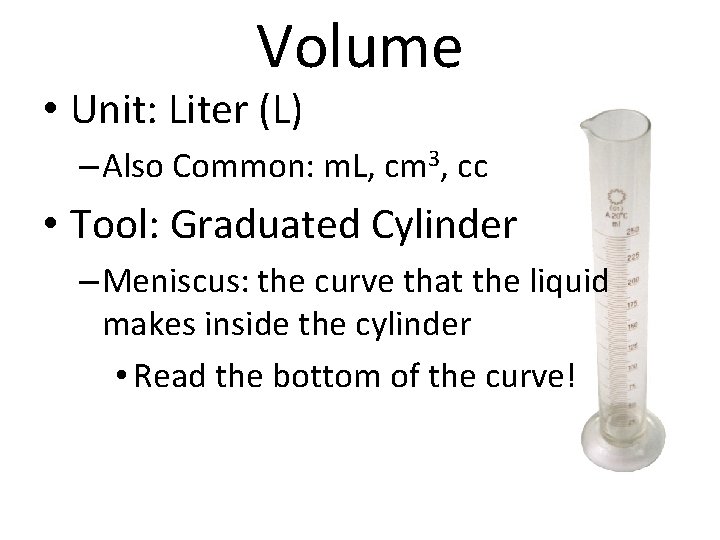
Volume • Unit: Liter (L) – Also Common: m. L, cm 3, cc • Tool: Graduated Cylinder – Meniscus: the curve that the liquid makes inside the cylinder • Read the bottom of the curve!
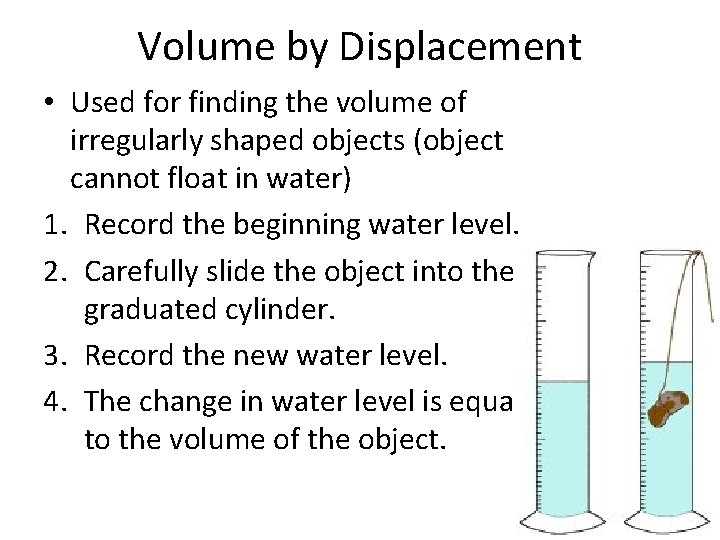
Volume by Displacement • Used for finding the volume of irregularly shaped objects (object cannot float in water) 1. Record the beginning water level. 2. Carefully slide the object into the graduated cylinder. 3. Record the new water level. 4. The change in water level is equal to the volume of the object.
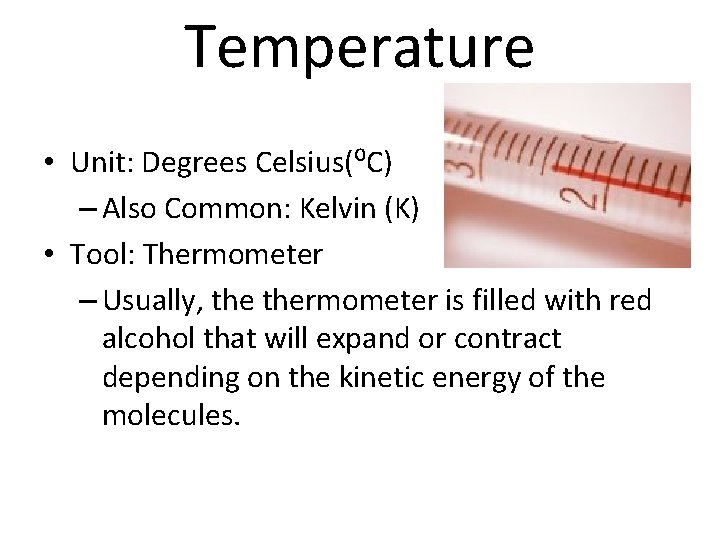
Temperature • Unit: Degrees Celsius(⁰C) – Also Common: Kelvin (K) • Tool: Thermometer – Usually, thermometer is filled with red alcohol that will expand or contract depending on the kinetic energy of the molecules.
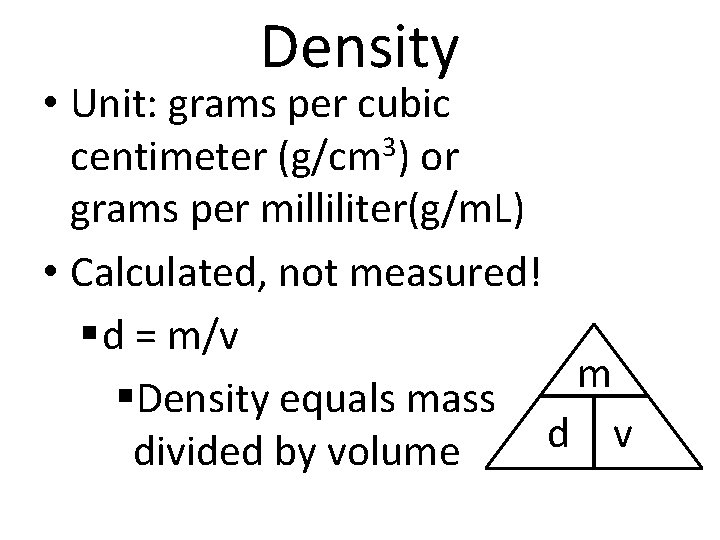
Density • Unit: grams per cubic centimeter (g/cm 3) or grams per milliliter(g/m. L) • Calculated, not measured! § d = m/v m §Density equals mass d v divided by volume