
Measurement Systems Graphing GraphsCharts condense large amounts of

- Slides: 15
Measurement Systems
Graphing • Graphs/Charts: condense large amounts of data so we can read it more easily • Bar graphs: categories of data/comparing values • Pie chart: compare parts of a whole • Line graphs: display relationships between data or change overtime • Time is always graphed on the x-axis
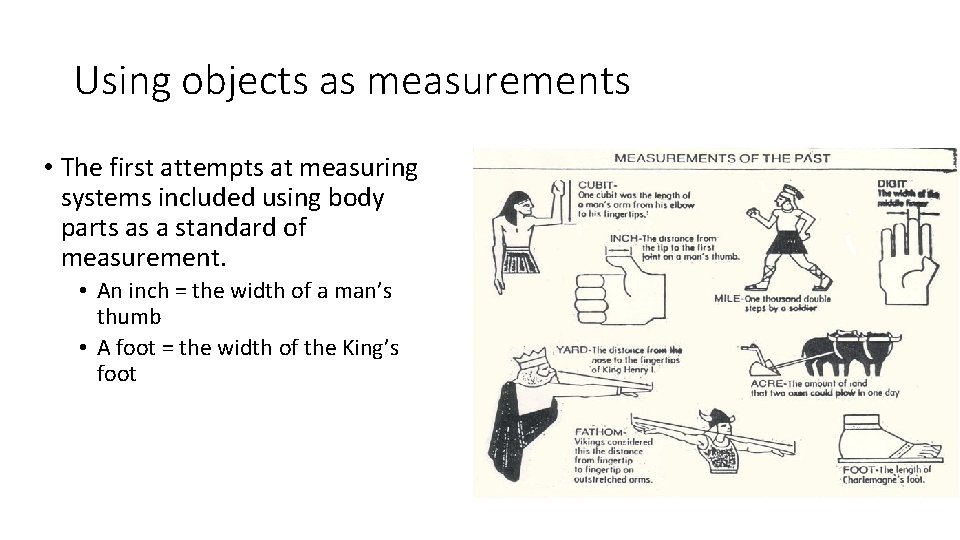
Using objects as measurements • The first attempts at measuring systems included using body parts as a standard of measurement. • An inch = the width of a man’s thumb • A foot = the width of the King’s foot
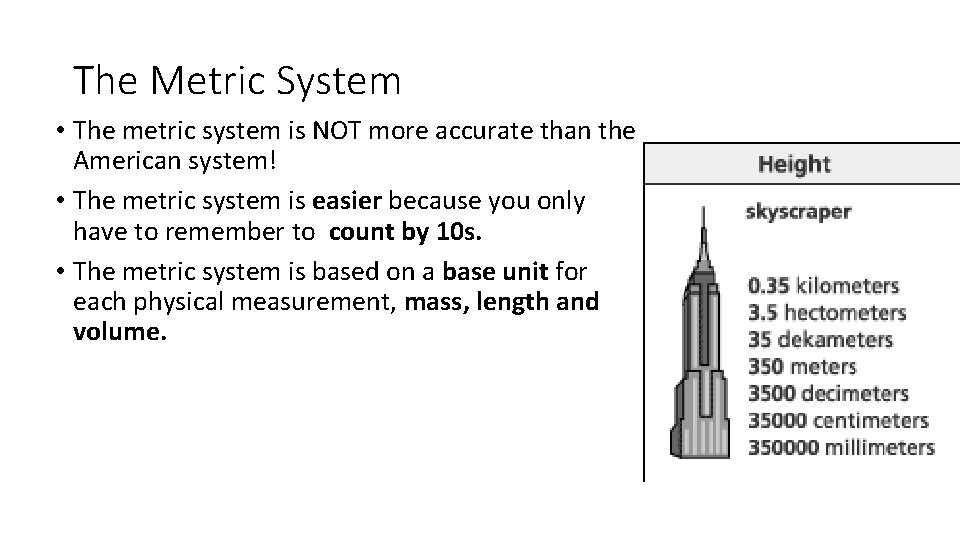
The Metric System • The metric system is NOT more accurate than the American system! • The metric system is easier because you only have to remember to count by 10 s. • The metric system is based on a base unit for each physical measurement, mass, length and volume.
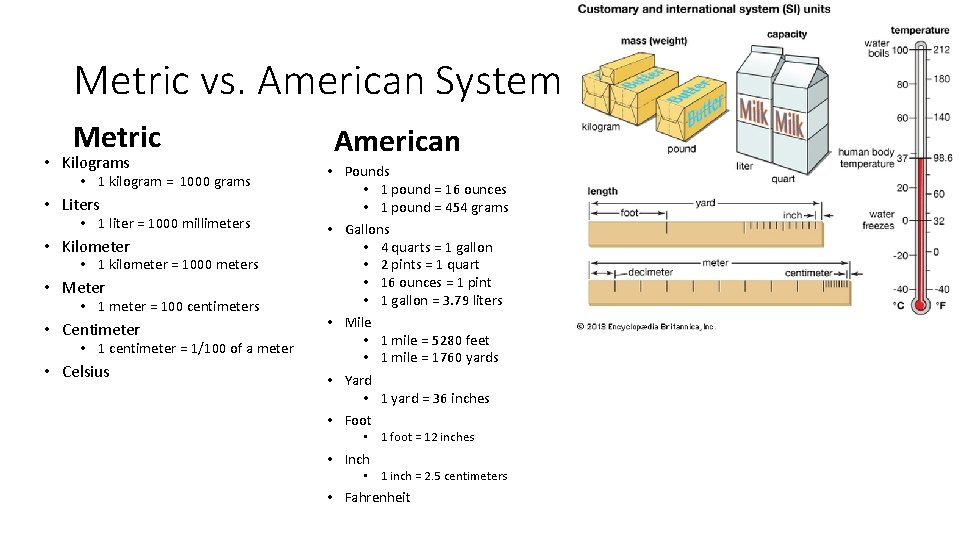
Metric vs. American System Metric • Kilograms • 1 kilogram = 1000 grams • Liters • 1 liter = 1000 millimeters • Kilometer • 1 kilometer = 1000 meters • Meter • 1 meter = 100 centimeters • Centimeter • 1 centimeter = 1/100 of a meter • Celsius American • Pounds • 1 pound = 16 ounces • 1 pound = 454 grams • Gallons • 4 quarts = 1 gallon • 2 pints = 1 quart • 16 ounces = 1 pint • 1 gallon = 3. 79 liters • Mile • 1 mile = 5280 feet • 1 mile = 1760 yards • Yard • 1 yard = 36 inches • Foot • 1 foot = 12 inches • Inch • 1 inch = 2. 5 centimeters • Fahrenheit
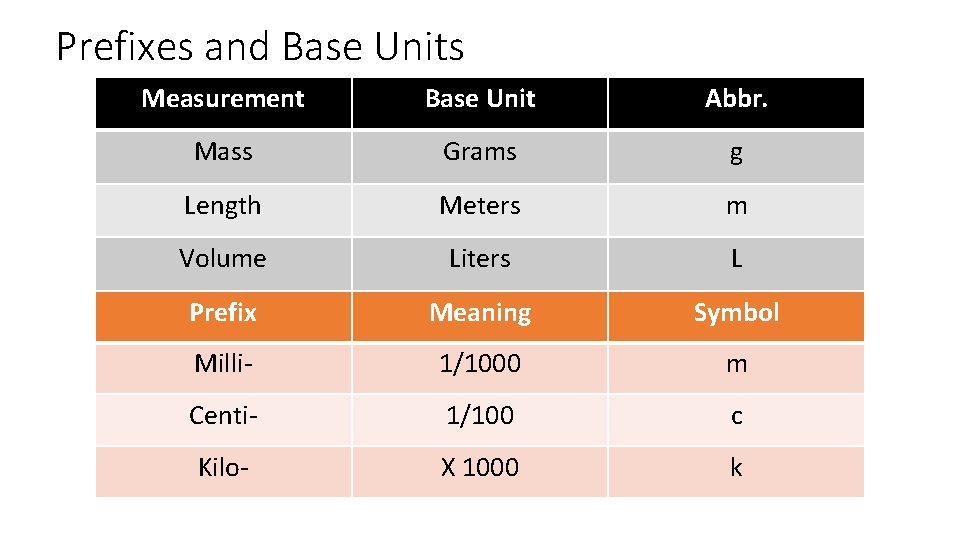
Prefixes and Base Units Measurement Base Unit Abbr. Mass Grams g Length Meters m Volume Liters L Prefix Meaning Symbol Milli- 1/1000 m Centi- 1/100 c Kilo- X 1000 k
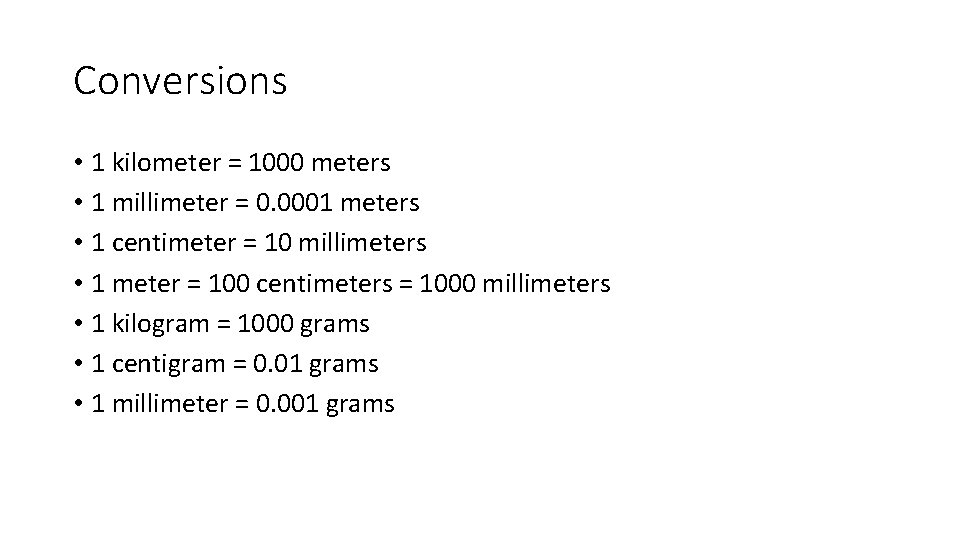
Conversions • 1 kilometer = 1000 meters • 1 millimeter = 0. 0001 meters • 1 centimeter = 10 millimeters • 1 meter = 100 centimeters = 1000 millimeters • 1 kilogram = 1000 grams • 1 centigram = 0. 01 grams • 1 millimeter = 0. 001 grams
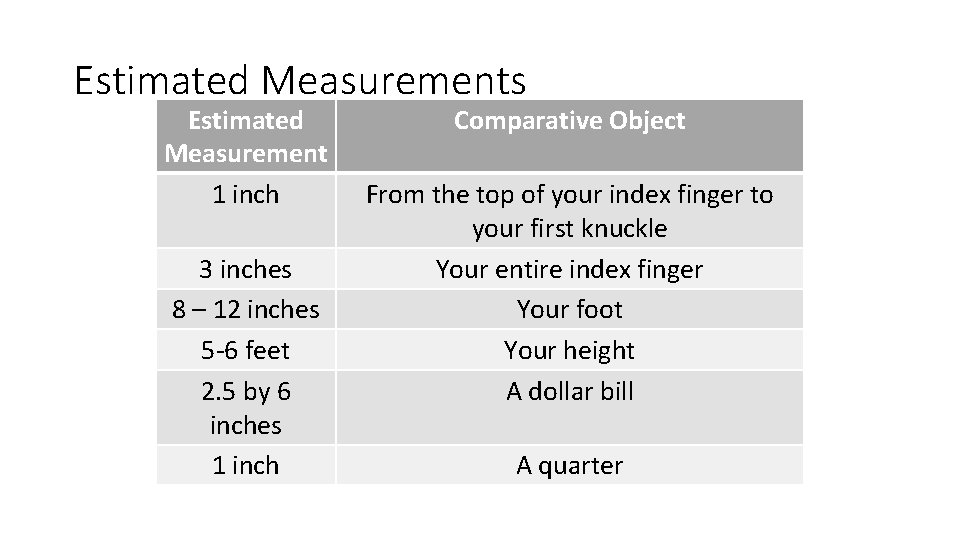
Estimated Measurements Estimated Measurement 1 inch 3 inches 8 – 12 inches 5 -6 feet 2. 5 by 6 inches 1 inch Comparative Object From the top of your index finger to your first knuckle Your entire index finger Your foot Your height A dollar bill A quarter
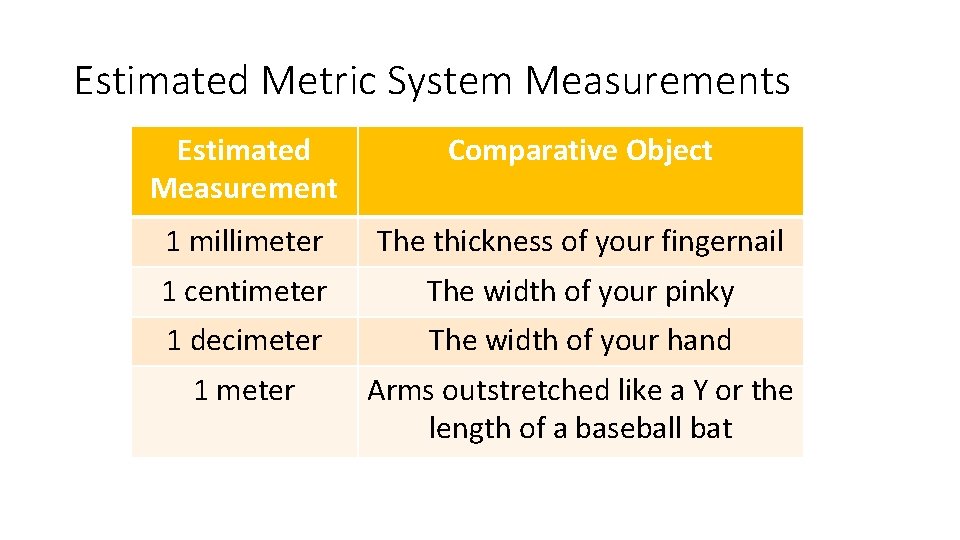
Estimated Metric System Measurements Estimated Measurement Comparative Object 1 millimeter The thickness of your fingernail 1 centimeter The width of your pinky 1 decimeter The width of your hand 1 meter Arms outstretched like a Y or the length of a baseball bat
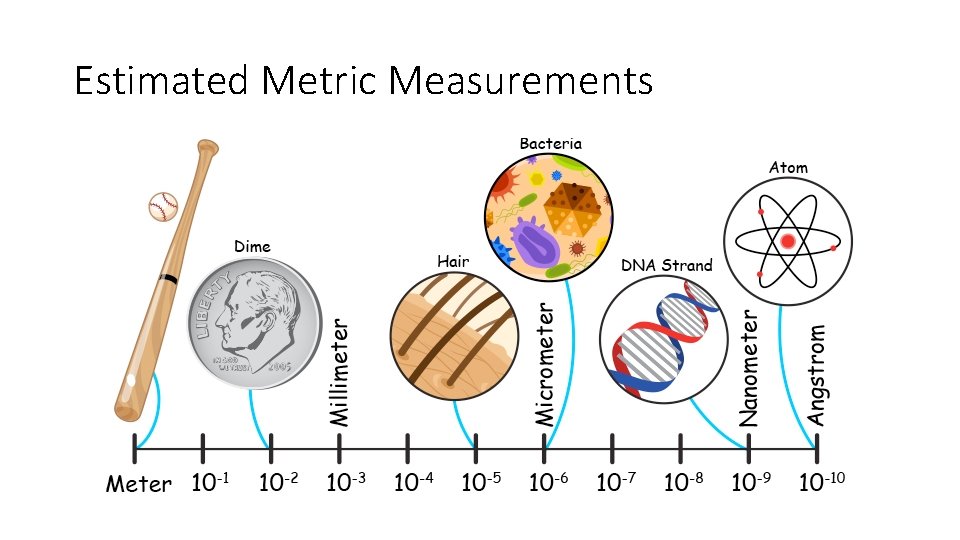
Estimated Metric Measurements
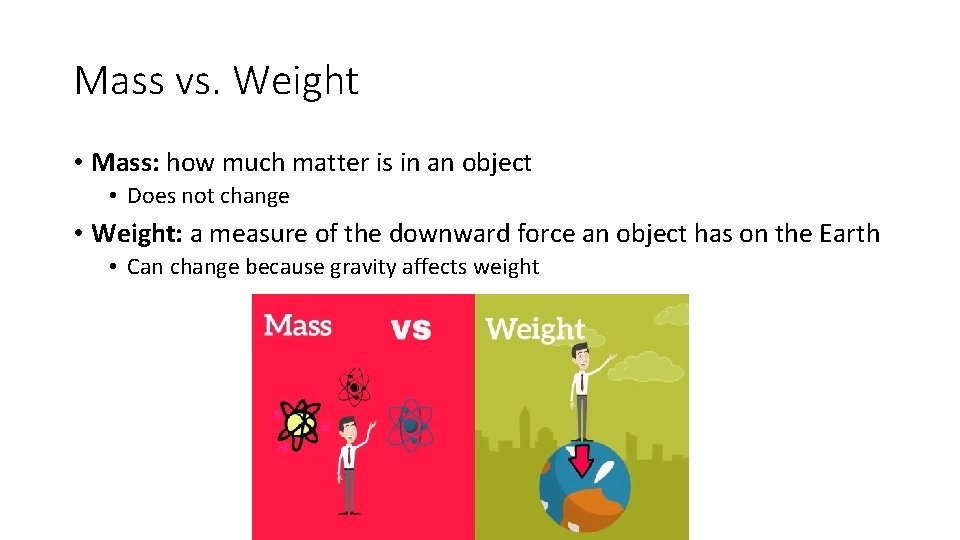
Mass vs. Weight • Mass: how much matter is in an object • Does not change • Weight: a measure of the downward force an object has on the Earth • Can change because gravity affects weight
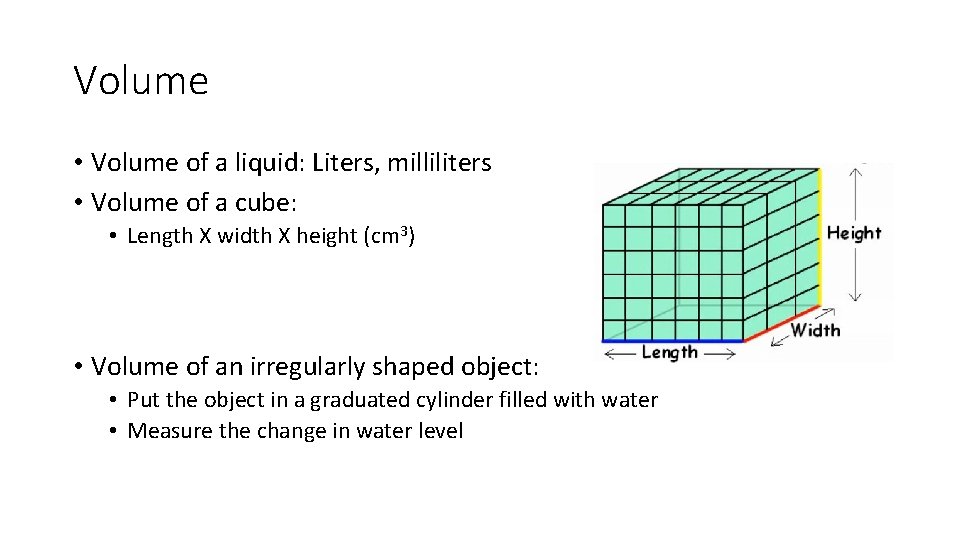
Volume • Volume of a liquid: Liters, milliliters • Volume of a cube: • Length X width X height (cm 3) • Volume of an irregularly shaped object: • Put the object in a graduated cylinder filled with water • Measure the change in water level
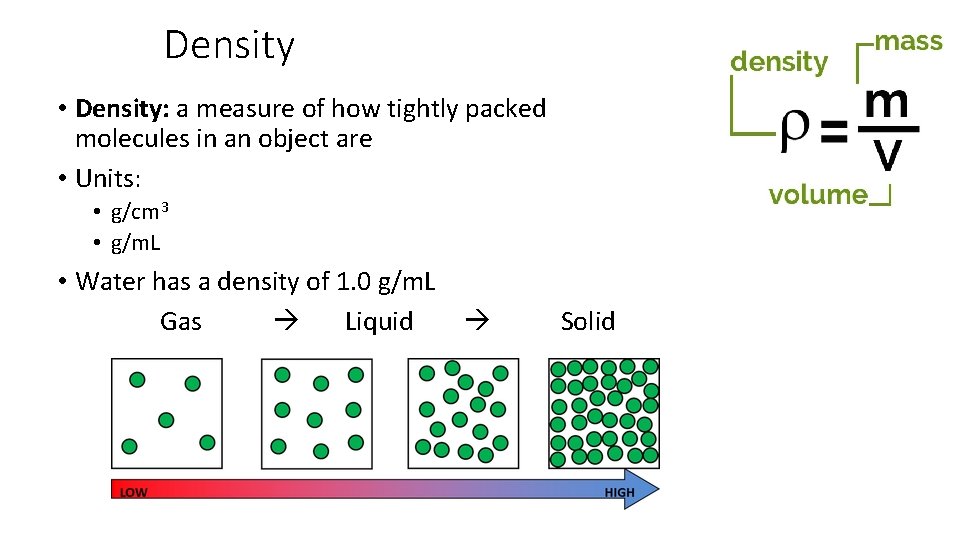
Density • Density: a measure of how tightly packed molecules in an object are • Units: • g/cm 3 • g/m. L • Water has a density of 1. 0 g/m. L Gas Liquid Solid
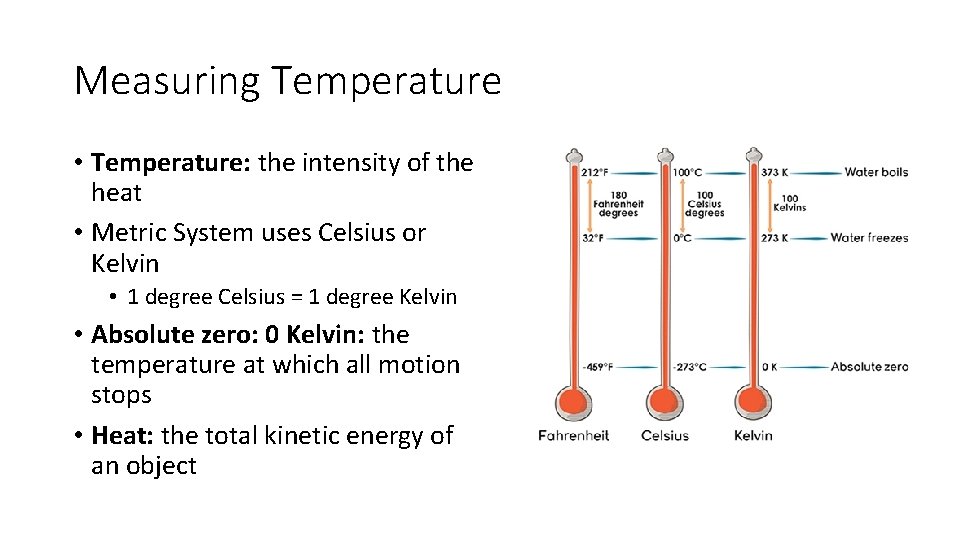
Measuring Temperature • Temperature: the intensity of the heat • Metric System uses Celsius or Kelvin • 1 degree Celsius = 1 degree Kelvin • Absolute zero: 0 Kelvin: the temperature at which all motion stops • Heat: the total kinetic energy of an object