
Measurement Principles Systems of Measurement Metric Liquids m



- Slides: 14
Measurement Principles
Systems of Measurement -Metric: -Liquids: m. L, L -Solids: g, kg -Pan Dimensions: mm, cm -Imperial (or Customary) -Liquids: Fluid oz. (Fl. oz. ), oz. -Solids: Cups (c. ), Teaspoons (Tsp. ), Tablespoons (Tbsp. ) Ounces (oz. ), Pounds (lbs) -Pan Dimensions: Inches
Common Measurement Terms “Few Drops” -2 to 5 drops -Example: Tobasco, Almond Extract “Pinch” -Small amount between two fingers, approximately 1/2 m. L -Example: Salt
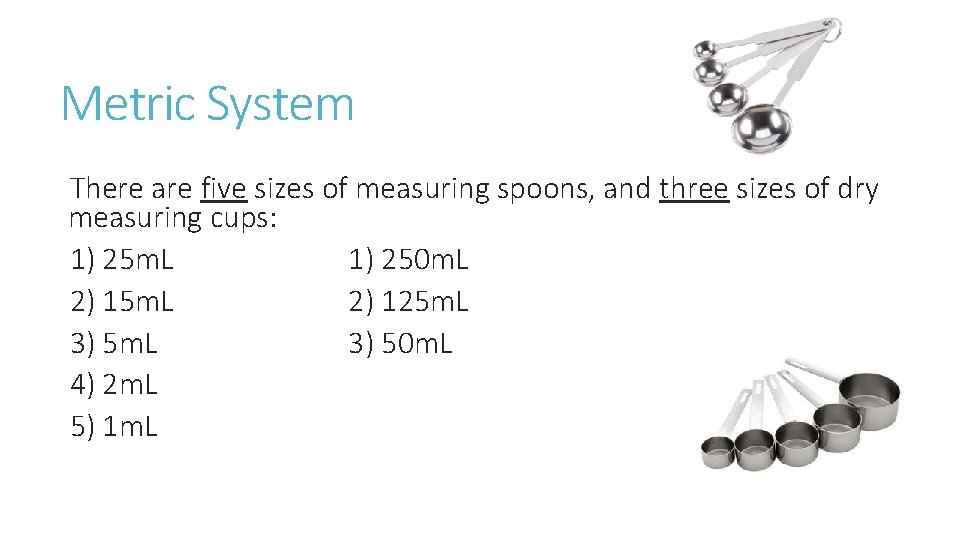
Equipment: -Measuring Spoons: used for small amounts of liquid and dry ingredients -Liquid Measuring Cups: used to measure liquids (e. g. water, milk, heavy cream) -Dry Measuring Cups: used to measure dry ingredients (e. g. flour, brown or white sugar, oats) -Custard Cups: small glass bowls used to hold ingredients that you measure and keep them separate in the recipe
Metric System There are five sizes of measuring spoons, and three sizes of dry measuring cups: 1) 25 m. L 1) 250 m. L 2) 15 m. L 2) 125 m. L 3) 50 m. L 4) 2 m. L 5) 1 m. L
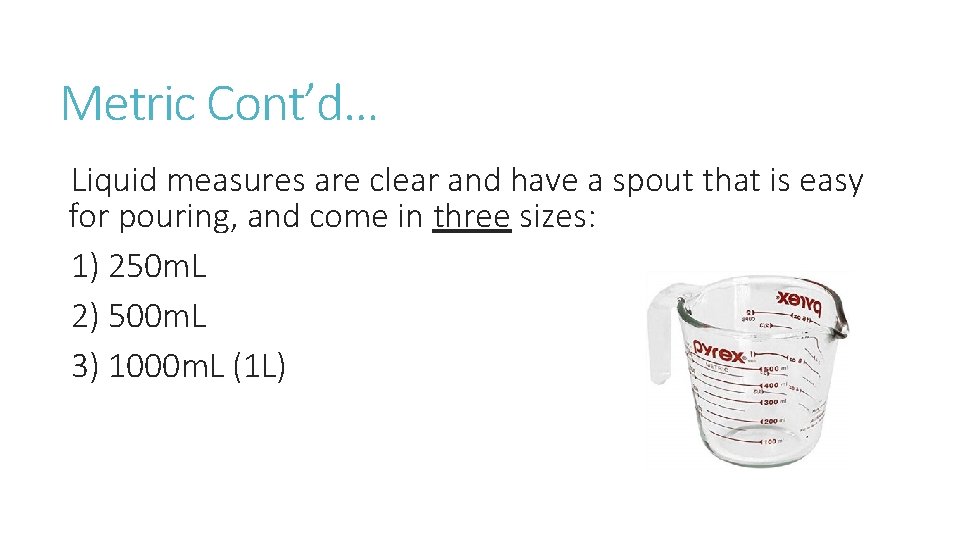
Metric Cont’d… Liquid measures are clear and have a spout that is easy for pouring, and come in three sizes: 1) 250 m. L 2) 500 m. L 3) 1000 m. L (1 L)
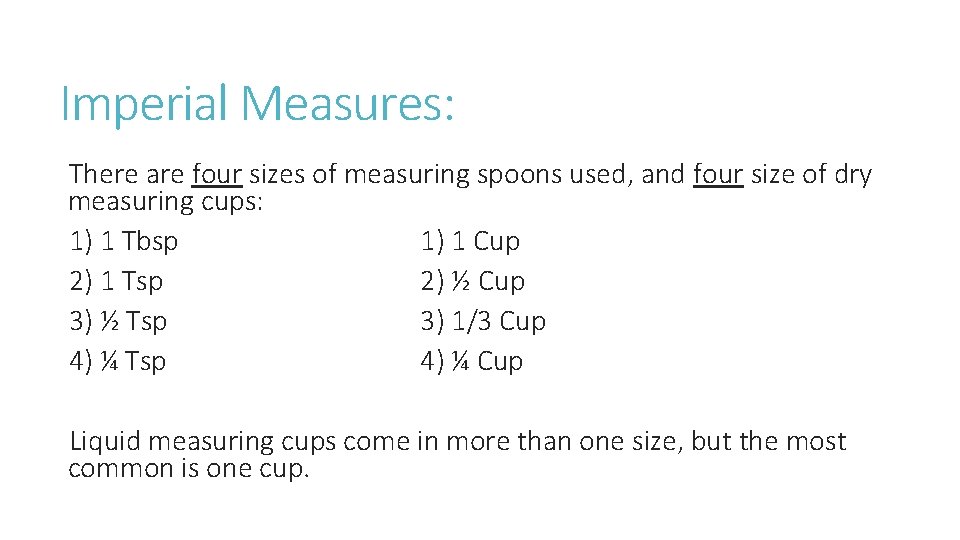
Imperial Measures: There are four sizes of measuring spoons used, and four size of dry measuring cups: 1) 1 Tbsp 1) 1 Cup 2) 1 Tsp 2) ½ Cup 3) ½ Tsp 3) 1/3 Cup 4) ¼ Tsp 4) ¼ Cup Liquid measuring cups come in more than one size, but the most common is one cup.
Measurement Tips & Tricks:
Combining Measures: When measuring ingredients, you may need to use a combination of measures to get the accurate amount -Example: 10 m. L = 2 x 5 m. L ***Please complete the measures on your worksheet now, writing down combinations to make up the measures (HINT: there is more than one correct answer) -Assume you are measuring dry ingredients
Measuring Flour: Measuring flour requires special treatment: 1) Sift a bulk amount of flour first 2) Delicately spoon flour into your measure 3) Level off with a metal spatula ***Icing sugar and cocoa also require the same treatment!
Measuring Brown Sugar Brown sugar also requires a special method of measuring: 1) Scoop brown sugar into dry measure and pack down 2) Level off 3) Place in custard cup or in recipe – it should retain its shape if packed properly
Measuring Liquids: When measuring liquids, you need to. . 1) Place your liquid measuring cup on a level surface 2) Read it at eye level
Measuring Solid Fat Solid fat includes items such as butter, margarine, or shortening, and can be measured three ways: 1) Cut according to the packaging 2) Packed into a dry measure and leveled off 3) Water Displacement A) Measure “x” amount of cold water in a liquid measure B) Add fat until water level rises “x” + amount needed C) Drain off the water D) Fat is ready to use
HINT! Measure in the following order so you won’t have to use two sets of measures (or have to wash in between): 1) Dry (e. g. baking powder, flour, brown sugar) 2) Liquid (e. g. water, milk) 3) Sticky or Greasy Foods (e. g. oil, shortening, syrup)