
Measurement Physical quantities Activity Use your hand span
- Slides: 29
Measurement Physical quantities
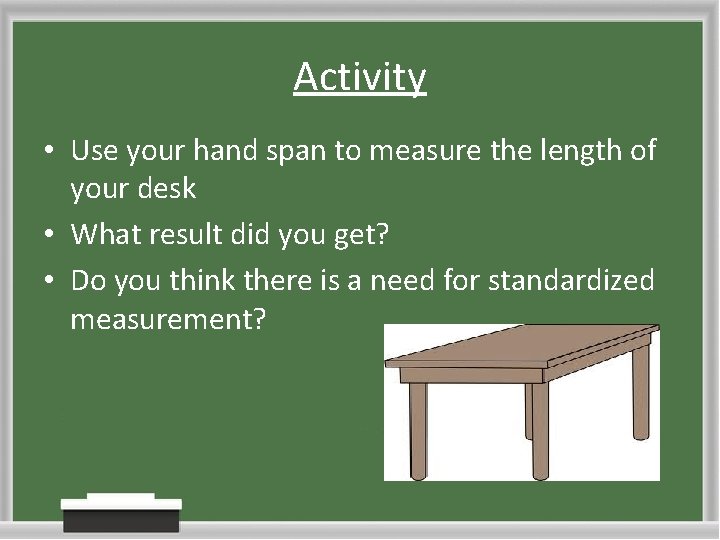
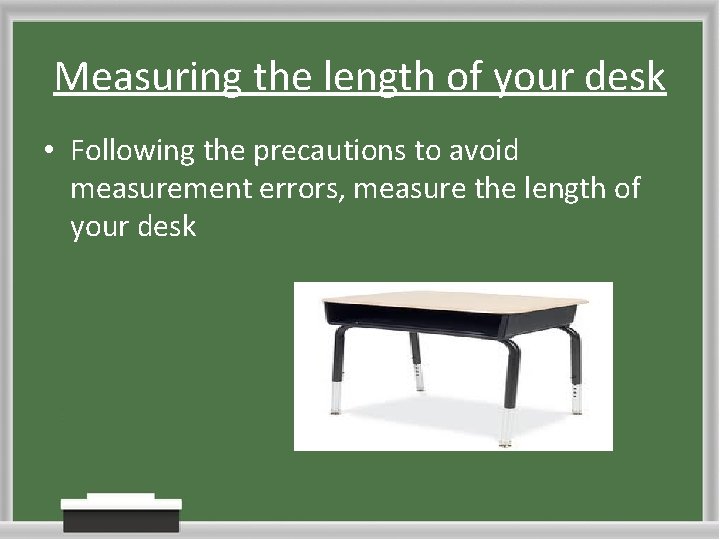
Activity • Use your hand span to measure the length of your desk • What result did you get? • Do you think there is a need for standardized measurement?
Lets Travel Back In Time
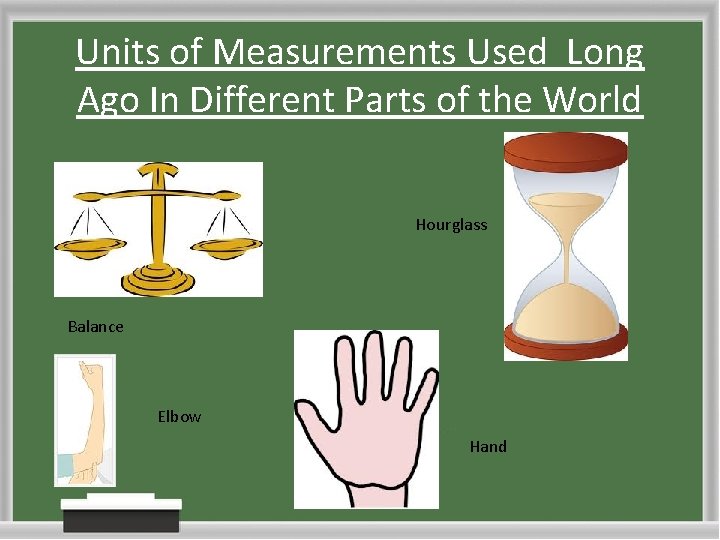
Units of Measurements Used Long Ago In Different Parts of the World Hourglass Balance Elbow Hand
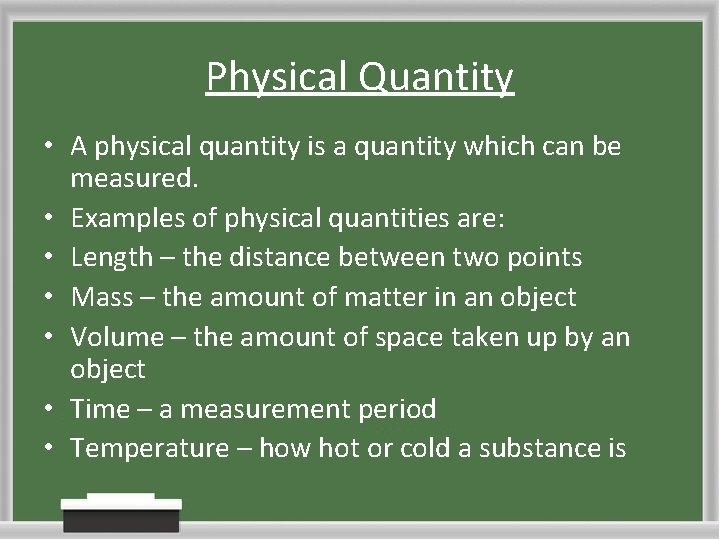
Physical Quantity • A physical quantity is a quantity which can be measured. • Examples of physical quantities are: • Length – the distance between two points • Mass – the amount of matter in an object • Volume – the amount of space taken up by an object • Time – a measurement period • Temperature – how hot or cold a substance is
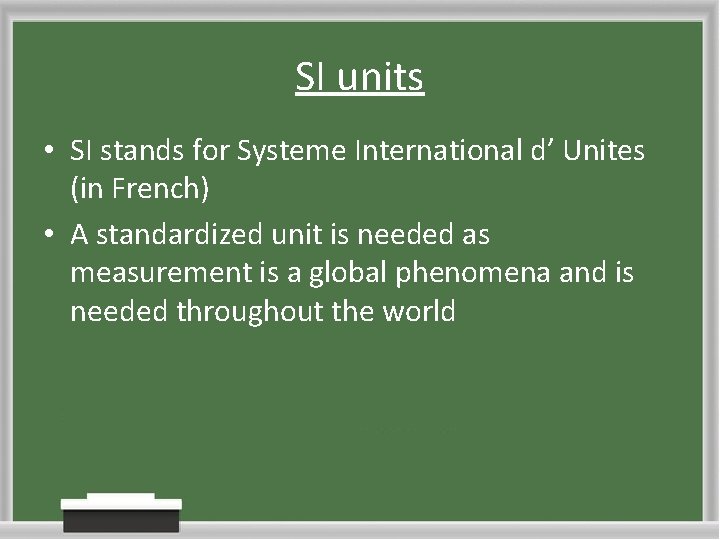
SI units • SI stands for Systeme International d’ Unites (in French) • A standardized unit is needed as measurement is a global phenomena and is needed throughout the world
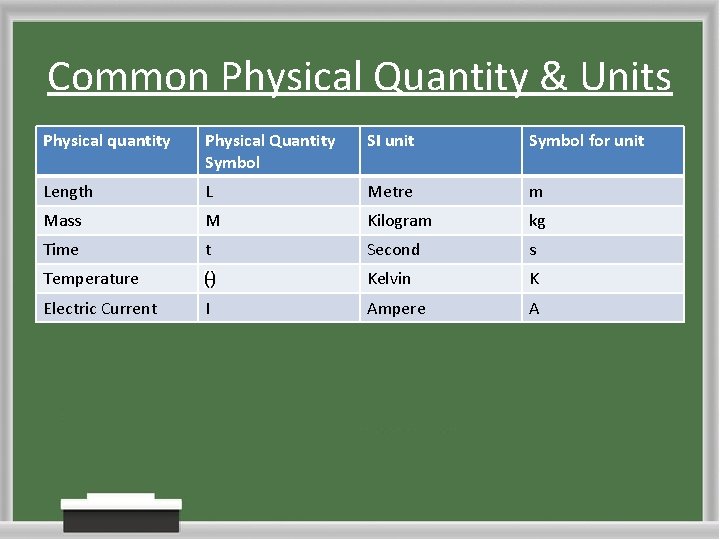
Common Physical Quantity & Units Physical quantity Physical Quantity Symbol SI unit Symbol for unit Length L Metre m Mass M Kilogram kg Time t Second s Kelvin K Ampere A Temperature Electric Current I
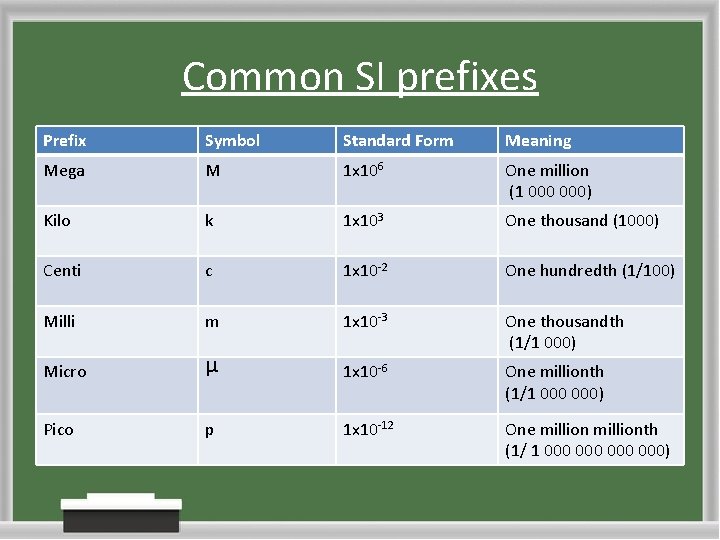
Common SI prefixes Prefix Symbol Standard Form Meaning Mega M 1 x 10⁶ One million (1 000) Kilo k 1 x 10³ One thousand (1000) Centi c 1 x 10 -2 One hundredth (1/100) Milli m 1 x 10 -3 Micro µ One thousandth (1/1 000) 1 x 10 -6 One millionth (1/1 000) Pico p 1 x 10 -12 One millionth (1/ 1 000 000)
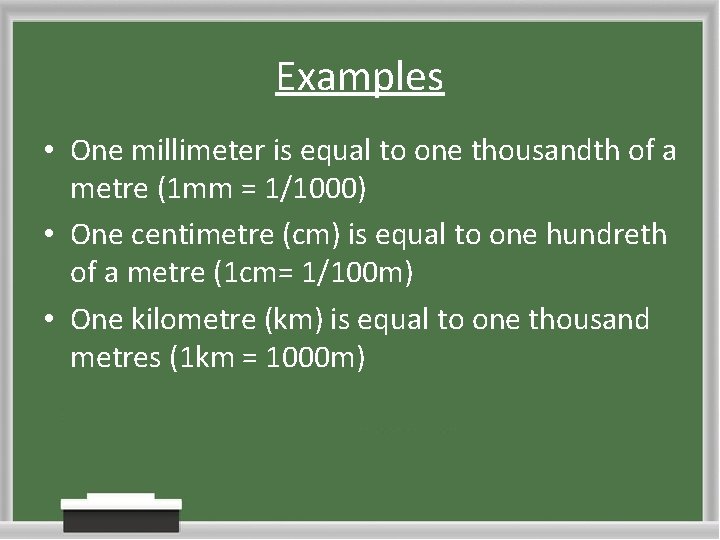
Examples • One millimeter is equal to one thousandth of a metre (1 mm = 1/1000) • One centimetre (cm) is equal to one hundreth of a metre (1 cm= 1/100 m) • One kilometre (km) is equal to one thousand metres (1 km = 1000 m)
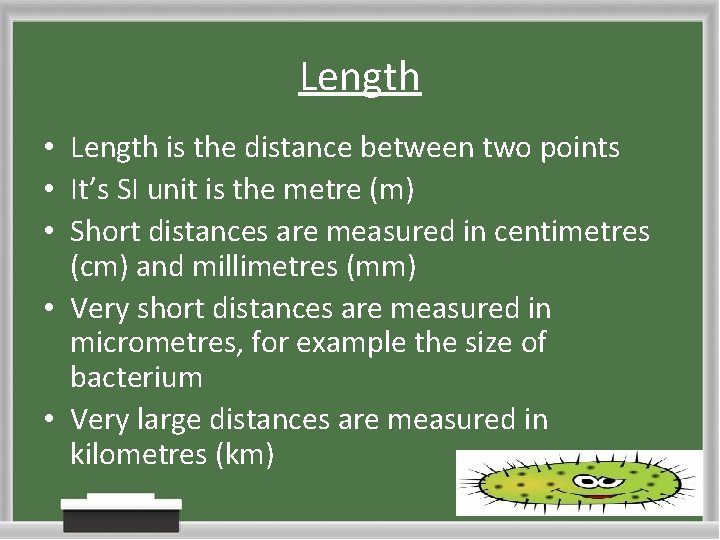
Length • Length is the distance between two points • It’s SI unit is the metre (m) • Short distances are measured in centimetres (cm) and millimetres (mm) • Very short distances are measured in micrometres, for example the size of bacterium • Very large distances are measured in kilometres (km)
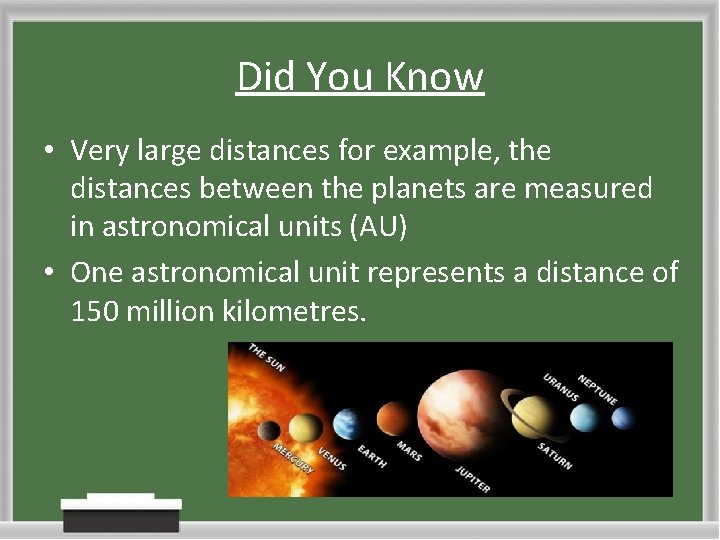
Did You Know • Very large distances for example, the distances between the planets are measured in astronomical units (AU) • One astronomical unit represents a distance of 150 million kilometres.
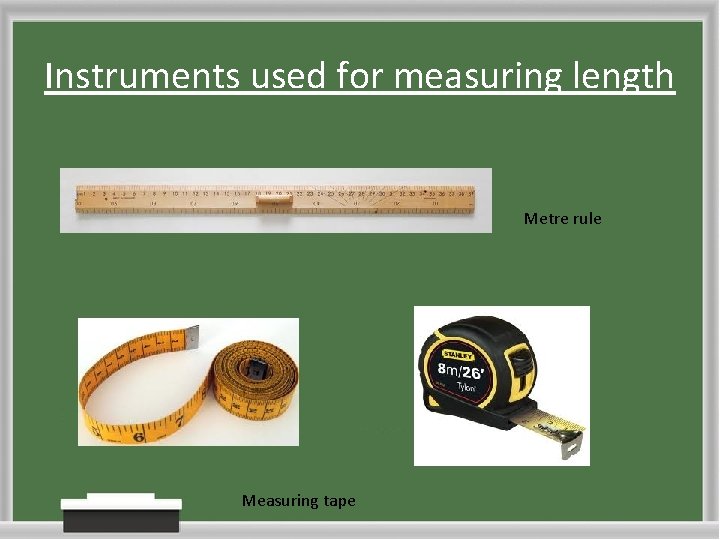
Instruments used for measuring length Metre rule Measuring tape
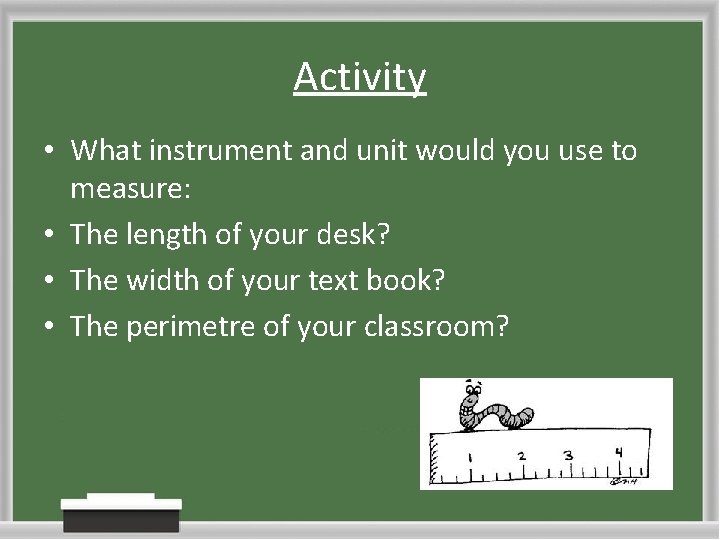
Activity • What instrument and unit would you use to measure: • The length of your desk? • The width of your text book? • The perimetre of your classroom?
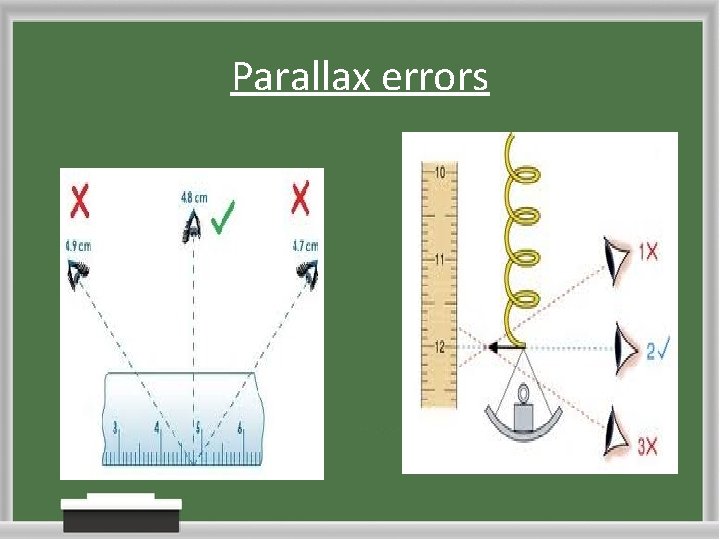
Errors in measuring length – Parallax error • Parallax error is an error in a measurement due to the eye not being in the correct position when taking a reading • Zero error – when the measurement is taken at any point besides zero
Parallax errors
Reducing Parallax Errors • Placing the eye vertically above the marking on the scale to be read • Placing the metre rule on the edge beside the object to be measured so that the scale is touching it • Using a thin ruler so that the scale is touching the object to be measured.
Measuring the length of your desk • Following the precautions to avoid measurement errors, measure the length of your desk
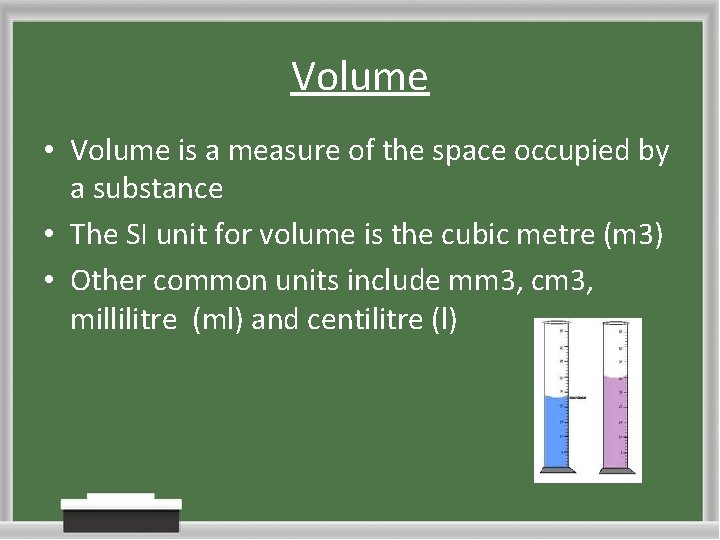
Volume • Volume is a measure of the space occupied by a substance • The SI unit for volume is the cubic metre (m 3) • Other common units include mm 3, cm 3, millilitre (ml) and centilitre (l)
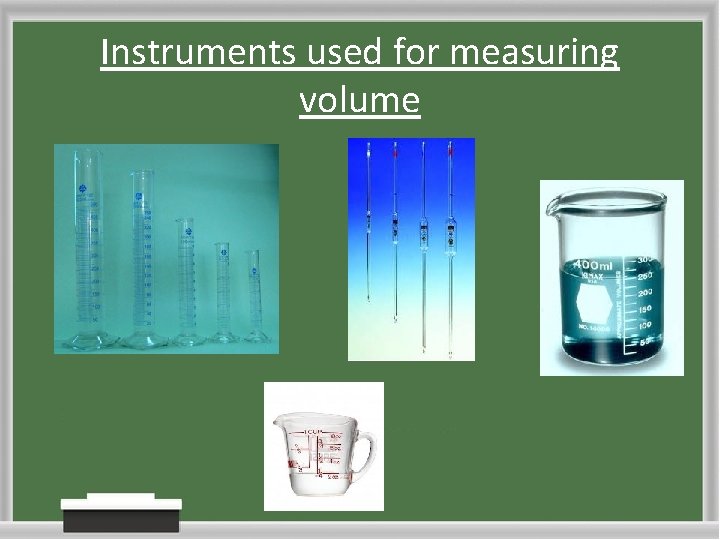
Instruments used for measuring volume
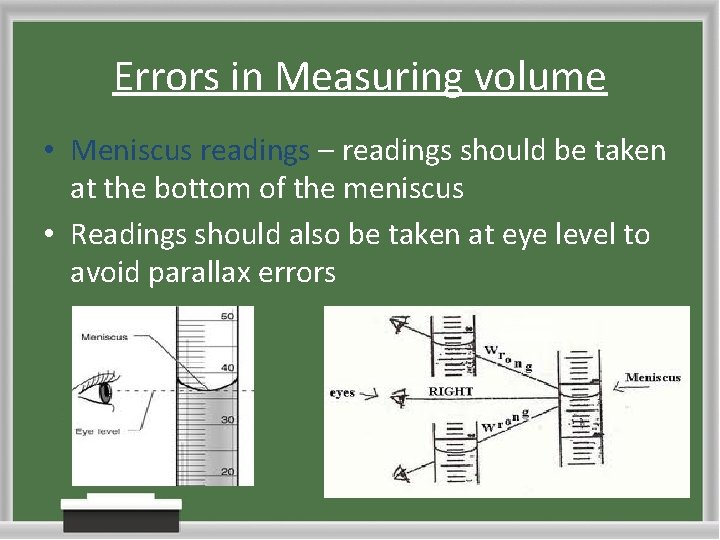
Errors in Measuring volume • Meniscus readings – readings should be taken at the bottom of the meniscus • Readings should also be taken at eye level to avoid parallax errors
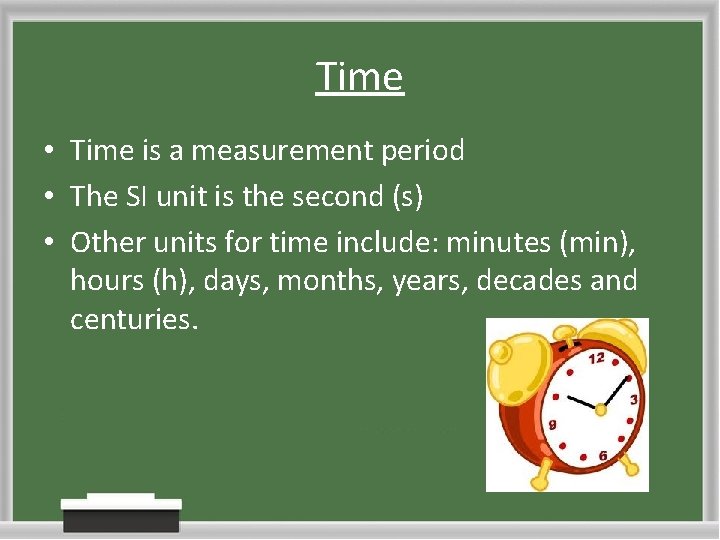
Time • Time is a measurement period • The SI unit is the second (s) • Other units for time include: minutes (min), hours (h), days, months, years, decades and centuries.
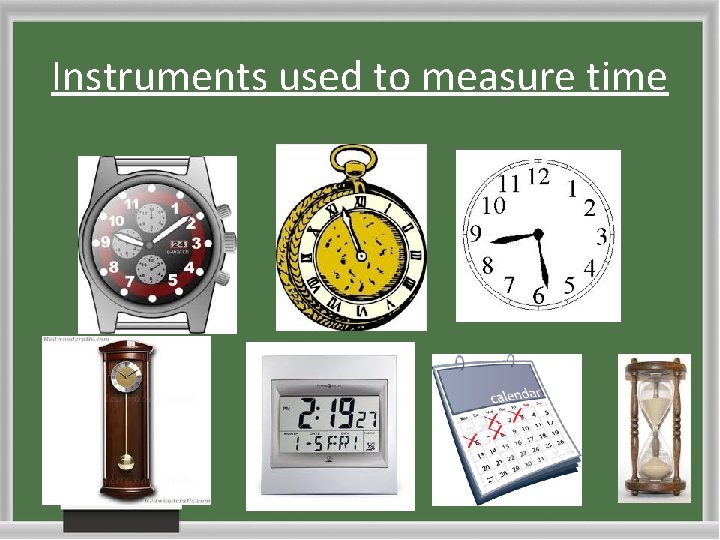
Instruments used to measure time
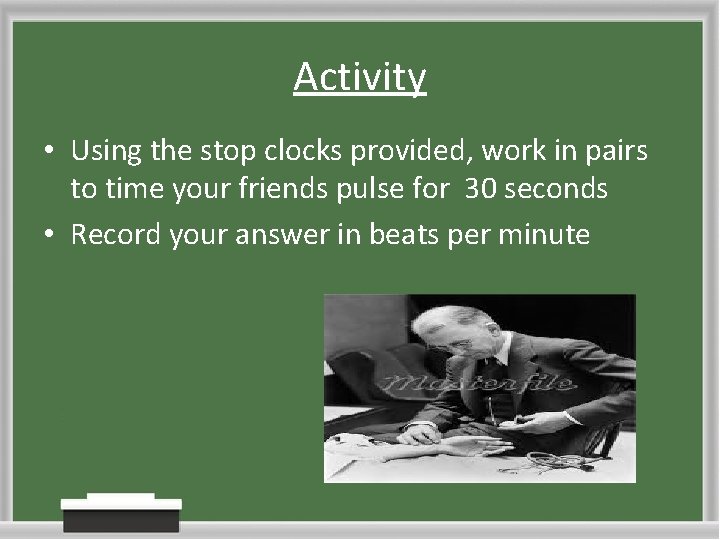
Activity • Using the stop clocks provided, work in pairs to time your friends pulse for 30 seconds • Record your answer in beats per minute
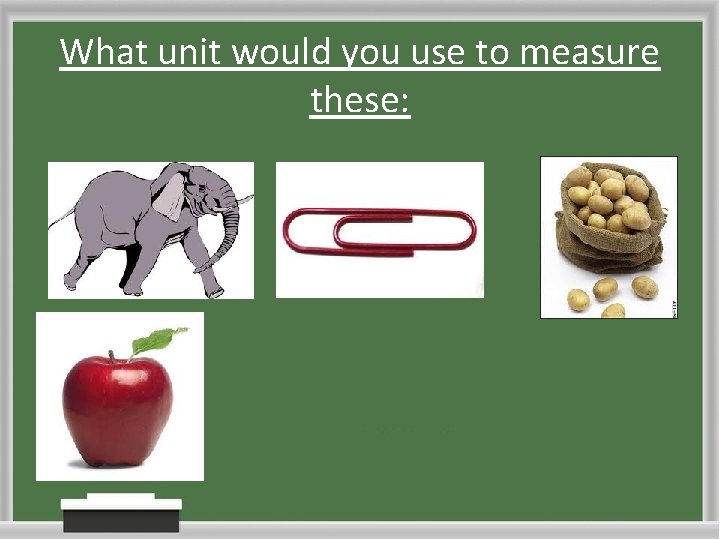
Mass • The mass of an object is the measure of the amount of matter in it • Remember matter is anything which occupies space. • The SI unit for mass is the kilogram (kg) • Large masses are measured in tonnes • (1 tonne = 1000 kg) • Small masses are measured in grams (g), milligrams (mg) and micrograms
What unit would you use to measure these:
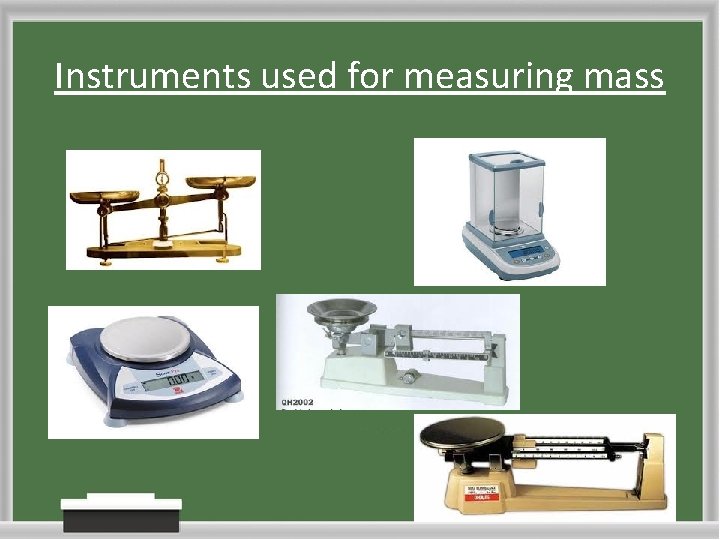
Instruments used for measuring mass
Temperature • The temperature of a substance tells use how hot or cold a substance is • The SI unit for temperature is the Kelvin and the unit is also called the Kelvin • We, however measure according to the Celsius scale and the unit is called degrees Celsius
Converting Kelvin to Celsius • Temperature in Kelvin=Temperature in C +273 • For example 27 C = 27 + 273 = 300 K
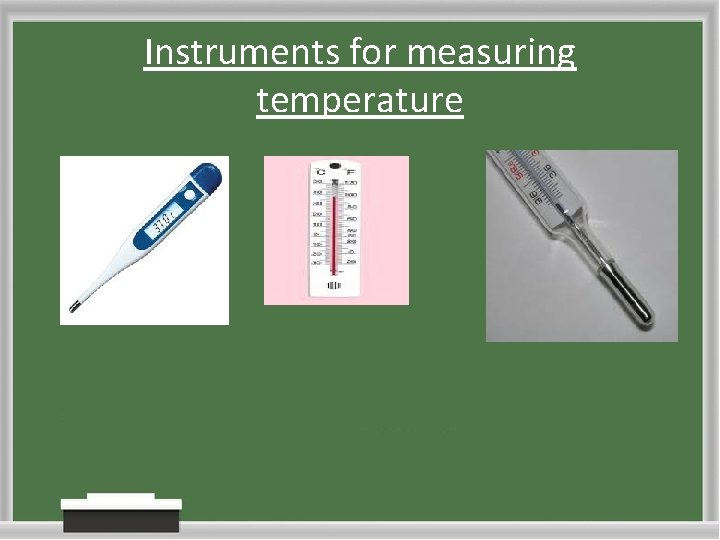
Instruments for measuring temperature