
Measurement of Transverse Emittance in ASTA John Nocita
- Slides: 16
Measurement of Transverse Emittance in ASTA John Nocita Amber Johnson John Diamond August 8, 2013
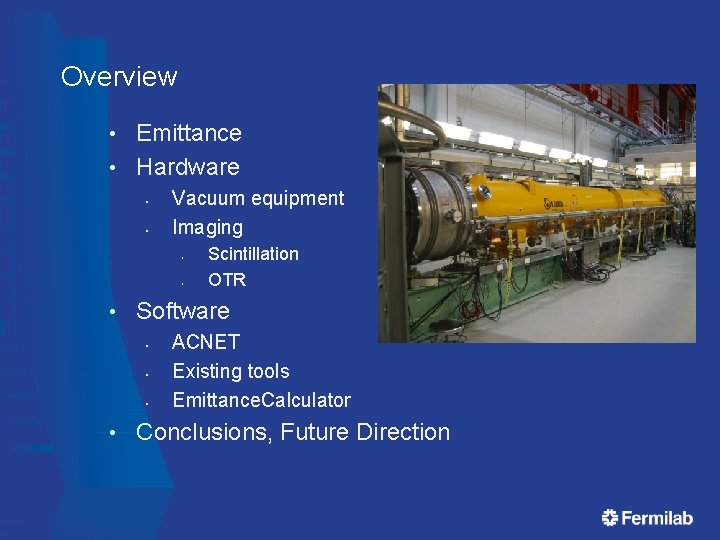
Overview Emittance • Hardware • • • Vacuum equipment Imaging • • • Software • • Scintillation OTR ACNET Existing tools Emittance. Calculator Conclusions, Future Direction
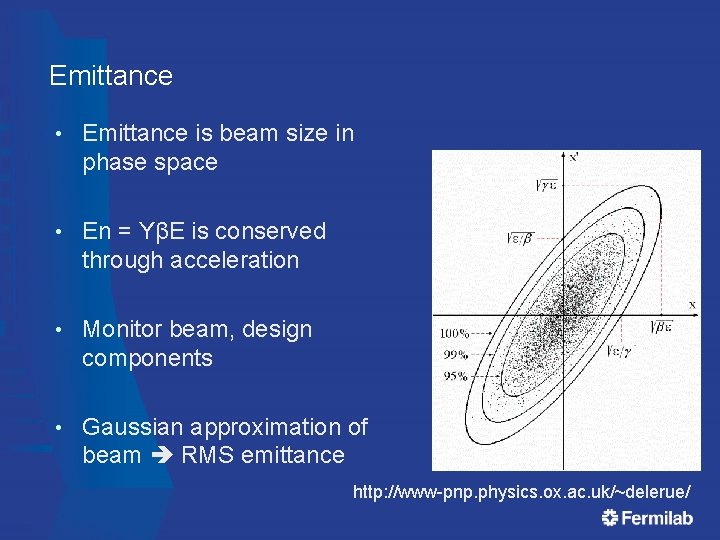
Emittance • Emittance is beam size in phase space • Εn = ΥβE is conserved through acceleration • Monitor beam, design components • Gaussian approximation of beam RMS emittance http: //www-pnp. physics. ox. ac. uk/~delerue/
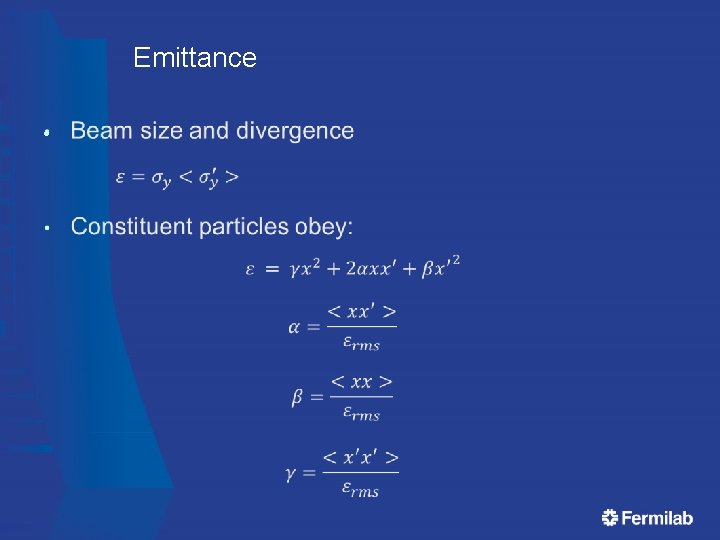
Emittance •
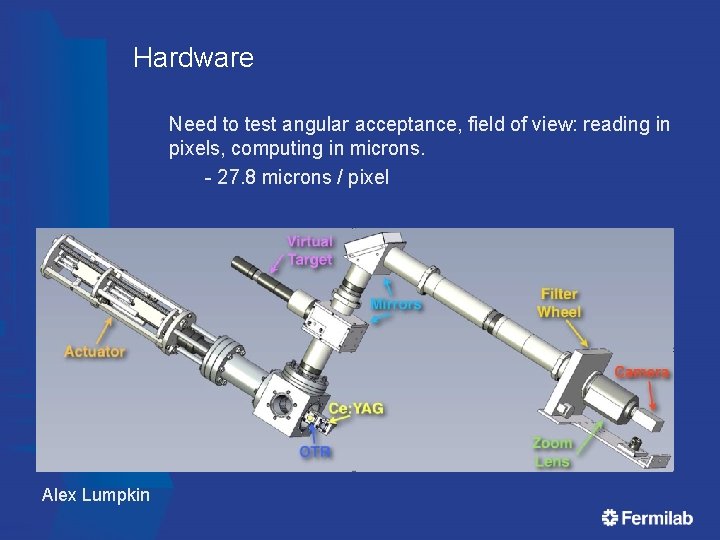
Hardware Need to test angular acceptance, field of view: reading in pixels, computing in microns. - 27. 8 microns / pixel Alex Lumpkin
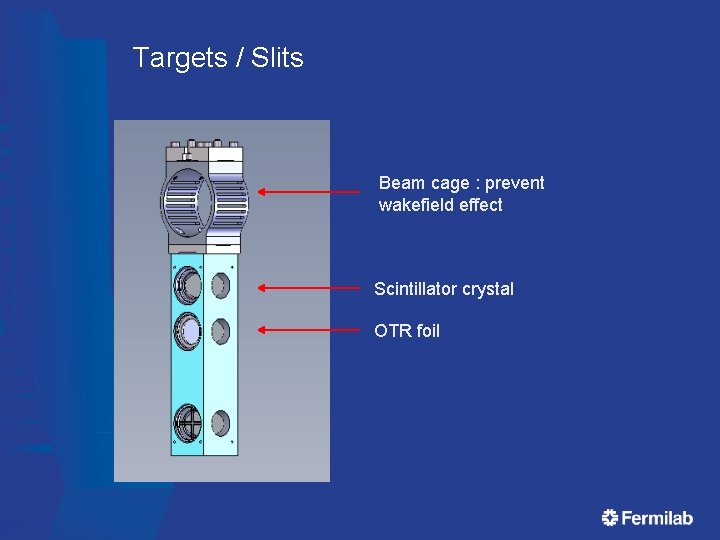
Targets / Slits Beam cage : prevent wakefield effect Scintillator crystal OTR foil
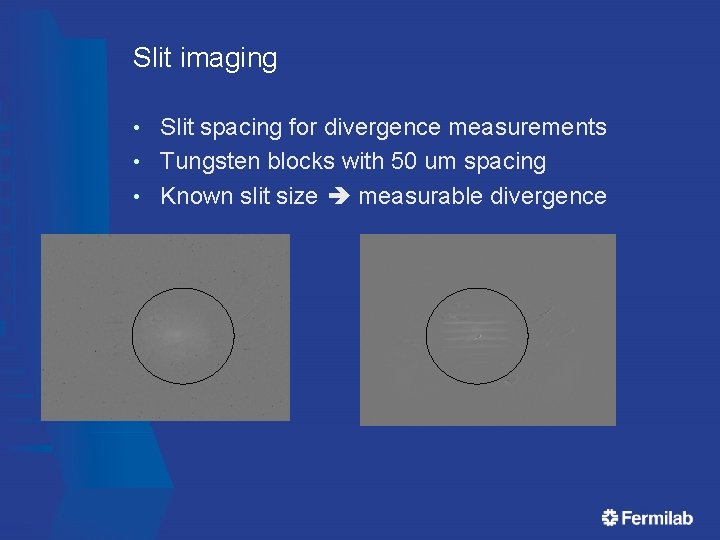
Slit imaging Slit spacing for divergence measurements • Tungsten blocks with 50 um spacing • Known slit size measurable divergence •
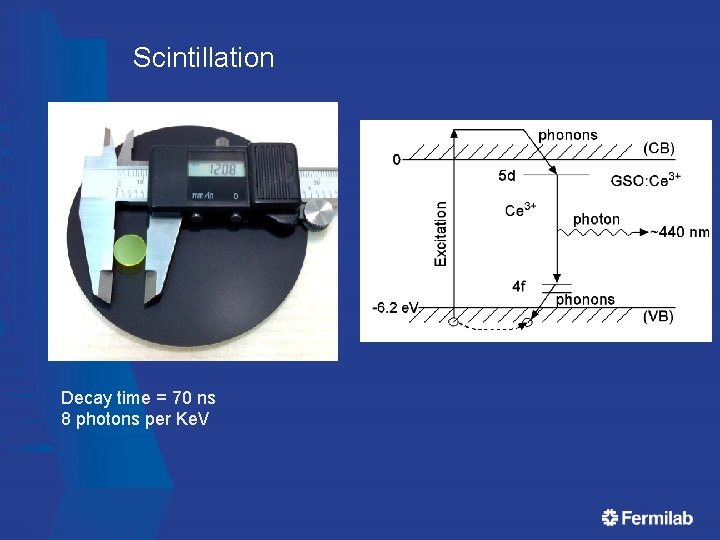
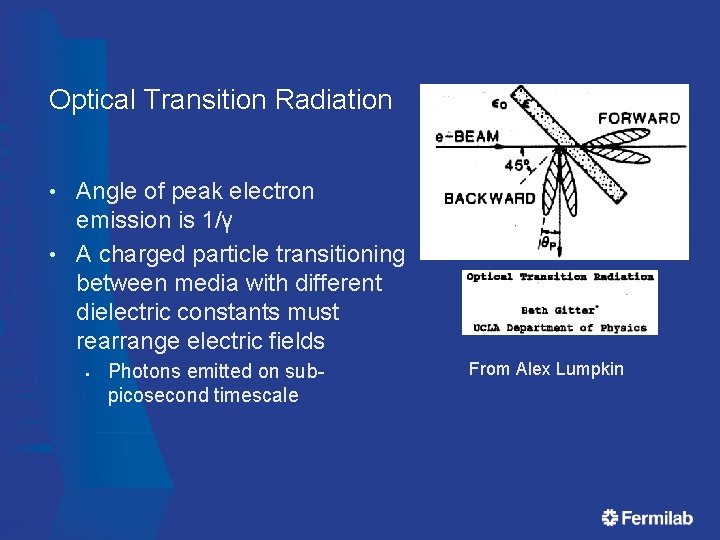
Imaging techniques • Scintillation § • OTR § • Higher output; limited by crystal effects Better spatial, temporal resolution Both destructive
Scintillation Decay time = 70 ns 8 photons per Ke. V
Optical Transition Radiation Angle of peak electron emission is 1/γ • A charged particle transitioning between media with different dielectric constants must rearrange electric fields • § Photons emitted on subpicosecond timescale From Alex Lumpkin
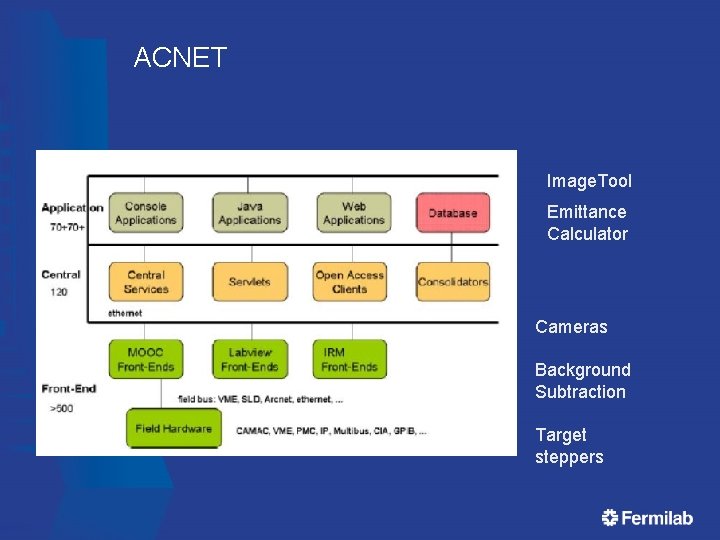
ACNET Image. Tool Emittance Calculator Cameras Background Subtraction Target steppers
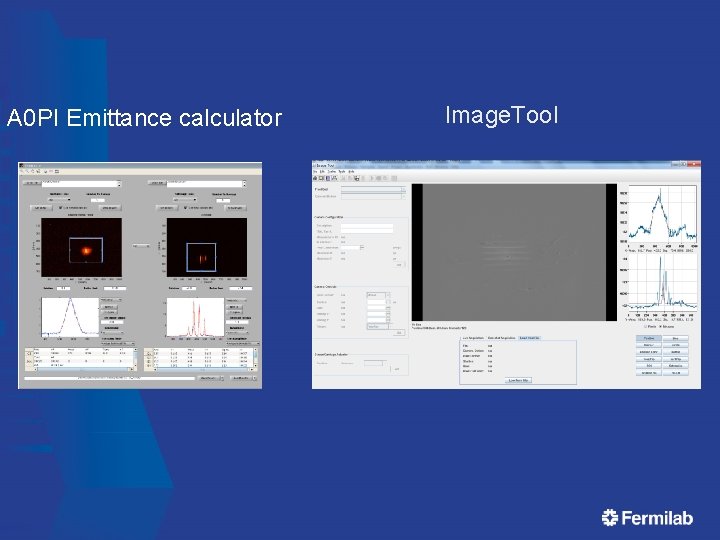
A 0 PI Emittance calculator Image. Tool
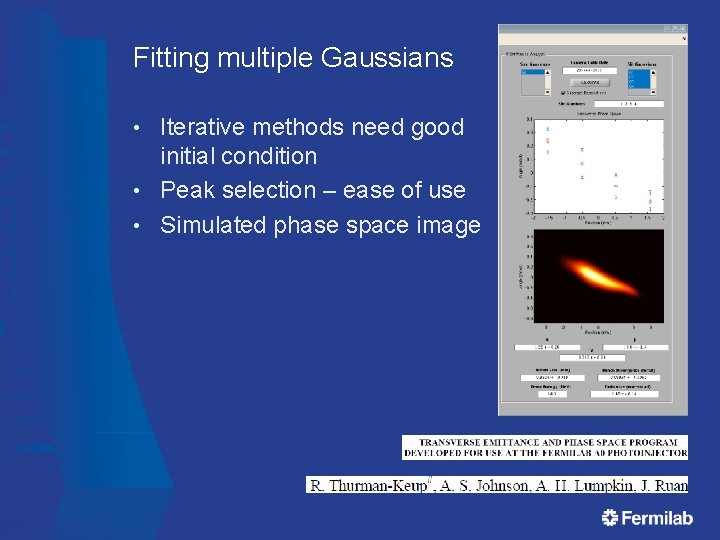
Fitting multiple Gaussians Iterative methods need good initial condition • Peak selection – ease of use • Simulated phase space image •
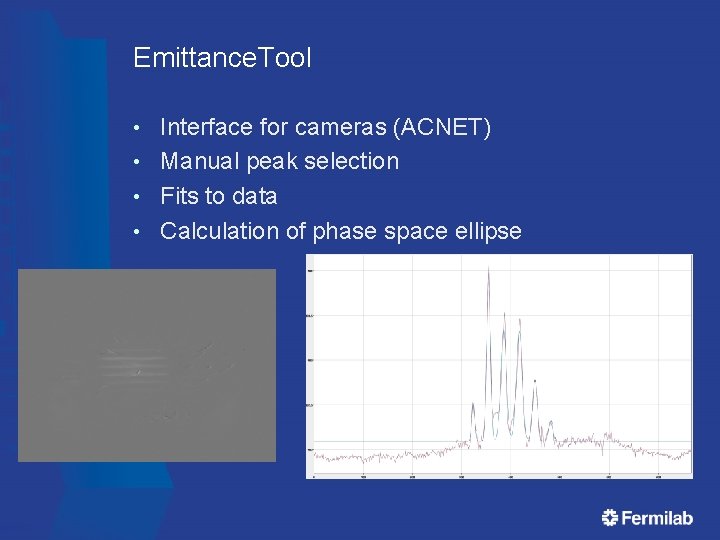
Emittance. Tool Interface for cameras (ACNET) • Manual peak selection • Fits to data • Calculation of phase space ellipse •
Conclusions and Future Directions Adaptation of A 0 PI functions to ACNETcompatible format • Specific to ASTA • § § Camera signatures beam energy, drift length More automated calculation Flexible – optimized to present hardware, software conditions but will adapt to beam • Hopefully, a useful tool through construction •
Thanks to: • • • Amber Johnson for guidance and support. John Diamond for countless good ideas and advice Alex Lumpkin for great explanations The Fermilab Accelerator Division for creating a welcoming and helpful atmosphere Eric Prebys, Linda Spentzouris, and Carol Angarola for all their work to make things go smoothly