
Measurement of the frequency dependent impedance of a
- Slides: 20
Measurement of the frequency dependent impedance of a thin wire with ground return Magnus Akke 2004 -04 -115 Industriell Elektroteknik och Automation magnus. akke@iea. lth. se
Outline – Introduction – Measurements – Comparison with models – Discussion and conclusion 2
Motivation for measurements • • Relay testing Transient based fault location Insulation coordination Power line carrier 3
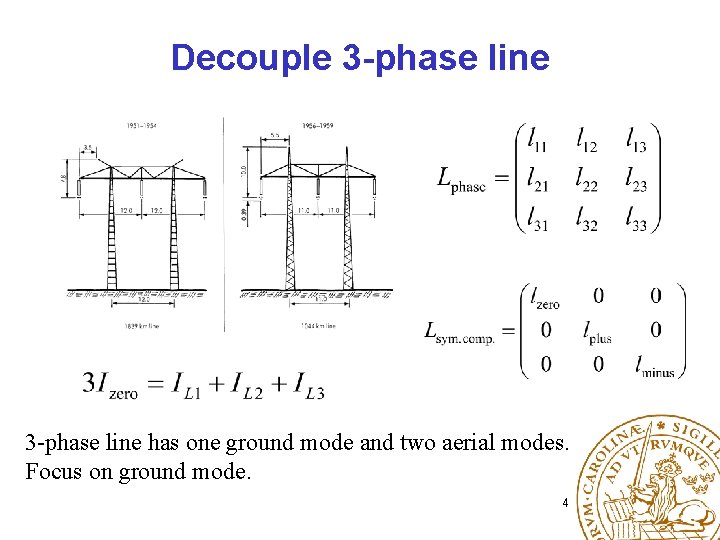
Decouple 3 -phase line has one ground mode and two aerial modes. Focus on ground mode. 4
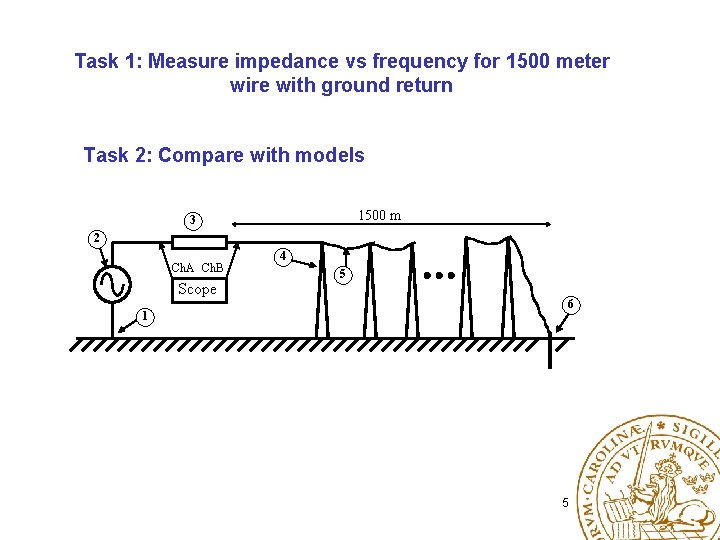
Task 1: Measure impedance vs frequency for 1500 meter wire with ground return Task 2: Compare with models 1500 m 3 2 Ch. A Ch. B Scope 1 4 5 6 5
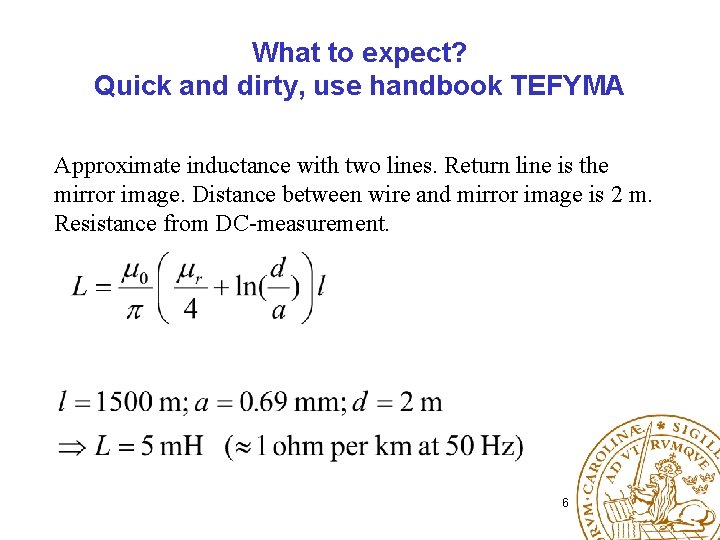
What to expect? Quick and dirty, use handbook TEFYMA Approximate inductance with two lines. Return line is the mirror image. Distance between wire and mirror image is 2 m. Resistance from DC-measurement. 6
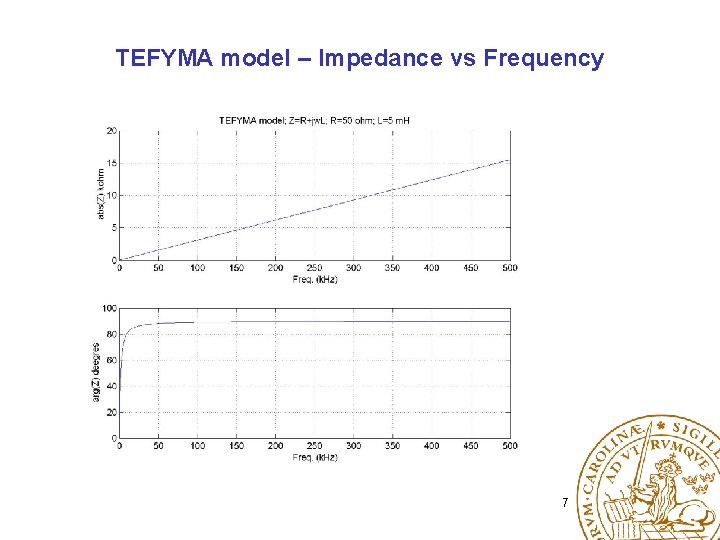
TEFYMA model – Impedance vs Frequency 7
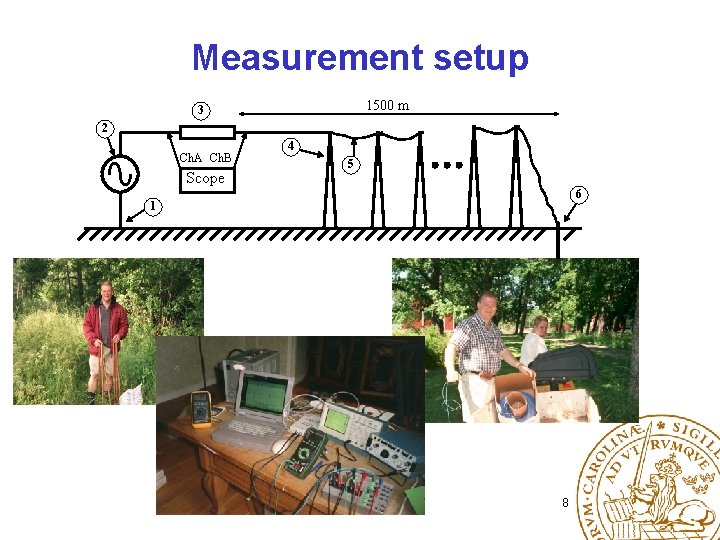
Measurement setup 1500 m 3 2 Ch. A Ch. B Scope 4 5 6 1 8
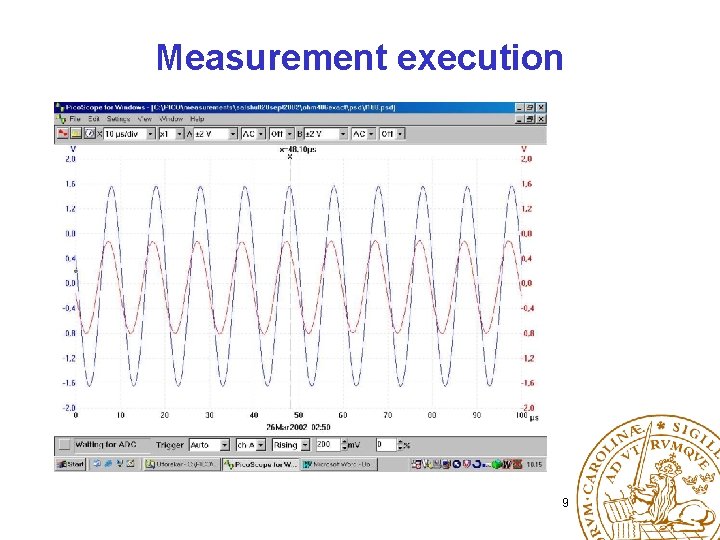
Measurement execution 9
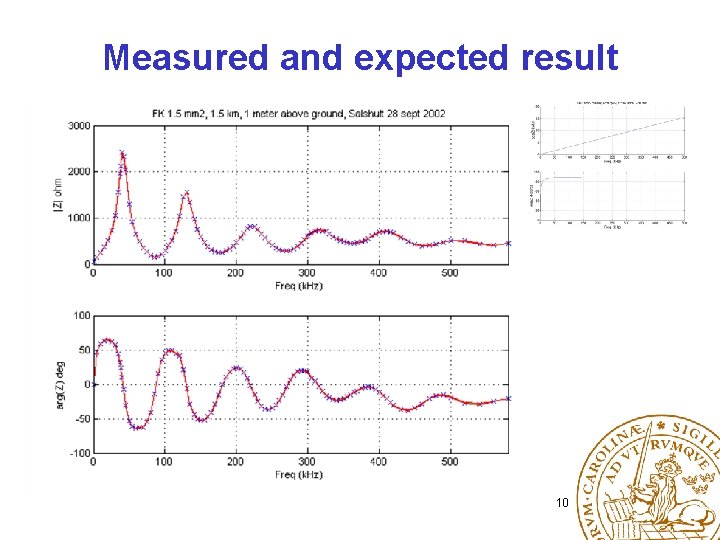
Measured and expected result 10
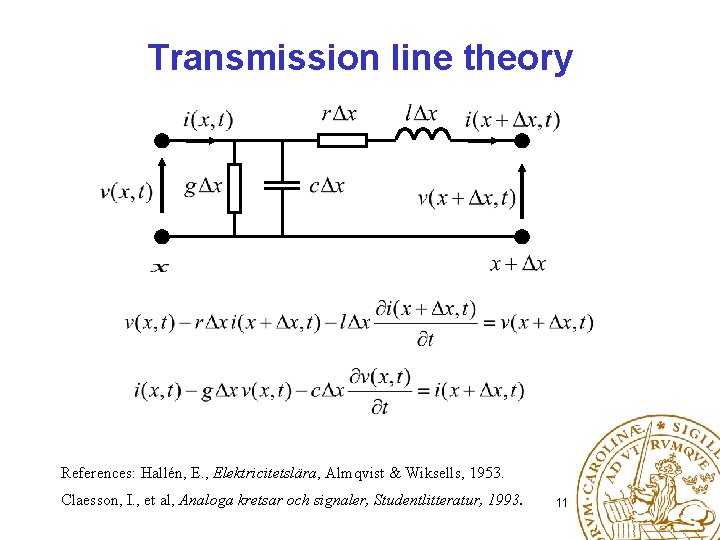
Transmission line theory References: Hallén, E. , Elektricitetslära, Almqvist & Wiksells, 1953. Claesson, I. , et al, Analoga kretsar och signaler, Studentlitteratur, 1993. 11
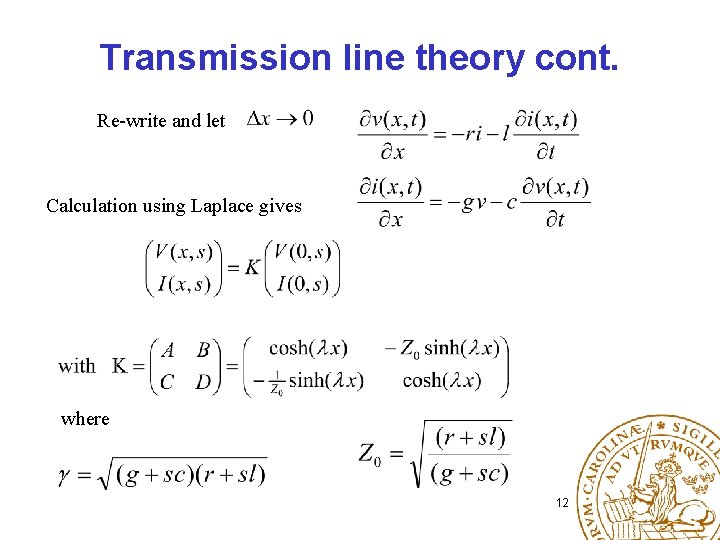
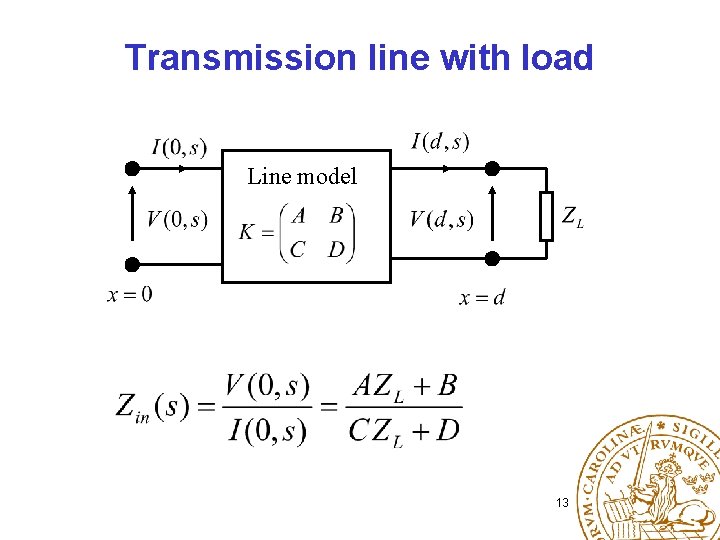
Transmission line theory cont. Re-write and let Calculation using Laplace gives where 12
Transmission line with load Line model 13
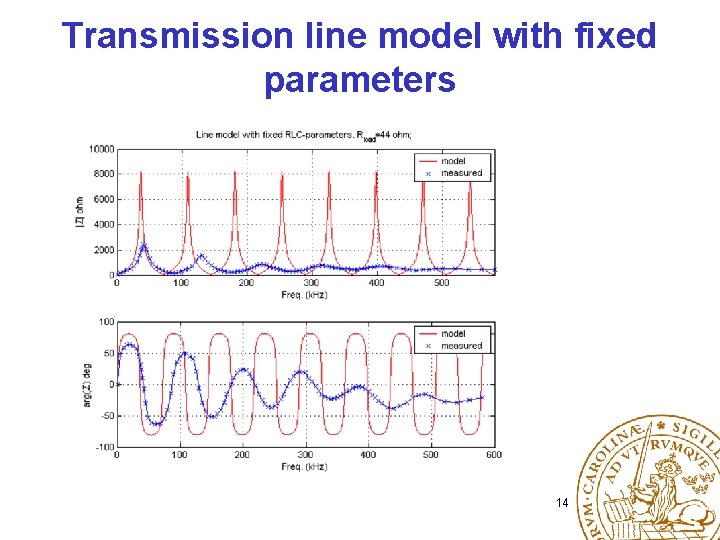
Transmission line model with fixed parameters 14
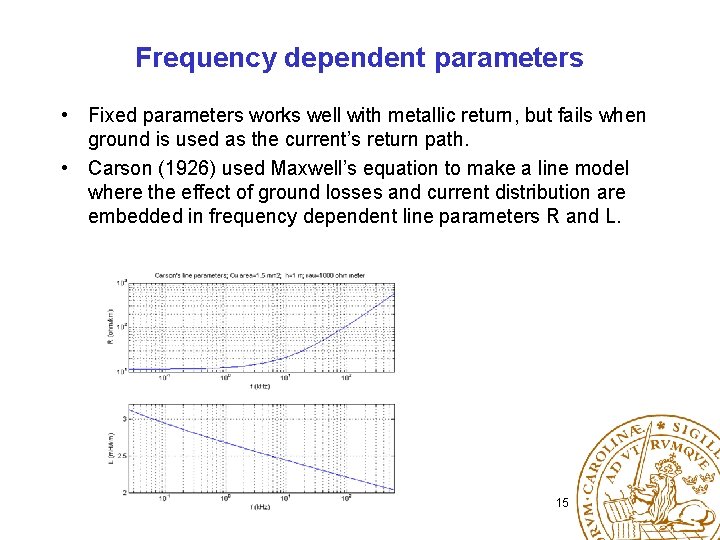
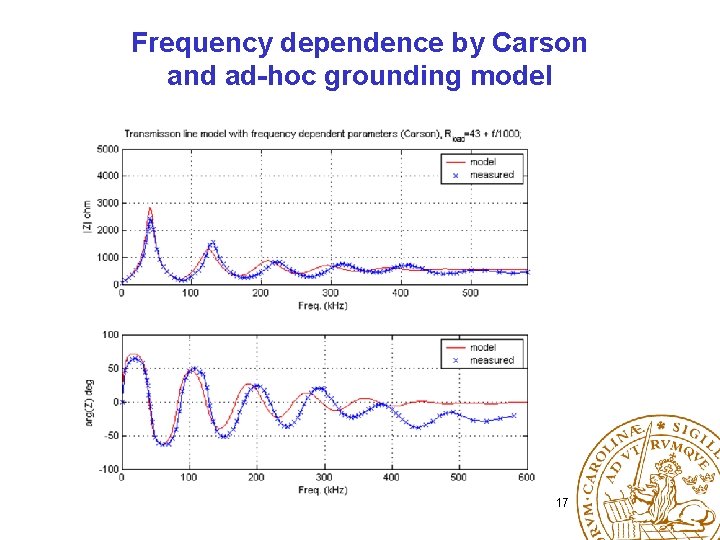
Frequency dependent parameters • Fixed parameters works well with metallic return, but fails when ground is used as the current’s return path. • Carson (1926) used Maxwell’s equation to make a line model where the effect of ground losses and current distribution are embedded in frequency dependent line parameters R and L. 15
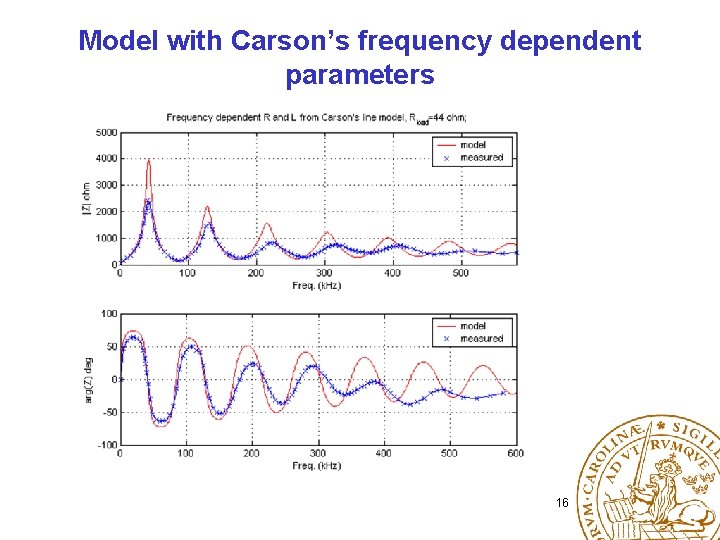
Model with Carson’s frequency dependent parameters 16
Frequency dependence by Carson and ad-hoc grounding model 17
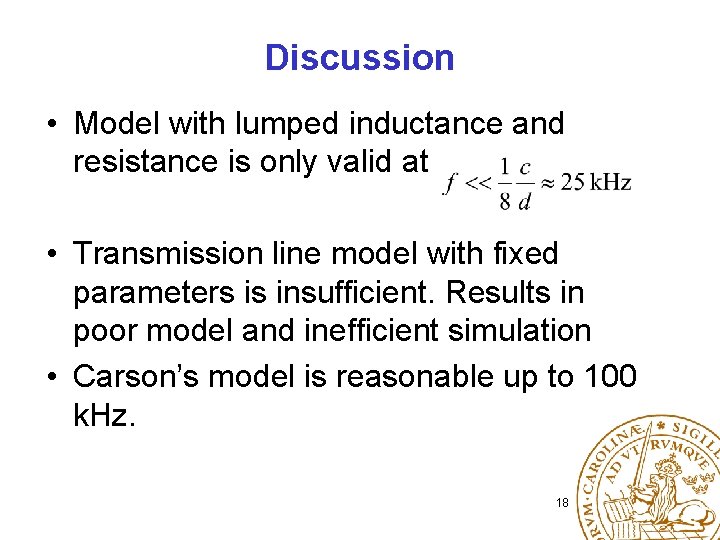
Discussion • Model with lumped inductance and resistance is only valid at • Transmission line model with fixed parameters is insufficient. Results in poor model and inefficient simulation • Carson’s model is reasonable up to 100 k. Hz. 18
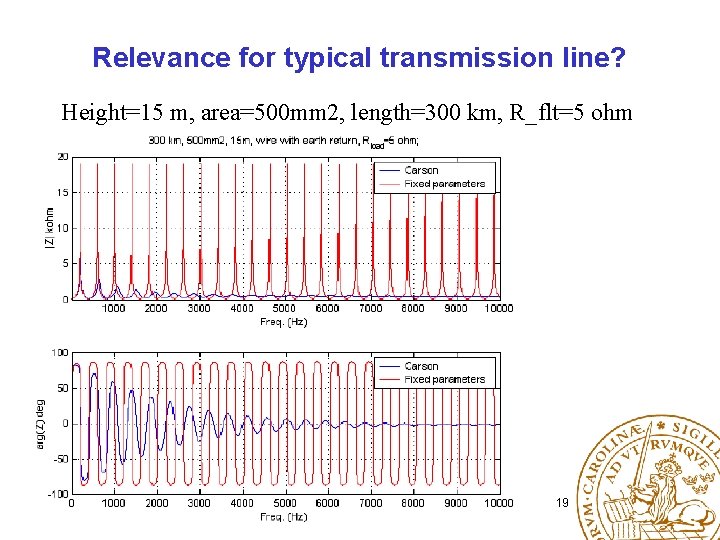
Relevance for typical transmission line? Height=15 m, area=500 mm 2, length=300 km, R_flt=5 ohm 19
Conclusion • Theory and measurements are needed to verify and develop models. • Measurement shows un-modeled dynamics. • Further work – High frequency modeling of line – Include dynamics of connection between line and ground, e. g, ground rod or fault – Bounded line length 20