
Measurement of electric charge in gas dispersed particles

- Slides: 33
Measurement of electric charge in gas dispersed particles using Particle Tracking Velocimetry Miguel Ángel Sánchez Quintanilla Javier Pérez Vaquero Grupo de Electrohidrodinámica y Medios Granulares Cohesivos. Departamento de Electrónica y Electromagnetismo, Facultad de Física, Universidad de Sevilla
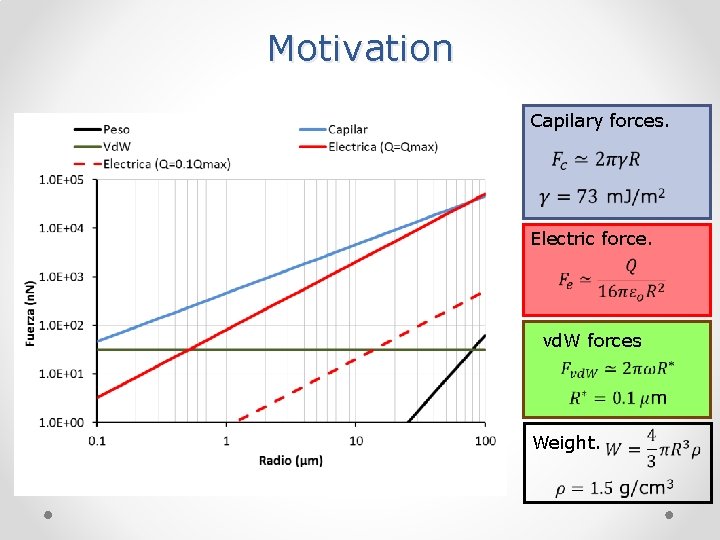
Motivation Capilary forces. Electric force. vd. W forces Weight.
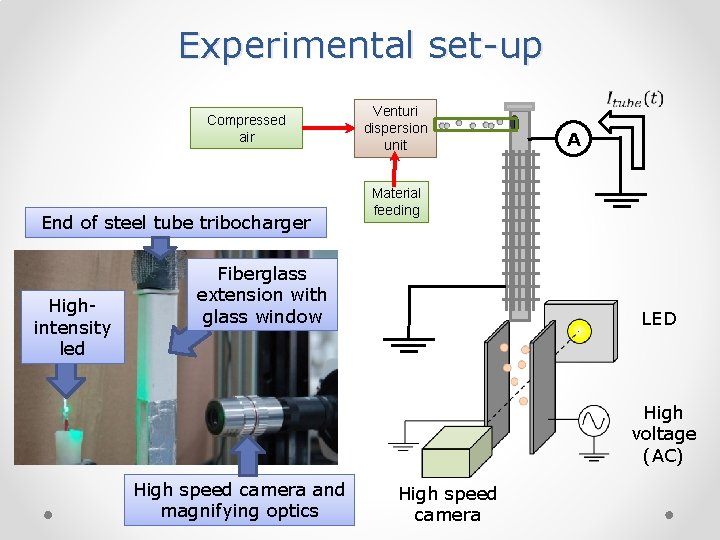
Experimental set-up Compressed air End of steel tube tribocharger Highintensity led Venturi dispersion unit A Material feeding Fiberglass extension with glass window LED High voltage (AC) High speed camera and magnifying optics High speed camera
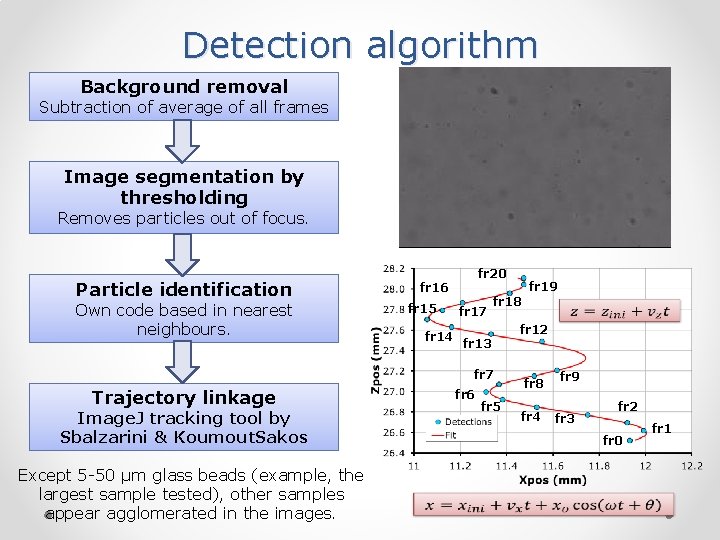
Detection algorithm Background removal Subtraction of average of all frames Image segmentation by thresholding Removes particles out of focus. Particle identification Own code based in nearest neighbours. fr 20 fr 16 fr 15 fr 14 fr 17 fr 18 fr 13 fr 7 Trajectory linkage Image. J tracking tool by Sbalzarini & Koumout. Sakos Except 5 -50 µm glass beads (example, the largest sample tested), other samples appear agglomerated in the images. fr 6 fr 19 fr 5 fr 12 fr 8 fr 4 fr 9 fr 3 fr 2 fr 0 fr 1
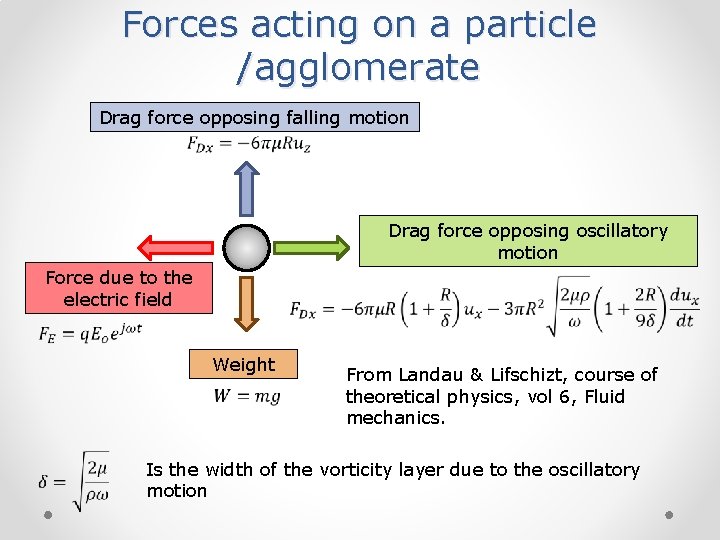
Forces acting on a particle /agglomerate Drag force opposing falling motion Drag force opposing oscillatory motion Force due to the electric field Weight From Landau & Lifschizt, course of theoretical physics, vol 6, Fluid mechanics. Is the width of the vorticity layer due to the oscillatory motion
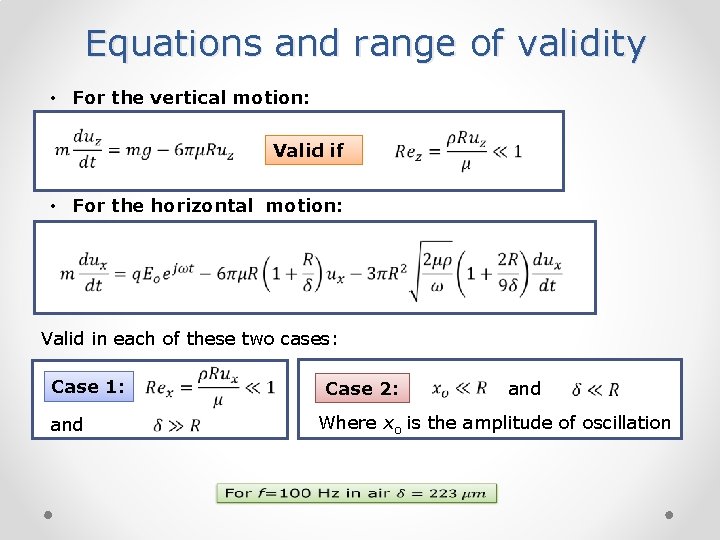
Equations and range of validity • For the vertical motion: Valid if • For the horizontal motion: Valid in each of these two cases: Case 1: and Case 2: and Where xo is the amplitude of oscillation
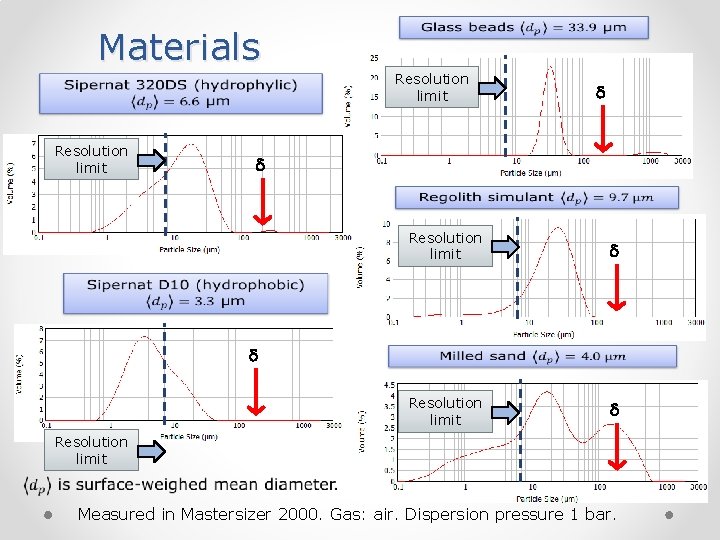
Materials Resolution limit Resolution limit Measured in Mastersizer 2000. Gas: air. Dispersion pressure 1 bar.
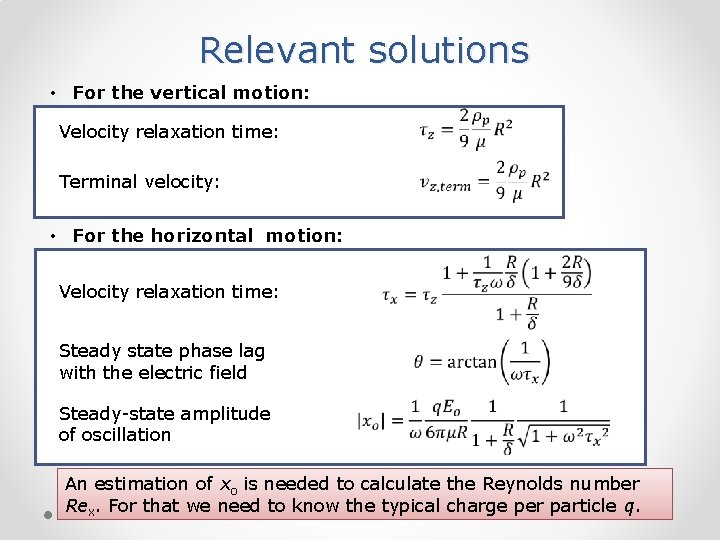
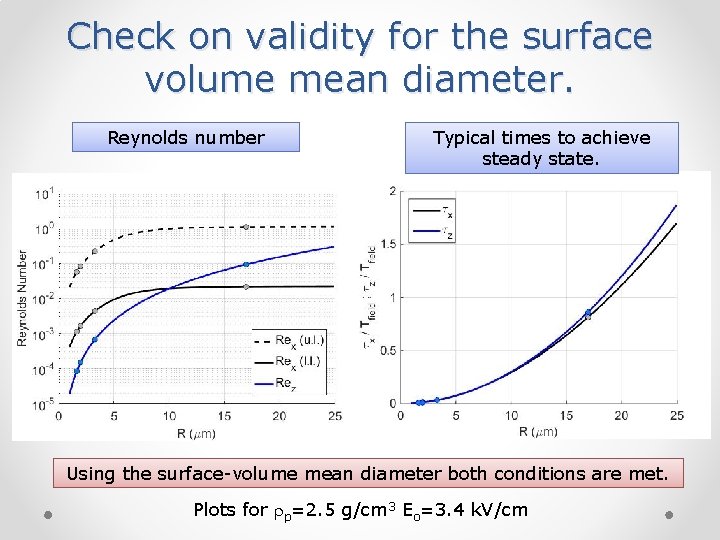
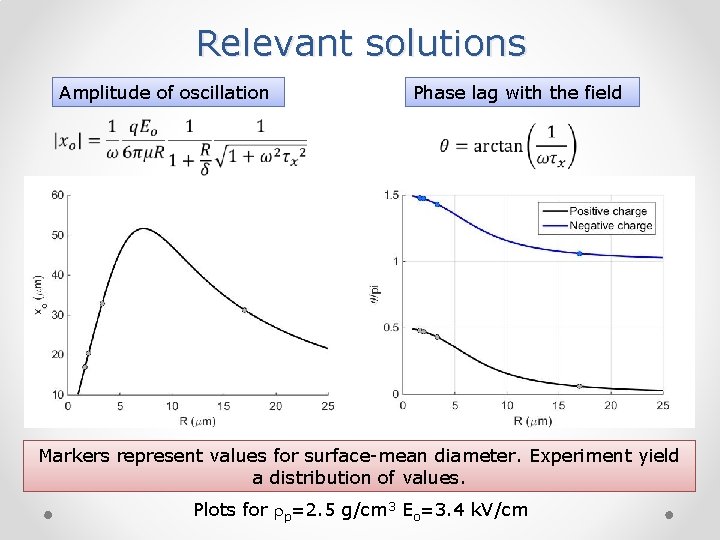
Relevant solutions • For the vertical motion: Velocity relaxation time: Terminal velocity: • For the horizontal motion: Velocity relaxation time: Steady state phase lag with the electric field Steady-state amplitude of oscillation An estimation of xo is needed to calculate the Reynolds number Rex. For that we need to know the typical charge per particle q.
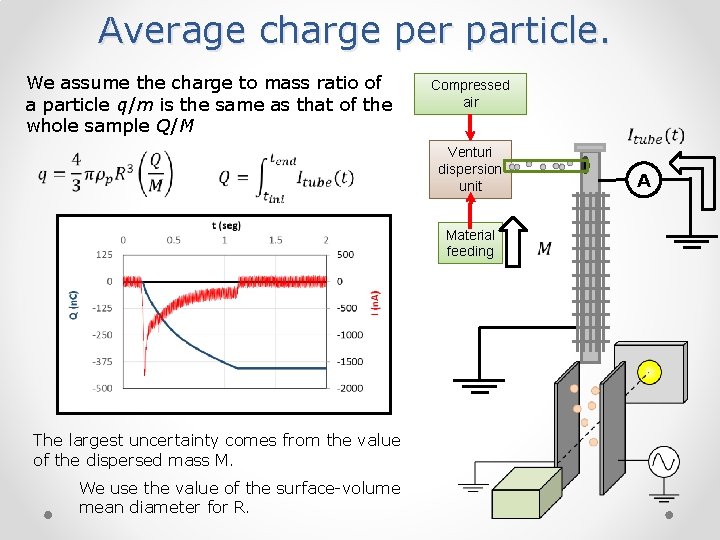
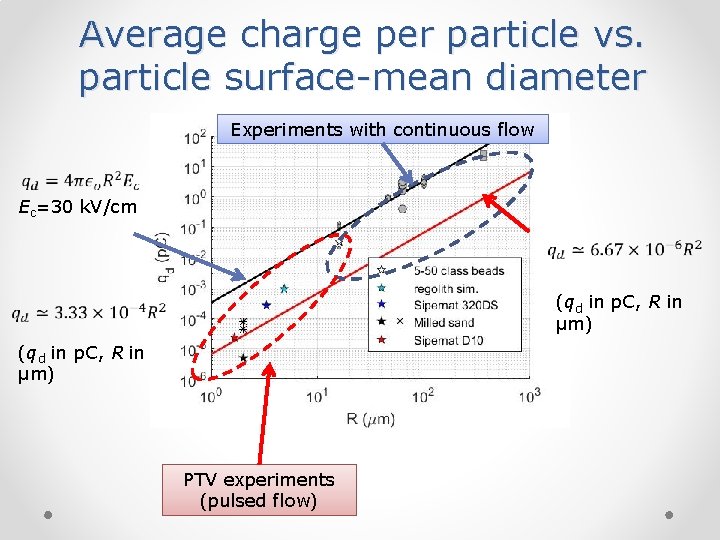
Average charge per particle. We assume the charge to mass ratio of a particle q/m is the same as that of the whole sample Q/M Compressed air Venturi dispersion unit Material feeding The largest uncertainty comes from the value of the dispersed mass M. We use the value of the surface-volume mean diameter for R. A
Average charge per particle vs. particle surface-mean diameter Experiments with continuous flow Ec=30 k. V/cm (qd in p. C, R in µm) PTV experiments (pulsed flow)
Check on validity for the surface volume mean diameter. Reynolds number Typical times to achieve steady state. Using the surface-volume mean diameter both conditions are met. Plots for p=2. 5 g/cm 3 Eo=3. 4 k. V/cm
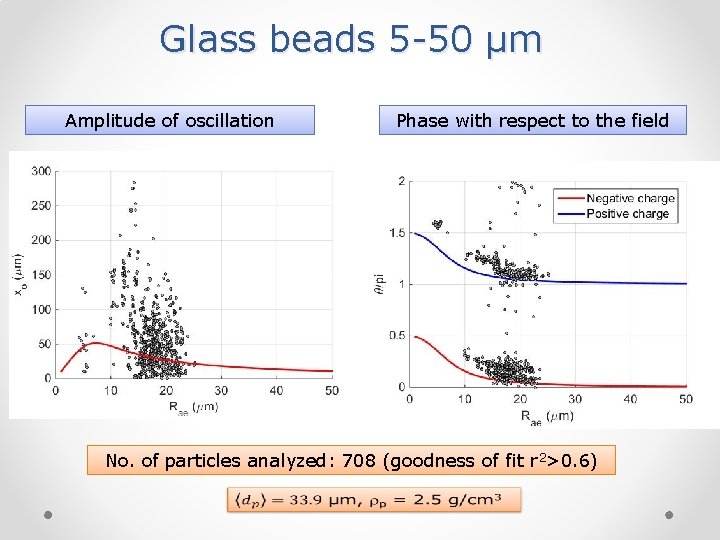
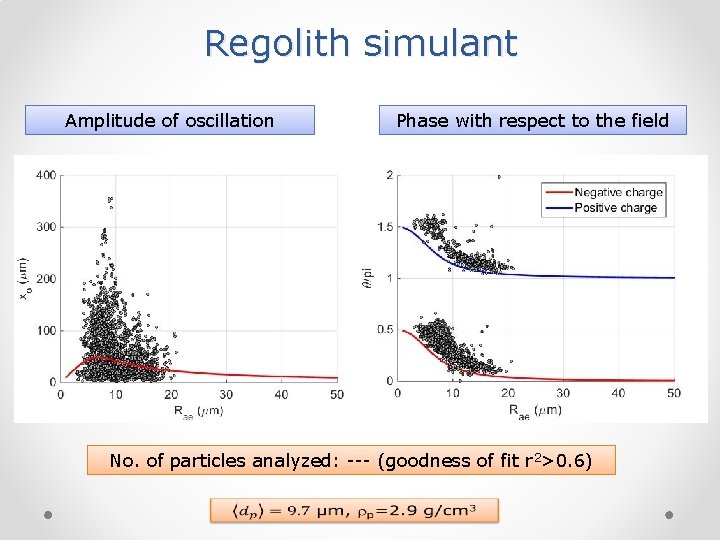
Relevant solutions Amplitude of oscillation Phase lag with the field Markers represent values for surface-mean diameter. Experiment yield a distribution of values. Plots for p=2. 5 g/cm 3 Eo=3. 4 k. V/cm
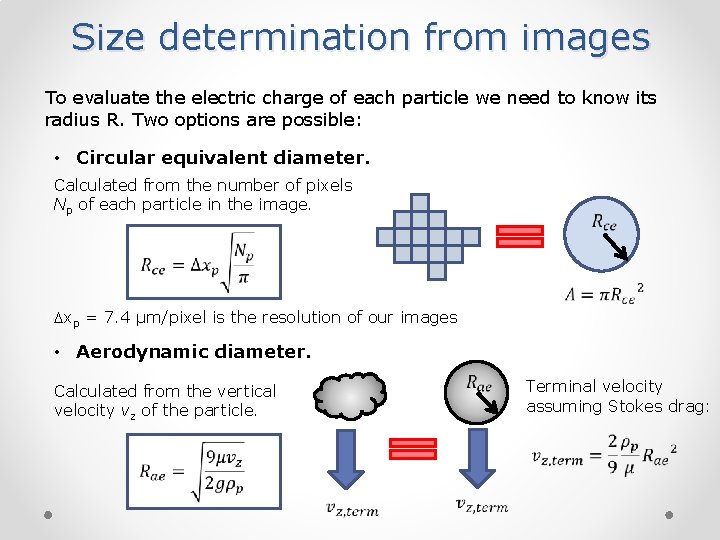
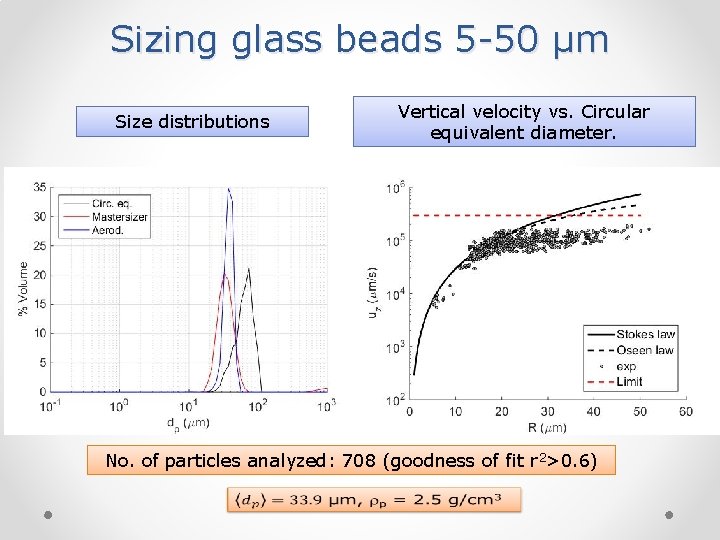
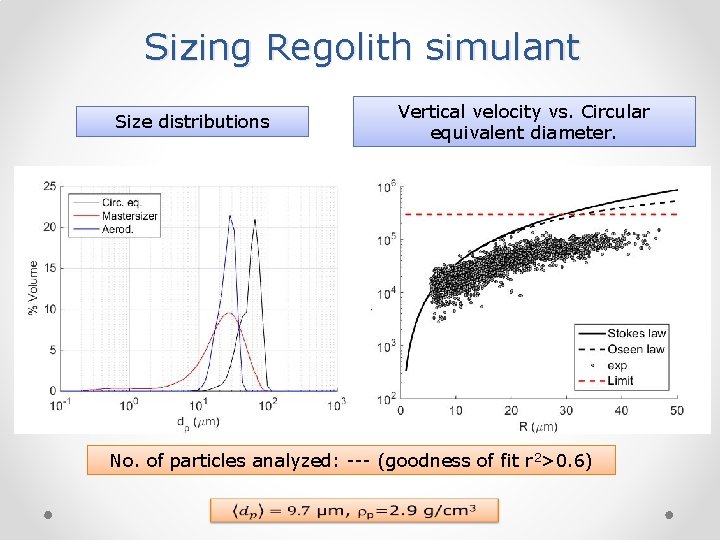
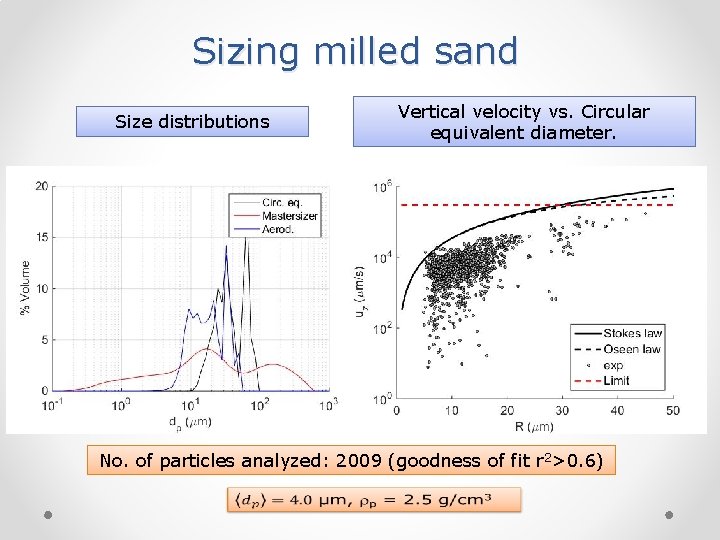
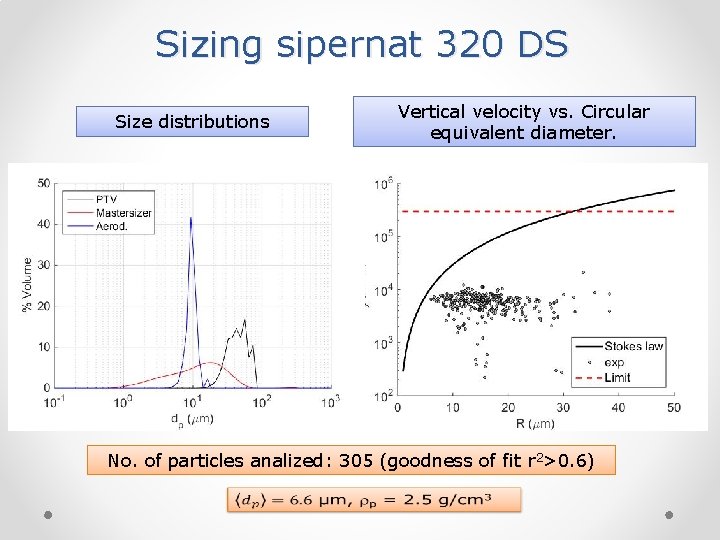
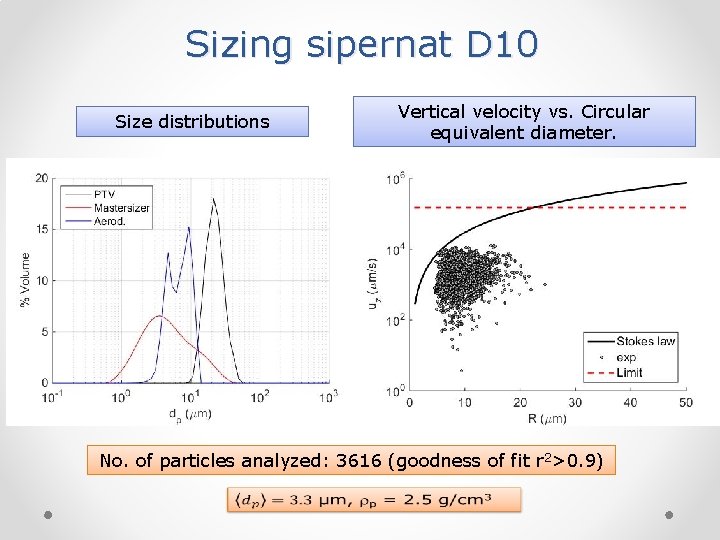
Size determination from images To evaluate the electric charge of each particle we need to know its radius R. Two options are possible: • Circular equivalent diameter. Calculated from the number of pixels Np of each particle in the image. xp = 7. 4 µm/pixel is the resolution of our images • Aerodynamic diameter. Calculated from the vertical velocity vz of the particle. Terminal velocity assuming Stokes drag:
Sizing glass beads 5 -50 µm Size distributions Vertical velocity vs. Circular equivalent diameter. No. of particles analyzed: 708 (goodness of fit r 2>0. 6)
Sizing Regolith simulant Size distributions Vertical velocity vs. Circular equivalent diameter. No. of particles analyzed: --- (goodness of fit r 2>0. 6)
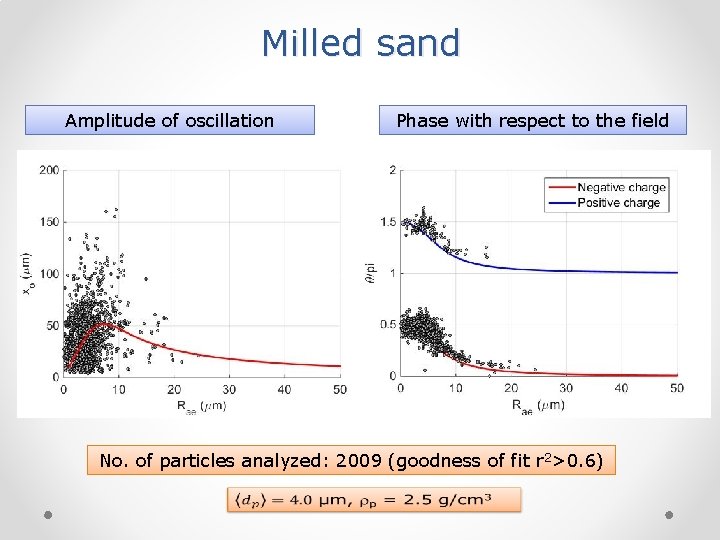
Sizing milled sand Size distributions Vertical velocity vs. Circular equivalent diameter. No. of particles analyzed: 2009 (goodness of fit r 2>0. 6)
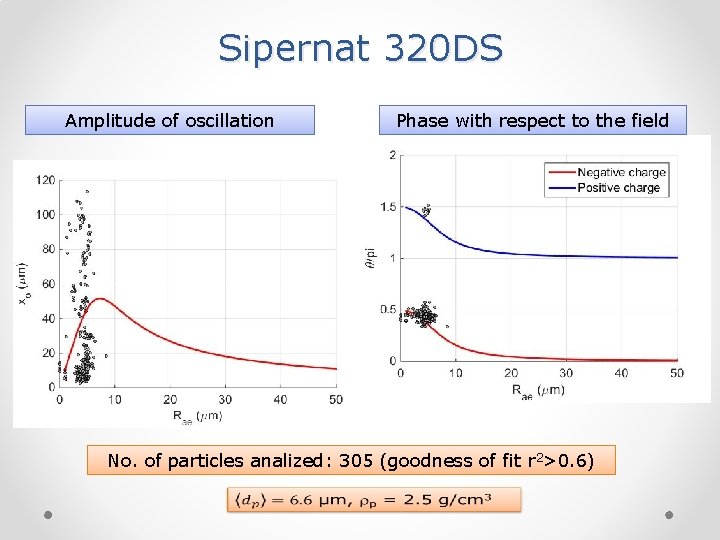
Sizing sipernat 320 DS Size distributions Vertical velocity vs. Circular equivalent diameter. No. of particles analized: 305 (goodness of fit r 2>0. 6)
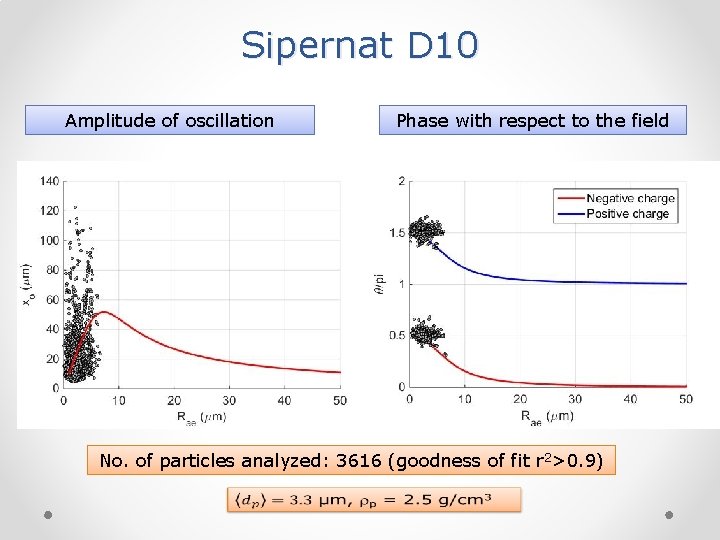
Sizing sipernat D 10 Size distributions Vertical velocity vs. Circular equivalent diameter. No. of particles analyzed: 3616 (goodness of fit r 2>0. 9)
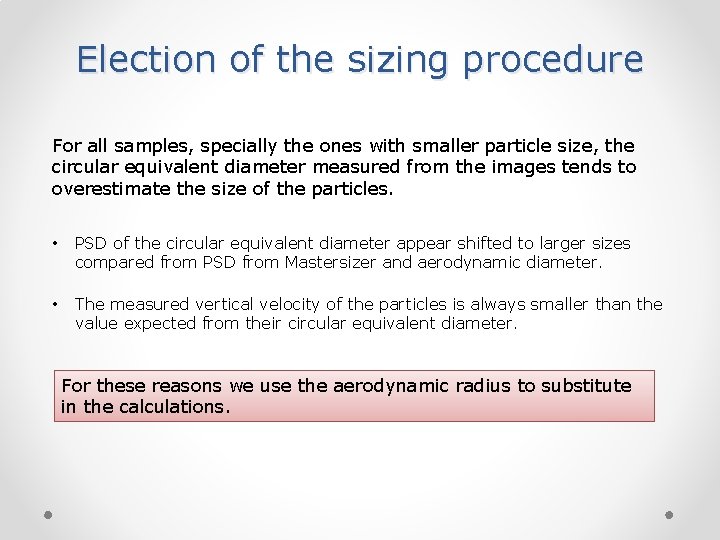
Election of the sizing procedure For all samples, specially the ones with smaller particle size, the circular equivalent diameter measured from the images tends to overestimate the size of the particles. • PSD of the circular equivalent diameter appear shifted to larger sizes compared from PSD from Mastersizer and aerodynamic diameter. • The measured vertical velocity of the particles is always smaller than the value expected from their circular equivalent diameter. For these reasons we use the aerodynamic radius to substitute in the calculations.
Glass beads 5 -50 µm Amplitude of oscillation Phase with respect to the field No. of particles analyzed: 708 (goodness of fit r 2>0. 6)
Regolith simulant Amplitude of oscillation Phase with respect to the field No. of particles analyzed: --- (goodness of fit r 2>0. 6)
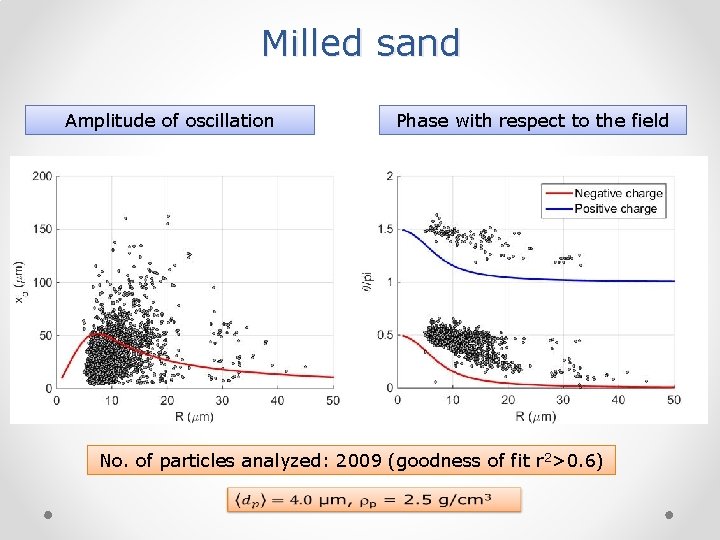
Milled sand Amplitude of oscillation Phase with respect to the field No. of particles analyzed: 2009 (goodness of fit r 2>0. 6)
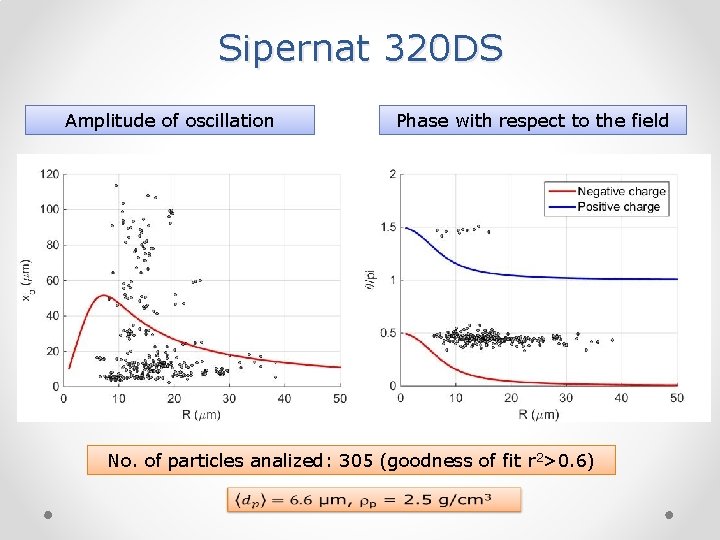
Sipernat 320 DS Amplitude of oscillation Phase with respect to the field No. of particles analized: 305 (goodness of fit r 2>0. 6)
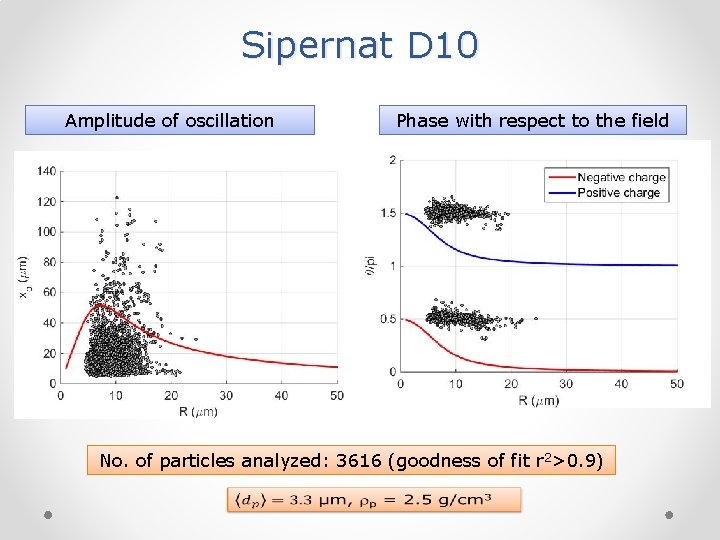
Sipernat D 10 Amplitude of oscillation Phase with respect to the field No. of particles analyzed: 3616 (goodness of fit r 2>0. 9)
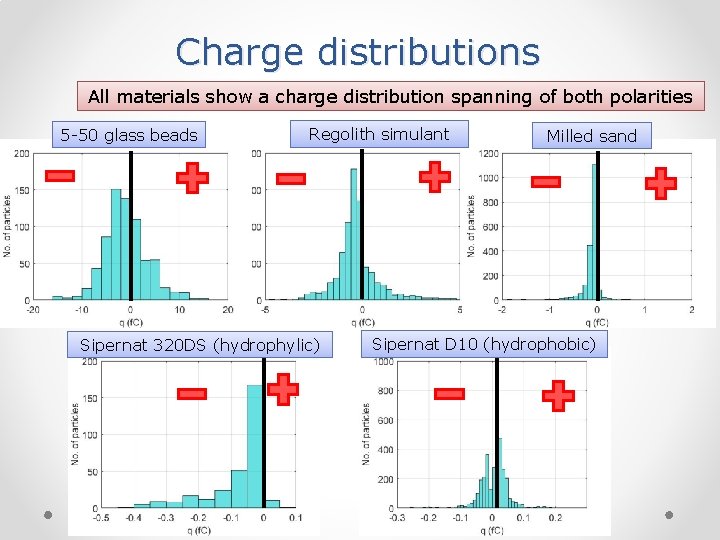
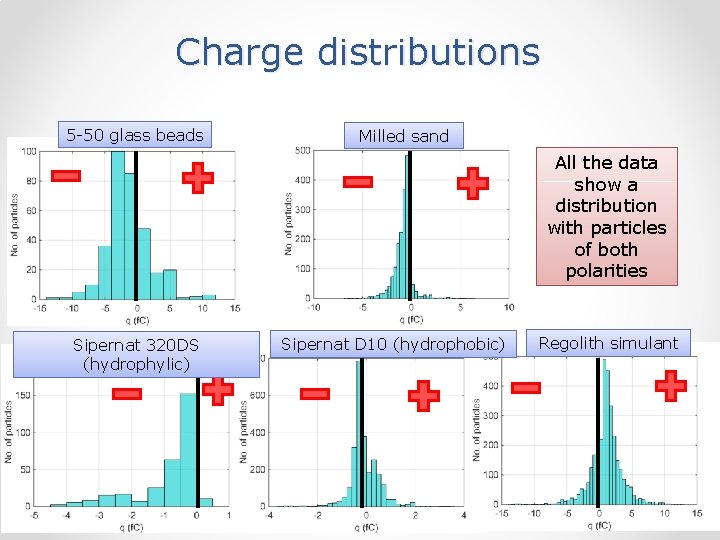
Charge distributions All materials show a charge distribution spanning of both polarities 5 -50 glass beads Regolith simulant Sipernat 320 DS (hydrophylic) Milled sand Sipernat D 10 (hydrophobic)
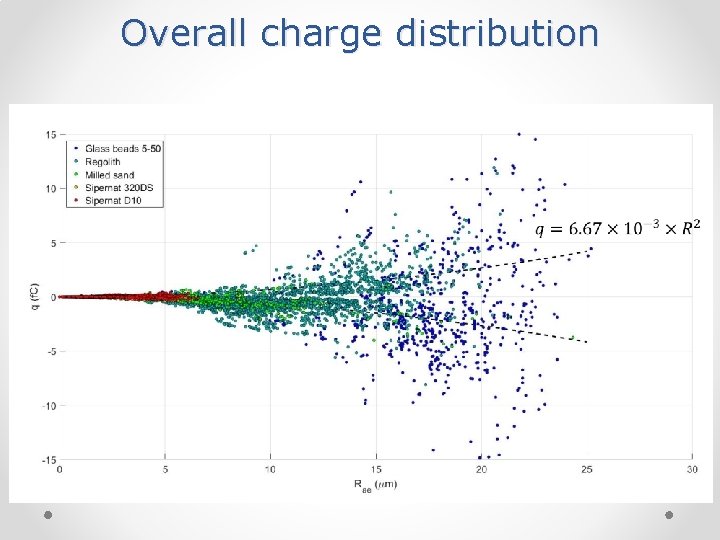
Overall charge distribution
The following slides represent results vs. circular equivalent radius
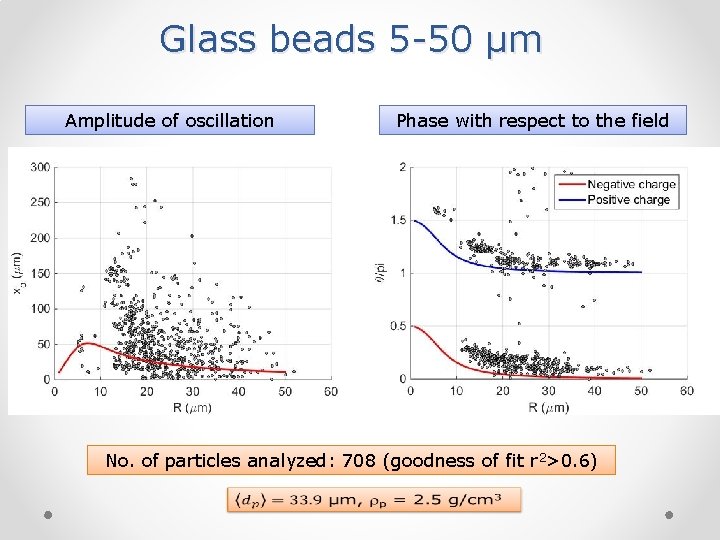
Glass beads 5 -50 µm Amplitude of oscillation Phase with respect to the field No. of particles analyzed: 708 (goodness of fit r 2>0. 6)
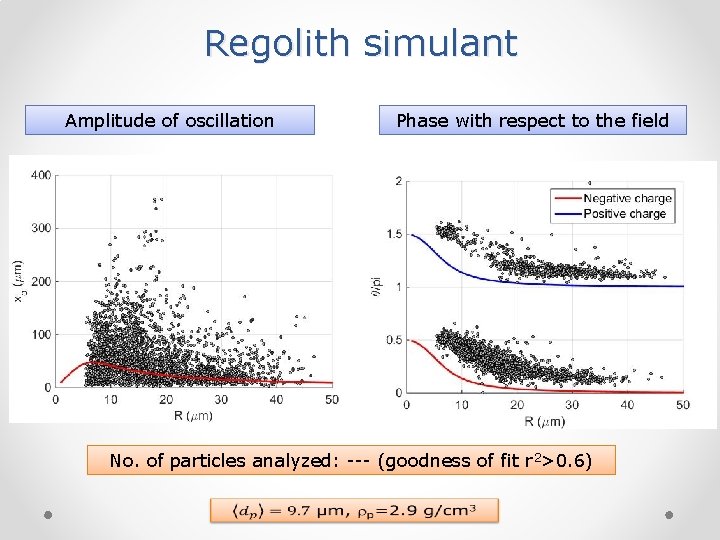
Regolith simulant Amplitude of oscillation Phase with respect to the field No. of particles analyzed: --- (goodness of fit r 2>0. 6)
Milled sand Amplitude of oscillation Phase with respect to the field No. of particles analyzed: 2009 (goodness of fit r 2>0. 6)
Sipernat 320 DS Amplitude of oscillation Phase with respect to the field No. of particles analized: 305 (goodness of fit r 2>0. 6)
Sipernat D 10 Amplitude of oscillation Phase with respect to the field No. of particles analyzed: 3616 (goodness of fit r 2>0. 9)
Charge distributions 5 -50 glass beads Milled sand All the data show a distribution with particles of both polarities Sipernat 320 DS (hydrophylic) Sipernat D 10 (hydrophobic) Regolith simulant