
MEASUREMENT Converting Metric Units Many people need to

- Slides: 22
MEASUREMENT Converting Metric Units
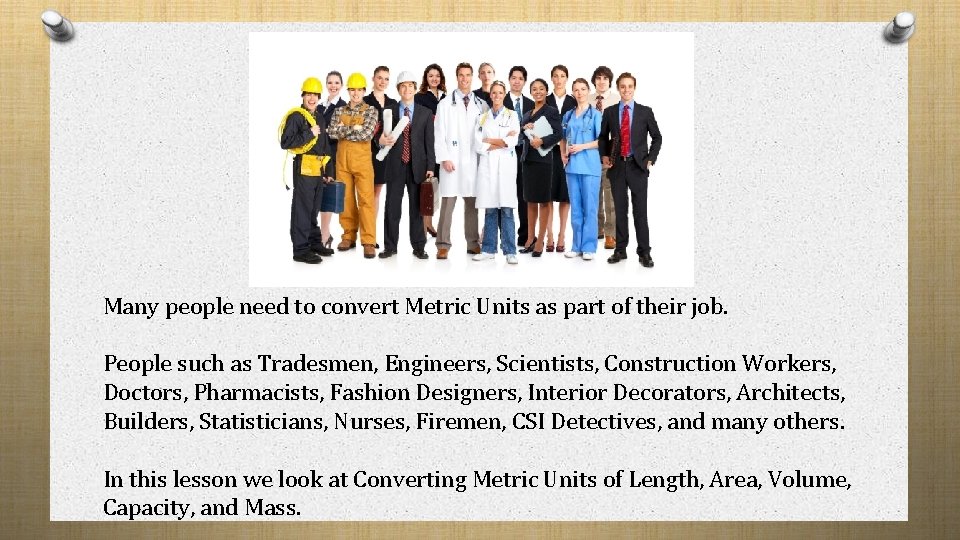
Many people need to convert Metric Units as part of their job. People such as Tradesmen, Engineers, Scientists, Construction Workers, Doctors, Pharmacists, Fashion Designers, Interior Decorators, Architects, Builders, Statisticians, Nurses, Firemen, CSI Detectives, and many others. In this lesson we look at Converting Metric Units of Length, Area, Volume, Capacity, and Mass.
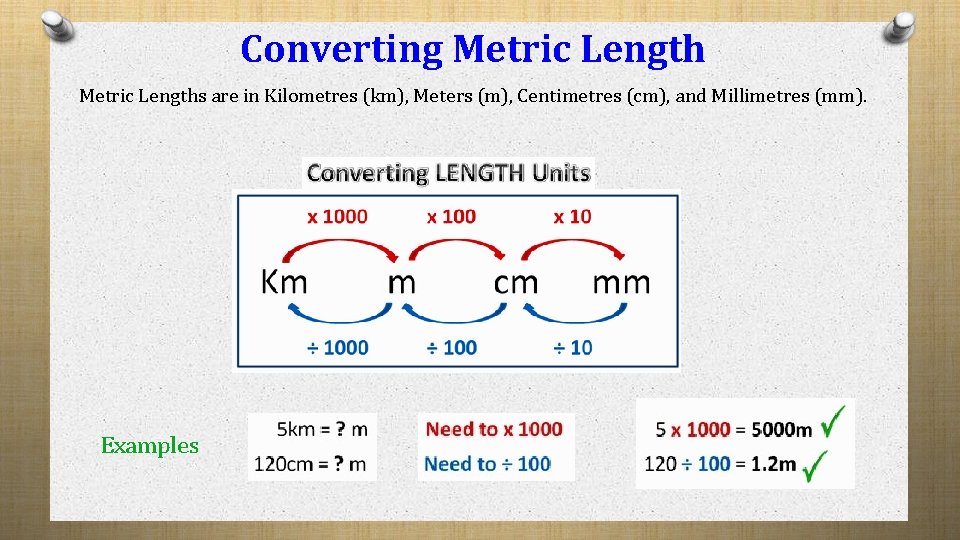
Converting Metric Lengths are in Kilometres (km), Meters (m), Centimetres (cm), and Millimetres (mm). Examples
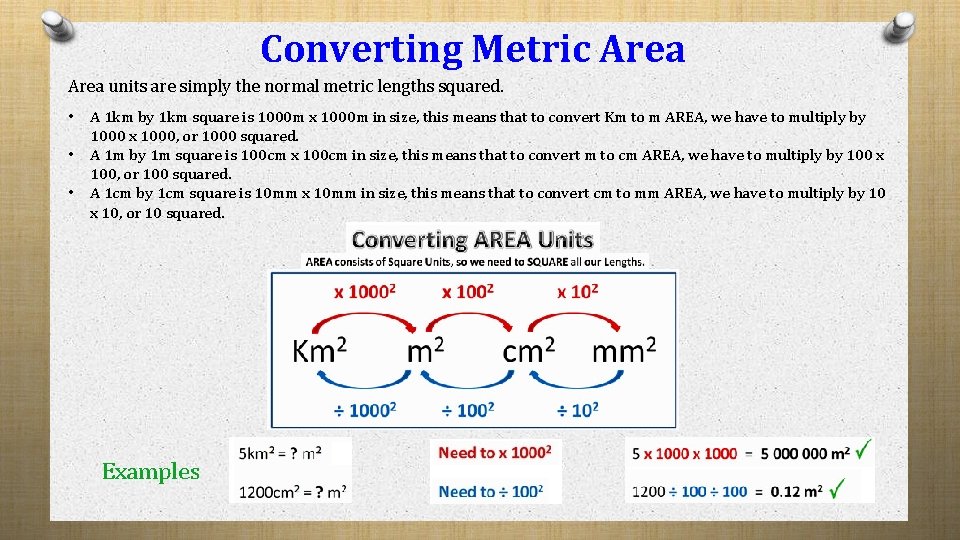
Converting Metric Area units are simply the normal metric lengths squared. • • • A 1 km by 1 km square is 1000 m x 1000 m in size, this means that to convert Km to m AREA, we have to multiply by 1000 x 1000, or 1000 squared. A 1 m by 1 m square is 100 cm x 100 cm in size, this means that to convert m to cm AREA, we have to multiply by 100 x 100, or 100 squared. A 1 cm by 1 cm square is 10 mm x 10 mm in size, this means that to convert cm to mm AREA, we have to multiply by 10 x 10, or 10 squared. Examples
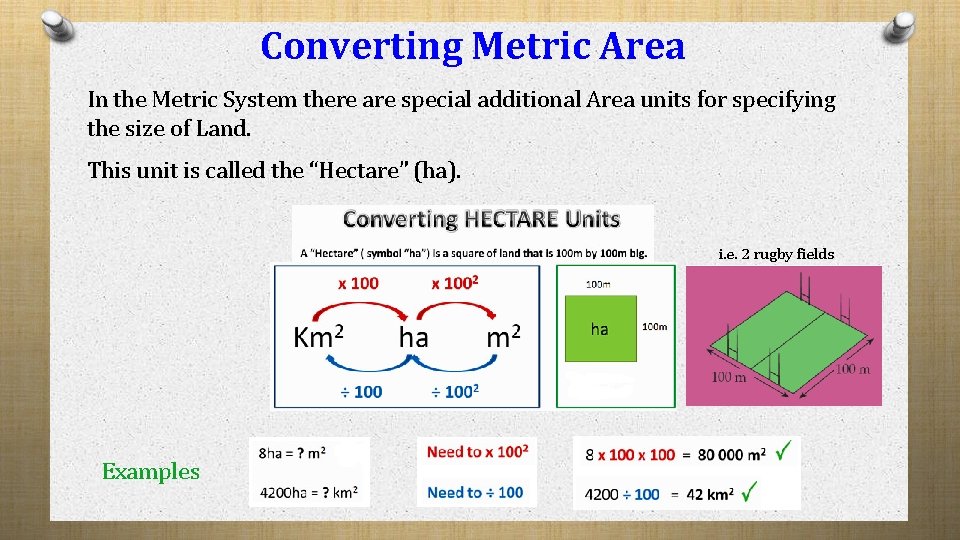
Converting Metric Area In the Metric System there are special additional Area units for specifying the size of Land. This unit is called the “Hectare” (ha). i. e. 2 rugby fields Examples
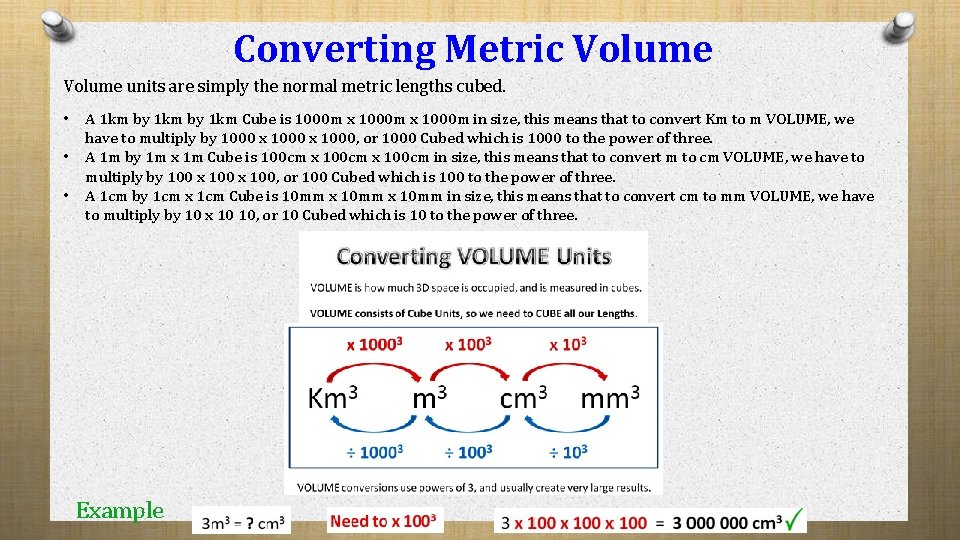
Converting Metric Volume units are simply the normal metric lengths cubed. • • • A 1 km by 1 km Cube is 1000 m x 1000 m in size, this means that to convert Km to m VOLUME, we have to multiply by 1000 x 1000, or 1000 Cubed which is 1000 to the power of three. A 1 m by 1 m x 1 m Cube is 100 cm x 100 cm in size, this means that to convert m to cm VOLUME, we have to multiply by 100 x 100, or 100 Cubed which is 100 to the power of three. A 1 cm by 1 cm x 1 cm Cube is 10 mm x 10 mm in size, this means that to convert cm to mm VOLUME, we have to multiply by 10 x 10 10, or 10 Cubed which is 10 to the power of three. Example
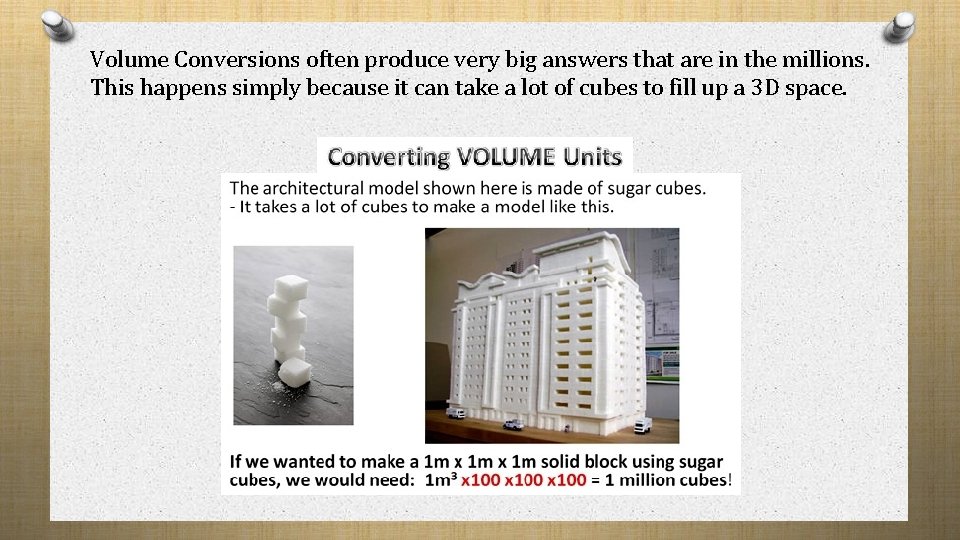
Volume Conversions often produce very big answers that are in the millions. This happens simply because it can take a lot of cubes to fill up a 3 D space.
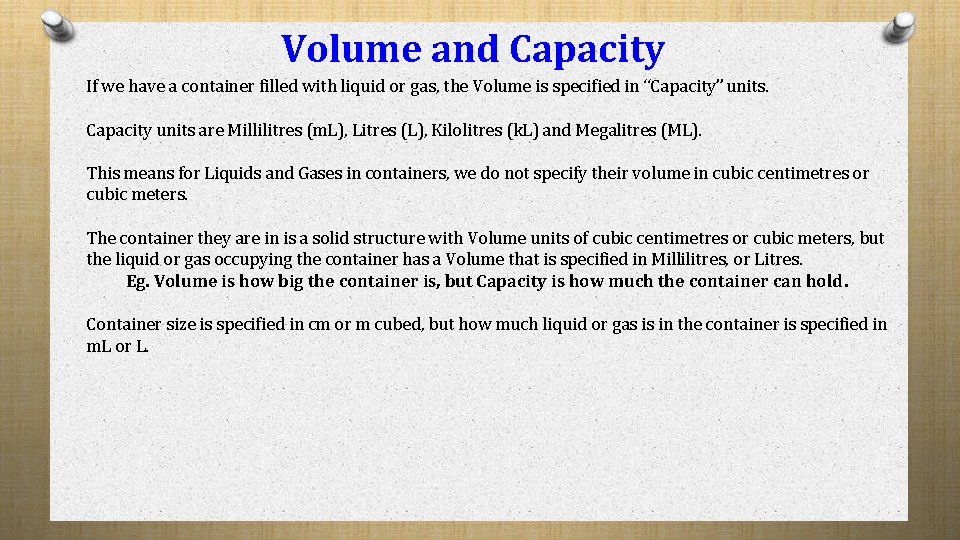
Volume and Capacity If we have a container filled with liquid or gas, the Volume is specified in “Capacity” units. Capacity units are Millilitres (m. L), Litres (L), Kilolitres (k. L) and Megalitres (ML). This means for Liquids and Gases in containers, we do not specify their volume in cubic centimetres or cubic meters. The container they are in is a solid structure with Volume units of cubic centimetres or cubic meters, but the liquid or gas occupying the container has a Volume that is specified in Millilitres, or Litres. Eg. Volume is how big the container is, but Capacity is how much the container can hold. Container size is specified in cm or m cubed, but how much liquid or gas is in the container is specified in m. L or L.
If we have a container filled with liquid or gas, the Volume is specified in “Capacity” units. Capacity units are Millilitres (m. L), Litres (L), Kilolitres (k. L) and Megalitres (ML).
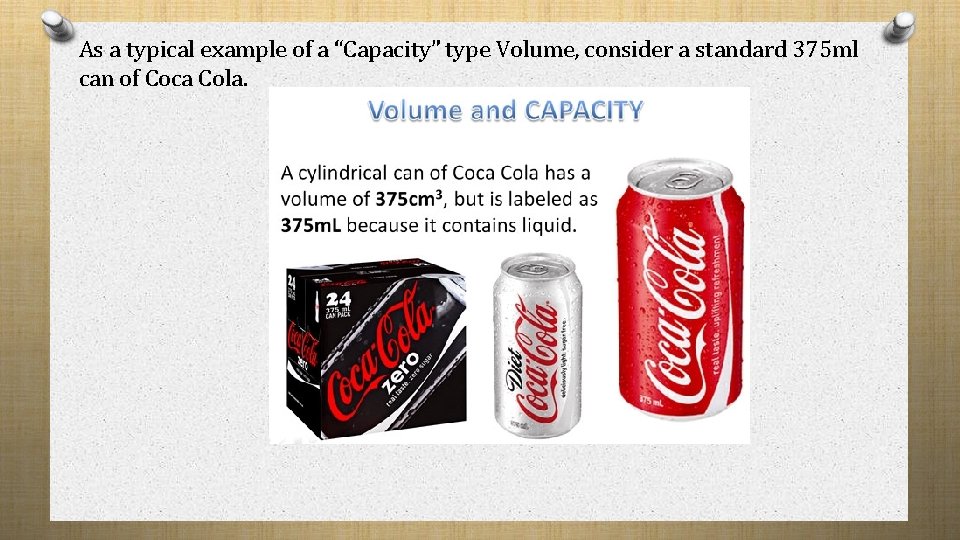
As a typical example of a “Capacity” type Volume, consider a standard 375 ml can of Coca Cola.
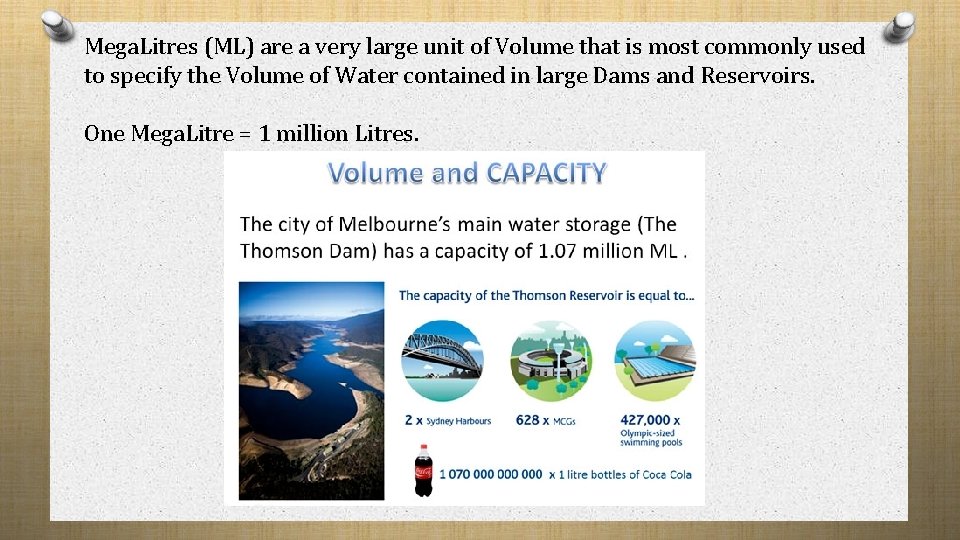
Mega. Litres (ML) are a very large unit of Volume that is most commonly used to specify the Volume of Water contained in large Dams and Reservoirs. One Mega. Litre = 1 million Litres.
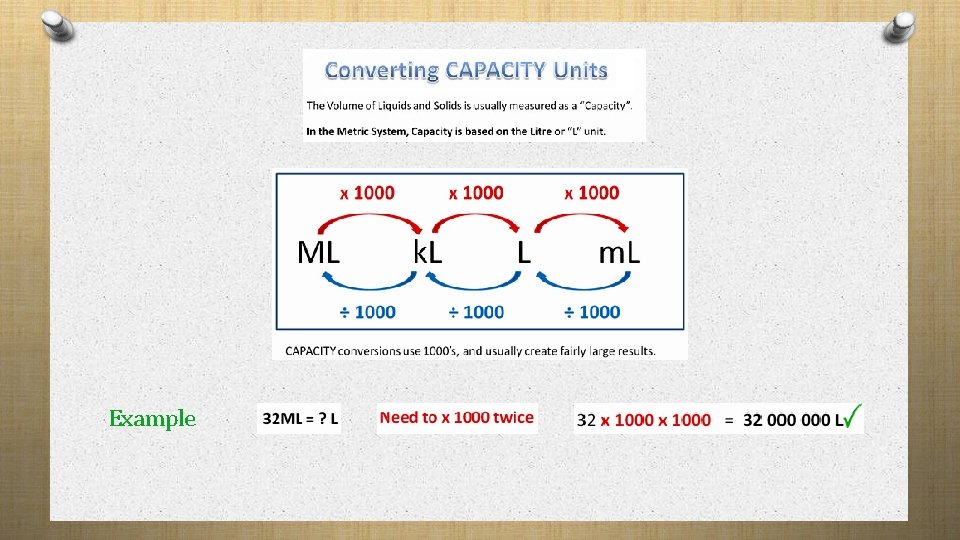
Example
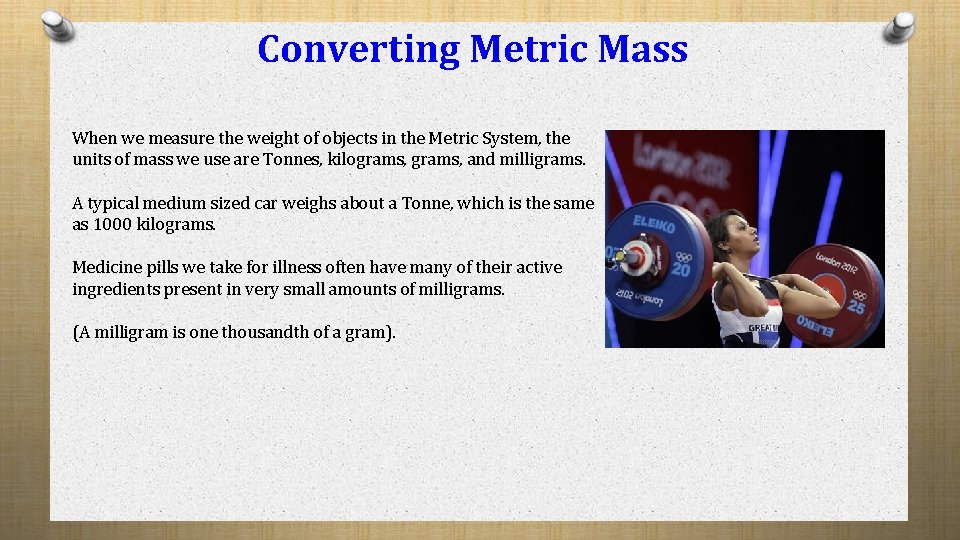
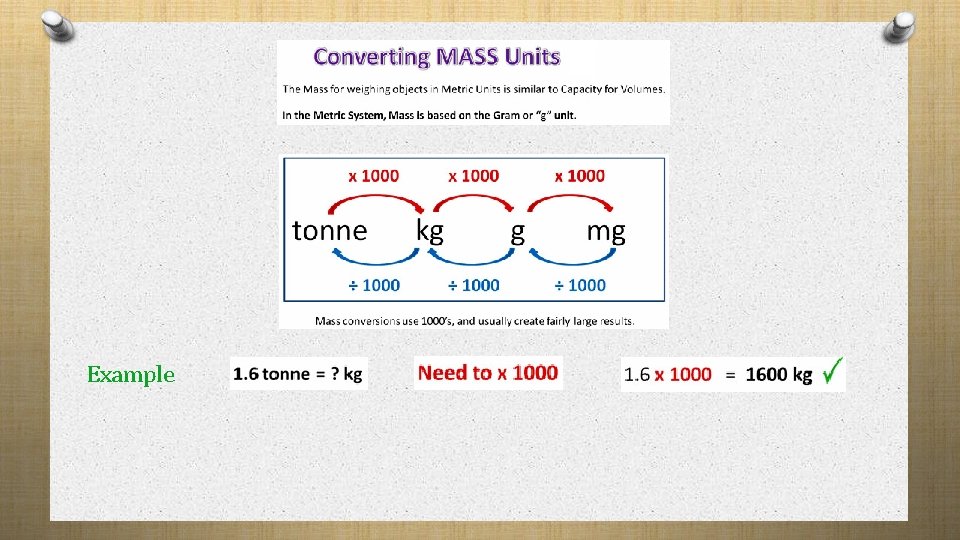
Converting Metric Mass When we measure the weight of objects in the Metric System, the units of mass we use are Tonnes, kilograms, and milligrams. A typical medium sized car weighs about a Tonne, which is the same as 1000 kilograms. Medicine pills we take for illness often have many of their active ingredients present in very small amounts of milligrams. (A milligram is one thousandth of a gram).
Example
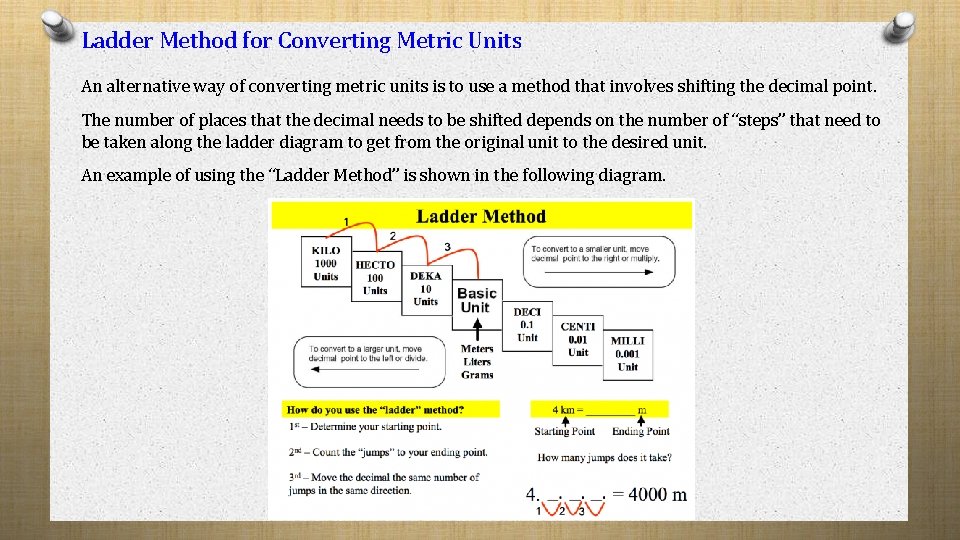
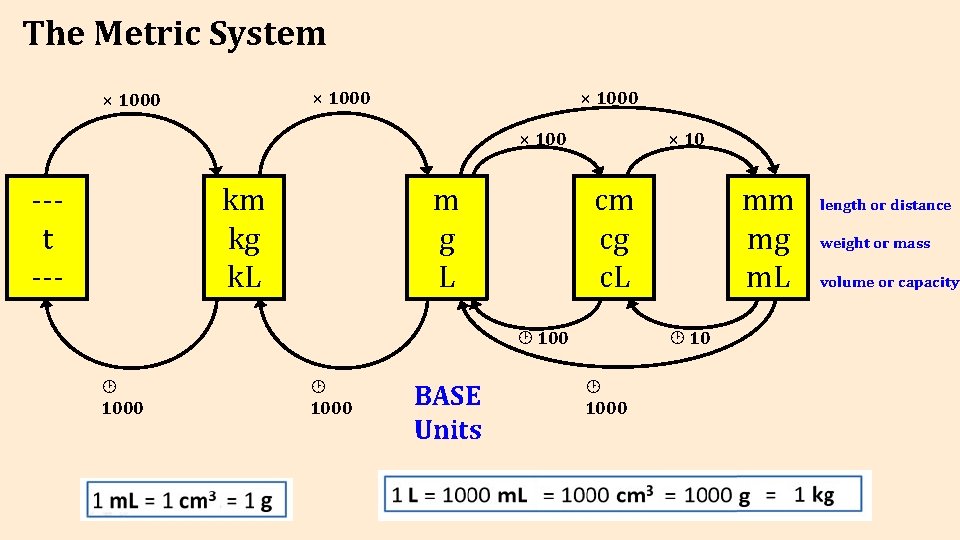
Ladder Method for Converting Metric Units An alternative way of converting metric units is to use a method that involves shifting the decimal point. The number of places that the decimal needs to be shifted depends on the number of “steps” that need to be taken along the ladder diagram to get from the original unit to the desired unit. An example of using the “Ladder Method” is shown in the following diagram.
Links for Online Converters online metric length converter online metric AREA converter online metric VOLUME and CAPACITY converter online metric MASS converter
Video http: //www. youtube. com/watch? v=XKCZn 5 MLKvk
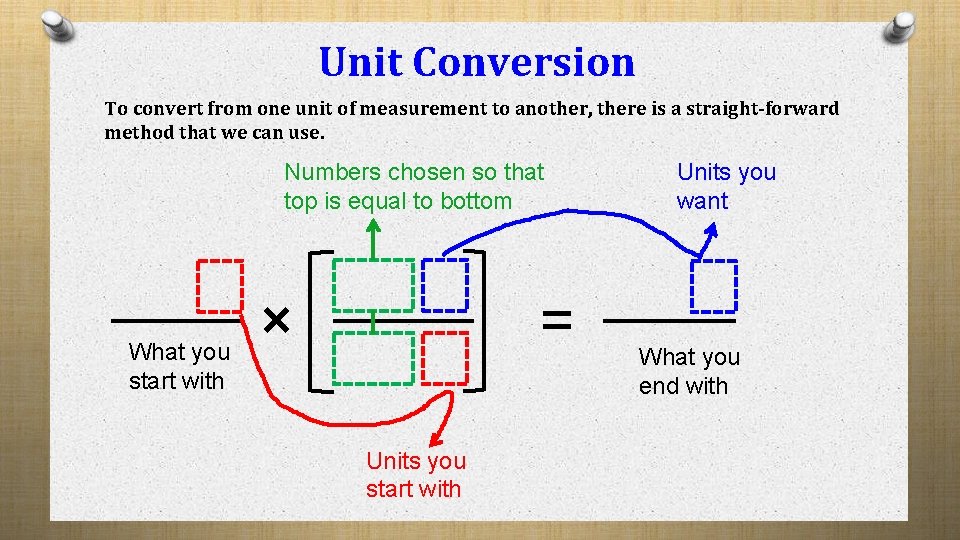
Unit Conversion To convert from one unit of measurement to another, there is a straight-forward method that we can use. Numbers chosen so that top is equal to bottom What you start with ⨯ = Units you start with Units you want What you end with
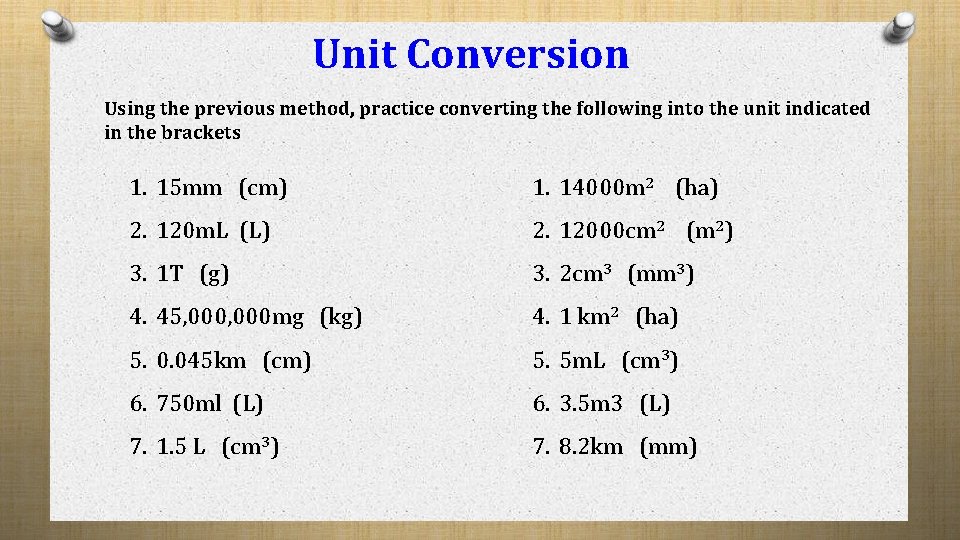
Unit Conversion Using the previous method, practice converting the following into the unit indicated in the brackets 1. 15 mm (cm) 1. 14000 m 2 (ha) 2. 120 m. L (L) 2. 12000 cm 2 (m 2) 3. 1 T (g) 3. 2 cm 3 (mm 3) 4. 45, 000 mg (kg) 4. 1 km 2 (ha) 5. 0. 045 km (cm) 5. 5 m. L (cm 3) 6. 750 ml (L) 6. 3. 5 m 3 (L) 7. 1. 5 L (cm 3) 7. 8. 2 km (mm)
Homework Exercise B: Pages 160/161
The Metric System ⨯ 1000 ⨯ 100 --t --- km kg k. L m g L cm cg c. L 1000 BASE Units mm mg m. L 1000 length or distance weight or mass volume or capacity